
REVIEW · BHAKTAPUR & PATAN TOURS
Patan and Bhaktapur City Full Day Tour
Two UNESCO squares in one tight day. I like how this full-day format stitches together Patan Durbar Square and Bhaktapur Durbar Square so you get temples, palaces, and everyday city views in a single outing.
What I really like is the way the tour uses a live guide to connect what you see with what it meant for rulers, artisans, and merchants. You also get standout stops tied to Newari craftsmanship, from Patan’s Golden Temple metalwork to Bhaktapur’s royal-era squares and tall Nyatpole Temple tower.
One drawback to plan for is that monument entrance fees are not included, so you will want to budget a little extra on top of the $50 price.
In This Review
- Key highlights to plan around
- Two UNESCO squares, one smooth Kathmandu Valley day
- Bhaktapur Durbar Square: royal power made visible
- How Bhaktapur’s wood carving culture shows up in the streets
- Patan Durbar Square: where Lalitpur’s arts reputation is easy to see
- Patan’s palace courtyards and museum stop
- Golden Temple in Patan: Newari metalwork you can actually appreciate
- Patan temples that connect belief, symbolism, and local daily life
- The pace: how 6 hours can still feel complete
- What the guide adds, beyond facts on a sign
- Price and value: is $50 per person fair for what you get?
- Practical considerations before you go
- Who should choose the Patan and Bhaktapur full day tour
- Should you book this Patan and Bhaktapur tour?
- FAQ
- How long is the Patan and Bhaktapur City Full Day Tour?
- What’s included in the price?
- What is not included?
- Where is the pickup and drop-off?
- Is this a private tour?
- What languages are the guides available in?
- What sights will we visit during the day?
- What is the cancellation policy?
Key highlights to plan around
- Patan and Bhaktapur in one day saves time if you are short on Kathmandu Valley days
- Golden Temple in Patan spotlights Newari metalwork, not just big-name monuments
- Bhaktapur’s Nyatpole (Taumadhi) Temple gives you the tallest temple feel in-town, easy to spot and photograph
- Royal squares and palace courtyards show how power shaped the city layout
- English or Spanish guide plus air-conditioned transport makes the day smoother than self-guided wandering
- Private group pace lets you ask questions and move at a comfortable speed
Old towns beyond Kathmandu, compared
Two UNESCO squares, one smooth Kathmandu Valley day
If you like architecture you can read, this kind of tour is a smart use of limited time. Patan and Bhaktapur both sit in the Kathmandu Valley and are tied to UNESCO World Heritage status, but they feel different the moment you step outside.
Patan is another small city inside the valley, historically its own kingdom with a famous arts reputation. Bhaktapur is described as a medieval town, and the streets and squares reflect that older, planned, royal rhythm.
You start in Kathmandu with hotel pickup and air-conditioned transport, then spend your day on guided sightseeing with time for walking and breaks. The whole experience is sold as about 6 hours, so you should expect efficiency, not a slow museum crawl.
Bhaktapur Durbar Square: royal power made visible
Bhaktapur is where the idea of city planning through royalty feels very real. You will focus on Bhaktapur’s Durbar Square, and from there you can explore the surrounding temple-and-square network on foot.
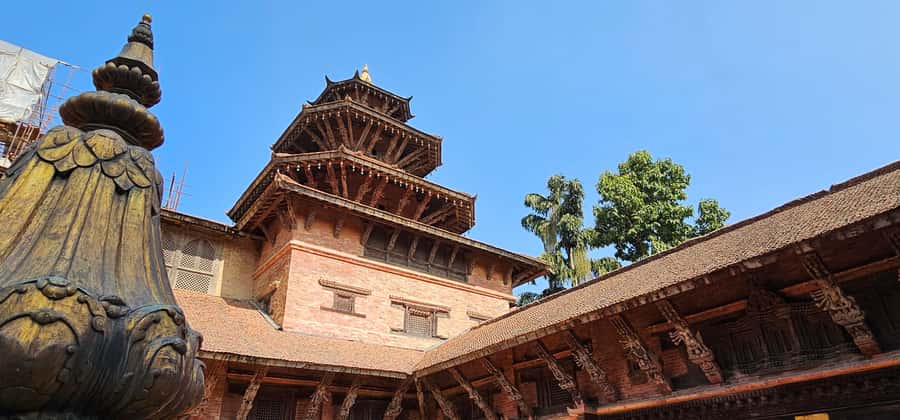
A highlight in Bhaktapur is Taumadhi Square, also called Nyatpole Temple. This is the tallest temple in town, so even if you do not know much Nepalese temple design, you can still understand the visual payoff. In a single stop, you get a strong sense of height, symmetry, and the way Bhaktapur’s spiritual buildings shaped the skyline.
Another key stop is Dattatraya Square, noted as the first square used by royalties. That detail matters because it frames the place as more than a pretty courtyard. It is where authority got staged daily, where the city’s public life and sacred life overlapped.
How Bhaktapur’s wood carving culture shows up in the streets
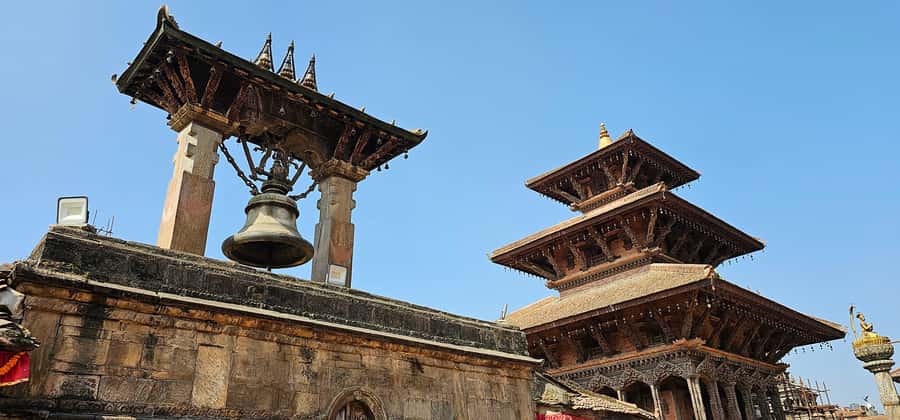
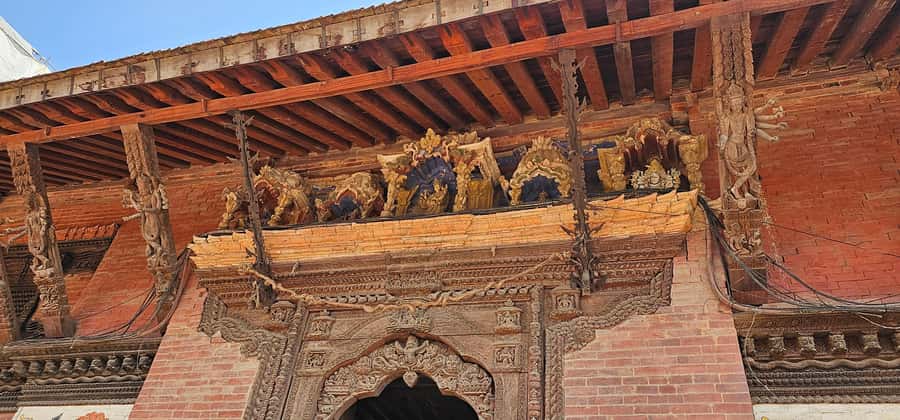
Bhaktapur is strongly associated with wood carving craft skills. On a guided day like this, you are not only looking at large monuments. Your guide can help you notice the smaller carving moments that make the whole town feel intentional, from door frames to carved surfaces around the squares.
This is where a good guide makes a real difference. In a private setup, you can ask what symbols mean, what roles different deities played, and why certain motifs appear where they do. You should come away with an understanding of how craft is not just decoration, but part of identity.
Patan Durbar Square: where Lalitpur’s arts reputation is easy to see
Once you head to Patan, the mood shifts to a more artisan-forward city feel. Patan’s classical name is Lalitpur, meaning the beautiful city, and the reputation is tied to temples, buildings, and the work of local artists.
You will spend time around Patan Durbar Square and major temple sights. This is not just one landmark. The palace complex and nearby structures create a route where you keep seeing new layers of Newari urban architecture.
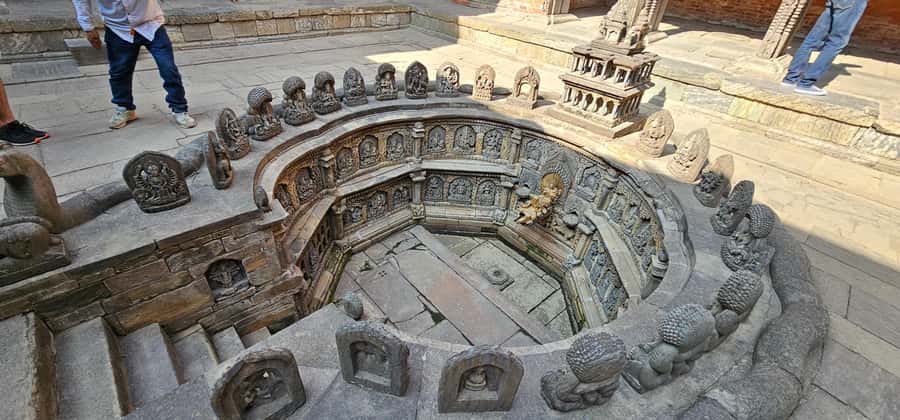
One big reason Patan feels special is how its royal palace layout is preserved and readable. The palace complex is described as the finest collection of Newari urban architecture in Nepal, and it is organized around three different courtyards. Even if you are not a hardcore architecture fan, the courtyard system gives you a clear way to understand how the palace functioned.
Patan’s palace courtyards and museum stop
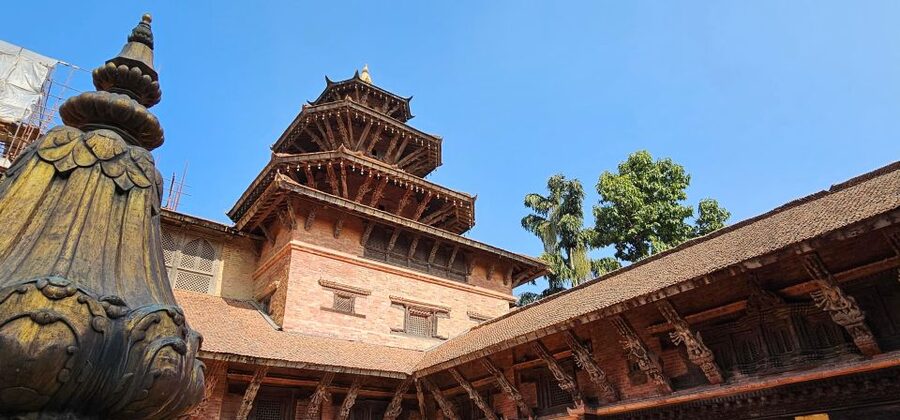
Inside Patan’s palace complex, you will encounter three courtyards with distinct roles.
- Sundarichok is known as the most beautiful courtyard and was once a royal bath
- Mulchok was traditionally a gathering place for social and religious occasions and holds a temple for Taleju, a tutelary deity of the royal family
- Keshavnarayan Chok contains a small Vishnu temple and is described as the living area for the king and queen in the past, and it now houses the museum
This is a great mix for your day because it goes beyond photo stops. You get the sense of how people moved through public and private space, then you can see curated objects inside the museum setting.
Some versions of this Patan stop may also include quieter, more unusual add-ons linked to wellness, like a sound therapy centre that shows up as a highlight. If you like the idea of slowing down after temples, that kind of stop can be a pleasant break.
Golden Temple in Patan: Newari metalwork you can actually appreciate
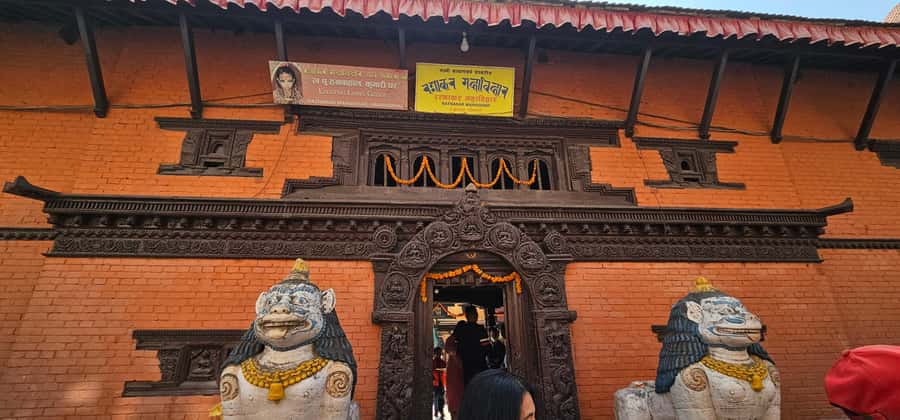
The tour then points you toward one of Patan’s most famous monastery areas, Hiranyavarna Mahabihar, also known to visitors as the Golden Temple. This is where you see Newari metalwork described as especially rich and where the monastery is noted as one of the richest in Patan.
What makes this stop work well on a guided day is scale and detail. A lot of temple tours focus on the biggest outward features. Here, the charm is the craftsmanship feel, the shine, the careful work, and the sense that metalwork is part of worship.
If you like taking time to look, this is the kind of place where you can pause longer during your free time and still feel like you did something meaningful. It is not a quick glance and move on stop.
Patan temples that connect belief, symbolism, and local daily life
Patan’s temple world includes several named stops that help you understand how religion, craft, and community meet.
You may see references to Bhimsen Temple, linked to business and merchants, with Bhimsen representing bravery. The temple is described as a richly ornate three-story pagoda, and there is a detail about household goods hanging as symbolic offerings, including pots, pans, brooms, and wooden slippers. That kind of everyday symbolism helps bridge what people pray for with how they live.
Another highlight you might encounter is the Krishna Temple, described as a masterpiece of Shikhar architecture, with a statue of Garuda in front. Nearby, you can also find a temple for Vishnu. There is also mention of a restored statue of Yoga Narendra Malla, who is connected to the 2015 earthquake and whose statue has been restored.
And if you want a temple that feels visually different, there is mention of an octagonal temple representing eight symbols of good luck for Hindu people. Even if you do not memorize the architecture terms, you will notice how the shape and symbolism help make the religious space easier to read.
The pace: how 6 hours can still feel complete
This tour is structured to cover two major UNESCO areas, and the biggest practical question is pace. With a 6-hour total duration and a private group setting, you should expect a rhythm of guided explanation plus walking, plus time to wander and take photos.
The best value of this kind of day is balance. You get enough guided time to understand what you are seeing, but you are not trapped in a rigid script. Several guide-focused comments highlight flexibility, time for questions, and photo stops, which is exactly what you want when you are trying to see carvings, courtyards, and temple details without feeling rushed.
If you are the type who enjoys shopping briefly and watching craft culture at street level, this pacing also gives room for it. If you are the type who wants to sit for long periods inside museums, you might feel the day runs tight, so manage your expectations.
What the guide adds, beyond facts on a sign
A tour like this lives or dies by the guide. Here, the recurring strength in the experience is that you can ask questions and get answers that connect temple design to daily community life.
Guides are also highlighted for showing side streets and daily-life details, including noticing ethnic costumes still worn on an everyday basis. That matters because it stops the day from being only monuments and starts making the city feel alive and lived in.
You also get craft-skill context, including wood carving culture in Bhaktapur and metalwork in Patan. Once you understand that these are regional signatures, you start noticing them everywhere.
Price and value: is $50 per person fair for what you get?
At $50 per person, the value depends on one thing: you are buying structure and interpretation. This price includes hotel pickup and drop-off in Kathmandu, an English or Spanish live tour guide, and air-conditioned transport. Monument entrance fees are not included.
If you would otherwise spend time figuring out transport between two cities, finding the correct routes, and trying to interpret what palace courtyards and temple symbols mean, then the price can be a solid bargain. You are paying for time savings plus a clearer understanding once you are inside the World Heritage spaces.
The only cost you likely add is entrance fees at monuments. If you budget for that, the $50 price works well for a private group day where you still get guided stops and personal attention.
Practical considerations before you go
Because monument entrance fees are excluded, bring a bit of cash or a payment method suitable for small fees. Also expect to pay attention to where your guide is taking you, since courtyards and temple areas can involve both walking and changing viewpoints.
Also note the day is run with an English or Spanish guide and air-conditioned transport, and it is private group. That combination is especially useful if you want a gentler pace, or if you are traveling at the end of your trip and already saw a few major sites.
Who should choose the Patan and Bhaktapur full day tour
This is a great fit if you want a focused World Heritage day without planning two separate outings. It works well for first-time visitors to Kathmandu Valley who want to compare two very different urban atmospheres, royal-era squares in Bhaktapur and artisan-palace energy in Patan.
It is also a strong choice if you care about culture that shows up in small details, like metalwork, carvings, palace courtyards, and symbolic temple design. The guide-led framing is what turns those details from random sights into a coherent story.
If you only want the biggest, most famous photo icons and prefer wandering alone, then you might find a guided day slightly more structured than you want. But if you like knowing what you are looking at while you walk, this tour style is right on target.
Should you book this Patan and Bhaktapur tour?
I would book it if you want an efficient UNESCO day with guided context and time to breathe. The big win is the combination of Patan’s Golden Temple metalwork plus the royal-square logic of Bhaktapur with Nyatpole and Dattatraya Square.
Book it especially if you value a private guide who can slow down for questions, point out craft culture, and adjust the pace. Just remember to budget for monument entrance fees, and plan for a packed but friendly 6-hour schedule.
FAQ
How long is the Patan and Bhaktapur City Full Day Tour?
The tour duration is 6 hours.
What’s included in the price?
The tour includes hotel pick up and drop off, a live tour guide, and air-conditioned transport.
What is not included?
Monument entrance fees are not included.
Where is the pickup and drop-off?
Pickup and drop-off are included at your hotel in Kathmandu.
Is this a private tour?
Yes, the group type is private group.
What languages are the guides available in?
The live tour guide is available in English and Spanish.
What sights will we visit during the day?
You will visit Patan Durbar Square and the Golden Temple, plus Bhaktapur Durbar Square and key squares such as Taumadhi Square or Nyatpole Temple and Dattatraya Square.
What is the cancellation policy?
You can cancel up to 24 hours in advance for a full refund.
Everything Bookable Around Lalitpur Nepal
The Rest of Our Lalitpur Nepal Write Ups
Bhaktapur and Patan, Brick by Brick
Everything else we have reviewed around Lalitpur Nepal
- Kathmandu: Private Patan and Bhaktapur Sightseeing Tour
★ 5.0 · 6 reviews
Bhaktapur & Patan Tours worth a second look.
 ★ 5.0Private Bhaktapur and Nagarkot Day Tour From KathmanduFrom $20305 reviews
 ★ 5.0Day Trip to Bhaktapur and Panauti from KathmanduFrom $34184 reviews
 ★ 4.7Nagarkot Sunrise and Hike Tour to Changu NarayanFrom $55151 reviews
 ★ 4.8Everest View from Nagarkot & hike to ChanguFrom $43140 reviews
 ★ 5.0Nagarkot Sunrise & Hike to Changu Narayan Day Tour from KathmanduFrom $25126 reviews
 ★ 5.0Bhaktapur & Patan Durbar Square Day ToursFrom $50122 reviews
 ★ 5.0Nagarkot Sunrise & Bhaktapur UNESCO Heritage Private TourFrom $5066 reviews
 ★ 4.5Mt Everest view from Nagarkot -hiking to Changu UNESCO siteFrom $4764 reviews
Lists this tour sits in