
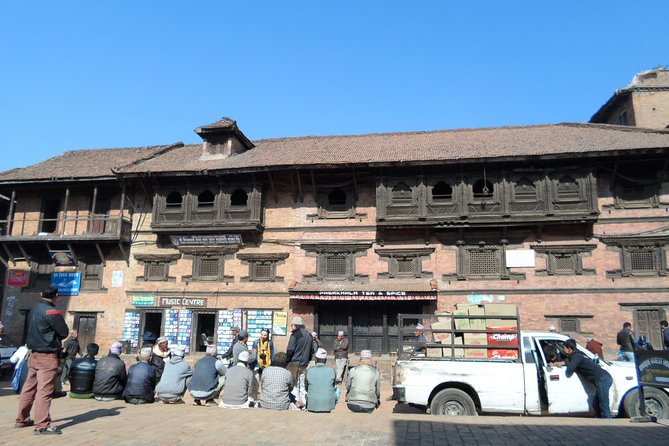
REVIEW · KATHMANDU UNESCO HERITAGE TOURS
Bhaktapur & Patan Durbar Square Day Tours
Three squares, one historic story. This day trip links Bhaktapur’s major town squares to Patan’s famous carved stonework and courtyards, with a local English speaking guide that helps you read what you’re seeing, not just walk past it. I especially like the chance to spot how people live right alongside the temples and palace spaces, and how the guide can add clear historical context as you go. One thing to plan for, monument entrance tickets and food and drinks are not included.
The day is built for comfort and sanity. You get a private air conditioned vehicle, pickup is offered, and the whole route is designed for a 6 to 8 hour window starting at 9:15 am. Since it is a private tour for your group only, you can ask questions without feeling rushed.
I also like the pacing ending at the Golden Temple area, tied to the 12th-century story of the site. If you want a single outing that mixes art, architecture, and everyday city life, this is a strong fit.
In This Review
- Key points you will care about
- How Bhaktapur and Patan make one smart cultural day
- Dattatraya Square and Taumadhi Square: your Bhaktapur orientation
- Bhaktapur Durbar Square: where the royal setting becomes real
- Patan Durbar Square: wood carving and courtyards you can actually feel
- Golden Temple (12th century): a calmer ending with context
- Price and value: what $50 gets you in real terms
- Timing, group size, and comfort on a 6 to 8 hour day
- Getting the most from your guide, including better photos
- What to bring and what to skip for a smoother day
- Who this Bhaktapur and Patan tour suits best
- Should you book this Bhaktapur and Patan Durbar Square day tour?
- FAQ
- What is the price per person for this tour?
- How long is the tour?
- What time does the tour start?
- Is pickup included?
- Is the tour private?
- What’s included in the tour price?
- Are monument entrance tickets included?
- Is food and drinks included?
- Do I get a mobile ticket?
- What is the cancellation policy?
Key points you will care about
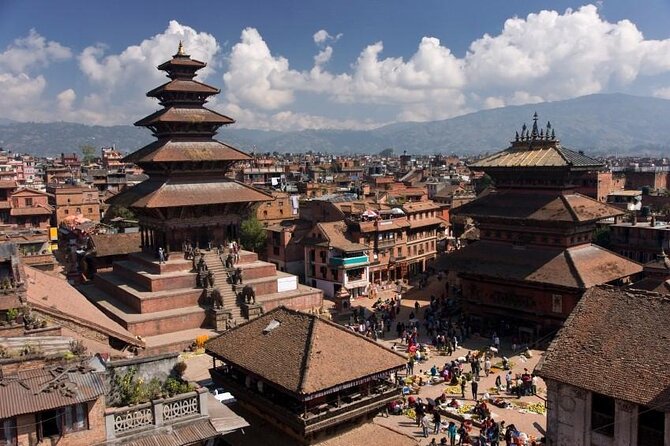
- Bhaktapur’s three main squares: Dattatraya Square, Taumadhi Square, and Durbar Square, all in one run
- Patan Durbar Square’s wood carving and old courtyards: the kind of detail you need time to notice
- A 12th-century Golden Temple stop: a meaningful finish that adds context to the morning
- A local English speaking guide: history and on-the-spot answers, including help with photos
- Private air conditioned vehicle plus pickup: comfort matters on a long but manageable day
- Mobile ticket: easy to manage on the day
Other seven site heritage runs
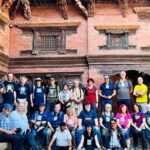
How Bhaktapur and Patan make one smart cultural day
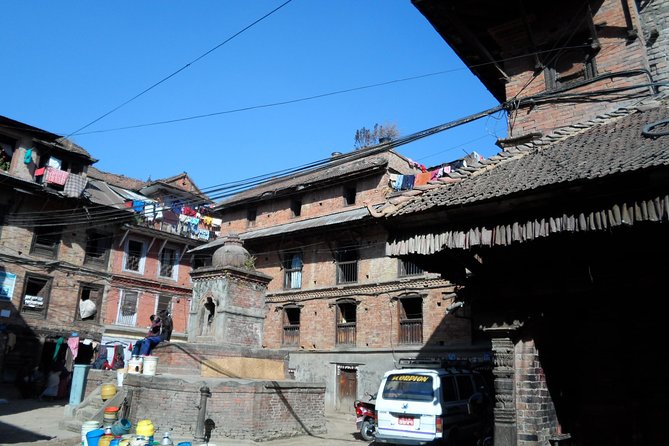
Bhaktapur and Patan feel related, but they do not repeat each other. In Bhaktapur, you read the city through squares tied to royal space and everyday life. In Patan, the focus shifts to craftsmanship and courtyards, with the temple world and artistic traditions taking more of the spotlight.
If you like architecture, this pairing is efficient. You see palace squares and monumental entrances in Bhaktapur, then you move into Patan where carved work and inner spaces do the talking. And because you are not stuck on a single site for hours, you keep your energy up, even if you are not traveling with a lot of deep research background.
There’s also a practical angle. The tour is scheduled as a single day, starting at 9:15 am and running about 6 to 8 hours. That length is long enough to feel like a real outing, but short enough that you still get back to Kathmandu without turning your whole trip into a slog.
Dattatraya Square and Taumadhi Square: your Bhaktapur orientation
Your Bhaktapur morning is organized around three squares, and the first two matter because they act like visual anchors. Dattatraya Square is a good place to start because you can get a sense of how the town’s religious and civic spaces connect. Taumadhi Square follows with another angle on the same idea, so you begin to notice patterns in layout and movement.
What I like about beginning with squares rather than random streets is simple. Squares give you a mental map fast. You can look outward, see where people gather, and spot temple forms that repeat in different corners of the city. With a local English speaking guide, you can connect the objects to the story, instead of relying on guesswork.
One practical benefit: squares usually give you better chances for steady footing and clear sightlines for photos. You might also find that these earlier stops help your guide learn how you like your pace, so the rest of the day feels smoother.
Bhaktapur Durbar Square: where the royal setting becomes real
Then comes Durbar Square, the big one in Bhaktapur. This is where the idea of kings living in the past stops being abstract. You see how the palace space functioned as a stage, and how the surrounding religious structures work as part of the same urban plan.
This is also the point in the day where your guide’s explanation can really pay off. Even if you already know the broad outline of Nepal’s historical kingdoms, a good guide can point out details that change how you look at the architecture. The goal is not memorizing facts. It’s understanding why these spaces were built like this and how people used them.
I recommend taking your time here if you enjoy architecture. Durbar Square is not just a place to pass through. It is a place to slow down enough to notice carved elements, the relationship between open space and entrances, and the way crowds move around key areas.
A drawback to keep in mind: Durbar Square is busy in most situations, and the day can run long. If you get tired of holding attention in crowded spaces, you may want to pace your photos, take breaks when you can, and keep your focus on the details your guide highlights.
Patan Durbar Square: wood carving and courtyards you can actually feel
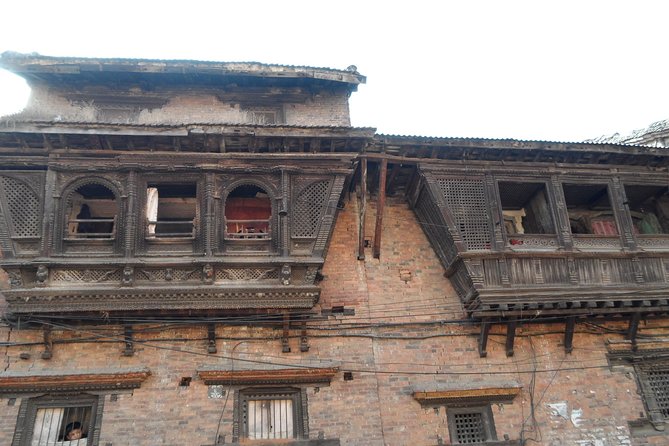
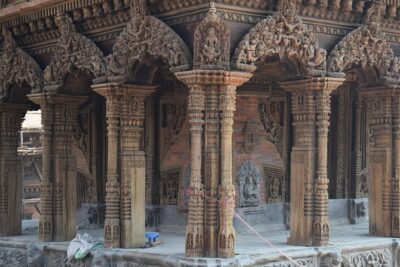
After Bhaktapur, the tour moves to Patan Durbar Square, which is known for wood carving and older courtyards. This shift is part of what makes the day satisfying. The carving work and inner courtyard feel bring you closer to the craftsmanship side of the story.
Patan’s courtyards tend to reward a slower look. Instead of only facing outward, you also look inward at how space is framed. You might find that your camera gets busy here, because details are everywhere and the light changes as you move from one doorway or approach to another.
What I like is that this stop does not feel like a single photo spot. It feels like a layout you explore, with the courtyards guiding your path. When the guide points out specific features, the whole area clicks into focus.
There is also mention of a richest monastery in Patan, which tells you the emphasis here is not just decorative. It’s tied to religious life and long-standing traditions. Even without a specific name given in the tour description, you can treat it as an indicator: expect meaningful temple structures and spaces that connect art to practice.
Old towns beyond Kathmandu, compared
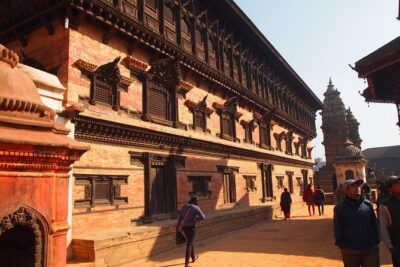
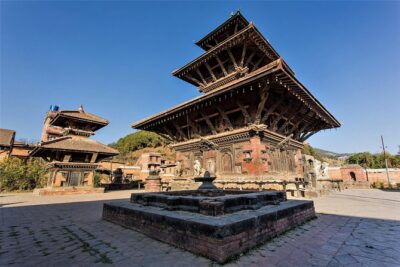
Golden Temple (12th century): a calmer ending with context
The tour continues to the Golden Temple area, described as connected to the 12th century. This works well as a finishing point because it turns your attention from palace-courtyard complexity to a more grounded spiritual setting.
A 12th-century anchor helps you frame what you have seen earlier. In the morning, you are learning how kings and city planning shaped monumental squares. Here, you connect that to the older timeline of sacred sites that shaped Patan and the wider valley.
Even if the day has been active, this stop can feel like a breather. You can take a few quiet minutes, watch how people move through the space, and let the earlier explanations settle.
Practical note: since monument entrance tickets are not included, you may need to handle access fees depending on what areas are open that day. Plan for that so the last stop does not turn into surprise budgeting.
Price and value: what $50 gets you in real terms
The price is $50 per person, and that sounds simple, but what matters is what’s included. You get a private air conditioned vehicle and a local English speaking tour guide. For a day that covers multiple heritage sites across Kathmandu Valley, that combination often turns out to be the real value.
Here is how I think about the cost. The vehicle handles the biggest time and energy drain: getting you between sites without negotiating transport hassles. The guide handles the second biggest value piece: translating the visual experience into meaning and answering questions while you are there, not later.
What is not included is equally important. Monument entrance tickets, tips, and food and drinks are extra. If you want lunch, snacks, or bottled water, budget for it ahead of time. If you also want maximum time inside sites with paid access, you should be ready to pay those tickets separately.
So, is it good value? For many people, yes, because the core experience is guided and transportation is handled. If you already have your own driver and you plan to self-guide with a phone app, the value drops. But if you want a coherent route and someone to read the city with you, it’s a fair deal.
Timing, group size, and comfort on a 6 to 8 hour day
The tour starts at 9:15 am. That is a helpful time because you get daylight and you can usually still feel energetic for the second half of the day. The total duration is about 6 to 8 hours, which is long enough to cover three Bhaktapur squares and Patan Durbar Square, plus the Golden Temple stop.
This matters because heritage sites can easily expand beyond the planned time if you keep adding extra stops. Here, the route is already set. You can focus on enjoying what’s on the schedule rather than trying to solve logistics mid-day.
Group size is another deciding factor. It is a private tour/activity, meaning only your group participates. You avoid the “watch everyone funnel through one spot” feeling that happens on larger group tours. It also makes it easier to move at a pace that suits your questions and your walking comfort.
Transport is handled with a private air conditioned vehicle, and pickup is offered. That combination can be a big deal in Nepal, where the day can turn hot or tiring depending on weather. If you are sensitive to heat, the AC ride can help you stay focused when you switch from road time to walking time.
Also, the meeting point is listed as near public transportation. That can matter if you prefer to arrive on your own and just join the group without waiting around too long.
Getting the most from your guide, including better photos
A recurring theme in the tour’s positive feedback is the guide experience. One guide name mentioned is Rajendra Manandhar. He is described as kind, patient, and strong on history, with the extra attention of taking pictures of you. You do not have to be a photography person to appreciate this. When someone frames shots for you, you actually get memories of the day, not just a blurry blur of stone.
Here is what you can do to make the most of that dynamic. Ask questions that go beyond the monument label. For example, you can ask what the space was used for, why the layout looks the way it does, or how people interacted with the area in earlier times.
Also, use the guide’s patience well. If you see a carved detail and you do not understand it, point at it. A good guide can usually connect the detail to a bigger theme quickly.
If your group includes people who get bored with long explanations, you can still ask for short answers and then return to observing. The point is not lectures. The point is making your walk more meaningful.
What to bring and what to skip for a smoother day
Because monument entrance tickets are not included, you should expect you may need to pay entry fees for some areas. The tour description does not give exact ticket costs, so I suggest you keep some extra cash or payment options ready.
Food and drinks are also not included. That means you should plan for a lunch stop or snacks based on how the day flows. If you wait until you are hungry, you lose time and patience. A simple approach works best: bring water if permitted, grab a snack when you can, and treat lunch as part of the rhythm.
Tips are not included too. You can handle this at the end of the day in whatever way you feel comfortable.
On the positive side, you do get a mobile ticket. That typically makes check-in smoother than hunting for paper vouchers. And because confirmation is received at booking time, you can organize your Kathmandu day without uncertainty.
Who this Bhaktapur and Patan tour suits best
This tour fits best if you want a guided day that covers multiple heritage areas without turning your trip into a puzzle. I think it’s a great choice for:
- People who want architectural and historical context, not just sightseeing
- Groups who prefer a private format for questions and pacing
- Visitors who like photos but do not want to struggle with timing and framing alone
- Anyone who enjoys seeing local life connected to monumental spaces
If you only want one or two major sites and you love fully self-guided travel, this might feel like too much in one day. But if you like variety, this route gives you an easy structure: squares in Bhaktapur, then Patan’s carved and courtyard-focused experience, then the Golden Temple ending.
Should you book this Bhaktapur and Patan Durbar Square day tour?
I’d book it if your priority is a focused, guided day across Bhaktapur and Patan with comfort and clear context. The combination of a private air conditioned vehicle, pickup, and a local English speaking guide is the backbone of the value. The route makes sense for first-timers because squares give quick orientation, Patan gives craftsmanship detail, and the Golden Temple finish adds a longer timeline.
Skip or consider alternatives if you hate paying extra for entrances and you also want food included. In that case, your budget will grow beyond the $50, since monument entrance tickets, tips, and food and drinks are not included.
One last practical tip: if you want the best chance of fitting the day into your schedule, note that this is often booked about 75 days in advance. Planning early usually makes the day run smoother.
FAQ
What is the price per person for this tour?
The price is $50.00 per person.
How long is the tour?
The duration is approximately 6 to 8 hours.
What time does the tour start?
The start time is 9:15 am.
Is pickup included?
Pickup is offered.
Is the tour private?
Yes. It is a private tour/activity, and only your group will participate.
What’s included in the tour price?
Included are a private air conditioned vehicle and a local English speaking tour guide.
Are monument entrance tickets included?
No. Monument entrance tickets are not included.
Is food and drinks included?
No. Food and drinks are not included.
Do I get a mobile ticket?
Yes. The tour includes a mobile ticket.
What is the cancellation policy?
You can cancel for free up to 24 hours in advance for a full refund. If you cancel less than 24 hours before the experience’s start time, the amount you paid will not be refunded.
The Rest of Our Kathmandu Write Ups

Bhaktapur and Patan, Brick by Brick


Seven Sites, Other Routes
Everything else we have reviewed around Kathmandu
- 12 Days Everest Base Camp Trekking
★ 5.0 · 3 reviews - 1 Night 2 Days Chitwan Jungle Safari Tour from Pokhara or Kathmandu
★ 3.0 · 3 reviews - Thamel Rickshaw tour
★ 4.7 · 3 reviews - Kathmandu: Momo Making Class with a Local Chef
★ 5.0 · 3 reviews - Kathmandu: Full-Day Yoga, Body Massage and Pedicure Package
★ 5.0 · 3 reviews - From Kathmandu / Pokhara / Chitwan: River Rafting – 1 Day
★ 4.6 · 3 reviews
Kathmandu UNESCO Heritage Tours worth a second look.
 ★ 5.0Full Day 7 UNESCO Tour with Lunch – Private/GroupFrom $10415 reviews
 ★ 5.0Full Day Top 4 UNESCO Tour with Lunch – Private/GroupFrom $10269 reviews
 ★ 5.0UNESCO Seven World Heritage Tour in KathmanduFrom $180253 reviews
★ 4.9Full-Day 7 UNESCO Tour with Lunch – Private/GroupFrom $5247 reviews
★ 5.0UNESCO Seven World Heritage Tour in KathmanduFrom $180253 reviews
★ 4.9Full-Day 7 UNESCO Tour with Lunch – Private/GroupFrom $5247 reviews
 ★ 4.97 UNESCO Sites Tour in 1 Day (Private Tour)From $4204 reviews
 ★ 4.9Top 4 UNESCO Tour with Lunch – Private/GroupFrom $5181 reviews
 ★ 5.0Kathmandu Private Sightseeing Tour | UNESCO World Heritage SitesFrom $35109 reviews
★ 5.0Full Day 7 UNESCO Tour with Lunch – Private/GroupFrom $5101 reviews
★ 5.0Kathmandu Private Sightseeing Tour | UNESCO World Heritage SitesFrom $35109 reviews
★ 5.0Full Day 7 UNESCO Tour with Lunch – Private/GroupFrom $5101 reviews
Lists this tour sits in