
REVIEW · POKHARA CITY TOURS & LAKESIDE SIGHTS
Pokhara in 5 Hours: Lake, Museum, Cave, Falls & Pagoda Hill
Pokhara moves fast, and this half-day route makes the most of it. You’ll roll through iconic sights in a tight loop, starting at Fewa Lake for a boat ride and Annapurna views, then sweeping on to the museum, falls, a cave, and the Peace Pagoda on the hill. The trip feels practical because you get your own driver cum guide, and guides like Bidur and Pujan were called out for being smooth, punctual, and genuinely helpful.
Two parts I really like: the mix of viewpoints and real places with meaning, and the way the pace stays manageable for a 4 to 5 hour day. The International Mountain Museum gives you context for why mountaineering matters in Nepal, and the Peace Pagoda area rewards your effort with big panoramic views over the Annapurna Range. One drawback to plan for: you should expect stairs and a bit of walking, especially at the Peace Temple, plus the cave area may feel slippery or uneven.
In This Review
- Key Highlights You’ll Actually Feel on the Day
- A Fast Pokhara Sampler That Still Feels Personal
- Fewa Lake and Barahi Temple: Where the Day Looks Like a Postcard
- International Mountain Museum: Big Views With Context
- Devi’s Fall: The Water That Disappears (and Why It Hooks You)
- Gupteshwor Mahadev Cave: Where Water Meets Myth
- World Peace Pagoda and Shanti Stupa Views: The Payoff on the Hill
- Price and Value: What’s Included, What’s Extra, and Why $40 Can Make Sense
- Timing, Timing, Timing: How to Survive a 4 to 5 Hour Loop
- Who This Tour Suits Best (and Who Might Want a Different Plan)
- Should You Book This 5-Hour Pokhara Tour?
- FAQ
- How long is the Pokhara in 5 Hours tour?
- Is pickup included?
- Is this tour private?
- What is included in the price?
- Are entry tickets included?
- What are the main stops on the tour?
- Is there a boat ride on the lake?
- What is the cancellation policy?
- Is there a mobile ticket?
- Is the Peace Temple area a lot of walking or stairs?
Key Highlights You’ll Actually Feel on the Day
- Private, driver-guided route: only your group, with pickup offered, so you’re not waiting around.
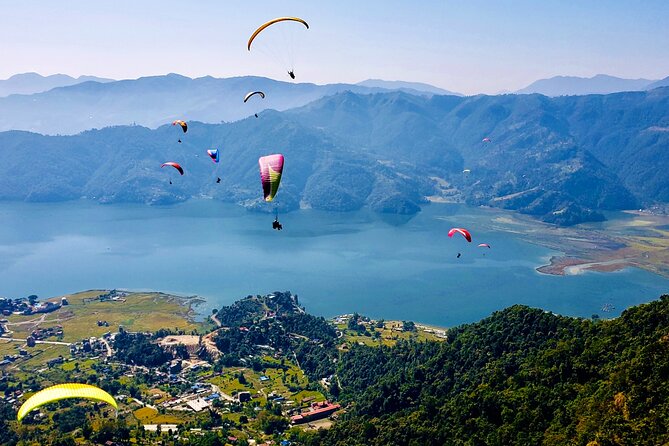
- Fewa Lake boat ride plus Barahi Temple: start with Nepal’s postcard lake and a small island Hindu temple.
- International Mountain Museum terrace views: learn mountaineering history while you enjoy mountain sightlines.
- Devi’s Fall to Gupteshwor Cave water connection: see how local water systems create a weird and wonderful scene.
- Peace Pagoda hilltop views, expect stairs: the payoff is worth it, but plan for steps.
Other slow days along the Phewa shore
A Fast Pokhara Sampler That Still Feels Personal
If you only have a morning or afternoon in Pokhara, this tour works because it’s built like a smart checklist, not a random hop. In about 4 to 5 hours, you cover five major stops tied together by a logical route, and you’re in a comfortable vehicle the whole way. There’s bottled water included, and you’re not wrestling with tickets and directions on your own.
What makes it feel personal is the setup. This is a private tour/activity, so you’re not merging into a big bus crowd. You’ll have a friendly driver cum guide who can keep things moving and adjust slightly when needed, like when a detour to the Helping Hands shop came up and added a meaningful local stop.
The itinerary also makes sense thematically. You start with water and faith (Fewa Lake and Barahi Temple), then you move into mountain culture (International Mountain Museum), then you shift to water drama (Devi’s Fall and Gupteshwor Cave). You end with a calm, big-view finish on the hill (Peace Pagoda).
Fewa Lake and Barahi Temple: Where the Day Looks Like a Postcard
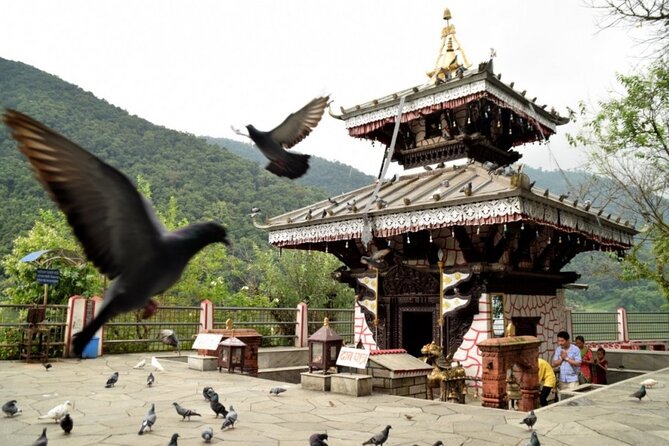
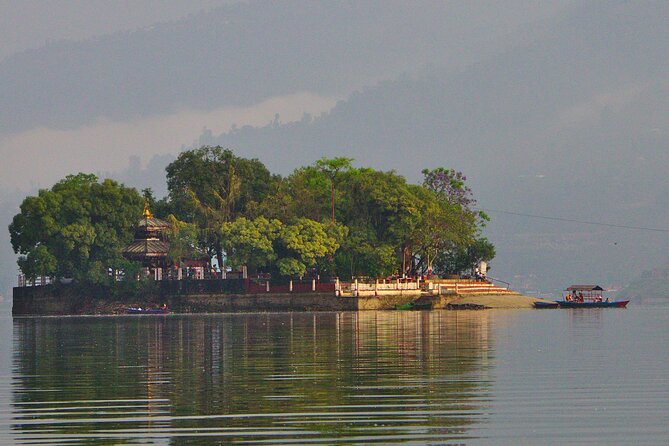
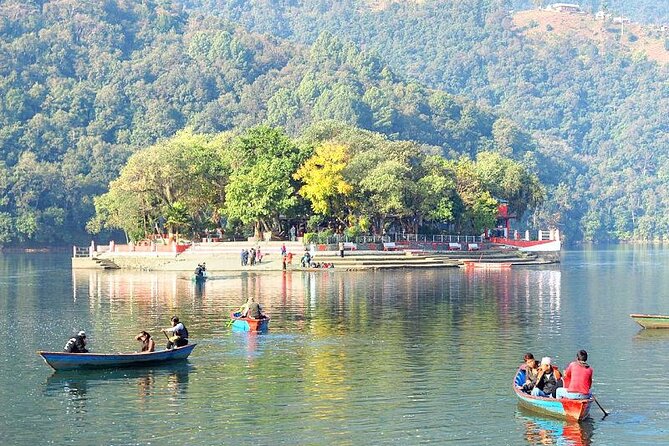
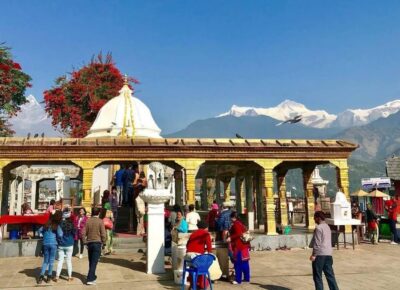
You start at Barahi Temple on or near the lake, and it’s one of Pokhara’s most important religious sites. It’s dedicated to Durga and sits on a small island in the middle of the lake, which is why it feels so tied to the water. Your stop is about 45 minutes, and admission here is free.
Then you head to the main lake experience, a boat ride on Fewa Lake. This is the part that sets the mood. From the water, the Annapurna mountain range tends to frame the whole scene, and you get a slower rhythm than the road gives you. Even if the weather is changeable, the lake still delivers that Pokhara calm.
Practical note: you’ll likely spend time looking up at the mountains and also scanning the shoreline for photo angles. If you’re the type who loves details, you’ll have fun noticing how the temple and boats fit into the lake’s daily life. If you’re mobility-limited, plan for some steps and uneven surfaces around the temple area, since it’s an island setting.
International Mountain Museum: Big Views With Context
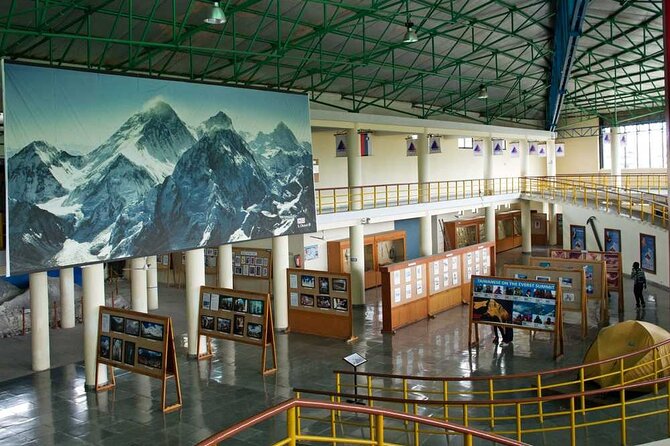
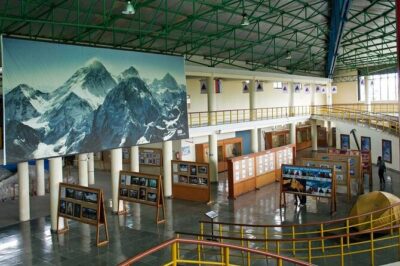
After the lake, the trip shifts into learning mode at the International Mountain Museum. This stop runs about 1 hour, and admission is not included in the base price.
What you get here is more than a room full of photos. The museum focuses on the history and culture of mountaineering in Nepal. You can walk through exhibits at your own pace, then head up to the terrace area where the mountains show themselves again in a new way. One of the biggest values here is that it helps you understand what you’re seeing elsewhere in Nepal. Instead of treating the Annapurnas as just a photo backdrop, you start to see them as part of a mountain culture and a climbing story.
In real terms, this museum stop also gives your legs a break. It’s not just standing around outdoors. You get walking paths and exhibit time, which helps when you’re stacking multiple outdoor sights in one half-day.
If you care about mountaineering history, this is one of the best uses of limited time in Pokhara. If you don’t, you can still enjoy it as a scenic terrace stop where you get those mountain sightlines with less effort than hiking.
Devi’s Fall: The Water That Disappears (and Why It Hooks You)
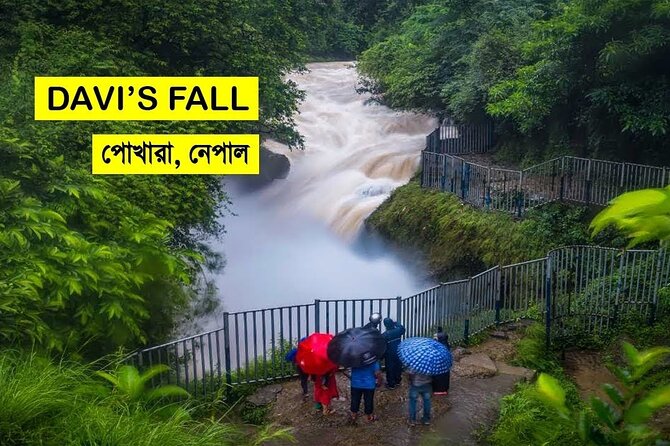
Next is Devi’s Fall, a waterfall in Pokhara that forms a tunnel at the bottom. The water does something you don’t usually see in a simple waterfall, it sinks into a tunnel about 500 feet long, running roughly 100 feet below ground level. That strange design is part of what makes the place memorable.
Your time here is about 45 minutes, and admission is not included. You’ll have enough time to watch the water, take photos, and get oriented without feeling rushed. This is also a good stop if you like stories behind places, because Devi’s Fall feels like the landscape is doing something slightly mischievous.
One consideration: waterfalls are weather-dependent. In dry periods, you might find the water volume less dramatic than you expected. In that case, the tunnel and the rock structure still make it worth seeing, but set expectations for how intense the water show will be that day.
Before the deposit goes down: more Pokhara to weigh
Gupteshwor Mahadev Cave: Where Water Meets Myth
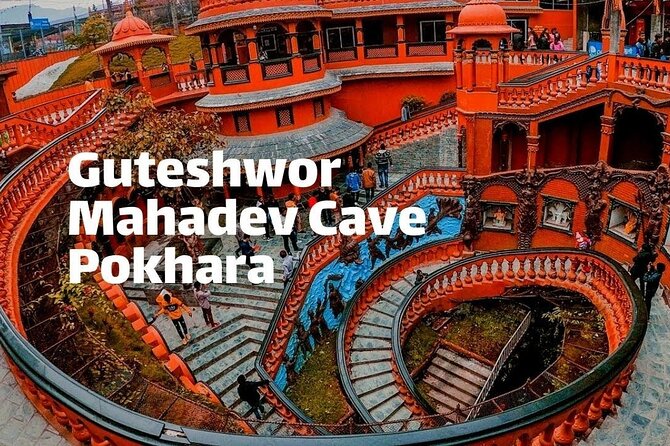
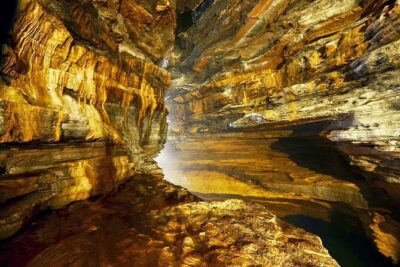
Right after Devi’s Fall, you’ll move to Gupteshwor Mahadev Cave (also called Gupteshwor Gupha). This cave is located opposite to Davis Fall, and the water from Davis fall passes through this cave.
Your visit is about 45 minutes, and admission is not included. The vibe here is different from the waterfall. Instead of focusing on what the water looks like from the top, you’re exploring a more mysterious, enclosed space. The cave is associated with Mahadev, so even though it’s a natural feature, it also has a spiritual atmosphere.
Practical tip: bring shoes with grip. Even if the area looks calm, cave zones can be slick, and surfaces can be uneven. Keep your camera ready, but also keep one eye on where you’re stepping, because you’re combining sightseeing with careful walking.
This stop is especially worth it because it ties the route together. You’re not just collecting five unrelated attractions. You’re watching one water story connect across two locations.
World Peace Pagoda and Shanti Stupa Views: The Payoff on the Hill
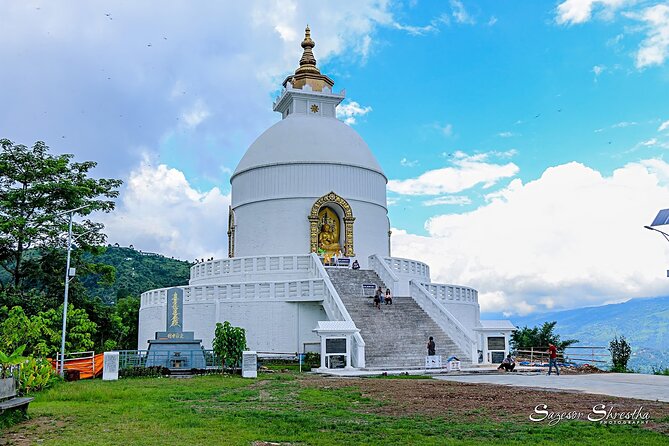
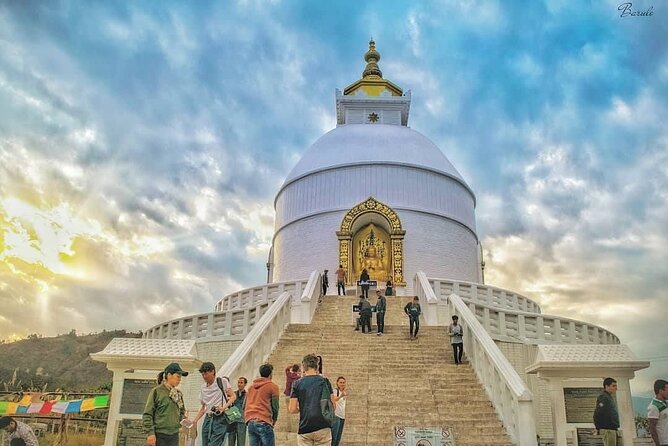
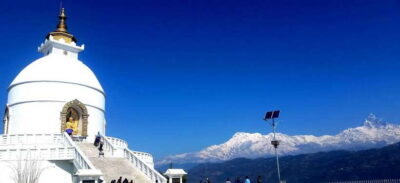
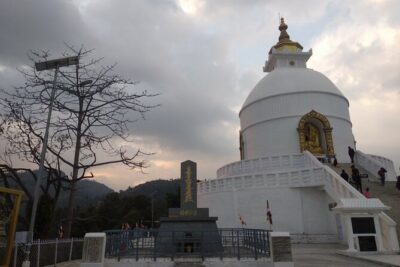
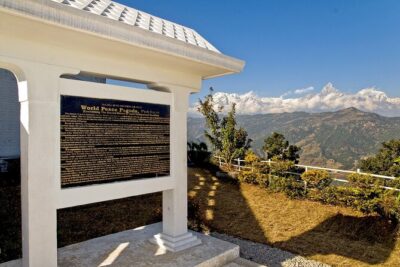
The final main stop is the World Peace Pagoda, also known as the Peace Temple or Pokhara Shanti Stupa area. It sits on a hilltop location called Anadu Hill, and the monument was built to promote world peace. Your time here is about 45 minutes, and admission is free.
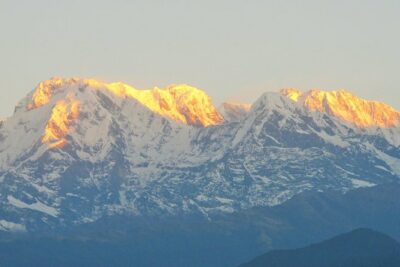
Here’s the big reason this stop belongs at the end. The views are the payoff. From the hill, you get panoramic sightlines over the Annapurna Range. You’re also likely to feel that shift from sightseeing mode into slower, quieter appreciation. People tend to sit, look, and breathe a little after the cave and falls.
One thing to plan for: expect stairs. A guest specifically mentioned struggling with the 200 steps to reach the Peace Temple. If stairs are a challenge for you, bring patience for the climb or ask your driver for the most comfortable pace. This is the one part of the tour that can feel physically demanding compared with the rest of the route.
Price and Value: What’s Included, What’s Extra, and Why $40 Can Make Sense
At $40 per person, this tour is positioned as an efficient “see a lot” half-day. What’s included: bottled water, an air-conditioned vehicle, private transportation, and a friendly driver cum guide. You also get pickup offered, a mobile ticket, and private means only your group participates.
What’s not included: entry tickets and personal expenses.
Here’s how to think about the value. If you price out entries individually, the tour can still be good money because your major logistics are handled for you: transport, timing, and the guided flow between sites. Also, at least two stops are free in the provided details: Barahi Temple and the Peace Temple area both list free admission. That helps offset some of the paid portions.
The International Mountain Museum and the cave and falls entries are listed as not included, so you should budget for those separately. But even with extra entry costs, having a private driver keep you on track is often worth it when your time in Pokhara is limited.
If you’re trying to travel on a tight budget and you’re confident navigating alone, you might do parts cheaper. But if you want less stress and fewer headaches, this tour’s included transport and local guidance make it a solid choice.
Timing, Timing, Timing: How to Survive a 4 to 5 Hour Loop
A 4 to 5 hour tour sounds short until you remember Pokhara roads and the walking time at multiple stops. This schedule works because each stop has a clear time block: roughly 45 minutes at Barahi Temple, Devi’s Fall, and Gupteshwor Cave, plus 1 hour at the museum, plus 45 minutes at the Peace Temple.
My advice: treat this as a “great overview” day, not a slow wander. You’ll see a lot, but you won’t have hours at each place. If a site is your top priority, aim to arrive ready to focus and take photos early in your visit.
You’ll also want to be practical about your comfort items. Wear shoes you can walk in on uneven surfaces and bring a light layer, because Pokhara weather can shift. The tour includes bottled water, but it doesn’t replace good hydration habits if you’re out in sun or humidity.
Who This Tour Suits Best (and Who Might Want a Different Plan)
This tour fits best if you want a first-timer’s outline of Pokhara without spending the day figuring it out. It’s also a good fit when you like a blend of nature, culture, and viewpoint stops in one compact schedule.
If you’re traveling with limited time, this gives you a lot of variety: a lake boat ride, a mountaineering museum, two water-related sights with a connection, and a hilltop peace monument. It’s also a nice option if you want a private setup so you can set your own pace within the time limits.
The main mismatch is physical comfort around stairs at the Peace Temple. Since the route ends at a hilltop and includes stairs, it may not feel great for everyone. If stairs or uneven ground are major issues for you, you might choose a gentler route or plan a different order that reduces climbing.
Should You Book This 5-Hour Pokhara Tour?
Yes, I’d book it if you want a tight, high-value Pokhara overview with a private driver, built-in pacing, and a clear payoff at the Peace Pagoda views. The $40 price is reasonable because your transport and guidance are handled, and you get free admission at two key stops based on the listed details.
Hold off or adjust expectations if you have trouble with stairs, because the Peace Temple climb is the tour’s physical challenge. Also budget for entry tickets at places marked as not included, since that’s where extra costs can land.
FAQ
How long is the Pokhara in 5 Hours tour?
The duration is about 4 to 5 hours.
Is pickup included?
Pickup is offered.
Is this tour private?
Yes. It’s a private tour/activity, and only your group will participate.
What is included in the price?
The tour includes bottled water, an air-conditioned vehicle, private transportation, and a friendly driver cum guide.
Are entry tickets included?
Entry tickets are not included. Some stops list free admission in the details, but entry tickets are generally not covered.
What are the main stops on the tour?
The route includes Barahi Temple, International Mountain Museum, Devi’s Fall, Gupteshwor Mahadev Cave, and the Peace Temple (World Peace Pagoda area).
Is there a boat ride on the lake?
Yes. The tour includes a boat ride at Fewa Lake.
What is the cancellation policy?
You can cancel for free up to 24 hours in advance for a full refund. If you cancel less than 24 hours before the start time, the amount paid is not refunded.
Is there a mobile ticket?
Yes, a mobile ticket is included.
Is the Peace Temple area a lot of walking or stairs?
You should expect stairs and some climbing to reach the Peace Temple area. One guest noted struggling with about 200 steps. Most travelers can participate, but plan for the climb.
Other Museums on the Pokhara list
The Rest of Our Pokhara Write Ups


Pokhara, Lakeside and Above
Everything else we have reviewed around Pokhara
- Pokhara: Cable Car Tour – Bird Eye View of Mountain & Lake
★ 4.4 · 3 reviews - Jomsom Muktinath Tour by 4WD SUV 2 Days
★ 5.0 · 3 reviews - Ghorepani Poonhill Private Trek – 2 nights / 3 days
★ 4.5 · 3 reviews - Pokhara: 30-Minute Paragliding Adventure with pick up/drop off
★ 4.5 · 3 reviews - Pokhara: 7-Day Annapurna Base Camp Trek via Ghandruk
★ 4.3 · 3 reviews - Pokhara Group Joining Sarangkot Sunrise Himalayas Tour
★ 5.0 · 3 reviews
Pokhara City Tours & Lakeside Sights worth a second look.
 ★ 4.1Full-Day Sharing Bus Tour on 7 Iconic DestinationFrom $12179 reviews
 ★ 4.8Full-Day Private Tour on 7 Iconic DestinationFrom $53108 reviews
 ★ 5.0The Best of Pokhara: Full-Day Private Tour with Sarangkot SunriseFrom $6866 reviews
 ★ 5.0Guided Tour to explore the entire Pokhara CityFrom $7051 reviews
 ★ 4.1City Sightseeing Group Bus TourFrom $837 reviews
 ★ 4.5Private Half Day Tour Highlights of Pokhara by CarFrom $8036 reviews
 ★ 5.0Pokhara Valley Mountain Bike Adventure Private TourFrom $18530 reviews
 ★ 5.0Half-Day Private Pokhara TourFrom $6727 reviews
Lists this tour sits in