
REVIEW · POKHARA CITY TOURS & LAKESIDE SIGHTS
The Best of Pokhara: Full-Day Private Tour with Sarangkot Sunrise
One sunrise can set the whole tone. This full-day private route strings together Sarangkot sunrise views, major Pokhara sights like the bat caves, and a calm finish at Phewa Lake, all with hotel pickup and your own vehicle. I also like how the day is built for pacing, so you can linger at the stops that hit you, instead of being yanked along. The trade-off is real, though: sunrise depends on weather, and entry fees for the caves and some attractions are not included.
You’re also not just ticking boxes. With an English-speaking guide, you get context for what you’re seeing, from cave life to temple etiquette, and you’ll have a driver who gets you in and out without stress. Just plan for the fact that some caves can be dark, damp, and physically awkward, and a few places may feel less impressive if you were expecting big wow-factor scenery at every stop.
In This Review
- Key highlights before you go
- Sarangkot sunrise: the reason this day starts so early
- Your private car and hotel pickup: why it feels easier than hopping around
- Stop-by-stop: what you’ll see and what to watch for
- Sarangkot: morning views with a purpose
- Mahendra Cave: limestone chambers and cave-walk stamina
- Chamere Gufa: thousands of horseshoe bats
- Seti River Gorge: quick look, different vibe
- Bindhyabasini Temple: the oldest Pokhara temple stop
- Gupteswar Gupha: a cave connection to the Falls area
- Devi’s Falls: tunnel water and the classic Pokhara story
- Phewa Tal: your calm reset after caves and temples
- Price and value: what you’re paying for, and what you must budget
- Weather and timing: how to maximize your odds at Sarangkot
- When things feel off: common friction points to watch for
- Some major sights may not be part of this route
- Caves can be physically tricky
- Who should book this Pokhara private sunrise day
- Should you book the Best of Pokhara private tour with Sarangkot sunrise?
- FAQ
- Is hotel pickup and drop-off included?
- How long is the tour?
- What is included in the price?
- Are entry fees included?
- Is this a private tour?
- What are the cancellation rules?
Key highlights before you go
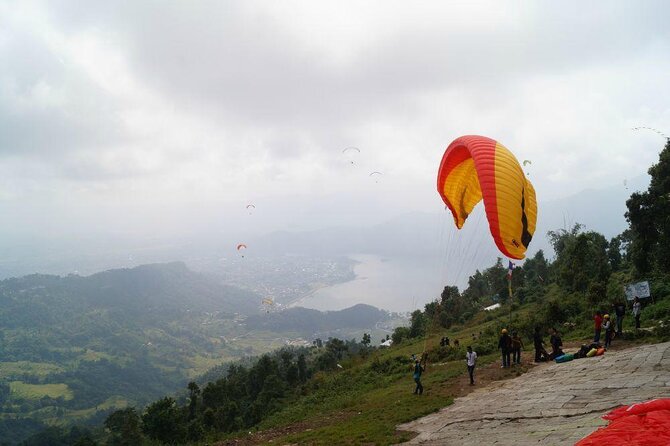
- Sarangkot early start to chase mountain views at the best time of day
- Private pickup and drop-off so the schedule fits your hotel location
- Bat caves on a guided route where you’ll see thousands of horseshoe bats
- Temple stops with local etiquette including a chance to learn the right way to enter
- A calm Phewa Lake finish after a busy morning and midday cave run
- Flexible pacing with time built in for breaks and photo stops
Other slow days along the Phewa shore
Sarangkot sunrise: the reason this day starts so early
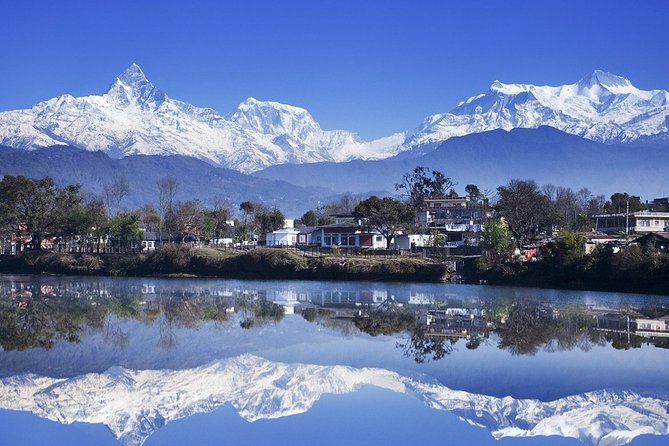
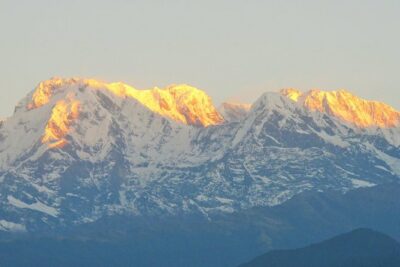
If you do only one full-day tour in Pokhara, this is one of the smarter formats. You’re not stuck doing every stop in the same photo-dump style. Instead, the day begins at Sarangkot with a dedicated sunrise slot, then transitions into caves, temples, and waterfalls. That first leg matters because clear early light makes the Himalaya look dramatic, and when visibility is good, you’ll get that classic Pokhara “mountains in your face” moment.
You should also know what people love most here is not only the view, it’s the guide’s help. In past groups, guides like Bidur have pointed out which peaks you’re actually looking at and even helped people find the best place to stand for the shots. Another guide, Samundra, has been praised for being especially attentive and making the sunrise feel organized instead of rushed.
The drawback, and you can’t sugarcoat it, is fog and cloud cover. Some days are just not view-friendly. The tour still has value on those mornings because you’ll get a guided experience and cultural stops after, but if your main goal is to see crisp peaks, you’re gambling with Mother Nature.
Your private car and hotel pickup: why it feels easier than hopping around
This is a private tour, which changes everything about how the day feels. You get hotel pickup and drop-off using an air-conditioned vehicle, plus bottled water. That matters in Pokhara, where waiting around or figuring out transport can eat half your daylight.
The tour is also designed around practical time use. You’ll start early for Sarangkot, then come back for a breakfast break before the afternoon sightseeing run. That split rhythm is a quiet win: you get a real meal, not just a snack you choke down while walking.
One more detail: this tour uses an English-speaking guide. That doesn’t automatically mean you’ll get deep explanations at every second, but it does mean you can ask questions. Many visitors do, especially about temples and Nepalese daily life.
If you’re the type who likes your day to stay smooth, your odds are good here. On multiple occasions, drivers were described as punctual and friendly, and the cars were comfortable, including examples of clean, newer vehicles.
Stop-by-stop: what you’ll see and what to watch for
This itinerary packs in a lot. The “value” part is the variety, and the “beware” part is that you will move. The good news is that each stop has a distinct character, so it doesn’t feel like you’re repeating the same thing.
Sarangkot: morning views with a purpose
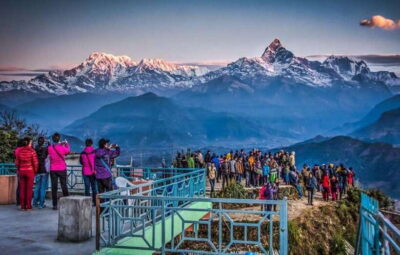
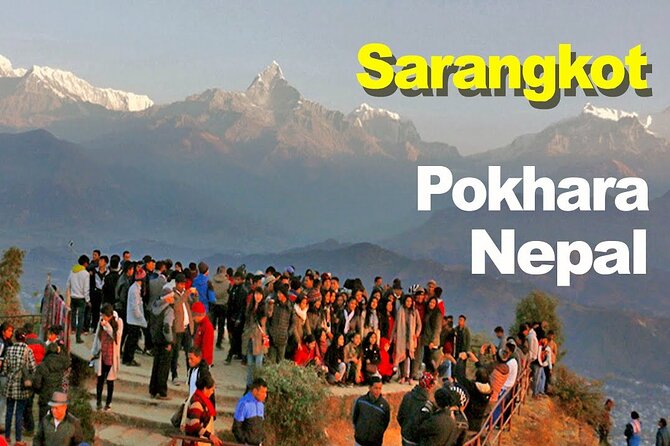
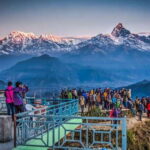
You get about an hour here, and the admission ticket is included. Sarangkot is popular for sunrise because it gives you an elevated vantage over the Pokhara valley. When the sky is cooperative, you’ll see the mountain silhouettes sharpen as the light improves.
Practical tip: dress for cool air, even if Pokhara daylight feels warm. Sunrise temps can surprise you, and you’ll be standing still long enough for it to matter.
Other early climbs above Phewa
Mahendra Cave: limestone chambers and cave-walk stamina
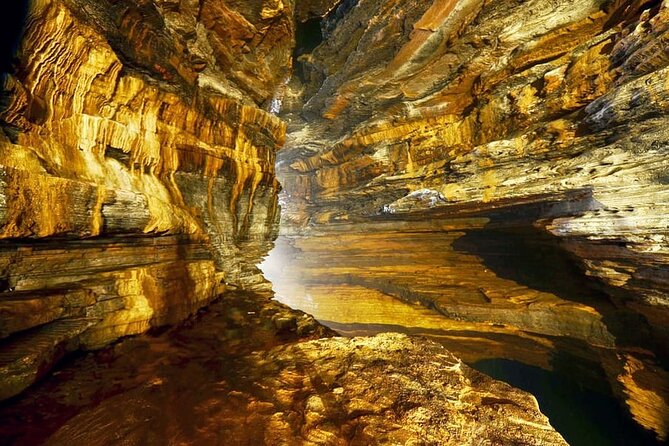
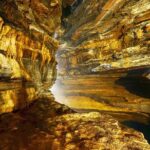
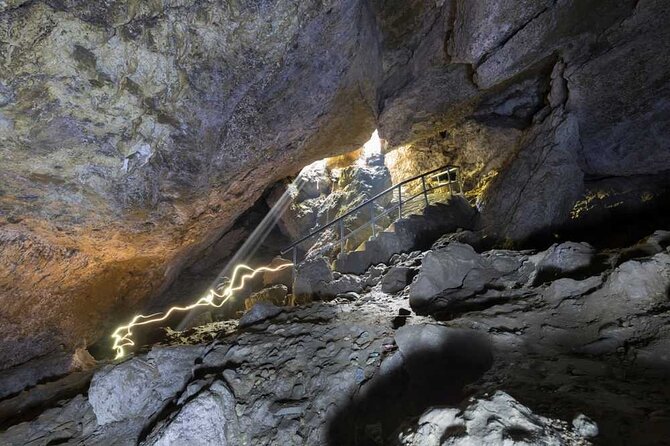
Next comes Mahendra Cave for about 30 minutes. The cave itself is a large limestone system, and it’s known for features like stalagmites and stalactites. Admission is not included, so you’ll want cash or the payment method you’re told you can use.
What to expect: damp stone, uneven surfaces, and places where you might want a steady pace. If you don’t love tight or dark spaces, this is the part to take calmly.
Chamere Gufa: thousands of horseshoe bats
Chamere Gufa is one of the big crowd-pleasers because it’s not a generic cave. You’re there for wildlife, specifically thousands of horseshoe bats clinging to the ceiling in a damp chamber.
If you’re there at the right time, the whole place can feel alive with small movements and chirps. The admission ticket is not included here either.
Practical tip: wear footwear with grip. The ground can be slick, and you’ll want to feel secure.
Seti River Gorge: quick look, different vibe
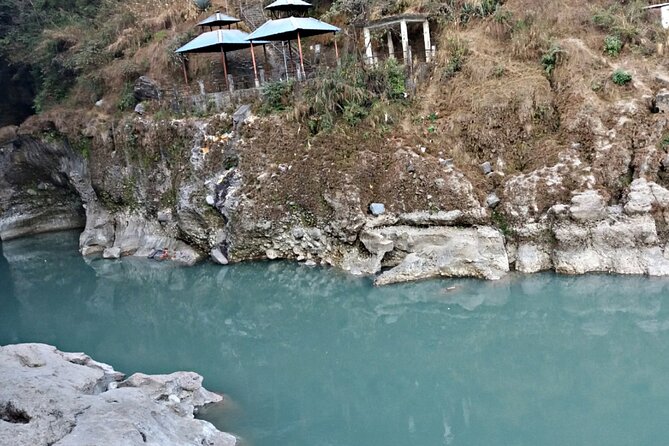
Seti River Gorge is a shorter stop at around 15 minutes. The Seti River runs from higher ground and flows down into remote valleys. This is more about the idea of the gorge and the river route than about spending a long time there.
This is also one of the stops where opinions can split. Some people love it for the remoteness and the river story. Others feel time spent here could be used on stronger attractions. If you’re the second type, balance that by knowing the morning caves and afternoon temple visits tend to carry more “wow” for many.
Bindhyabasini Temple: the oldest Pokhara temple stop
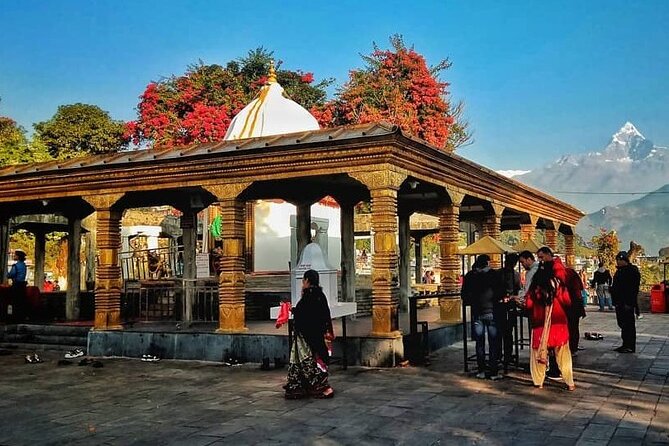
Next up is Bindhya Basini Temple, also written Bindhyabasini Temple, for about 45 minutes. This one is free to enter.
This is one of the more meaningful cultural stops on the day because it’s tied to local devotion and history. It draws locals regularly, so you’ll get a more everyday feel than some purely tourist-oriented places.
Practical etiquette you’ll appreciate: you’ll likely get guidance on how to enter and behave respectfully. In past experiences with guides like Sadichchha, people were taught the correct way to respond and even received a tika from a priest. Even if it’s not that specific moment for you, the “how to do temple visits right” part is a real value.
Gupteswar Gupha: a cave connection to the Falls area
Gupteswar Gupha (Gupteshwor Mahadev Cave) is another limestone cave stop, about 30 minutes. It’s associated with the water system near Davis Fall, and the tour positions it as a key cave experience.
Admission is not included. Expect another round of damp stone and close passageways.
If you had trouble in Mahendra Cave, this could also be challenging. The best approach is to tell your guide if you want to go slower or avoid the most physically demanding parts.
Devi’s Falls: tunnel water and the classic Pokhara story
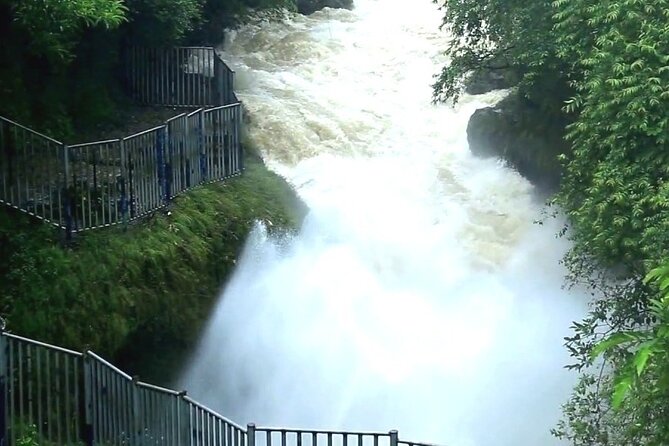
Devi’s Falls is about 30 minutes and is one of Pokhara’s most photographed waterfalls. It’s known for how the water forms a tunnel after reaching the bottom and runs below ground level.
Admission is not included. If you’re expecting a huge waterfall curtain, you might find it more interesting for the story and engineering-like water flow than for sheer volume.
Again, this is where expectations matter. Some visitors love the uniqueness of it. Others feel it’s not worth the time compared to longer scenery stops. The good part is that the rest of your day includes caves and temples that usually deliver more variety.
Phewa Tal: your calm reset after caves and temples
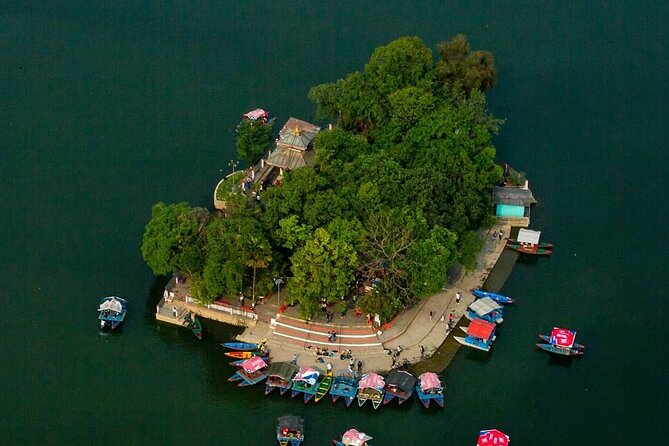
The last stop is Phewa Tal, the freshwater lake in the Pokhara Valley. It’s about 30 minutes and is free to enter.
This is a useful ending for two reasons. First, it gives you a breather after darker cave interiors. Second, it’s a chance to absorb Pokhara’s softer side, where the city feels slower and the mountains (when visible) reflect off the water.
What you should do depends on your style and the weather. If it’s clear, spend your time looking for the best angle for photos, and don’t rush. If it’s overcast, focus on the lake atmosphere and the village rhythm around it. If you want a boat ride, treat it as a separate add-on, because the information you get for this tour does not include any specific lake ride.
Price and value: what you’re paying for, and what you must budget
The price is $68 per person, and it’s a private day with an air-conditioned vehicle, bottled water, pickup and drop-off, and an English-speaking guide. That setup is often better value than trying to hire a car and guide separately because you get coordination and timing built in.
Here’s the part you should budget for: entry fees are not included. That includes cave admissions and paid attractions on the route. If you’re traveling with tight spending limits, add those fees into your mental math now, not after you arrive.
The other value question is execution. In the best-case scenario, you get an unhurried guide who answers questions, helps with photos, and keeps the day smooth. In worse scenarios, the day can feel like a driver drops you off and you do more on your own. The pattern from feedback is that the sunrise and guide quality are what most strongly determine whether people feel “this was worth it.”
So I’d treat the price as good for a one-day highlights plan, but still a “value hinges on guide and weather” kind of purchase.
Weather and timing: how to maximize your odds at Sarangkot
Because your first big moment is sunrise, your planning matters.
- If the forecast or sky looks thick with cloud, don’t cancel automatically. You might still get some visibility, and the rest of the day is not empty.
- Wear layers. Cool air at sunrise plus warm sun later is common enough to plan for.
- Bring patience for a packed day. Even when the route is efficient, you’ll still be moving.
If you really care about mountain photos, ask your guide where to stand and how long they recommend you wait before moving on. Guides who have done this repeatedly tend to know the small details that make pictures better.
When things feel off: common friction points to watch for
Even though most experiences are positive, there are a few recurring pitfalls to keep in mind.
Some major sights may not be part of this route
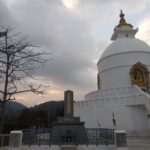
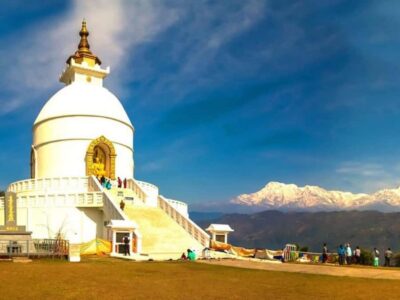
If you were hoping for stops like Shanti Stupa or the World Peace Pagoda, note that they are not listed as part of this itinerary. One earlier experience described a request to visit the pagoda and an extra charge possibility. Translation: don’t assume you can swap stops freely for a major addition without costs.
Caves can be physically tricky
Some cave stops involve damp floors and dark areas. If you have mobility issues or you’re uncomfortable with tight, slippery conditions, this is where your day can feel harder than you expect.
Your best move: tell your guide how you want to handle pacing at each cave stop. In past experiences, guides were willing to adapt to individual comfort levels, but you should still expect the physical environment of caves to be what it is.
Who should book this Pokhara private sunrise day
This tour is a strong fit if you:
- Have one day in Pokhara and want a tight highlight mix
- Like sunrise experiences and don’t mind an early start
- Want the convenience of private hotel pickup and AC transport
- Enjoy caves, temples, and animal-life moments like horseshoe bats
It might not be ideal if you:
- Want big waterfall time and long nature walks more than caves
- Need a very flexible itinerary with major optional add-ons
- Have mobility concerns that make dark, damp cave areas a struggle
- Book only for crystal-clear mountain views, since weather can mute the peaks
Should you book the Best of Pokhara private tour with Sarangkot sunrise?
I think this is a good booking for most first-time Pokhara visitors who want structure. You get the early payoff at Sarangkot, then a full day that covers the kinds of stops people actually talk about in Pokhara: bat caves, limestone caves, a classic temple, Devi’s Falls, and a lake finish.
Book it if you’re excited by variety and you like having a guide handle the timing. Consider a different approach if your top priority is one specific attraction not on this route, or if you strongly dislike caves. Either way, go in knowing the day is weather-dependent at sunrise and budget separately for entry fees at the paid stops.
FAQ
Is hotel pickup and drop-off included?
Yes. Pickup and drop-off from your hotel in Pokhara are included, and the pickup time depends on the season.
How long is the tour?
The tour is about 7 hours in total.
What is included in the price?
Included items are bottled water, an air-conditioned vehicle, private transportation, and an English-speaking tour guide.
Are entry fees included?
No. Entry fees are not included. One stop lists admission as included (Sarangkot), but the rest note entry fees as not included or free.
Is this a private tour?
Yes. It’s a private tour/activity, so only your group will participate.
What are the cancellation rules?
You can cancel up to 24 hours in advance for a full refund.
The Rest of Our Pokhara Write Ups


Early Up Sarangkot
Pokhara, Lakeside and Above
Everything else we have reviewed around Pokhara
- Pokhara: Cable Car Tour – Bird Eye View of Mountain & Lake
★ 4.4 · 3 reviews - Jomsom Muktinath Tour by 4WD SUV 2 Days
★ 5.0 · 3 reviews - Ghorepani Poonhill Private Trek – 2 nights / 3 days
★ 4.5 · 3 reviews - Pokhara: 30-Minute Paragliding Adventure with pick up/drop off
★ 4.5 · 3 reviews - Pokhara: 7-Day Annapurna Base Camp Trek via Ghandruk
★ 4.3 · 3 reviews - Pokhara Group Joining Sarangkot Sunrise Himalayas Tour
★ 5.0 · 3 reviews
Pokhara City Tours & Lakeside Sights worth a second look.
 ★ 4.1Full-Day Sharing Bus Tour on 7 Iconic DestinationFrom $12179 reviews
 ★ 4.8Full-Day Private Tour on 7 Iconic DestinationFrom $53108 reviews
 ★ 5.0Guided Tour to explore the entire Pokhara CityFrom $7051 reviews
 ★ 4.1City Sightseeing Group Bus TourFrom $837 reviews
 ★ 4.5Private Half Day Tour Highlights of Pokhara by CarFrom $8036 reviews
 ★ 5.0Pokhara Valley Mountain Bike Adventure Private TourFrom $18530 reviews
 ★ 5.0Half-Day Private Pokhara TourFrom $6727 reviews
 ★ 4.0Kathmandu to Pokhara Bus Ticket- SofaFrom $2124 reviews
Lists this tour sits in