
REVIEW · POKHARA CITY TOURS & LAKESIDE SIGHTS
Round The Phewa
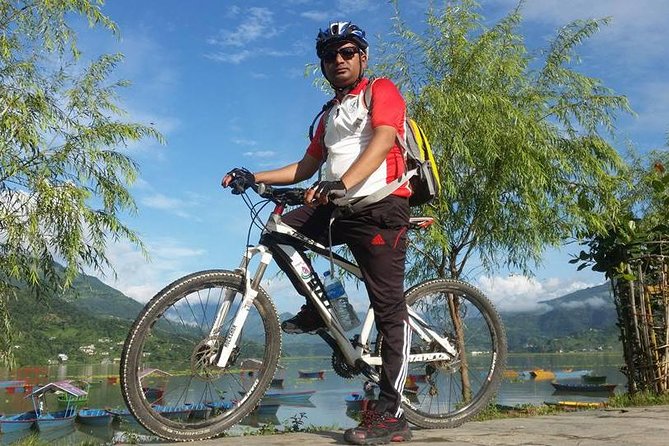
Single-track loops around Lake Phewa can feel like a secret weapon for Pokhara. I like the combo of new mountain bikes and a female guide, plus the small extra of fresh juice after the ride. One thing to watch: there’s at least one low rating report about an operator no-show, so you’ll want to confirm close to start time.
This is a private, 3 to 5 hour biking experience with pickup offered and a mobile ticket. You’ll need moderate physical fitness, because the route mixes uphill effort with hair-raising downhill on forest single-track. If the weather turns, expect the plan to shift, since this ride depends on good conditions.
In This Review
- Key Highlights You’ll Actually Care About
- Riding Lake Phewa: Why This Loop Feels More Real Than a Simple Sight Tour
- New Mountain Bikes and a Female Guide: What the Small Details Signal
- The Stops That Make the Ride Feel Like More Than Just Trail Time
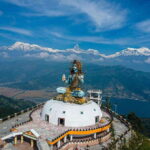
- World Peace Pagoda: A Calm View Before the Technical Sections
- Devi’s Fall: Water, Power, and a Different Pace
- Tibetan Refugee Camp: A Human Stop, Not a Photo-Only Stop
- What Comes After the Big Stops
- Queen Forest Single-Track: The Part You Should Prepare For
- Bridges, Boats, Water Buffalo, and That Mt Fishtail Detail
- Duration, Pickup, Mobile Tickets, and Why They Affect Your Day
- Price and Value: Is $185 Reasonable for What You Get?
- Weather, Fitness, and Your Best Day to Ride
- One Caution From the Reviews: The No-Show Risk
- Should You Book Round The Phewa?
- FAQ
- Where does the Round The Phewa tour start?
- How long is the Round The Phewa tour?
- Is pickup offered for this experience?
- Is lunch included?
- What is included in the tour price?
- Do I get a mobile ticket?
- Is this a private tour?
- What fitness level do I need?
- What happens if the weather is poor?
- What is the cancellation rule?
Key Highlights You’ll Actually Care About
- Fresh juice after your ride keeps the energy up and makes the ending feel cared for
- Queen Forest single-track means real trail time, not just flat lake strolling
- Big viewpoints on a bike with Annapurna Range views, plus the Mt Fishtail shadow on the lake
- Cultural stops on the way including World Peace Pagoda, Devi’s Fall, and the Tibetan Refugee Camp
- Bridges and water views like suspension and wooden bridges, boats, and water buffalo in working landscapes
Other slow days along the Phewa shore
Riding Lake Phewa: Why This Loop Feels More Real Than a Simple Sight Tour
Lake Phewa is already famous, but biking makes it different. Instead of taking the same main road viewpoints, you follow narrower paths that move you through the edge of the lake, past fields, and into forest trail sections. That matters because Pokhara can be pretty easy to do on foot and scooter. This ride adds effort and focus, so the scenery sticks.
One of the best parts is the trail style. You’re promised single-track riding around Phewa, and that usually means narrower, more technical feeling sections where you stay alert. The ride description also calls out both physical and technical challenges, with uphill sections that push your legs and downhill sections where your heart rate jumps. That’s a good fit if you like active travel, and it’s a warning sign if you prefer lazy sightseeing.
I also like how the route ties scenic views to everyday life. You’re not just looking at the lake from one angle. You’re moving alongside the water, then switching to riverbed areas and village paths. That mix tends to feel more authentic, because you catch how locals work around the shoreline, fields, and small water systems.
The overall timing, 3 to 5 hours, keeps it flexible enough for a half-day out of Pokhara without turning into an all-day slog. You’ll still get a full feel for the area, but you’re not trapped on the bike past the point where fatigue steals your attention from the views.
New Mountain Bikes and a Female Guide: What the Small Details Signal
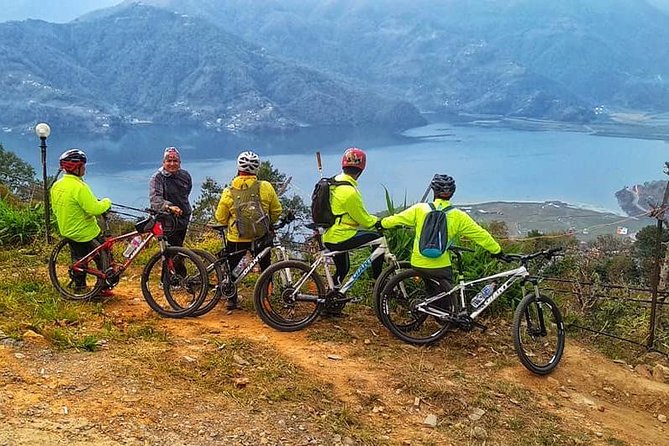
The tour promises new mountain bikes, which is not a throwaway line. On technical or rougher trails, bike condition affects your confidence. Newer bikes tend to mean better braking and smoother handling, and that matters when you’re heading into downhill sections.
You also get a female guide. Even if you don’t think about this up front, it can shape the experience. A guide who’s leading the route and managing the group helps you read the terrain, choose lines on single-track, and stay safe while you’re taking in the Annapurna views.
There’s also a practical comfort in the included add-on: a glass of fresh juice after the trip. It’s a small detail, but it’s the kind that makes an active morning or afternoon feel complete. After a few hours of pedaling, you often want something simple right away, not a hunt for a drink later.
Pickup offered is another helpful piece of value. If you’re staying in Pokhara, you may not want to spend your best energy navigating to a start point, especially if you’re starting near public transportation. Pickup can make it easier to arrive rested and ready, so you spend more time riding and less time figuring out logistics.
Finally, the tour runs as a private experience, meaning only your group participates. That usually helps if you’re trying to match comfort levels, keep pace with the route demands, or simply prefer a quieter ride than a multi-group shuffle.
The Stops That Make the Ride Feel Like More Than Just Trail Time
This route doesn’t treat sightseeing as an interruption. It uses landmarks as waypoints that break up the riding and give your brain a reset between trail sections.
World Peace Pagoda: A Calm View Before the Technical Sections
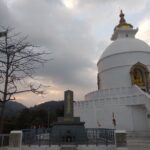
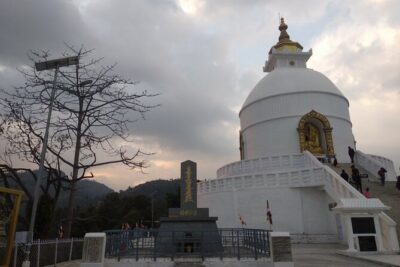
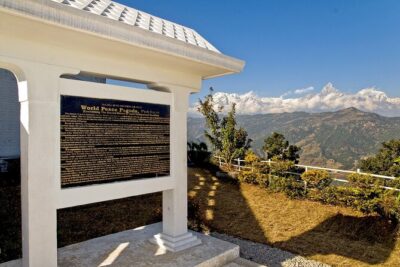
World Peace Pagoda is one of the stops, and it fits the ride rhythm well. Pagoda areas usually give you space to pause, breathe, and take in the big sightlines. If your legs are burning from uphill trail sections, a short stop like this can feel like a reward.
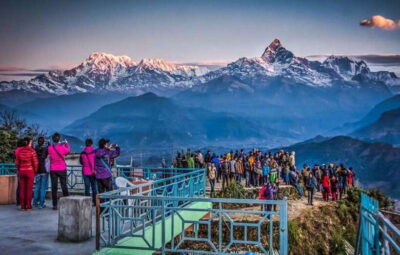
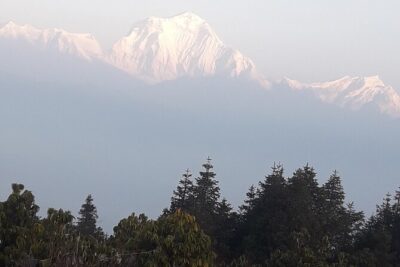
What you’ll likely appreciate here is not just the structure, but the vantage it offers in the Pokhara area. The ride description emphasizes superb views of the Annapurna Range, and you can expect moments where the surrounding area looks wide and open compared to the tighter trail sections.

Devi’s Fall: Water, Power, and a Different Pace
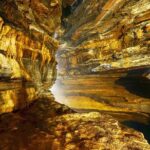
Devi’s Fall is another named stop, and it tends to change the mood. Water features can make you slow down. Even if you’re focused on biking, you’ll probably notice the shift from cycling intensity to watching moving water and how the area is set around it.
This is also a good moment to hydrate and regroup, because the ride later includes downhill stretches and more technically demanding flow. Devi’s Fall gives your body a break, while still keeping the outing active.
Tibetan Refugee Camp: A Human Stop, Not a Photo-Only Stop
The Tibetan Refugee Camp is included too. This is the kind of stop that adds meaning to an outing. It’s not just a scenic overlook. It’s a community area that connects the experience to real people and ongoing history.
In your head, you can think of this stop as the “why we travel” segment. A bike ride can be about legs and views, but this adds a cultural and human layer, so your half-day in Pokhara feels rounded instead of purely scenic.
What Comes After the Big Stops
After these landmarks, the ride returns into the active trail sections. The route description includes riding down to suspension and wooden bridges, and then moving through areas where you can see boats and water buffalo working around the shoreline. That change of scene is one reason the loop style works well. You’re cycling through different environments in one outing.
Queen Forest Single-Track: The Part You Should Prepare For
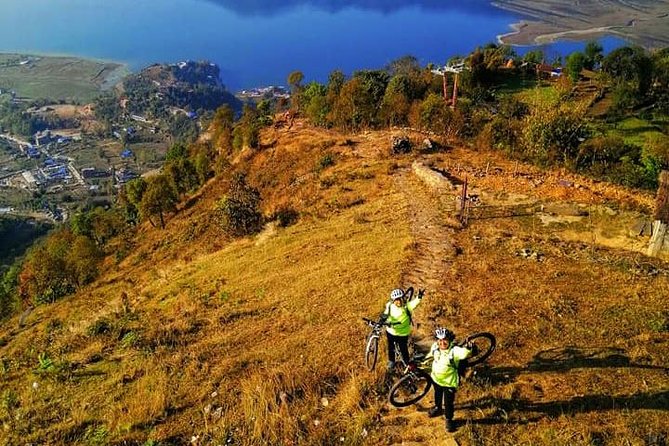
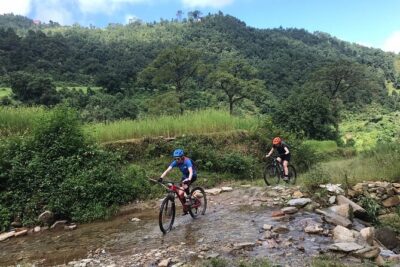
This is the core of the experience, and it’s where the value and the risk both live. The route promises single-track through Queen Forest, plus hair-rising downhill and challenging uphill segments.
If you’re new to trail riding, think about what that means. Single-track usually means narrower paths, less margin for error, and terrain that asks you to keep your balance. The ride description also points to both physically and technically challenging trails. That’s not trying to scare you, it’s telling you the bike is not just a transportation tool here.
You’ll also be riding through a variety of surface types in the loop: forest paths, paddy fields, river areas, villages, lakeshores, and even riverbed sections. That variety is fun, but it’s also why moderate fitness is required. Even if you’re not doing a steep mountain climb, constant starts and stops plus occasional steep sections can add up.
The downhill sections being described as hair-rising suggests speed control matters. If you don’t like steep descents, you’ll want to manage expectations. On the other hand, if you do like technical flow, this is where you’ll feel the most adrenaline.
A helpful way to think about it: if your ideal day is steady, easy scenery with minimal risk, this may not be for you. If you want active riding, views that show up while you’re working, and trail variety, you’ll probably enjoy the pace.
Bridges, Boats, Water Buffalo, and That Mt Fishtail Detail
Not every ride earns its “wow” moments. This one tries to stack them.
The route includes suspension and wooden bridges, which often become mini-adventures on bike. You typically slow down, feel the structure under you, and take in the water or valley below. These are the places where trail riding turns into a full sensory experience, because you’re not just pedaling. You’re crossing, looking, and adjusting.
Then there are boats and water buffalo. This is not just wildlife spotting. The ride description frames it as working landscapes, so you’ll likely see farming and daily routines happening along the water’s edge. Even if you’re mostly focused on not wobbling on a narrow trail, these scenes keep it grounded.
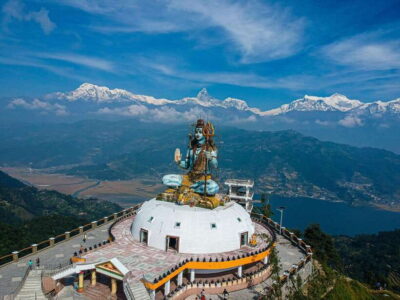
One particularly specific detail is the mention of the shadow of Mt Fishtail on the lake. That’s a classic Pokhara visual because of how the light and water interact. If you love those atmospheric moments, this detail is a strong reason to pick this tour instead of a basic scenic drive.
As you loop around Phewa Lake, you’ll also ride along Phewa Lakeside, so you get repeating contact with the water. That repetition matters. It keeps the scenery flowing, and it prevents the day from turning into a long sequence of “ride, then stop, then ride again.”
Duration, Pickup, Mobile Tickets, and Why They Affect Your Day
This tour runs about 3 to 5 hours. That’s a sweet spot for Pokhara. It’s long enough to feel like you did something meaningful, and short enough to keep the rest of your day open for lakeside strolling, a café break, or a relaxed evening.
Pickup offered helps if your day is already packed. Even if you’re staying close to public transportation, starting a bike ride on time without extra fuss is worth something. You also get a mobile ticket, which is convenient if you prefer not to manage paper confirmations.
Because it’s private, only your group participates. That can mean a more controlled pace, and it can also mean you can be more honest about your comfort level. If you know you’ll need more explanation on tricky sections, a private setup is often easier than joining a large mixed group.
The one real practical consideration is timing and weather dependence. The experience requires good weather. If conditions are poor, you may be offered a different date or a full refund. In Pokhara, rain can hit suddenly. So it helps to plan this kind of ride earlier in your stay, not on the final day, if possible.
Price and Value: Is $185 Reasonable for What You Get?
The price is listed as $185, and the included items are clear: bicycle use. Pickup offered and a fresh juice complement after the trip are described in the experience details, even though lunch is not included.
So the value question becomes: are you paying mostly for the bike and guide, or for a broader “active day” package? With a private tour, a guided route through single-track, and named stops like World Peace Pagoda, Devi’s Fall, and the Tibetan Refugee Camp, you’re buying more than just transportation. You’re buying a curated half-day that moves you across lake areas and cultural points without you having to plan the route or source a compatible bike.
You should also check how the $185 is priced in your booking view. The details say it’s private and only your group participates, but the data you gave does not specify whether pricing is per person or for the whole group. Either way, the smartest move is to compare this cost to what it would take to arrange equivalent bike time plus guidance plus the same set of stops.
One more value note: this ride likely saves you time. You’re not piecing together separate activities. You’re doing a trail loop and sightseeing points in one go. If you enjoy being active and you want views plus context, that bundling makes the price easier to justify.
Weather, Fitness, and Your Best Day to Ride
The route asks for moderate physical fitness. That doesn’t mean you need to be training for a race, but it does mean you should be comfortable riding for multiple hours with uphill effort and some technical sections. If you’re coming off a big hike day, consider how your legs will feel later.
The biggest external factor is weather. The experience requires good weather. Wet trails can turn technical single-track into a slick and stressful ride. That’s also why the plan includes a safety net, offering a different date or a full refund if canceled due to poor weather.
If you’re choosing when to do it, aim for a day when Pokhara has stable conditions. If you’re flexible, schedule this during the middle of your stay so you have options if weather forces a change.
Finally, keep your expectations aligned with the ride style. This is not a gentle lake cruise. It includes rolling, physically and technically challenging trails, plus downhill that’s described as hair-rising. If that sounds fun, you’re in the right place.
One Caution From the Reviews: The No-Show Risk
Even with an overall rating of 4.4 from 8 reviews, there’s a serious negative report included. One review states the vendor/operator never showed up or contacted the traveler, and the traveler reports still waiting on a refund.
I can’t predict what will happen for your booking, but this is the kind of risk you manage with one simple habit: confirm close to the start time and keep your communication trail. If you have a contact number or email in your booking details, use it early enough that you still have a backup option.
Should You Book Round The Phewa?
I’d book this if you want a true biking experience, not just a sightseeing drive. The combination of single-track around Phewa, named cultural stops, and specific scenic moments like Annapurna views and the Mt Fishtail shadow on the lake is exactly the kind of Pokhara day that feels different from the usual checklist.
Skip it or be cautious if you know you dislike technical downhill riding, or if your fitness level is closer to casual walking than active biking. Also consider doing this earlier in your trip, since the ride requires good weather and could shift to another date.
One last smart move: treat pickup and day-of contact as important. The included bike and guide plus the private format sound great, but the one no-show report means you should confirm timing before you rely on it.
If those points match your style, this loop can be a memorable half-day that mixes views, culture, and real trail riding around Lake Phewa.
FAQ
Where does the Round The Phewa tour start?
It starts at Cycle Tours & travel Pokhara 33700, Nepal.
How long is the Round The Phewa tour?
The duration is approximately 3 to 5 hours.
Is pickup offered for this experience?
Yes, pickup is offered.
Is lunch included?
No, lunch is not included.
What is included in the tour price?
The use of bicycle is included.
Do I get a mobile ticket?
Yes, the tour includes a mobile ticket.
Is this a private tour?
Yes, it’s a private tour/activity, and only your group participates.
What fitness level do I need?
You should have a moderate physical fitness level.
What happens if the weather is poor?
If it’s canceled due to poor weather, you’ll be offered a different date or a full refund.
What is the cancellation rule?
You can cancel up to 24 hours in advance for a full refund.
The Rest of Our Pokhara Write Ups


Pokhara, Lakeside and Above
Everything else we have reviewed around Pokhara
- Pokhara: Cable Car Tour – Bird Eye View of Mountain & Lake
★ 4.4 · 3 reviews - Jomsom Muktinath Tour by 4WD SUV 2 Days
★ 5.0 · 3 reviews - Ghorepani Poonhill Private Trek – 2 nights / 3 days
★ 4.5 · 3 reviews - Pokhara: 30-Minute Paragliding Adventure with pick up/drop off
★ 4.5 · 3 reviews - Pokhara: 7-Day Annapurna Base Camp Trek via Ghandruk
★ 4.3 · 3 reviews - Pokhara Group Joining Sarangkot Sunrise Himalayas Tour
★ 5.0 · 3 reviews
Pokhara City Tours & Lakeside Sights worth a second look.
 ★ 4.1Full-Day Sharing Bus Tour on 7 Iconic DestinationFrom $12179 reviews
 ★ 4.8Full-Day Private Tour on 7 Iconic DestinationFrom $53108 reviews
 ★ 5.0The Best of Pokhara: Full-Day Private Tour with Sarangkot SunriseFrom $6866 reviews
 ★ 5.0Guided Tour to explore the entire Pokhara CityFrom $7051 reviews
 ★ 4.1City Sightseeing Group Bus TourFrom $837 reviews
 ★ 4.5Private Half Day Tour Highlights of Pokhara by CarFrom $8036 reviews
 ★ 5.0Pokhara Valley Mountain Bike Adventure Private TourFrom $18530 reviews
 ★ 5.0Half-Day Private Pokhara TourFrom $6727 reviews
Lists this tour sits in