
REVIEW · POKHARA CITY TOURS & LAKESIDE SIGHTS
Pokhara: 1-Day World Peace Pagoda and Lord Shiva Statue Trek
Pokhara’s views hit fast if the sky cooperates. I especially like the Phewa Lake boat ride for an easy start, and the World Peace Pagoda for big, spiritual mountain views. The main drawback is simple, the day involves several hours of walking, so it can be tough if you have mobility limits.
You’ll combine lake time, temple time, and uphill paths, all with a live English guide. The pacing is built for sightseeing, with time for photos and breaks, not just ticking boxes. If you want a gentler day, this might be more legs than you planned.
In This Review
- Key Things to Know Before You Go
- Phewa Lake Boat Ride, the Easy Start That Sets the Tone
- Barahi Temple on an Island, a Small Stop With Big Atmosphere
- The Hike to World Peace Pagoda, Ananda Hill and the View Window
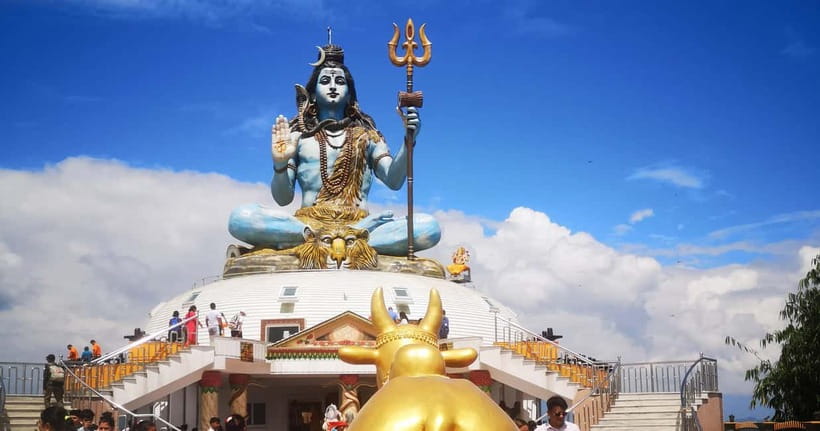
- Lord Shiva Statue at Pumdikot, the 15-Meter Photo Moment
- How the Day Flows After the Views, Lunch and the Return by Lakeside
- Price and Value at About $28, What You’re Really Paying For
- The Guide Makes It Better, Especially If You Care About Timing
- What to Pack for This Pokhara Hike (So You Don’t Regret It)
- Who This Trek Fits Best, and Who Should Rethink It
- Booking This One-Day Peace and Shiva Tour, Should You Go?
- FAQ
- How long is the Pokhara 1-day World Peace Pagoda and Lord Shiva Statue trek?
- What does the tour include?
- What is the pickup time and where do I meet the group?
- Is lunch included?
- Is this tour suitable for people with mobility impairments?
- What should I bring for the hike?
- What language is the guide?
Key Things to Know Before You Go
- Phewa Lake first, so you start with calm water instead of climbing right away
- Barahi Temple on an island, a short hop that adds real local flavor
- World Peace Pagoda viewpoint, on Ananda Hill, with Himalayan views when visibility is good
- Lord Shiva Statue at Pumdikot, a 15-meter-tall highlight that’s hard to miss
- English live guide, and your group stays private, so questions are welcome
- Lunch is on your own, but there’s a stop where you can buy food
Other slow days along the Phewa shore
Phewa Lake Boat Ride, the Easy Start That Sets the Tone
The day begins in Pokhara with hotel pickup around 8:30 AM from Pokhara Lakeside. You’re asked to be ready in the lobby about 15 minutes ahead, which helps the morning run on time and keeps the group feeling smooth.
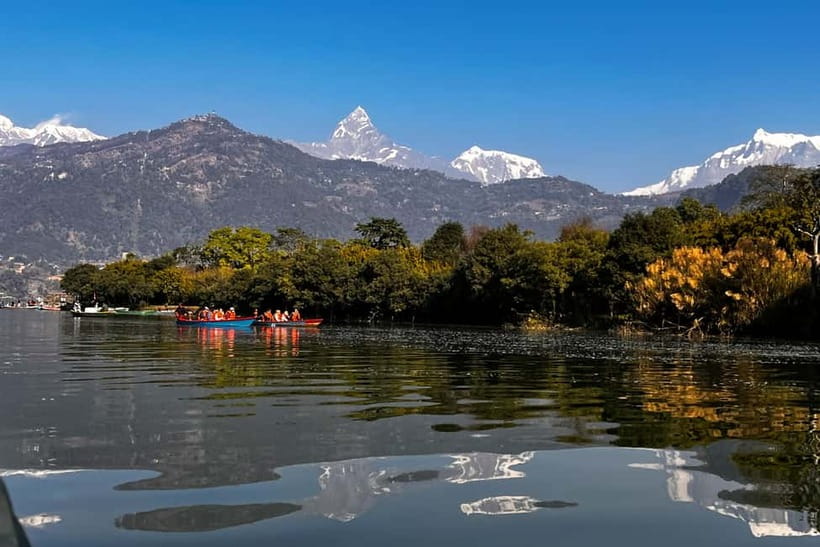
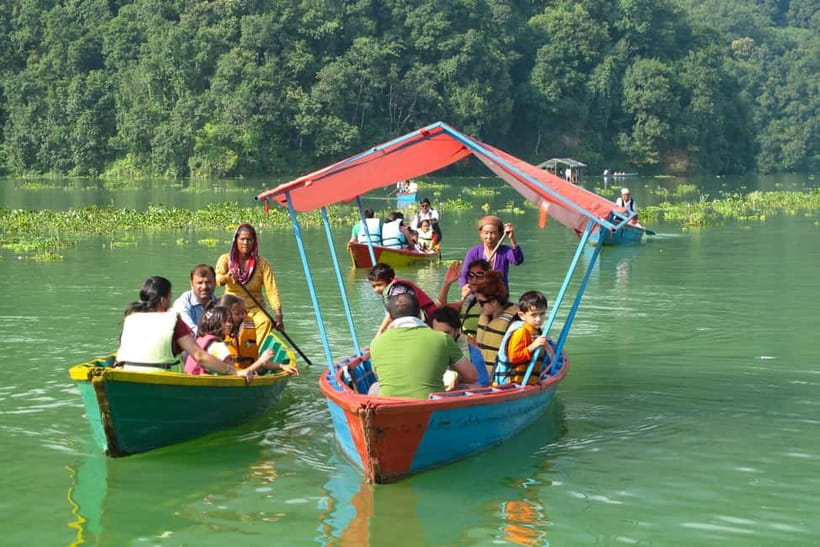
Then you slide onto Phewa Lake by boat. This is one of the best parts to kick things off, because it’s low effort and high payoff. You get that slow Pokhara rhythm, water in front of you, mountains forming the backdrop, and time to settle your energy before the uphill sections.
I like that the lake part isn’t just a transfer. It’s treated like part of the experience, so you can actually enjoy the scenery instead of rushing through it.
Practical note: the best views depend on weather. Even on clear days, cloud cover can hide peaks. Still, the lake itself is attractive any time, and you’ll appreciate the contrast between quiet water and the later climb.
Barahi Temple on an Island, a Small Stop With Big Atmosphere
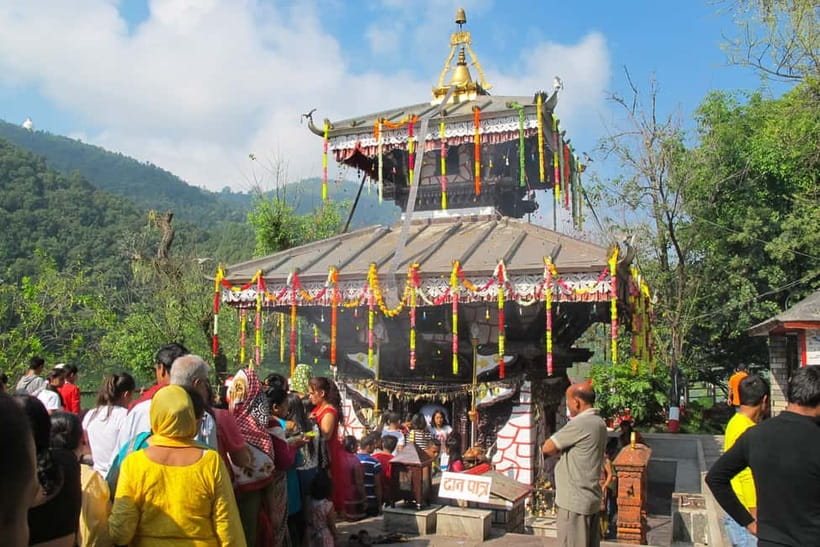
After the boat time, you visit Barahi Temple, located on a small island in the middle of Phewa Lake. It’s a short detour, but it’s the kind that gives the day meaning beyond viewpoints.
Temples like this are special because they connect a dramatic setting with everyday devotion. You’re not just looking at something from a distance. You’re stepping into a place where people come for faith, rituals, and calm.
Expect a brief, focused visit rather than an all-day cultural immersion. That’s not a downside here. It fits the flow of a one-day trek: you’re building variety without turning the schedule into a full marathon.
If you’re a photo person, bring your camera out early. Light can shift quickly around the water, and the island views tend to look their best when you time them right.
The Hike to World Peace Pagoda, Ananda Hill and the View Window
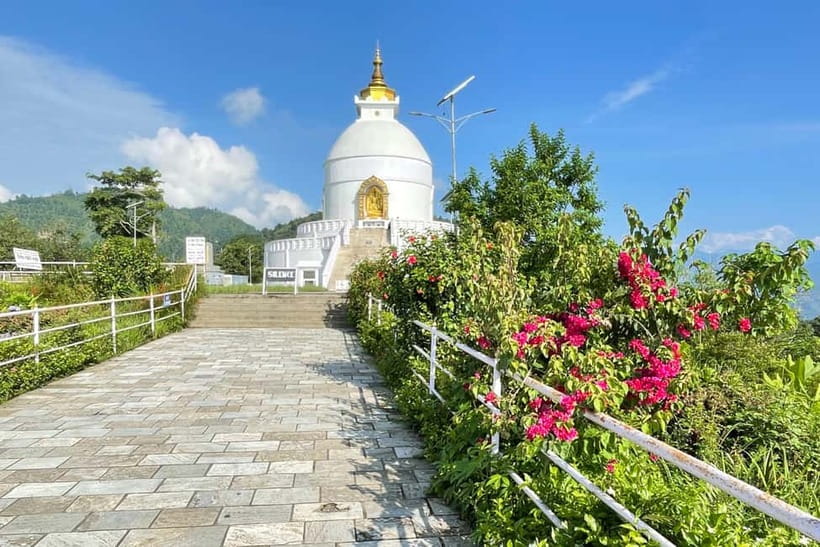
Once you’ve done the island temple stop, you transfer back toward the other side of Phewa Lake and start your ascent toward the World Peace Pagoda on Ananda Hill.
Plan for a steady walk of about an hour to reach the pagoda area, depending on your pace. The path passes through settlements and shady forests, which helps break up the climb. It’s not one long, exposed grind the whole way, and that matters in warm sun.
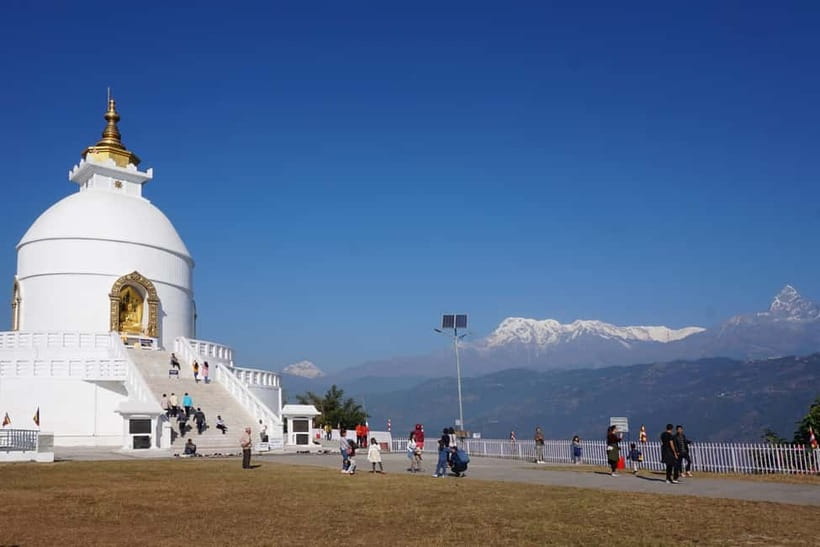
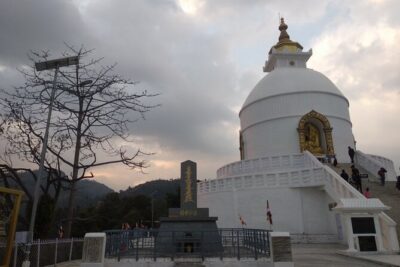
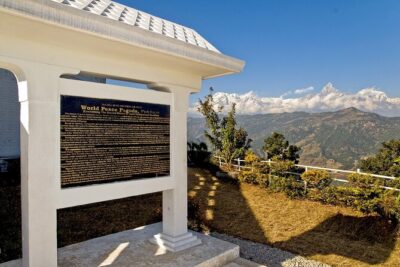
When you reach the pagoda, you’ll have around 30 minutes to take it in. This is a Buddhist monument tied to the message of non-violence and compassion. The setting also works as a pause button. You can slow down, look out over Phewa Lake, and watch how Pokhara sits in the valley below.
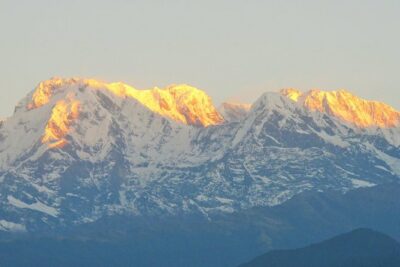
The views are the main reason people go. On clear days, you may see parts of the Annapurna massif including Annapurna I (8,091 m) and Dhaulagiri (8,167 m). You might also glimpse the sacred Machhapuchre (6,997 m).
Here’s the honest consideration: if cloud cover hangs over the hills, the peaks can disappear. That happened for one guide experience I read about, where visibility wasn’t great on the pagoda day. Still, the pagoda itself stays worth it because the lake and city views are already attractive, even when the tallest peaks blur or vanish.
Lord Shiva Statue at Pumdikot, the 15-Meter Photo Moment
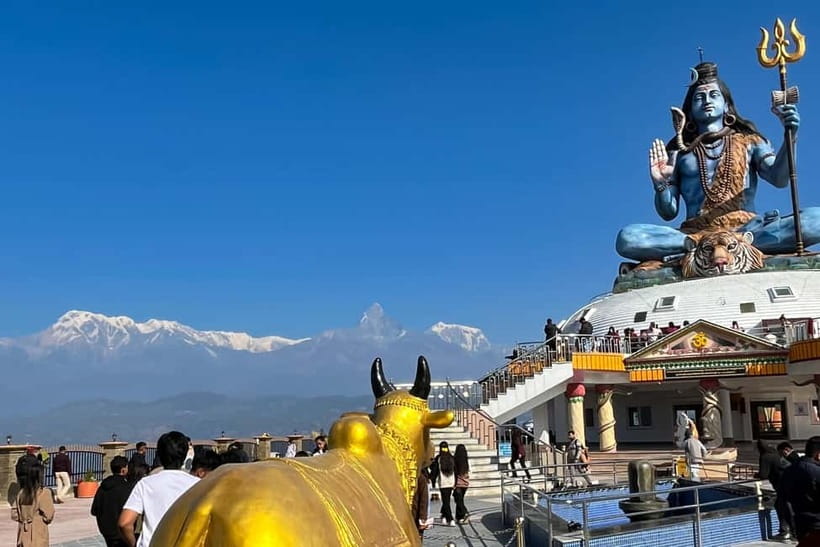
After the pagoda, you head on toward the Lord Shiva Statue, also at Pumdikot. The walk is about 1.5 hours, so this is where the day turns from scenery to effort.
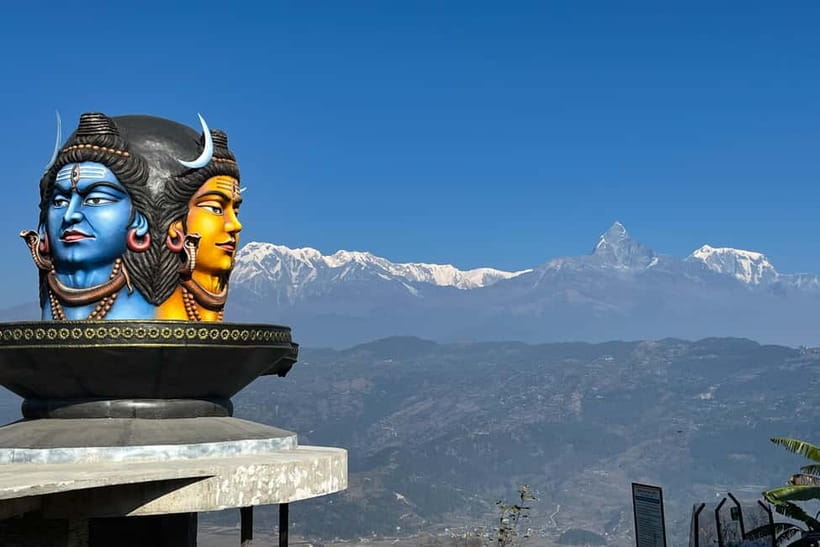
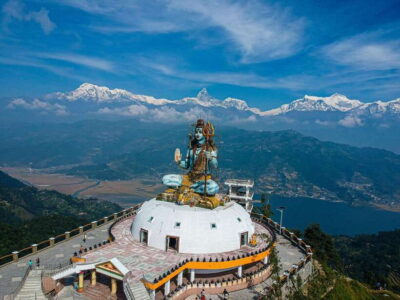
The statue is described as the tallest of its kind in Nepal, standing over 15 meters tall. Even before you reach it, you can usually tell the terrain is meant to bring you up for a dramatic reveal.
The sightseeing time is shorter here, roughly 20 minutes at the statue viewpoint. That can feel quick if you want lots of photos, but it’s enough to get the main angles and soak in the sightlines.
From here, you can look back over Lake Phewa and Pokhara. If the weather is clear, the Annapurna region may show again from this higher angle.
The statue adds a different energy than the pagoda. The pagoda feels calm and reflective, while the Shiva statue is more instantly impressive. Together, they balance each other nicely.
Comfort tip: wear shoes with grip. The route is on foot and you’ll want stable footing during the uphill segments.
Other lodge to lodge routes near Pokhara
How the Day Flows After the Views, Lunch and the Return by Lakeside
After statue time, the plan brings you back to the World Peace Pagoda area for lunch. Lunch is not included in the price, but there’s a stop where you can buy a meal locally.
This is a practical setup. You’re already in the middle of the day. Having a food chance without needing to scramble for restaurants is a big deal on a hiking schedule.
After lunch, the route continues with another walk segment of around 1.5 hours toward Pokhara Damside. Then you get a quick 30-minute transfer to Pokhara Lakeside, where you’re dropped near your hotel.
What I like about this structure is that you don’t end the day with another long uphill push. It’s a downhill or flatter-feeling phase compared to the main climb. It still takes effort, but the finish feels manageable.
Also, the transfer back matters. You don’t want to spend your last energy hunting for transport after a long day on your feet.
Price and Value at About $28, What You’re Really Paying For
At about $28 per person, this is good value for a full day that mixes transport, boat time, temple access, and multiple viewpoint walks.
The price makes sense because several pieces are already built in:
- Hotel pickup
- Boat ride on Phewa Lake
- Barahi Temple visit
- Hike up to the World Peace Pagoda
- Visit to the Lord Shiva Statue
- A taxi transfer after the trek
What’s not included: drinks and meals. Lunch is available to buy during the day. That’s common, and it also gives you flexibility to choose what you feel like eating.
If you’re comparing this to paying separately for a private guide plus lake transport plus entry visits, the package can be a bargain. Even more, you’re not planning the route yourself. That peace of mind is worth money when you’re in a new place.
The Guide Makes It Better, Especially If You Care About Timing
This tour runs with a live English guide and is set up as a private group. That combination changes the experience. In a private setup, you can ask questions as you walk. You can also pause for photos without feeling like the schedule is controlling every minute.
In one strongly praised guide experience, the guide named Roman Paudel was described as amazing, helpful, and flexible. The key detail I’d take from that: the pace was not rushed, with enough time for photos and pauses.
That kind of guidance matters on a hike like this because weather and visibility can shift. If your guide knows how to read the day, you get better odds of enjoying what’s visible right now, not just hoping for a perfect sky later.
If your guide offers a local tip, take it seriously. One helpful idea tied to this route was pairing the day with a next-day viewpoint stop at Sarangkot if conditions weren’t great for seeing the higher peaks. Even if you don’t follow it exactly, it’s a reminder to think in terms of timing and clouds, not just altitude.
What to Pack for This Pokhara Hike (So You Don’t Regret It)
The day is simple, but you’ll feel it. Pack like you’re going for a real walking session, not a casual stroll.
Bring:
- Comfortable shoes with grip
- Hat
- Camera
- Sunscreen
- Water
A useful mindset: carry enough water for the day, because the walking segments add up. The tour doesn’t promise unlimited drinks.
Clothing matters too. Wear layers you can adjust for sun and shade. You’ll get sunny stretches and forest shade, and your body temperature can change fast on a climb.
If you’re prone to sunburn, cover up more than you think. Lakeside days in Nepal can still burn you quickly.
Who This Trek Fits Best, and Who Should Rethink It
This is a hiking-focused experience, about 8 hours total. It’s designed for people who are comfortable walking for hours and handling uphill sections.
It is not suitable for people with mobility impairments, because the route involves several hours of walking with climbing segments.
Who it suits well:
- You want a one-day Pokhara adventure that mixes lake scenery and mountain viewpoints
- You like cultural stops like a temple visit without committing to a full multi-day trek
- You’re okay with moderate effort in exchange for big outlooks
- You want an English speaking guide and a private group feel
If you’re traveling with older adults or anyone with limited walking tolerance, you’ll likely need a different Pokhara plan that’s more relaxed and less trail-based.
Booking This One-Day Peace and Shiva Tour, Should You Go?
Yes, I’d book it if you want a compact Pokhara highlight day. The combination of Phewa Lake boat time, the Barahi Temple island stop, and the two main viewpoints makes it feel like more than a single destination.
Do skip or rethink it if:
- You know you struggle with several hours of walking
- You’re hoping for a purely flat, easy nature experience
- You’re extremely sensitive to stairs and uphill terrain
One last practical tip: check the sky situation when you can, but don’t over-fret. Even if peaks are partially hidden, the pagoda and Shiva statue viewpoints still give you a strong look at Pokhara’s lake-and-mountain setting.
If you can handle the walking, this tour is a solid way to see why people fall for Pokhara fast, with just one day’s effort.
FAQ
How long is the Pokhara 1-day World Peace Pagoda and Lord Shiva Statue trek?
The total duration is about 8 hours.
What does the tour include?
It includes hotel pickup, a boat ride on Phewa Lake, visits to Barahi Temple, the World Peace Pagoda hike, the Lord Shiva Statue, and a taxi transfer from Damside to the Lakeside hotel after the trek.
What is the pickup time and where do I meet the group?
Pickup is from your Pokhara hotel around 8:30 AM. You should wait in the hotel lobby at least 15 minutes before pickup.
Is lunch included?
No. Drinks and meals are not included, but there will be a stop at a local place where you can buy lunch.
Is this tour suitable for people with mobility impairments?
No. It involves several hours of walking and is not suitable for people with mobility problems.
What should I bring for the hike?
Bring comfortable shoes, a hat, a camera, sunscreen, and water.
What language is the guide?
The tour is guided in English, with a live tour guide.
Lodge to Lodge Around Pokhara
The Rest of Our Pokhara Write Ups


Pokhara, Lakeside and Above
Everything else we have reviewed around Pokhara
- Pokhara: Cable Car Tour – Bird Eye View of Mountain & Lake
★ 4.4 · 3 reviews - Jomsom Muktinath Tour by 4WD SUV 2 Days
★ 5.0 · 3 reviews - Ghorepani Poonhill Private Trek – 2 nights / 3 days
★ 4.5 · 3 reviews - Pokhara: 30-Minute Paragliding Adventure with pick up/drop off
★ 4.5 · 3 reviews - Pokhara: 7-Day Annapurna Base Camp Trek via Ghandruk
★ 4.3 · 3 reviews - Pokhara Group Joining Sarangkot Sunrise Himalayas Tour
★ 5.0 · 3 reviews
Pokhara City Tours & Lakeside Sights worth a second look.
 ★ 4.1Full-Day Sharing Bus Tour on 7 Iconic DestinationFrom $12179 reviews
 ★ 4.8Full-Day Private Tour on 7 Iconic DestinationFrom $53108 reviews
 ★ 5.0The Best of Pokhara: Full-Day Private Tour with Sarangkot SunriseFrom $6866 reviews
 ★ 5.0Guided Tour to explore the entire Pokhara CityFrom $7051 reviews
 ★ 4.1City Sightseeing Group Bus TourFrom $837 reviews
 ★ 4.5Private Half Day Tour Highlights of Pokhara by CarFrom $8036 reviews
 ★ 5.0Pokhara Valley Mountain Bike Adventure Private TourFrom $18530 reviews
 ★ 5.0Half-Day Private Pokhara TourFrom $6727 reviews
Lists this tour sits in