
REVIEW · ANNAPURNA BASE CAMP TREKS
Kathmandu/Pokhara: 5-Day Annapurna Base Camp (ABC) Trek
Five days, one huge payoff in the Himalaya. This trek strings together big mountain drama with everyday trail life, from forest walks and waterfalls to traditional village stops and that final moment at Annapurna Base Camp (4,130 m). I especially like how the route is designed around real hiking days, not just one big viewpoint day.
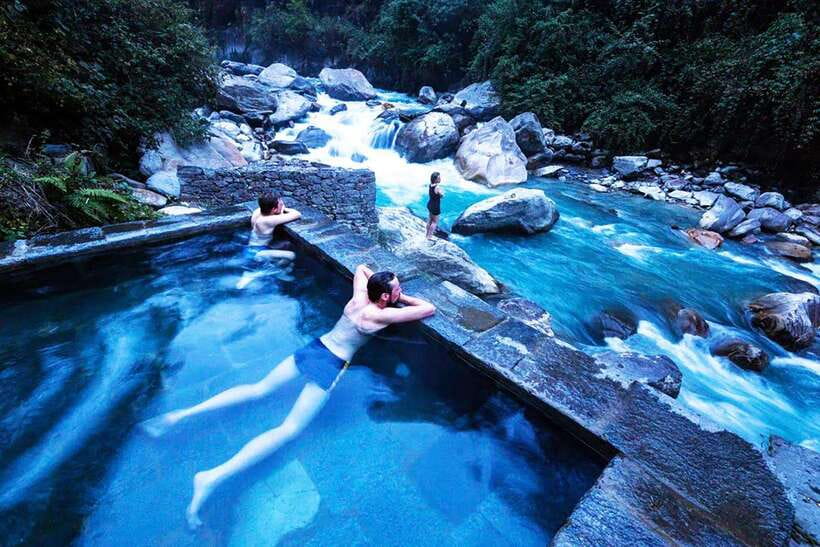
My other favorite part is the recovery hit on the way back, Jhinu Danda hot springs, which gives your legs a break before you bounce back down toward Simrung and Pokhara. On top of that, you get plenty of “Nepal in motion” details, terraced farms, village paths, and the feel of the Annapurna Sanctuary changing as you climb.
One thing to consider up front: this is still a tough 5-day trek. You are walking 7 to 8 hours on the hardest day, and weather can make conditions slick and slow, especially if you go during monsoon months.
In This Review
- Key highlights that make this ABC trek a strong value
- From Pokhara drives to tea-house nights: what the trek format means for you
- Day 1: Simrung to Sinuwa, the first climb that sets your pace
- Day 2: Sinuwa to Deurali through forests and waterfalls up to 3,230 m
- Day 3: Deurali to Annapurna Base Camp via Machhapuchhre Base Camp valley
- Day 4: Sunrise at ABC, then the big 12 to 14 km return day
- Day 5: Jhinu Danda hot springs, then Simrung to Pokhara by jeep
- Price and Logistics: what $96 really buys you for a 5-day ABC trek
- Guides make or break the ABC experience, and the best ones run on safety
- Packing checklist that actually matches this trek’s altitude and weather
- Tea houses, food, and the charging limits you should expect
- Who this ABC trek suits best
- Should you book this 5-day Annapurna Base Camp trek?
Key highlights that make this ABC trek a strong value
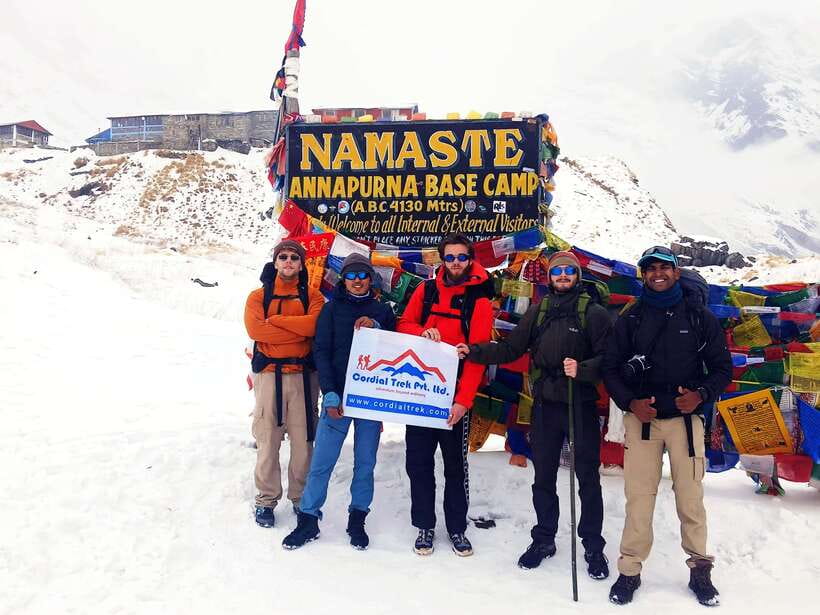
- Annapurna Base Camp at 4,130 m, with a morning sunrise stop built in
- Jhinu Danda hot springs on the descent day, a real morale booster
- An Annapurna Sanctuary route through multiple ecosystems, from bamboo areas to colder ridges
- Tea-house style lodging for 4 nights, so you do not need to camp
- A licensed guide plus optional porter support, with first aid and water purification tablets included
- Support that feels personal, with guides like Raju, Smile, Pratip, and Anil Sherpa frequently praised for pacing and safety
Other approaches to the Sanctuary gate
From Pokhara drives to tea-house nights: what the trek format means for you
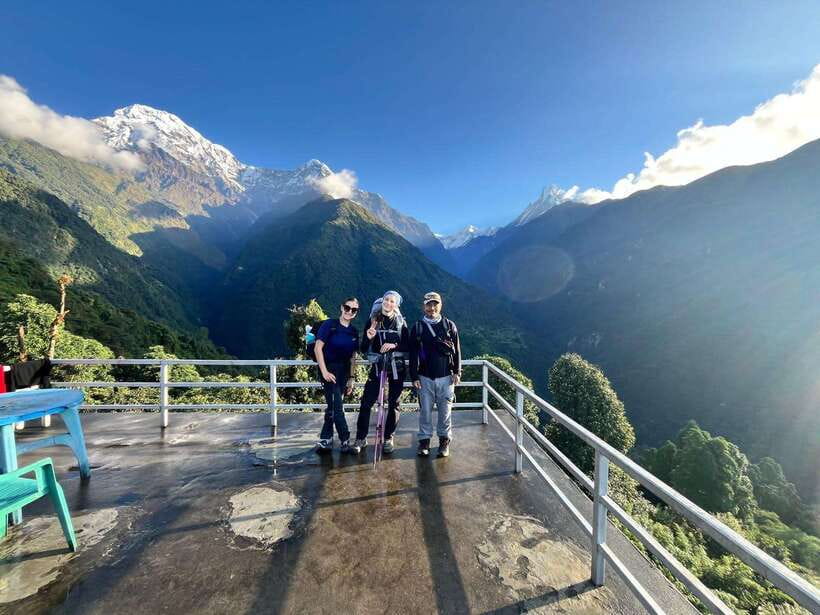
This is a short ABC trek by Himalayan standards, and that matters. You are not spending a week living out of a tent. Instead, you sleep in mountain guest houses and eat at tea houses along the way, which keeps the experience focused on walking, altitude, and scenery.
The overall rhythm is practical: one day to get your legs moving, one day to climb higher through forests, one day to reach ABC, then two days to return (with a sunrise moment on Day 4). If you like structure and you want someone else to handle permits, permits paperwork, guide logistics, and equipment borrowing, this format fits well.
Also, you get a real “from the lowlands” start. If you begin in Kathmandu, you take a short flight to Pokhara, then drive into the trekking area. That can be a smoother on-ramp than jumping straight from the city into trekking gear.
Day 1: Simrung to Sinuwa, the first climb that sets your pace
Day 1 starts with hotel pickup in Kathmandu or Pokhara. If you are coming from Kathmandu, you take a roughly 30-minute flight to Pokhara, then begin the land transfer. From Pokhara, it is a 2 to 3 hour drive to Simrung via Nayapul, then you start trekking.
Your hike is Simrung to Sinuwa, about 10 to 11 km, typically 5 to 6 hours. The max altitude on this day is listed at 2,340 m, which makes it a good “start walking” day rather than a day that immediately crushes you. The goal is to build rhythm: steady steps, a short break here and there, and good hydration.
Sinuwa is where you sleep, in a mountain guest house. Expect the usual tea-house trekking reality: your room is basic, your warmth comes from layers and the guest house setup, and your comfort depends a lot on having the right jacket and socks.
Day 2: Sinuwa to Deurali through forests and waterfalls up to 3,230 m
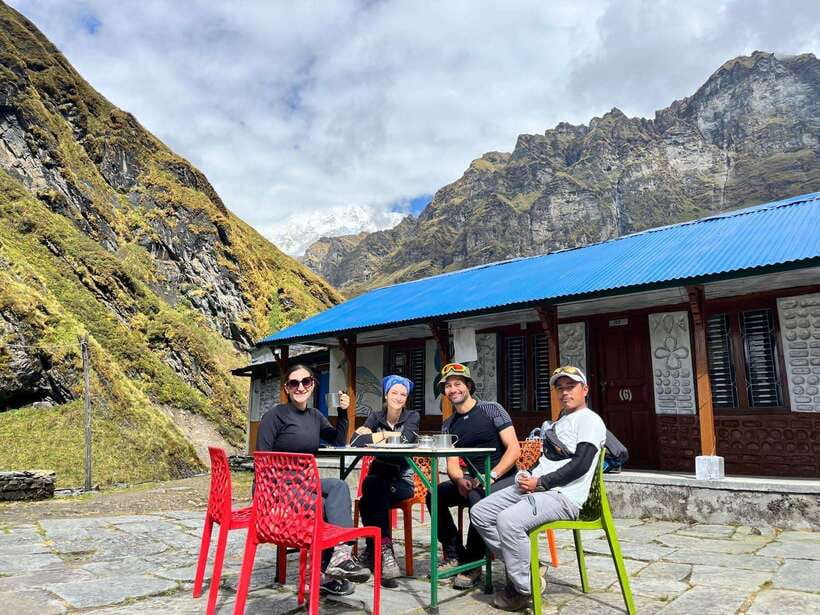
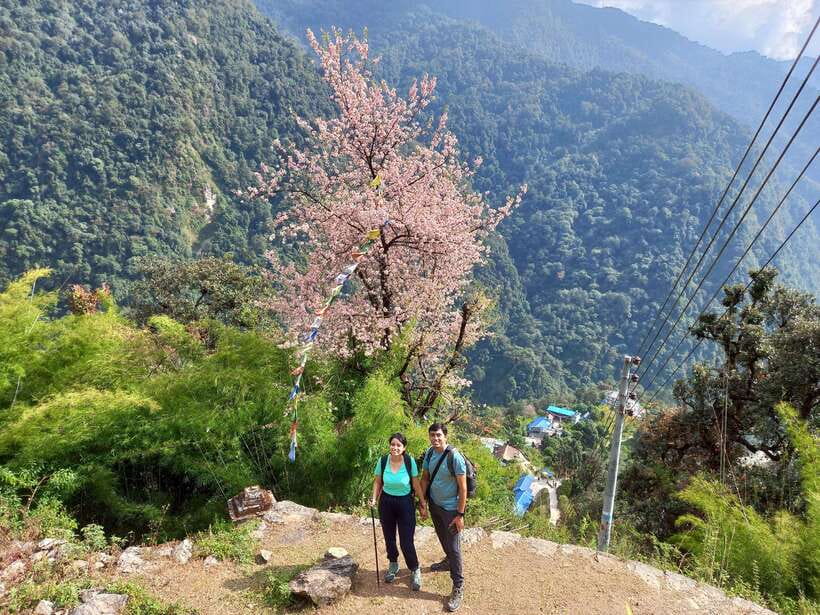
On Day 2 you hike from Sinuwa to Deurali, again about 10 to 11 km and 5 to 6 hours. The max altitude rises to 3,230 m, and the route passes through the Himalaya tea-house area, along with dense forest sections.
The highlight here is the constant scenery motion. You are not just climbing through empty trail. You are moving through a corridor of waterfalls and forest cover, which helps the day feel like more than just a grind. When conditions are wet, forest trekking can also be surprisingly beautiful, but you will feel it in your boots and the lower half of your clothes.
Deurali is another guest house night. This is the day that helps you settle into how mountain meals work: you eat when it is time, you rest when your body asks for it, and you treat the trail like a schedule instead of a random adventure.
Day 3: Deurali to Annapurna Base Camp via Machhapuchhre Base Camp valley
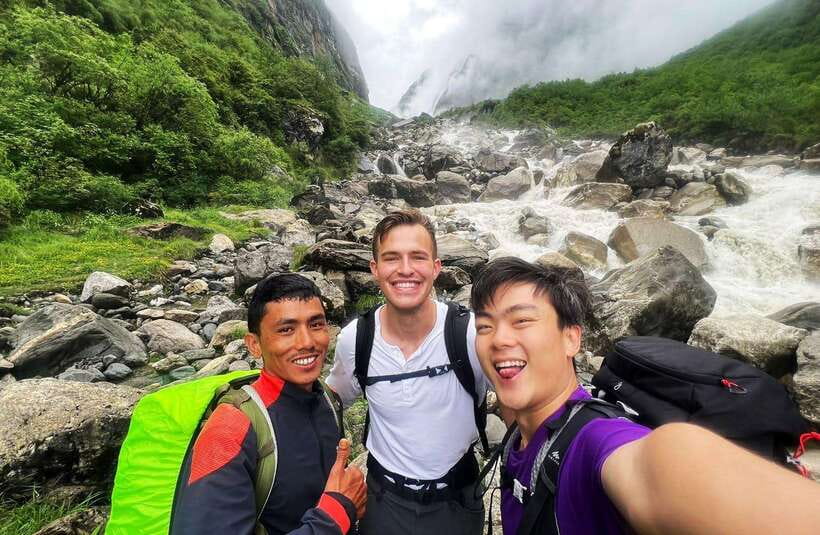
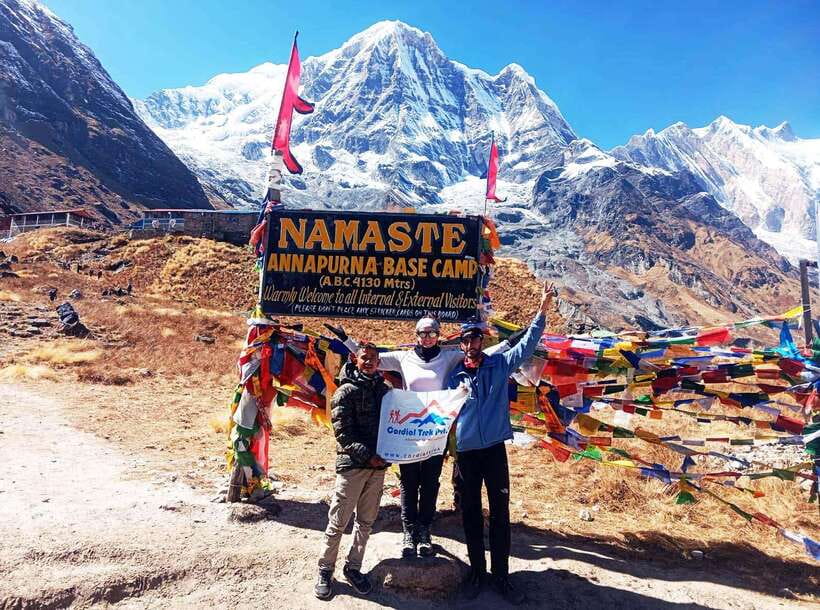
This is the key day. You hike Deurali to Annapurna Base Camp at about 10 to 11 km and 5 to 6 hours, with Machhapuchhre Base Camp (MBC) valley on the way. The max altitude hits 4,130 m, so take this day seriously.
What makes this day feel special is the way the Annapurna Sanctuary changes as you approach ABC. The route is described as moving through multiple ecosystems, including bamboo-valley style areas earlier on and colder, more exposed views closer to base camp. You go from “green and shaded” to “open and icy-feeling” faster than you might expect.
Once you reach ABC, the plan is to sleep in tea houses at base camp. This is also where Annapurna-I becomes a presence in your photos and your thoughts. Even if you have read about it, seeing the mountain at the base-camp level hits differently. You are not looking at it from far away. You are in its world.
Your sunrise window matters too, because Day 4 starts with that moment before the long return. If you are lucky with visibility, the whole trek can feel like it is rewarding you twice.
Other lodge to lodge routes near Pokhara
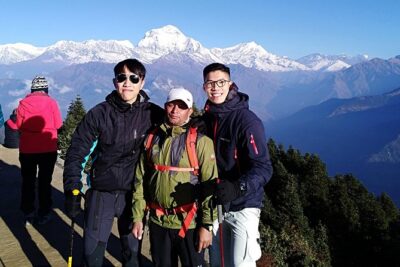
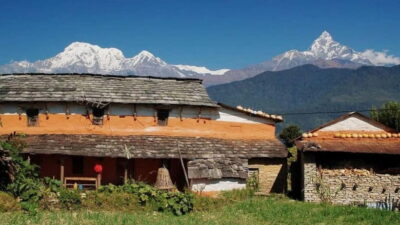
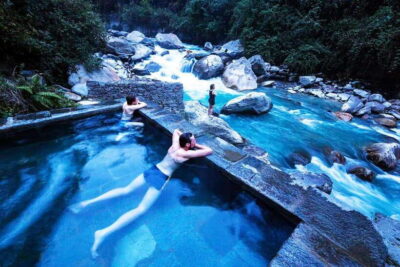
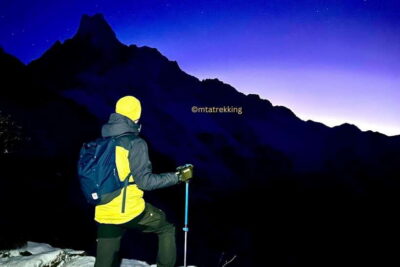
Day 4: Sunrise at ABC, then the big 12 to 14 km return day
Day 4 begins with a spectacular view of sunrise in the morning. After that, you hike back toward Bamboo or Sinuwa via Deurali, Himalaya, and Dobhan. This is the long day: 12 to 14 km, typically 7 to 8 hours.
The max altitude for this return day is not the same as Day 3 since you are descending again, with the minimum altitude noted at 2,340 m. That still means you are walking long enough that your body will notice fatigue, not just elevation.
If you want to make this day easier on yourself, focus on small habits: consistent water breaks, short step resets, and not sprinting down the trail just because you can. On a day like this, the “winning move” is finishing feeling steady, not feeling proud at the cost of sore knees.
Day 5: Jhinu Danda hot springs, then Simrung to Pokhara by jeep
Day 5 mixes two things you will appreciate: movement and recovery. You trek from ABC back toward Simrung via Jhinu Danda, including the hot spring stop. The walking distance is about 7 to 8 km, usually 4 to 5 hours.
Jhinu Danda is the payoff stop on this day, the natural hot springs that help tired legs feel human again. It is also a great chance to reset your mind for the final travel leg.
After the trek, you drive from the trekking area back to Pokhara, around 2 to 3 hours. You should be dropped at your Pokhara hotel no later than 17:00. If you have a return flight option, you can also be dropped at Pokhara Airport for your Kathmandu-bound flight. Arrival in Kathmandu is noted as no later than 19:30, with later international departures handled by letting you go to the airport on your own.
Minimum altitude on this day is listed at 830 m, which is a big drop and a relief if you have been feeling the altitude.
Price and Logistics: what $96 really buys you for a 5-day ABC trek
At $96 per person for 5 days, the value is the main story here. That price point can only make sense because the trek relies on:
- tea-house style lodging instead of camping gear and portaled base-camp setup
- shared ground transfers (like the Pokhara-Simrung-Pokhara jeep)
- a standardized short itinerary with fixed permit coverage and included meals in the all-inclusive setup
What you get included, based on the package details:
- hotel pickup and drop-off in Pokhara (and in Kathmandu if your flight option is selected)
- flight tickets when included by your chosen option
- 4-night guest house accommodation
- a trekking guide described as licensed and experienced
- necessary trekking permits
- borrowed equipment like a down jacket, sleeping bag, and trekking poles
- water purification tablets as required
- first aid
- meals with a clear count if you select the all-inclusive setup (4 breakfasts, 5 lunches, 4 dinners)
- porter support only if the all-inclusive option is selected
What is not included:
- hot showers, Wi-Fi, and battery charging
- alcoholic drinks, and hot or cold drinks
- personal expenses and snacks
- travel insurance
So here is my practical take: the price is a bargain if you are happy to handle your own extra comfort items (like charging and snacks) and if the included meals fit your appetite. If you want lots of creature comforts, you will spend extra. If you are cost-conscious and comfortable with simple mountain living, this setup is hard to beat.
Guides make or break the ABC experience, and the best ones run on safety
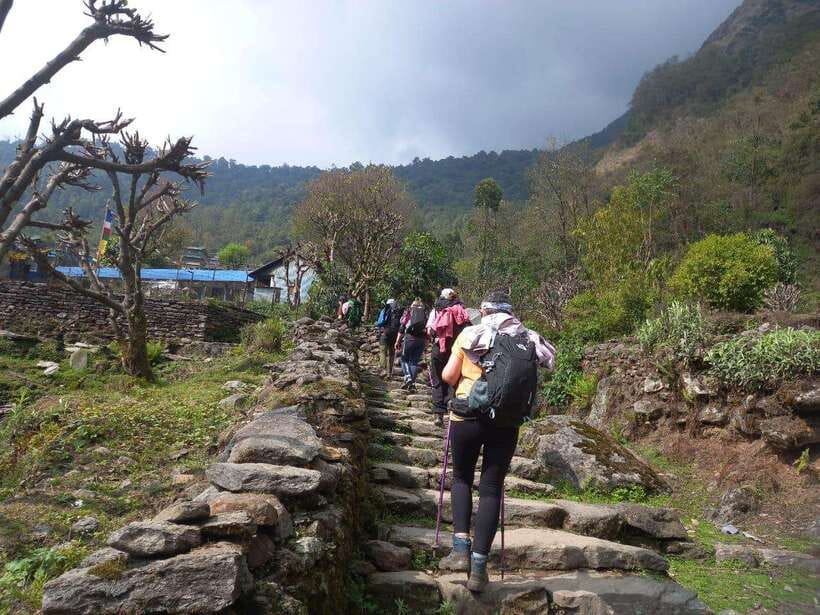
In this trek type, your guide is not just a person holding a map. They manage pacing, help you interpret conditions, and keep the group moving with fewer surprises. That is why the names you see in the feedback matter.
I like the way guides such as Raju and Smile are described as checking in often, keeping people calm, and recommending what to eat at different stops. I also like that some guides are praised for practical problem-solving, like adapting quickly when someone is dealing with an emergency or sickness.
You will also notice a theme: the best guides explain the route and the mountains in a way that makes the effort feel less random. People mention things like learning local culture and plant life, and getting help with trekking behavior at altitude. In other words, you are not just hiking. You are making sense of what is happening around you.
Another safety detail that you can feel good about: first aid is included, and water purification tablets are provided as required. Add trekking poles and proper boots, and you remove a lot of avoidable discomfort.
One important reality: the trek is not listed as suitable for people with mobility impairments, and the maximum age is set at 95. That is not negotiable for trail logistics.
Packing checklist that actually matches this trek’s altitude and weather
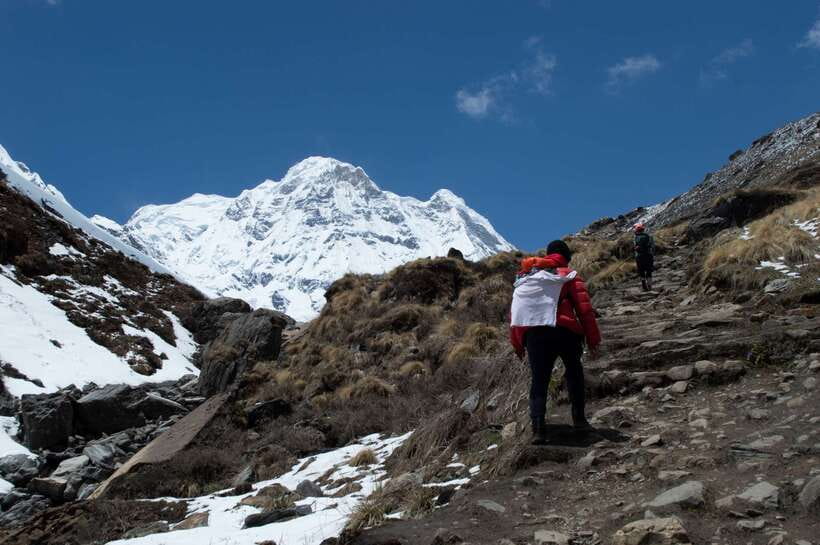
The package gives you a strong head start by offering borrowing of trekking poles, a sleeping bag, and a down jacket. Still, you need your base layers and footwear right.
Bring:
- down jacket or puffer jacket (even if borrowing is available, I still prefer having your own if you run cold)
- thermal base layers
- trekking pants
- half or full-sleeve T-shirts (based on weather)
- beanie, gloves, and a neck gaiter
- high-ankle waterproof trekking boots (recommended) plus warm socks
- towel, sunscreen, sunglasses
- a backpack or daypack, plus a water bottle or CamelBak
For cold or snowy conditions, crampons are mentioned as available or needed. If you are unsure about snow risk for your dates, ask before you commit.
Season temperatures help too:
- Spring and autumn (Mar-May, Sep-Nov): lows around -3°C to 3°C, highs roughly 2°C to 20°C
- Summer/monsoon (Jun-Aug): lows around 0°C to 5°C, highs about 5°C to 22°C
- Winter (Dec-Feb): lows around -10°C to -2°C, highs about -5°C to 15°C
If you go in rainy season, plan for wet gear and slower drying. That is not a comfort issue, it is a safety and energy issue.
Also do not forget paperwork. You will need passport details for permits, and you must send a copy of your passport plus a recent passport-sized photo at least one day in advance.
Tea houses, food, and the charging limits you should expect
This is a tea-house trek, so your “camping comfort” is really about what the guest house provides. Meals are included in the all-inclusive option (4 breakfasts, 5 lunches, 4 dinners). If you are not on the all-inclusive meals setup, you will need to budget for meals and snacks on the trail.
A big expectation-setting point: hot showers, Wi-Fi, and battery charging are listed as not included. That matches what people report from mountain stays. Bring a charging plan that does not rely on outlets, and treat phone battery like a limited resource, not a guarantee.
Rooms can also vary. Some people are comfortable with the standard setup, but if you are solo, you should be mentally ready for the possibility of sharing depending on lodge availability.
Who this ABC trek suits best
This is a good fit if:
- you want a short, structured trek with guided support and guest house nights
- you like big scenery days without carrying camping gear
- you want hot springs recovery built into the schedule at Jhinu Danda
- you are okay with long walking days and basic mountain amenities
It is not a good fit if:
- you need mobility-friendly terrain
- you are outside the supported age guidance (over 95)
- you cannot handle cold nights or persistent wet conditions during monsoon months
Should you book this 5-day Annapurna Base Camp trek?
I would book this if you want a real ABC experience in only 5 days, and you like the idea of having logistics handled: pickup, permits, a licensed guide, equipment borrowing, and tea-house lodging for 4 nights. The sunrise moment plus Jhinu Danda hot springs is a smart combo, especially for morale on a hard trek.
Before you hit reserve, be honest about two things: your walking stamina on the long Day 4 return, and your weather readiness. Bring warm layers, waterproof boots, and a plan for wet days.
If that sounds like you, this is a strong value way to reach Annapurna Base Camp at 4,130 m without turning your vacation into a gear headache.
Lodge to Lodge Around Pokhara
The Rest of Our Pokhara Write Ups
Through the Sanctuary Gate
Everything else we have reviewed around Pokhara
- Pokhara: Cable Car Tour – Bird Eye View of Mountain & Lake
★ 4.4 · 3 reviews - Jomsom Muktinath Tour by 4WD SUV 2 Days
★ 5.0 · 3 reviews - Ghorepani Poonhill Private Trek – 2 nights / 3 days
★ 4.5 · 3 reviews - Pokhara: 30-Minute Paragliding Adventure with pick up/drop off
★ 4.5 · 3 reviews - Pokhara: 7-Day Annapurna Base Camp Trek via Ghandruk
★ 4.3 · 3 reviews - Pokhara Group Joining Sarangkot Sunrise Himalayas Tour
★ 5.0 · 3 reviews
Annapurna Base Camp Treks worth a second look.
 ★ 5.0Annapurna base camp trek 5 DaysFrom $699252 reviews
 ★ 5.0Annapurna Base Camp TrekFrom $935111 reviews
 ★ 5.0Kathmandu to Annapurna Base Camp (ABC) 5-Day TrekFrom $99102 reviews
 ★ 5.0Annapurna Base Camp Trek 12 DaysFrom $80085 reviews
★ 5.0Annapurna Base Camp TrekFrom $92580 reviews
★ 5.0Annapurna Base Camp TrekFrom $69959 reviews
★ 5.0Annapurna Base Camp Trek 12 DaysFrom $80085 reviews
★ 5.0Annapurna Base Camp TrekFrom $92580 reviews
★ 5.0Annapurna Base Camp TrekFrom $69959 reviews
 ★ 5.011-Day Hike Tour to Annapurna Base Camp Bliss in KathmanduFrom $1,30052 reviews
 ★ 5.0Private 7 – Day Annapurna Base Camp TrekkingFrom $62550 reviews
Lists this tour sits in