
REVIEW · ANNAPURNA BASE CAMP TREKS
Private 7 – Day Annapurna Base Camp Trekking
Seven days in the Annapurnas can feel like a dream. This private trek gets you to Annapurna Base Camp with all the hard logistics handled, so your job is to move at your pace and enjoy the big mountain scenery. I especially like that your guide and porter fees are included, and you don’t have to negotiate the usual trek stuff day by day.
The main consideration is physical, because the route mixes real uphill climbs with a lot of stairs and up and down. If your legs hate stairs, plan to go slow and lean on your guide’s pacing.
You also get practical climbing support that matters at altitude, including oxygen saturation checks and water purification, plus an ACAP permit package. If you’re the type who wants fewer worries and more summit-time, this structure helps.
In This Review
- Key highlights worth your attention
- Why a private Annapurna Base Camp trek from Pokhara is such a good match
- Pokhara morning start: meeting point, pickup, and timing
- Day 1 to Chhomrong: terrace breakfast views and a 2.5-hour jeep transfer
- Day 2 through Chhomrong Khola: the 2500-stair descent, then uphill to Sinuwa and Bamboo
- Day 3 toward Deurali: past Dovan, the Weeping Wall, and the climb to Himalaya Hotel
- Day 4 to Annapurna Base Camp: Modi River, alpine forests, an icy cave, and arrival
- Day 5 at Annapurna Base Camp: the 360-degree panorama and time to explore
- Day 6 return with Jhinu Danda hot spring: bamboo forests, ridge walking, and sore-leg relief
- Day 7 back to Pokhara: breakfast views, Samrung walk, and a private jeep drive down
- Price and what you are really paying for at $625 per person
- How the included oxygen checks and water purification change the trip
- Fitness, stairs, and altitude reality checks (without scaring yourself)
- Who should book this private ABC trek (and who should think twice)
- Should you book this private 7-day Annapurna Base Camp trek?
- FAQ
- Where does the trek start and what time?
- How long is the Annapurna Base Camp trek?
- Is this a private trek?
- What’s included in the price for the trek?
- What is not included?
- Do I need travel insurance?
- What is the cancellation policy?
Key highlights worth your attention
- Private trek for your group means no mixing, no waiting around for strangers, and a pace that fits you
- Guide and porter included, including their expenses, so costs stay predictable
- Meals and lodge accommodation on the trek take the daily decision-making out of it
- ACAP and necessary permits included, keeping you on the legal trail
- Base Camp with panoramic views plus time for exploration, not just a stamp-and-go visit
- Jhinu Danda hot spring stop gives you a real recovery moment on the way down
Other approaches to the Sanctuary gate
Why a private Annapurna Base Camp trek from Pokhara is such a good match
Annapurna Base Camp is one of those Nepal treks that pulls you in fast. You start near Pokhara, then you gradually step into thicker air, colder nights, and sharper scenery. What makes this specific experience attractive is how it’s set up as a private seven-day trek for your group, with a guide and porter where the logistics are part of the service, not something you manage.
In plain terms, it’s built for people who want the trail experience, but don’t want to play “operations manager.” You get your meals and lodge stays during the trek, plus permits handled for you. That’s the kind of value that shows up when you realize how many small decisions and phone calls usually happen around a trek like this.
The best part is also the simplest: you can go at your pace. The itinerary is structured, but it’s not trying to force a race. With a private guide, you can lean into your comfort level, especially if altitude is new to you.
Pokhara morning start: meeting point, pickup, and timing
Your trek starts back in Pokhara Lakeside, at the meeting point listed on Lakeside Rd. The start time is 8:15 am, which is a good hour because you’re not rushed into cold weather movement right away. The operator also offers pickup, so you’re less likely to arrive flustered and behind schedule.
A small but useful detail is the mobile ticket included. It may sound minor, but it usually means fewer paper hassles once you’re already tired from travel days.
If you’re thinking about pre-trek planning, arrive the day before if you can. That gives you time to settle in Pokhara and get ready for a day that includes a road transfer before you even start hiking.
Day 1 to Chhomrong: terrace breakfast views and a 2.5-hour jeep transfer
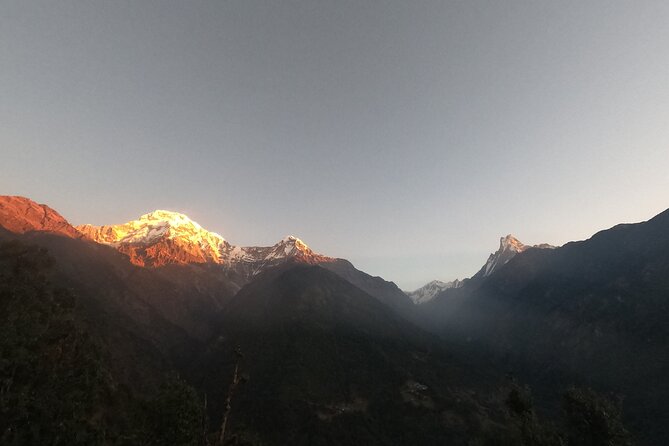
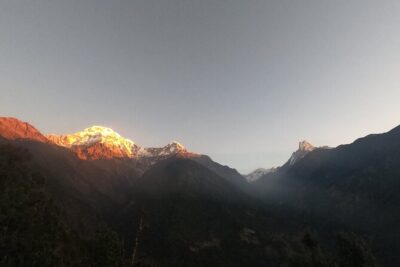
Day 1 begins with a breakfast that looks out over Annapurna I (8091m) and Machhapuchhre (6997m). That terrace-view start matters more than people think, because it puts you in the right mindset before you start climbing or descending for real.
Then you pack up and take a jeep ride for about 2.5 hours to Chhomrong. This is one of the ways the trek reduces friction. Instead of spending your first day just trying to reach the trail, you roll into the mountain zone earlier.
Chhomrong is a classic trekking base area, and it’s a smart first hiking night because it helps you adjust to the rhythm of the trek. You’ll likely feel the altitude change more as the days go on, but Day 1 is a gentler entry.
Day 2 through Chhomrong Khola: the 2500-stair descent, then uphill to Sinuwa and Bamboo
Day 2 starts with a real taste of Nepal trail work. You descend about 2500 stone steps and cross the bridge above Chhomrong Khola, then you turn uphill again toward Sinuwa.
The mix is the point. Big down sections build your legs in a different way, and then the climb forces you to work steadily instead of rushing. It’s also why having a guide who controls pace is valuable. If you’ve ever started downhill too fast, you know how quickly that can turn into regret later.
You’ll have lunch in Sinuwa, then continue trekking to Bamboo for overnight. A key value here is predictability: your meals and lodge accommodation are included on the trek, so you’re not trying to figure out where you will eat at the end of a long walking segment.
If you’re worried about tired legs, this is the day to take extra slow steps. One of the most repeated practical comments about this region is that the trail can mean a lot of stair climbing and descending, which is tiring even when the views are stunning.
Private guides for Pokhara, a few more
Day 3 toward Deurali: past Dovan, the Weeping Wall, and the climb to Himalaya Hotel
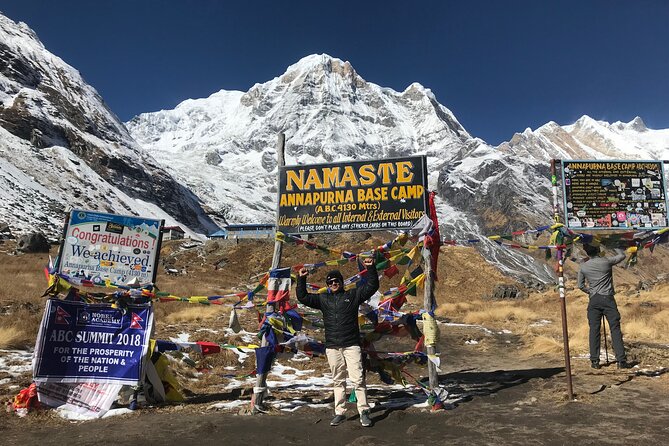
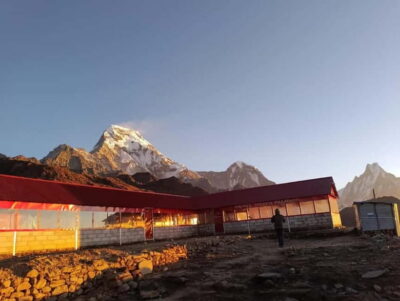
Day 3 begins after breakfast with a move out of Bamboo village. You start climbing toward the Himalaya Hotel, and the scenic route goes past Dovan and along the weeping wall, plus a local shrine.
That weeping wall detail is a classic kind of trail landmark. It’s the sort of thing that breaks up the climb visually, and it also gives you a mental check-in point, so the hours don’t blur into one long grind.
This is also where tea house trekking starts to feel real. Your legs are working, your air gets sharper, and you start noticing how your body wants steady effort, not spurts.
Plan on a day that’s all about consistency. With a private guide, you can stick to a pace that keeps you comfortable, especially if altitude is already starting to make you breathe a little harder.
Day 4 to Annapurna Base Camp: Modi River, alpine forests, an icy cave, and arrival
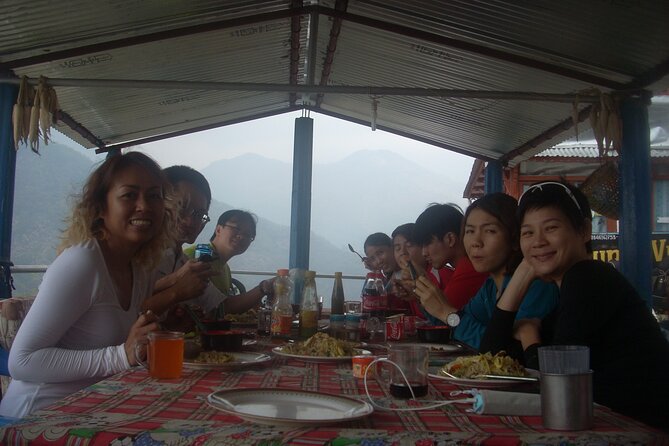
On Day 4 you leave Deurali and the trail climbs alongside the Modi River through alpine forests. You’ll pass a neatly decorated stack of rocks along the way, which is both cultural and practical. Those small features help you feel oriented on the trail.
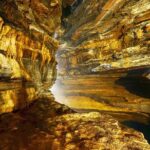
As you keep going, the climb gets harder. The route is described as passing an icy cave before continuing into the Annapurna Base Camp area. That portion is often where people feel the altitude and the effort together.
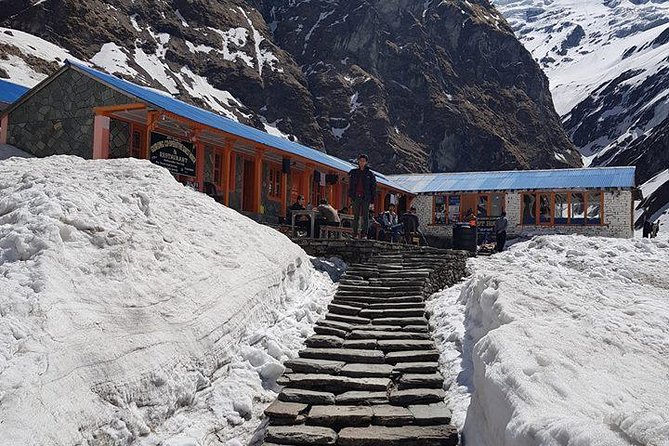
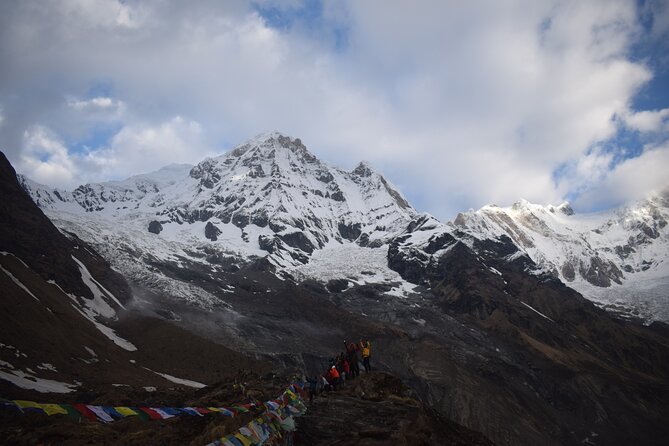
What I like about reaching Base Camp is that it’s not just a destination. When you arrive, you finally get a sense of scale. You’re high enough to see how everything connects, and the effort starts to make sense.
Even if you’re not doing big summit-style exertion, this day is about holding focus through a tough climb and getting yourself to the spot where the views are the reward.
Day 5 at Annapurna Base Camp: the 360-degree panorama and time to explore
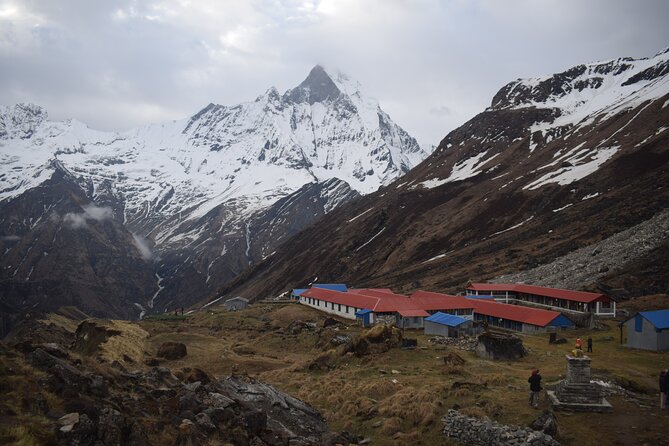
Day 5 is your Base Camp exploration day. The high-altitude region gives you a panoramic 360-degree view of the mountains. You get to enjoy the Annapurna massif and the surrounding peaks from the Base Camp zone, and the experience is described as a chance to explore the area, not just reach it and move on.
This is also a smart day to keep expectations realistic. Base Camp viewing feels almost unreal, but it can also be physically demanding just standing still in cold air. Take breaks. Keep moving slowly. Let your guide handle the timing so you don’t rush the moment.
One of the best values here is that the trek is private, so you’re not forced into a tight group schedule. That flexibility matters because you might want a bit more time at the viewpoints, or you might want a quieter break when the air feels thin.
Day 6 return with Jhinu Danda hot spring: bamboo forests, ridge walking, and sore-leg relief
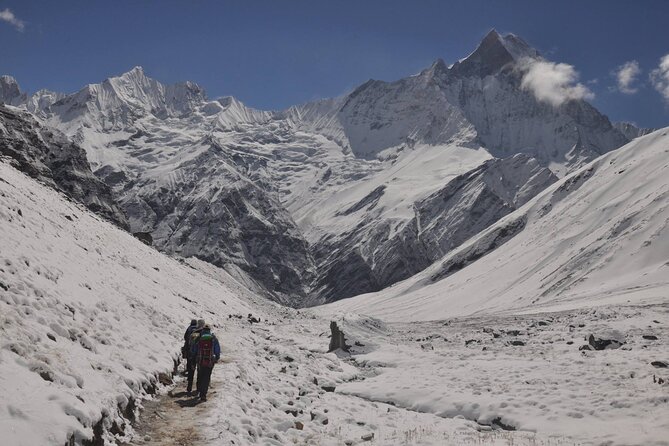
Day 6 is a payoff day. You leave Bamboo and climb through lush bamboo forests, then walk along a narrow ridge toward Sinuwa village. After that, you begin a downhill stretch toward the Chhomrong River area.
Then the itinerary includes Jhinu Danda Hot Spring. This is a genuinely useful stop for your comfort. Even if you don’t expect miracles, a hot spring is a practical recovery tool on a trek that includes plenty of stairs and long walking days.
If you’re going to feel anything in your knees or feet, Day 6 is where people start noticing it. The trick is to keep your effort smooth on the descent and let the hot spring help you reset for the final transfer day.
Day 7 back to Pokhara: breakfast views, Samrung walk, and a private jeep drive down
Day 7 starts with another breakfast with views over Annapurna I and Machhapuchhre. You then take a short walk to Samrung and get into a private jeep to drive back toward Pokhara. The return route follows the road described as Baglu…, then you head back to your Pokhara Lakeside meeting point to end the experience.
I like this structure because the last day includes movement, but it avoids the “one more huge mountain day” feeling. You get to see the scenery one more time before swapping trail dust for city air.
Also, Day 7 is when you’ll notice what your body learned. Even if you’re tired, the trek ends with a sense of closure, not confusion.
Price and what you are really paying for at $625 per person
At $625 per person, the real question is not just whether it’s “cheap” or “expensive.” It’s whether the package bundles the things that usually cost extra or create extra hassle.
Here’s what’s included that tends to drive cost and planning effort:
- Government registered trekking guide and porters, including their expenses
- Lodge accommodation on trek
- Meals on trek: breakfast (7), lunch (6), dinner (6)
- ACAP and necessary permits
- Overland transportation as described in the route
- Trekking map, oxygen saturation, water purification, duffle bag, and water purification support
- Emergency rescue evacuation assistance
- Public liability insurance, plus government tax and service charge
And here’s what’s not included:
- Hotel accommodation in Kathmandu and Pokhara
- Travel insurance
- Tips for guide and porter
For many people, private trekking feels like a splurge until you count what’s handled already. If you’ve priced a guide, a porter, permits, and a meal plan before, the value logic makes more sense. In other words, this package is paying for reduced risk and reduced planning stress, not just for walking in the mountains.
The tour also lists that it’s booked on average 52 days in advance, which is usually a sign of steady demand. If you want specific guiding availability or better weather odds, earlier planning can help.
How the included oxygen checks and water purification change the trip
Two inclusions stand out because they directly affect how you feel on the trail.
First is oxygen saturation. Altitude is part of Annapurna Base Camp. Even if you consider yourself fit, your body can still react. Having oxygen saturation support and monitoring as part of the trek service helps you treat altitude seriously, not casually.
Second is water purification and purification support. Trekking dehydration creeps up quietly. Having this included makes it more likely you can drink responsibly without constantly worrying whether you’re cutting corners.
Also included are practical items like a trekking map and a duffle bag. Those aren’t glamorous, but they reduce the chance that small logistical stuff turns into big daily stress.
Finally, the inclusion of assistance for emergency rescue evacuation matters. It’s not a guarantee of anything, but it’s the kind of backing that helps you feel safer when you’re far from hospitals.
Fitness, stairs, and altitude reality checks (without scaring yourself)
This trek is listed for travelers with moderate physical fitness. That’s consistent with the route description: you’ll deal with long walking days and big altitude steps. Day 2 alone includes a descent of about 2500 stone steps, and Day 6 includes narrow ridge walking and downhill segments.
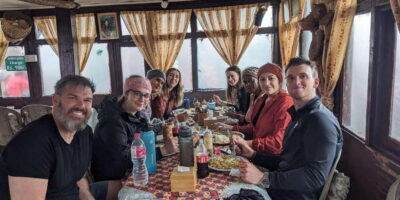
One practical note that comes up in group feedback is that the trek can include tiring, boring stairs even when the views keep you motivated. So if your training is mostly flat walking, this is where you’ll feel the difference.
The good news is the trek is private and paced at your speed. If you pay attention to your body, slow down before you feel awful, and listen to your guide, you’ll give yourself the best chance to enjoy each day instead of merely surviving it.
Travel insurance is explicitly called out as something you should arrange. That’s not just paperwork. It’s part of being responsible at altitude.
Who should book this private ABC trek (and who should think twice)
Book it if:
- You want a private trek for your group, with fewer moving parts
- You prefer having meals and lodge accommodation included during the trek
- You want permits handled through ACAP
- You like the idea of tea house trekking and a realistic seven-day schedule
- You want a recovery stop with Jhinu Danda hot spring
Think twice if:
- You dislike stairs and constant up/down trails and you have limited leg strength
- You’re not comfortable with moderate physical demands
- You don’t plan to get travel insurance before you go
If you’re an experienced trekker, you might find the pace comfortably structured. If you’re new to Nepal trekking, the included support items and guided logistics can make the whole thing feel smoother.
Should you book this private 7-day Annapurna Base Camp trek?
I’d book this if your top priorities are comfort with planning, safety support like oxygen saturation and purification, and a private pace that keeps you from getting swept into a sprint. The itinerary is built around real trekking days, but it also gives you classic rewards: Chhomrong scenery, the climb to Base Camp, a 360-degree panorama day, and hot spring recovery.
Don’t book it only for the views if you hate stairs. If you can handle moderate fitness and you’re ready to go slow, the included structure at $625 per person can feel like a smart deal, not a gamble.
FAQ
Where does the trek start and what time?
It starts at Pokhara Lakeside at 8:15 am, using the listed Lakeside Rd meeting point. The activity ends back at the same meeting point.
How long is the Annapurna Base Camp trek?
The trek is listed as 7 days, approximately.
Is this a private trek?
Yes. It is private, and only your group participates.
What’s included in the price for the trek?
Included are a government registered trekking guide and porters (their expenses too), lodge accommodation along the trek, ACAP and necessary permits, overland transportation as mentioned, a trekking map, oxygen saturation, water purification, a duffle bag, and emergency rescue evacuation assistance. Meals on the trek are also included (7 breakfasts, 6 lunches, 6 dinners), along with public liability insurance and government tax and service charge.
What is not included?
Hotel accommodation in Kathmandu and Pokhara is not included. Travel insurance is not included, and tips for the guide and porter are also not included.
Do I need travel insurance?
Yes. The trip notes specifically say to make sure you get travel insurance before you go.
What is the cancellation policy?
Cancellation is free if you cancel up to 24 hours in advance for a full refund. If you cancel less than 24 hours before the experience starts, the paid amount is not refunded. If poor weather cancels the experience, you are offered a different date or a full refund.
Pokhara Without the Group Bus
The Rest of Our Pokhara Write Ups

Through the Sanctuary Gate
Everything else we have reviewed around Pokhara
- Pokhara: Cable Car Tour – Bird Eye View of Mountain & Lake
★ 4.4 · 3 reviews - Jomsom Muktinath Tour by 4WD SUV 2 Days
★ 5.0 · 3 reviews - Ghorepani Poonhill Private Trek – 2 nights / 3 days
★ 4.5 · 3 reviews - Pokhara: 30-Minute Paragliding Adventure with pick up/drop off
★ 4.5 · 3 reviews - Pokhara: 7-Day Annapurna Base Camp Trek via Ghandruk
★ 4.3 · 3 reviews - Pokhara Group Joining Sarangkot Sunrise Himalayas Tour
★ 5.0 · 3 reviews
Annapurna Base Camp Treks worth a second look.
 ★ 5.0Annapurna base camp trek 5 DaysFrom $699252 reviews
 ★ 5.0Annapurna Base Camp TrekFrom $935111 reviews
 ★ 5.0Kathmandu to Annapurna Base Camp (ABC) 5-Day TrekFrom $99102 reviews
 ★ 5.0Annapurna Base Camp Trek 12 DaysFrom $80085 reviews
★ 5.0Annapurna Base Camp TrekFrom $92580 reviews
★ 5.0Annapurna Base Camp Trek 12 DaysFrom $80085 reviews
★ 5.0Annapurna Base Camp TrekFrom $92580 reviews
 ★ 4.95-Day Annapurna Base Camp (ABC) TrekFrom $9672 reviews
★ 5.0Annapurna Base Camp TrekFrom $69959 reviews
★ 4.95-Day Annapurna Base Camp (ABC) TrekFrom $9672 reviews
★ 5.0Annapurna Base Camp TrekFrom $69959 reviews
 ★ 5.011-Day Hike Tour to Annapurna Base Camp Bliss in KathmanduFrom $1,30052 reviews
Lists this tour sits in