
REVIEW · ANNAPURNA BASE CAMP TREKS
Annapurna base camp trek 5 Days
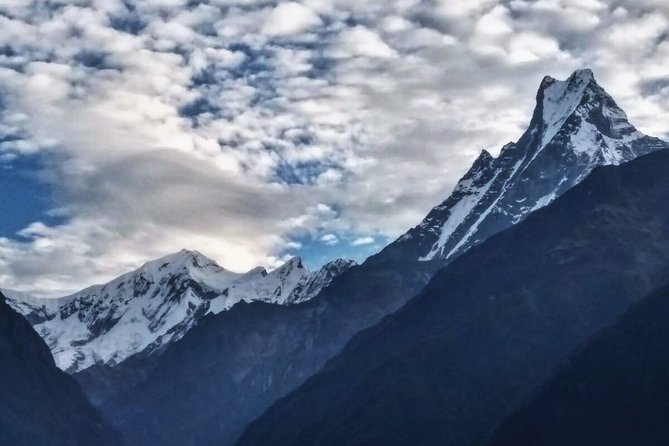
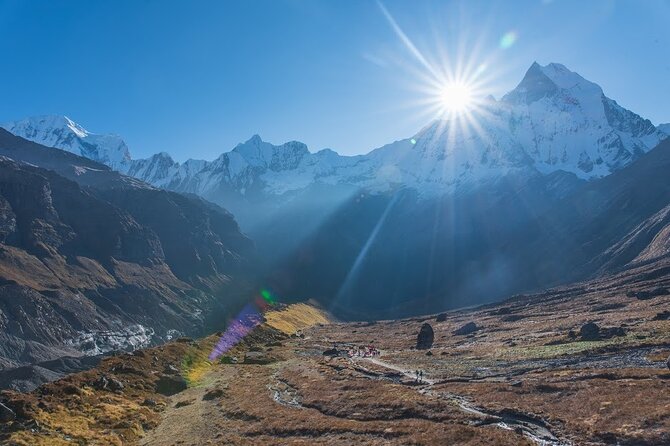
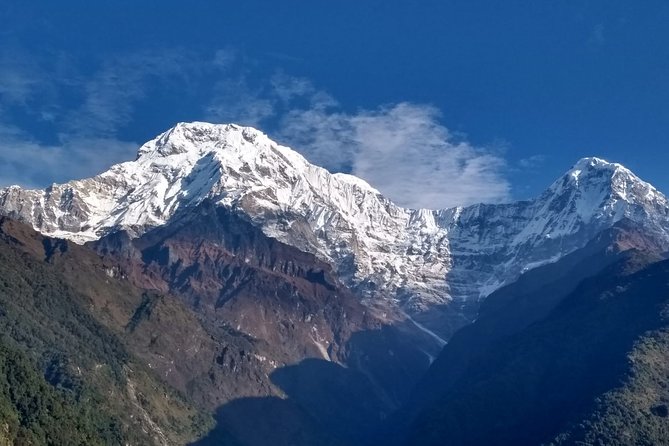
Base Camp in six days, minus the guesswork. What makes this trek feel manageable is the way it bundles airport transfers and the tourist bus to Pokhara with tea house lodging, meals, permits, and an English-speaking guide to smooth out the logistics so you can focus on the trail and the views. You get a classic Annapurna Base Camp run with the iconic Fish Tail (Machhapuchare) showing up in the scenery that people dream about.
I also like the pace for a short trek like this. You warm up around Pokhara, then you move into the Annapurna foothills through villages and forested paths, with sunrise moments from places like Sinuwa. One drawback to keep in mind: a couple of poor experiences point to inconsistent water support, including cases where water purification tablets were forgotten or later handled awkwardly. That is solvable, but you should plan to carry your own backup water treatment.
In This Review
- Key points to know before you go
- A short route with big views: what you are really buying
- From Kathmandu to Pokhara Lakeside: day one warm up
- Birethati and the Chhomrong area: day two and the first real walking day
- Upper Sinuwa sunrise lodge: day three’s quiet payoff
- The push to Annapurna Base Camp: where the route earns its name
- Machhapuchare and a lodge morning: day five’s second sunrise focus
- Jhinu hot spring, Chomrong, and the steep descent back to Siwai: day six
- Price and logistics: is $699 a good deal?
- Gear, tea houses, and the water question you should not ignore
- Who should book this Annapurna Base Camp trek
- Small group size: why it affects your comfort
- Should you book this trek? My decision guide
- FAQ
- What time does the trek start each day?
- How long is the trek?
- What is included in the trek package?
- How many people are in the group?
- Are airport transfers included?
- What happens if the trek is canceled due to weather?
Key points to know before you go
- Short-route timing, real altitude time: You can target Annapurna Base Camp without a long multi-week commitment, but you still get sustained mountain walking.
- Included permits and guiding: Permits, a friendly guide, and tea house stays are part of the package, which reduces hassle when you are focused on trekking.
- You travel Kathmandu to Pokhara first: That first day is mostly transfer and lakeside settling in, then the walking starts.
- Sunrise viewpoints matter here: Places like Upper Sinuwa are built into the route for morning mountain views when weather cooperates.
- Water logistics can be a weak spot: Bring your own purification tablets or filter plan in case the group supply is missing.
Other approaches to the Sanctuary gate
A short route with big views: what you are really buying
This is an Annapurna Base Camp trek designed for people who want the famous high-mountain payoffs without an overly long trek plan. You are paying for more than hiking. You are paying for transportation from Kathmandu to Pokhara, the back-and-forth ground movement during the trek, tea house sleeping and meals, permits, and a guide to keep everything running.
For value, I focus on what you do not have to sort out yourself. Permits and ground logistics can eat time and energy, especially if you are not already familiar with Nepal trekking routes. Here, those tasks are handled for you, and the guide is English-speaking. That matters because on shorter itineraries, every saved headache helps.
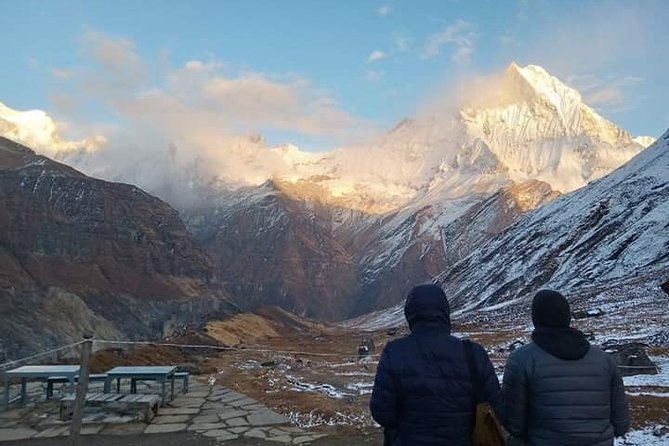
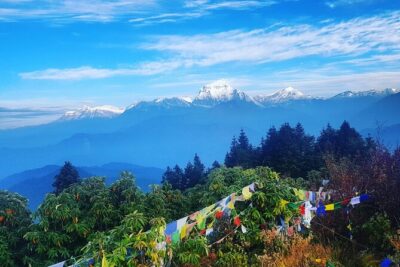
The views are the headline, and they are why people do this route at all. Annapurna Range scenery is dramatic, and Machhapuchare, also called Fish Tail, is the mountain that gets talked about again and again. In practice, you are likely to see it from viewpoints and lodge mornings, not only from the final base camp moment.
From Kathmandu to Pokhara Lakeside: day one warm up
Day one is all about transition. You start from Kathmandu with a scenic drive to Pokhara on the Prithvi highway by tourist bus. The timing listed is about seven hours, so it is a real travel day, not a quick hop. Once you arrive, you spend time around Pokhara Lakeside, visiting the tourist area.
What I like about this structure is that it gives you a night at lower elevation before the trek begins in earnest. It also lets you handle small needs like snacks, charging devices, and getting your bearings in a place that is used to trekkers.
What to watch for: after a long drive, you might be tempted to do too much exploring right away. I would keep it simple, aim for an easy evening, and treat sleep like part of your training.
Birethati and the Chhomrong area: day two and the first real walking day
After breakfast in Pokhara, you drive to Siwai by local jeep, with a listed travel time of about two hours. Along the way, you stop at Birethati, which is described as an entering point.
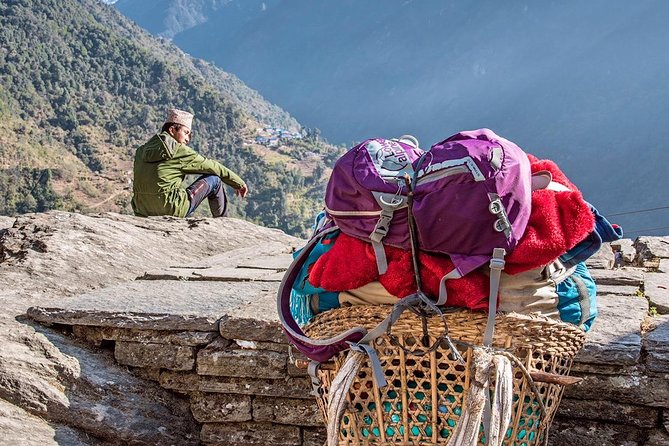
This is an important day for mental prep. You are moving from the world of roads into the world of footpaths. Even if day two does not feel like a huge climb, it is when your body learns that you are carrying your day pack, walking at a steady effort, and living with changing temperatures.
A small practical note: because this trek includes tea house accommodation, you will want to plan your pace around when you will reach lodging. That keeps you from arriving tired and cold, then rushing through dinner and sleep.
Upper Sinuwa sunrise lodge: day three’s quiet payoff
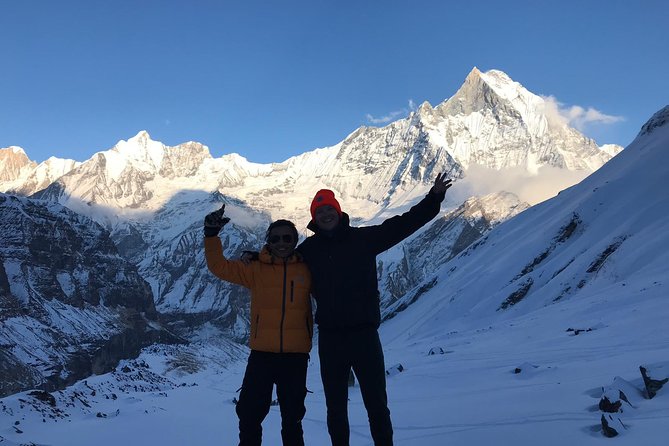
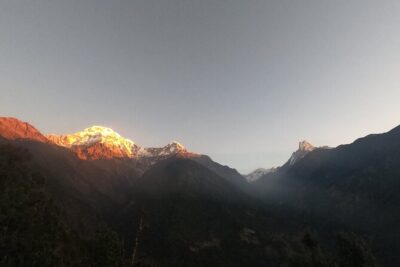
Day three is framed around a sunrise routine. You wake up, and the route highlights a morning cup of tea and a view of the White Mountain, weather depending. Then you descend along the trail.
Upper Sinuwa, with its hilltop lodge and restaurant, is the kind of stop that makes short treks feel special. You do not just walk for miles. You get a lodge morning where you can take in big peak silhouettes, then keep moving.
The drawback is also obvious: sunrise views are weather dependent. If clouds roll in, the morning may be more about atmosphere and less about crisp mountain drama. That is normal for this region, but it is good to set expectations so you do not feel like the trek is underdelivering.
Other lodge to lodge routes near Kathmandu
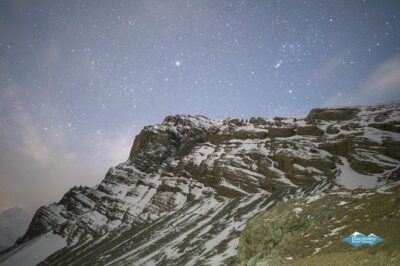
The push to Annapurna Base Camp: where the route earns its name
Day four is the big one: reaching Annapurna Base Camp on foot. The trek description connects it to the world’s tallest-mountain rankings, and it positions base camp as the day you earn the payoff. This is where you stop thinking like a tourist and start thinking like a hiker, step by step.
Even without getting overly technical, you should plan this day as a steady effort day. Base camp trekking is not about one heroic sprint. It is about keeping your breathing calm and your pace consistent so you do not burn out early.
Also, this day is where your included logistics start to feel real. You are not worrying about permits, lodging choices, or which route variations to take. The guide handles the plan so your attention stays on walking and staying comfortable.
If you are sensitive to altitude, this is also the day to be disciplined about rest stops and water. Short treks can still challenge you.
Machhapuchare and a lodge morning: day five’s second sunrise focus
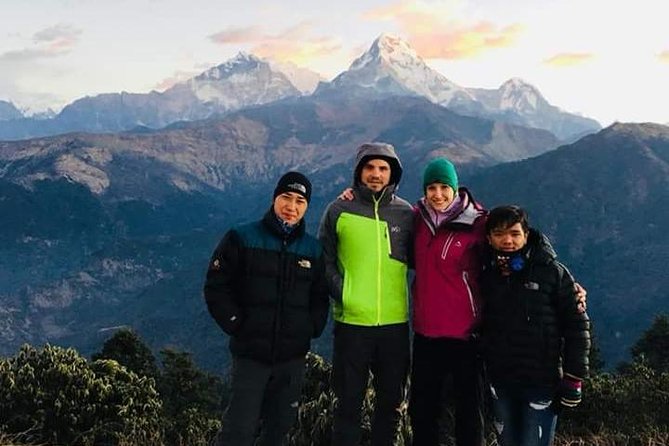
Day five keeps the mountain theme alive with a morning explore. You walk up a bit from Sinuwa hilltop lodge and restaurant to experience a sunrise scene over Machhapuchare and Annapurna. After breakfast, you continue on the trail.
I like the structure here because it gives you a second shot at that morning light drama, instead of betting everything on day four. Many treks give you one peak morning, then move on. This one gives you two concentrated view moments, which is a smart design for a short itinerary.
Practical consideration: walking up a bit to get a viewpoint means your day starts earlier in a practical sense. That is fine, as long as you go to bed early enough the night before.
Jhinu hot spring, Chomrong, and the steep descent back to Siwai: day six
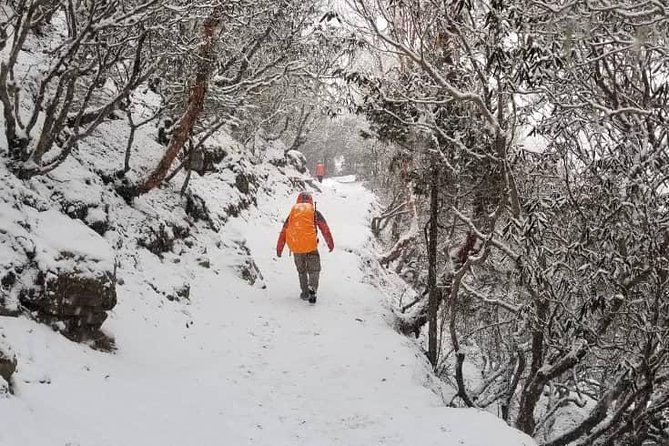
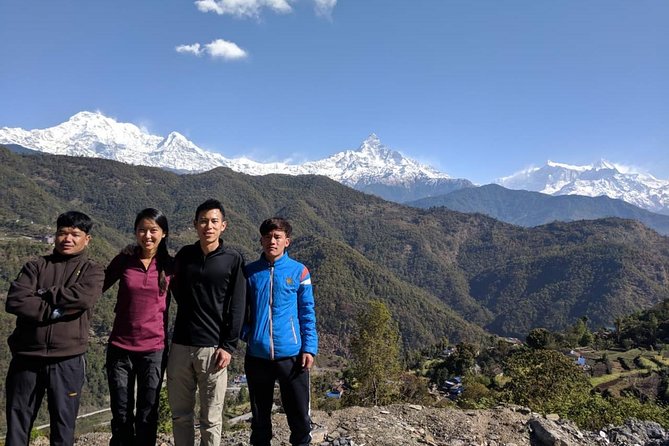
Day six starts after breakfast. You follow the same trail until Chomrong. From Chomrong, the description says the trail descends very steeply to Jhinu hot spring. After that, from Jhinu Dada you trek down to Siwai for about two hours, then you take a local jeep.
Hot springs at the end are a classic reason people do this trek route. It is not just entertainment. It is also a built-in chance to stretch out sore legs in a setting that fits the area.
The main caution is the steep descent. Even if you feel strong going up, downhill can be harder on knees and ankles. I would plan to take it slow, shorten your stride, and keep your weight controlled.
Once you are back toward Siwai and jeep transport, your day becomes less about hiking and more about transitioning back to road travel.
Price and logistics: is $699 a good deal?
The price is listed as $699 per person, and this is booked about 48 days in advance on average. For that money, you are getting a lot of the heavy lifting.
Here is what the package explicitly includes:
- Airport pick and drop off plus ground transportation, including the tourist bus to Pokhara
- Trekking guide who is English speaking
- Tea house accommodation during the trek
- Permits and all fees and taxes
- Meals: 5 breakfasts, 5 lunches, 5 dinners listed for the trek days
- Down jacket and sleeping bag
- A farewell dinner
- Certificate of achievements, plus an ART’s free t-shirt
- Insurance and the guide’s equipment and salary are listed as included
If you try to price those parts separately, it is usually the permits, guiding, and transport that add up quickly. This package also covers the big practical gear items listed. Many trekkers end up paying extra for those if they are not bringing them.
The one caveat is that trekking still runs on weather. If the trek is canceled due to poor conditions, the policy says you get offered a different date or a full refund. That is good, but it still means your plan may shift.
Gear, tea houses, and the water question you should not ignore
This trek includes down jacket and sleeping bag, which is a huge help if you do not already own cold-weather gear. It also includes tea house lodging, meaning you do not need to camp. Tea houses are the practical engine of short base camp treks, and they work because they keep you fed and off the ground.
Water is the part I would treat as your personal responsibility. Two low-point experiences in the information you provided describe failures around water purification tablets, including a guide who forgot them and later asked group members to handle water in a pay-to-fix-it way. Another account describes a guide who did not seem prepared with the plan at the time and only resolved the situation later.
Even if those were outliers, the lesson is straightforward: do not count on the group to solve your water needs. Bring your own purification tablets or a filter as backup. If your plan depends on one supply item, you are setting yourself up for stress.
Also, since this trek includes meals on the trail, you will likely spend time drinking and eating from tea houses. That makes having a reliable water treatment system even more important.
Who should book this Annapurna Base Camp trek
This trek is a good fit if you want a short and classic Annapurna Base Camp experience with a guide handling permits and most logistics. It is designed for people with moderate physical fitness, and the route length is described as 6 days approx.
It is also a fit if you like structured days. You know what day five focuses on, you know day six includes Jhinu hot spring, and you know when base camp is the target.
If you are the type who likes to walk at your own speed without any schedule at all, this kind of organized trek may feel restrictive. But you can still make it yours with pacing, breaks, and how you pack your day.
If you have sensitive knees, you should take the steep descent seriously and plan slow steps on day six.
Small group size: why it affects your comfort
The group size is capped at maximum 12 travelers. For a base camp trek, that is small enough to feel like a real group, but big enough that you are not necessarily the only person asking questions.
In practice, small groups can mean less waiting around and more flexibility when weather or trail conditions shift. You also tend to get better guide attention when there are fewer people to manage.
The key is to communicate early. If you have altitude concerns, water needs, or pace preferences, bring them up at the start of the trek rather than waiting until you are tired.
Should you book this trek? My decision guide
I would book this Annapurna Base Camp trek if you want short-route convenience and you appreciate having permits, meals, tea house lodging, and transport handled. The price can be reasonable for what is included, especially the guide support, fees, and the cold-weather gear items listed. The sunrise-focused viewpoints and the Machhapuchare connection are also strong reasons to choose this specific route format.
I would pause or adjust your plan if you do not like the idea of group-level supplies being unreliable. Based on the negative experiences you shared, I would bring your own water purification backup no matter what is listed as included. If you do that, you reduce the biggest practical risk.
Here is my simple call:
- Book if you value organized logistics and you are happy to hike with a guide.
- Don’t rely on the group for water purification. Bring your own backup.
- Go only if you are ready for the steady effort of a mountain hike, not a leisurely stroll.
If you tick those boxes, this trek can deliver exactly what its name promises, Annapurna Base Camp, with Machhapuchare in the mix, in a timeframe that is realistic for many travelers.
FAQ
What time does the trek start each day?
The meeting start time listed is 6:45 am.
How long is the trek?
The duration is listed as 6 days approximately.
What is included in the trek package?
The package includes airport pick and drop off, ground transportation, trekking permits and fees, a local English-speaking guide, tea house accommodation on the trek, meals (5 breakfasts, 5 lunches, 5 dinners listed), down jacket and sleeping bag, and guide-related costs, plus a farewell dinner, certificate of achievements, and a hiking t-shirt.
How many people are in the group?
This activity has a maximum of 12 travelers.
Are airport transfers included?
Yes. Airport pick and drop off are included.
What happens if the trek is canceled due to weather?
It requires good weather. If canceled due to poor weather, you are offered a different date or a full refund.
Lodge to Lodge Around Kathmandu
The Rest of Our Kathmandu Write Ups

Through the Sanctuary Gate
Everything else we have reviewed around Kathmandu
- 12 Days Everest Base Camp Trekking
★ 5.0 · 3 reviews - 1 Night 2 Days Chitwan Jungle Safari Tour from Pokhara or Kathmandu
★ 3.0 · 3 reviews - Thamel Rickshaw tour
★ 4.7 · 3 reviews - Kathmandu: Momo Making Class with a Local Chef
★ 5.0 · 3 reviews - Kathmandu: Full-Day Yoga, Body Massage and Pedicure Package
★ 5.0 · 3 reviews - From Kathmandu / Pokhara / Chitwan: River Rafting – 1 Day
★ 4.6 · 3 reviews
Annapurna Base Camp Treks worth a second look.
 ★ 5.0Annapurna Base Camp TrekFrom $935111 reviews
 ★ 5.0Kathmandu to Annapurna Base Camp (ABC) 5-Day TrekFrom $99102 reviews
 ★ 5.0Annapurna Base Camp Trek 12 DaysFrom $80085 reviews
★ 5.0Annapurna Base Camp TrekFrom $92580 reviews
★ 5.0Annapurna Base Camp Trek 12 DaysFrom $80085 reviews
★ 5.0Annapurna Base Camp TrekFrom $92580 reviews
 ★ 4.95-Day Annapurna Base Camp (ABC) TrekFrom $9672 reviews
★ 5.0Annapurna Base Camp TrekFrom $69959 reviews
★ 4.95-Day Annapurna Base Camp (ABC) TrekFrom $9672 reviews
★ 5.0Annapurna Base Camp TrekFrom $69959 reviews
 ★ 5.011-Day Hike Tour to Annapurna Base Camp Bliss in KathmanduFrom $1,30052 reviews
 ★ 5.0Private 7 – Day Annapurna Base Camp TrekkingFrom $62550 reviews
Lists this tour sits in