
REVIEW · BHAKTAPUR & PATAN TOURS
Folklore and Everyday Life in Ancient Patan
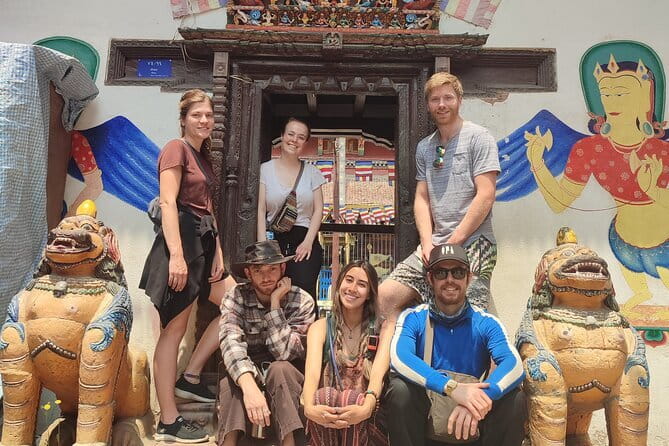
Patan stories live in courtyards. This short walk through old Patan connects folklore and faith to the everyday spaces people still use, from monastery courtyards to temple-filled squares. I especially like the way it links Newar Buddhism and Tantric Hinduism to what you can actually see and touch in daily life.
The tour is also strong because the group stays small and the guide style is warm and funny. I’ve heard praise for Sandip in particular, for explaining Hinduism and Buddhism in a way that feels practical, not academic. One drawback to plan for: it intentionally skips Patan Durbar Square, so if you want that palace complex, you’ll need extra admission on your own after the walk.
In This Review
- Key highlights you will actually feel on the street
- From Patan Dhoka to Swotha Square, a walk that feels locally planned
- How the tour frames faith: not as museum talk, but as daily space
- Stop 1: Pimbahal courtyard monastery, where woodwork signals devotion
- Stop 2: Nyakhachowk and the architecture of everyday pauses
- Stop 3: Nagbahaa and the surprising Greek thread in Buddhist and Hindu art
- Stop 4: Swotha Square, temples, shrines, and a natural landing spot
- Price and value: $65 for a guided, courtyard-first route
- Guide quality: why Sandip’s approach shows up in the praise
- Logistics you should plan for before you walk
- Who this tour suits best
- Should you book this Patan folklore and everyday life walk?
- FAQ
- FAQ
- What time does the tour start?
- How long is the walking tour?
- Where do I meet the guide, and where does the tour end?
- Is Patan Durbar Square included in the tour?
- What is included in the tour price?
- What is the cancellation policy?
Key highlights you will actually feel on the street
- A focused old-town route from Patan Dhoka to Swotha Square, ending close to Patan Durbar Square
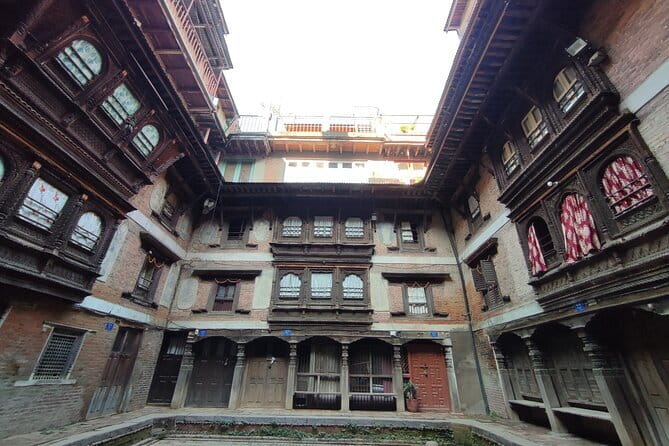
- Courtyard spirituality you can read with your eyes, especially at Pimbahal
- Tiny architectural details like falchaa resting areas and ancestral shrines at Nyakhachowk
- Ancient connections in the iconography at Nagbahaa, including Greek and Hellenistic influence
- Small group size of up to 10 with time for questions
- Free admission tickets for the listed stops, with extra costs only if you choose to add Patan Durbar Square
Old towns beyond Kathmandu, compared



From Patan Dhoka to Swotha Square, a walk that feels locally planned

You start at Patan Dhoka at 10:00 am, then your route winds through the old town in a way that makes sense for pedestrians. The end point is Swotha Square, and that matters because it leaves you right near the larger temple complex at Patan Durbar Square. If you want, you can continue on your own after the tour to visit that main site and the museum inside, but you will need to buy those tickets separately.
This is a tour length that works for jet lag and busy schedules. You’re looking at about 2 to 2.5 hours, with a pace built around short walks between courtyards and squares. With a cap of 10 travelers, it also feels more like a guided neighborhood walk than a bus-style sightseeing loop.
How the tour frames faith: not as museum talk, but as daily space
A big reason this works is the lens it uses. You’re not just collecting monuments. You’re learning how belief systems shape how people organize the city: where they pause, pray, store sacred objects, meet neighbors, and mark identity.
The theme centers on Newar Buddhism and Tantric Hinduism, and the tour repeatedly ties those traditions to places you can observe directly. Courtyards are the main stage. In Patan, those enclosed spaces often function like outdoor rooms for community life, and that is where spiritual practice blends into everyday rhythm.
As you walk, you’ll also pick up the idea that tradition is not frozen. Young people in Nepal are still part of this world, taking cultural norms with them while engaging modern values. That context helps the stories feel current, not stuck in a textbook.
Stop 1: Pimbahal courtyard monastery, where woodwork signals devotion
Your first meaningful encounter is Pimbahal, presented as a traditional courtyard settlement tied to spiritual practice and local knowledge. Pimbahal is also described as a respected Newar Buddhist monastery, with more than 4,000 ordained monks in the monastic order. That scale alone changes how you view the space. This is not a small side shrine, it is a living religious institution.
What to watch for here is the craft. The tour highlights the monastery’s intricate woodwork, and on a real street walk, that kind of detail is exactly what you miss when you only rush to big-name sights. Courtyard architecture also tends to guide your movement, pulling your attention inward where rituals and community meaning concentrate.
Good news: the stop is listed as admission free, so you can focus on observing instead of budgeting for entry at each step.
Stop 2: Nyakhachowk and the architecture of everyday pauses
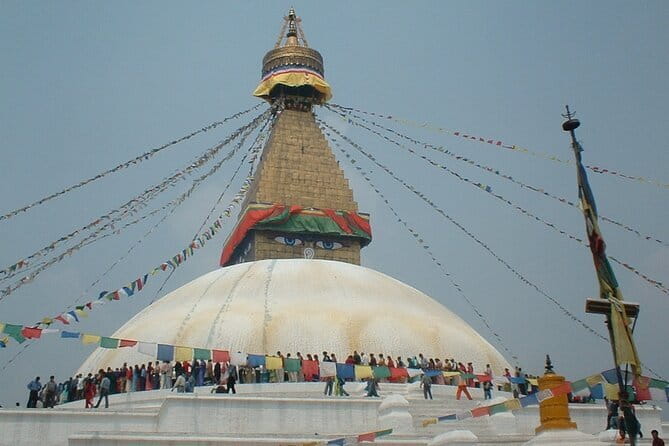
From Pimbahal, you move along a cozy path to Nyakhachowk, where the point is to show how traditional urban design supports daily life and faith. This stop focuses on specific architecture you can look for.
The tour calls out falchaa, which are resting areas. That sounds small, but it’s actually a clue to how the city works socially. In old towns, places to stop briefly matter, especially along routes that connect courtyards and shrines. Falchaa are one more way Patan’s sacred and practical worlds overlap.
You’ll also be pointed toward ancestral shrines and vernacular houses. That combination helps you understand that belief and family memory are not separate topics here. They live side by side in doorways, carved spaces, and the way courtyard life keeps family and community visible.
Like the first courtyard, this stop is listed as free admission.


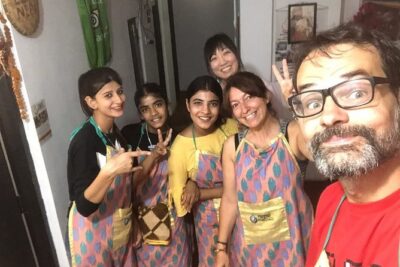

Stop 3: Nagbahaa and the surprising Greek thread in Buddhist and Hindu art
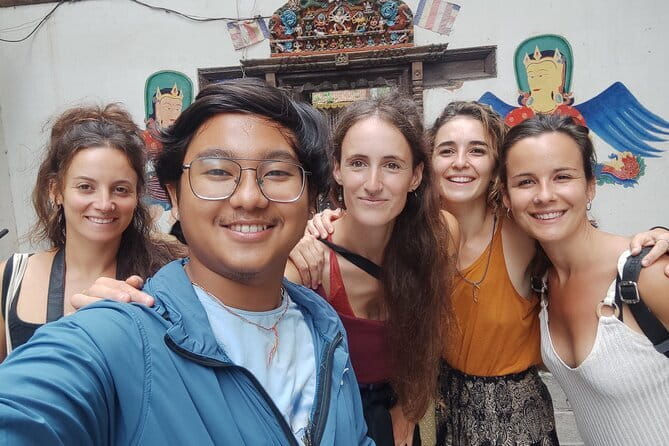
Next comes Nagbahaa (Nagbahaa), described as one of the largest courtyards in old Patan. This is where the tour expands beyond local life into a bigger historical conversation, using art as evidence.
The tour suggests that globalization shaped traditional art long ago, and it points to Greek influence and Hellenistic impressions in Buddhist and Hindu iconography. That’s a fascinating claim to keep in mind as you look around. Even without becoming an art historian, you can start training your eye to notice that religious art travels and transforms, picking up visual styles along the way.
Practically, this stop is also short, about 15 minutes. That’s enough time to get the interpretive frame, not enough time to linger forever. If you’re the kind of traveler who loves to stare at small carvings for a long time, keep your expectations realistic and save your extra time for later on your own.
Admission here is also listed as free.
Stop 4: Swotha Square, temples, shrines, and a natural landing spot

You end at Swotha Square, and the atmosphere shifts from courtyard focus to a more open square with multiple religious structures. The tour describes it as a beautiful area with temples, shrines, and tea shops.
That matters because it gives you a simple next step. You can take a break, refresh, and then decide what to do next. Since Patan Durbar Square is not included, Swotha Square works like a smart off-ramp. The tour notes that you can get guided directions toward Patan Durbar Square if you want to continue, then you explore independently.
If you do go to Patan Durbar Square, plan for extra admission fees, including for the museum inside the old palace. The tour specifically calls that museum out as worth visiting, so it’s a good follow-on if your day has room.
This stop is listed as free admission, but the cost will likely start later if you add the palace complex.
Price and value: $65 for a guided, courtyard-first route
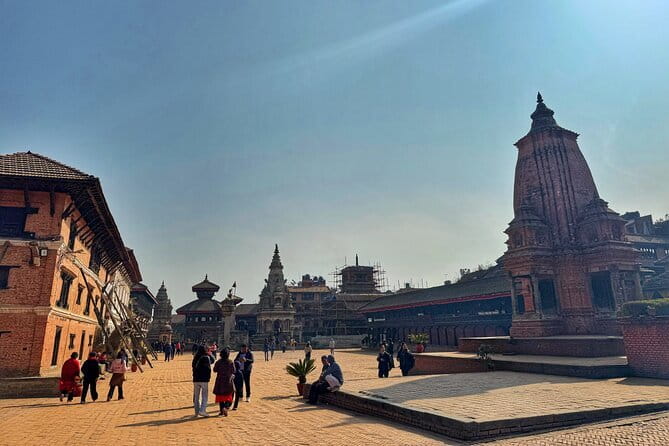
At $65 for about 2 to 2.5 hours, you’re paying for three things: a local guide, a tight route through meaningful places, and interpretive storytelling that helps you make sense of what you’re seeing.
The value improves because the listed stops have free admission tickets. So a good chunk of the cost goes to guiding and context rather than park tickets or repeated entry fees. The tour also runs with a maximum of 10 travelers, which usually keeps the experience from feeling rushed.
Two cost considerations to keep in mind:
- Patan Durbar Square is not covered, so if you want the main complex and museum, budget extra ticket time and money.
- No pickup or drop-off is included, so you’ll need to handle your own transport to the meeting point and from Swotha Square.
If you want a quick way to understand Kathmandu Valley culture without spending your whole day fighting crowds at the biggest sites, this price structure is reasonable.
Guide quality: why Sandip’s approach shows up in the praise
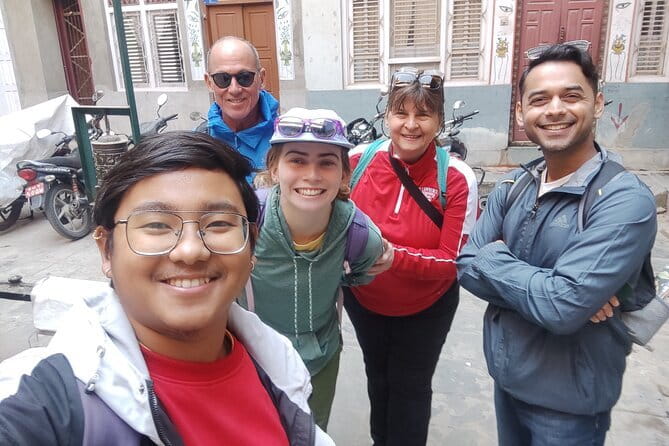
The best proof of value is how a guide turns confusing places into understandable scenes. In the feedback, Sandip comes up again and again, with people highlighting two traits: he points you to nice, hidden corners and he connects them to Hinduism and Buddhism in a way that stays clear. Humor also appears as part of his style, and that matters on a walking tour, because it keeps attention from slipping.
Another detail: one set of notes also mentions Pinhua alongside Sandip. I cannot promise every departure uses the same team, but it’s a good sign that the operation can feel attentive and organized rather than chaotic.
What you should look for in any guide on this route is this: you want someone who explains why courtyards matter, why iconography shifts across traditions, and why the city’s small religious spaces are not small in meaning.
Logistics you should plan for before you walk
This is a walking tour through narrow streets and courtyard spaces. That means you should wear footwear you can trust, especially if the ground is uneven or you hit any damp patches.
The tour runs with mobile tickets, so keep your phone handy and your brightness up. You also get a confirmation at booking time, and the experience requires good weather. If conditions are poor, you should expect the chance of a reschedule or a full refund.
As for access, the tour says most travelers can participate, service animals are allowed, and it’s near public transportation. That combination makes it easier to fit into a Kathmandu Valley itinerary without needing private rides.
Who this tour suits best
You’ll likely love this tour if:
- you want a local, nuanced perspective on Patan rather than only the biggest palace sights
- you care about how faith traditions show up in daily spaces, not just as standalone monuments
- you like walking routes with short, meaningful stops and time to ask questions
You might skip it or plan it differently if your main goal is strictly Patan Durbar Square. Since the tour intentionally does not cover it, you’ll need to add that time yourself.
Should you book this Patan folklore and everyday life walk?
Book it if you want Patan to make sense through courtyards, shrines, and the everyday architecture that keeps traditions visible. The route structure is smart, ending at Swotha Square so you can choose whether to continue to Patan Durbar Square afterward.
Skip or adjust if Patan Durbar Square is your top priority. This tour is designed to help you understand the surrounding old town, not to replace the palace complex. If that main site is a must for you, plan to pair this walk with an additional visit on the same day.
FAQ
FAQ
What time does the tour start?
The tour starts at 10:00 am.
How long is the walking tour?
It runs for about 2 hours to 2 hours 30 minutes.
Where do I meet the guide, and where does the tour end?
You meet at Patan Dhoka on Patandhoka Road in Lalitpur. The tour ends at Swotha Square, which is a couple minutes walk to Patan Durbar Square.
Is Patan Durbar Square included in the tour?
No. Patan Durbar Square is intentionally not covered. If you want to visit it, you can do so on your own after the tour, with extra admission fees.
What is included in the tour price?
An experienced local guide is included. A mobile ticket is used.
What is the cancellation policy?
You can cancel for a full refund if you cancel at least 24 hours before the experience’s start time. If it’s canceled due to poor weather, you’ll be offered a different date or a full refund.
The Rest of Our Kathmandu Write Ups




Bhaktapur and Patan, Brick by Brick
Everything else we have reviewed around Kathmandu
- 12 Days Everest Base Camp Trekking
★ 5.0 · 3 reviews - 1 Night 2 Days Chitwan Jungle Safari Tour from Pokhara or Kathmandu
★ 3.0 · 3 reviews - Thamel Rickshaw tour
★ 4.7 · 3 reviews - Kathmandu: Momo Making Class with a Local Chef
★ 5.0 · 3 reviews - Kathmandu: Full-Day Yoga, Body Massage and Pedicure Package
★ 5.0 · 3 reviews - From Kathmandu / Pokhara / Chitwan: River Rafting – 1 Day
★ 4.6 · 3 reviews
Bhaktapur & Patan Tours worth a second look.
 ★ 5.0Private Bhaktapur and Nagarkot Day Tour From KathmanduFrom $20305 reviews
 ★ 5.0Day Trip to Bhaktapur and Panauti from KathmanduFrom $34184 reviews
 ★ 4.7Nagarkot Sunrise and Hike Tour to Changu NarayanFrom $55151 reviews
 ★ 4.8Everest View from Nagarkot & hike to ChanguFrom $43140 reviews
 ★ 5.0Nagarkot Sunrise & Hike to Changu Narayan Day Tour from KathmanduFrom $25126 reviews
 ★ 5.0Bhaktapur & Patan Durbar Square Day ToursFrom $50122 reviews
 ★ 5.0Nagarkot Sunrise & Bhaktapur UNESCO Heritage Private TourFrom $5066 reviews
 ★ 4.5Mt Everest view from Nagarkot -hiking to Changu UNESCO siteFrom $4764 reviews
Lists this tour sits in