
REVIEW · KATHMANDU CITY TOURS & SIGHTSEEING
Kathmandu Full Day Tour
Four shrines, one day, big ideas. This Kathmandu tour strings together UNESCO-listed Hindu and Buddhist landmarks, with hotel pickup and drop-off so you do not waste time figuring out where to meet. You start near the hilltop bustle of Swayambhunath and end at the massive Boudhanath stupa.
I also love how the guide turns each stop into a quick lesson in belief and daily life across Hinduism and Nepali and Tibetan Buddhism. With small group limits of up to 30 people, you get enough breathing room for questions, and guides like Birodh have been singled out for clear English and good explanations.
One drawback to plan around: entrance fees are not included (about 2,600 NPR per person), and the tour notes that some sites still show damage from the 2015 earthquakes, so the experience may look a bit different than older photos.
In This Review
- Key things that make this Kathmandu day tour work
- A first-timer’s Kathmandu shortcut: four UNESCO stops in one loop
- Price and what you truly get for $70
- Hotel pickup and private transportation: the real convenience win
- The guide is the difference maker, not just the itinerary
- Stop 1: Swayambhunath, the hilltop stupa with stories in every corner
- Stop 2: Kathmandu Durbar Square, where royal power meets living culture
- Stop 3: Boudhanath Stupa, the big Tibetan presence in Kathmandu Valley
- Stop 4: Pashupatinath Temple, Hindu devotion at one of Asia’s major Shiva sites
- Small group pace and your comfort level
- Weather and clothing: what to pack for Kathmandu temple days
- How the religious mix makes the day more meaningful
- Timing: a 6-hour day that still feels like a full hit
- Who this tour suits best
- Should you book this Kathmandu Full Day Tour?
- FAQ
- How long is the Kathmandu Full Day Tour?
- What is included in the price?
- Are entrance fees included for UNESCO sites?
- Is lunch included?
- How many people are in the group?
- What sites are visited during the day?
- What are the operating hours?
- Is free cancellation available?
Key things that make this Kathmandu day tour work
- Hotel transfers remove friction, so you can focus on the sights instead of logistics.
- Four major UNESCO highlights in one loop, ideal for a first visit.
- A guide-led explanation connects Hindu and Buddhist traditions without turning it into a lecture.
- Small group size (max 30) keeps the day from feeling like a cattle call.
- Private transportation means fewer delays from mixing with other groups.
Other one shot sweeps of the Valley

A first-timer’s Kathmandu shortcut: four UNESCO stops in one loop
If you only have a single day in Kathmandu and want the big spiritual hits without bouncing around on your own, this tour is built for that. You cover the heavyweights: the hilltop Swayambhunath area, the historic Kathmandu Durbar Square, the Tibetan Buddhist universe at Boudhanath Stupa, and the Hindu powerhouse Pashupatinath Temple.
The value is not just the number of sites. It is the flow. You are moving through very different religious worlds in a logical order, and the guide helps you understand what you are seeing as you go. That matters, because temples can blur together when you are alone and just collecting photos.
Price and what you truly get for $70
At $70 per person, this is not a bargain tour, but it is also not trying to be one. You are paying for a full-day structure: hotel pickup and drop-off, a local guide, small group departure, and private transportation. That combination reduces time waste, and in Kathmandu, time waste is often the hidden cost of “cheap” day trips.
The catch is that your headline price does not include site entry fees. The tour estimates UNESCO entrance fees at about 2,600 NPR per person. Lunch is also not included, so you will want to budget for a meal or snacks. When you factor those in, the day becomes a “pay once, move smoothly” kind of experience rather than a low-cost sightseeing sprint.
Hotel pickup and private transportation: the real convenience win
Kathmandu is very doable, but getting started can be the annoying part. This tour removes that barrier with pick up from your hotel and drop back after the tour. That means you can wake up, drink a coffee, and go. No hunting for a meeting point, no guessing which street the group is on, no stress about being late.
You also get private transportation, which usually translates to fewer crossovers and less waiting. One caution from an unhappy account: in one case, a vehicle issue happened mid-route, and the group was asked to walk a portion of the road due to the problem. It was framed as a one-off problem, but it is still a reminder that traffic and vehicle conditions can affect any car-based tour. If you are the type who needs air conditioning at all times, keep that expectation flexible and pack a little patience.
The guide is the difference maker, not just the itinerary
The strongest praise across accounts is about the guide experience. Clear, engaging explanations made the sights feel connected instead of repetitive. Names mentioned include Birodh and Birodh Burlakoti, and one guide was praised for easygoing style and strong English, plus good photo spots.
That is exactly what you want on a day like this. These places are not cookie-cutter attractions. If your guide can explain Hindu practices and Buddhist symbolism in a simple way, the day clicks into place. If your guide is harder to understand, you may miss names and details, and the stops start blending together.
If you are booking close to departure, it is worth going in knowing that guide quality matters. A one-day tour is short, so you benefit most when communication is strong.
Other Kathmandu days that run to dusk
Stop 1: Swayambhunath, the hilltop stupa with stories in every corner
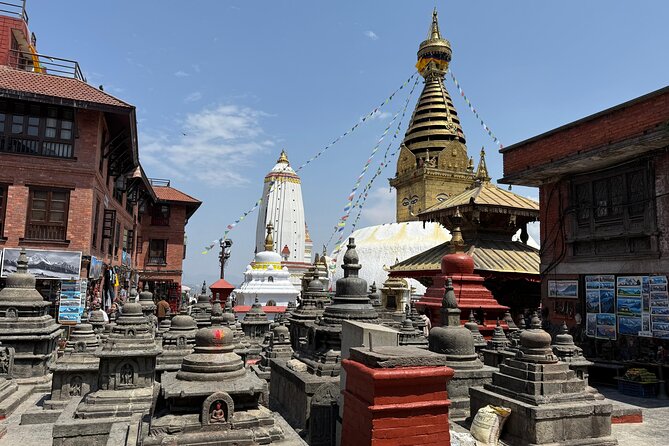
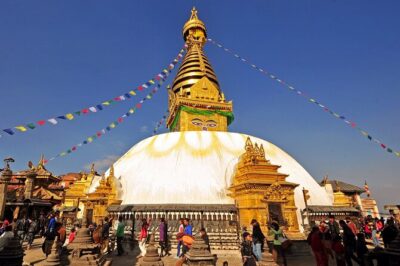
You begin at Swayambhunath, the hilltop complex that many people call the spiritual eye of Kathmandu. Expect a lively approach, lots of steps or paths depending on where you enter, and a scene that feels both old and alive. Even if you are not religious, the place has a built-in wow factor.
What makes Swayambhunath special on a day tour is context. A hilltop Buddhist stupa in Kathmandu is not just a landmark, it is a statement about how Buddhism took root here and how symbolism is shared across regions. The guide helps connect the dots, so you are not just looking at carvings and umbrellas.
Time tip: plan for a steady pace. There is no mention of your pace being tailored, and the tour runs about 6 hours total, so the schedule depends on everyone keeping moving.
Stop 2: Kathmandu Durbar Square, where royal power meets living culture
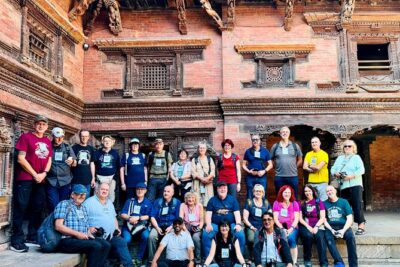
Next is Kathmandu Durbar Square (also associated with Hanuman Dhoka and Basantapur). This is the old heart of the city, built around palaces, courtyards, and temples that helped define Kathmandu’s historical role. UNESCO status here is part of why the area is so important, but the lived-in feel is what hits you.
The drawback of Durbar Square is also the reality: it is a complex place. If you try to do it on your own, it can become a checklist of buildings without meaning. With a guide, you get the storyline: why it was built, what the layout is meant to communicate, and how the religious and political worlds overlap in Kathmandu.
Entry note: the tour says entrance tickets are not included for the stops, and it gives an overall entrance fee estimate. Durbar Square is one of the places where that fee is easy to forget to budget for, so keep your wallet ready.
Stop 3: Boudhanath Stupa, the big Tibetan presence in Kathmandu Valley
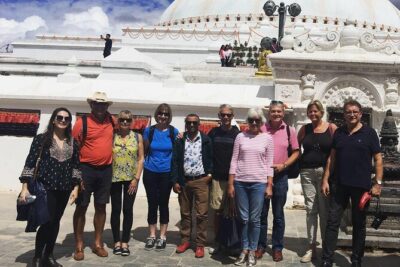
Then you shift gears to Boudhanath Stupa, the one many first-time visitors remember long after the flight home. The tour description highlights the stupa’s scale, including its 36-meter height, and it is easy to see why this stop anchors the Buddhist side of the day.
On a personal-thinking level, Boudhanath is different because it invites repeat viewing. You can watch prayer behaviors, notice the way people move around the stupa, and see how the community organizes a holy space. A good guide helps you read what is happening instead of just pointing at the structure.
Lunch pairing: one account noted lunch above Buddha Stupa during the day. That is not guaranteed for everyone, because lunch is not listed as included, but it tells you the area has convenient food options when you want a break.
One practical consideration: expect crowds around the stupa. This is a major Kathmandu landmark, so plan for slower moments and keep your patience switched on.
Stop 4: Pashupatinath Temple, Hindu devotion at one of Asia’s major Shiva sites
Your final major stop is Pashupatinath Temple, devoted to Lord Shiva. The tour description flags Pashupatinath as one of the four most vital Shiva sites in Asia, and it also notes that the site’s existence is believed to go back many centuries, with redesign work by later rulers.
This is the stop that can feel most intense. Not because it is scary, but because the rituals are serious and visible. Even when you are not participating, you are watching a real religious system at work, with traditions that have depth. A guide helps here by explaining what you are seeing and why it matters in Nepali Hindu life.
Earthquake note: the tour warns that some visited sites were significantly damaged in the April and May 2015 earthquakes. That does not mean the places are “closed,” but it can affect how sections look, how pathways operate, or what you can access in a given moment. If you are comparing to older images, be ready for real-world change.
Small group pace and your comfort level
The tour keeps things to a maximum of 30 travelers and describes a “small group departure.” That is a good middle ground. Big buses feel chaotic at sacred sites. Private transfers keep you moving efficiently, and a smaller group helps you keep your footing on stairs and paths.
Pace is the main variable. One account mentioned a guide who moved so quickly that even fit participants struggled to keep up. That is not the norm in a well-run tour, but it is a reminder to choose the right mindset. If you want a slow, museum-style pace, this may feel like you are racing. If you can handle steady walking and short viewing windows, it is a strong match.
Weather and clothing: what to pack for Kathmandu temple days
The itinerary includes hilltop walking and temple compounds. Even without special requirements stated in the tour details, I recommend planning like you are doing a walking day in warm conditions. One negative account described a dusty, traffic-heavy street walk under the sun when a vehicle problem occurred mid-route. That is not the standard plan, but it illustrates the environment.
Bring basics:
- Comfortable shoes for uneven stones and stairs
- Sun protection, since you may have outdoor stretches
- A light layer if the morning feels cooler
- Cash for entrance fees (since they are not included)
For sacred-site visits, dress codes can matter, but the tour data you provided does not list specific rules. So I would treat this as a “cover up smartly” day and aim for respectful, practical clothing.
How the religious mix makes the day more meaningful
A major strength here is the pairing of Hindu and Buddhist icons in one route. Many Kathmandu tours focus on one tradition. This one intentionally balances both. That can feel educational without being heavy, especially if you are new to Nepal’s religious landscape.
You start with a Buddhist stupa complex at Swayambhunath, then pivot to the royal and temple core at Durbar Square, then shift again to Tibetan Buddhism at Boudhanath, then end at Pashupatinath’s Shiva devotion. You can see Kathmandu as a place where religion is not separate from daily life. It is part of how people mark time, space, and meaning.
Timing: a 6-hour day that still feels like a full hit
The tour runs about 6 hours. That is long enough to feel like you did something, short enough to keep your rest of your trip flexible. In Kathmandu, a full-day program can either be great or tiring. Here, the short visit windows at each stop are compensated for by the guide’s running commentary.
Expect each stop to have about one hour. That hour can pass fast if you are climbing steps slowly or stopping for photos every ten minutes. It can also feel perfect if you treat it like a guided orientation. My advice: focus on getting the “big picture” first, then take your time for photos near the most prominent angles.
Who this tour suits best
This is a strong match if:
- You are on a first visit to Kathmandu and want the main UNESCO highlights quickly
- You want hotel transfers so you do not spend your first day orienting
- You prefer a group tour with private transport rather than solo DIY hopping
- You enjoy cultural interpretation as much as sightseeing
It may feel less ideal if:
- You hate any walking on stairs or uneven ground
- You need a super slow pace
- You are trying to keep the day ultra-budget, because entrance fees and lunch are not included
Should you book this Kathmandu Full Day Tour?
Yes, if your goal is a smart, guided introduction to Kathmandu’s most important sacred sites. The biggest reason to book is the combination of hotel pickup/drop-off, a guide who explains meaning, and a clean route through Swayambhunath, Kathmandu Durbar Square, Boudhanath, and Pashupatinath.
I would book with two expectations set in advance. First, budget for about 2,600 NPR per person in entrance fees plus lunch. Second, be ready for some walking and daylight time outside, even though the tour uses transport between stops.
If you want to learn what you are seeing and you like a one-day “greatest hits” plan, this is a solid way to get oriented fast.
FAQ
How long is the Kathmandu Full Day Tour?
The tour lasts about 6 hours (approx.).
What is included in the price?
It includes hotel pickup and drop-off, a local tourist guide, small group departure, and private transportation.
Are entrance fees included for UNESCO sites?
No. Entrance fees are not included, and the tour estimates them at about 2,600 NPR per person.
Is lunch included?
No. Lunch is not included.
How many people are in the group?
The tour has a maximum of 30 travelers.
What sites are visited during the day?
You visit Swayambhunath Temple, Kathmandu Durbar Square, Boudhanath Stupa, and Pashupatinath Temple.
What are the operating hours?
The tour operates Monday through Sunday, 9:15 AM to 5:15 PM.
Is free cancellation available?
Yes. You can cancel for a full refund if you cancel up to 24 hours in advance of the start time.
Everything Bookable Around Kathmandu
The Rest of Our Kathmandu Write Ups

One More Valley Day
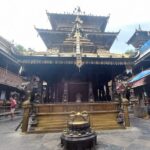
Everything else we have reviewed around Kathmandu
- 12 Days Everest Base Camp Trekking
★ 5.0 · 3 reviews - 1 Night 2 Days Chitwan Jungle Safari Tour from Pokhara or Kathmandu
★ 3.0 · 3 reviews - Thamel Rickshaw tour
★ 4.7 · 3 reviews - Kathmandu: Momo Making Class with a Local Chef
★ 5.0 · 3 reviews - Kathmandu: Full-Day Yoga, Body Massage and Pedicure Package
★ 5.0 · 3 reviews - From Kathmandu / Pokhara / Chitwan: River Rafting – 1 Day
★ 4.6 · 3 reviews
Kathmandu City Tours & Sightseeing worth a second look.
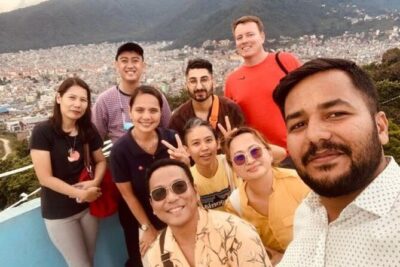 ★ 5.0Kathmandu Private Sightseeing Tour | UNESCO World Heritage SitesFrom $35109 reviews
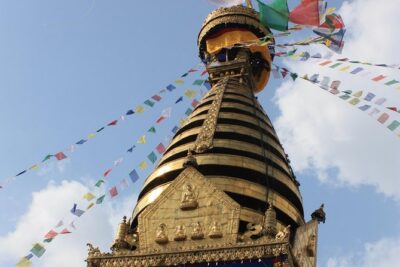 ★ 5.0Private tour of Major highlights of Kathmandu top rated placesFrom $4492 reviews
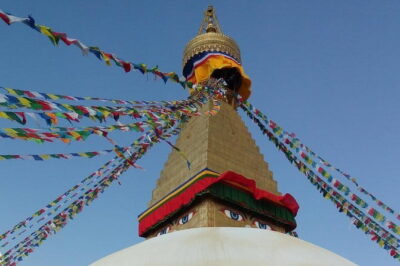 ★ 5.0Kathmandu Heritage Tour (Full Day)From $3863 reviews
 ★ 5.0Life and spirituality tour of KathmanduFrom $5554 reviews
 ★ 5.0Kathmandu Highlights: Private UNESCO World Heritage Sites TourFrom $4950 reviews
 ★ 5.0Full Day Private Tour of Kathmandu – UNESCO World Heritage SitesFrom $3542 reviews
 ★ 5.0Kathmandu Valley City Day TourFrom $6040 reviews
 ★ 5.01 Day Kathmandu Valley Sightseeing TourFrom $3537 reviews
Lists this tour sits in