
REVIEW · BHAKTAPUR & PATAN TOURS
Patan and Bhaktapur Boutique Tour
Two UNESCO squares, one calm pace. I love how this small-group day stitches Patan and Bhaktapur into one walkable story, focused on temples, courtyards, and the details Newar artisans build into everyday life. You start with convenient pickup around Boudha and central Thamel, then swap city noise for stone carvings and temple courtyards.
I especially like the stop style here, short enough to keep it lively, long enough to actually notice things. The Golden Temple pagoda in Patan and the pottery work at Bhaktapur’s Pottery Square give you two very different kinds of craft to watch, not just sites to stand in front of.
One thing to plan for: several key places require extra payments on site. Entrance fees for the Durbar Squares are not included, and you’ll need cash when you arrive, plus lunch is also on you.
In This Review
- Key highlights to look for
- Why this Patan and Bhaktapur day tour is a smart use of your Kathmandu time
- Pickup, timing, and the small-group pace you’ll feel all day
- Patan Dhoka and the Asta Matrika gateway start
- Pimbahal and Gaya Baje, where daily life meets temple lore
- Nagbahal Galli, Samyak Mahadan, and the serpent courtyard
- Golden Temple (Hiranya Varna Mahavihar): the calm, gilded pagoda moment
- Manga Hiti water spout: a Lichhavi-era pause for the small details
- Patan Museum inside a restored Malla-era palace
- Patan Durbar Square: royal palace architecture and Newar craft in stone
- Heading to Bhaktapur: Pottery Square and the joy of watching hands work
- Bhaktapur Durbar Square: UNESCO scale with courtyard calm
- Taumadhi Square and the Nyatapola Temple at five stories
- Dattatraya Temple and the Peacock Window: a small detail that feels big
- The practical value: what you’re paying for, and what you should budget
- What it’s like on the ground: walking comfort, photo moments, and where you’ll slow down
- Who should book this tour, and who might want a different style
- Should you book the Patan and Bhaktapur Boutique Tour?
- FAQ
- What time does the tour start?
- Where is the meeting point?
- How long is the tour?
- Is this a small group tour?
- What’s included in the price?
- What is not included?
- How much are the Durbar Square entrance fees?
- Do I need to pay for the Golden Temple and Patan Museum?
- Is lunch provided?
- What are the age and fitness requirements?
- Is there a cancellation option if I change my plans?
Key highlights to look for
- UNESCO focus in both cities with guided time at the major Durbar Square complexes
- Small group size (max 10) so the guide can keep the pace friendly
- Religious and everyday details like Patan’s serpent courtyard and Bhaktapur craft streets
- Craft watching you can’t fake at Pottery Square, where making and selling pottery happens right in the open
- Solid guide energy with praised guides such as Shreya Karki and Santosh
- Worth-it logistics: air-conditioned vehicle and onboard WiFi, with hotel pickup near Thamel
Old towns beyond Kathmandu, compared



Why this Patan and Bhaktapur day tour is a smart use of your Kathmandu time
If you want Nepal’s “wow” without spending your whole day in transit, this is a good fit. Patan and Bhaktapur are close enough to combine, but different enough to feel like two distinct worlds. You get guided stops that mix the famous spots with the smaller, more local-feeling corners.
I like that the tour isn’t trying to cram in 40 stops. It’s more like a guided walk through the key architecture, plus a couple of stops that explain how people lived, prayed, and worked. And for a day trip, that balance matters. You’ll leave with clearer mental pictures of where to go next on your own.
The group stays small, with a maximum of 10 people. That usually means less waiting at each site and a better chance to ask questions that are specific to what you’re seeing right then.
Pickup, timing, and the small-group pace you’ll feel all day
You meet at Filli chai on Kathmandu Guest House Rd, with a start time of 8:30 am. The tour ends back at the same meeting point.
The total time is about 9 hours 30 minutes, including transportation and time for lunch and a coffee stop. Lunch is not included, but the schedule expects you’ll take a break. That’s helpful, because skipping lunch or rushing it inside a market can turn a cultural day into a cranky day.
Expect moderate walking. The tour notes a moderate physical fitness level requirement, so you should be comfortable with uneven stone, steps, and short uphill stretches that come with temple areas. Also note the age guidance: minimum age is 9, and children under 9 are not allowed to sit on your lap due to insurance rules. (If you’re traveling with kids, this is the kind of detail you want to check early.)
Good news for comfort: you ride in an air-conditioned vehicle and there is WiFi on board. It won’t replace the experience outside, but it helps on a hot day and keeps the group sane between stops.
Patan Dhoka and the Asta Matrika gateway start
The first stop is Patan Gate (Patan Dhoka). This is the historic entrance into Patan’s old city, decorated with paintings of the Asta Matrika, the eight mother goddesses. Even before you get deep into the old streets, this sets the tone: religion, symbolism, and art are part of daily space here, not just inside temple doors.
What I like about starting at the gate is how it helps you orient. Once you understand where the old city begins, later stops make more sense. You’re not just moving from landmark to landmark, you’re learning the city’s layout as you go.
Pimbahal and Gaya Baje, where daily life meets temple lore
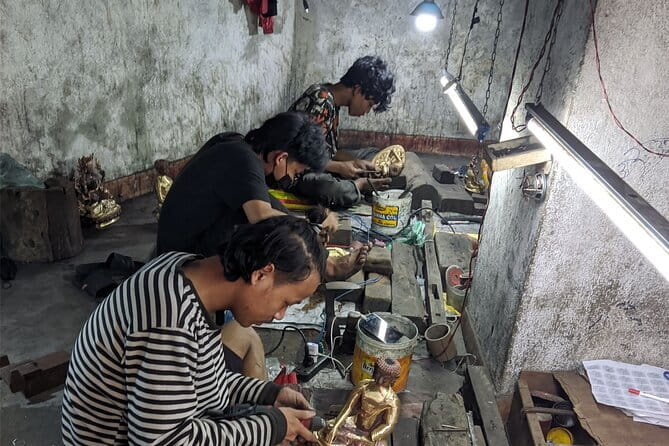
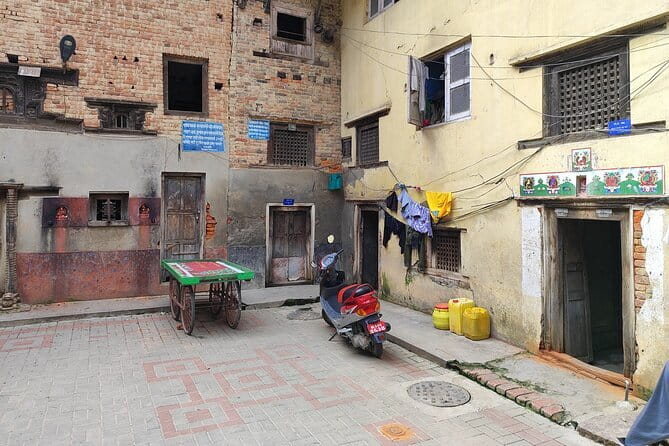
Next comes Pimbahal, a courtyard connected to older patterns of life: cooking food, fetching water, and resting. The guide time includes the story of Gaya Baje, a Hindu priest. That matters because it turns a courtyard from “pretty place” into “the kinds of routines that shaped the city.”
Sites like this are great when you want authentic texture. They help you notice the continuity between sacred spaces and normal movement. Also, the time here is short, so you can enjoy it without losing the day to one stop.

Nagbahal Galli, Samyak Mahadan, and the serpent courtyard
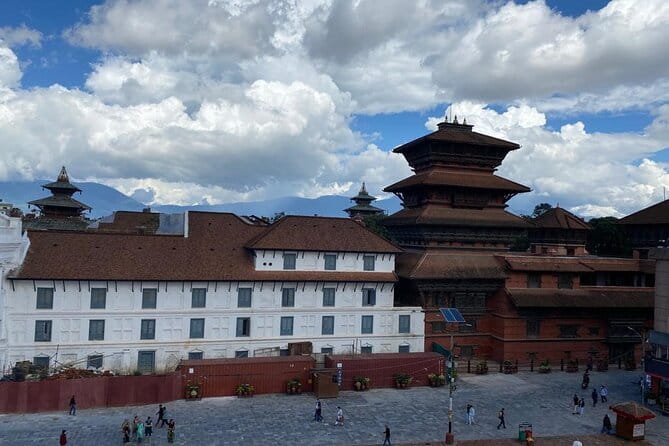
At Nag Baha Galli (Nagbahal), you visit a courtyard dedicated to serpents. The guide explains its role in Samyak Mahadan, a celebration of giving that happens every five years.
Even if you’re not visiting during that festival, the concept helps you understand what Newar sacred spaces do. They often connect spiritual symbolism with community events. You’re seeing how a city organizes devotion at a neighborhood level.
A short courtyard visit like this is a good energy saver too. After the gate, courtyard, and symbolism stops, you’ll be ready for the more architectural, photo-friendly pagoda moments.
Golden Temple (Hiranya Varna Mahavihar): the calm, gilded pagoda moment
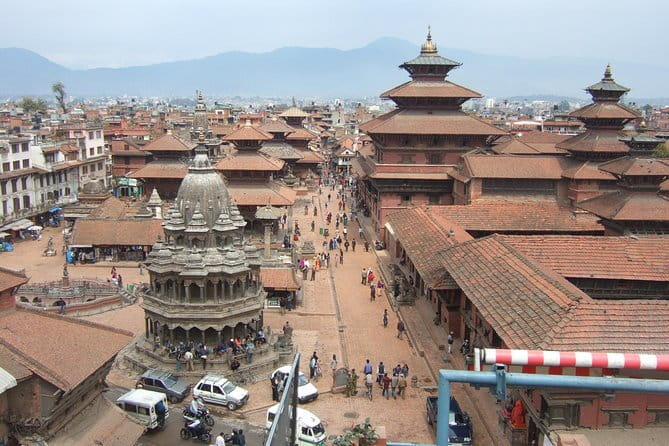
Then you get to the big visual hit: Golden Temple (Hiranya Varna Mahavihar). This is a three-story pagoda with a gilded roof and intricate carvings, dedicated to Gautam Buddha. It’s a sanctuary, so the vibe is usually quieter than the streets outside.
Here’s the practical part: admission for the Golden Temple is not included. So if you’re budgeting, add that in. Still, I think it’s worth it because this is not just a single-view temple. The pagoda structure gives you layers of detail to notice as you move around.
Also, take a few minutes to slow down. The carvings and the way light hits the gold roof are the kinds of details that are easy to miss if you’re in “walk fast, take pics, move on” mode.
Manga Hiti water spout: a Lichhavi-era pause for the small details
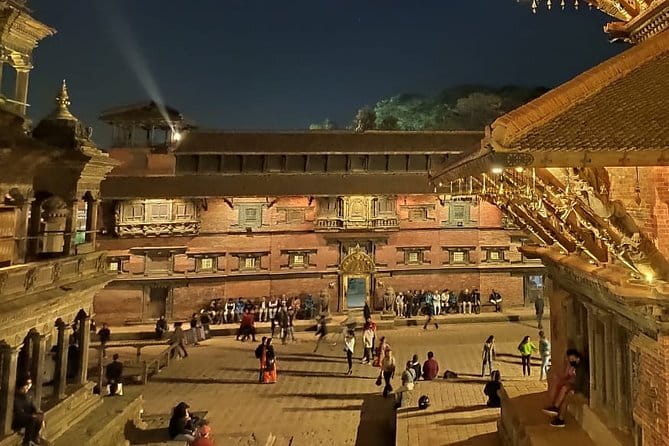
Manga: Water Stone Spout (Manga Hiti) is one of those stops that feels easy to skip if you’re only chasing the biggest names. But it shouldn’t be skipped. This historic stone water spout was built during the Lichhavi period and has carved gods and intricate designs.
This stop is valuable because it shows a different side of Patan’s art. You’re not just looking at temples and palaces, you’re seeing the craft that shaped practical infrastructure. Water points like this are often where communities gather, and the decoration reflects that importance.
The stop is also quick, with about 15 minutes and free admission. That makes it a nice breather between bigger sites.
Patan Museum inside a restored Malla-era palace
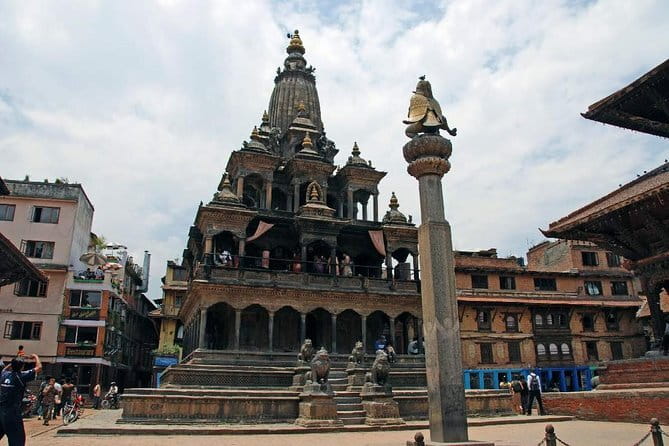
Next you visit Patan Museum, housed in a restored Malla-era palace. The museum is designed to celebrate Nepal’s art, culture, and history, and the building itself is part of the experience.
Museum time is about 30 minutes, and admission is not included. Still, this is one of the best places on a short itinerary to get context. When you later see Durbar Square carvings, you’ll have a better sense of what you’re looking at.
If you’re someone who likes to understand before you photograph, plan to spend a bit more time reading labels and not just scanning. If you’re not, you can still catch the main story in half an hour.
Patan Durbar Square: royal palace architecture and Newar craft in stone
Now you get to Patan Durbar Square, a UNESCO World Heritage Site. This was once a royal palace area of the Malla kings and is filled with intricately carved temples, courtyards, and open spaces.
This stop is longer at about 30 minutes, and admission is not included. The tour notes that the entrance fee for Durbar Square is NRP 1000, about US$9, and it has to be paid in cash at the entrance. There’s also a recommendation to pay a minimum of NRP 100 as a donation to the Royal Kumari.
A practical tip: plan your cash. ATM withdrawals can be unpredictable around old-town sites, so bring what you need. Having the cash ready keeps the group from stalling at the ticket point.
What you’ll actually enjoy here is the craftsmanship. Newar architecture uses carving and layout to communicate status, belief, and community. Even if you’ve seen other Durbar Squares elsewhere, Patan’s style feels distinct.
Heading to Bhaktapur: Pottery Square and the joy of watching hands work
After Patan, you move to Bhaktapur and start with Pottery Square. This is the kind of place where craft happens right in front of you, not behind a museum glass wall. You can watch local artisans create handmade pottery and then buy it if you want.
Pottery Square is about 30 minutes and the tour notes no admission fee included. Even without buying anything, it’s worth your attention because it teaches you what local making looks like in real time.
I like this stop because it gives your brain a break from “temples and more temples.” It also gives you something tangible to remember later. If you do buy something, treat it like a small cultural souvenir, not a bargain hunt.
Bhaktapur Durbar Square: UNESCO scale with courtyard calm
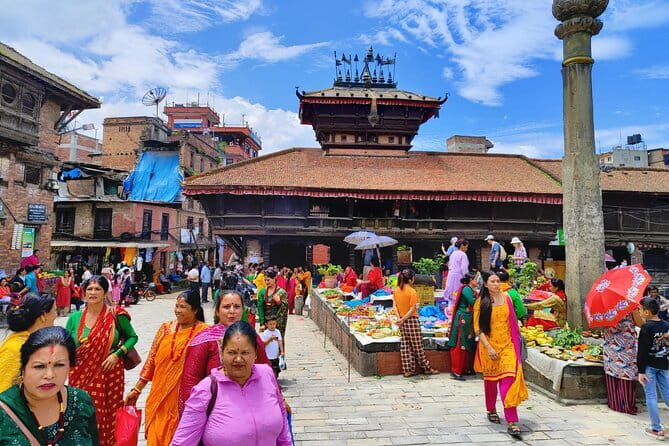
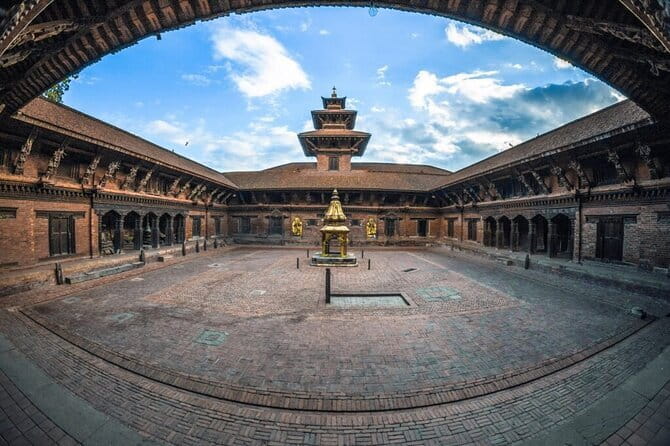
Then you visit Bhaktapur Durbar Square, another UNESCO World Heritage Site. The square reflects traditional Newar architecture and includes ancient temples and charming court spaces.
This is another about 30 minutes and admission is not included. Same cash reality applies for Durbar Square entry fees.
Bhaktapur can feel more relaxed than you might expect given its popularity. The architecture is visually powerful, but the courtyards encourage slow movement. If you’re the type who likes to sit for a minute and scan details, this is your moment.
Taumadhi Square and the Nyatapola Temple at five stories
At Taumadhi Square, you’ll see the five-story Nyatapola Temple, one of the tallest and most beautiful temples in Nepal. It’s dedicated to the goddess Siddhi Lakshmi.
Again, admission is not included on the provided info. But even outside the temple area, the structure reads clearly. The multiple tiers make it feel dramatic, and you’ll probably notice people looking up as much as across.
This stop is good for a specific reason: scale. Many Newar temples are intricate at close range, but Nyatapola gives you a “step back and see the whole” feeling too. It’s a nice contrast to carving-heavy stops.
Dattatraya Temple and the Peacock Window: a small detail that feels big
Finally, you visit Dattatraya Temple at Dattatraya Square. The square is home to a temple dedicated to a god who embodies unity of Brahma, Vishnu, and Shiva. You’ll also see the Peacock Window, famous for its design.
This stop is about 30 minutes, and it lists free admission. That’s a rare win on a day when several bigger sights charge entry.
What I like about this kind of stop is that it rewards attention. A window design can sound like a small thing, but when you’re in front of it, it becomes a mini lesson in artistic storytelling.
The practical value: what you’re paying for, and what you should budget
At $40 per person for a roughly 9.5-hour guided small-group tour, the value is mostly in the structure and time saving.
You’re paying for:
- An air-conditioned vehicle
- WiFi on board
- A guide who connects the religious and architectural dots
- Planned stops that cover both Patan and Bhaktapur in one day
You still need to budget for:
- Lunch (not included)
- Entrance fees for some major sites, especially Durbar Square (NRP 1000 cash)
- The optional extra admissions listed as not included, like Golden Temple and Patan Museum
If you’re the type who hates surprise charges, this is your cue to bring cash and plan lunch before you get hungry. The tour’s durations also include time for a coffee stop, so you won’t be stuck searching for a place to sit down mid-walk.
On guides: the reviews are consistently positive about guides such as Shreya Karki and Santosh, praised for culture and history explanations and for keeping the day smooth. I can’t promise who you’ll get, but it’s a good sign that the provider invests in guiding, not just transportation.
What it’s like on the ground: walking comfort, photo moments, and where you’ll slow down
This tour moves at a friendly walking pace with short site windows. That’s ideal if you want to see a lot without feeling trapped in a long museum slog. Your day will likely have a rhythm:
- a gate or courtyard stop with context
- a pagoda or temple stop with visual impact
- a craft or square stop where you can breathe and watch people
Photo-wise, you’ll have plenty of chances at courtyards, carved facades, and temple structures. But the real value is not the camera. It’s recognizing patterns: gates with symbolic painting, water spouts as public art, courtyards connected to festivals, and windows that act like storytelling panels.
If you’re traveling in Nepal for only a short time and you want a clear jump start for understanding Patan and Bhaktapur, this tour does that. If you already know Newar architecture well, you might want to extend your time after the tour ends, but the guided orientation helps either way.
Who should book this tour, and who might want a different style
You should book this if:
- you want a one-day hit of Patan and Bhaktapur UNESCO highlights
- you like a guide who explains what you’re seeing, not just where to stand
- you enjoy craft and daily-life details, like water spouts and pottery making
- you prefer a max-10 small group pace
You might consider a different plan if:
- you hate paying entrance fees on arrival and you do not carry cash
- you want a slower, longer walk with fewer stops
- you are looking for lots of free, no-ticket attractions only, since multiple key sights require extra payments
Should you book the Patan and Bhaktapur Boutique Tour?
My take: yes, if you’re excited by temples, courtyards, and the way Newar art shows up in real public spaces. The itinerary structure makes sense for a day trip, and the small group size keeps it from feeling rushed.
The decision hinges on two things. First, bring cash for Durbar Square entry, including the recommended Royal Kumari donation. Second, plan your lunch and know that lunch is not included.
If you do those two things, this tour becomes a practical, high-reward way to experience two UNESCO cities without turning your Kathmandu trip into a logistics problem.
FAQ
What time does the tour start?
The tour starts at 8:30 am.
Where is the meeting point?
The meeting point is Filli chai at Kathmandu Guest House Rd, Kathmandu 44600, Nepal.
How long is the tour?
The duration is about 9 hours 30 minutes, including transportation and time for lunch and a coffee stop.
Is this a small group tour?
Yes. The tour has a maximum of 10 travelers.
What’s included in the price?
Included are an air-conditioned vehicle, WiFi on board, and a guide.
What is not included?
Lunch and several entrance fees are not included, including Durbar Square entrance fees (and listed admissions like Golden Temple and Patan Museum).
How much are the Durbar Square entrance fees?
Entrance to Durbar Square is NRP 1000 (about US$9) and must be paid in cash at the entrance. The tour also recommends a minimum of NRP 100 donation to the Royal Kumari.
Do I need to pay for the Golden Temple and Patan Museum?
Yes. The Golden Temple (Hiranya Varna Mahavihar) and Patan Museum admissions are listed as not included.
Is lunch provided?
No. Lunch is not included, but the tour schedule includes time for you to eat.
What are the age and fitness requirements?
The tour notes a moderate physical fitness level. The minimum age is 9, and children under 9 are not allowed to be brought due to insurance rules.
Is there a cancellation option if I change my plans?
Yes. You can cancel for a full refund up to 24 hours before the experience starts.
Everything Bookable Around Kathmandu


The Rest of Our Kathmandu Write Ups



Bhaktapur and Patan, Brick by Brick
Everything else we have reviewed around Kathmandu
- 12 Days Everest Base Camp Trekking
★ 5.0 · 3 reviews - 1 Night 2 Days Chitwan Jungle Safari Tour from Pokhara or Kathmandu
★ 3.0 · 3 reviews - Thamel Rickshaw tour
★ 4.7 · 3 reviews - Kathmandu: Momo Making Class with a Local Chef
★ 5.0 · 3 reviews - Kathmandu: Full-Day Yoga, Body Massage and Pedicure Package
★ 5.0 · 3 reviews - From Kathmandu / Pokhara / Chitwan: River Rafting – 1 Day
★ 4.6 · 3 reviews
Bhaktapur & Patan Tours worth a second look.
 ★ 5.0Private Bhaktapur and Nagarkot Day Tour From KathmanduFrom $20305 reviews
 ★ 5.0Day Trip to Bhaktapur and Panauti from KathmanduFrom $34184 reviews
 ★ 4.7Nagarkot Sunrise and Hike Tour to Changu NarayanFrom $55151 reviews
 ★ 4.8Everest View from Nagarkot & hike to ChanguFrom $43140 reviews
 ★ 5.0Nagarkot Sunrise & Hike to Changu Narayan Day Tour from KathmanduFrom $25126 reviews
 ★ 5.0Bhaktapur & Patan Durbar Square Day ToursFrom $50122 reviews
 ★ 5.0Nagarkot Sunrise & Bhaktapur UNESCO Heritage Private TourFrom $5066 reviews
 ★ 4.5Mt Everest view from Nagarkot -hiking to Changu UNESCO siteFrom $4764 reviews
Lists this tour sits in