
REVIEW · EVEREST BASE CAMP TREKS
From Kathmandu Budget: 15 Day Everest Base Camp Trek
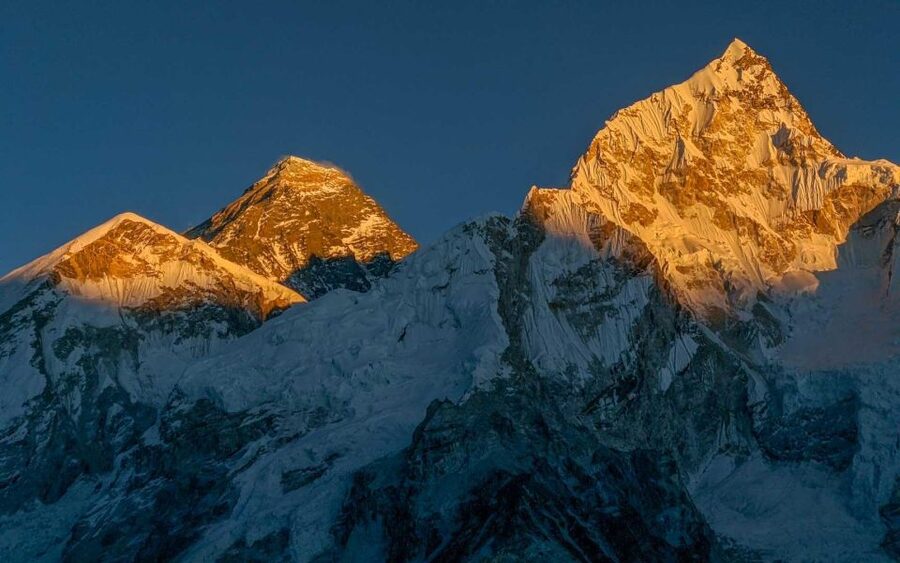
One trek, two Everest viewpoints. You climb to Everest Base Camp at 5,364 meters and then push up to Kala Patthar at 5,545 meters for big views of Everest, Lhotse, and Nuptse. Along the way, you move through Sherpa villages, Buddhist monasteries, and suspension bridges over deep gorges, so it feels like more than just one “photo day.”
What I also like is the human side, especially a flexible itinerary and a safety focus from guides like Krisna and Milan. The possible drawback is simple: this is a serious altitude trek. You are going high, the weather can change fast, and it is not suitable for pregnant women or wheelchair users.
In This Review
- Key highlights that make this 15-day EBC + Kala Patthar special
- Everest Base Camp at 5,364 meters, then Kala Patthar at 5,545
- A private guide who can actually adjust your pace
- From Kathmandu to Salleri, then into the Everest trekking world
- Phakding to Namche Bazaar: the Khumbu corridor begins
- Tengboche and Dingboche: monasteries, altitude, and a smarter rhythm
- Dingboche to Lobuche to Everest Base Camp: the push to the high line
- Kala Patthar day at 5,545 meters: sunrise odds and big peak drama
- The descent back: Panboche, Namche, and Lukla without losing the magic
- Price and logistics: what $796 covers, and what you must plan
- What to bring, and the altitude rules you should respect
- Best season to go, and what the weather reality looks like
- Should you book this Everest Base Camp with Kala Patthar trek?
- FAQ
- What altitude will I reach at Everest Base Camp and Kala Patthar?
- What is the best time of year to do this trek?
- Is food included during the trek?
- What is included in the $796 per person price?
- What languages will the guide speak?
- Do I need travel insurance?
- Is this trek suitable for pregnant women or wheelchair users?
Key highlights that make this 15-day EBC + Kala Patthar special
- Everest Base Camp plus Kala Patthar: Two major high-altitude viewpoints, with Kala Patthar often best near sunrise or sunset
- Suspension bridges and Sherpa culture: You do not just walk through the Khumbu, you pass Sherpa villages and monasteries along the way
- A real acclimatization day in Dingboche: Built in before you go higher toward Lobuche and Everest Base Camp
- Private, English speaking guidance: Languages include English, Nepali, and Hindi, with guides who can adjust to your pace and health
- Guesthouse trekking with permits handled: Accommodation in guest houses plus official documents and trekking permits included
Other routes to Base Camp, side by side
Everest Base Camp at 5,364 meters, then Kala Patthar at 5,545
If you want the Everest story, this route gives you two chapters. First comes Everest Base Camp at about 5,364 meters (17,598 feet), where you stand in the shadow of the world’s tallest mountain and see how massive Everest looks in real life. It is not a distant postcard anymore. It is right there, dominating the horizon.
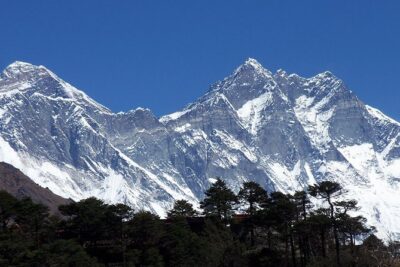
Then you earn the second chapter on Kala Patthar at 5,545 meters (18,192 feet). This rocky viewpoint is famous for wide panoramas of Everest, Lhotse, Nuptse, and the neighboring peaks. You also get the best chance at dramatic light if you go early, since sunrise or sunset views are specifically called out. Translation: you will likely spend your effort climbing high for payoff you can actually feel.
One practical thought: the higher you go, the more your breathing and pacing matter. This trek does not hide that. It builds in an acclimatization day later, but you still need a steady rhythm from the start so your body does not feel like it is being dragged uphill.
A private guide who can actually adjust your pace
A big part of why this trek works well for many people is the private group setup. Your guide is responsible for keeping things organized and also reading the day. Nlook Nepal lists a friendly English speaking trekking guide, with languages available in English, Nepali, and Hindi.
In the experience of past travelers, guides such as Krisna and Milan were described as serious about listening and adapting. That matters because Everest region treks are not one-size-fits-all. Your energy level, how you sleep, how your stomach feels, and how your altitude tolerance behaves can change from day to day. A guide who checks in and can slow down, speed up, or adjust your day makes the trip feel safer and less stressful.
It also helps that the guide setup includes support like an emergency first aid kit (with the guide). It is not a substitute for smart planning on your end, but it is a real comfort feature when you are hiking at altitude.
From Kathmandu to Salleri, then into the Everest trekking world
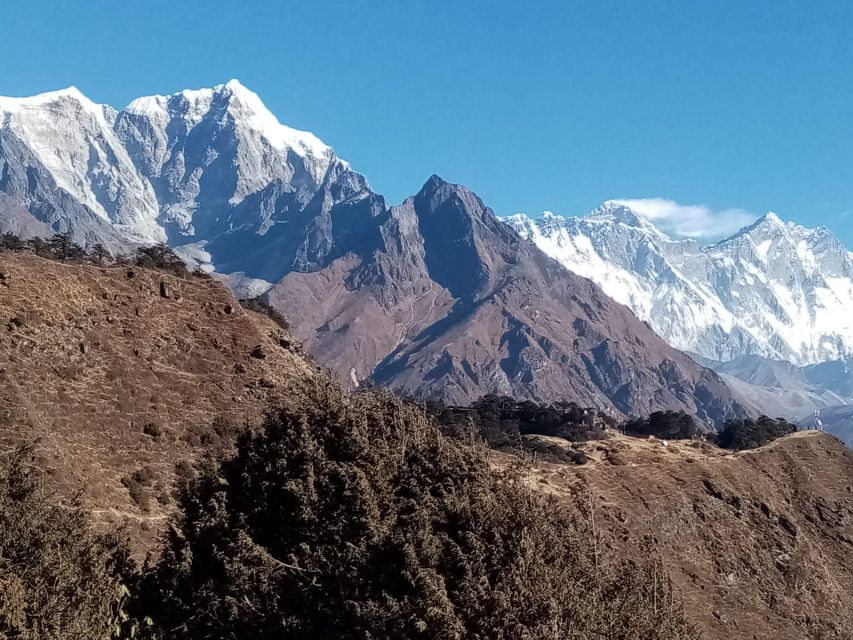
This trip starts with transportation from Kathmandu to the trekking region by jeep. Day 1 is a long but useful transfer: you get picked up in the morning, then ride about 10 hours to Salleri (around 2,600 meters). Long vehicle days sound boring on paper, but they do two things well. They get you out of Kathmandu’s lower elevation, and they start shrinking the gap between “city you” and “mountain you.”
Day 2 continues with a shorter jeep leg to Tham danda, then you trek to Surkhe. This is the first time you start earning altitude on foot, so I like treating it as a “warm up with purpose” day. If you go out too fast, you can pay for it later, even if the trail feels manageable.
From there, your route funnels you toward classic Khumbu waypoints. You will keep mixing driving and hiking early on, which can be an advantage if you want the trek to be the main event, not your entire life spent on buses.
Phakding to Namche Bazaar: the Khumbu corridor begins
After the early stretch, you reach Phakding, then hike up to Namche Bazaar. The Namche day is listed as about 6 to 7 hours, and you arrive around 3,440 meters. This is a key moment because Namche is the hub for the Khumbu region. You will feel the shift from quieter trails to a more “settlement-based” trekking experience.
The trek description also flags rhododendron forests, prayer flags, and Buddhist monasteries as you climb. That is exactly what I would expect in this zone, and it gives you mental breaks. Instead of only focusing on legs and lungs, you also get plenty of cultural sights that help pass the time.
Also, suspension bridges show up along the route. Walking across them is one of those moments that makes you understand why people remember this trek. You are not just on a trail, you are crossing over deep gorges with big drop-offs, which can be thrilling if you are steady on your feet.
Practical tip: on bridge days, take it slow. Your balance matters more than speed.
Tengboche and Dingboche: monasteries, altitude, and a smarter rhythm
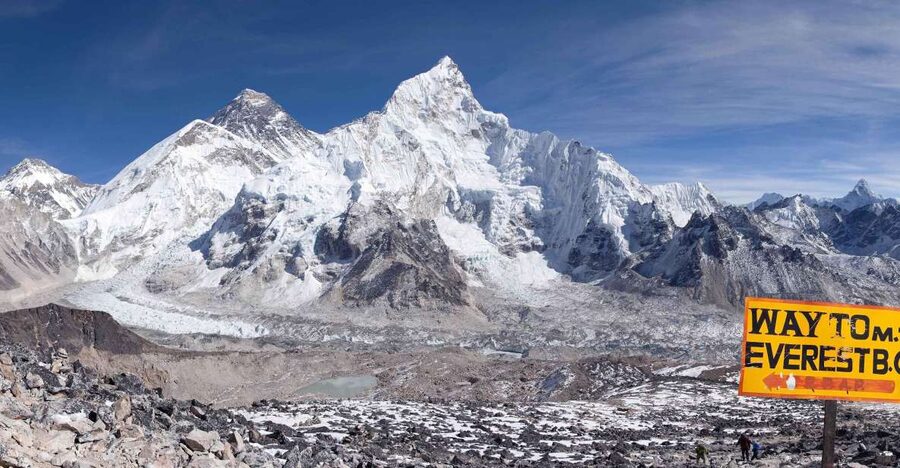
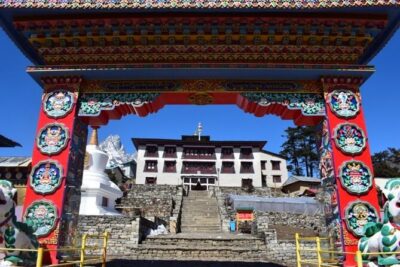
Next comes the hike to Tengboche Monastery around 3,860 meters. Monasteries are part of the Everest region’s spiritual landscape, and this one is specifically named in the plan. Even if you are not super into religious sites, you tend to notice something here: the quiet contrast. After earlier stretches, Tengboche can feel like a pause button.
Then you climb to Dingboche (about 4,350 meters) and the trek includes an acclimatization day there. This is huge. Day 7 is listed as an acclimatization day in Dingboche, and it is one of the best “body management” features in this itinerary.
Here is why it matters. You are already above 4,000 meters. At that elevation, people often experience tiredness, headache, or appetite changes, even if they are fit. A planned rest or acclimatization day gives you a chance to adjust before you go higher again.
Then you continue to Lobuche around 4,910 meters. This is not just a “higher town.” It is a staging point for the big days ahead, and the thinner air makes every uphill step feel heavier.
Dingboche to Lobuche to Everest Base Camp: the push to the high line
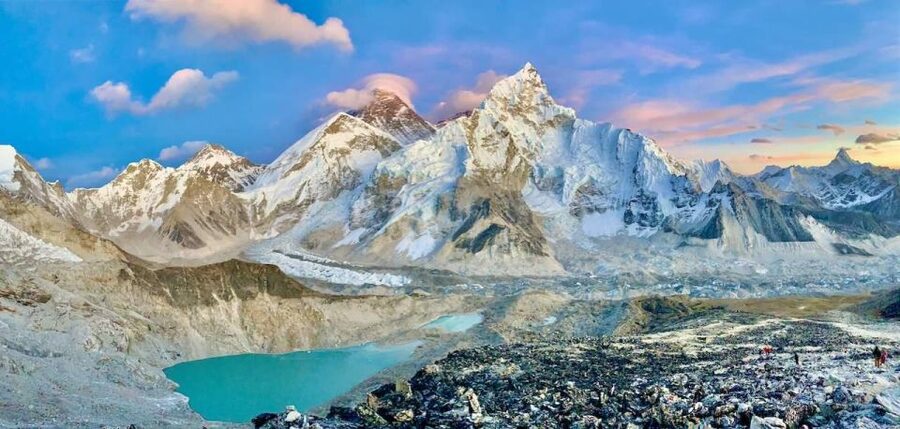
From Lobuche you move toward Everest Base Camp at about 5,365 meters. The trek day to Base Camp is listed as about 8 hours, and then you go back to Gorak Shep around 5,180 meters.
This is where most people feel the difference between a normal hike and an altitude trek. The air is thinner. Your pace changes. Even if the trail is the same width as other days, your legs work differently because breathing takes more effort.
Gorak Shep is where you rest before your Kala Patthar hike. If you are expecting to feel energized, I want to manage expectations. At this altitude, “resting” still feels like work. You might sleep lightly, and you can feel chilly even if the day was sunny.
Still, the advantage is clear: you are close to the viewpoint day. You do not lose a full day just getting into position. That saves your energy for the climb to Kala Patthar later.
Kala Patthar day at 5,545 meters: sunrise odds and big peak drama
Kala Patthar is listed with a long climb time, around 7 hours (depending on your pace). You hike up to about 5,545 meters, then continue onward to Pheriche around 4,120 meters.
This is the classic “hard day, strong memories” combo. You are high enough to feel the altitude and still doing a full day of movement. The plan’s mention of best views near sunrise or sunset is also telling, because those lighting conditions make the peaks look sharper and more dramatic.
What I love about Kala Patthar is that it changes how you understand Everest. At Base Camp, you look toward the mountain from near the expedition starting world. At Kala Patthar, you get a higher angle and a broader panorama, with Everest, Lhotse, and Nuptse all showing in relation to each other.
Practical strategy: start slower than you think you need to. People often go out too fast at the beginning of a high climb. That can work against you on the final grind.
Afterward, you trek down to Pheriche. That descent helps your body recover. It is not “easy,” but dropping in elevation gives you more breathing room.
The descent back: Panboche, Namche, and Lukla without losing the magic
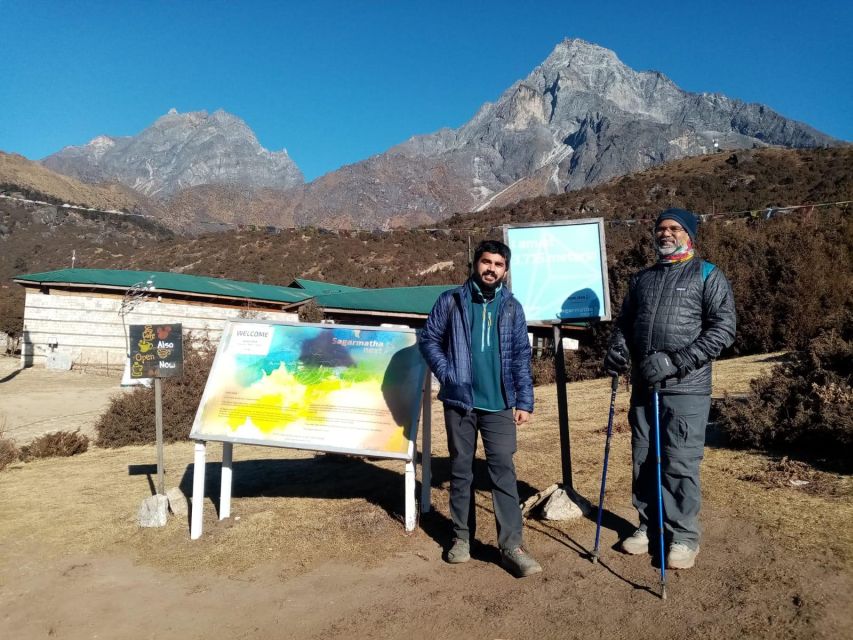
After Kala Patthar, the plan continues through Panboche (about 3,985 meters) and then back to Namche Bazaar. The hike to Panboche is listed around 5 to 6 hours, and the Namche leg from Panboche is listed around 7 hours.
This part of the journey feels different. You are lower, so you usually feel more stable. But you still get the payoff of seeing the same routes with different light and different energy. If you are the type who likes photographing details, this is when you notice prayer flags fluttering again, and the monasteries and villages you passed earlier become more meaningful because you understand where you are now.
Then you reach Lukla (around 2,860 meters) after about 5 to 6 hours from Namche. Lukla is the airstrip town many people associate with the Everest region. Even if you never plan to fly anywhere, arriving there gives you a strong sense of the trek’s endgame.
Finally, you ride back to Salleri by shared jeep around 7 to 8 hours, then take a final shared jeep or bus ride from Salleri to Kathmandu about 10 hours.
Price and logistics: what $796 covers, and what you must plan
At $796 per person, this trek is positioned as a value option, and you can see why when you break down what is included.
Included items that reduce your stress:
- Hotel pick up and drop off in Kathmandu
- Round trip transfer by shared bus or jeep
- English speaking trekking guide
- Trekking permit and all official documents
- Accommodation in guest houses during the trek
- Trekking pole
- Emergency first aid kit with the guide
You also get a private trek and a private group setup, which tends to mean you are not sharing your guide time with random strangers. That often matters more than people expect.
What is not included:
- Food and drinks (you buy on your own)
- Travel insurance
- Emergency rescue coverage (your travel insurance should cover it)
The “value” piece, in my view, is not only the low-ish headline price. It is that permits and many logistics are handled, and you are not expected to solve the Everest admin part alone. You still need to budget for meals and drinks, but you are not also paying for everything else from scratch.
What to bring, and the altitude rules you should respect
The trekking plan gives a straightforward packing list. I recommend you treat it as a minimum, not a target.
Bring:
- Warm clothing (layers matter up high)
- Hiking shoes
- Hiking pants
- Passport (a copy is accepted)
- Passport-sized photo
- Travel insurance
Not allowed:
- Pets
Also, this is explicitly not suitable for:
- Pregnant women
- Wheelchair users
One more important mindset: weather in the mountains can be unpredictable. The plan points out the best trekking seasons are spring (March to May) and autumn (September to November), when you are more likely to get stable weather and clearer views. But “best season” does not mean perfect sky every day. I always plan as if I might get clouds, wind, or cold snaps, and I pack like the mountain will have opinions.
Best season to go, and what the weather reality looks like
The trek can be done throughout the year, but the best time is listed as spring (March to May) and autumn (September to November). Those seasons usually offer clearer mountain views and more stable conditions.
Even with good timing, expect the mountain to change moods. That is why having warm clothing and taking your acclimatization day seriously matters. A trip like this is not won by speed. It is won by steady effort and good pacing.
Should you book this Everest Base Camp with Kala Patthar trek?
Book it if you want a classic Everest route with the two biggest viewpoints built in: Everest Base Camp and Kala Patthar. The private guide setup, guest house lodging, guest-friendly pacing support, and permit handling are practical advantages, especially if you want less logistics stress and more time focusing on the trail and the views.
Skip it, or at least rethink timing, if you are not comfortable with altitude or you need an accessible route. The trek goes from roughly 2,600 meters up past 5,500 meters, and it is physically demanding by design.
If you choose to go, do one thing that pays off fast: arrive mentally ready for a slow climb, not a workout sprint. Your legs will thank you, and your views will feel better when you earn them.
FAQ
What altitude will I reach at Everest Base Camp and Kala Patthar?
Everest Base Camp is listed at about 5,364 meters, and Kala Patthar is listed at about 5,545 meters.
What is the best time of year to do this trek?
The best time is spring (March to May) and autumn (September to November), when weather is usually more stable and mountain views are clearer.
Is food included during the trek?
Food and drinks are not included. You can purchase them during the trek.
What is included in the $796 per person price?
The price includes hotel pick up and drop off in Kathmandu, round trip shared transfers by bus or jeep, a friendly English speaking trekking guide, guide food and accommodation, trekking permit and official documents, guest house accommodation during the trek, a private trek setup, an emergency first aid kit with the guide, and a trekking pole.
What languages will the guide speak?
The guide is listed as speaking English, Nepali, and Hindi.
Do I need travel insurance?
Travel insurance is not included, and emergency rescue coverage is expected to be handled by your travel insurance.
Is this trek suitable for pregnant women or wheelchair users?
No. It is listed as not suitable for pregnant women and not suitable for wheelchair users.
Lodge to Lodge Around Pheriche
The Rest of Our Pheriche Write Ups
Base Camp, Three More Ways
Everything else we have reviewed around Pheriche
- Everest Base Camp Trek: A short EBC Trek to Iconic Himalaya
★ 5.0 · 3 reviews
Everest Base Camp Treks worth a second look.
 ★ 5.0Everest Base Camp Trek – 14 DaysFrom $1,8001,499 reviews
 ★ 5.0Everest Base Camp TrekkingFrom $1,350485 reviews
 ★ 5.0Everest Base Camp Trekking – 13 DayFrom $1,399365 reviews
★ 5.0Everest Base Camp Trek -14 DaysFrom $1,420321 reviews
 ★ 5.0Everest Base Camp Trekking – 2025/2026From $1,339199 reviews
 ★ 5.0Everest Base Camp TrekFrom $1,408193 reviews
 ★ 5.0Everest Base Camp Trek with Helicopter Return from Gorakshep to LuklaFrom $3,000161 reviews
14-Days Private Everest Base Camp TrekFrom $1,600152 reviews
Lists this tour sits in