
REVIEW · EVEREST BASE CAMP TREKS
Everest Base Camp Trek
If you like big mountains with real logistics, this trek fits. You get Sherpa help, included gear, and the famous Lukla flight. Then you follow the classic route at an easier pace through the Khumbu region.
I particularly like how your trekking day is made simpler. Porters carry your gear, your guide handles the route and day planning, and you also get a package of essential cold-weather items like a down jacket and sleeping bag. In the guide lineup people talk about, names like Lok, Khila, and Lal show up often, and the common thread is that they keep the trip moving at a safe, realistic rhythm.
The one drawback to plan for is altitude stress and scheduling risk. The route climbs high, so you need moderate fitness and good acclimatization habits, and Lukla flights can be weather-dependent, which means you should respect the buffer day in Kathmandu.
In This Review
- Key Things I’d Pencil Into Your Plan
- Kathmandu to Lukla: Where the Trek Starts at 30 Minutes per Flight
- Included Gear That Saves You Money and Headaches
- Porters, Guide, and the Real Meaning of a Private Small Group
- Day 1 Arrival in Kathmandu: Easy Logistics, Less Day-One Stress
- Day 2 Into Phakding: The Lukla Landing Moment You Hear About
- Days 3 and 4: Pine Forest Walking, Bridges, and a Smarter Acclimatization Day
- Days 5 and 6: Kyanjuma to Pangboche at Around 4,000 Meters
- Day 7 Rest and Acclimatization: The Nagarkhang Peak Hike
- Days 8 and 9: Dughla and the Glacier Section Before Base Camp
- Day 10 Kalapatthar: The Famous View That Earns Its Reputation
- Day 11 to Day 12: Tengboche, Phungi Tenga, and Heading Back Down
- Day 13 to Day 15: The Lukla Flight Back, Kathmandu Buffer, and Departure Day
- Price and Logistics: Is $1,408 Good Value for Everest Base Camp?
- Should You Book This Everest Base Camp Trek?
- FAQ
- What does the Everest Base Camp trek price include?
- Do I need to bring my own sleeping bag and down jacket?
- How long is the trek and how many days is the full trip?
- Are international flights and travel insurance included?
- What about permits and TIMS registration?
- Are porters included, and what do they carry?
- What if Lukla flights are delayed or canceled?
- What is the cancellation refund schedule?
Key Things I’d Pencil Into Your Plan
- Included trekking gear means less to pack, including a down jacket, sleeping bag, and duffel bag returned after the trip
- Porters plus a guide take the pressure off so you can focus on walking and breathing
- Two acclimatization/rest days build in a smarter rhythm before the push toward Base Camp
- Kalatthar sunrise viewpoint hike is the big payoff for the toughest climbing day
- Kathmandu buffer day helps protect your schedule when Lukla gets delayed or canceled
Other routes to Base Camp, side by side
Kathmandu to Lukla: Where the Trek Starts at 30 Minutes per Flight
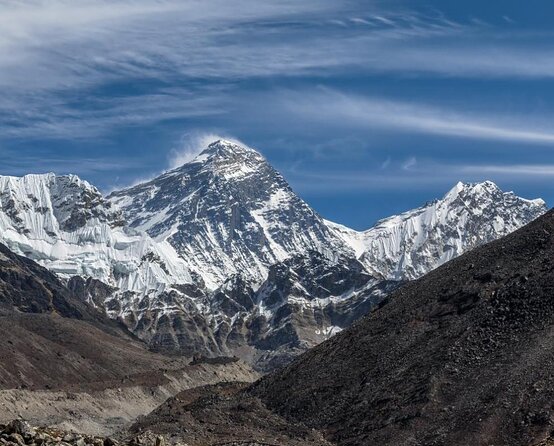
Your first day in Nepal is all about getting squared away in Kathmandu. You land, meet an airport representative with your name card, then transfer to your hotel. It is not glamorous, but it matters. You want a low-stress start when the rest of the trip is very physical.
The next step is the signature Lukla hop. From Kathmandu you fly to Lukla for about 30 minutes, and that short flight is famous for being a little intense. Once you are there, you shift from city time to trail time fast. The itinerary then sends you onward toward Phakding, which is a good early stretch because it helps you settle into the pace before the route really ramps up.
By the time you reach the first hiking days, you will notice a pattern this trek leans on. It is not just about covering distance. It is about building comfort with the air, the walking rhythm, and the fact that your pack weight is not the whole story when you get higher.
Included Gear That Saves You Money and Headaches
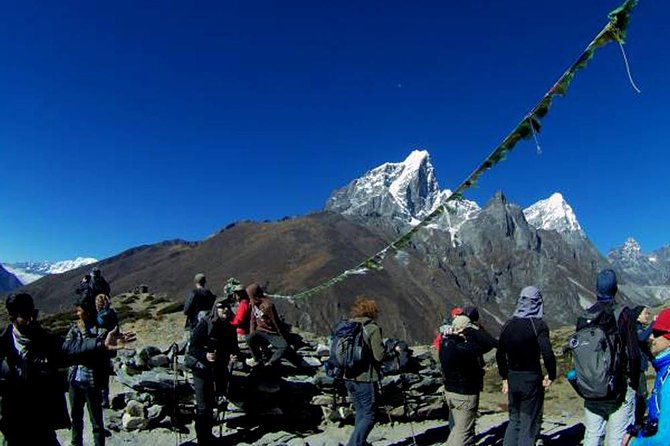
One of the best value pieces here is that you do not have to buy the big-ticket cold-weather gear for a one-time trip. The package includes a down jacket, a four-season sleeping bag, and a duffel bag. You use them during the trek, and the duffel is returned after the trip is complete.
That is more than convenience. If you have ever priced out a decent down jacket or tried to rent gear in a rush, you know it can get expensive fast. Here, the operator builds those costs into the experience. It also cuts down on travel friction. Fewer bags through airports, fewer questions about rental quality, fewer last-minute mistakes.
The other practical win is how the gear lines up with the timing of high altitude days. You will spend time at higher elevations, including the Kalapatthar viewpoint hike early in the morning. Cold mornings are not optional there, so having the right insulation matters.
Porters, Guide, and the Real Meaning of a Private Small Group
This trek is set up as a private small group experience, so you are not stuck in a mega-line of people. Your group travels together, and the operator includes an assistant trekking guide if the group is over 6 people. Even with a small group, you still get structure, because the guide and team run the details.
Here is what that looks like in daily life. Your guide organizes the route and pacing, and porters carry your gear. That means you can walk with a lighter load, which helps when you are dealing with steep moments and low-oxygen days later on. On paper, that sounds like a standard Everest trick. In real life, it changes how you feel on the climbs.
Also, having a strong team is not only about comfort. It is about safety habits. The trip includes a comprehensive first aid medical kit carried by the guide, and your guide is described as English speaking, government licensed, and trained by the tourism ministry. That combination matters when weather or altitude throws curveballs.
Day 1 Arrival in Kathmandu: Easy Logistics, Less Day-One Stress
Day 1 is straightforward: airport pickup and transfer to your hotel in Kathmandu. You get introduced and set up for the next stage. This is one of those days that does not look exciting on a brochure, but it is the difference between a smooth trek and a shaky one.
If you are arriving internationally, your body will already be fighting jet lag. Use this day for simple things: sleep, hydrated meals, and planning your next morning without rushing.
Other lodge to lodge routes near Kathmandu
Day 2 Into Phakding: The Lukla Landing Moment You Hear About
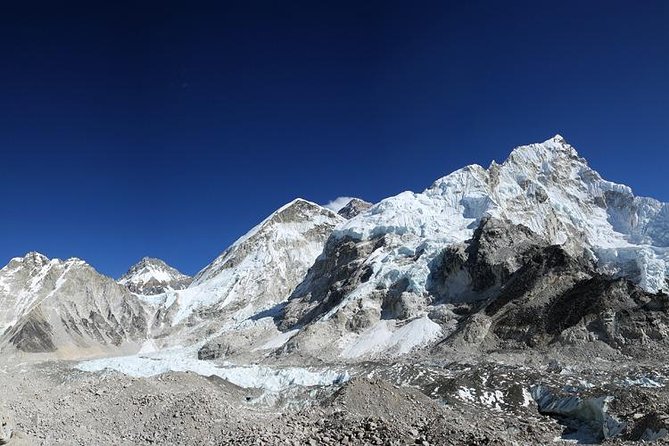
On day 2, you fly to Lukla and then start walking. You are likely to feel that shift immediately, from paved roads to trails and from city air to mountain air.
The trek takes you toward Phakding, and along the way you get early views of the Himalayas. This is the kind of day where the goal is not speed. It is acclimatization through movement. You are learning your breathing rhythm and your walking cadence before the higher passes and glacier sections.
If you have a nervous laugh about heights, do not fight it. Just keep walking, keep your steps steady, and remember that the whole trip is designed with rest and acclimatization days ahead.
Days 3 and 4: Pine Forest Walking, Bridges, and a Smarter Acclimatization Day
Day 3 brings gentle ascending before you reach Monjo. You stop in Jorsalle for lunch, then continue toward Hilary Bridge through pine forests. After crossing the bridge, the trail turns steeper.
That steep moment is a good reality check. Everest region hiking can feel like a roller coaster. You might have an easy stretch, then suddenly your legs feel like they have been asked to do extra work. Your guide is meant to help you keep the effort controlled.
Day 4 is a rest and acclimatization day, and this is one of the most important components of the entire trip. Instead of adding mileage, you do optional hikes around the area. The itinerary lists options like Khumjung and Khunde, an Everest View Hotel hike, a Thame hike, or a national park option.
Why this matters: acclimatization only works if you respect it. The goal of these options is to expose your body to higher terrain without going too hard too soon. Even if you choose a shorter option, the day still builds the habit your body needs for the later climbing.
Days 5 and 6: Kyanjuma to Pangboche at Around 4,000 Meters
On day 5, the route ascends toward the national park headquarters and then follows a gentle trail to Kyanjuma. You may stop for a short tea break before descending toward Phungi Thanga for lunch. You also cross the Dudh Koshi river during this segment.
Crossing rivers in the Himalayas is never just scenery. It signals that you are moving along a major valley system, and it keeps your body from getting too predictable. One moment you are walking a smooth line, the next you are adjusting your step and balance.
Day 6 follows the Imja Khola toward Pangboche, listed at 3,930 meters. Pangboche is presented as a home base for many renowned Everest climbers and as Sherpa country known for brave history. It is also a day where the views can feel bigger because you are getting higher and closer to the core Everest terrain.
Expect the day to feel more demanding than the earlier sections. Not because you are suddenly off schedule, but because your body notices every meter now.
Day 7 Rest and Acclimatization: The Nagarkhang Peak Hike
Day 7 is the second major rest and acclimatization day. You hike to Nagarkhang Peak, roughly 5,000 meters, for a day hike experience and panoramic Himalayan beauty.
This is the point in the trek where your brain and lungs start to work as a team. The altitude makes you slow down, which is exactly what you want. The hike gives you a high-elevation exposure, but it is still planned as a day hike rather than a long grueling trek. That balance is what helps the overall plan feel doable.
Days 8 and 9: Dughla and the Glacier Section Before Base Camp
Day 8 moves you closer to Everest Base Camp. You follow a ridge above Pheriche until you reach Dughla. You stop in Dughla for a quick lunch, then begin steep climbing to the Dughla pass area.
This is where your legs start asking questions. Steep climbing at altitude can feel like each step costs extra. Your guide’s job is to keep you from trying to power through and instead focus on steady rhythm.
Day 9 includes glacier walking. The early part is described as pretty easy until the ascent over glaciers begins. Once you are ascending over the glaciers, the trail becomes harder due to trail difficulty and low oxygen levels. That means the day is as much about breath control as it is about foot placement.
Even when the route is challenging, it is still guided. That is a huge comfort factor. You are not figuring out route complexity while also managing altitude stress.
Day 10 Kalapatthar: The Famous View That Earns Its Reputation
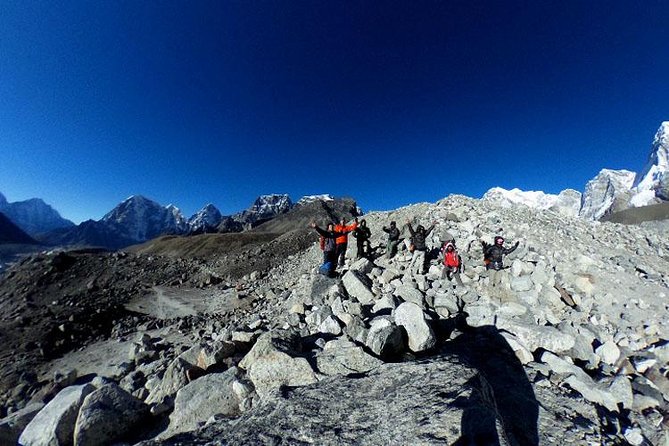
Day 10 is the big viewpoint day. You wake up early to hike to Kalapatthar before sunrise. The climb is described as difficult, but worth it.
Kalapatthar is famous because it gives wide views of the Khumbu valley with towering peaks. You can expect early cold, slow climbing, and that moment when the world feels both huge and quiet.
This is also a good day to respect your energy. Sunrise hikes at altitude are not about athletic performance. They are about patience and safe pace. If you go out too fast, you will pay for it later.
Day 11 to Day 12: Tengboche, Phungi Tenga, and Heading Back Down
After Kalapatthar, you do not immediately get an easy stroll. The itinerary describes passing through Debuche and Tengboche village, followed by steep descending to Phungi Tenga for lunch. Phungi Tenga sits on the bank of the Dudhkoshi river. Then you start ascending to Kyanjuma again.
This is how the return trek works in the Everest region. Descending feels easier for the lungs in some ways, but steep downhills can beat up knees and ankles. You may also still be high enough that oxygen feels thin. So the body keeps needing careful pacing.
Day 12 continues the downward rhythm. You take a steep descent to Jorsalle village and continue further to Phakding for lunch breakfast. Then you come toward the end of the walking portion, and once you reach Lukla, you conclude the trek.
Even though you are heading down, do not treat this as a victory lap. It is the phase where people get careless because they assume altitude problems are behind them.
Day 13 to Day 15: The Lukla Flight Back, Kathmandu Buffer, and Departure Day
Day 13 begins with a morning trip to the airport to catch your flight back to Kathmandu. The flight is described as adventurous, and you are advised to sit on the right side of the airplane for some beautiful views.
This is also a good day for humility. Flights out of Lukla can be weather-dependent, and your plan needs flexibility.
Day 14 is a free day in Kathmandu. This buffer is not an extra bonus day purely for fun, it is specifically used in case Lukla flight issues cause delays or cancellations. You get time for shopping and resetting before your international plans.
Day 15 finishes with a drive to the airport about 3 hours before your flight time. Kathmandu’s airport area is small with only one terminal, so you should expect a compact process. Breakfast is included, which helps you avoid scrambling on your final morning.
Price and Logistics: Is $1,408 Good Value for Everest Base Camp?
At $1,408 per person, this trek is priced as a package experience. The real question is what you are getting for that money, because Everest trips vary wildly in what they include.
Here is what your price covers, based on the listed inclusions:
- Airport pickup and drop services in Kathmandu in private vehicle
- Kathmandu to Lukla and back, including domestic airline tickets for the guide
- Everest National Park entry permit and TIMS registration card
- Government licensed trekking guide and Sherpa helpers with meals, accommodation, salary, and insurance
- Down jacket, four-season sleeping bag, and duffel bag (duffel returned after the trip)
- First aid medical kit carried by the guide
- Paperwork, local taxes, and company service charges
- Meals: breakfast 14 times, lunch 11 times, dinner 12 times
What you do not pay for includes international airfare, Nepal visa fees, travel and medical insurance, and emergency evacuation. You also pay for personal costs like bars and beverages, hot showers, telephone, laundry, and small extras.
So is it good value? For me, the strongest justification is the gear bundle and the fact that domestic flights, park permits, and guiding staff are included. If you were to buy gear yourself and pay for separate guiding, it would likely cost more than this package once you add up the totals and time wasted on logistics.
Also, the private small group format tends to improve the experience. You get support without feeling like you are part of a crowd.
The one financial caution is insurance. The trek data does not include travel or medical insurance or emergency evacuation, so you must arrange that yourself. At altitude, this is not the place to wing it.
Should You Book This Everest Base Camp Trek?
I think this trek is a strong fit if you want a guided, well-supported Everest Base Camp experience with less gear stress and a pace built around acclimatization. I like that the plan includes rest days with specific hike options, not just a vague promise to slow down.
It is also a good option if you prefer structure. Your guide and porters handle a lot of the daily burden, and you are also given a first aid kit and proper registration and permits.
Book it if:
- You have moderate fitness and you want a route that includes planned acclimatization time
- You want a cold-weather kit included, instead of buying or renting everything
- You value a private small group setting with support and a lighter pack
Consider it carefully if:
- You get nervous about altitude and steep terrain, because days like Kalapatthar are hard and the glacier section can feel demanding
- You cannot tolerate flight uncertainty, since Lukla weather issues can disrupt schedules, which is why the Kathmandu buffer day matters
If you go in with realistic expectations, respect acclimatization, and trust your guide, this is the kind of EBC trek that feels planned for humans, not just athletes.
FAQ
What does the Everest Base Camp trek price include?
It includes Kathmandu airport pickup and drop-off by private vehicle, domestic flights Kathmandu to Lukla and back (including for the guide), Everest National Park entry permit, TIMS registration, an experienced English-speaking government licensed guide, Sherpa helpers (porters) with meals, accommodation, salary and insurance, an assistant trekking guide for groups over 6 people, a down jacket, sleeping bag, and duffel bag, a first aid kit carried by the guide, necessary paperwork and local taxes, plus breakfasts, lunches, and dinners.
Do I need to bring my own sleeping bag and down jacket?
No. The trek includes a down jacket and a four-season sleeping bag, along with a duffel bag. The duffel bag is to be returned after the trip completion.
How long is the trek and how many days is the full trip?
The duration is about 15 days.
Are international flights and travel insurance included?
No. International airfare, Nepal visa fees, travel and medical insurance, and emergency evacuation are not included.
What about permits and TIMS registration?
The Everest National Park entry permit and TIMS registration card are included.
Are porters included, and what do they carry?
Yes. Strong experienced Sherpa helpers (porters) carry your gear, while your guide organizes the rest of the trek.
What if Lukla flights are delayed or canceled?
A free day in Kathmandu is included to handle potential Lukla flight issues, since weather can cause cancellations or delays.
What is the cancellation refund schedule?
You can cancel up to 6 days in advance for a full refund, cancel 2 to 6 days in advance for a 50% refund, and cancel less than 2 days before for no refund. If the experience is canceled due to poor weather, you are offered a different date or a full refund.
Lodge to Lodge Around Kathmandu
The Rest of Our Kathmandu Write Ups

Base Camp, Three More Ways
Everything else we have reviewed around Kathmandu
- 12 Days Everest Base Camp Trekking
★ 5.0 · 3 reviews - 1 Night 2 Days Chitwan Jungle Safari Tour from Pokhara or Kathmandu
★ 3.0 · 3 reviews - Thamel Rickshaw tour
★ 4.7 · 3 reviews - Kathmandu: Momo Making Class with a Local Chef
★ 5.0 · 3 reviews - Kathmandu: Full-Day Yoga, Body Massage and Pedicure Package
★ 5.0 · 3 reviews - From Kathmandu / Pokhara / Chitwan: River Rafting – 1 Day
★ 4.6 · 3 reviews
Everest Base Camp Treks worth a second look.
 ★ 5.0Everest Base Camp Trek – 14 DaysFrom $1,8001,499 reviews
 ★ 5.0Everest Base Camp TrekkingFrom $1,350485 reviews
 ★ 5.0Everest Base Camp Trekking – 13 DayFrom $1,399365 reviews
★ 5.0Everest Base Camp Trek -14 DaysFrom $1,420321 reviews
★ 5.0Everest Base Camp Trekking – 13 DayFrom $1,399365 reviews
★ 5.0Everest Base Camp Trek -14 DaysFrom $1,420321 reviews
 ★ 5.0Everest Base Camp Trekking – 2025/2026From $1,339199 reviews
 ★ 5.0Everest Base Camp Trek with Helicopter Return from Gorakshep to LuklaFrom $3,000161 reviews
14-Days Private Everest Base Camp TrekFrom $1,600152 reviews
★ 5.0Everest Base Camp TrekkingFrom $1,350146 reviews
★ 5.0Everest Base Camp Trek with Helicopter Return from Gorakshep to LuklaFrom $3,000161 reviews
14-Days Private Everest Base Camp TrekFrom $1,600152 reviews
★ 5.0Everest Base Camp TrekkingFrom $1,350146 reviews
Lists this tour sits in