
REVIEW · EVEREST BASE CAMP TREKS
Everest Base Camp Trek with Helicopter Return from Gorakshep to Lukla
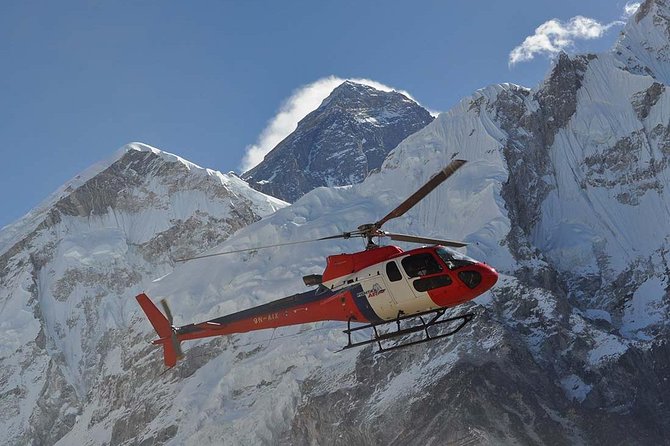
One famous trail, one famous mountain, and one surprising rescue option: a helicopter home. This Everest Base Camp trek pairs classic Khumbu scenery and high-altitude days with a helicopter return from Gorakshep to Lukla, so you get the experience without the full slog of retracing every step.
What I really like is how the trip handles the big moving parts for you. You get door-to-door support in Kathmandu, a licensed English-speaking guide, and porter help (one porter for every two guests), so you can focus on pacing and breathing, not logistics.
The main drawback to factor in is that mountain weather controls everything. Flights and the helicopter are weather-dependent, and at altitude you still earn every view, even with the ride home.
In This Review
- Key highlights to know before you go
- Why a helicopter return from Gorakshep changes Everest Base Camp
- The route basics: Kathmandu to Lukla, then the Khumbu climb over 12 days
- Day-by-day: what each stop gives you on the way to Everest Base Camp
- Day 1: Arrive in Kathmandu and get set up
- Day 2: Lukla into Phakding, the first feel of the Khumbu
- Day 3: Phakding to Namche Bazaar with bridges and prayer flags
- Day 4: Everest View Point for acclimatization and big mountain moments
- Day 5: Tengboche, monastery vibes and the glacial river country
- Day 6: Dingboche area and the climb toward the higher villages
- Day 7: Nangkartshang Peak, an acclimatization hike without pushing to Base Camp
- Day 8: Lobuche and the glacier edge with memorials
- Day 9: Everest Base Camp at 5,365 m, the closest you can get without mountaineering gear
- Day 10: Kala Pattar, the demanding payoff at 5,555 m
- Day 11: Lukla and the flight back toward Kathmandu
- Day 12: Depart Kathmandu
- How the helicopter return fits with altitude and pacing
- Food, filtered water, and the small comfort details that add up
- Price and Logistics: is $3,000 good value for this specific package?
- The fitness test and who should consider this trek
- Should you book this Everest Base Camp trek with helicopter return?
- FAQ
- How long is the trek and what is the trip duration?
- What flights and helicopter ride are included?
- Where do you stay during the trek?
- Who provides guiding and luggage support?
- What permits are included for the trek?
- What equipment or medical/safety items are provided?
Key highlights to know before you go
- Helicopter return from Gorakshep to Lukla saves a full return trek and adds a memorable twist near the end.
- Smart acclimatization days built in at Everest View Point and with a climb to Nangkartshang Peak.
- Kala Pattar sunrise-style effort (a steep, demanding day) gives you big payoff at 5,555 m.
- Guided support with safety gear, including an oxymeter to measure oxygen saturation.
- Comfort where it counts in Kathmandu, with a three-star hotel and breakfast included for two nights.
Other routes to Base Camp, side by side
Why a helicopter return from Gorakshep changes Everest Base Camp
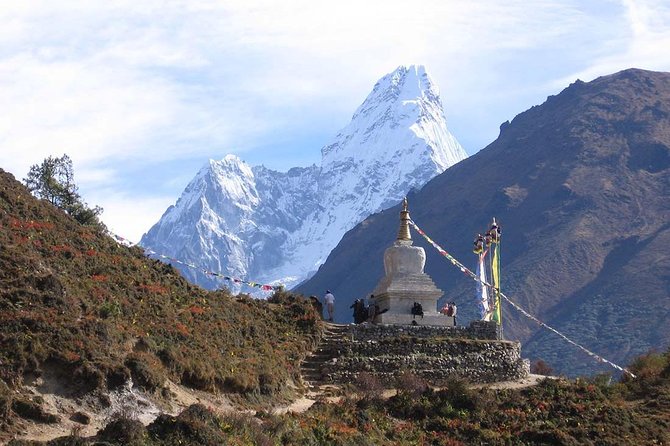
The Everest Base Camp trek is famous for a reason. You walk through Sherpa villages, cross suspension bridges over fast rivers, and gradually trade tree line for glacial terrain. It’s the kind of itinerary that makes your legs feel different by day three, and your brain feel different by day nine.
The helicopter return is the practical magic trick here. After you reach Everest Base Camp and work your way into the higher region, you do not have to plan a full downhill grind back to Lukla on foot. The route is still a serious trek, but your last transfer is lighter, and you get a scenic flight back to civilization faster.
Keep your expectations grounded, though. A helicopter is a shared ride and it depends on conditions. Even with good planning, if weather is poor, aircraft can be delayed or the operator may adjust the schedule.
The route basics: Kathmandu to Lukla, then the Khumbu climb over 12 days
Your trip starts in Kathmandu with a pick-up and a pre-trip meeting. You land at Tribhuvan International Airport, get transferred to your hotel by private tourist vehicle, and meet your guide. If you like clarity early, that meeting helps you get bearings fast, especially since you’ll be dealing with altitude quickly.
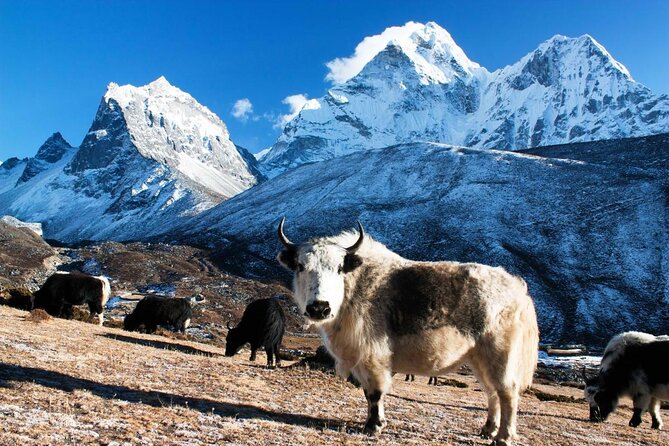
Day 2 is your launch into the mountains. You fly from Kathmandu to Lukla in about 35 minutes, at roughly 2,804 m. Then the trek begins in earnest with a walk toward Phakding, following the Dudh Koshi area and its suspension bridges and prayer flags.
This itinerary has a clear rhythm. You climb day by day, you stop for acclimatization, and you earn two big high points: Everest Base Camp and Kala Pattar. Group size stays reasonable, with a maximum of 14 travelers, which usually makes managing pace and schedules more realistic.
One more practical note: start time is listed as 8:00 am. That matters because your hiking days start early to avoid bottlenecks and to give you daylight.
Day-by-day: what each stop gives you on the way to Everest Base Camp
Day 1: Arrive in Kathmandu and get set up
After you arrive at Tribhuvan International Airport, you’ll be greeted by a company official and moved to your hotel by private tourist vehicle. You’ll have a pre-trip meeting and meet your guide.
This day is about prep, not effort. You’ll want to use it to hydrate, confirm your gear plan, and ask any questions you’re nervous about, especially if you’ve never trekked at altitude.
Other lodge to lodge routes near Kathmandu
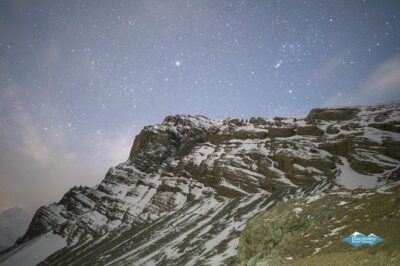
Day 2: Lukla into Phakding, the first feel of the Khumbu
You fly to Lukla, then trek toward Phakding. Expect a fairly early start and a steady introduction to the trail along the Dudh Koshi corridor.
Why this matters: you won’t just jump from sea-level stress straight into thin air fatigue. You get an adjustment day via walking, plus a gentle rhythm as you settle into lodge life.
Day 3: Phakding to Namche Bazaar with bridges and prayer flags
The walk from Phakding to Namche Bazaar is listed as about 6 hours of hiking total. You’ll follow the Dudh Koshi banks, crossing the river multiple times on suspension bridges decorated with prayer flags.
Namche is the big hub town in the Khumbu. It’s where you start feeling the Sherpa culture in daily life, not just at the view points. It’s also where acclimatization starts to matter more than motivation.
Day 4: Everest View Point for acclimatization and big mountain moments
Today you spend time acclimatizing around Namche. You go for a short trek and aim at Everest View Point, which is timed around a sunrise-style window (the itinerary notes rewarding Himalaya views with a stunning sunrise).
You’ll be adjusting to thinning air, so don’t treat this as a sprint day. The goal is to get your body used to altitude before the trek goes higher.
Day 5: Tengboche, monastery vibes and the glacial river country
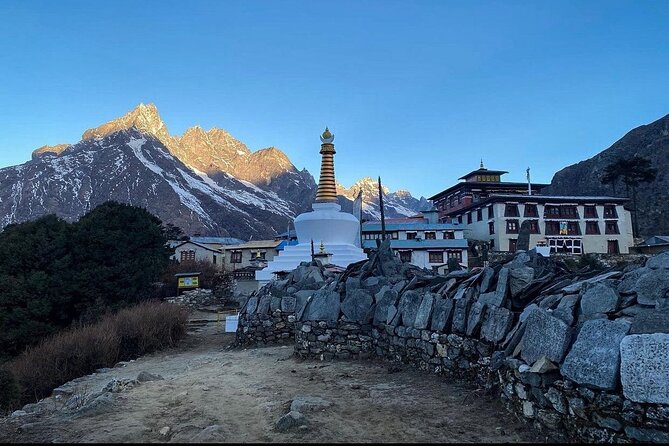
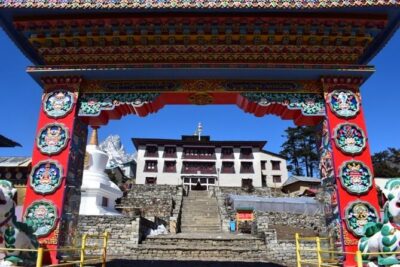
The trek continues along rushing glacial water and mountain views, reaching Tengboche at about 3,860 m. The itinerary calls out the monastery inside Tengboche, which is a strong cultural stop, not just a photo stop.
If you like spirituality and simplicity, this place can be grounding. Just remember: even a cultural day still happens at altitude, so keep your pace steady.
Day 6: Dingboche area and the climb toward the higher villages
From Tengboche, the route drops to Debuche, crosses another suspension bridge on the Imja Khola, and climbs via Pangboche. The itinerary highlights reaching an altitude around 4,300 m and passing through thousands of mani stones.
The key idea here is transition. You’re moving from the more forested lower zone into a rock-and-ice dominated world. You can feel it in how the trail looks and how your lungs work.
Day 7: Nangkartshang Peak, an acclimatization hike without pushing to Base Camp
This is your planned acclimatization day. You hike toward Nangkartshang Peak just above Dingboche, and the point is views, not Everest Base Camp progress.
Why this is valuable: it helps you test your altitude tolerance without trying to force a major milestone day. You still get effort, but it’s a controlled kind.
Day 8: Lobuche and the glacier edge with memorials
Today you move along the lateral moraine of the Khumbu Glacier. The itinerary also notes stone memorials for climbers who perished nearby, which is sobering but part of how Everest is remembered.
You’re climbing toward the village area around Lobuche. This is also the point where many people start feeling that Everest is no longer a picture in a book. It’s right there, and the air has changed.
Day 9: Everest Base Camp at 5,365 m, the closest you can get without mountaineering gear
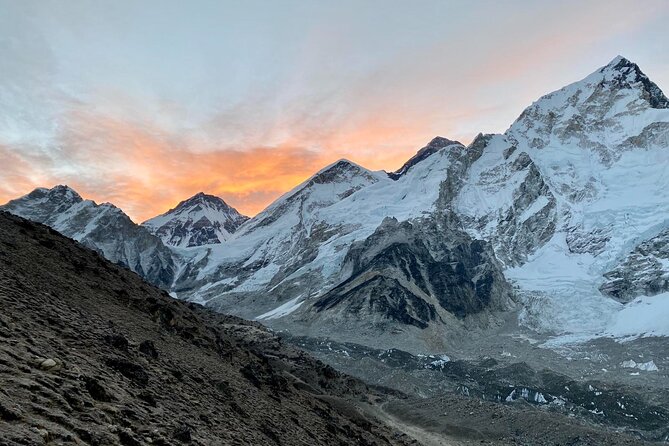
This is the big, difficult day. The itinerary describes a walk along the Khumbu Glacier up to Everest Base Camp at 5,365 m, with seasonal details depending on the time of year.
Expect a full-on effort day. The reward is being at the world’s most famous mountain staging area, even if you never use ropes or crampons. It’s pure altitude walking, plus an emotional sense of place.
Day 10: Kala Pattar, the demanding payoff at 5,555 m
Kala Pattar is one of the hardest days in the trek. You climb a small peak at 5,555 m and spend much of the morning on the ascent.
This day is all about focus. You keep moving, take breaks when needed, and let the view do the work. It’s also where the trek stops feeling like a standard hike and starts feeling like a mountain mission.
Day 11: Lukla and the flight back toward Kathmandu
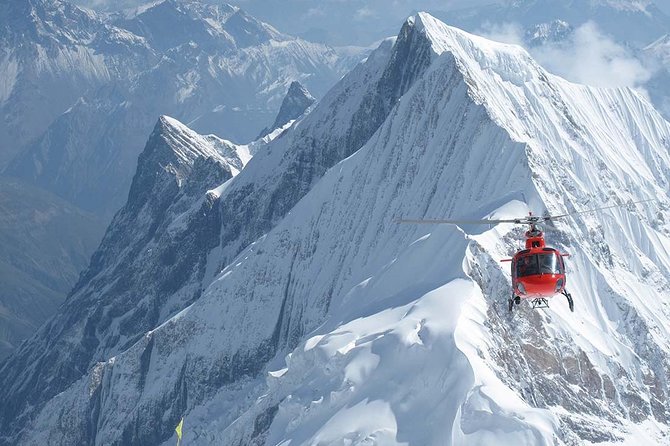
After the high days, you head to Lukla. The helicopter return is part of this end game: the feature is a shared helicopter ride from Gorakshep to Lukla, then you take a 35-minute scenic flight back to Kathmandu.
This is a huge relief for many people, because you skip a long descent on foot. Still, flights are short, but they feel significant because you’re going from the Everest region back to city noise quickly.
Day 12: Depart Kathmandu
Your final day is just airport transfer and time at Tribhuvan International Airport. It’s listed as a couple of hours, which fits an easy departure day.
How the helicopter return fits with altitude and pacing
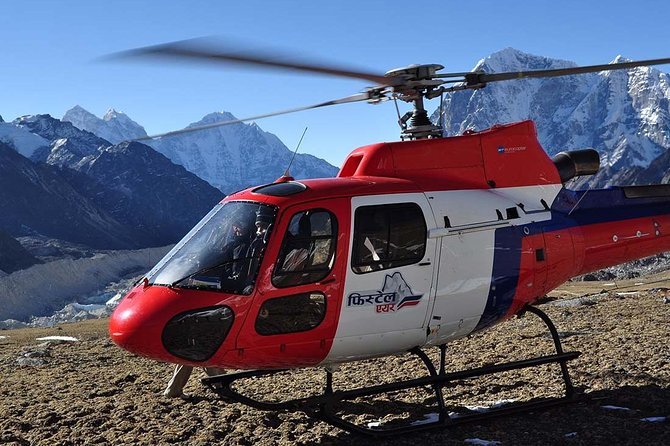
The helicopter ride is only 20 minutes in the trip description, and it comes near the end. That time cut matters because the final days are often the point where tired legs get sloppy. By removing the longest chunk of retracing your steps, you reduce fatigue-related mistakes and preserve more energy for your earlier high days.
Still, don’t treat it as an automatic guarantee. The cancellation terms you get include a weather clause, and the trip explicitly requires good weather. If weather is rough, you might see date adjustments or refunds.
One smart thing I noticed is the safety kit included with first-aid support. Your group gets a comprehensive first-aid kit and an oxymeter to measure oxygen saturation. You can’t eliminate altitude risk with equipment, but measuring oxygen helps your guide make practical decisions.
Food, filtered water, and the small comfort details that add up
Meals are included on the trek: breakfast, lunch, and dinner, with a farewell dinner on the last night. That sounds simple, but it’s real value at these elevations where meals can be harder to price and plan on your own.
You also get a Katadyn Pocket Water Filter, plus the trip uses filtered water on the trails. That matters for peace of mind, especially when you’re walking all day and drinking schedules get messy.
A few comfort perks are listed too: a trekking map, a sun hat, and a free Ace the Himalaya duffel or kit bag (yours to keep). These are small items, but they reduce last-minute shopping headaches.
In past groups, the support team is often praised by name. Guides like Raj and Ram show up in feedback, along with porters including Bishal, Girija, Pesal, Jit, Ser, Jot, and Sher, plus guides like Madan and Maddy. Your exact team may differ, but those names are a good signal that the company focuses on matching travelers with real, local expertise, not just a random route.
Price and Logistics: is $3,000 good value for this specific package?
At $3,000 per person, you’re paying for an integrated package, not just a “guide and a route.” The included costs add up in a big way:
- Kathmandu airport and hotel transfers by private vehicle
- Three-star Kathmandu hotel, twin sharing, breakfast included for two nights
- Twin-sharing guesthouse lodging in Lukla, Phakding, and Namche with attached toilets in those locations
- Licensed English-speaking trekking guide and first-aid support
- Porters with a ratio of one porter per two guests
- Everest National Park permits and TIMS permit
- Airfare Kathmandu to Lukla and back
- Shared helicopter ride from Gorakshep to Lukla
- Daily trek meals and a farewell dinner
- First-aid kit and an oxymeter
- Filtered water using the Katadyn Pocket Water Filter
When you compare that to doing parts of it independently, the helicopter element alone is usually the difference-maker for value. Most people who pay for EBC are willing to suffer for the views. This package lets you suffer earlier in the trek and then trims the final heavy walking load.
What you should watch: the price does not include travel insurance that covers emergency rescue and evacuation, and tips are expected. You’ll also cover personal trekking equipment, plus meals in Kathmandu outside the included breakfast.
So the true value question is simple: do you want the helicopter return and a fully handled logistics chain? If yes, this price can make sense. If you’re trying to keep the trip ultra-budget, you might feel it.
The fitness test and who should consider this trek
This is a high-altitude trek with difficult walking days. The itinerary clearly includes demanding segments like Everest Base Camp and the Kala Pattar ascent, plus a day described as one of the most difficult yet rewarding.
You’re told to have moderate physical fitness, which is helpful, but moderate does not mean casual. You’ll want endurance, steady hiking stamina, and a willingness to take short breaks without rushing.
This trip fits best if you:
- want the classic Everest Base Camp route with cultural stops like Tengboche monastery
- like the idea of acclimatization days rather than pushing straight upward
- want to reduce the stress of the final return trek with the helicopter from Gorakshep to Lukla
- value English-speaking guided support and porter assistance
You may want a different plan if you:
- are very budget-sensitive, since the package includes airfare and the helicopter
- rely on strict schedule control and don’t want weather to affect aircraft timing
- are uncomfortable with high-altitude travel even with the oxymeter and guided pacing
Should you book this Everest Base Camp trek with helicopter return?
I’d book it if your priority is a well-run Everest Base Camp trek with helicopter return from Gorakshep to Lukla, strong safety-minded logistics, and less time spent hiking the return trails. The included permits, guide, porter setup, airfare, helicopter ride, and daily meals make it easier to execute the trip without constant planning stress.
I wouldn’t book it if the helicopter is the only thing you care about and you’re not ready for the hard parts. You still have to climb to Everest Base Camp and tackle Kala Pattar, and those days are the heart of the challenge.
If you do book, my practical advice is to plan your gear carefully, carry hydration habits from day one, and get travel insurance that covers rescue and evacuation. Also, go in with weather flexibility in mind, because the mountains control the timetable.
FAQ
How long is the trek and what is the trip duration?
The trek is listed as 12 days approximately, from arrival in Kathmandu through departure from Tribhuvan International Airport.
What flights and helicopter ride are included?
The package includes airfare from Kathmandu to Lukla and back to Kathmandu, plus a shared helicopter ride from Gorakshep to Lukla.
Where do you stay during the trek?
You get twin-sharing guesthouse accommodation in Lukla, Phakding, and Namche, with attached toilets in Lukla, Phakding, and Namche. In Kathmandu, you stay in a twin-sharing three-star hotel with breakfast included for two nights.
Who provides guiding and luggage support?
A first-aid trained, local Ace the Himalaya licensed English-speaking trekking guide is included. Porters carry luggage during the trek, with one porter assigned for every two guests.
What permits are included for the trek?
The trek includes Everest National Park permits and a TIMS permit.
What equipment or medical/safety items are provided?
The tour includes a comprehensive first-aid kit with an oxymeter to measure oxygen saturation, plus filtered water support using a Katadyn Pocket Water Filter.
Lodge to Lodge Around Kathmandu
The Rest of Our Kathmandu Write Ups

Base Camp, Three More Ways
Everything else we have reviewed around Kathmandu
- 12 Days Everest Base Camp Trekking
★ 5.0 · 3 reviews - 1 Night 2 Days Chitwan Jungle Safari Tour from Pokhara or Kathmandu
★ 3.0 · 3 reviews - Thamel Rickshaw tour
★ 4.7 · 3 reviews - Kathmandu: Momo Making Class with a Local Chef
★ 5.0 · 3 reviews - Kathmandu: Full-Day Yoga, Body Massage and Pedicure Package
★ 5.0 · 3 reviews - From Kathmandu / Pokhara / Chitwan: River Rafting – 1 Day
★ 4.6 · 3 reviews
Everest Base Camp Treks worth a second look.
 ★ 5.0Everest Base Camp Trek – 14 DaysFrom $1,8001,499 reviews
 ★ 5.0Everest Base Camp TrekkingFrom $1,350485 reviews
 ★ 5.0Everest Base Camp Trekking – 13 DayFrom $1,399365 reviews
★ 5.0Everest Base Camp Trek -14 DaysFrom $1,420321 reviews
★ 5.0Everest Base Camp Trekking – 13 DayFrom $1,399365 reviews
★ 5.0Everest Base Camp Trek -14 DaysFrom $1,420321 reviews
 ★ 5.0Everest Base Camp Trekking – 2025/2026From $1,339199 reviews
 ★ 5.0Everest Base Camp TrekFrom $1,408193 reviews
14-Days Private Everest Base Camp TrekFrom $1,600152 reviews
★ 5.0Everest Base Camp TrekkingFrom $1,350146 reviews
★ 5.0Everest Base Camp TrekFrom $1,408193 reviews
14-Days Private Everest Base Camp TrekFrom $1,600152 reviews
★ 5.0Everest Base Camp TrekkingFrom $1,350146 reviews
Lists this tour sits in