
REVIEW · KATHMANDU CITY TOURS & SIGHTSEEING
Full Day Ticket Access around Kathmandu Valley
Four sacred stops, one smooth day plan. This full-day Kathmandu Valley ticket is built for people who want context, not just checkmarks, with private transport and English-speaking guidance connecting each site to living Nepal.
I particularly like the compact route that hits Swayambhunath, Patan Durbar Square, Boudhanath, and Pashupatinath in one day, and I also like the focus on culture and tradition through explanations tied to religion and everyday life. In the strongest feedback, the guide Manish is praised for deep, engaging knowledge and a lively, passionate approach.
One thing to consider is that you may still need to budget for a separate entrance fee (listed as $20 per person) and plan around good weather, since the experience depends on it.
In This Review
- Key things to know before you go
- Why this Kathmandu Valley full-day plan is a smart use of time
- Swayambhunath (Monkey Temple): what to expect and how to make it meaningful
- Patan Durbar Square: heritage that connects crafts, power, and community
- Boudhanath Stupa: one of the world’s largest spiritual anchors
- Pashupatinath Temple on the Bagmati: sacred rituals and the meaning people live by
- Price and value: what $40 really buys, plus the $20 entrance note
- Timing, walking, and comfort on a 7-hour Kathmandu Valley loop
- Who this tour suits best, and who should consider alternatives
- Should you book this full-day Kathmandu Valley ticket?
- FAQ
- What time does the tour start?
- How long is the full-day Kathmandu Valley experience?
- Is pickup included?
- Are entrance fees included in the $40 price?
- What languages are covered by the guide?
- What happens if the weather is poor?
Key things to know before you go
- A religion-to-daily-life style of guiding: You get more meaning than facts, with explanations of how people practice Buddhism and Hindu traditions.
- Four major landmarks, efficiently ordered: The route groups hilltop, city-center heritage, Tibetan spiritual life, and riverbank sacred rituals.
- Private transport plus pickup: You are not stuck navigating between neighborhoods on your own.
- Free admission is listed per stop, but entrance fees are still noted: Budget $20 per person as stated, and be ready to pay on the day if required.
- Good for first-time visitors who want structure: It is designed to give you a clear eastern concept of Nepal quickly.
Other one shot sweeps of the Valley

Why this Kathmandu Valley full-day plan is a smart use of time
If you only have a short window in Kathmandu, the biggest challenge is moving between very different neighborhoods without losing half your day in transit. This is a tightly arranged loop that concentrates the most important sights into roughly 7 hours starting at 9:30 am, and it does so with private transportation and pickup offered. That means you can focus on the places, not on figuring out routes or negotiating rides.
The real value here is the guided storytelling. The tour is described as being led by a team with expertise in culture and tradition, and the strong feedback backs up that approach, especially for Manish, who is credited with strong knowledge of the country and religions and an enthusiastic way of presenting it. That matters because Kathmandu Valley sites can look similar at a glance, but they mean very different things depending on the tradition, the community, and the rituals around them.
The route also makes geographic sense. You start on a hill for a sweeping sacred landmark, move into Patan for heritage and craft culture, shift to a major Tibetan Buddhist center, and then finish at one of the most important riverbank temples in the region. You get a broad idea of Nepal in one day, without feeling like you are sprinting. Still, expect a reasonable amount of walking and standing, especially at hilltop and temple areas.
Swayambhunath (Monkey Temple): what to expect and how to make it meaningful
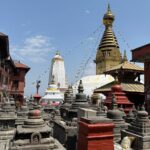
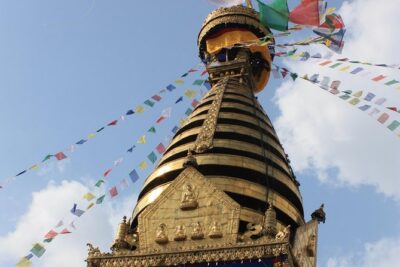
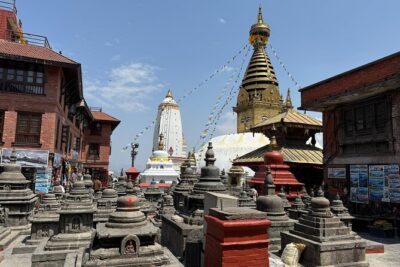
Your first stop is Swayambhunath Mahachaitya, often called Swayambhunath or the Monkey Temple. It sits on a forested hilltop, and it is presented as a site with deep importance for Nepali Buddhism, built on the idea of something ancient and spiritually central. The ticket notes that the time here is around 2 hours, with admission ticket free listed for this stop.
What I like about starting here is the way it sets the tone for the whole day. This is not just a single structure you glance at. The hill and approach matter, because the site feels like a destination you earn. You will likely climb stairs and navigate through a busy temple precinct, and if the nickname Monkey Temple is any clue, you might see monkeys in the area, so keep your belongings secured and avoid sudden reaching toward animals.
How to get more out of your visit:
- Take a moment to scan the site from different angles, not just one photo spot. The layout is part of the experience.
- Watch for small ritual rhythms. Even if you are not a practitioner, you will get a feel for how people move through the space.
- If the guide Manish explains how this site fits into broader Buddhism in Nepal, pay attention. That context makes the next stops click.
A practical note: going first thing at 9:30 am style timing usually helps with temperature and crowds. Still, hilltop sites can be exposed, so carry water and dress in layers.
Patan Durbar Square: heritage that connects crafts, power, and community
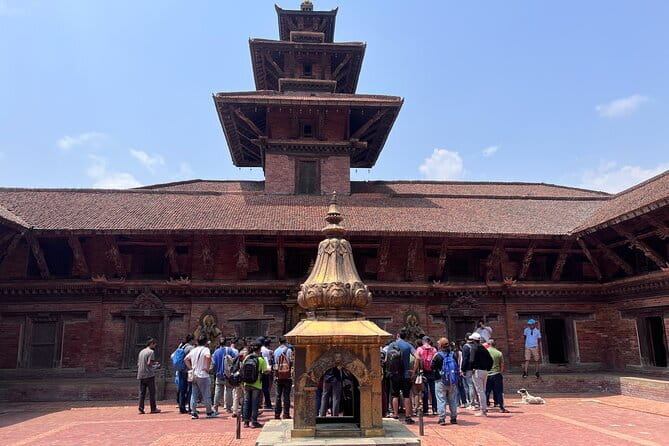
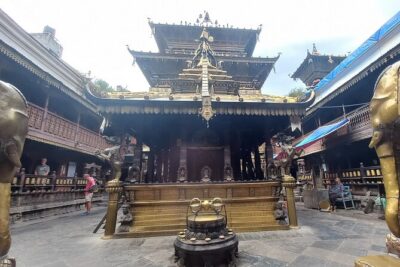
Next you cross over to Patan Durbar Square, also labeled a World Heritage Site and framed as the ancient Newar kingdom of Patan. This is another 2-hour stop, again listed as admission ticket free.
This stop is valuable because it is not only sacred. It is civic and artistic. Patan is known for metal-casting and wood-carving guilds, and the tour description points you to the idea that within one compact plaza, you see centuries of craft tradition and the way communities shaped their world.
What you can expect on the ground is a dense heritage environment. Durbar squares tend to be busy, and there is a lot to look at: carved elements, courtyard layouts, and the overall sense of a city center designed for ceremony, authority, and daily life. For many visitors, it can be easy to treat this as another square. The guiding helps you notice patterns instead, like how the architecture and artistic details reflect Newar culture and long-running craftsmanship.
Possible drawback here is simply attention fatigue. You will have started at Swayambhunath with a lot going on, and then Patan adds more visual detail. If you get tired, tell your guide and slow down. You do not need to sprint to feel like you did it right.
If you want a small strategy: pick one or two craft motifs or building elements to focus on during your time in the square. Then let the guide connect those details to the bigger story.
Boudhanath Stupa: one of the world’s largest spiritual anchors
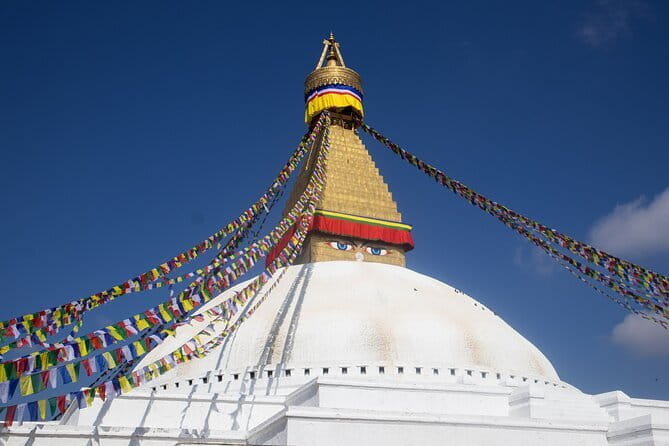
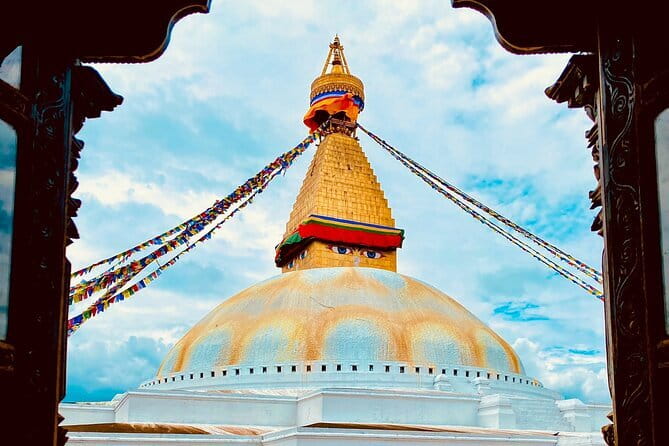
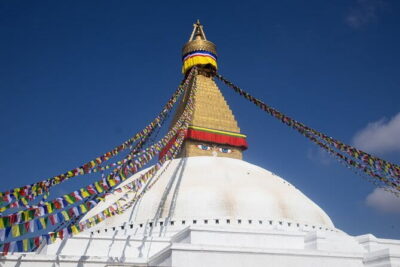
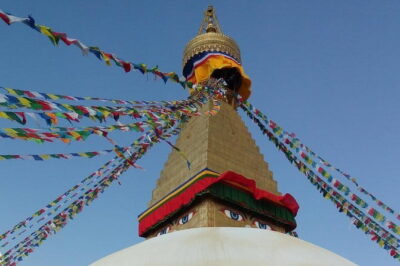
After Patan, the tour heads to Boudhanath Stupa, described as one of the world’s largest spherical stupas and the spiritual heart of Nepal’s Tibetan community. You spend about 2 hours here, again marked as admission ticket free.
This is where the experience often becomes emotionally vivid. The description calls out the atmosphere around the kora, the circumambulation path, with monks in crimson robes and incense smoke, including juniper incense spiraling from rooftop monasteries. Even if you are not sure what you are seeing, you will feel the movement of devotion as people walk the circuit.
A good reason this stop works in a full-day itinerary is contrast. Swayambhunath and Patan are deeply sacred and historical, but Boudhanath shifts the tone. It becomes more focused on Tibetan Buddhist practice, and your guide’s cultural framing helps you understand what the repetition means, why the kora matters, and how the stupa operates as a spiritual focal point.
How to handle the crowds and the sensory overload:
- Give yourself a few minutes to just watch. It helps you learn the flow of the kora.
- If incense smoke is strong, step slightly aside and breathe normally. You do not have to stand in it to appreciate the space.
- Keep an eye on your footing. Temple courtyards can be uneven, and you will likely be walking more than you think.
This is also the stop where I recommend you slow down on purpose. If you rush, you miss the rhythm that makes Boudhanath so special.
Other Kathmandu gates you can prepay
Pashupatinath Temple on the Bagmati: sacred rituals and the meaning people live by
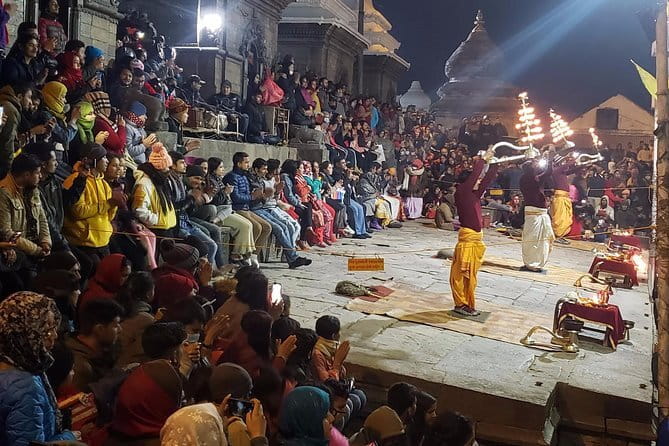
The final major sight is Pashupatinath Temple, located on the bank of the holy Bagmati River. The time here is listed as 1 hour, with admission ticket free.
Pashupatinath is described in a way that highlights a unique blend of cultural practice tied to the life cycle, including ideas about the relationship between soul and body and what comes between life and afterlife. In other words, it is not just architecture or a tourist landmark. It is a place where people connect their spiritual beliefs to real rituals and real moments.
One reason this stop is powerful at the end of the day is mental focus. After three heritage and Buddhist stops, you arrive at a site with a different kind of attention. Your guide can help you understand what is happening around you without turning it into a spectacle.
A consideration here is that temples and riverbank areas can be sensitive and busy. Dress conservatively, keep your behavior respectful, and follow any guidance from your guide on where to stand and how to observe. If you feel overwhelmed, that is normal. Tell your guide you want a quieter spot. You will get more from calm observation than forced staring.
Price and value: what $40 really buys, plus the $20 entrance note
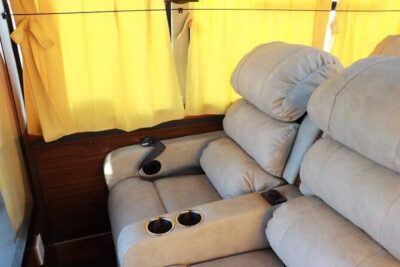
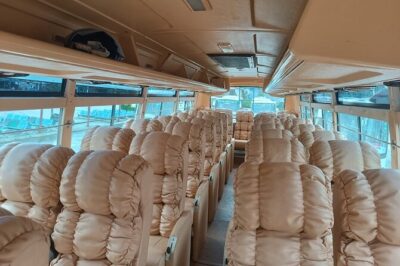
The headline price is $40 per person, and it covers key things that are expensive in time and stress: private transportation and a highly experienced cultural guide with English (in-person) and English audio.
That is the part you should judge on. If you try to DIY this route, you will either spend time arranging separate rides between neighborhoods or you will end up paying for a guide for only one or two stops. Here, you get one guiding voice across the whole loop, which is what makes the day feel cohesive.
Now the detail that matters: entrance fees are marked as not included, with an additional $20 per person to be paid by you for monument access. At the same time, each stop is listed with admission ticket free. That can happen when some parts of a site are free while other areas or special sections are ticketed. The safest approach is to budget the stated $20 and plan to pay only what is required on the day.
In plain terms, you are likely looking at a total closer to $60 per person once the entrance fee line is accounted for. For many first-time visitors, that still feels like good value because you are paying for transportation, guidance, and a full day structure.
Timing, walking, and comfort on a 7-hour Kathmandu Valley loop
A day that starts at 9:30 am gives you a solid chunk of time without feeling like you are losing your whole day. Still, the route includes a mix of hilltop walking, square hopping, and temple observation. Even if the tour does not mention specific walking difficulty, you should assume you will be on your feet for much more than one hour.
Here is how to plan smart:
- Wear comfortable shoes with grip. Temple steps and uneven stone surfaces are common at these kinds of sites.
- Bring water. You will want it, especially if the weather is warm.
- Have a light layer. Temple areas can feel cooler in the shade and warmer in direct sun.
Weather is also a factor. The tour says it requires good weather. If conditions are poor, you may be offered a different date or a full refund, so do not plan a flight for the same day as your tour without a buffer.
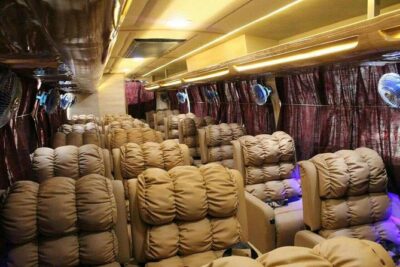
Pickup and private transport help with comfort. You do not need to worry about catching the right local bus or dealing with multiple transfers. For anyone who is tired from arriving in Kathmandu, that peace of mind is a real part of the value.
Who this tour suits best, and who should consider alternatives
This experience fits best if you want a guided introduction to Kathmandu Valley that covers both sacred and heritage sides of the region. It is also a strong match if you like your sightseeing with explanations about how people practice and believe, since the tour emphasizes culture, tradition, and religion.
It is likely a good fit for:
- First-time visitors who want the main sights in one day
- People who prefer guided structure over DIY wandering
- Travelers who appreciate learning through a lively guide, like the praise for Manish’s passion
It may not be the best fit if:
- You want maximum free time at just one site. This is a full loop, so each stop has a set window.
- You dislike walking stairs, especially with hilltop routes like Swayambhunath.
One more practical note from the tour details: service animals are allowed, and it is described as suitable for most travelers. If you have specific mobility limits, ask the provider before booking so you can confirm how the route is handled.
Should you book this full-day Kathmandu Valley ticket?
I would book it if you want an efficient overview of Kathmandu Valley that does not feel empty or rushed. The combination of private transport, a guide who explains culture and religion in an engaging way, and a route that balances Buddhism, Newar heritage, and Hindu sacred practice makes the day feel like it has a clear purpose.
I would hesitate only if you are budget-tight and sensitive to paying entrance fees on top of the base price. Just plan for the listed $20 entrance fee and you will keep the math simple. Also, remember the weather requirement, so schedule it with a little flexibility.
If your goal is to get your bearings fast and leave with a real understanding of what you saw, this is a solid choice.
FAQ
What time does the tour start?
It starts at 9:30 am.
How long is the full-day Kathmandu Valley experience?
The duration is about 7 hours.
Is pickup included?
Pickup is offered, and the tour includes private transportation.
Are entrance fees included in the $40 price?
Entrance fees are not included. The tour notes an additional $20 per person for monument access you pay yourself.
What languages are covered by the guide?
The guide provides English in person, and English audio is also listed.
What happens if the weather is poor?
The tour requires good weather. If it is canceled due to poor weather, you will be offered a different date or a full refund.
Gates You Can Prepay





The Rest of Our Kathmandu Write Ups

One More Valley Day
Everything else we have reviewed around Kathmandu
- 12 Days Everest Base Camp Trekking
★ 5.0 · 3 reviews - 1 Night 2 Days Chitwan Jungle Safari Tour from Pokhara or Kathmandu
★ 3.0 · 3 reviews - Thamel Rickshaw tour
★ 4.7 · 3 reviews - Kathmandu: Momo Making Class with a Local Chef
★ 5.0 · 3 reviews - Kathmandu: Full-Day Yoga, Body Massage and Pedicure Package
★ 5.0 · 3 reviews - From Kathmandu / Pokhara / Chitwan: River Rafting – 1 Day
★ 4.6 · 3 reviews
Kathmandu City Tours & Sightseeing worth a second look.
 ★ 5.0Kathmandu Private Sightseeing Tour | UNESCO World Heritage SitesFrom $35109 reviews
 ★ 5.0Private tour of Major highlights of Kathmandu top rated placesFrom $4492 reviews
 ★ 5.0Kathmandu Heritage Tour (Full Day)From $3863 reviews
 ★ 5.0Life and spirituality tour of KathmanduFrom $5554 reviews
 ★ 5.0Kathmandu Full Day TourFrom $7054 reviews
 ★ 5.0Kathmandu Highlights: Private UNESCO World Heritage Sites TourFrom $4950 reviews
 ★ 5.0Full Day Private Tour of Kathmandu – UNESCO World Heritage SitesFrom $3542 reviews
 ★ 5.0Kathmandu Valley City Day TourFrom $6040 reviews
Lists this tour sits in