
REVIEW · KATHMANDU CITY TOURS & SIGHTSEEING
KATHMANDU FULL DAY SIGHTSEEING TOUR (6-hrs)
Kathmandu can feel like a blur, but this 6-hour circuit gives it structure. You get a tight route with major spiritual sights, plus the city’s mix of old temples and newer architecture, explained in plain language. I especially like the private air-conditioned transport that keeps you comfortable while traffic does what traffic does.
Two things I really like: first, the English-speaking guide who connects what you see to the religious symbolism, so the stops land with meaning instead of just being photos. Second, it is set up as a private tour for your group, so you are not forced into a rushed herd, and you can move at a steady pace through each site.
One consideration to plan for is cost creep. Entrance fees are not included, and there is no restroom on board, so you’ll want to budget for site entry and plan bathroom stops at logical times during the day.
In This Review
- Key things to know before you go
- A 6-hour Kathmandu loop that hits the big four
- Price and value: $40 plus entrance fees, plan for a second budget
- Private A/C transport and Kathmandu traffic reality
- Stop 1: Pashupatinath Temple in Deopatan
- Stop 2: Swayambhu Mahachaitya, the 365 steps and the stupa walk
- Stop 3: Patan Durbar Square, temples first then deeper city courtyards
- Stop 4: Boudhanath Buddha Stupa, mandala shape at walking level
- Guide pacing, timing, and how to make the day feel easier
- Should you book this Kathmandu full-day sightseeing tour?
- FAQ
- What time does the Kathmandu full day sightseeing tour start?
- How long is the tour?
- Is pickup included?
- Is the tour private or group-based?
- What is included in the price?
- Are entrance fees included?
- How much should I budget for permits and entrance fees?
- Is lunch included?
- Is there a restroom on board the vehicle?
- What is the cancellation policy?
Key things to know before you go
- Private A/C vehicle for the full tour, which matters a lot in Kathmandu heat and slow streets
- Four headline sights in one day, with time to understand what each one represents
- 365 steps at Swayambhunath, plus monkeys and small temples along the climb
- Boudhanath as a mandala-like stupa, best appreciated with patience and a slower look around
- Entrance fees and monument permits cost extra, so plan for a second budget line
Other one shot sweeps of the Valley

A 6-hour Kathmandu loop that hits the big four
This is built as a half-day plan, roughly 6 hours, starting at 9:30am. You spend your time in Deopatan and the core heritage zones, moving from Hindu sacred space at Pashupatinath to Buddhist highlights at Swayambhunath and Boudhanath, then into Patan’s Durbar Square area. It is a lot to fit in, but it works because the sites are close enough to manage in a single day with vehicle support.
If you have only a day or two in Kathmandu, this route is practical. You get the main “wow” stops without the guesswork of arranging separate tickets, guides, and transport for each monument. And since it is private for your group, your guide can pace you based on how steady you feel on your feet.
The tradeoff is that you should not treat this as a leisurely museum tour. Even with private transport, you will still spend real time walking courtyards, climbing steps, and navigating crowded temple areas. If you want a slow, sit-and-stare kind of day, you may prefer spreading these sights across two separate mornings or adding extra time at just one or two.
Price and value: $40 plus entrance fees, plan for a second budget
At $40.00 per person, this tour can feel like good value because several costs are rolled in. You get air-conditioned vehicle transport for the day, an experienced English-speaking guide, and government taxes. You also get pickup offered, group discounts, and a mobile ticket, which can reduce hassle once you arrive.
But the fine print matters: entrance fees are extra. The tour also lists city tour permits and monument entrance fees that total about $10 + $10 + $4 + $2. That comes to roughly $26 in additional site-related costs, depending on what is required on the day and which monuments charge what.
So how do you decide if it is worth it? Here is the simple math mindset I use: compare the cost of private transport plus a guide for 6 hours against the cost of buying separate tickets and trying to self-navigate the route. If you value clarity, smooth logistics, and a guide who explains symbolism, the $40 rate plus entrance fees usually makes sense.
One more budgeting note: lunch and dinner are not included, with suggested meal costs about $3 to $6 per meal depending on what and where you choose to eat. There is also no restroom on board, so you’ll want to be prepared to use restrooms at stops or nearby.
Private A/C transport and Kathmandu traffic reality
Kathmandu traffic is famous, and this tour acknowledges that with private vehicle transport the whole time. When you are moving between Pashupatinath, Swayambhu, Patan Durbar Square, and Boudhanath, comfort and timing matter. Air-conditioning can be a real quality-of-life boost when you are walking in temple areas and then returning to a vehicle that can get you to the next stop without overheating.
You also get a ground transport setup designed for a group, not a rigid bus schedule. In practice, that means your guide can adjust the sequence slightly if something gets crowded. Even when you keep the same itinerary, small changes in how long you spend at each spot can make the day feel more relaxed.
One practical tip: wear breathable clothes and keep a small water plan. You will do stairs and courtyard walking, and you will likely be in daylight for most of the route. Even if the day starts cool, temple areas can warm up quickly once you are moving.
Stop 1: Pashupatinath Temple in Deopatan
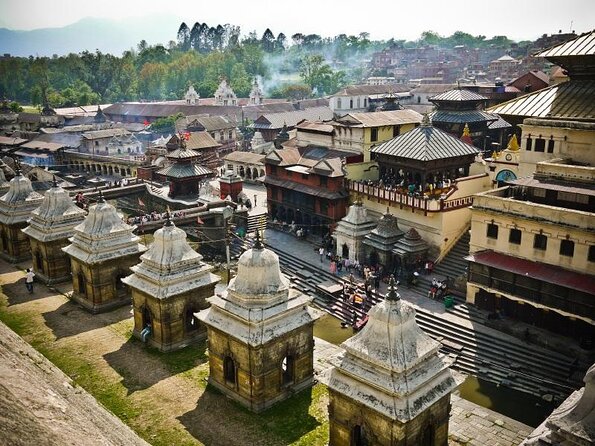
Pashupatinath is the first big spiritual anchor of the day. The site sits in Deopatan, in a courtyard setting, and the main structure is described as a square, two-tiered pagoda temple built on a single-tier plinth. That architectural detail is worth paying attention to because it explains why the building feels distinct from simpler temple forms.
You’ll be there for about 2 hours. That is a good block of time for a place like this, where you are not just looking at one object. You are observing sacred space in action, and you’ll likely notice people praying, walking, and moving through areas in ways that can look structured even if the crowds feel chaotic.
Because admission tickets are not included, you should plan on buying site access on the day, either with help from your guide or through the process you are given. Dress matters at major temples, and you will want to follow whatever rules your guide points out for that moment. If you are unsure, ask your guide before you enter restricted areas.
Potential drawback: this stop can feel intense for first-timers because it is a working sacred site, not a quiet viewpoint. If you prefer calmer atmosphere, you may want to spend your first minutes orienting yourself, then focus on details like the temple form, the courtyard rhythm, and the meaning behind what you’re seeing, rather than trying to capture everything at once.
Other Kathmandu days that run to dusk
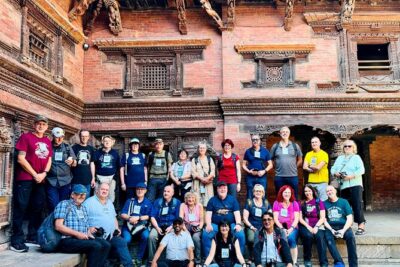
Stop 2: Swayambhu Mahachaitya, the 365 steps and the stupa walk
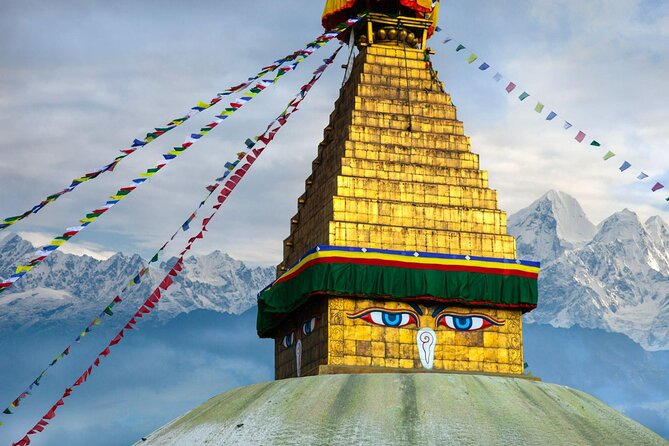
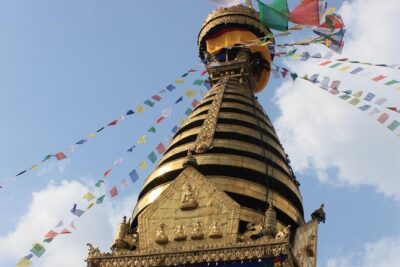
Next comes Swayambhunath, also called Swayambhu Mahachaitya. This is where the tour gets physically active. You are set for about 1 hour total here, and the standout task is climbing the full set of 365 steps to the top.
Along the ascent, you’ll see small stupas and temple features, plus the famous presence of monkeys. There is also a practical social rhythm here: vendors hang around the climb, and it can feel like prices go up as you get closer to the main areas. Your best move is to keep your goals simple. Decide what you want to buy, if anything, before the climb, and avoid negotiating while you are out of breath.
Once you reach the top, you’ll circle the stupa at the very top, and the tour notes circling clockwise. It is a small instruction, but it changes how you experience the space. Instead of walking like a tourist, you move like a participant in a ritual rhythm.
You also will want time to visit small temples and other nearby religious details around the main stupa area. The one-hour window means you should not sprint. Go at a steady pace, stop when you need to, and let the view and the symbolism do the work.
Footwear note: choose comfortable shoes with grip. The stone steps can be uneven, and you’ll be sharing space with other walkers.
Stop 3: Patan Durbar Square, temples first then deeper city courtyards
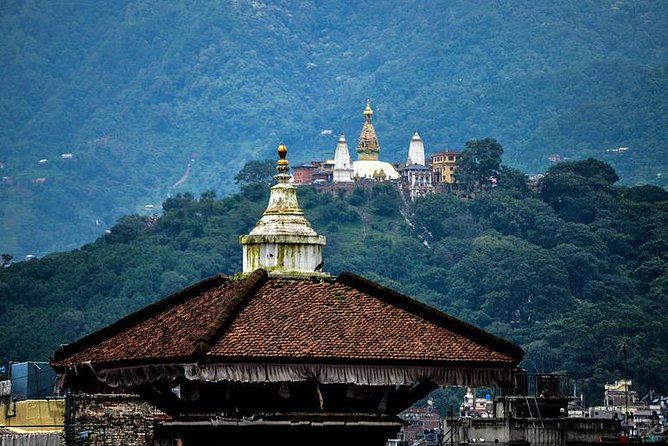
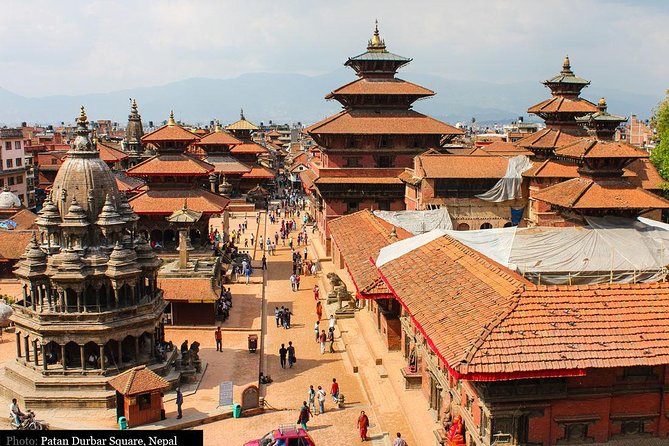
Patan Durbar Square is where the tour shifts from individual monuments to a broader heritage setting. You spend about 2 hours here. The suggested flow starts from the left side of Patan, watching the temples first, then moving deeper toward the city.
This approach matters. If you enter and rush straight to the main cluster, you can miss the layered feel of Patan’s temple layout and the gradual transition from outer views to inner courtyards. Moving in order also makes it easier to understand what you are looking at, because your guide can point out why certain structures are where they are.
The tour highlights that you will see key attractions at Patan, including Chyasin Dewal as one of the main temples. Even when you only catch partial views due to crowds, the point is to follow the guide’s logic: look for the structure first, then listen for the religious or cultural meaning tied to the site.
Like the earlier stops, admission tickets are not included. Entrance fees can vary based on which areas you access, so it is smart to have extra cash or payment options available. Your guide can help you route you efficiently so you spend more time seeing and less time figuring out how entry works.
Potential drawback: Patan Durbar Square can get busy. That is normal for Kathmandu’s heritage zones. If you dislike crowds, choose a spot to pause early in the visit, and let the flow pass before you push deeper.
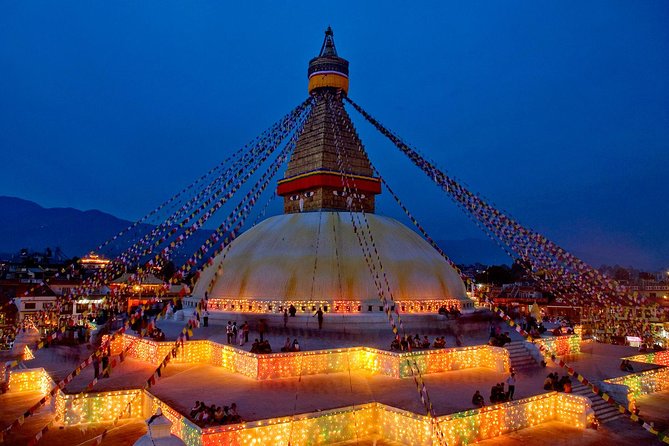
Stop 4: Boudhanath Buddha Stupa, mandala shape at walking level
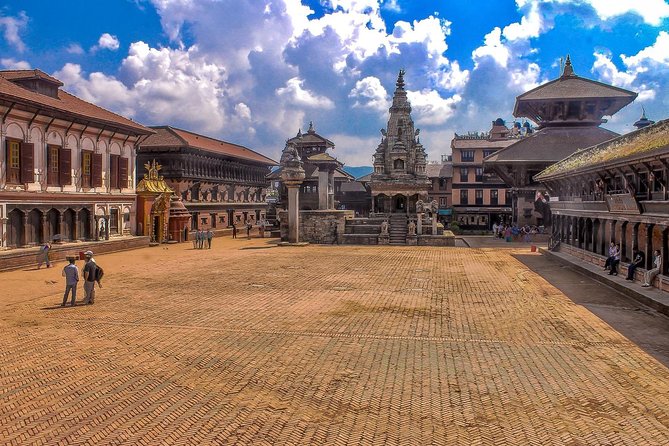
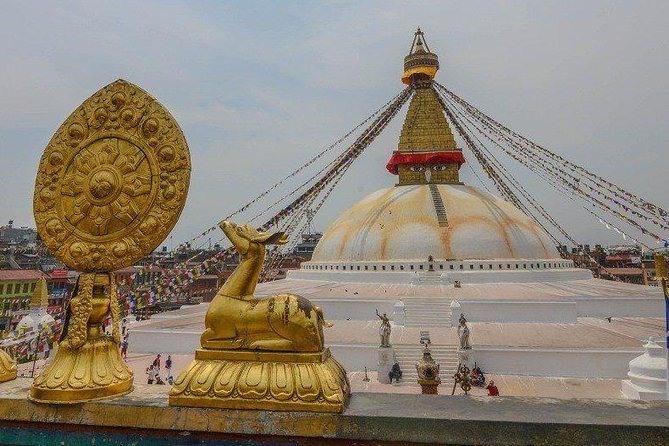
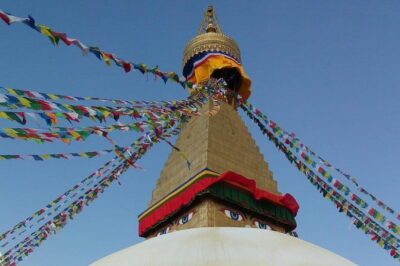
The last stop is Boudhanath Buddha Stupa, also described as a place where from above the stupa looks like a giant mandala, or diagram of the Buddhist cosmos. That is a big concept, and it helps to hear it out loud while you are standing there, because the stupa’s visual layout then makes more sense.
You’re scheduled for about 1 hour here. That is often enough time to appreciate the scale from different angles and to see the surrounding activity. The description also notes that four Dhyani Buddhas mark the cardinal points. Even if you do not study iconography in depth, that detail gives your eyes a target. You can look around the structure and try to map the symbolism in your head as you walk.
This stop is likely to be a photo moment, but it is also a pause moment. If your day has been about climbing and moving, Boudhanath is a good place to slow down. Let your guide point out the key features, then take a quiet lap around the surrounding areas if it is possible for you at the time of day.
Best use of the hour: choose one or two angles that feel special, stand for a minute, then move. That way you collect the visual impact without turning the stupa visit into an endless walk.
Guide pacing, timing, and how to make the day feel easier
A full day of major monuments only feels manageable when the guide is good at pacing. The most praised part of this tour format is the combo of guide and driver working smoothly together, especially in traffic. A safe, confident driver helps the day feel calm even when streets are chaotic.
Your guide’s job is not just to name places. In this route, the guide is there to explain significance and religious symbolism tied to each stop. When it clicks, you stop treating each site as a checkbox and start understanding why each one is important. That makes the day more satisfying, even when you cannot linger for hours.
Timing-wise, remember the tour is about 6 hours total. That means the stops are controlled blocks: 2 hours at Pashupatinath, 1 hour at Swayambhunath, 2 hours at Patan Durbar Square, and 1 hour at Boudhanath. You will likely feel the rhythm if you treat bathroom breaks as part of the schedule, not interruptions.
A few simple packing ideas that fit this itinerary:
- Comfortable shoes for steps and courtyard walking
- A light layer, since temple areas can shift between shade and sun
- A small amount of cash or payment options for entrance fees and permits
- Water, since there is no restroom on board listed in the tour details
Also, one practical note from a real-world concern: communication around changes or cancellations can matter. If your plans might shift, confirm your details early and keep the booking message trail handy. It can save stress if anything in your itinerary changes.
Should you book this Kathmandu full-day sightseeing tour?
Book it if you want a focused Kathmandu day with private A/C transport, an English-speaking guide, and a route that covers the major spiritual sights plus Patan’s heritage zone. It is a strong choice for first-timers, time-crunched visitors, and anyone who prefers structure over planning four separate logistics pieces.
Skip or consider a different plan if you hate steps or you are sensitive to crowds. Swayambhunath includes climbing 365 steps, and Patan Durbar Square can get busy in peak hours. If you want more quiet time at fewer places, you might do two half-day tours instead of packing everything into one 6-hour window.
If you do book, plan for extra entrance costs, bring comfortable shoes, and treat the day like a guided route with real walking, not a sightseeing carousel. With that mindset, you’ll get the best value from the time you spend in Kathmandu.
FAQ
What time does the Kathmandu full day sightseeing tour start?
The start time is 9:30am.
How long is the tour?
The duration is about 6 hours.
Is pickup included?
Pickup is offered.
Is the tour private or group-based?
It is private. Only your group participates.
What is included in the price?
Included items are air-conditioned vehicle, ground transport in a comfortable private vehicle, an experienced English speaking tour guide, and all government taxes.
Are entrance fees included?
No. Entrance fees are extra.
How much should I budget for permits and entrance fees?
The tour lists city tour permits and entrance fees totaling about $10 + $10 + $4 + $2.
Is lunch included?
No. Lunch and dinner are not included. Meals cost about $3 to $6 depending on what and where you eat.
Is there a restroom on board the vehicle?
The tour notes that a restroom on board is not included.
What is the cancellation policy?
You can cancel for free up to 24 hours in advance for a full refund. If canceled less than 24 hours before the start time, the amount paid is not refunded. The tour also depends on good weather and a minimum number of travelers, with a different date or full refund if canceled for those reasons.
Everything Bookable Around Kathmandu
The Rest of Our Kathmandu Write Ups

One More Valley Day
Everything else we have reviewed around Kathmandu
- 12 Days Everest Base Camp Trekking
★ 5.0 · 3 reviews - 1 Night 2 Days Chitwan Jungle Safari Tour from Pokhara or Kathmandu
★ 3.0 · 3 reviews - Thamel Rickshaw tour
★ 4.7 · 3 reviews - Kathmandu: Momo Making Class with a Local Chef
★ 5.0 · 3 reviews - Kathmandu: Full-Day Yoga, Body Massage and Pedicure Package
★ 5.0 · 3 reviews - From Kathmandu / Pokhara / Chitwan: River Rafting – 1 Day
★ 4.6 · 3 reviews
Kathmandu City Tours & Sightseeing worth a second look.
 ★ 5.0Kathmandu Private Sightseeing Tour | UNESCO World Heritage SitesFrom $35109 reviews
 ★ 5.0Private tour of Major highlights of Kathmandu top rated placesFrom $4492 reviews
 ★ 5.0Kathmandu Heritage Tour (Full Day)From $3863 reviews
 ★ 5.0Kathmandu Full Day TourFrom $7054 reviews
 ★ 5.0Life and spirituality tour of KathmanduFrom $5554 reviews
 ★ 5.0Kathmandu Highlights: Private UNESCO World Heritage Sites TourFrom $4950 reviews
 ★ 5.0Full Day Private Tour of Kathmandu – UNESCO World Heritage SitesFrom $3542 reviews
 ★ 5.0Kathmandu Valley City Day TourFrom $6040 reviews
Lists this tour sits in