
REVIEW · KATHMANDU CITY TOURS & SIGHTSEEING
Evening Photography Tour of Kathmandu
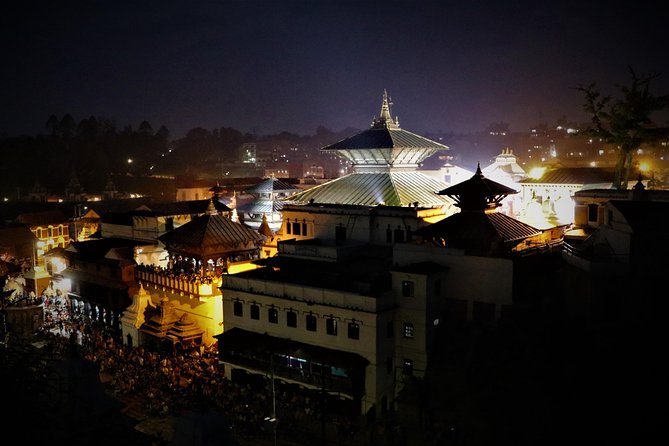
Fire rituals and prayer lights in one evening. This private half-day photography tour is built around two of Kathmandu’s most important religious sites, with a guide who helps you find the right moments for photos at Boudhanath and Pashupatinath. I especially like how the evening atmosphere turns practical, with butter lamps, chanting, and fire rituals giving you instant subject matter.
You’ll also get the benefit of a private setup, so you are not scrambling between locations. The one real drawback to plan for is simple: it depends on good weather and busy crowds around the ceremonies, so timing and comfort matter.
In This Review
- Key Things You Will Notice on This Kathmandu Photo Tour
- How This Half-Day Evening Tour Builds Great Photos
- Boudhanath Stupa at Night: Parikrama, Butter Lamps, and White Light
- What Can Be Tricky at Boudhanath
- Pashupatinath After Sunset: Arati on the Bagmati River Edge
- How to Get Better Results at Pashupatinath
- Why the Guide Matters More Than You Think
- What Your Guide Usually Does for You
- Price and Value: Is $102 a Good Deal for This Private Setup?
- What to Bring (and What You Do Not Need)
- Scheduling, Weather, and Real-World Timing
- Who This Tour Is Perfect For
- Should You Book This Evening Photography Tour?
- FAQ
- What temples does the evening photography tour include?
- How long is the tour?
- Is transportation included?
- What is included in the price?
- What should I bring?
- What happens if the weather is bad or plans change?
Key Things You Will Notice on This Kathmandu Photo Tour
- Two temple worlds in one evening: Buddhist pilgrimage life at Boudhanath, then Hindu evening arati at Pashupatinath.
- Photo-focused guidance: you are taken to the spots where the action happens, not just dropped off.
- Butter lamps and fire rituals as your subjects: the lighting is part of the show, so bring a camera you trust in low light.
- Parikrama at Boudhanath: you get the circumambulation rhythm that helps your photos feel alive, not static.
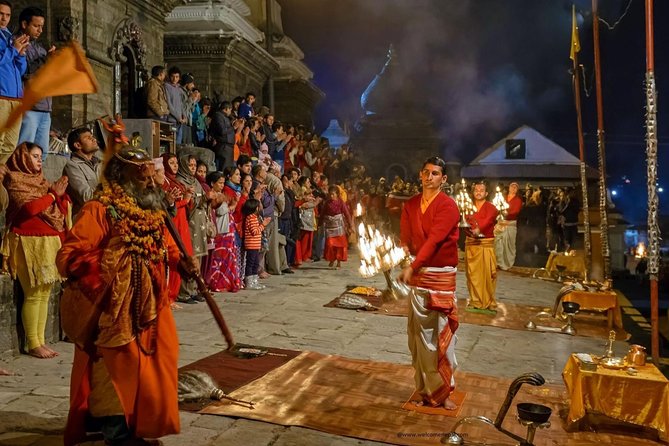
- Evening arati at Pashupatinath: chanting, hymns, and priests offering light from a flame create a strong story arc.
- Private transport from central Kathmandu: you spend less time figuring out logistics and more time looking at details.
Other one shot sweeps of the Valley

How This Half-Day Evening Tour Builds Great Photos
This tour is designed for one thing: letting you photograph Kathmandu’s religious life during the hours when the scenes look most dramatic. Evening matters here. The stupa and temple areas light up, people gather, and ceremonies move on a steady rhythm. That gives you something far more useful than random sightseeing. You get context, then you get the frames.
I like that it stays focused and efficient. It’s only about 3 to 4 hours, and the plan connects two major landmarks in the same evening window. That means you are not burning time on long transfers or trying to guess where the best action is. Plus, private transportation from central Kathmandu is included, so you can just show up with your camera and follow the guide.
The private format also helps with photo pace. If you want an extra minute to try a different angle around the stupa or wait for the next flame moment during arati, you can. If you are traveling with a partner or a small group, you also avoid the constant stop-start energy that comes with larger group tours.
Boudhanath Stupa at Night: Parikrama, Butter Lamps, and White Light
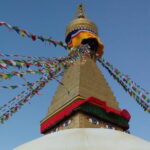
Boudhanath is one of Kathmandu’s key pilgrimage centers for Tibetan Buddhism, and this evening stop is built around the stupa and the people moving around it. You start with the white-domed Boudhanath Stupa, beautifully lit and decorated. What makes your photos feel real is not just the monument. It is the movement: devotees and monks making Parikrama, the circumambulation around the stupa.
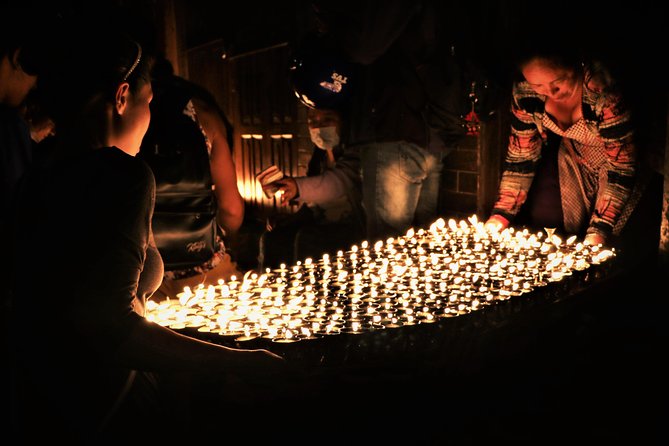
This is where a guide earns their fee. You are not left wandering and hoping the right scene appears. Instead, you learn where to stand and when to watch for the moments that naturally happen during the circuit. People light butter lamps and pray for well-being for all sentient beings and for world peace. You can use those actions as your visual anchors, then build a sequence from there: hands lighting lamps, the line of devotees moving, monks in the flow of the crowd, and the stupa holding the whole scene together.
A practical note for your camera: lamp light is small, bright, and surrounded by darker areas. That is a setup that rewards patience. Keep your camera ready, and give yourself a few rounds of shooting so you catch both wide context shots (stupa plus people) and tighter moments (flames and faces). If you shoot video, the repeating movement of Parikrama can help you create a smooth, story-like clip.
The stop lasts about an hour, and admission is included. That is important value because it removes one more question mark from your evening. It also keeps your time focused on photography and not ticket lines.
What Can Be Tricky at Boudhanath
The stupa area can be crowded. That is part of the experience, but you may have to work with limited space depending on where the biggest waves of devotees are moving. If you are very particular about standing positions for your shots, plan to be flexible and let the guide manage the flow.
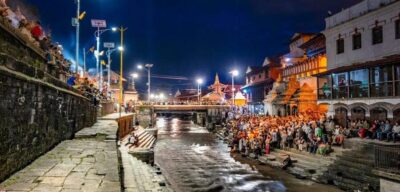
Pashupatinath After Sunset: Arati on the Bagmati River Edge
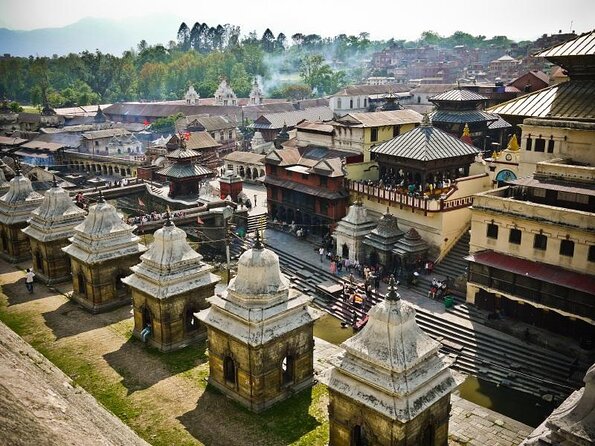
The second stop is Pashupatinath Temple, one of the most important Hindu shrines dedicated to Lord Shiva. Even if you have visited temples in daylight before, evening changes the mood completely. The focus shifts from architecture to ritual.
Here, you come for the evening arati, a sacred Hindu ritual where light from a flame is offered to the gods. You will hear chanting and sacred Vedic shlokas and hymns. Priests perform the arati, and devotees may dance in trance. The setting becomes a mix of sound, light, and spiritual intensity, and those ingredients translate beautifully into photos if you are ready for quick, changing moments.
Pashupatinath has a name that tells you what the place stands for: protector of all living beings. Knowing that context helps your photos feel more meaningful. You are not just photographing an event. You are photographing a community performing devotion with Shiva as the center.
More Kathmandu evenings worth the late finish
How to Get Better Results at Pashupatinath
This is not a long lecture tour. It is a short, concentrated evening window, about another hour. So you get one key advantage: your guide helps you find where the action is, and you spend your time observing rather than guessing.
During arati, the best scenes often happen in seconds. I recommend keeping your focus on the ritual sequence: priests preparing, the flame offered, devotees responding. Then, layer in wider shots that show the atmosphere and the temple setting, so your photos tell both the story and the location.
The admission ticket is included here too, so you are not juggling cash or figuring out entry while the ceremony is already underway. And because the tour includes private transportation between sites, you do not arrive stressed or late, which matters when you are working around ceremony timing.
Why the Guide Matters More Than You Think
In a photo tour like this, the guide is not just a translator of facts. The guide is your advantage in two ways: timing and placement.
The strongest theme from past participants is how professional and polite the guides are, and how quickly they help you get oriented. Names that have come up include Mr Bikash and Deepa. Both are described as highly knowledgeable and helpful, and that kind of guidance matters when you are photographing religious ceremonies, where the best angles are not always obvious from street level.
If you care about ethical photography, a good guide also helps you understand how to behave around people who are there for worship, not as scenery. The tour’s structure supports that. It is private, guided, and designed around respectful viewing of ceremonies rather than treating the sites as a quick photo backdrop.
What Your Guide Usually Does for You
- Explains what you are seeing at each stop, so your photos have a story.
- Guides you to the settings and moments worth capturing on film.
- Helps you keep moving through the evening without losing the best light.
Price and Value: Is $102 a Good Deal for This Private Setup?
At $102 per person for a 3 to 4 hour private evening tour, you are paying for more than a ride. You are paying for access to two major landmarks at the right time of day, guided photo positioning, admission tickets included for both stops, and private transport from central Kathmandu.
Here is how the value adds up for you:
- You get transportation and tickets included. That removes two common costs and reduces friction during an evening when ceremonies run on time.
- You are buying time efficiency. If you were to do this on your own, you would still need to figure out where to stand for Parikrama scenes and how to time Pashupatinath arati. Doing it with a guide is paying for that certainty.
- It’s private. Private means the experience stays flexible for your photography style and your group pace.
It is not a budget walking tour. But it is also not overpriced for what you get, especially because the itinerary is short, the sites are major, and the photography moments are tied to scheduled evening rituals.
What to Bring (and What You Do Not Need)
The good news is that the experience is built around your camera, and you do not need specialized gear to enjoy it. Transportation, guides, and the included entry fees take care of the “planning effort” side.
Still, for best results, think practically about low light. You are photographing butter lamps and an arati flame, and the contrast between bright flames and darker surroundings can make camera settings feel tricky. Use whatever approach fits your camera and comfort level, but give yourself time to test exposure and focus once you arrive.
In terms of what is not included, the tour does not provide dinner, bottled water, or alcoholic beverages. Plan to handle your own water and food. For an evening plan, that is one of the easiest ways to stay comfortable and keep your energy up for the ceremonies.
Scheduling, Weather, and Real-World Timing
This experience runs for about 3 to 4 hours and uses private transportation. It also requires good weather. If the tour is canceled due to poor weather, you are offered a different date or a full refund.
That means your best move as a traveler is to build some flexibility around your evening. If your Kathmandu schedule is tight, you may want a backup activity nearby. Evening photography tours depend on the air, the lighting, and whether the ceremony conditions feel comfortable outside.
Also, the tour is typically booked about 12 days in advance on average. That suggests demand, and it is smart to reserve early if your trip dates are fixed.
Who This Tour Is Perfect For
This is a great fit if you want religious sightseeing with structure, and if you enjoy photographing people doing meaningful, time-tested rituals. You are walking into two heavyweight landmarks and watching what happens when worship becomes visible through light and motion.
It also suits you if:
- You like your travel experiences guided, but not rigid.
- You want cultural context so your photos do not feel empty.
- You prefer private transport so your evening does not turn into a logistics puzzle.
If you already know Kathmandu well and you just want to wander freely, you might not need a guided photo route. But if you want the best chance of capturing the right scenes without hours of guesswork, this tour makes sense.
Should You Book This Evening Photography Tour?
I would book it if your ideal Kathmandu evening includes Boudhanath Parikrama and the Pashupatinath arati ritual, and you want a guide to help you find the moments that matter. The value is strong because admission is included at both stops and private transportation is part of the package. You also get a focused half-day window that fits into real travel schedules.
Skip it only if you hate crowds or you know you will be uncomfortable with low-light photography. Also, keep weather in mind. When conditions are good, this tour has the kind of energy that turns photography into storytelling.
FAQ
What temples does the evening photography tour include?
The tour covers Boudhanath Stupa and Pashupatinath Temple, with time for key religious rituals and activities at each site.
How long is the tour?
It runs about 3 to 4 hours total, in a half-day evening format.
Is transportation included?
Yes. Private transportation is included, including pickup offered from central Kathmandu.
What is included in the price?
Included items are private transportation, all fees and taxes, and an English speaking licensed city guide. Admission tickets for both Boudhanath and Pashupatinath are included.
What should I bring?
You should bring your camera. Bottled water and dinner are not included, so plan to bring or buy what you need for comfort during the evening.
What happens if the weather is bad or plans change?
The experience requires good weather. If it is canceled due to poor weather, you will be offered a different date or a full refund. There is free cancellation, and you can cancel up to 24 hours in advance for a full refund.
Everything Bookable Around Kathmandu

The Rest of Our Kathmandu Write Ups



One More Valley Day
Everything else we have reviewed around Kathmandu
- 12 Days Everest Base Camp Trekking
★ 5.0 · 3 reviews - 1 Night 2 Days Chitwan Jungle Safari Tour from Pokhara or Kathmandu
★ 3.0 · 3 reviews - Thamel Rickshaw tour
★ 4.7 · 3 reviews - Kathmandu: Momo Making Class with a Local Chef
★ 5.0 · 3 reviews - Kathmandu: Full-Day Yoga, Body Massage and Pedicure Package
★ 5.0 · 3 reviews - From Kathmandu / Pokhara / Chitwan: River Rafting – 1 Day
★ 4.6 · 3 reviews
Kathmandu City Tours & Sightseeing worth a second look.
 ★ 5.0Kathmandu Private Sightseeing Tour | UNESCO World Heritage SitesFrom $35109 reviews
 ★ 5.0Private tour of Major highlights of Kathmandu top rated placesFrom $4492 reviews
 ★ 5.0Kathmandu Heritage Tour (Full Day)From $3863 reviews
 ★ 5.0Kathmandu Full Day TourFrom $7054 reviews
 ★ 5.0Life and spirituality tour of KathmanduFrom $5554 reviews
 ★ 5.0Kathmandu Highlights: Private UNESCO World Heritage Sites TourFrom $4950 reviews
 ★ 5.0Full Day Private Tour of Kathmandu – UNESCO World Heritage SitesFrom $3542 reviews
 ★ 5.0Kathmandu Valley City Day TourFrom $6040 reviews
Lists this tour sits in