
REVIEW · EVEREST HELICOPTER TOURS
Everest base camp Helicopter Tour
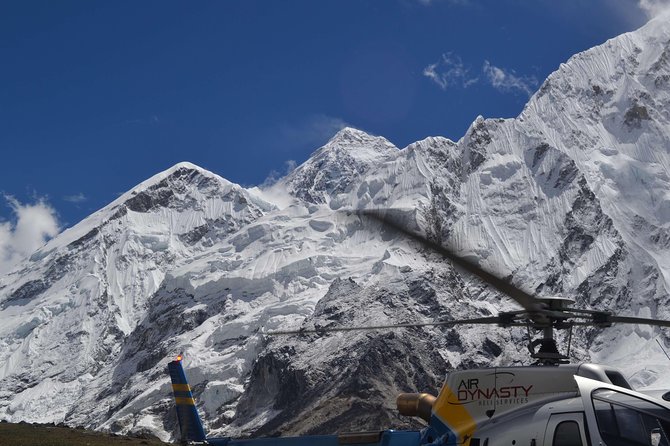
Everest, fast and by helicopter. This half-day trip is built for big aerial views without the multi-day trek grind, pairing early Kathmandu pickup with about 4.5 hours of flight time and guided commentary along the way.
I also like the emphasis on photo angles, especially around Kala Patthar, plus the fact that it runs as a small group in the helicopter, so your guide can actually answer questions. One key consideration: this tour is weather-dependent, so you need a day with good visibility.
In This Review
- Key Highlights Worth Noticing
- Why this half-day Everest Base Camp flight makes sense
- Start at 6:15 am: Kathmandu pickup to Lukla
- Everest View Hotel breakfast: your first real altitude moment
- Lukla to Kala Patthar: the window-seat moment
- Sherpa villages and monasteries: culture from above
- Everest Base Camp and Kalapathar fly-bys: getting the shots in limited time
- Price breakdown: what $1,700 really buys (and what costs extra)
- Weather, weight limits, and comfort on a helicopter day
- Who this Everest helicopter day suits best
- Who should skip it
- Should you book this Everest Base Camp helicopter tour?
- FAQ
- What time does the Everest Base Camp helicopter tour start in Kathmandu?
- How long is the tour, and how much of that is flying?
- What’s included in the price?
- What extra fees should I budget for?
- Is breakfast included during the tour?
- How many people are in the group?
Key Highlights Worth Noticing
- Small-group helicopter time: capped at about five people, so you get more attention and less chaos at the windows
- Kala Patthar photo stop: you get a dedicated time block for pictures at one of the best viewpoints in the region
- Kathmandu to Lukla flow: an early start and efficient routing that keeps the whole day tight
- Sherpa culture stop (optional): you may pause in Sherpa villages and see Buddhist monasteries and customs
- Clear-day advantage: when conditions are good, the views from altitude are the whole point of the day
Rather fly it? More Everest heli options
Why this half-day Everest Base Camp flight makes sense
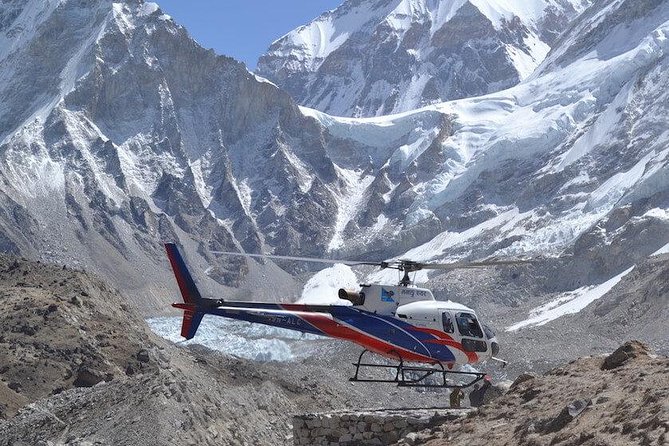
Most Everest plans fall into two extremes: you either commit to weeks on foot, or you resign yourself to distant postcards. This tour is trying to do something smarter for the time-poor, and it does it with aviation.
You’re looking at a total duration of about 5.5 hours, with flight time around 4 hours 30 minutes. That matters because Everest photos are all about light and clarity, and a short schedule reduces the chance that the day drags into bad weather. If you’re in Nepal for a quick stopover or you simply do not want climbing, this is the most direct way to see the Everest area in a single morning.
There’s also a practical value here that people often miss. When you fly, you can spend time at the viewpoints instead of losing hours to logistics. You’re not waiting in a long line for transport, and you’re not walking uphill with heavy layers that make altitude feel harder than it has to be.
Start at 6:15 am: Kathmandu pickup to Lukla
The day starts early, with a 6:15 am start time. That early start is not just “tour math.” It’s how you maximize a calm morning in the Kathmandu area and give the pilots the best shot at visibility later in the flight.
You get hotel pickup and drop-off, plus round-trip private transfer and an air-conditioned vehicle. The private transport piece is a genuine comfort win if you’re tired from jet lag or city traffic, and it also keeps things from turning into a group scavenger hunt at random hotels.
From Kathmandu, the program includes a transfer to Lukla (2,845 meters) for the next phase of the day. A key point here: you’re moving quickly through altitude transitions. That’s great for time, but it also means you should be ready to eat a little earlier and keep water handy, so you are not scrambling when the flight schedule moves.
Everest View Hotel breakfast: your first real altitude moment
One of the smartest pieces of the plan is the stop for breakfast at the Hotel Everest View area, including time to enjoy the view. You’ll spend about 30 to 50 minutes there.
Breakfast might sound like filler, but in the Everest region it often functions as your warm-up. You arrive, you get your bearings, you adjust to the cold air and the scale of the mountains, and then you move on. For photo planning, that time matters too. You can test your camera settings in daylight and choose how you want to shoot once you’re higher.
Two practical notes. First, the breakfast stop comes with the caveat that the admission ticket is not included. Second, breakfast is listed as not included in general, so budget accordingly. If you like eating while you watch the peaks, treat this meal as part of the experience, not an afterthought.
Lukla to Kala Patthar: the window-seat moment
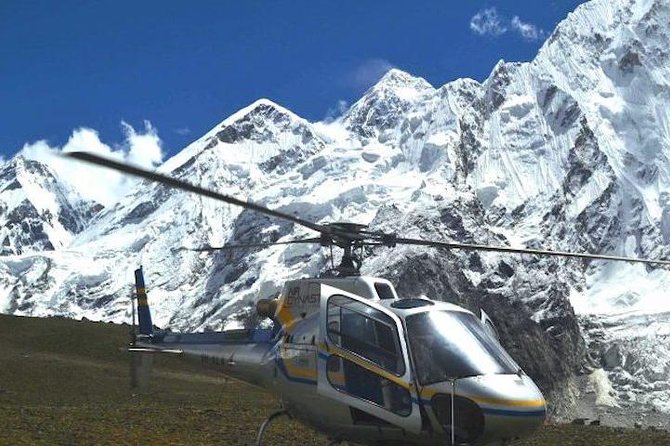
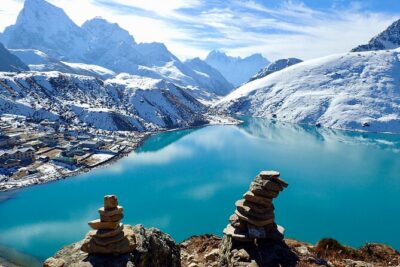
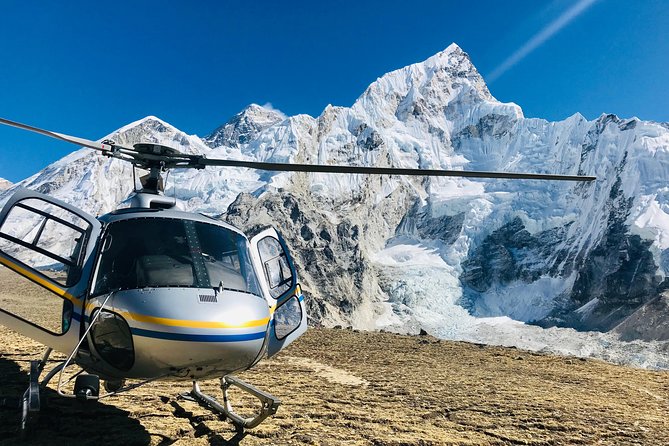
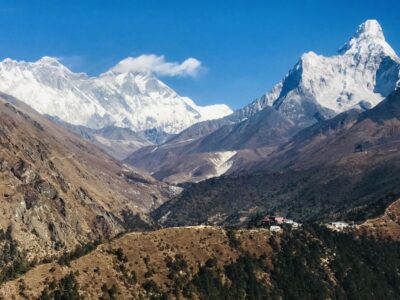
If you’re coming for photos, you’ll care most about the sections around altitude viewpoints. After the early Kathmandu to Lukla connection, the program includes a helicopter flight from Lukla to Kala Patthar (5,550 meters), typically 15 to 20 minutes.
This is where the tour earns its keep. Short flight segments like this tend to work well for people who want the views without spending the whole day at altitude. You get the height, you get the angle, then you move on. It also helps prevent window-seat fatigue. Staring out for too long can tire you out, and a focused time window is often easier on your neck and hands if you’re switching between phone and camera.
The best part, from the info you provided, is that you’re not rushed through the viewpoint. There’s mention of enough time for pictures at Kala Patthar, which is exactly what you want. If the sky is clear, your photos will look better because you have the chance to wait for small changes in light, not just snap and hope.
One more practical detail: your route includes flying passes that are designed for window seating and photo opportunities. That means the helicopter experience is not just transport. It is part of the sightseeing.
More Kathmandu flights with a landing
Sherpa villages and monasteries: culture from above
The tour includes a culture component that goes beyond “look at mountains, take pictures.” There’s a stop concept focused on Sherpa culture, including Buddhist traditions and colorful local customs.
There’s also a chance to stop in Sherpa villages and see interesting older monasteries, described as optional. Optional matters because it depends on timing and conditions, and it means you should not build your expectations on a single guarantee. Still, even a brief cultural stop can change how you interpret the scenery. Everest is not just a view, it is a living place with long religious and community histories tied to the mountains.
What makes this portion valuable for real-world travelers is that it helps you connect people to the landscape. When you see a village setting and a monastery stop alongside the flight, you understand why locals talk about mountain life the way they do. It also adds variety so the morning does not feel like one long stretch of window time.
If you’re the kind of person who likes short cultural moments, this stop is a good match. If you prefer a straight-to-the-views itinerary with zero “sit and listen,” it might feel like extra, but it is still brief.
Everest Base Camp and Kalapathar fly-bys: getting the shots in limited time
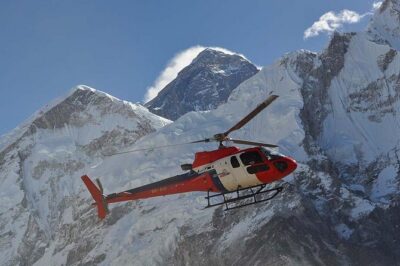
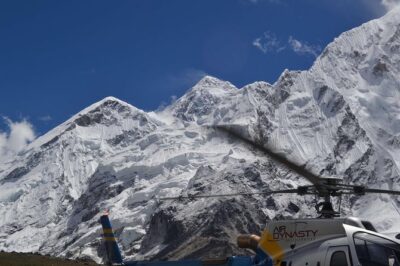
The core promise is seeing the Everest area in a day. The plan includes flying over the Everest Base Camp and Kalapathar area, with notes about doing a shuttle from Phiriche to Everest Base Camp and Kalapathar, plus flying over the area twice for window-seat opportunities.
That “twice” detail is more important than it sounds. One pass gives you context, the second pass helps you refine your photo angle. It also gives you a backup if cloud wisps move across the peaks. In this region, weather can change fast, even when it does not feel dramatic on the ground.
You should think of this as a best-of strategy. You are not doing the full trek walk to base camp on foot, so you will not get the same hands-on time with the camp life. Instead, you’re getting aerial perspective plus a short on-the-ground or shuttle-linked segment that keeps the day moving.
If your goal is to check Everest Base Camp and Kalapathar off your dream list without taking days off work or spending weeks on the trail, this format is hard to beat. You get the geography and the scale, and you still leave Nepal with the kind of photos people show for years.
Price breakdown: what $1,700 really buys (and what costs extra)
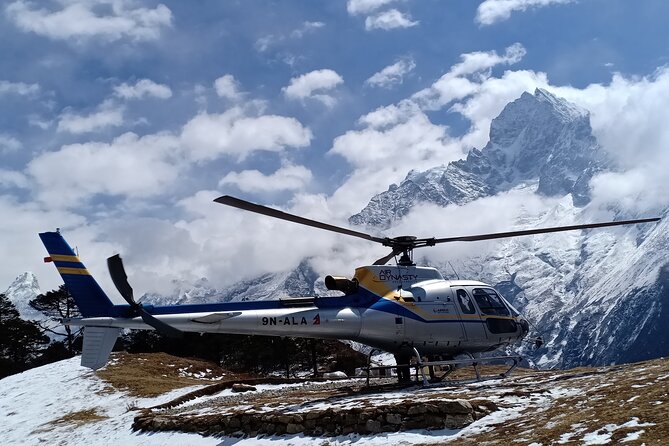
The price is $1,700.00 per person. For most of us, that sounds steep. But helicopter viewing in Nepal has two pricing drivers: aircraft cost and the challenge of operating at altitude with limited weather windows.
So here’s the honest value question: what are you buying? You’re paying for coordinated hotel pickup/drop-off, round-trip private transfer, an air-conditioned vehicle, and a flight program with enough time blocks to matter for sightseeing. You’re also buying the convenience of staying in Kathmandu with minimal extra planning.
Also note what is not included:
- Airport tax: $8.00 per person
- Breakfast
- National park fee: $43.00 per person
- The breakfast stop at the Hotel Everest View includes a note that an admission ticket is not included
Those add-ons are not crazy in isolation, but they do affect your total cost. When I price this kind of day trip, I treat the stated tour price as the starting line, not the final number.
Still, for the right person, the math can work. If you have limited time, helicopter sightseeing can be cheaper than spending extra nights in Nepal plus losing paid time on a longer trek. If you have the time to trek, then you already know helicopter pricing may not feel worth it. But if time is your limiting factor, this is a direct route.
Weather, weight limits, and comfort on a helicopter day
This is the one variable you cannot control. The tour requires good weather, and if it is canceled due to poor conditions, you’ll be offered a different date or a full refund. That’s how these high-altitude schedules protect safety and visibility.
What you can control is readiness:
- Keep expectations flexible for a clear sky, because Everest views are visibility dependent.
- Dress in layers. Even in season, the higher you go, the more the air can bite.
- Plan your comfort for window time. You’ll want a stable stance and easy camera handling.
There is also a weight limit listed as 243 lbs per passenger. If you’re close to that number, you should check details before booking to avoid surprises.
On the comfort side, you do get air-conditioned vehicle transport in Kathmandu and private transportation, which helps a lot when you start early and want your body to feel decent before the flight.
Who this Everest helicopter day suits best
This tour fits best if you want Everest views but you do not want the effort of a long trek. It is also a strong match if you value structure, because the day is organized around specific time blocks: breakfast with a view, flight segments to altitude viewpoints, and photo-focused passes.
It is especially good for:
- People with only a half-day window in Nepal
- Non-climbers who want the Everest story and the geography
- Anyone who appreciates a small group because you can actually interact with your guide
If you hate early mornings, this is not your plan. If you want to spend meaningful time on foot at base camp, you’ll likely feel the difference. And if you expect Everest in bad weather, you may end up disappointed. The tour is designed for conditions that allow visibility.
Who should skip it
If your dream is walking the route and taking in base camp life up close, helicopter sightseeing will feel too fast. If you cannot flex your schedule for weather, you might want a different Nepal plan that does not depend so heavily on visibility.
Also, consider cost. If $1,700 plus park fees feels like a stretch, do the honest comparison. Sometimes a slower trek gives you more days of content for the money, even if you sacrifice the speed.
Should you book this Everest Base Camp helicopter tour?
Book it if you have a short Nepal window and you want a high-impact Everest morning with serious photo chances. I especially like that the schedule is tight, the pickup is convenient, the group size is small, and the viewpoint focus includes time at Kala Patthar and fly-bys around Everest Base Camp and Kalapathar.
Skip it if you want days of on-foot exploration, or if you need a plan that does not hinge on clear weather. Also, if you’re sensitive about total costs once park fees and the non-included meal add up, run your numbers first.
For the right person, this is one of those rare Everest experiences where the dream stays intact while the logistics get dramatically simpler.
FAQ
What time does the Everest Base Camp helicopter tour start in Kathmandu?
The start time is 6:15 am.
How long is the tour, and how much of that is flying?
The total duration is about 5 hours 30 minutes, with around 4 hours 30 minutes of flight time.
What’s included in the price?
Included are hotel pickup and drop-off, round-trip private transfer, an air-conditioned vehicle, and private transportation.
What extra fees should I budget for?
Not included costs are airport tax ($8.00 per person), breakfast, and national park fee ($43.00 per person).
Is breakfast included during the tour?
Breakfast is listed as not included. There is a breakfast stop mentioned at the Hotel Everest View area, but the admission ticket for that stop is also noted as not included.
How many people are in the group?
The activity lists a maximum of 5 travelers, with a cap of 10 people per booking.
Everything Bookable Around Kathmandu
The Rest of Our Kathmandu Write Ups

Everest, Rotors and All
Everything else we have reviewed around Kathmandu
- 12 Days Everest Base Camp Trekking
★ 5.0 · 3 reviews - 1 Night 2 Days Chitwan Jungle Safari Tour from Pokhara or Kathmandu
★ 3.0 · 3 reviews - Thamel Rickshaw tour
★ 4.7 · 3 reviews - Kathmandu: Momo Making Class with a Local Chef
★ 5.0 · 3 reviews - Kathmandu: Full-Day Yoga, Body Massage and Pedicure Package
★ 5.0 · 3 reviews - From Kathmandu / Pokhara / Chitwan: River Rafting – 1 Day
★ 4.6 · 3 reviews
Everest Helicopter Tours worth a second look.
 ★ 5.0Everest Base Camp Helicopter Tour landing at Everest View HotelFrom $1,575668 reviews
 ★ 5.0Everest Base Camp Helicopter Tour landing at Hotel Everest ViewFrom $1,600218 reviews
 ★ 5.0Everest Base Camp helicopter tour with landingFrom $1,60061 reviews
 ★ 5.0Everest Base Camp Helicopter Tour with Hotel Everest View LandingFrom $1,49052 reviews
 ★ 5.0Guaranteed Landing at Everest Base Camp Kalapathar by HelicopterFrom $3,50038 reviews
★ 5.0Everest Base Camp Helicopter Tour landing at Everest View Hotel.From $1,98534 reviews
★ 5.0Guaranteed Landing at Everest Base Camp Kalapathar by HelicopterFrom $3,50038 reviews
★ 5.0Everest Base Camp Helicopter Tour landing at Everest View Hotel.From $1,98534 reviews
 ★ 4.9Everest Base Camp Helicopter TourFrom $1,86330 reviews
 ★ 5.0Everest Base Camp Helicopter TourFrom $1,60024 reviews
Lists this tour sits in