
REVIEW · EVEREST HELICOPTER TOURS
Kathmandu: Everest Base Camp Helicopter Tour
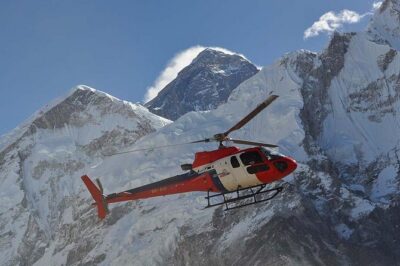
You get Everest without the long hike. This is a fast, chartered helicopter run that lines you up for close aerial views of the Everest Base Camp area, then slows down for a breakfast at high altitude. I like that it stays structured and short, with real viewing time built in, not just flying past and hoping for the best.
My favorite part is the chance to see the famous Kalapatthar viewpoint from the air and then actually eat breakfast in the shadow of the peaks at Hotel Everest View (3,880 meters). The main drawback is weather. If clouds or wind move in, the day can shift, waits can happen, and in worst cases plans can stretch far longer than the stated 4.5 hours.
In This Review
- Key things to know before you go
- From Kathmandu hotel to the first flight: the short-run logistics
- The Lukla refuel stop (2,860 meters): quick looks at the Khumbu gateway
- Over Namche, Tengboche, Pheriche, and Gorakshep: the Everest story from above
- Kalapatthar and Everest Base Camp angles: why the height numbers matter
- Hotel Everest View breakfast at 3,880 meters: the part you’ll remember
- Phiriche landing and shuttle legs: how you get base camp and Kalapatthar time
- Getting back to Kathmandu: the final flight and the pace shift
- Price and value: what $1,863 buys you, and what it doesn’t
- Weather is the real boss: flexibility and the possibility of a long day
- Comfort limits: what to expect at high altitude and on the ground
- What to bring so you’re not miserable in the cold
- The best fit: who should book this helicopter Everest day
- Should you book the Kathmandu to Everest Base Camp helicopter tour?
- FAQ
- How long is the Kathmandu to Everest Base Camp helicopter tour?
- Where do you get picked up in Kathmandu?
- What is included in the price?
- Is breakfast included?
- Are national park fees included?
- How does the flight route include Lukla?
- Will I have good viewing from the helicopter?
- Where is the breakfast stop and how long is it?
- What do I need to bring?
- What are the luggage restrictions?
Key things to know before you go
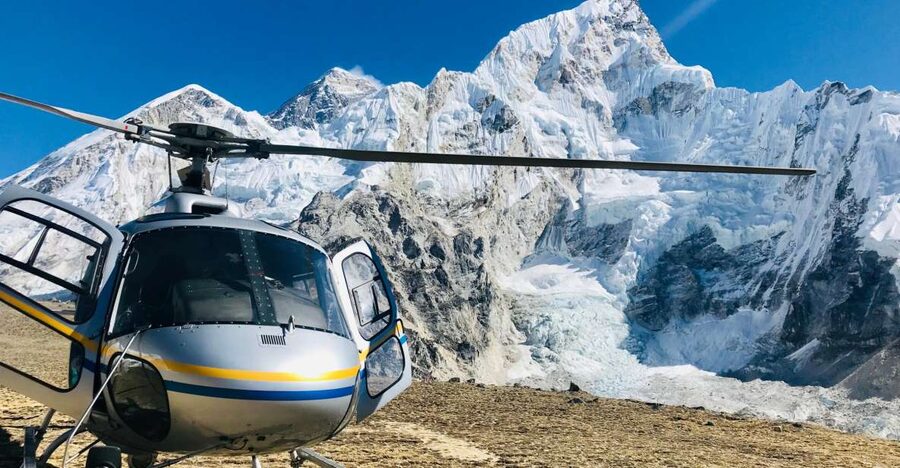
- Chartered helicopter, small group (max 5), which keeps the cabin calm and the experience feeling personal
- Two altitude anchors: Lukla at 2,860 meters and Hotel Everest View at 3,880 meters
- Close flyovers of the Everest region landmarks, including Namche Bazar, Pheriche, Tengboche Monastery, and Gorakshep
- Kalapatthar viewpoint passes with famous close-up angles, plus photo time over the Everest Base Camp area
- Oxygen tanks on board for emergencies, a practical extra that matters at altitude
Rather fly it? More Everest heli options
From Kathmandu hotel to the first flight: the short-run logistics
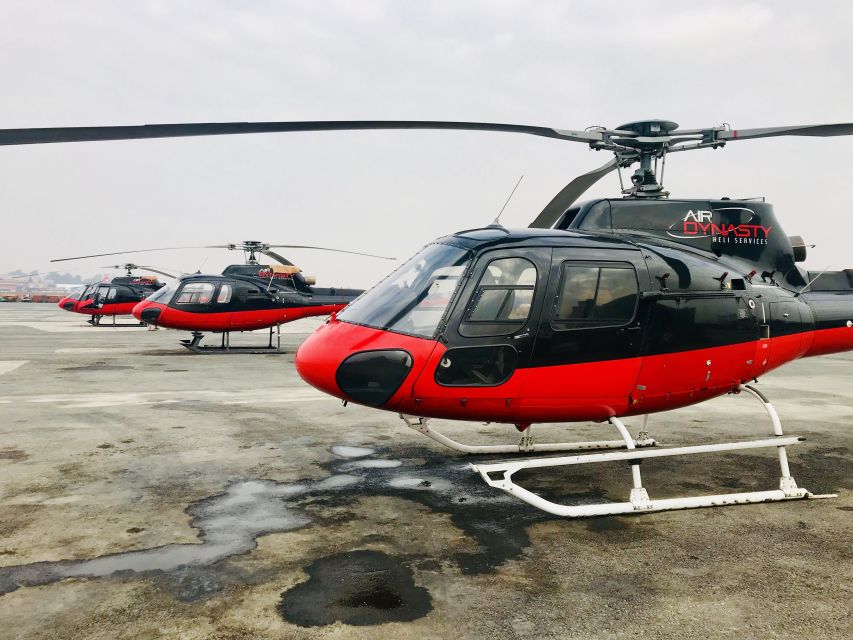
This tour is designed for an early start. They pick you up from your Kathmandu accommodation and transfer you to Tribhuvan International Airport’s domestic area. You should expect a preparation window of about 30 to 40 minutes, then a safety briefing before you’re airborne.
The timing matters because the whole plan is built around flying in the clearest windows of the morning and early day. From there, the route moves fast: a downhill-to-uphill flight rhythm, a quick refuel stop, then a focused pass over the Everest region.
You’ll also notice the tour takes a “small group” approach. It’s limited to 5 participants, and that has a real effect on how the day feels. Less crowding means less chaos around windows, cameras, and boarding.
The Lukla refuel stop (2,860 meters): quick looks at the Khumbu gateway
One of the most important segments is the stop at Lukla (Tenzing Hillary Airport). The helicopter flies about 45 minutes from Kathmandu toward Lukla at 2,860 meters, then lands for 10 to 15 minutes for refueling.
That stop is short on purpose. You’re not meant to linger. Still, it’s one of those moments where you get a fast “I’m really here” check, because the whole Khumbu story is built around places like this airstrip.
Practical move: have your camera ready before the helicopter touches down. You may only get a narrow moment to frame shots, especially if you’re seated away from the side with the best light.
Over Namche, Tengboche, Pheriche, and Gorakshep: the Everest story from above
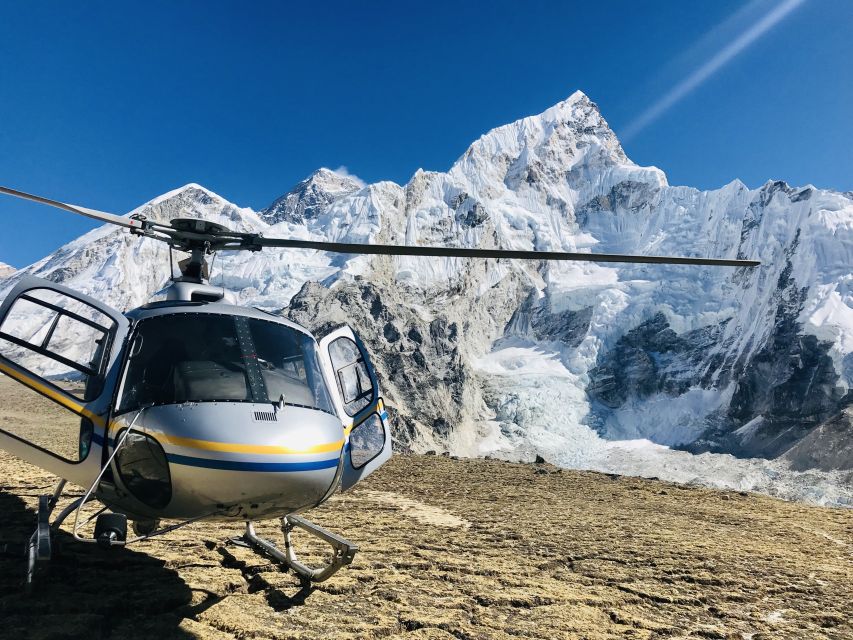
After the refuel, you head back into the Everest region. The flight segment over the area is about 25 minutes, and it’s packed with recognizable stops, at least from the air.
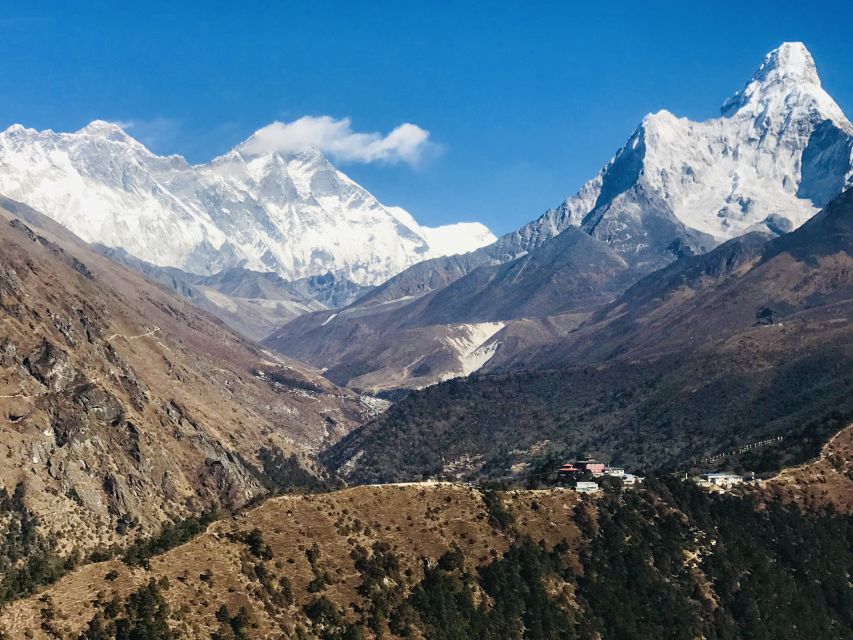
You’ll fly over Namche Bazar, Pheriche, Tengboche Monastery, and Gorakshep. From a helicopter window, these places look like they’re stacked along the mountain’s edges, with valleys and ridgelines slicing the terrain into layers.
This is where the value of helicopter travel really shows. A trek can take you along those paths for days, but the helicopter gives you a compressed map of how the region fits together. In a few minutes, you get orientation, not just views.
Also, keep expectations realistic. This isn’t a long sightseeing bus tour. You’re traveling fast, so your best “learning” comes from picking key viewpoints and snapping photos as landmarks line up.
Kalapatthar and Everest Base Camp angles: why the height numbers matter
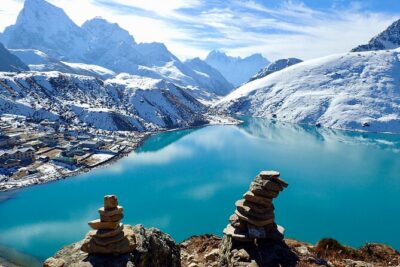
The headline view is the Kalapatthar angle. The tour highlights viewing from around 6,000 meters, and it includes flying over the famous point that’s referenced as being about 200 meters above Everest Base Camp.
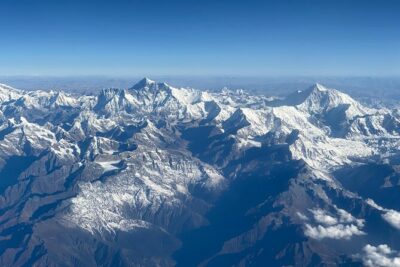
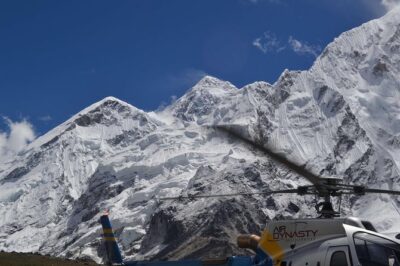
That detail matters because it changes how Everest reads from your window. At this height, you’re not just seeing the famous peak, you’re seeing the geometry: where glaciers meet rock faces, where valleys open up, and how the base camp area sits against the mountain’s bulk.
You get photo time during a dedicated viewing stretch, plus time to look around and absorb the scale. This part of the experience is all about making the most of a narrow window. If your phone battery tends to die quickly, charge it fully the day before, and keep a lens cloth handy.
And because you’re close to the Everest Base Camp and Kalapatthar passes, you’ll likely feel the “gravity” of the mountains in a way static photos can’t replicate. You’re seeing the space between ridges and the way snowfields cut into the terrain.
More Kathmandu flights with a landing
Hotel Everest View breakfast at 3,880 meters: the part you’ll remember
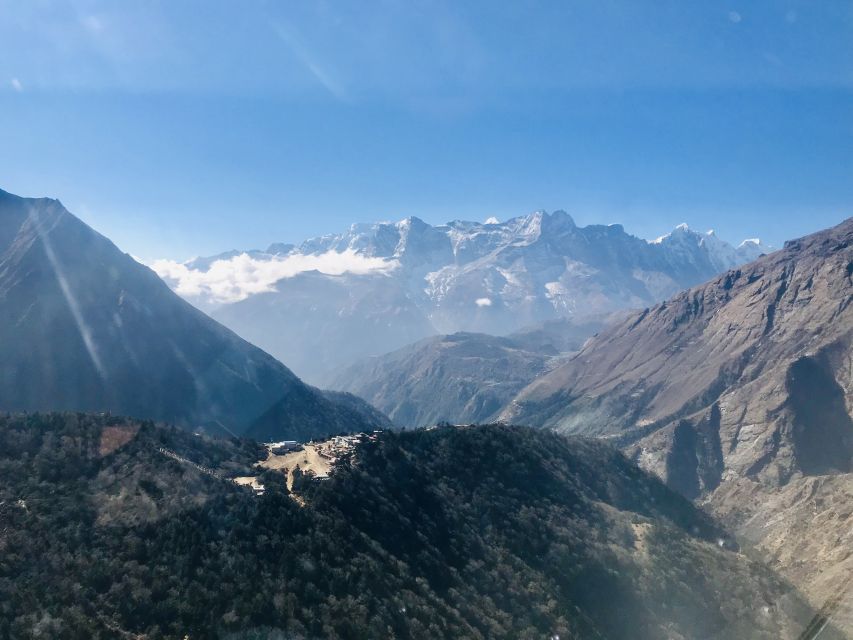
Here’s what I think makes this tour different from a typical sightseeing flight: you pause for breakfast at Hotel Everest View (3,880 meters).
The helicopter moves from the Everest area to Hotel Everest View with a flight time noted as about 12 minutes, then you get a break of roughly 45 minutes. The breakfast is served on an open terrace with big views, which turns the meal into the emotional anchor of the day.
Breakfast at altitude is not just a cute detail. It’s a chance to slow down while everything is still working. Once you’re back in the air, there’s no time to sit and take it in like this. Eating in that setting forces you to do the simple stuff: breathe, look longer, and stop rushing your photos.
Important: the plan includes a weather backup. If conditions aren’t good at Hotel Everest View, they’ll adjust, including landing at Lukla or another location in the region so you can still have breakfast.
Phiriche landing and shuttle legs: how you get base camp and Kalapatthar time
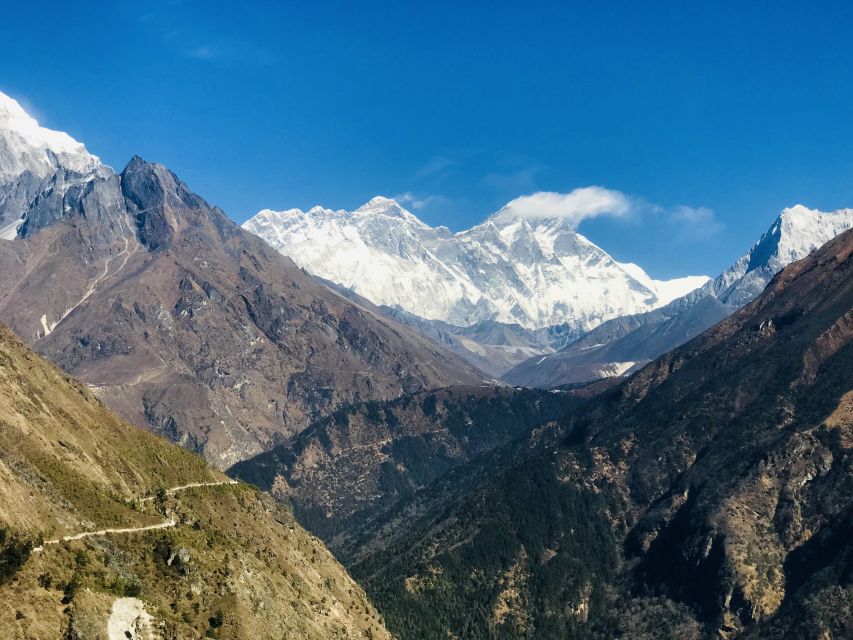
The experience is also described as including a landing near Phiriche, with two shuttle connections to EBC and Kalapatthar, with all window-seat seating. What that means for you is that the day isn’t only overhead.
You should think of it as a hybrid. You’re flying most of the time, but you’re also set up for short ground connections in the Everest area. That’s a big deal if your goal is to see both the base camp area and the Kalapatthar viewpoint without doing a multi-day trek.
One caution: this kind of day still involves transfers. Even if the shuttles reduce walking, you’re dealing with cold, height, and quick timing. Wear warm layers and plan to keep your hands free for hats, cameras, and sunglasses.
Getting back to Kathmandu: the final flight and the pace shift
After the breakfast break, the tour includes another longer flight leg, noted as about 80 minutes. The route runs from Hotel Everest View and Syangboche back toward Lukla, then on to Kathmandu Airport.
Once you’re back at the airport, they transfer you to your Kathmandu hotel. In many travel days, the return feels rushed. Here it’s more like a letdown to normal life, because you’ve just spent the morning orbiting some of the highest terrain on Earth.
If you’re prone to feeling jet-lagged by excitement, plan something calm after you get back. You’ll be mentally wired for a while.
Price and value: what $1,863 buys you, and what it doesn’t
Let’s talk value in plain terms. The tour price is $1,863 per person, which is not “try it if you feel like it” money. This is a premium option, and you’re paying for three things: speed, reduced physical strain, and a chartered helicopter experience.
Here’s what’s included:
- Hotel pickup and drop-off in Kathmandu
- One chartered helicopter flight
- Company charges
- Oxygen tanks inside the aircraft (in case of emergencies)
And here’s what’s not included:
- Breakfast at Hotel Everest View, about $30 USD
- National park fees, about $50 USD
- Airport tax, about $5 USD
So for budgeting, you’re looking at roughly $1,948 per person before any extra costs, based on those listed amounts. That can still be a good deal if you compare it to alternatives that require long trekking, multiple days of logistics, and the physical toll.
But it’s only worth it if you truly want the experience of seeing Everest in a few hours. If you want a slower, cheaper, step-by-step journey, a trek will fit better.
Weather is the real boss: flexibility and the possibility of a long day
This tour is weather dependent, because helicopters need safe conditions to fly and land. The guidance recommends you keep one or two flexible days, so the operator can reschedule if needed.
In the best case, a cloudy window clears and you carry on. In a more frustrating case, you might wait on the ground for about an hour due to weather before you fly. The key point: build in patience and avoid tight connections right after your tour day.
On extreme bad-weather days, timing can get messy. One account you’ll want to learn from is the idea that a trip can stretch far beyond 4.5 hours, including needing lodging in Lukla if the return flight cannot happen on schedule. That is rare, but it is possible enough that your travel insurance and backup plans matter.
My practical advice: if you book, treat the tour day like the start of a mountain buffer, not a clean slice of time.
Comfort limits: what to expect at high altitude and on the ground
This is not a casual chairlift ride. The tour operates at high altitude, including the 3,880-meter breakfast stop, and the plan includes landings and transfers (including short refueling and possible shuttles).
It is not suitable for:
- Pregnant women
- People with mobility impairments
- Wheelchair users
Even if you’re healthy and mobile, you should expect cold temperatures. The tour provides oxygen tanks inside the aircraft for emergencies, but oxygen tanks are not the same thing as comfort at chilly altitude. Warm layers and sun protection still matter.
Also, note the luggage rule. You cannot bring luggage or large bags. Plan to travel light so you don’t end up wrestling with gear in a small airport space.
What to bring so you’re not miserable in the cold
They specifically ask you to bring:
- Passport or ID card
- Warm clothing
- Sunglasses
- Sunscreen
- Cash
That list is short for a reason. In mountain air, sun glare can be intense, even when it’s cold. Sunglasses and sunscreen help you enjoy the views instead of squinting through them.
Warm clothing matters because your body feels height and temperature changes fast. Layers are the simplest way to stay comfortable during waiting, refueling, and short ground time.
Finally, bring cash. Even though breakfast is available at the viewpoint, the listed breakfast cost is not included in the tour price, so having cash helps avoid stress.
The best fit: who should book this helicopter Everest day
If your dream is to see Everest’s big shapes, but you do not want to spend weeks trekking, this is a strong option. It’s also a good fit if you want a guided, structured day with clear landmarks, and you’re comfortable paying for speed.
I especially like it for people who:
- Want a short Everest experience with major viewpoint passes
- Prefer a small group setting
- Can handle weather uncertainty with at least some scheduling flexibility
It’s less ideal if you hate waiting, if your travel calendar is rigid, or if you fall into the listed non-suitable categories.
Should you book the Kathmandu to Everest Base Camp helicopter tour?
Book it if you want the Everest moment fast, and you can afford to treat this as a premium, weather-dependent outing. The combination of close flyovers, Kalapatthar viewing, and a 3,880-meter terrace breakfast is the kind of memory that tends to stick.
Skip or rethink it if your schedule is locked to fixed flights with zero buffer, or if you want a low-cost adventure. This trip can also be emotionally tough if you hate contingency plans, because the weather can change how long the day takes.
If you do book, plan one or two buffer days, pack warm and light, and expect that the day may feel like a blend of flying and waiting. Do that, and you’ll give yourself the best shot at the clear-sky views the route is built for.
FAQ
How long is the Kathmandu to Everest Base Camp helicopter tour?
The duration listed for the experience is 4.5 hours.
Where do you get picked up in Kathmandu?
Pickup is included from your hotel in Kathmandu.
What is included in the price?
It includes hotel pickup and drop-off, one chartered helicopter flight, company charges, and oxygen tanks inside the aircraft.
Is breakfast included?
Breakfast at Hotel Everest View is not included. It is listed as approximately $30 USD.
Are national park fees included?
No. National park fees are listed as approximately $50 USD.
How does the flight route include Lukla?
The flight includes a stop at Lukla (Tenzing Hillary Airport) at 2,860 meters for refueling for about 10 to 15 minutes.
Will I have good viewing from the helicopter?
The experience notes window-seat viewing, and the route includes close flyovers over the Everest region viewpoints such as Kalapatthar and the Everest Base Camp area.
Where is the breakfast stop and how long is it?
Breakfast is at Hotel Everest View at 3,880 meters, with a break time of about 45 minutes.
What do I need to bring?
Bring passport or ID card, warm clothing, sunglasses, sunscreen, and cash.
What are the luggage restrictions?
Luggage or large bags are not allowed.
Everything Bookable Around Kathmandu
The Rest of Our Kathmandu Write Ups
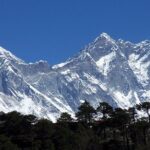

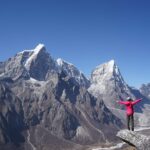
Everest, Rotors and All
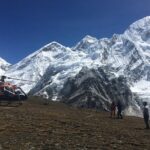
Everything else we have reviewed around Kathmandu
- 12 Days Everest Base Camp Trekking
★ 5.0 · 3 reviews - 1 Night 2 Days Chitwan Jungle Safari Tour from Pokhara or Kathmandu
★ 3.0 · 3 reviews - Thamel Rickshaw tour
★ 4.7 · 3 reviews - Kathmandu: Momo Making Class with a Local Chef
★ 5.0 · 3 reviews - Kathmandu: Full-Day Yoga, Body Massage and Pedicure Package
★ 5.0 · 3 reviews - From Kathmandu / Pokhara / Chitwan: River Rafting – 1 Day
★ 4.6 · 3 reviews
Everest Helicopter Tours worth a second look.
 ★ 5.0Everest Base Camp Helicopter Tour landing at Everest View HotelFrom $1,575668 reviews
 ★ 5.0Everest Base Camp Helicopter Tour landing at Hotel Everest ViewFrom $1,600218 reviews
 ★ 5.0Everest Base Camp helicopter tour with landingFrom $1,60061 reviews
 ★ 5.0Everest Base Camp Helicopter Tour with Hotel Everest View LandingFrom $1,49052 reviews
 ★ 5.0Guaranteed Landing at Everest Base Camp Kalapathar by HelicopterFrom $3,50038 reviews
★ 5.0Everest Base Camp Helicopter Tour landing at Everest View Hotel.From $1,98534 reviews
★ 5.0Guaranteed Landing at Everest Base Camp Kalapathar by HelicopterFrom $3,50038 reviews
★ 5.0Everest Base Camp Helicopter Tour landing at Everest View Hotel.From $1,98534 reviews
 ★ 5.0Everest base camp Helicopter TourFrom $1,70026 reviews
★ 5.0Everest Base Camp Helicopter TourFrom $1,60024 reviews
★ 5.0Everest base camp Helicopter TourFrom $1,70026 reviews
★ 5.0Everest Base Camp Helicopter TourFrom $1,60024 reviews
Lists this tour sits in