
REVIEW · KATHMANDU UNESCO HERITAGE TOURS
Kathmandu: Full-Day Tour of 5 World Heritage Sites
Five UNESCO stops in one Kathmandu day, doable. This full-day guided outing connects Durbar Square with major Hindu worship at Pashupatinath, then rounds out the story with Buddhist landmarks like Swayambhunath and Buddhanath. I like how the guide ties what you see to Kathmandu’s long timeline, stretching back over 2,000 years of settlement in the Kathmandu Valley.
One thing to plan for: monument entrance fees and meals are not included, so the $65 base price is only part of your total day budget. If you eat on the go, bring a little extra cash for snacks and drinks between stops.
In This Review
- Key things to know before you go
- Kathmandu’s UNESCO day: why this route works
- From Thamel to temple time: getting oriented fast
- Durbar Square and the Kumari Palace: where Kathmandu’s Hindu power shows
- Pashupatinath on the Bagmati River: devotion you can’t ignore
- Swayambhunath: Buddhist gompa meaning on a sacred hill setting
- Buddhanath: the other side of the Buddhist pilgrimage map
- Nagarkot viewpoints and Himalayan peaks: where the day expands
- Kathmandu’s 2,000-year story: context that makes the temples click
- Price and logistics: is $65 good value for this day?
- Who this Kathmandu UNESCO tour fits best
- The guide factor: why Uddhab is mentioned for a reason
- Should you book this Kathmandu full-day UNESCO tour?
- FAQ
- How long is the tour?
- Where do I get picked up, and where do I get dropped off?
- What UNESCO sites does the tour include?
- What is included in the $65 price?
- What is not included?
- What languages are the guides available in?
- Is there free cancellation and a pay-later booking option?
Key things to know before you go
- A day built around UNESCO in Kathmandu Valley so you are not guessing what matters most.
- Hindu and Buddhist sites back to back, with both faiths living side by side in the same city streets.
- Pickup at Thamel or Tribhuvan International Airport, handy if you arrive and want a full day right away.
- A guided Kathmandu section for 6 hours, which is where you’ll get context and help with what you’re looking at.
- Pashupatinath includes real pilgrim and cremation context on the Bagmati River, so go in mentally prepared.
Other seven site heritage runs
Kathmandu’s UNESCO day: why this route works
Kathmandu can feel like a lot at first. The streets are busy, the temples are everywhere, and it is easy to miss the meaning behind the carvings, statues, and sacred spaces. This tour is built to fix that problem by compressing several key UNESCO sites into one organized day, with an English-speaking guide to translate the big picture.
I also like that it gives you both perspectives you might not get if you only pick one “type” of sight. You’ll see Hindu sites that draw pilgrims from across Nepal, and you’ll also visit Buddhist gompas that are major pilgrimage destinations in their own right. The result is that Kathmandu stops being just a place to pass through, and starts to feel like a living religious capital.
There’s one practical reality to keep in mind. This is a full-day schedule, and sacred places often mean you are standing around, walking in city traffic, and adjusting to crowds. If you like your sightseeing slow and spaced out, you might feel the pace. If you prefer structure, this is a smart way to see a lot without feeling lost.
From Thamel to temple time: getting oriented fast
You have two practical pickup choices: Thamel or Tribhuvan International Airport. That matters because Thamel is the area most visitors use as a base, with narrow streets lined with shops and lots of “small everything” tucked into corners. Airport pickup is ideal if you land and want to avoid spending precious daylight figuring out the next move.
On this kind of tour, get your bearings fast really applies. Once the guide starts explaining what you’re seeing, Kathmandu’s mix of palace, pagoda, stupa, and riverfront religion starts making sense. And when you have a plan for where you’re going next, you are less likely to bounce between sites randomly.
The tour’s guided focus is in Kathmandu itself for about 6 hours. You’ll be in the historical core long enough to see why the sites matter, not just to take quick photos and move on.
Durbar Square and the Kumari Palace: where Kathmandu’s Hindu power shows
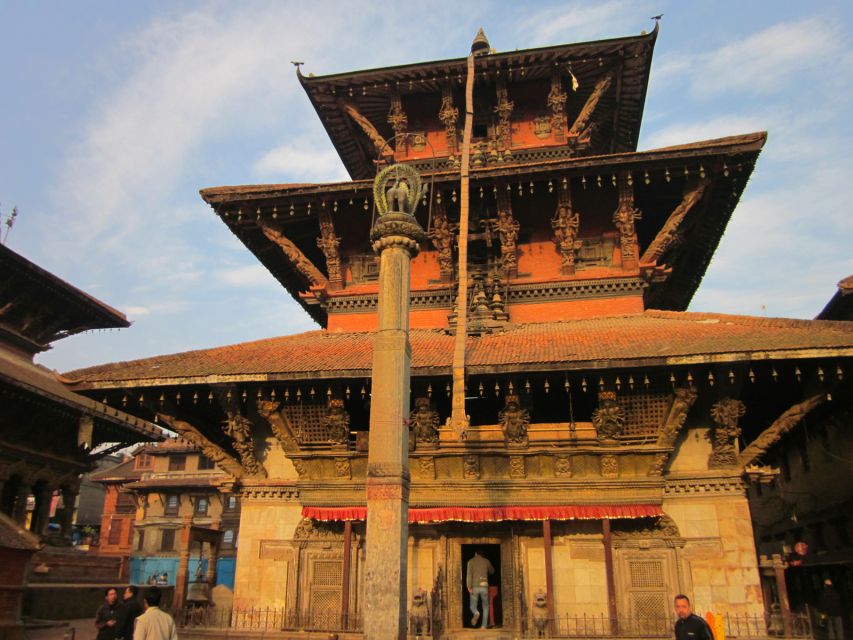
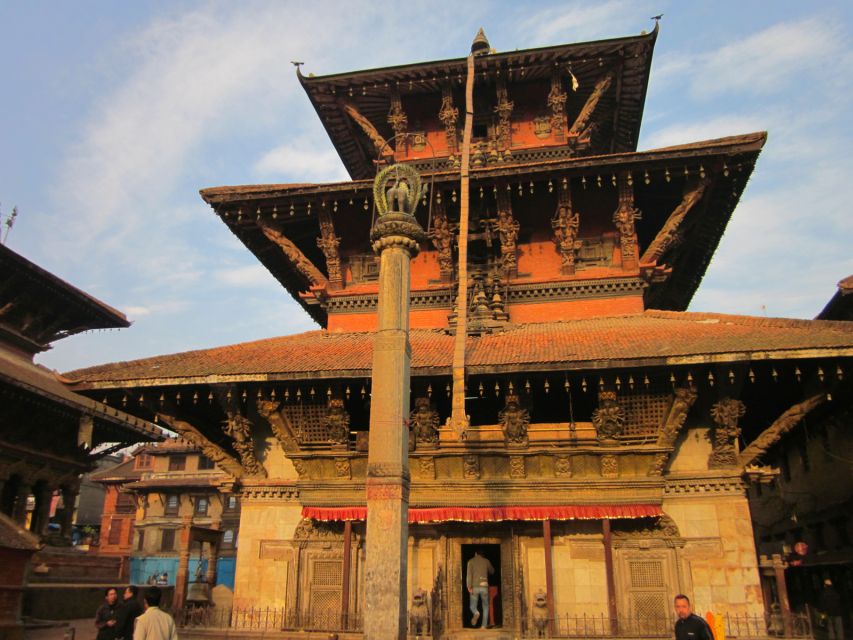
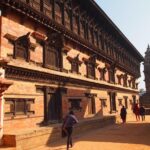
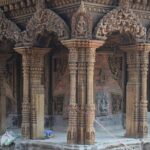
Durbar Square is one of the UNESCO sites you’ll visit, and it is also one of the most useful places to start. It’s essentially a crossroads of Hindu temples, statues of Hindu deities, and the Palace of Kumari, the living goddess.
This is one of those stops where the guide’s explanation changes the experience. If you walk in without context, it’s easy to treat it as “pretty old buildings.” With context, you start noticing what is symbolic, what is ceremonial, and how the city expresses religion through architecture and public space.
The Palace of Kumari is particularly interesting because it signals how sacred roles can be woven into everyday visibility. You are not only looking at history, you are looking at how belief still plays a role in Kathmandu’s cultural identity.
Possible drawback here: Durbar Square can be visually dense. There are many temples and details going on at the same time, so if you hate crowds or you get overwhelmed by too many stops in one place, you may need a little breathing room between photo angles.
Pashupatinath on the Bagmati River: devotion you can’t ignore
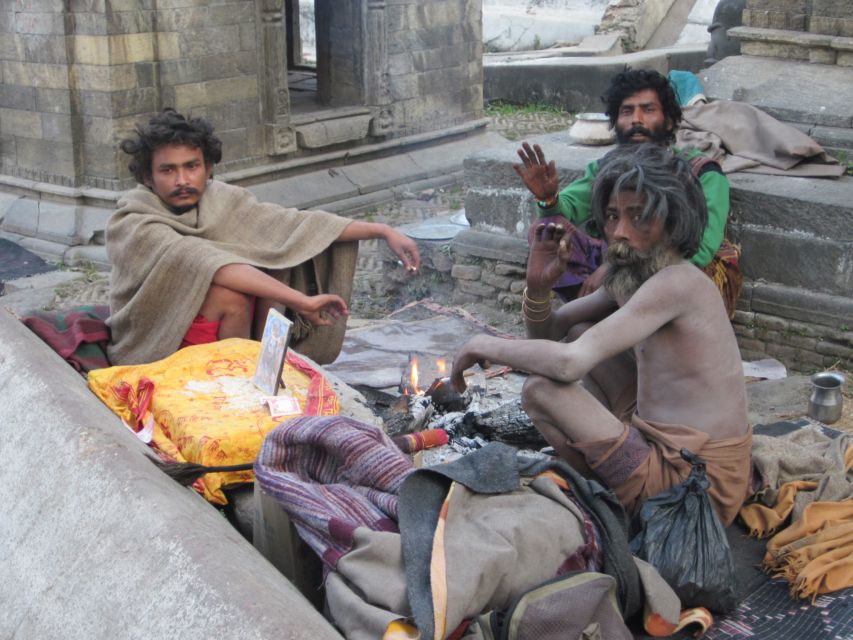
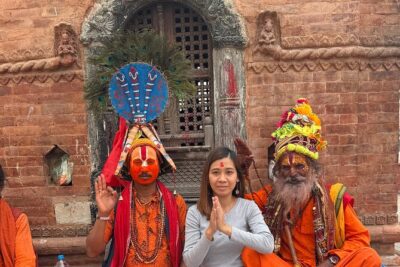
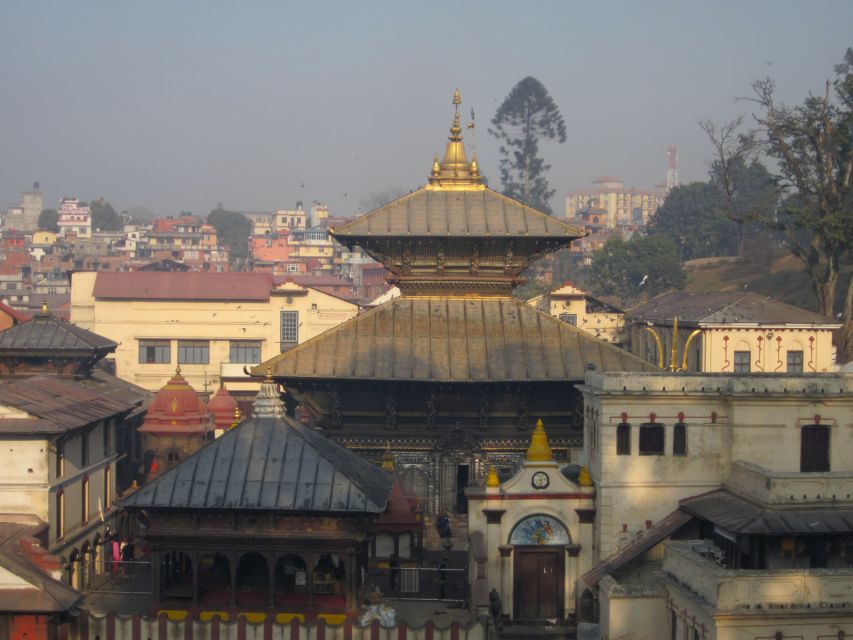
Pashupatinath is another UNESCO-highlighted stop, and it’s described as the world’s largest Hindu temple. That’s a big claim, but it lines up with how important the site is to Hindu followers. It attracts pilgrims, and it’s also famous for colorful Sadhus.
The Bagmati River matters here. Many Hindus choose cremation on the banks of the river, so you’re not just seeing a tourist temple. You’re seeing a major religious landscape where grief, ritual, and public life overlap.
I think this is where the tour earns its value. With a guide, you are more likely to understand what you are looking at, and when you should pause, look respectfully, and move on. Without that, a place like Pashupatinath can feel confusing, or worse, unintentionally disrespectful.
Consideration: If you are sensitive to funerary rituals, go in with that awareness. This is not a “just cheerful temples” day. It’s a day that shows how religion touches life events, including death.
More old stones and living temples
Swayambhunath: Buddhist gompa meaning on a sacred hill setting
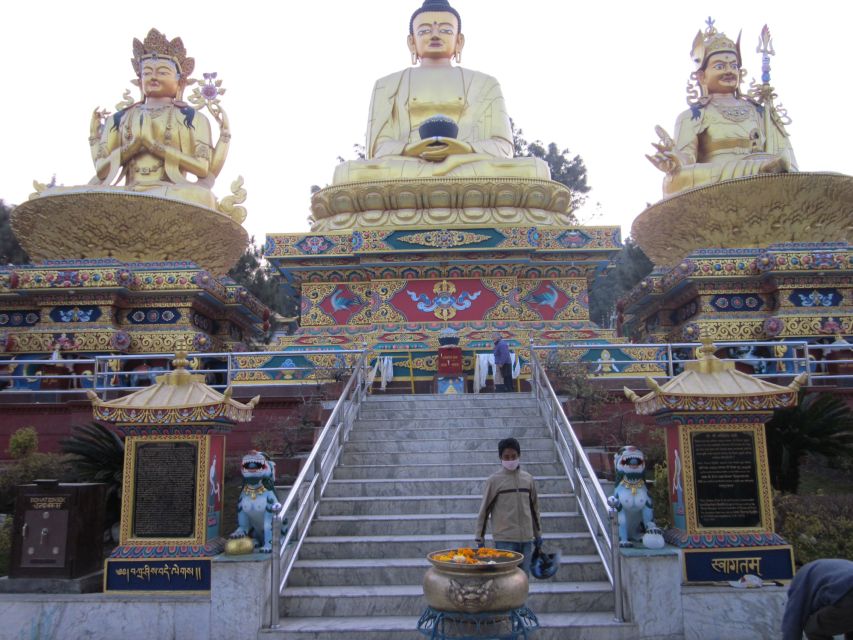
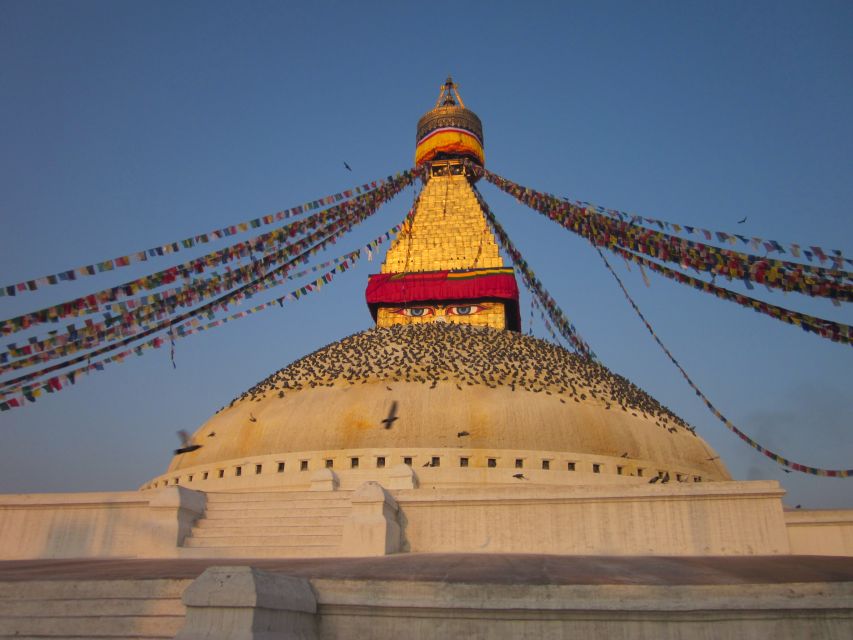
Swayambhunath is one of Kathmandu’s major Buddhist gompas and a UNESCO World Heritage Site. What I like about visiting it on the same day as Hindu Pashupatinath is the shift in tone. Even though you are still in Kathmandu, the spiritual language changes.
With a guided format, you’ll spend time focusing on the Buddhist elements rather than just moving through quickly. The guide helps connect the idea of a gompa as a pilgrimage and worship setting, and it makes it easier to understand what makes this site distinct within Kathmandu’s UNESCO set.
Swayambhunath also helps with pacing. After the emotional and intense atmosphere around Pashupatinath, it’s a different kind of spiritual experience. You get to reset your attention and see how another tradition interprets sacred space.
Buddhanath: the other side of the Buddhist pilgrimage map
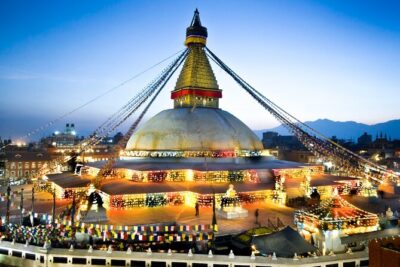
Buddhanath is the second major Buddhist gompa on the tour, and it is also UNESCO-listed. If Swayambhunath represents one Buddhist pilgrimage style, Buddhanath gives you another. You’ll see a different flow of devotion, and it’s a solid way to compare how Buddhist worship shows up in different temple settings.
I find Buddhanath especially useful for travelers who want to understand Kathmandu beyond one temple. Seeing two major Buddhist sites back to back helps you notice patterns that might otherwise be lost, like how sacred sites become magnets for regular visitors and long-term religious practice.
This is also a good stop to slow down a bit. If your morning has been heavy with historical explanations and riverfront intensity, Buddhanath can be a calmer moment to absorb.
Nagarkot viewpoints and Himalayan peaks: where the day expands
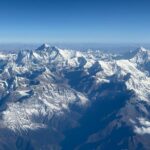
Kathmandu Valley sits at about 1,400 meters, surrounded by mountain peaks including Shivapuri, Phulchowki, Nagarjun, and Chandragiri. The tour description also highlights Nagarkot, about 35 kilometers from the city center, as a viewpoint area.
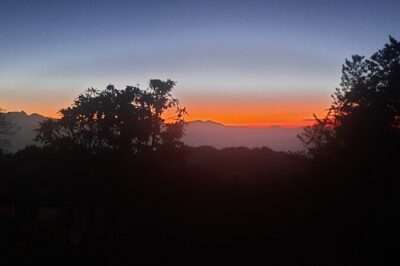
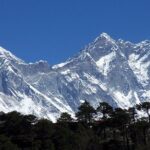
From Nagarkot, you can get views toward the Langtang range and, in favorable conditions, see major distant peaks named such as Annapurna, Manaslu, Cho Oyu, and Shishapangma. Even if you do not catch every distant summit, it still helps your brain connect the city to the mountains that shape Nepal.
Practical note: viewpoints depend on weather, and clouds can erase sightlines. If you’re the kind of traveler who wants that view, keep your expectations flexible and use the viewpoint time as a chance to appreciate scale.
Kathmandu’s 2,000-year story: context that makes the temples click
This tour is not only about monuments. It also tries to explain why Kathmandu looks the way it does. Kathmandu’s history is traced back to ancient settlement, including archaeological exploration pointing to some of the oldest settlements in the Kathmandu Valley, alongside Patan and Bhaktapur.
The period given is roughly between 167 B.C. and 1 A.D., which is a wild scale jump from modern travel planning. But the point of that detail is simple. When you realize these sites have been part of the region’s religious and cultural identity for centuries, the carvings and temple layouts stop feeling random.
The tour also frames Kathmandu as Nepal’s capital and largest city, sitting in a bowl-shaped valley. That geographic setup helps you understand why sacred sites cluster where they do, and why you can feel the mountains in the backdrop of daily life.
And if you’ve ever stood in front of a temple and wondered what you’re supposed to notice, this is the right kind of guided day. You’ll get the story first, then the buildings and rituals start making sense.
Price and logistics: is $65 good value for this day?
At $65 per person, this is positioned as a budget-to-midrange way to cover multiple UNESCO World Heritage Sites in one day. The big value piece is what is included.
Included:
- Transportation
- An English-speaking tour guide
- Taxes and service fees
Not included:
- Accommodation
- Monument entrance fees
- Food and beverages
- Personal expenses
So what does that mean for you? It means your biggest “surprise cost” risk is entrance fees and meals. If you plan to snack and eat simply, you can keep the day close to budget. If you prefer to sit down for full meals at each stop, it can add up quickly.
Still, $65 can be a strong deal when you compare it to piecing together separate transport and spending time figuring out route logistics. The guided format also helps you get more out of each UNESCO stop, especially in places where symbolism is part of what you came for.
Who this Kathmandu UNESCO tour fits best
This tour is a great match if:
- You want a structured way to see several UNESCO sites without planning every route yourself.
- You like religious and cultural travel, not just architecture snapshots.
- You want both Hindu and Buddhist sites in one day, with context from a guide.
It may not be ideal if:
- You want a slow, deep pace with plenty of downtime.
- You are strongly uncomfortable with funerary rituals and the presence of cremation activity at Pashupatinath.
Also, if you are short on time in Kathmandu, this is exactly the kind of “get it done well” day that can prevent you from leaving with only a partial sense of the city.
The guide factor: why Uddhab is mentioned for a reason
One name that comes up in the most positive feedback is Uddhab, praised for being patient and for helping make the day easier to understand. That matters more than you might think.
In temple areas, the difference between a stressful visit and a smooth visit often comes down to interpretation. A patient guide helps you understand what you’re seeing, keeps the day moving, and manages the cultural and practical rhythm of a sacred site visit.
So if you’re the kind of traveler who values explanations, you’ll likely appreciate this aspect of the experience.
Should you book this Kathmandu full-day UNESCO tour?
I’d book it if you want maximum Kathmandu UNESCO coverage with a guide who can connect the dots between sites, faiths, and the city’s long timeline. The combination of Durbar Square, Pashupatinath, and the Buddhist gompas at Swayambhunath and Buddhanath is a strong mix for most first-time visitors.
I would hesitate only if you dislike long days, crowded sacred areas, or you’re not ready for the reality of cremation activity at Pashupatinath. If you can handle that and you plan your extra spending for entrance fees and food, this tour is a practical way to turn a limited day into a meaningful Kathmandu overview.
If you want, tell me your travel dates and whether you’re starting from Thamel or the airport, and I can suggest how to mentally pace the day so it feels rewarding rather than rushed.
FAQ
How long is the tour?
The tour runs for 1 day. The Kathmandu guided tour portion is listed as 6 hours, with starting times varying based on availability.
Where do I get picked up, and where do I get dropped off?
Pickup options are Thamel and Tribhuvan International Airport. Drop-off options are also Tribhuvan International Airport and Thamel.
What UNESCO sites does the tour include?
The details specifically name Durbar Square, Pashupatinath, Buddhanath, and Swayambhunath as UNESCO World Heritage Sites included in the experience.
What is included in the $65 price?
Transportation, an English-speaking tour guide, and taxes and service fees are included.
What is not included?
Accommodation, monument entrance fees, food and beverages, and personal expenses are not included.
What languages are the guides available in?
The live tour guide is available in English, French, German, and Italian.
Is there free cancellation and a pay-later booking option?
Yes. You can cancel up to 24 hours in advance for a full refund. You can also reserve now and pay later.
Everything Bookable Around Kathmandu
The Rest of Our Kathmandu Write Ups


Seven Sites, Other Routes
Everything else we have reviewed around Kathmandu
- 12 Days Everest Base Camp Trekking
★ 5.0 · 3 reviews - 1 Night 2 Days Chitwan Jungle Safari Tour from Pokhara or Kathmandu
★ 3.0 · 3 reviews - Thamel Rickshaw tour
★ 4.7 · 3 reviews - Kathmandu: Momo Making Class with a Local Chef
★ 5.0 · 3 reviews - Kathmandu: Full-Day Yoga, Body Massage and Pedicure Package
★ 5.0 · 3 reviews - From Kathmandu / Pokhara / Chitwan: River Rafting – 1 Day
★ 4.6 · 3 reviews
Kathmandu UNESCO Heritage Tours worth a second look.
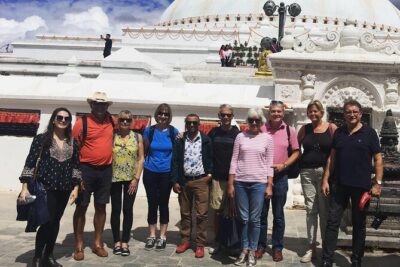 ★ 5.0Full Day 7 UNESCO Tour with Lunch – Private/GroupFrom $10415 reviews
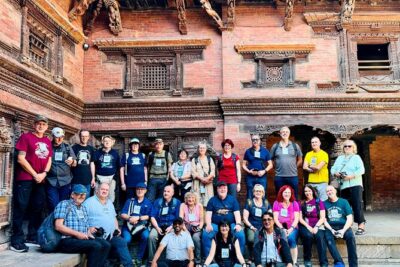 ★ 5.0Full Day Top 4 UNESCO Tour with Lunch – Private/GroupFrom $10269 reviews
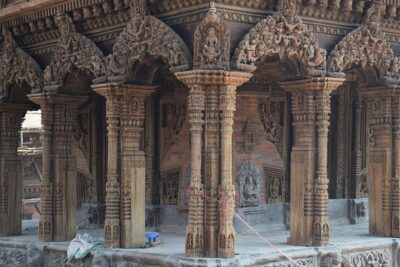 ★ 5.0UNESCO Seven World Heritage Tour in KathmanduFrom $180253 reviews
★ 4.9Full-Day 7 UNESCO Tour with Lunch – Private/GroupFrom $5247 reviews
 ★ 4.97 UNESCO Sites Tour in 1 Day (Private Tour)From $4204 reviews
 ★ 4.9Top 4 UNESCO Tour with Lunch – Private/GroupFrom $5181 reviews
 ★ 5.0Bhaktapur & Patan Durbar Square Day ToursFrom $50122 reviews
 ★ 5.0Kathmandu Private Sightseeing Tour | UNESCO World Heritage SitesFrom $35109 reviews
Lists this tour sits in