
REVIEW · KATHMANDU UNESCO HERITAGE TOURS
Kathmandu Top 4 or 2 UNESCO World Heritage Sites Day Tour
Four UNESCO stops, one smooth day. This Kathmandu Valley tour feels manageable because you get hotel pickup and a pro guide, then spend the day at major sites without guessing what you are looking at. I especially like the mix of temples and town squares with the cultural stops like a thangka painting school and a singing bowl demonstration, which turns all that sacred scenery into something you can understand.
Two highlights I think you will love right away: the fact that you are not navigating on your own, and the way the guide helps you connect the places to the beliefs behind them. One thing to consider is timing and comfort, because you may need to deal with crowds and stair climbing at Swayambhunath, and the UNESCO entrance fees are not included in the base price.
In practice, the experience runs on people who know the flow of the city. I noticed this in the way Prakash Aryal and the driver team, including Niroj, handle the in-between moments so you can actually enjoy the stops and not just rush between them. Since it is a private tour, you can also steer the day to what you care about most and ask questions at the right moments instead of saving them for later.
In This Review
- Key points before you go
- Why this Kathmandu Valley UNESCO day feels easier than DIY
- Pashupatinath Temple: Shiva at the Bagmati River
- Boudhanath Stupa: Tibetan-influenced devotion in Kathmandu
- Swayambhunath Monkey Temple: stairs, hilltop views, and instant perspective
- Patan Durbar Square: Newari architecture and Malla-era artistry
- Thangka painting school and singing bowl demonstration: the cultural part that sticks
- Price and real value: what $40 covers, and what to budget next
- Who this tour suits best, and who should think twice
- Should you book this Kathmandu Top UNESCO Day Tour?
- FAQ
- Which UNESCO World Heritage sites are included?
- How long does the tour take?
- Do I get hotel pickup and drop-off?
- Are the UNESCO entrance fees included in the $40 price?
- What cultural activities are included beyond the UNESCO sites?
- Is this a private tour?
- What is the cancellation policy for a full refund?
Key points before you go
- Door-to-door hotel pickup and drop-off means you do not lose time figuring out transport
- Four UNESCO World Heritage sites in one day, covering Hindu, Buddhist, and Newari heritage
- Pashupatinath on the Bagmati River adds a very real sense of ritual and place
- Swayambhunath Monkey Temple includes a hilltop climb that is part of the experience
- Thangka painting and singing bowl demonstration adds hands-on cultural context beyond photos
Other seven site heritage runs
Why this Kathmandu Valley UNESCO day feels easier than DIY
Kathmandu Valley can look like a maze on a map, especially if you are trying to plan around opening times, traffic, and the unwritten rules of temple areas. This tour reduces the mental load fast, because a driver meets you right at your door and takes you from site to site by car.
You also get a professional guide, which changes everything at UNESCO sites. Without context, these places can blur together into “a cool stupa” or “a big temple.” With guidance, you start noticing what matters: where worship happens, why the architecture looks the way it does, and how different traditions share space in the same valley.
There is a reason this is popular with first-timers. You get a focused route in about 5 to 7 hours, so you can still have an evening free for dinner, markets, or just catching your breath. And it is priced at $40 per person, which can feel like good value once you compare it to the cost and stress of cobbling together transport plus guided time.
Pashupatinath Temple: Shiva at the Bagmati River
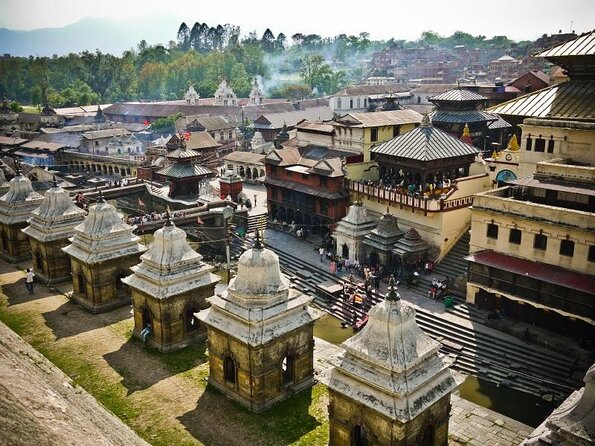
Pashupatinath is one of Nepal’s best-known Hindu temples, dedicated to Lord Shiva, and it sits on the eastern side of Kathmandu Valley along the Bagmati River. This location matters because the river and the riverside ritual setting are part of how the place functions, not just a backdrop for sightseeing.
What I like here is the sense of being in a living religious space. You are not only looking at carvings and architecture, you are seeing how people actually come to pray and perform daily religious acts. If your timing lines up, you may also witness open cremation rituals at the cremation ghat area, which many visitors find moving and unforgettable.
Practical considerations: plan for respectful behavior around temple spaces, and remember that religious sites can have varying rules about where you can stand or how you should dress. Also, this stop runs for about 2 hours, which is usually enough time to take it in slowly while still keeping the day on schedule.
Boudhanath Stupa: Tibetan-influenced devotion in Kathmandu
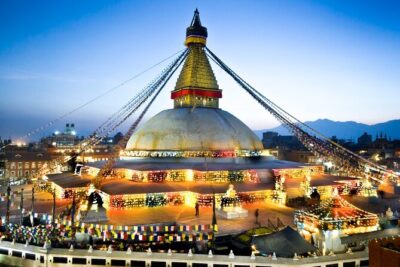
Boudhanath Stupa is the kind of place where your brain slows down. It has a strong Tibetan cultural influence, and the area around the main stupa is lined with monasteries. That setup creates a loop of visual cues, from religious symbols to prayer rhythms, so you feel the culture rather than just reading about it later.
This stop lasts about 1 hour, which sounds short until you realize Boudhanath works best at a steady pace. The stupa is the anchor, and the surrounding monasteries and atmosphere help you understand why this site is so important for Buddhist practice.
A helpful tip for your visit: give yourself a few minutes to watch what people do around the stupa, not just what you take photos of. That is where the meaning lives, like how people orient themselves, move with intention, and treat the space as something active. If you are sensitive to crowds, you might want to stay flexible here, since stupa areas can get busy.
Swayambhunath Monkey Temple: stairs, hilltop views, and instant perspective
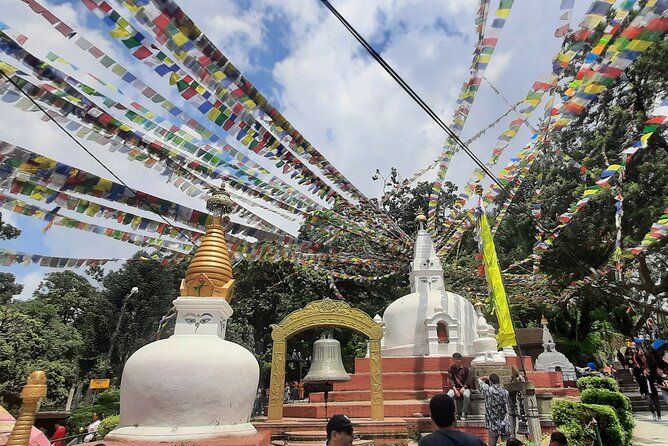
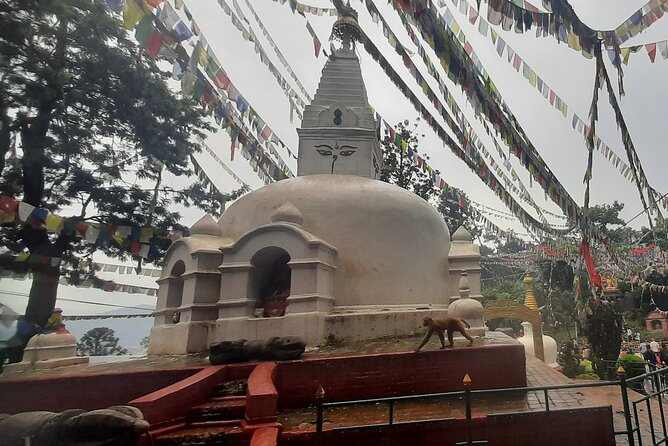
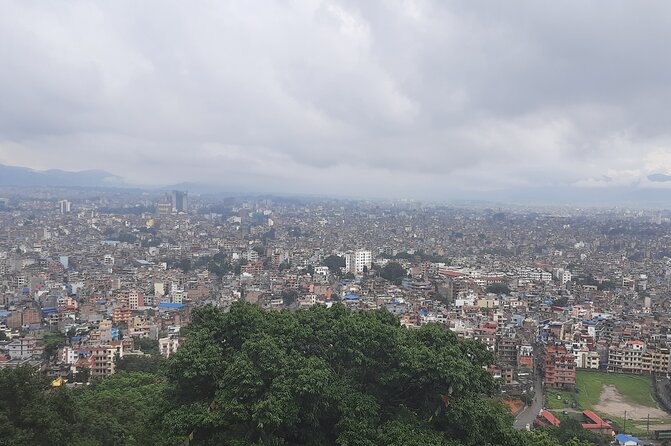
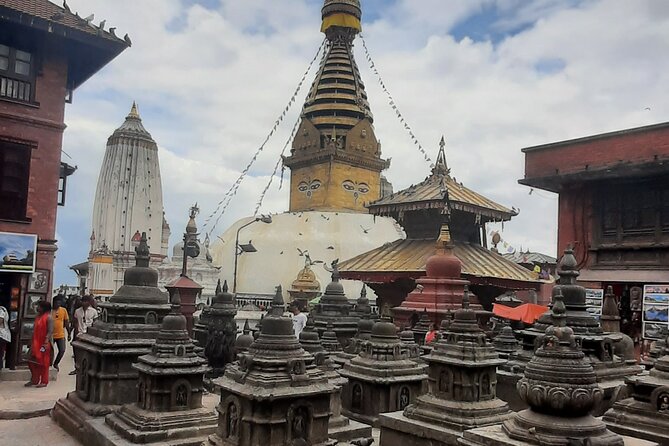
Swayambhunath, also called the Monkey Temple, sits at the top of a hill and is reached by climbing a long set of stairs. That physical effort is part of the experience, because the moment you reach the stupa you immediately feel how the temple connects to the city.
The main stupa is the focal point, and the elevated position gives you a different angle on Kathmandu Valley than you get from street level. This stop is about 2 hours, which gives you breathing room to climb, arrive, and then take your time looking around.
Do not underestimate the stairs, even if you are generally fit. If you have knee issues or you just do not want a steep climb, plan your pace carefully, take short rests, and carry water if you need it. (You should have bottled water with the tour, but it is still smart to manage your effort.)
Cultural note: the name Monkey Temple is not just a cute phrase. The area includes monkeys, and you will likely see them during your visit. Keep your belongings secure and stay aware as you move around the temple grounds.
More old stones and living temples
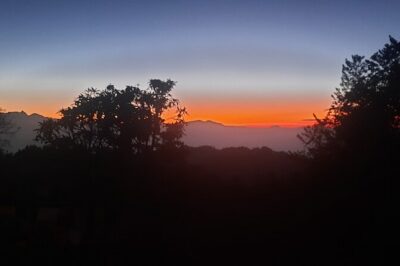
Patan Durbar Square: Newari architecture and Malla-era artistry
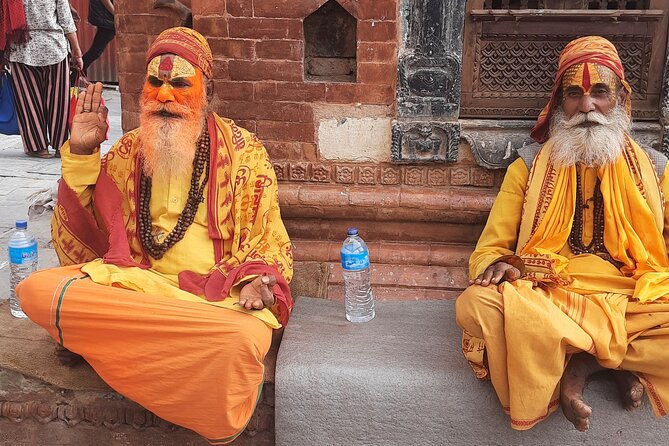
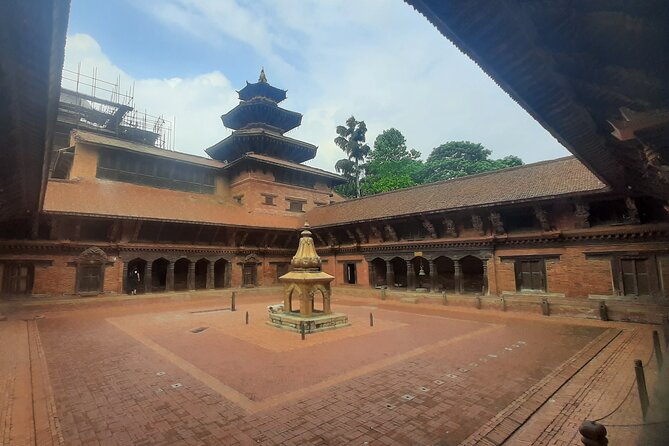
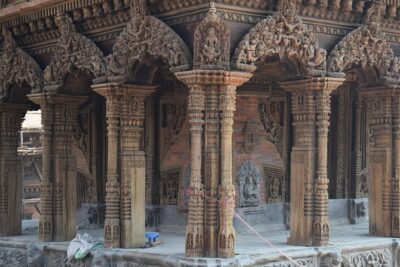
Patan Durbar Square is where Kathmandu Valley’s artistic side becomes very obvious. This area represents Newari architecture and reached a crest during the reign of the Malla kings, who were known for supporting arts and architecture.
What to expect on the ground: a strong sense of a planned, detailed urban space. It is not just one landmark. It is a cluster of palaces, courtyards, and temple elements that make the square feel like an outdoor museum that still functions as part of the city.
This stop is about 1 hour, so you will want to focus on the most important visual zones rather than trying to read every carved surface. If you are drawn to religious architecture, you may enjoy landmarks connected with the area’s famous temple structures, including what visitors often call the Golden Temple portion of the complex.
A practical drawback to plan for: Patan can be busy, and the pace of the route depends on traffic. Since you are on a full-day UNESCO loop, you will not have days to wander. Think of this as a concentrated introduction, best followed by extra time on your own if you want to go deeper.
Thangka painting school and singing bowl demonstration: the cultural part that sticks
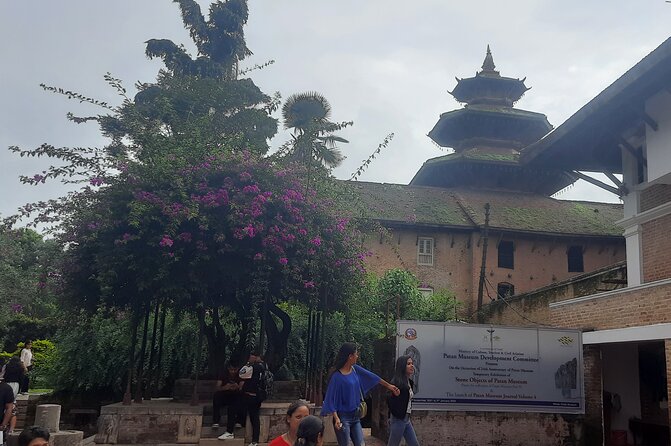
If you only did the UNESCO monuments, you could still leave Kathmandu with great photos but limited understanding. This is where this tour earns extra points, because it includes traditional arts.
You visit a thangka painting school. Thangka paintings are devotional artworks, and having time in a school setting gives you a clearer sense of the craft behind the images you saw earlier at temples and stupas. Instead of treating art as decoration, you start seeing it as part of religious practice.
Then you go to a healing and singing bowl demonstration center. Singing bowls are often described in connection with sound healing and meditation practices, and this stop helps you understand the tradition through an on-site demonstration rather than just hearing about it. Even if you are skeptical, you will likely appreciate the cultural seriousness of the practice and how people use sound intentionally.
This pair of activities gives you balance. Temples and squares can feel intense. These craft and demonstration stops add a human scale, so the day feels more than just “see, move, repeat.”
Price and real value: what $40 covers, and what to budget next
At $40 per person, the base price is mostly about making the day easy. You get transportation as per the itinerary, a professional guide, bottled water, visits to the thangka school, and the singing bowl demonstration.
What is not included is important: the UNESCO entrance fees. The tour lists UNESCO World Heritage site entrance fees as $20 per person when visiting all four sites, and $10 per person if only two sites are visited. So your realistic total budget could be around $60 per person for the full set of stops, assuming the four-site option applies.
Is it still good value? For most people, yes, because you are not only paying for entry tickets. You are paying for guided time, coordinated transport, and the craft demonstrations that are part of the itinerary. If you tried to do this alone, the biggest cost would often be time and hassle, not just money.
One more practical note: the tour includes a mobile ticket, which can reduce the back-and-forth on the day. You still want to keep an eye on what is payable on-site, since entrance fees are not included in the base price.
Who this tour suits best, and who should think twice
This tour fits best if you want a first-rate Kathmandu sampler with structure. It is also a good choice if you care about culture but do not want to spend your limited vacation time figuring out logistics and etiquette.
I think it is especially suitable for:
- First-time visitors to Kathmandu Valley who want multiple UNESCO sites without the stress of DIY navigation
- People who like guided context at temples and monuments
- Visitors who want a mix of architecture plus traditional arts like thangka and sound healing practices
- Small groups that want a private pace and the ability to ask questions
Who should think twice:
- Anyone who really struggles with stairs, since Swayambhunath involves a long climb
- Travelers who hate crowds at major religious sites, because all four stops are popular destinations
- Budget planners who do not want to add UNESCO entrance fees on top of the $40 price
The good news is that the tour is built for real-life pacing. It is private, so your guide can adjust how you move, where you pause, and how long you stay in each space within the overall time window.
Should you book this Kathmandu Top UNESCO Day Tour?
I would book it if your goal is a confident, well-paced day that checks the major UNESCO boxes and also includes meaningful culture stops. The hotel pickup, the professional guidance at each UNESCO site, and the added thangka painting plus singing bowl demonstrations make it feel like more than a basic sightseeing loop.
The main reason not to book is if you are very price-sensitive once entrance fees are added, or if stairs and crowded religious sites are hard for you. If neither of those is a problem, this tour is a solid use of a single day in Kathmandu Valley.
FAQ
Which UNESCO World Heritage sites are included?
The tour visits Pashupatinath Temple, Boudhanath Stupa, Swayambhunath, and Patan Durbar Square.
How long does the tour take?
The duration is about 5 to 7 hours.
Do I get hotel pickup and drop-off?
Yes. Pickup is offered, and the driver meets you right at your door, with hotel pickup and drop-off.
Are the UNESCO entrance fees included in the $40 price?
No. Entrance fees for UNESCO sites are listed as $20 per person for 4 sites, or $10 per person if only 2 sites are visited.
What cultural activities are included beyond the UNESCO sites?
The tour includes a thangka painting school visit and a healing and singing bowl demonstration center.
Is this a private tour?
Yes. It is a private tour/activity, and only your group participates.
What is the cancellation policy for a full refund?
You can cancel up to 24 hours in advance of the experience for a full refund.
Everything Bookable Around Kathmandu
The Rest of Our Kathmandu Write Ups

Seven Sites, Other Routes
Everything else we have reviewed around Kathmandu
- 12 Days Everest Base Camp Trekking
★ 5.0 · 3 reviews - 1 Night 2 Days Chitwan Jungle Safari Tour from Pokhara or Kathmandu
★ 3.0 · 3 reviews - Thamel Rickshaw tour
★ 4.7 · 3 reviews - Kathmandu: Momo Making Class with a Local Chef
★ 5.0 · 3 reviews - Kathmandu: Full-Day Yoga, Body Massage and Pedicure Package
★ 5.0 · 3 reviews - From Kathmandu / Pokhara / Chitwan: River Rafting – 1 Day
★ 4.6 · 3 reviews
Kathmandu UNESCO Heritage Tours worth a second look.
 ★ 5.0Full Day 7 UNESCO Tour with Lunch – Private/GroupFrom $10415 reviews
 ★ 5.0Full Day Top 4 UNESCO Tour with Lunch – Private/GroupFrom $10269 reviews
 ★ 5.0UNESCO Seven World Heritage Tour in KathmanduFrom $180253 reviews
★ 4.9Full-Day 7 UNESCO Tour with Lunch – Private/GroupFrom $5247 reviews
★ 5.0UNESCO Seven World Heritage Tour in KathmanduFrom $180253 reviews
★ 4.9Full-Day 7 UNESCO Tour with Lunch – Private/GroupFrom $5247 reviews
 ★ 4.97 UNESCO Sites Tour in 1 Day (Private Tour)From $4204 reviews
 ★ 4.9Top 4 UNESCO Tour with Lunch – Private/GroupFrom $5181 reviews
 ★ 5.0Bhaktapur & Patan Durbar Square Day ToursFrom $50122 reviews
 ★ 5.0Kathmandu Private Sightseeing Tour | UNESCO World Heritage SitesFrom $35109 reviews
Lists this tour sits in