
REVIEW · NEPAL MULTI-DAY TOUR PACKAGES
Nepal Cultural Highlights Tour in 10 Days
Ten days, zero-planning stress. I really liked the small group of up to 10 and the way the tour pairs that with an English-speaking local guide, so you spend less time figuring things out and more time looking around. The main drawback to plan for is the amount of road time and the early starts, especially around the Sarangkot sunrise.
This Nepal cultural highlights route is built for first-timers who want comfort while moving between Kathmandu Valley, Chitwan, Lumbini, and Pokhara. You also get practical touches like pickup offered, a mobile ticket, and group-discount style pricing, plus the comfort of private vehicles and included hotels. It is run by Asian Heritage Treks and Travels, and the solid rating suggests their logistics are usually where they shine.
In This Review
- Key highlights that matter on the ground
- Why a 10-Day Cultural Route Works Better Than Piecing It Together
- Price and What You Actually Get for $1,699
- Kathmandu Durbar Square, Monkey Temple, Boudhanath, and Pashupatinath
- Patan Durbar Square and Bhaktapur’s Malla-Era Craft Squares
- Chitwan National Park: A Long Drive That Sets Up the Wildlife Day
- Rapti River Canoeing and Bird Watching You Can Actually Time
- Lumbini to Pokhara: The Change of Scenery, Plus the Route Between
- Sarangkot Sunrise: The Early Start That Pays Off
- Devi’s Fall, Gupteshwor Cave, and the World Peace Stupa Views
- Bandipur as a Quiet Reset Before Kathmandu
- Your Final Transfer: Flying Out Smoothly From Kathmandu
- Who Should Book This Tour, and Who Should Think Twice
- Should you book it?
- FAQ
- Where is the meeting point?
- How many people are in the group?
- What is the duration of the tour?
- Does the tour include hotel accommodation?
- Are World Heritage site entrance fees included?
- How many meals are included during the tour?
- What is not included in the tour price?
- Is there free cancellation?
Key highlights that matter on the ground
- Up to 10 travelers means you are not swallowed by a big group tempo.
- Private land transport keeps long distances manageable and reduces hassle.
- UNESCO-focused sightseeing in Kathmandu Valley (and included entrance fees).
- Chitwan on the Rapti River with canoe time tied to real wildlife viewing.
- Sarangkot sunrise gives you the best kind of wow moment with a clear plan.
- World Peace Stupa adds a calm, panoramic Buddhist stop on a big day in Pokhara.
Longer Nepal itineraries, start to finish
Why a 10-Day Cultural Route Works Better Than Piecing It Together
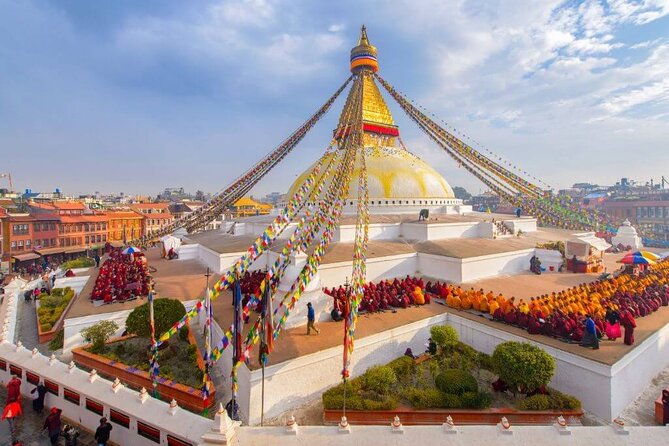
If you have limited vacation time, Nepal can feel like it has too many “must-sees” and too many details to plan. This tour’s biggest value is not one single sight. It is the way the days are stitched together so you can go from Kathmandu Valley’s temple squares to Chitwan’s riverside wildlife, then down to Lumbini, and onward to Pokhara, without you having to stitch transportation schedules yourself.
I like how your guide and driver handle the unglamorous parts. That matters because the driving is long and the stops are spread out. When you are doing Kathmandu plus multiple regions in one trip, the logistics can eat your energy fast. Here, you mostly show up, walk the sites, then let the day reset with a transfer and hotel.
This route also helps with the “language barrier” problem. You are not just relying on signage. You get an English-speaking local guide to explain what you are looking at, which turns the temples and monasteries from photo backdrops into places with context.
One more reason it works: it keeps the pacing clear. You are not stuck choosing between “do we go here or there,” because the order of stops is already planned. That can be a relief after you land, especially if it is your first time in Nepal.
Price and What You Actually Get for $1,699
At $1,699 for about 10 days, this is not a budget backpacking trip. But you also should not compare it only to a flight and a cheap hostel. You are paying for a full set of services: private land transport, included hotel accommodation, an English-speaking local tour guide, government and local taxes, plus entrance fees for World Heritage sites.
Meal coverage is also part of the value equation. The tour includes breakfasts (9), lunch (2), and dinner (2). It also includes entrance fees for World Heritage sites, which can add up when you stack multiple UNESCO stops across Kathmandu Valley.
What is not included is just as important for value. Tipping for the guide and driver is not included. Travel insurance is not included. Drinks and beverage bills are not included. And food is only included as stated, with “everywhere except Chitwan” noted in the information. That means you should budget for extra meals and bottled water, especially on drive days and in places where lunch or dinner is not provided.
Also, room upgrades are not included, so if you want a specific hotel level, you may pay extra. And if you travel with a mindset of “I want everything included,” you will need to adjust. This tour gives you the essentials, plus a few built-in meals. It is still your trip for personal spending.
The good news: the tour does offer free cancellation, up to 24 hours in advance, for a full refund. That is handy if your flights are uncertain.
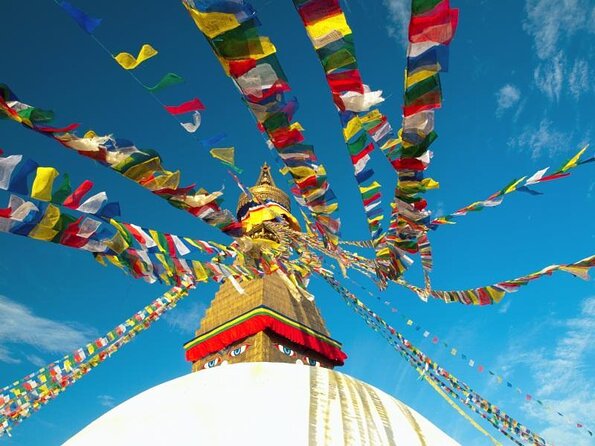
Kathmandu Durbar Square, Monkey Temple, Boudhanath, and Pashupatinath
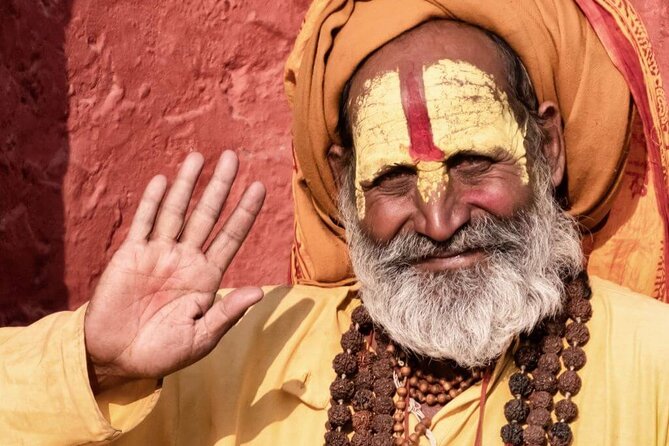
Your first real day is classic Kathmandu, but organized in a smart flow. You start at Kathmandu Durbar Square, then head to Swayambhunath Stupa (often called the Monkey Temple), and then on to Boudhanath Stupa, a UNESCO World Heritage site. After that, the day includes Pashupatinath Temple along the Bagmati River, with time in the evening to experience the atmosphere there.
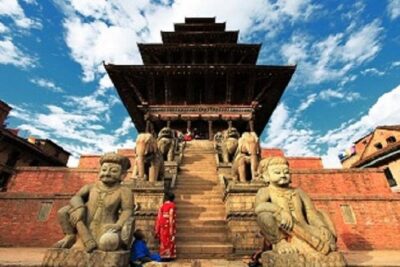
Kathmandu Durbar Square is one of those places where you quickly realize the city’s religious and artistic life is not separate from daily life. Temples and carved details fill the square, and the architecture gives you a sense of the layers of time in the Kathmandu Valley.
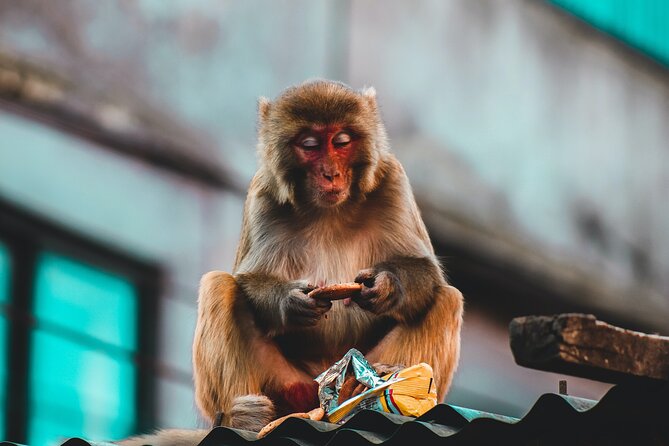
At Swayambhunath, the payoff is both spiritual and practical. The stupa sits on a hill, so you get a sense of height and reach, plus the whole area feels like a destination, not a quick stop. The “monkey” nickname is a real thing, but the stupa itself is the anchor. Plan for stairs and uneven ground.
Then comes Boudhanath, and this is where the tour slows down in a good way. You get free time for lunch and a peaceful break to watch devotees and rituals. Boudhanath is one of those big stupas that makes you sit back and realize how much devotion happens in stillness, not just movement.
Finally, Pashupatinath Temple shifts the mood. The site is an important Hindu pilgrimage place on the Bagmati River, and it is also where cremation ceremonies take place. If you have not seen that kind of ritual before, it can be intense. The evening timing helps, but keep your expectations grounded: this is a living religious site.
Practical tip: Wear comfortable shoes. You will walk more than you think, and Kathmandu temple steps can be hard on the feet after a long flight.
Patan Durbar Square and Bhaktapur’s Malla-Era Craft Squares
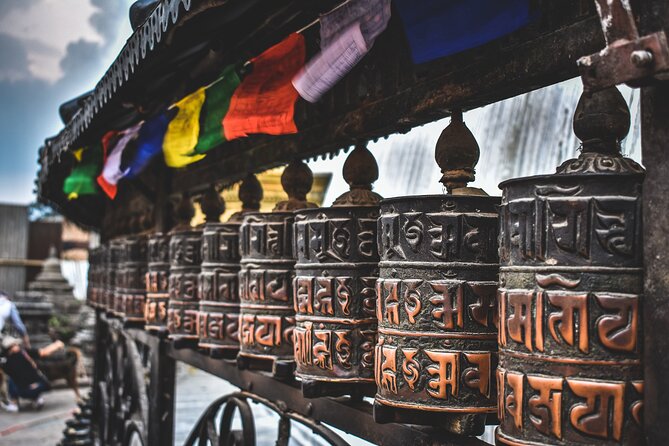
On day 3, the focus moves to two other UNESCO-linked city centers: Patan Durbar Square and Bhaktapur Durbar Square. This is a good move because it expands your understanding of the Kathmandu Valley beyond the most famous name on the map.
Patan’s Durbar Square keeps the day grounded in architecture and temple complexes. It is also the kind of place where you can spot craft skills in the details, not just in museum displays. The itinerary includes time for Krishna Temple as part of the stop. That matters because it gives you a specific anchor rather than just “walk around the square.”
Bhaktapur Durbar Square is another step in the “how did they build all this and keep it?” category. The information you are given highlights the Malla period and points out how the area is known for monuments, architecture, and preserved local traditions like pottery. If you like seeing a city where daily craft still has a role, Bhaktapur can feel especially meaningful.
The only caution here is time pressure. Both of these places reward slow looking, and you will cover them with a guide and a schedule. If you want to linger in every courtyard and side street, you may find yourself scanning a little faster than you hoped. Still, this is one of the better ways to see multiple “Durbar” centers without spending weeks on your own planning.
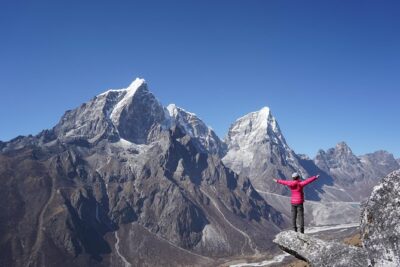
Chitwan National Park: A Long Drive That Sets Up the Wildlife Day
Day 4 is travel heavy in the best way. You drive about 160 kilometers from Kathmandu to Chitwan National Park. The transfer is listed as around 5 hours, and it is described as a beautiful journey through the countryside toward the park.
This day matters because it transitions you from stone and carvings into river and forest. When you spend your morning in temple squares and your afternoon in Chitwan, your brain gets a reset. The scenery changes fast, and that is part of what makes this route feel like more than a sightseeing list.
Even if you are not a “road trip person,” a private vehicle helps. You are not stuck sharing a crowded ride, negotiating stops, or trying to coordinate timing on your own. You can just relax, look out the window, and get ready for the river-based activities that follow.
Rapti River Canoeing and Bird Watching You Can Actually Time
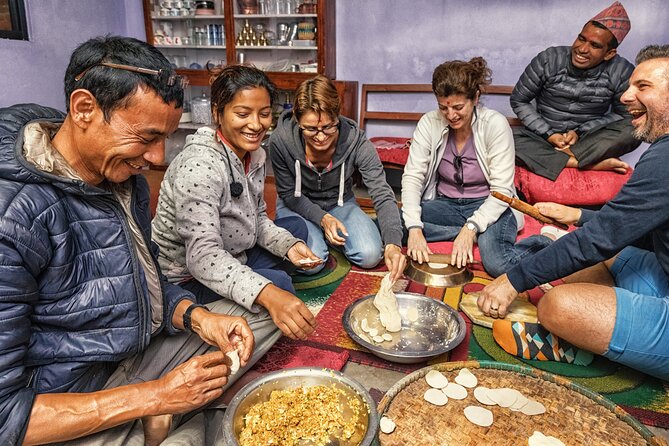
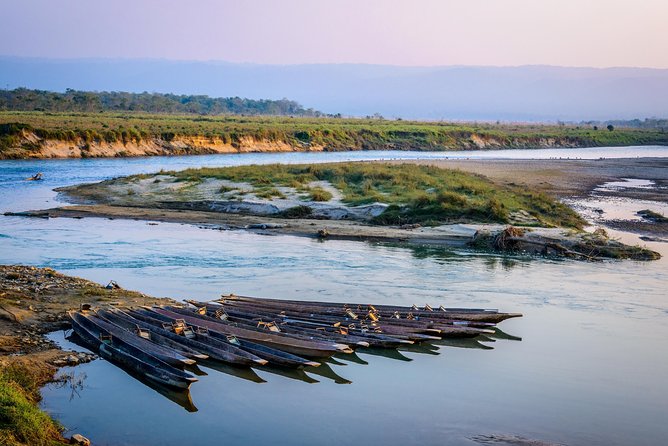
Chitwan becomes real on day 5 with an activity tied to the Rapti River. The itinerary includes canoeing, with the chance to observe Marsh Mugger and Gharial crocodiles resting by the riverbank. Even though you cannot control wildlife sightings, having an activity that places you where these animals are known to rest is a key difference from a generic “wildlife tour.”
This is also one of the days where you will feel the benefit of having someone coordinate you. Canoeing and river logistics are not something you want to freestyle when you are short on experience, even if you are the type who likes spontaneity. Here, you get set up for the activity and then you spend your attention where it belongs: on the river, the banks, and the chances of seeing real wildlife.
Day 6 shifts to birding. You head along the Rapti river bank for bird watching, and the guide explains different species. Bird watching in Chitwan is often a highlight for people who want nature experiences that do not rely only on spotting big mammals.
Both days also share a simple truth: wildlife and birds can take patience. If you expect constant action every minute, you might feel restless. If you accept a slower pace, you can get a lot out of quiet observation, and that is how these Chitwan days tend to land.
Lumbini to Pokhara: The Change of Scenery, Plus the Route Between
On day 7, you drive from Lumbini to Pokhara. The drive is listed as around 8 hours and uses the Siddhartha Highway, described as connecting the Terai region in southern Nepal with the mountain region in northern Nepal.
That highway detail matters because it helps you understand what the drive is like. You are traveling between lowland and highland zones. Your surroundings shift during the day, and you are traveling toward a city that is more geared to mountain views.
In many itineraries, Pokhara is a rest stop. Here, you still have a plan built in: after arriving, you are not just checking into a hotel and waiting for your own ideas. The next morning is where the big view experience happens.
Sarangkot Sunrise: The Early Start That Pays Off
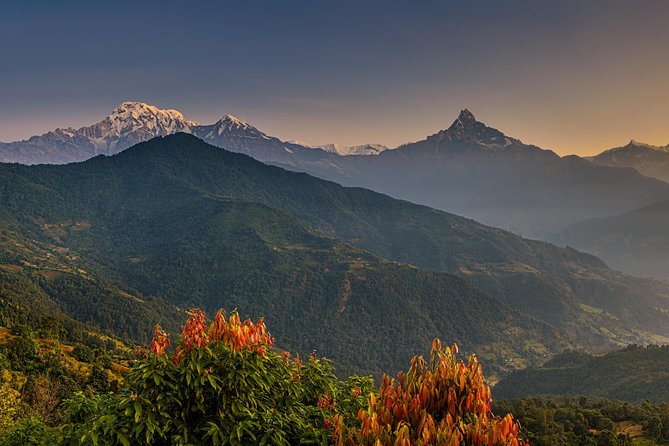
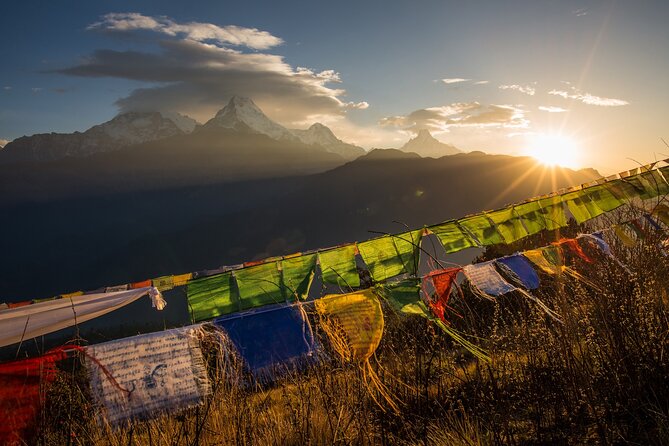
Day 8 is a sunrise day, and the itinerary is explicit: you head to Sarangkot very early in the morning for the Himalayan mountain views at sunrise. The description also notes it is an introduction to 8000+ meter high mountains.
If you hate early mornings, this is the one moment in the trip you should think about seriously. The upside is that sunrise viewing is a short window and a once-per-day chance. Getting there as a group with a plan is far easier than trying to organize it on your own once you are already tired.
After sunrise, you get breakfast, then continue with sightseeing. This structure is smart because it prevents the day from turning into an all-day scramble.
Devi’s Fall, Gupteshwor Cave, and the World Peace Stupa Views
Still on day 8, your itinerary includes three major stops around Pokhara:
- Devi’s Fall, described as unique because the water continues underground.
- Gupteshwor Cave, across the street from Davis Waterfall, where you can see water flow from inside the cave.
- The World Peace Stupa, a white-domed Buddhist monument symbolizing peace, built by Japanese monks, located on a hilltop with views over Phewa Lake.
These stops are not all the same kind of experience. Devi’s Fall and Gupteshwor Cave are water-and-geology style sights, while the World Peace Stupa adds a calmer, spiritual viewpoint. Together, they give you variety in one day, which is useful since Chitwan already took your attention in a different direction.
The biggest practical consideration is movement and timing. Day 8 is packed, and it is easy to feel a little tour-busy if you are the type who wants long pauses. If you like variety and quick hits, this day will suit you.
Practical tip: Expect a lot of stairs and foot travel. Wear shoes with grip, especially if the ground is slick.
Bandipur as a Quiet Reset Before Kathmandu
Day 9 is a return drive to Kathmandu, with a stop in Bandipur. The itinerary suggests around 2 to 3 hours of driving, then about 1 hour to explore Bandipur, and lunch at your own expense before continuing to your journey back.
Bandipur is positioned here as a reset. It is short enough that you do not lose the whole day to sightseeing, but it gives you the feeling of stopping in a smaller old town. If you want one gentle cultural detour before ending the trip, Bandipur fits that role well.
The main drawback is also the most obvious one: 1 hour can feel tight. It is enough to get your bearings and walk a few streets, but not enough to slow down deeply. Still, as a stop on a transfer day, it is a thoughtful inclusion.
Your Final Transfer: Flying Out Smoothly From Kathmandu
On day 10, the tour ends with a transfer to Kathmandu International Airport about 3 hours before departure.
I like this approach. In Nepal, traffic and timing can be unpredictable enough that you want buffer time, especially at the end of a trip when your energy is already lower. A pre-scheduled airport transfer is one less thing to manage on your last day.
Who Should Book This Tour, and Who Should Think Twice
This Nepal Cultural Highlights tour is a strong fit if:
- You are a first-timer in Nepal and want a clear route that covers major highlights without you chasing logistics.
- You value private vehicle comfort and an English-speaking local guide.
- You like moving between temples, cultural squares, wildlife, and mountain views in one trip.
- You want a small group experience with a cap of 10 travelers.
You should think twice if:
- You dislike early starts. The Sarangkot sunrise is a key part of the itinerary.
- You prefer lots of free time at each stop. Some days are full, and the schedule is built to cover many places.
- You prefer fully included meals and drinks. The tour includes many breakfasts and a set number of lunches and dinners, but not all meals and not beverages beyond what is included.
My practical take: if you want the highlights without the planning grind, this is the kind of trip that can feel worth every dollar.
Should you book it?
Yes, if you want an organized introduction to Nepal that still feels personal. The combination of small group size, private transport, and an English-speaking local guide is exactly how you reduce friction on a country that can be challenging to navigate alone. The core sights are also well matched across the 10 days, so you do not just bounce between checklists.
If you are the type who plans every detail yourself, you might find the price high. But for most people, the value is in what you do not have to manage: transfers, hotels, guides, and key site access.
FAQ
Where is the meeting point?
The tour starts at Tribhuvan Airport, Kathmandu, Nepal.
How many people are in the group?
This experience has a maximum of 10 travelers.
What is the duration of the tour?
It is listed as 10 days (approx.).
Does the tour include hotel accommodation?
Yes. All hotel accommodation is included.
Are World Heritage site entrance fees included?
Yes. Entrance fees for World Heritage Sites are included.
How many meals are included during the tour?
Breakfast is included 9 times, lunch is included 2 times, and dinner is included 2 times.
What is not included in the tour price?
Tipping for the guide and driver is not included, travel insurance is not included, extras for upgrading rooms and services at hotels are not included, donations in temples, schools, and monasteries are not included, and drinks or beverage bills are not included.
Is there free cancellation?
Yes. Free cancellation is available, with a full refund if you cancel at least 24 hours before the experience’s start time.
Everything Bookable Around Kathmandu
The Rest of Our Kathmandu Write Ups

Nepal Front to Back
Everything else we have reviewed around Kathmandu
- 12 Days Everest Base Camp Trekking
★ 5.0 · 3 reviews - 1 Night 2 Days Chitwan Jungle Safari Tour from Pokhara or Kathmandu
★ 3.0 · 3 reviews - Thamel Rickshaw tour
★ 4.7 · 3 reviews - Kathmandu: Momo Making Class with a Local Chef
★ 5.0 · 3 reviews - Kathmandu: Full-Day Yoga, Body Massage and Pedicure Package
★ 5.0 · 3 reviews - From Kathmandu / Pokhara / Chitwan: River Rafting – 1 Day
★ 4.6 · 3 reviews
Nepal Multi-Day Tour Packages worth a second look.
 ★ 5.08 Days Tour in Nepal (3 Star Accommodation)From $860113 reviews
 ★ 5.0Best Nepal Tour PackageFrom $70045 reviews
 ★ 4.5Shamanism Tour in Nepal – One-to-one Consultation with SharmansFrom $4042 reviews
 ★ 5.0Buddhist Pilgrimage Tour In NepalFrom $15027 reviews
 ★ 5.0Nepal Classic Tour -12 DaysFrom $1,45027 reviews
 ★ 5.012-Day Nepal Adventure Trek with Jungle SafariFrom $95026 reviews
 ★ 5.0All Nepal TourFrom $1,29026 reviews
 ★ 4.7Spiritual Nepal: Expert insight into Multifaith JourneyFrom $15024 reviews
Lists this tour sits in