
REVIEW · KATHMANDU CITY TOURS & SIGHTSEEING
Private Kathmandu Valley Sightseeing Tour Including Lunch
Kathmandu in one long, well-paced day is the plan. This private sightseeing loop pulls together major Hindu and Buddhist sites, plus lunch, with hotel pickup to cut down on wasted time. You start with the palace courtyard world of Kathmandu Durbar Square, then climb your way up to Swayambhunath, and finish at Pashupatinath, one of Nepal’s most important temples.
What I like most is the structure, especially when you’re short on time. You get a local guide, guided commentary, and entrance tickets included, so you spend less energy figuring things out and more time actually looking. I also really value the lunch setup, since you eat while taking in a view of Boudhanath Stupa, which is hard to top.
The main thing to consider is pacing and physical effort. Some stops involve climbing stairs and moving around older sites that may have uneven surfaces, and parts of the area show earthquake damage from 2015.
In This Review
- Key highlights to look for
- How This Private Kathmandu Valley Loop Works in Real Life
- Pickup, Air-Conditioned Ride, and a Schedule You Can Actually Use
- Stop 1: Kathmandu Durbar Square, Courtyards, and the Kumari Connection
- Stop 2: Swayambhunath, Monkey Temple Stairs, and Valley Views
- Stop 3: Boudhanath Stupa, a Big Buddhist Center, and Lunch With a View
- Stop 4: Pashupatinath Temple and the UNESCO World Heritage Feeling
- Price and Value: What $40 Buys You (and What to Budget Extra)
- Guides, Comfort, and the Small Things That Make or Break the Day
- Earthquake Damage in 2015, and How to Read the Sites When Things Look Different
- Should You Book This Private Kathmandu Tour?
- FAQ
- What is included in this Kathmandu private tour?
- Which sights will we visit during the day?
- Is lunch included, and is it served with a view?
- Are entrance tickets included?
- Do they offer a vegetarian option?
- Where does pickup and drop-off happen?
Key highlights to look for
- Private group, real guide time: you get a dedicated local guide for your day, not a “everyone follow the leader” situation.
- Entrance fees are included: Durbar Square, Swayambhunath, Boudhanath, and Pashupatinath are handled with tickets included.
- Lunch with a stupa view: you eat at a local spot with a strong vantage point of Boudhanath Stupa.
- A focused Kathmandu loop: the day is built to cover the big, iconic sites in about 7 hours.
- Advice that helps you behave and see better: your guide explains what you’re looking at, including how people worship at UNESCO-listed sites.
Other one shot sweeps of the Valley

How This Private Kathmandu Valley Loop Works in Real Life
This tour is built for travelers who want Kathmandu’s greatest hits without turning the day into a logistics puzzle. With hotel pickup and drop-off within Kathmandu Valley, you avoid the common start-stop friction of calling taxis, arguing over fares, or arriving late to crowded places.
The route is also designed to give you contrast. You move from carved palace architecture and the living goddess tradition at Kathmandu Durbar Square, to the monkey-temple climb at Swayambhunath, to the massive Buddhist presence at Boudhanath, and then to the intensely spiritual Hindu complex of Pashupatinath. That mix is one of the best ways to understand Kathmandu Valley as more than just buildings, because you see how different traditions share the same city energy.
I also like that the tour is private. That matters because you can go at a sensible speed and pause when something catches your eye, instead of timing your photos to someone else’s group agenda. You’ll still have a full day, but it feels controlled.
One note: the tour description calls out Freak Street as part of the highlights. The big temple stops are fixed, so if you care about a quick browse there, just make sure you ask your guide how much time you’ll have during the day.
Pickup, Air-Conditioned Ride, and a Schedule You Can Actually Use
On a one-day Kathmandu plan, transportation and timing make or break the experience. Here, private transportation and air-conditioned vehicle are included, and you get pickup and drop-off within Kathmandu Valley. That’s a big deal in a city where traffic and short distances can still eat time.
Your tour runs about 7 hours. That’s long enough to cover the key religious sites without feeling like you’re teleporting. But it’s still short enough that you should plan for some tired feet, especially if you’re not used to stair climbs and uneven stone.
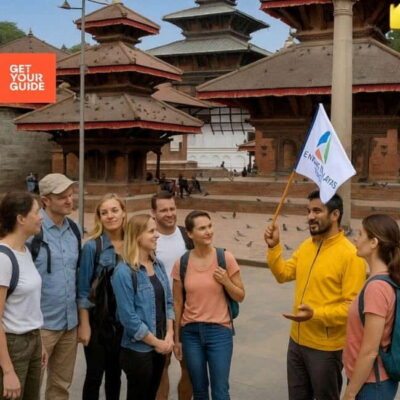
Your guide is a practical part of the day. The tour includes guided commentary, which is what turns a list of monuments into a meaningful route. When your guide explains what a courtyard is, why a goddess tradition matters, or what rituals look like at a temple complex, you can stop guessing and start noticing.
If you’re someone who hates scrambling, this is where the value shows. I like that the tour provides a mobile ticket, so you’re not standing around trying to track down paper tickets in the middle of the day.
Stop 1: Kathmandu Durbar Square, Courtyards, and the Kumari Connection
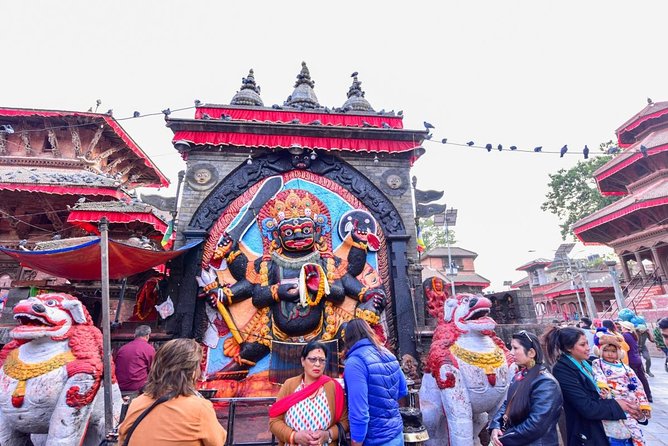
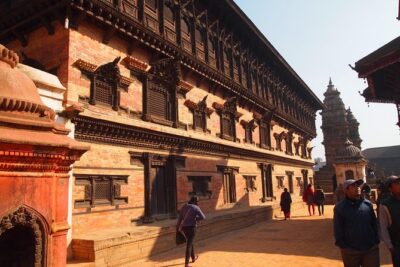
Kathmandu Durbar Square is where the city’s royal and religious identity shows up in carved wood, stone details, and layered courtyards. Your visit starts at a “house full of woodcarvings” featuring gods and goddesses. That detail matters, because it signals that you’re not only looking at buildings, you’re looking at symbols people interact with over time.
A highlight here is the tradition involving the living goddess, Kumari. Both Hindus and Buddhists venerate her, and the site’s layout helps you understand why this kind of role is tied to place. Your guide’s job is important at Durbar Square, because without that context, you could walk past carvings and not know what you’re seeing.
You should also know what to expect visually. The tour notes that there has been significant damage to some sites visited due to the April and May 2015 earthquakes. In plain terms, this means you may see restoration areas, uneven surfaces, and sections that look different from older photos. Don’t treat it as “unfinished tourism.” Treat it as history in progress.
Possible drawback: Durbar Square is a busy stop, and parts of it can feel crowded when you’re trying to look closely at carvings. If you’re serious about photos, go slowly, and let your guide steer you toward the best angles and the parts that people usually miss.
Stop 2: Swayambhunath, Monkey Temple Stairs, and Valley Views
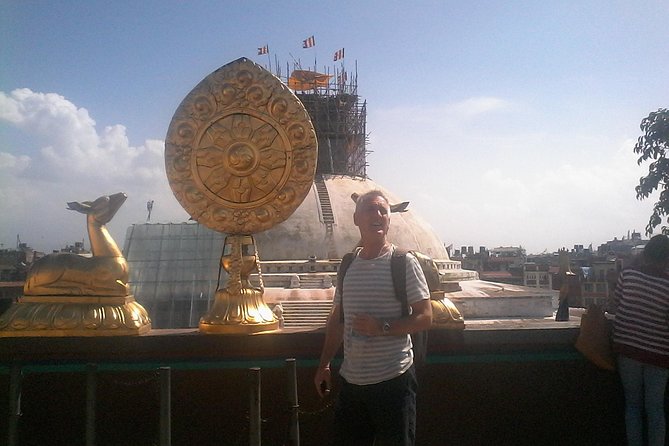
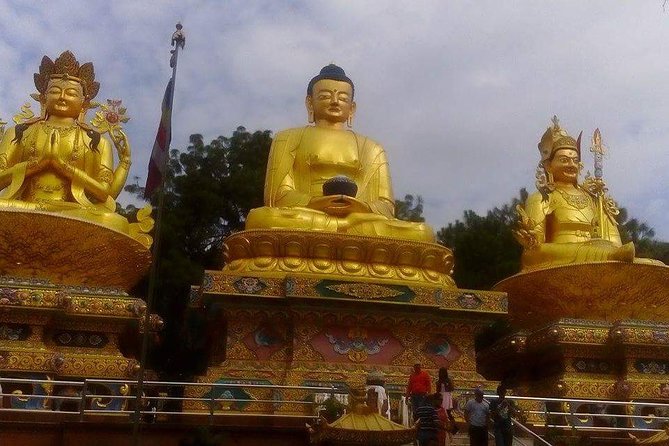
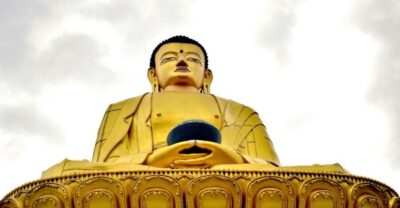
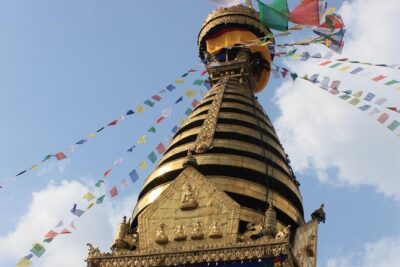
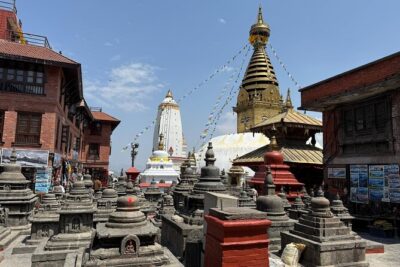
Next up is Swayambhunath, also known as the Monkey Temple. The nickname comes from the rhesus monkeys that call the area home, and yes, they can be part of the atmosphere. The more important part is the way Swayambhunath sits above Kathmandu Valley, giving you a sense of where the city spreads.
This is also a stair stop. You’ll walk up a long set of stairs to reach the sanctuary area, and that climb is often the first “okay, we’re really doing this” moment of the day. If you’re not used to stairs, bring a bit of patience and take breaks whenever you need to.
Once you’re up there, the views can be a reward. You’ll look back across the valley and see why people choose this kind of hillside temple setting. Your guide can help here by pointing out what you’re looking at, since the valley can look like one big blur if you don’t know what to focus on.
Temple sites often have a rhythm: people arrive, some perform small rituals, others pause just to look. At Swayambhunath, that rhythm plus monkeys makes the place feel alive and slightly chaotic in a good way.
Possible drawback: monkeys mean you should keep your belongings secure and be mindful about open food or dangling items. Your guide will likely steer you on basic behavior, but it’s still worth staying alert the entire climb.
Private guides for Kathmandu, a few more
Stop 3: Boudhanath Stupa, a Big Buddhist Center, and Lunch With a View
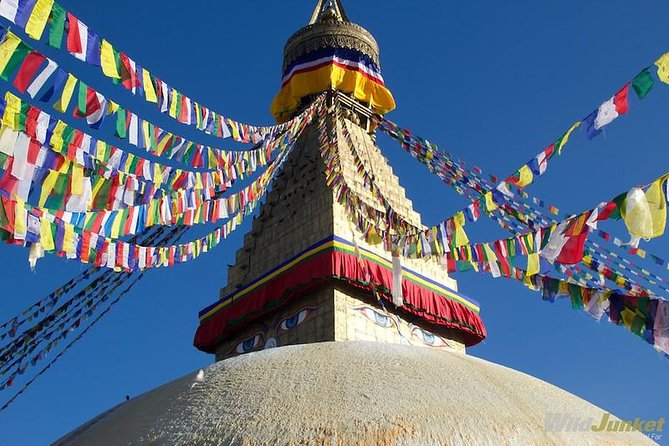
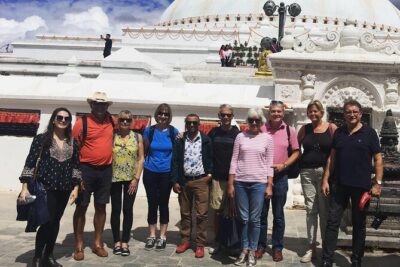
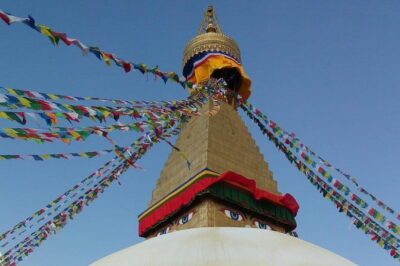
Then comes Boudhanath Stupa, described here as the biggest Buddhist stupa in Nepal. It’s the kind of religious structure that changes your perspective the moment you approach. You stop thinking in terms of “seeing a landmark” and start thinking in terms of “this is a working place of devotion.”
Your tour includes time for the stupa, then lunch at a local eatery that offers a phenomenal perspective of the stupa. This is the best kind of lunch arrangement, because you’re not stuck eating in a generic restaurant where food and view feel separate. Here, your meal sits beside the sacred scene.
Lunch also gives you a natural reset in the day. After stairs and temple walking, you can sit, recharge, and take a calmer look at how people move around the stupa. Since the tour includes a vegetarian option if you request it, it’s easy to plan meals around dietary preferences.
Possible drawback: Boudhanath can draw crowds, so expect some waiting or slower movement. The good news is that your guide can help you get oriented quickly so you’re not wandering in circles.
A small practical tip: if you want the best stupa-view moment, ask your guide when lunch starts and how seating is handled at the eatery. Even tiny timing choices can make a difference in what you can see.
Stop 4: Pashupatinath Temple and the UNESCO World Heritage Feeling
To close the day, you visit Pashupatinath Temple, a UNESCO World Heritage Site. This is one of the most important Hindu temple complexes in Nepal, and it carries a strong sense of ceremony and devotion. Your guide explains the various sanctuaries that make up the site, which is key, because Pashupatinath is not one single view. It’s a whole area of structures and spaces.
If you’ve never visited a major pilgrimage site before, Pashupatinath can feel both orderly and intense. People come with purpose. You’ll want to slow down and watch what’s happening rather than trying to collect every photo at once. A guided walk helps you understand why different parts matter, and it also helps you avoid common mistakes like wandering into restricted areas or assuming you can photograph freely everywhere.
This is also where your day’s “religious contrast” pays off. Earlier stops in your route emphasize a blend of royal palace culture and Buddhist presence, but Pashupatinath is clearly Hindu in its focus. Seeing both in one day gives you a clearer Kathmandu map in your head.
Possible drawback: temple complexes can have rules about where you can stand, how you dress, and when you can take photos. Since the tour includes a local guide, you’ll have someone helping you follow the flow, but still expect the day to ask for patience.
Price and Value: What $40 Buys You (and What to Budget Extra)
At about $40 for a private 7-hour tour, this is one of the more competitive ways to cover Kathmandu’s big-name sites with a guide. The reason it feels like value is the combination: hotel pickup and drop-off within the valley, private transportation, air-conditioned vehicle, a local guide, lunch, and entrance tickets included.
In other words, you’re not just paying for “someone to point at temples.” You’re paying for a full day plan where ticket costs and basic transport are handled. That matters because entrance fees and local transport add up fast when you’re doing it on your own.
What’s not included is also straightforward: food and drinks beyond the lunch. So if you want snacks, bottled water, or extra drinks, you’ll need to budget for that yourself.
Vegetarian travelers should be encouraged by the note that a vegetarian option is available if you advise during booking. If you have dietary restrictions beyond vegetarian, you might want to check directly with your operator ahead of time.
Guides, Comfort, and the Small Things That Make or Break the Day
The experience quality often comes down to your guide. Here, the name Narayan shows up in past experiences, described as friendly and well-informed, with an ability to adapt to needs. That’s exactly what you want on a high-demand day, because Kathmandu’s pace can change quickly. Maybe you arrive and certain areas are busier than expected. Maybe you’ve already seen one spot. A good guide can adjust so the day still feels full.
I also like that the day is private, so your guide can tailor explanations to your interests. If you care about carvings, you can spend extra time at Durbar Square. If you care about Buddhist rituals, you can pay closer attention around Boudhanath.
One caution based on rare but serious issues: there has been at least one case where the provider did not show up, and attempts to contact them failed. That’s not the norm, but it’s enough to say this: confirm your pickup details the day before, and have your hotel’s front desk help you double-check the time and meeting spot. It’s cheap insurance.
Earthquake Damage in 2015, and How to Read the Sites When Things Look Different
The tour flags that some sites show significant damage due to the April and May 2015 earthquakes. When you visit, you might see areas that look under repair, structural differences, or sections that do not match older postcards.
Try not to judge the sites as broken or “less.” Instead, view what you’re seeing as real Kathmandu history continuing in real time. Restoration work and changing structures are part of the story of surviving big disasters and rebuilding cultural meaning.
Your guide’s commentary becomes even more valuable here. With context, you can understand what you’re seeing instead of just thinking, “Wait, is this normal?”
Practical tip: wear shoes with good grip. Temple stone and stair surfaces can be uneven, and earthquake repairs do not always produce perfectly smooth ground. A little traction makes everything easier, from Durbar Square to Swayambhunath.
Should You Book This Private Kathmandu Tour?
If you’re trying to get your bearings fast in Kathmandu, this is a solid pick. It’s private, it includes lunch, it covers the main Hindu and Buddhist sites, and it handles entrance fees and transportation for you. The stupa-view lunch is especially good, because it turns a basic meal into a memorable cultural pause.
Book it if:
- You want a structured day around Kathmandu’s top UNESCO-linked and iconic religious sites
- You’d rather pay for convenience than spend hours mapping routes
- You like having a guide explain what you’re seeing, not just pointing at it
Skip it or be extra cautious if:
- You’re extremely sensitive to stair climbs or uneven surfaces
- You need strict dietary control beyond vegetarian, and you don’t want to communicate in advance
- You prefer to keep your day very flexible, since this is a planned loop with set stops
Given the strong overall rating and the repeated praise for guides like Narayan, the odds are good you’ll come away with a clearer sense of Kathmandu Valley than you would from random taxi hopping.
FAQ
What is included in this Kathmandu private tour?
The tour includes hotel pickup and drop-off within Kathmandu Valley, lunch, a local guide, private transportation, and an air-conditioned vehicle.
Which sights will we visit during the day?
You’ll visit Kathmandu Durbar Square, Swayambhunath (Monkey Temple), Boudhanath Stupa, and Pashupatinath Temple. Freak Street is also mentioned as part of the highlights.
Is lunch included, and is it served with a view?
Yes. Lunch is included, and it is served at a local eatery with a view of Boudhanath Stupa.
Are entrance tickets included?
Yes. Admission tickets are included for the stops on the itinerary.
Do they offer a vegetarian option?
Yes. A vegetarian option is available if you advise at the time of booking.
Where does pickup and drop-off happen?
Pickup and drop-off are included within Kathmandu Valley, and the tour ends back at the meeting point in Kathmandu Valley.
Everything Bookable Around Kathmandu
The Rest of Our Kathmandu Write Ups

One More Valley Day
Everything else we have reviewed around Kathmandu
- 12 Days Everest Base Camp Trekking
★ 5.0 · 3 reviews - 1 Night 2 Days Chitwan Jungle Safari Tour from Pokhara or Kathmandu
★ 3.0 · 3 reviews - Thamel Rickshaw tour
★ 4.7 · 3 reviews - Kathmandu: Momo Making Class with a Local Chef
★ 5.0 · 3 reviews - Kathmandu: Full-Day Yoga, Body Massage and Pedicure Package
★ 5.0 · 3 reviews - From Kathmandu / Pokhara / Chitwan: River Rafting – 1 Day
★ 4.6 · 3 reviews
Kathmandu City Tours & Sightseeing worth a second look.
 ★ 5.0Kathmandu Private Sightseeing Tour | UNESCO World Heritage SitesFrom $35109 reviews
 ★ 5.0Private tour of Major highlights of Kathmandu top rated placesFrom $4492 reviews
 ★ 5.0Kathmandu Heritage Tour (Full Day)From $3863 reviews
 ★ 5.0Kathmandu Full Day TourFrom $7054 reviews
 ★ 5.0Life and spirituality tour of KathmanduFrom $5554 reviews
 ★ 5.0Kathmandu Highlights: Private UNESCO World Heritage Sites TourFrom $4950 reviews
 ★ 5.0Full Day Private Tour of Kathmandu – UNESCO World Heritage SitesFrom $3542 reviews
 ★ 5.0Kathmandu Valley City Day TourFrom $6040 reviews
Lists this tour sits in