
REVIEW · KATHMANDU UNESCO HERITAGE TOURS
TOP 4 UNESCO World Heritage Sites Tour
Four UNESCO sites, one day, big feelings. I love how this private tour links Hindu and Buddhist sacred places in a single loop, with hotel pickup and drop-off that saves you from guessing transport and timing in Kathmandu traffic. It’s a lot to see, but it feels organized, not rushed.
My second favorite thing is the people. Guides such as Kapil Pandey and Saraswati Ghimire bring the sites to life with clear explanations, and drivers like Ram and Suman keep things moving smoothly, including small touches like water when you need it.
One thing to think about before you go: entry rules and dress matter. There’s a strict dress code (no shorts or sleeveless tops, knees and shoulders covered), and you must be Hindu to enter Pashupatinath Temple.
In This Review
- Key points worth planning around
- Why Four UNESCO Sites Works Better Than DIY in Kathmandu
- Price and Logistics: What Your $50 Actually Buys
- Pashupatinath Temple: Shiva, Golden Roofs, and the Rules You Must Follow
- Boudhanath Stupa: 5th-Century Buddhism Up Close
- Swayambhunath: The Monkey Temple, the Painted Eye, and the View
- Patan Durbar Square: Newari Architecture and a Royal Family Story
- The Real Star: Your Guide and Driver Make or Break the Day
- Timing, Pace, and How to Prepare So You Enjoy It
- Who This Tour Fits Best (And Who Might Want a Different Plan)
- Quick FAQ on the Important Bits
- FAQ
- Which UNESCO World Heritage sites are included?
- How long does the tour take?
- Does the tour include hotel pickup and drop-off?
- Are monument entrance fees included in the price?
- What dress code do I need for the temples?
- Can anyone enter Pashupatinath Temple?
- Do I get a mobile ticket?
- Should You Book This Top 4 UNESCO World Heritage Sites Tour?
Key points worth planning around
- Door-to-door pickup means you do not waste time lining up taxis or figuring out routes.
- A private group keeps the pace flexible for your questions and pace.
- Temple dress code is real and enforced, so plan your outfit before you leave the hotel.
- Pashupatinath entry has a religion requirement, which can affect what you are allowed to do inside.
- Entrance fees are separate, with an estimated total around NPR 2700.
- English-speaking guidance turns four UNESCO sites into one connected story, not four disconnected stops.
Other seven site heritage runs
Why Four UNESCO Sites Works Better Than DIY in Kathmandu
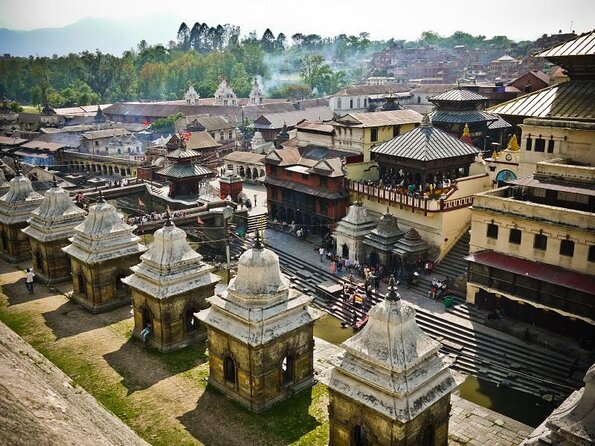
Kathmandu Valley can be confusing fast. Distances are not huge, but traffic and turns are. Add in temples that run by faith, not by your schedule, and DIY becomes a guessing game.
This tour is built for sanity. You get a private vehicle, a professional English-speaking guide, and a route that hits four UNESCO World Heritage sites in the same day: Pashupatinath Temple, Boudhanath Stupa, Swayambhunath, and Patan Durbar Square. Total time runs about 6 to 7 hours, and you can choose a morning or afternoon departure.
I like tours that respect your energy. Here, the stops are timed so you can actually look, ask, and reset between locations, instead of sprinting from gate to gate. And because it is private, you are not stuck with a group that moves half as fast as you do, or someone who needs 20 minutes to find the right selfie angle.
Price and Logistics: What Your $50 Actually Buys
The price is listed at $50.00 per person, and it is typically booked around 42 days in advance. That tells you this is a popular way to see the big hits without juggling multiple tickets and guides.
Here is the value breakdown in plain terms. The tour includes:
- Air-conditioned private tourist vehicle
- Hotel pickup and drop-off by private vehicle, from anywhere in Kathmandu
- English speaking professional tour guide
What is not included is where your brain should kick in:
- Monument entrance fees (around NPR 2700 estimated)
- Tips for guide and driver (tipping is expected)
So you are not just paying for driving. You are paying for navigation, timing, explanation, and a smoother experience inside religious spaces. In a city where you can easily spend an hour trying to find the right entrance or waiting for unclear directions, a prepared guide is money well spent.
Also, you get a mobile ticket. That small detail matters when your day is split across multiple sites and you do not want paper clutter.
Pashupatinath Temple: Shiva, Golden Roofs, and the Rules You Must Follow
Pashupatinath Temple is dedicated to Lord Shiva and sits about 5 kilometers east of Kathmandu on the bank of the Bagmati River. It is one of those places where architecture and belief are braided together. You will see the temple’s two golden roofs and four silver doors, and it has a strong pull for pilgrims.
This stop is about 1 hour, which is enough time to understand what you are looking at, observe religious practice, and still have moments to step back and take it in.
Now, the key consideration. You must be Hindu to enter Pashupatinath Temple. If you do not meet that requirement, you may still be able to observe from outside, but you should know you might not be allowed through the same entry points.
Dress code is strict here. No shorts or sleeveless tops, and knees and shoulders must be covered for both men and women. The guide can help you make sense of what is happening, but they cannot wave away the rules. If you show up in the wrong outfit, you risk being turned back.
One of the best things about the experience is how guides help you do the right kind of participation. In the feedback I saw, Kapil Pandey specifically helped a guest who wanted to pray, working around crowd conditions so they could proceed with what they came for. That is not something you can guarantee on your own.
Boudhanath Stupa: 5th-Century Buddhism Up Close
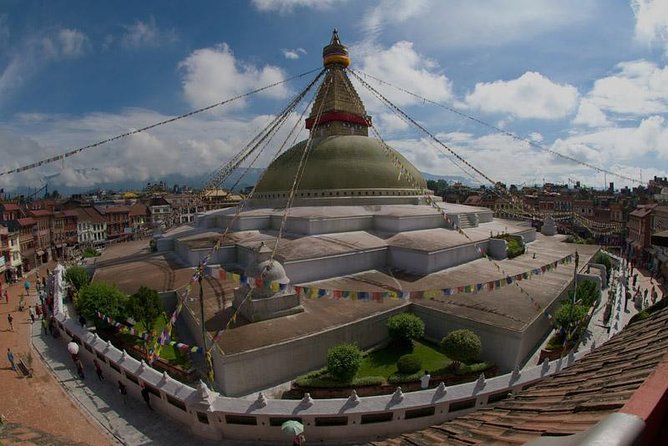
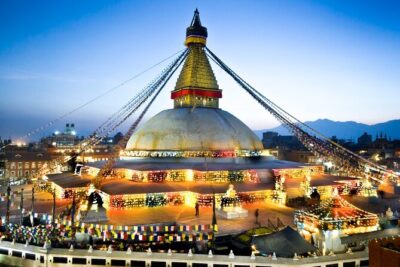
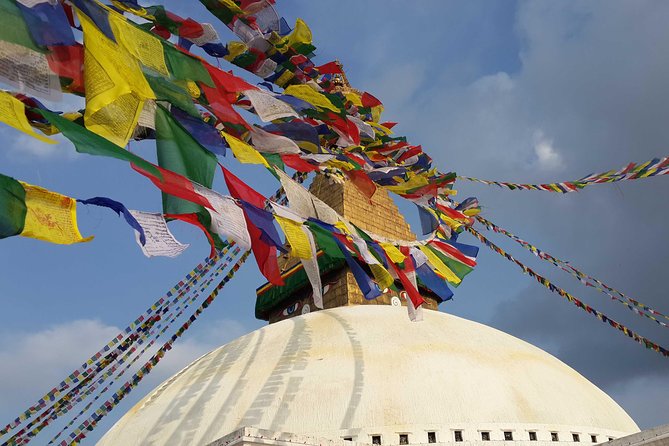
Next is Boudhanath Stupa, about 6 kilometers east of Kathmandu. This one is believed to date back to the 5th century AD, and it is described as one of the biggest Buddhist stupas in the world. Big meaning: the scale is obvious, but the atmosphere is what stays with you.
This stop is around 1 hour. You can spend that time walking around and observing the surrounding religious life. The stupa is ringed by Buddhist lamas and monks, which gives you a clear sense that this is not a museum stop. It’s an active sacred setting.
If you like a mix of faiths, this is where the day starts to feel like one connected circuit. Pashupatinath anchors you in Hindu practice, then Boudhanath brings you into Buddhist devotion, with the stupa acting like a visual center of gravity.
Practical note: entrance tickets are not included, so keep an eye on that estimated NPR 2700 total budget. Also, since it is an active religious space, keep your pace respectful. Your guide’s job is to keep you moving and understanding, but your job is to keep your tone calm.
More old stones and living temples
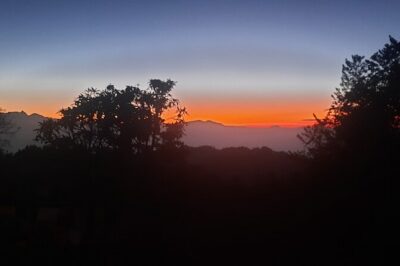
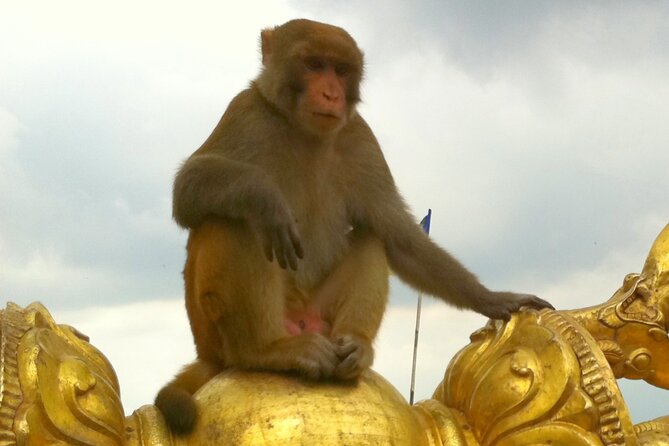
Swayambhunath: The Monkey Temple, the Painted Eye, and the View
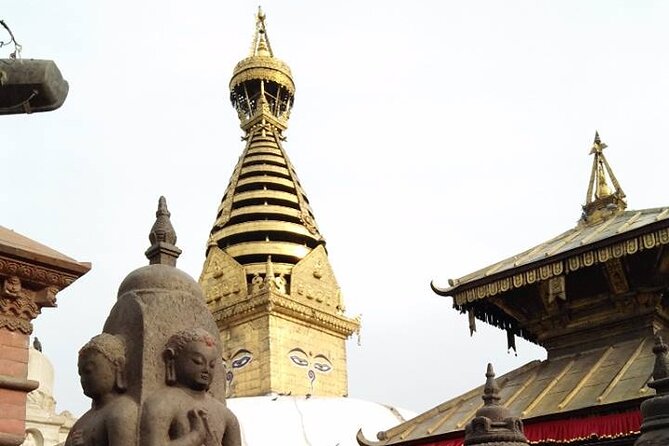
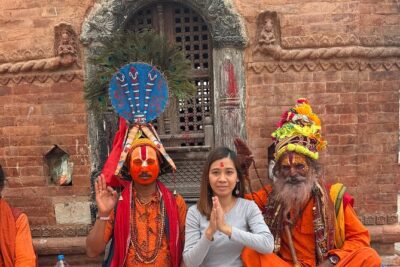
Swayambhunath, often called the Monkey Temple, is a Buddhist stupa about 2,500 years old. It sits on a hillock roughly 77 meters above ground level, so you get a view over the Kathmandu Valley.
This stop takes about 45 minutes. That shorter time works well here because the experience is concentrated: you climb or move through the approach, you take in the stupa details, and you step back to enjoy the perspective.
What stands out is the dome and the painted eye on top. It is symbolic and it is memorable. The eye makes you feel like the place is watching, even when you are just doing what any visitor does, look around and read the meaning through your guide’s explanations.
One thing to watch: the hillside setting means you should wear shoes you trust. Since the tour also has a dress code, pair that with comfortable, covered legs and supportive footwear so you are not thinking about your outfit while you are trying to enjoy the view.
Patan Durbar Square: Newari Architecture and a Royal Family Story
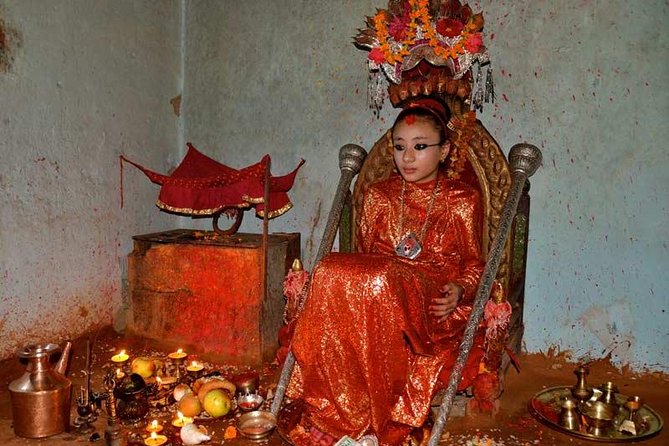
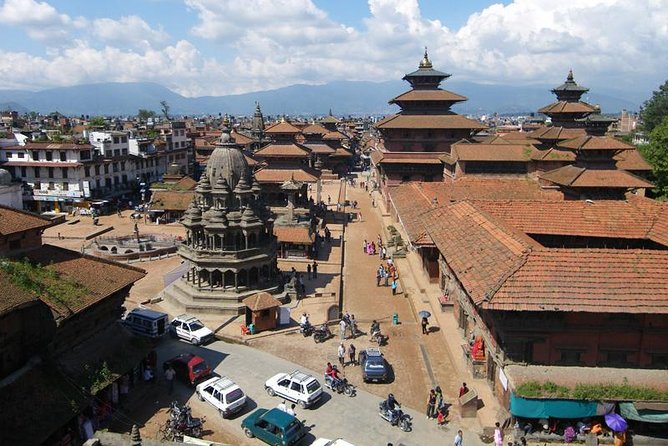
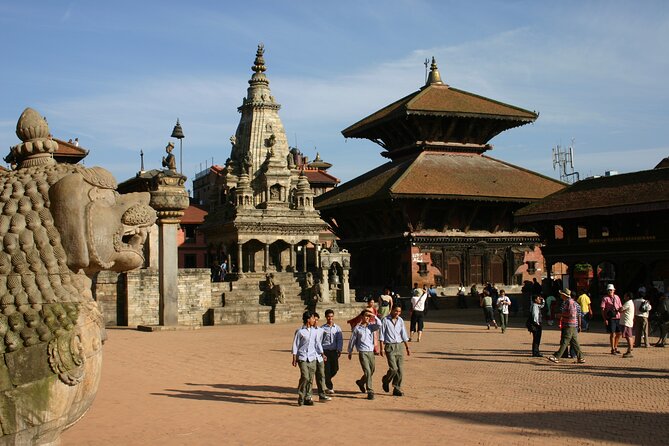
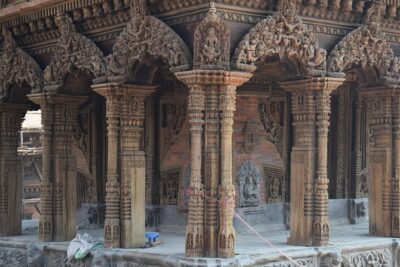
After the two religious anchors, Patan Durbar Square slows the day into a different kind of heritage. This area connects to the former Patan Royal Family and is famous for Newari architecture.
It is also described as the most photographed of Kathmandu’s three Durbar Squares, which makes sense. The layout and structures are built for visitors to pause, scan details, and reframe photos from different angles.
This stop runs about 1 hour. You get enough time to absorb the architecture without feeling like you are being herded. It is also a great transition moment. Earlier stops were religious practice sites with rules tied to faith and entry. Patan Durbar Square is still sacred and culturally important, but it is more about historical built heritage.
If you like the small clues that make a city feel real, this is where you can spot craftsmanship and design patterns that do not show up in big general overviews. Your guide’s explanations matter here too, because the meaning of the spaces can fade if you just look and move on.
The Real Star: Your Guide and Driver Make or Break the Day
This tour shines when the human team is strong. And the feedback on that front is consistently positive.
Kapil Pandey is repeatedly praised for clear, concise explanations and for being flexible when the moment calls for it. One guest described him as patient, answering questions thoroughly, and even helping with a special prayer request despite crowd conditions. That is the difference between seeing a site and understanding what you are doing there.
Saraswati Ghimire is another standout name in the feedback. Her style is described as informative, and she also connects the sites to changes in Nepalese culture in recent years. That matters because UNESCO places are not frozen in time. They are lived in, and cultures evolve around them.
On the driving side, Ram and Suman came up as reliable. Ram was praised as friendly and attentive, including offering a bottle of unopened water when it was needed. Suman was praised for navigating stressful traffic with ease. You might think driving is just driving, but in Kathmandu, calm navigation is part of comfort, part of safety, and part of staying on schedule.
Since this is a private tour, you are not stuck with a one-size-fits-all approach. A good guide adjusts to your questions and your pace.
Timing, Pace, and How to Prepare So You Enjoy It
The tour runs about 6 to 7 hours, with these stop times:
- Pashupatinath Temple: about 1 hour
- Boudhanath Stupa: about 1 hour
- Swayambhunath: about 45 minutes
- Patan Durbar Square: about 1 hour
That means you should plan for a full, concentrated day. You will likely feel it by the end, especially if you are sensitive to crowds, humidity, or stairs on hill terrain.
Before you go, prepare three things:
- Dress correctly: covered knees and shoulders, no shorts or sleeveless tops.
- Bring cash for entrance fees and tipping: entrance fees are not included, tipping is expected.
- Expect crowds at the religious sites: the guide can help you manage the flow.
Also, the tour offers morning or afternoon departure. If you hate early mornings, pick afternoon. If you want softer light for photos, consider the time of day. Just pick what keeps your energy steady.
One more point: confirmation is received at booking, and a minimum of 1 person per booking is required. So if you are traveling solo, you should still be able to arrange it based on that minimum structure.
Who This Tour Fits Best (And Who Might Want a Different Plan)
This is a strong choice if you want big heritage hits without doing research for months. You also get a smoother day if you prefer someone else to handle the navigation and timing.
You will probably love this if you:
- want to see both Hindu and Buddhist landmarks in one day
- appreciate an English-speaking guide who explains what you are seeing
- want door-to-door pickup and drop-off
- value a private experience where only your group participates
This might not fit perfectly if:
- you are not Hindu and you specifically want to enter Pashupatinath Temple itself, due to the entry requirement
- you hate structured schedules, because the day is timed to fit four major sites
- you are not ready for a strict dress code at places of worship
Quick FAQ on the Important Bits
FAQ
Which UNESCO World Heritage sites are included?
The tour visits four UNESCO World Heritage sites in Kathmandu Valley: Pashupatinath Temple, Boudhanath Stupa, Swayambhunath, and Patan Durbar Square.
How long does the tour take?
It runs about 6 to 7 hours in total.
Does the tour include hotel pickup and drop-off?
Yes. You get hotel pickup and drop-off by private vehicle, and pickup is offered from anywhere in Kathmandu.
Are monument entrance fees included in the price?
No. Entrance fees are not included, and the total is estimated around NPR 2700.
What dress code do I need for the temples?
You must cover your knees and shoulders. No shorts or sleeveless tops are allowed. If you do not meet the requirements, you may be refused entry.
Can anyone enter Pashupatinath Temple?
No. Customers must be Hindu to enter into Pashupatinath Temple.
Do I get a mobile ticket?
Yes. Mobile ticket is included as a tour feature.
Should You Book This Top 4 UNESCO World Heritage Sites Tour?
If you want one day that actually works in Kathmandu, book it. The private vehicle, hotel pickup, and English-speaking guide turn a scattered set of landmarks into a coherent cultural route. Your chances of wasting time, missing the right entrances, or misunderstanding what you are seeing drop a lot.
I’d especially recommend it if you care about the meaning behind the sights, not just the photos. With guides like Kapil Pandey or Saraswati Ghimire, you get more than facts. You get context, and you also get help navigating practical moments, like dress rules and crowd conditions.
Just do your homework on two things before you go: pack clothing that meets the entry rules, and confirm whether you are eligible to enter Pashupatinath Temple based on the Hindu entry requirement. If those fit your situation, this is a high-value way to see four UNESCO sites without turning your day into logistics homework.
Everything Bookable Around Kathmandu

The Rest of Our Kathmandu Write Ups


Seven Sites, Other Routes
Everything else we have reviewed around Kathmandu
- 12 Days Everest Base Camp Trekking
★ 5.0 · 3 reviews - 1 Night 2 Days Chitwan Jungle Safari Tour from Pokhara or Kathmandu
★ 3.0 · 3 reviews - Thamel Rickshaw tour
★ 4.7 · 3 reviews - Kathmandu: Momo Making Class with a Local Chef
★ 5.0 · 3 reviews - Kathmandu: Full-Day Yoga, Body Massage and Pedicure Package
★ 5.0 · 3 reviews - From Kathmandu / Pokhara / Chitwan: River Rafting – 1 Day
★ 4.6 · 3 reviews
Kathmandu UNESCO Heritage Tours worth a second look.
 ★ 5.0Full Day 7 UNESCO Tour with Lunch – Private/GroupFrom $10415 reviews
 ★ 5.0Full Day Top 4 UNESCO Tour with Lunch – Private/GroupFrom $10269 reviews
 ★ 5.0UNESCO Seven World Heritage Tour in KathmanduFrom $180253 reviews
★ 4.9Full-Day 7 UNESCO Tour with Lunch – Private/GroupFrom $5247 reviews
★ 5.0UNESCO Seven World Heritage Tour in KathmanduFrom $180253 reviews
★ 4.9Full-Day 7 UNESCO Tour with Lunch – Private/GroupFrom $5247 reviews
 ★ 4.97 UNESCO Sites Tour in 1 Day (Private Tour)From $4204 reviews
 ★ 4.9Top 4 UNESCO Tour with Lunch – Private/GroupFrom $5181 reviews
 ★ 5.0Bhaktapur & Patan Durbar Square Day ToursFrom $50122 reviews
 ★ 5.0Kathmandu Private Sightseeing Tour | UNESCO World Heritage SitesFrom $35109 reviews
Lists this tour sits in