
REVIEW · KATHMANDU UNESCO HERITAGE TOURS
UNESCO Five World Heritage Tour in Kathmandu
Your day gets a plan, not a pile of tickets.
This private UNESCO World Heritage tour strings together Kathmandu Valley’s biggest cultural anchors in a single morning-to-afternoon loop, starting at 9:00 am and running about 7 to 8 hours. I love that you get hotel transfers within the Ring Road area (including Bouddha) plus entry fees handled for you, so you are not spending your day hunting for the right office and correct payment. One thing to keep in mind is it is a long, full circuit, with lots of religious sites and city walking, so you will want to pace yourself.
The best part is the way the itinerary moves between Buddhist and Hindu places without making it feel like two separate trips. You will pass through Swayambhunath and Boudhanath, then on to Kathmandu and Patan Durbar Squares, and finally end at Pashupatinath. Guides like Shanti and Sarita are repeatedly praised for making the day feel organized and for answering questions in a way that turns buildings and statues into stories you can actually picture. The one drawback is that Kathmandu Durbar Square includes areas that are under reconstruction, which can affect how smoothly you flow through certain sections.
In This Review
- Quick take: what makes this Kathmandu UNESCO tour work
- The one-day UNESCO format: why this route feels efficient
- Price and value: what you really get for $130 per person
- Pickup, timing, and how the day flows from 9:00 am
- Swayambhunath and Amideva Buddha Park: where the beliefs meet
- Kathmandu Durbar Square and Basantapur Tower: the royal core and its repairs
- Patan Royal Palace, Patan Durbar Square, and the museum stop you will actually use
- Golden Temple, Vishwanath Mandir, Bhimsen Temple: small windows into big belief
- Pashupatinath and Boudhanath: the spiritual bookends of the day
- What to expect from the guide, and why the day can feel stress-free
- Who this tour is perfect for, and who should think twice
- Should you book? My recommendation in plain terms
- FAQ
- What time does the tour start?
- How long does the tour take?
- Is pickup and drop-off included?
- What is included in the price?
- Are food and drinks included?
- Is this a private tour?
- What sites are visited during the day?
- Is there free cancellation?
Quick take: what makes this Kathmandu UNESCO tour work
- Private car, private pacing with hotel pickup and drop off inside the Ring Road area, so you skip the taxi negotiation stress.
- Entry fees included for all the heritage stops, which makes the price feel more predictable.
- A smart mix of Kathmandu and Patan, with Durbar Square sites, museums, and temple clusters instead of one neighborhood.
- Buddhist and Hindu highlights in sequence, from Swayambhunath and Amideva Buddha Park to Pashupatinath and Boudhanath.
- Guides who earn their keep, with repeated praise for staff like Shanti, Sarita, Tej, and Rabina for clear explanations and attention to your questions.
- A practical “short-stay” format, designed for a full day without needing a multi-day sightseeing strategy.
Other seven site heritage runs

The one-day UNESCO format: why this route feels efficient
Kathmandu Valley can swallow time fast. Roads are busy, distances add up, and you can easily lose half a day just figuring out transport, entry lines, and which sites are worth the next stop.
This tour is built to solve that. You get a guided plan that targets the highest-profile UNESCO-listed locations, then fills in the smaller, meaningful stops around them. Instead of bouncing randomly, your itinerary is ordered so you move from hilltop stupa views to royal squares to temple clusters in Patan, and then to the major shrine complexes at Pashupatinath and Boudhanath.
You also get something that matters more than people expect: context. Places like Durbar Squares are not just pretty courtyards. They are built around Newari culture and royal-era religious life, so a guide’s narration helps you see patterns, not just landmarks.
Price and value: what you really get for $130 per person
At $130 per person, the headline sounds straightforward, but the value is in the bundle. You are paying for a professional guide, a private car, hotel transfers within the Ring Road area, and entry fees for all heritage sites. That matters because Kathmandu sightseeing can get expensive in fragments: guide time, separate admissions, and repeated transport.
If you try to DIY this, you typically spend extra time coordinating and money covering gaps. Here, you do not have to worry about whether you remembered the right ticket or whether someone is charging you a different rate because you look unsure. The result is that your budget covers the day in a cleaner way.
One more value point: you are on a schedule. The total time is listed as about 7 to 8 hours, which is long enough to feel like a real tour day, but not so long that you have to turn your vacation into a marathon. That balance is ideal if you are in Kathmandu for a short stay and you want the major sites without building a full itinerary from scratch.
Pickup, timing, and how the day flows from 9:00 am
The tour starts at 9:00 am, and it is set up as a private group experience, meaning only your group participates. That is helpful for two reasons. First, it reduces waiting around for unrelated people. Second, it makes it easier for your guide to keep your pace aligned with questions and photo stops.
Your pickup is specifically included inside the Ring Road area, including Bouddha. If you are staying in that zone, you can count on a smoother start. If you are outside it, you would want to confirm the pickup boundaries before you rely on it, since the inclusion is defined for that area.
Expect the day to feel like a chain of “entry, look, learn, move.” Several stops have admission tickets included, which means you can shift attention from logistics to the sites themselves. It also means you should plan your energy for repeated transitions, not just long “stand and stare” pauses.
Swayambhunath and Amideva Buddha Park: where the beliefs meet
Your first stop is Swayambhunath Stupa, an important holy site for both Buddhist and Hindu communities. It is also UNESCO-listed, and the descriptions emphasize how the site holds shared meaning across traditions. This is one of those places where a good guide helps you look beyond the obvious: you are not just seeing one faith space, you are seeing a lived overlap.
You get about 1 hour here, plus that built-in time is important. You will have enough time to orient yourself on the grounds, take in the stupa focus, and absorb the story elements that explain why the site carries such broad significance. In the Kathmandu Valley, these hilltop vantage points also tend to be useful for understanding the geography of the city, so the early start helps.
Right next door is Amideva Buddha Park, a shorter stop at about 15 minutes. It is described as a small hangout with three large statues of Shakyamuni Buddha. This stop works well as a palate cleanser after Swayambhunath. It gives you a calmer moment with big religious sculpture energy, without stretching the day longer than it needs to be.
One practical consideration: two religious sites back-to-back can mean repeated crowds and time spent managing entry or viewpoints. The tour format helps by keeping you moving with your guide rather than negotiating it yourself.
More old stones and living temples
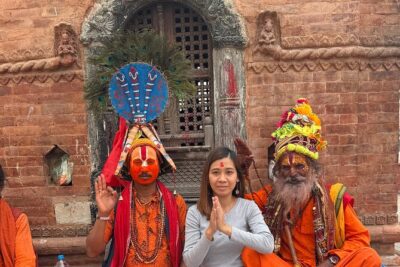
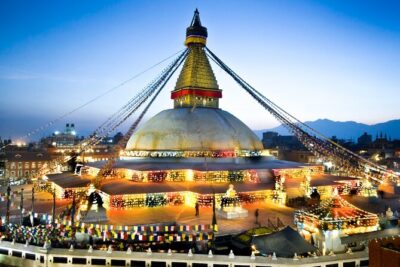
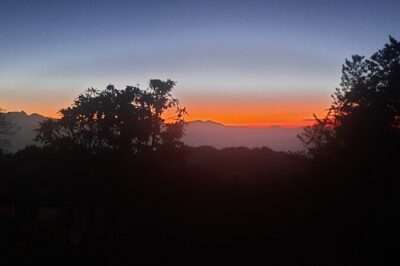
Kathmandu Durbar Square and Basantapur Tower: the royal core and its repairs
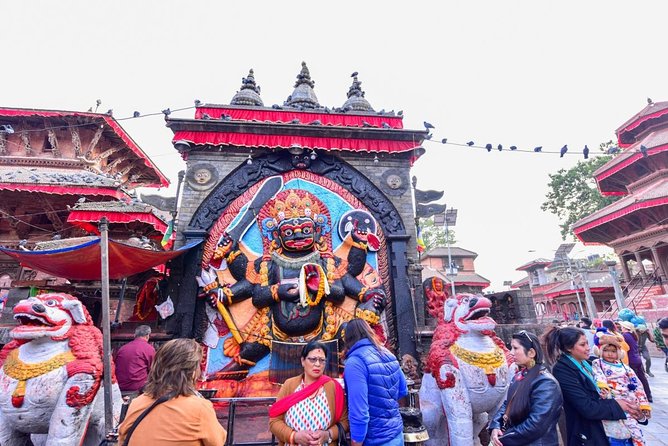
After the hilltop start, you move to Kathmandu Durbar Square, with about 1 hour allocated. This is one of the royal squares of the Kathmandu Valley, and the description notes that many structures are in reconstruction. That matters for two reasons.
First, it can affect how much of the square looks finished versus “in progress.” Second, it makes the guide’s explanation more important, because you may see a mix of heritage and restoration work. A good guide helps you understand what you are seeing, even when parts are not in their most photogenic state.
Inside the square, the tour highlights several specific points. Basantapur Tower gets about 30 minutes. It is listed as an attractive stop within the Durbar Square complex. Even if you are not climbing for views, tower landmarks help you anchor the space and understand why the layout developed the way it did.
Then the itinerary points you to Degu Taleju Temple, built in 1564, with about 10 minutes. This is the kind of stop where short time can still be meaningful, because the point is to connect a date and a dedication to what you can visually recognize. Kumari Chowk follows at about 10 minutes, and it is described as the courtyard inside a red-brick, three-level building that once housed Kumari, the living goddess chosen until puberty.
You also get Kaal Bhairab for about 5 minutes, described as a Bhairav statue in Kathmandu Durbar Square. Small stops like this often make the difference between “I saw a square” and “I understand the icons that square is built around.”
Finally, Taleju Mandir Temple appears again for about 15 minutes, described as rebuilt by Srinivasa Malla after a fire in 1676. This is where the tour’s storytelling payoff is strongest: you are not just looking at old stone, you are seeing how events shaped what still stands.
Patan Royal Palace, Patan Durbar Square, and the museum stop you will actually use
Once you leave Kathmandu’s royal core, you shift to Patan (Lalitpur). The itinerary gives you two separate Durbar Square-style stops and a museum, plus several temple landmarks. This is a smart strategy because Patan is where you often feel Newari artistry most clearly.
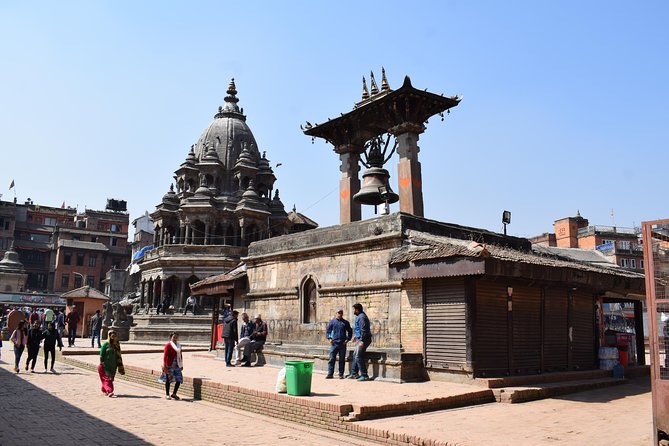
You start with Patan Royal Palace for about 1 hour. The description calls it one of Patan’s oldest royal palaces and mentions nearby temple elements such as Krishna Temple and Tulaja Devi Temples. It also references the Patan Museum and the Golden Temple as part of the larger Durbar Square area. A longer allocation here helps you not rush the “palace plus temple cluster” feeling.
Next comes Patan Durbar Square at about 45 minutes, described as an adobe for Newari architecture with temples and artistic creations tied to the Newar community. If you like architecture and carvings, this is the segment where you will likely notice more detail because the tour keeps you inside the same cultural zone instead of jumping away every few minutes.
Taleju Mandir Temple is listed again here with about 15 minutes. Then there is Patan Museum for about 15 minutes, and this is one of the most practical inclusions on the whole day. The description says you can observe old statues, carved windows, and wooden pillars. Even a short museum stop gives you context to interpret what you have already seen outside, especially if you are the type who likes to connect the physical objects to the historical narrative.
Golden Temple, Vishwanath Mandir, Bhimsen Temple: small windows into big belief
Patan’s itinerary continues with a fast sequence of landmark temples. Golden Temple (Hiranya Varna Mahavihar) is listed for about 10 minutes, and it is described as a 12th-century temple with bronze statues covered in silver and golden decorations. It is also pagoda-style, with a golden image of Lord Buddha mentioned in the description.
Because the time at each temple is short, the best way to enjoy this part is to let your guide frame what you are looking at, then give yourself a few minutes to actually stare. The Golden Temple in particular tends to reward attention because the decorations are a big visual language.
Next is Vishwanath Mandir Temple at about 5 minutes, described as built during the reign of Siddhi Narsingh Malla and dedicated to God Shiva. That quick timing works if your guide is good at tying it to the broader Shiva presence you will see later at Pashupatinath.
Then comes Bhimsen Temple for about 15 minutes, built in 1680 by Srinivasa Malla. It is described as worshiped as a god of business and trade by the Newar community. Stops like this are where you start to understand that these sites are not only about grand royal ceremony. They also reflect everyday economic and community life.
If your schedule feels full, this is still a good use of time. You get a range of religious and cultural functions without stretching the day past the planned length.
Pashupatinath and Boudhanath: the spiritual bookends of the day
Your last major cluster is at the two most famous shrine complexes on the list. First is Pashupatinath Temple, for about 1 hour. The description emphasizes it as a Hindu temple complex with over 500 shrines and temples, the main temple for Shiva devotees. It notes that pagoda structures appear as you enter the complex.
This is a big step after the Durbar Squares, because it shifts from royal Newari architecture to a large-scale spiritual landscape with many shrines. The tour’s hour allocation is valuable here, because you need time to slow down and let the scale register. It is also the segment where your guide’s explanation matters most for understanding what it means to be a Shiva-focused pilgrimage site.
Finally, you end with Boudhanath Stupa for about 1 hour. The description says it is a large dome-shaped structure about 36 meters high, surrounded by prayer wheels and picture carvings of Buddha. Boudhanath is a major Buddhist symbol in Nepal, and this stop is the clearest closing note to the day’s earlier Buddhist focus.
Boudhanath also tends to be the moment when the tour shifts into “sit with it” mode. Even if you are moving through with your group, you still have time to absorb the stupa and watch the devotional rhythms around it.
What to expect from the guide, and why the day can feel stress-free
The strongest theme in the provided feedback is how well the guides handle the day. Names that come up include Shanti, Sarita, Tej, and Rabina, and the praise is consistent: professional, polite, attentive, and able to answer questions with confidence.
This matters because a tour like this has a lot of moving parts. You have multiple UNESCO sites, multiple temples, and several short stops layered inside larger courtyards. When the guide can clearly connect the dots, you stop feeling like you are just “checking boxes.”
You also have flexibility built into the overall experience, since feedback mentions guides staying accommodating and patient rather than rushing you. One review even highlighted the guide working later than expected without complaint. That kind of service mindset can turn a tight schedule into a calmer one.
A small note on your own expectations: this tour covers a lot. Even with the best guide, you will not have hours at every stop. The plan is designed for absorption through explanation plus enough time to see the main highlights at each site.
Who this tour is perfect for, and who should think twice
This is a great fit if you want a single-day UNESCO sampler and you care about architecture, religious history, and Kathmandu Valley culture. It is especially well-suited for short stays where building a route on your own would take more time than you have.
It is also a good match if you like structure. The itinerary is defined, entry fees are included, and your pickup and drop off are handled within the ring road area. If you enjoy asking questions, the guide-led approach is where this day shines.
Think twice if you prefer slower travel and deep time at a single site. With multiple stops, short allocations, and a total day of 7 to 8 hours, you may feel rushed if you like to linger quietly without moving on. Also, reconstruction at Kathmandu Durbar Square can mean some areas are less accessible or less finished, depending on what is underway that day.
Should you book? My recommendation in plain terms
I would book this tour if you want Kathmandu Valley’s UNESCO highlights without turning your day into logistics. The combination of private transport, entry fees, and a professional guide is what makes the $130 feel fair, because your time stays focused on the sites.
I would skip it only if your main goal is to take one or two places slowly with minimal moving around. If you want the full sweep, this is the kind of day that helps you get your bearings fast and understand how Buddhist and Hindu traditions share space in Kathmandu.
FAQ
What time does the tour start?
The tour start time is 9:00 am.
How long does the tour take?
The tour lasts about 7 to 8 hours.
Is pickup and drop-off included?
Yes. Hotel pickup and drop-off are included inside the Ring Road area, including the Bouddha area.
What is included in the price?
The tour includes private transport by car, a professional tour guide, entry fees for all heritage sites, and the ring road pickup and drop-off.
Are food and drinks included?
No. Food and drinks are not included.
Is this a private tour?
Yes. It is private, with only your group participating.
What sites are visited during the day?
The stops include Swayambhunath, Amideva Buddha Park, Kathmandu Durbar Square (including Basantapur Tower, Degu Taleju Temple, Kumari Chowk, and Kaal Bhairab), Patan Royal Palace, Patan Durbar Square (including Taleju Mandir and the Patan Museum), Golden Temple, Vishwanath Mandir, Bhimsen Temple, Pashupatinath, and Boudhanath.
Is there free cancellation?
Yes. Free cancellation is available, with a full refund if you cancel at least 24 hours in advance.
Everything Bookable Around Kathmandu

The Rest of Our Kathmandu Write Ups



Seven Sites, Other Routes
Everything else we have reviewed around Kathmandu
- 12 Days Everest Base Camp Trekking
★ 5.0 · 3 reviews - 1 Night 2 Days Chitwan Jungle Safari Tour from Pokhara or Kathmandu
★ 3.0 · 3 reviews - Thamel Rickshaw tour
★ 4.7 · 3 reviews - Kathmandu: Momo Making Class with a Local Chef
★ 5.0 · 3 reviews - Kathmandu: Full-Day Yoga, Body Massage and Pedicure Package
★ 5.0 · 3 reviews - From Kathmandu / Pokhara / Chitwan: River Rafting – 1 Day
★ 4.6 · 3 reviews
Kathmandu UNESCO Heritage Tours worth a second look.
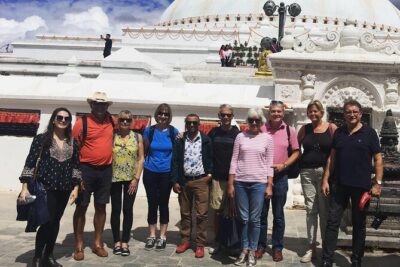 ★ 5.0Full Day 7 UNESCO Tour with Lunch – Private/GroupFrom $10415 reviews
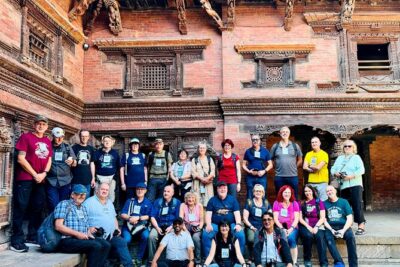 ★ 5.0Full Day Top 4 UNESCO Tour with Lunch – Private/GroupFrom $10269 reviews
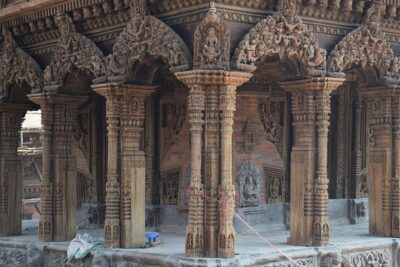 ★ 5.0UNESCO Seven World Heritage Tour in KathmanduFrom $180253 reviews
★ 4.9Full-Day 7 UNESCO Tour with Lunch – Private/GroupFrom $5247 reviews
 ★ 4.97 UNESCO Sites Tour in 1 Day (Private Tour)From $4204 reviews
 ★ 4.9Top 4 UNESCO Tour with Lunch – Private/GroupFrom $5181 reviews
 ★ 5.0Bhaktapur & Patan Durbar Square Day ToursFrom $50122 reviews
 ★ 5.0Kathmandu Private Sightseeing Tour | UNESCO World Heritage SitesFrom $35109 reviews
Lists this tour sits in