
REVIEW · KATHMANDU UNESCO HERITAGE TOURS
Kathmandu Heritage Tour – Private Full-Day UNESCO Sites & Temples
Kathmandu clicks into place on this route. It is a private, full-day sweep through UNESCO Kathmandu Valley landmarks, with a guide who explains what you are looking at, including how the 2015 earthquake changed the places and the people who care for them. You get hotel pickup and drop-off, plus a vehicle that helps you cover a lot without turning the day into a transport puzzle.
I love the order of sights. You start high at Swayambhunath, then step down into old royal Kathmandu at Kathmandu Durbar Square, where the living goddess Kumari can sometimes be seen in her window. I also love how the guide turns symbols into something you can actually feel, from the monkey-god theme at Hanuman Dhoka to the sacred meaning of the linga at Pashupatinath.
One consideration: the tour price is $60, but entrance fees are extra. Plan for that added cost, and you will feel a lot happier when the bill shows up.
In This Review
- Quick hits
- Why this UNESCO route works for first-timers
- Price and logistics: private transport, bottled water, and the real cost of entry
- Swayambhunath Hilltop: Monkey Temple views and the 3000-year story
- Kathmandu Durbar Square, Kumari Chowk, and Hanuman Dhoka in one walking world
- Basantpur Dabali and Taleju Bhawani: short stops that explain old power
- Pashupatinath Temple and the Crematoria: Hindu sacred core, up close
- Boudhanath Stupa and the Garden of Dreams: switching from ceremony to calm
- How long the day really takes, and how to pace it
- What your guide can do for you (Krishna, Jamuna, Janina, SuJan)
- Should you book Kathmandu Heritage Tour?
- FAQ
- Is lunch included in the tour?
- Are entrance fees included?
- How long is the Kathmandu Heritage Tour?
- Do I get hotel pickup and drop-off?
- Is this tour private?
- Are there any notes about earthquake damage?
- What is the cancellation policy?
Quick hits
- Private guide and vehicle with hotel pickup and drop-off, so you are not timing buses or sharing taxis
- Big first-timer payoff: Buddhist and Hindu sacred sites, plus key Kathmandu squares, in one day
- 2015 earthquake context, because some parts of temples and monuments were damaged after April and May 2015
- Kumari Chowk and Hanuman Dhoka for a genuinely unusual cultural experience (living goddess and living monkeys)
- Boudhanath Stupa with its famous four pairs of Buddha eyes, then a calmer finish at the Garden of Dreams
Other one shot sweeps of the Valley

Why this UNESCO route works for first-timers
This is a smart way to get your bearings in Kathmandu Valley. Instead of hopping randomly, you follow a route that builds from panoramic viewpoint to royal squares to major religious sites, with enough time at each stop to actually notice details. If you only have a day or two in town, this kind of structure saves your energy and helps you understand why these places matter.
The private setup also changes the vibe. You can move at a pace that fits your group, ask questions, and slow down when the scene grabs you. Many people love that guides keep things smooth and not rushed, even though the day is packed.
Also, you cannot ignore the 2015 earthquake context here. The tour notes that some visited sites have significant earthquake damage. That matters because it reframes what you see. You are not just collecting photos, you are witnessing living heritage that people are still restoring, rebuilding, and caring for.
Price and logistics: private transport, bottled water, and the real cost of entry
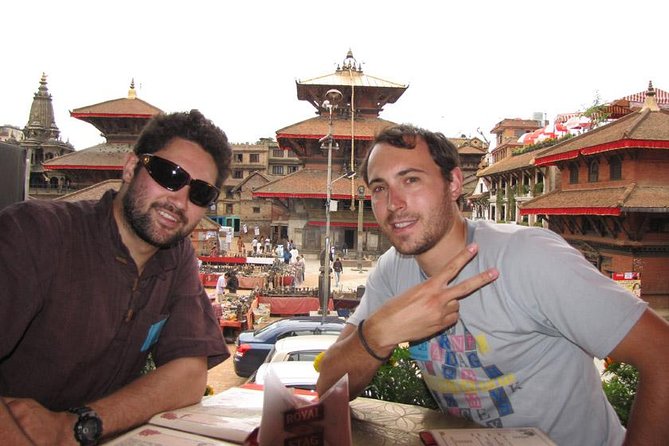
At $60 per person, you are paying for the heavy lifting: hotel pickup and drop-off, a private vehicle, and a private guide. Bottled water is included, which sounds small, but in hot, busy temple areas it keeps the day comfortable.
What is not included is also important. Entrance fees are at your expense, and food and drinks are not part of the package. You should budget roughly $10 USD for lunch bought locally, since the day runs long enough that meals are not optional.
Here is the practical part: entrance fees can add up fast because the day touches multiple major sites. One helpful review detail stood out for me, a traveler spent about $60 total on entrance fees after paying around $10 to $15 for most sites. That is not a promise for your exact totals, but it is a realistic heads-up. If you know you are on a tight budget, set aside extra cash now and you will enjoy the day more.
Swayambhunath Hilltop: Monkey Temple views and the 3000-year story
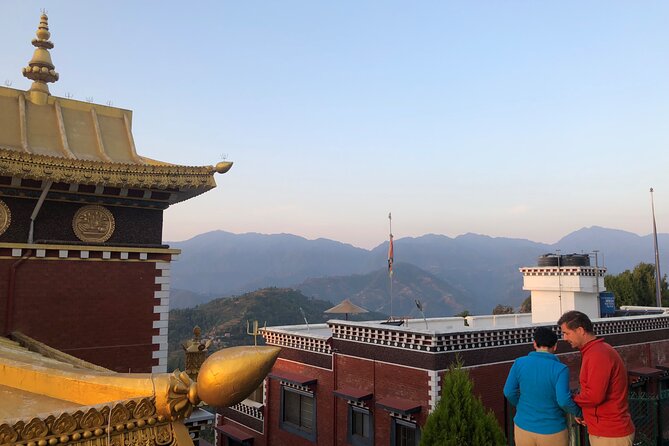
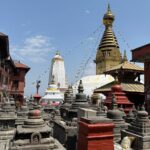
Swayambhunath, often called Monkey Temple, is the kind of start that makes Kathmandu feel instantly readable. You climb up to a hilltop temple with panoramic city views, then settle into a Buddhist site that has over 3000 years of history. From street level, Kathmandu can feel like a blur. From this hilltop, you understand how the city is layered and why people built sacred spaces where they could look out.
Expect to share the hill with monkeys, because this is not a metaphor. The animals are part of the experience, so keep your phone secure and watch your belongings. Your guide can help you navigate crowd flow so you are not constantly getting jostled by people chasing photos.
This first stop also sets the theme for the day. You are starting with Buddhism, then moving toward Hindu sacred power later. I like starting here because it makes it easier to keep track of what you are seeing, and it gives you a clear visual of Kathmandu before you plunge into the older streets and courtyards.
Time on the ground is about 1 hour. If your group loves photos, you may want to be ready to shoot quickly and then turn to observe. The best moments here are not the selfies, they are the slow looks at how people worship and move through the space.
Kathmandu Durbar Square, Kumari Chowk, and Hanuman Dhoka in one walking world
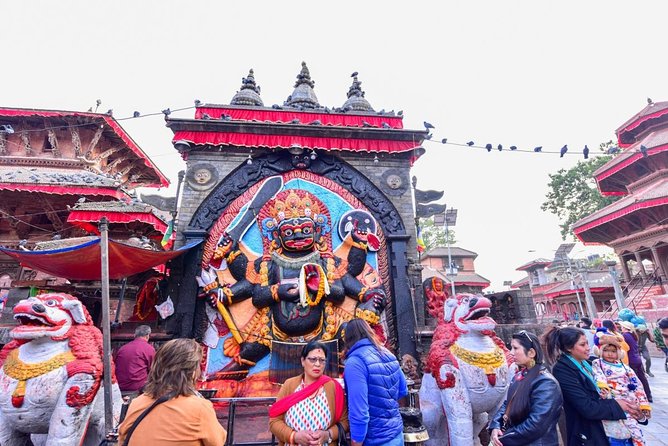
Kathmandu Durbar Square is where the city’s royal past becomes visible in stone, carvings, and ritual space. You get an insider’s view of an ornate 16th-century royal residence complex, and you also have a chance to see the Kumari, the living goddess associated with Durga, in her window at Kumari Chowk.
This is one of those experiences that feels odd in a good way, because you are watching an active cultural role, not a museum exhibit. The chance to glimpse her can be brief, so do not plan on a long, guaranteed performance. Instead, use the time to understand the symbolism your guide explains, then be ready to look up and notice when it happens.
Within the Durbar Square area, you also run into Hanuman Dhoka, a square built to honor Hanuman, and the interesting detail that real monkeys live there as part of the setting. That mix of sacred and playful can confuse first-time visitors, but with a guide it clicks into place.
A couple of practical things I recommend during this leg:
- Wear comfortable shoes. The surfaces can be uneven and you will be stopping often.
- Bring your patience. People and crowds cluster at the same sightlines, so it helps to have a calm plan for where you stand.
Also, this is one of the places the earthquake impact may be visible. Even when the focus is on beauty and worship, you might notice damage or rebuilding. That reality is part of the story.
Other seven site heritage runs
Basantpur Dabali and Taleju Bhawani: short stops that explain old power
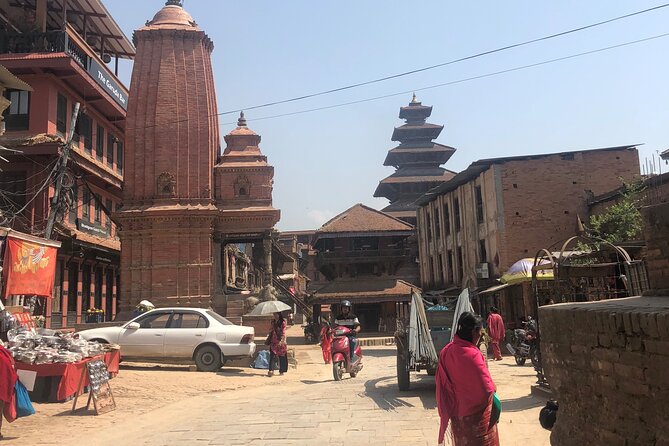
Not every moment of the day is a giant monument. You also get short, free stops that act like footnotes to the bigger UNESCO scenes.
Basantpur Dabali is a very old tourist centre of Kathmandu, with a Hindu temple and a sense of how the area has hosted visitors for generations. Even in 10 minutes, it gives you texture. You stop briefly, then move on, but you feel how the city’s sacred geography is also tied to everyday movement.
Then there is Taleju Bhawani Temple, linked to one of Nepal’s powerful royal lines. Taleju Bhawani is regarded as the clan goddess of the Malla kings, who ruled Nepal from the 12th to the 18th century. Even though you spend only about 10 minutes here, it helps you understand that temples are not just about religion. They are also about authority, identity, and who a ruler was claiming to represent.
These quick stops are a real benefit of a private tour. If you were self-guiding, you might skip them because you would not know they mattered. Here, they slot into the narrative and keep the day from feeling like a checklist.
Pashupatinath Temple and the Crematoria: Hindu sacred core, up close
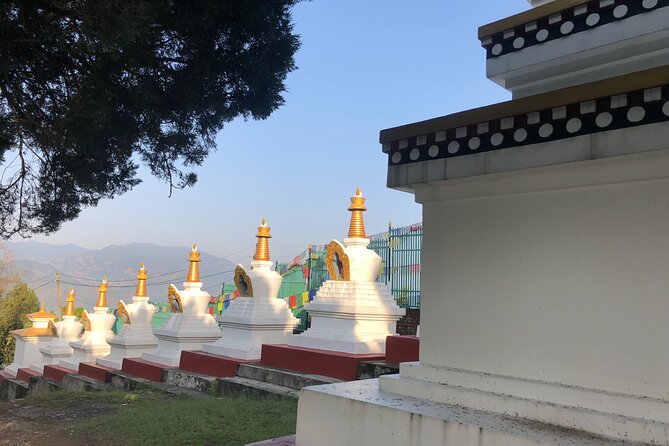
Pashupatinath Temple is the Hindu anchor of the route. It lies about 5 km east of the city centre, and it is one of the most sacred Hindu shrines in the world. Your guide spends about 1 hour here, and you will see the richly ornamented pagoda and the sacred linga, a phallic symbol connected with Lord Shiva.
This stop can be intense in the way that real sacred places are intense. You are not watching a dramatic show staged for tourists. You are seeing devotion, daily movement, and ritual presence. A guide helps you understand what you are witnessing, instead of just walking around trying to guess.
Then comes the crematoria area. The tour includes time at the crematoria, described as a place of constant action, with an atmosphere that feels reverent rather than flashy. If you have seen cremation scenes in other parts of the region, you may notice the difference in tone. Here, the emphasis is on veneration and ritual, not shock value.
You may also hear a practical detail: Pashupatinath entrance fees work for the crematoria area. So in your planning, treat this as one connected experience rather than completely separate ticketed events.
Because cremation and mourning are happening in real time, keep your behavior respectful. Ask your guide where it is appropriate to stand, and do not treat it like a sightseeing stop that happens to be emotional. This is where a good guide really matters.
Boudhanath Stupa and the Garden of Dreams: switching from ceremony to calm
After Pashupatinath, the day shifts. Boudhanath Stupa is a Buddhist reset button.
You spend about 1 hour at Boudhanath, described as a 2500-year-old Buddhist stupa built in the 5th century. The stupa’s striking feature is the four pairs of eyes of the Buddha in four cardinal directions, keeping an eternal watch over the people moving through the space.
This is a great contrast to the intensity of Pashupatinath. At Boudhanath, the mood is more contemplative. You can walk, look upward, and absorb how worshippers circle and pause. Even if you do not know the exact meanings of everything, your guide can connect the design to the feeling of presence.
Then the tour finishes with the Garden of Dreams. This is a neo-classical historical garden right in the middle of Kathmandu. The design is inspired by formal European gardens, with paved perimeter paths and a more ordered, quiet atmosphere than temple courtyards. It is a smart final stop because it gives your legs a break and gives your mind a breather.
If you feel temple-fatigue, this garden is where you regain your balance before you head back to the hotel.
How long the day really takes, and how to pace it
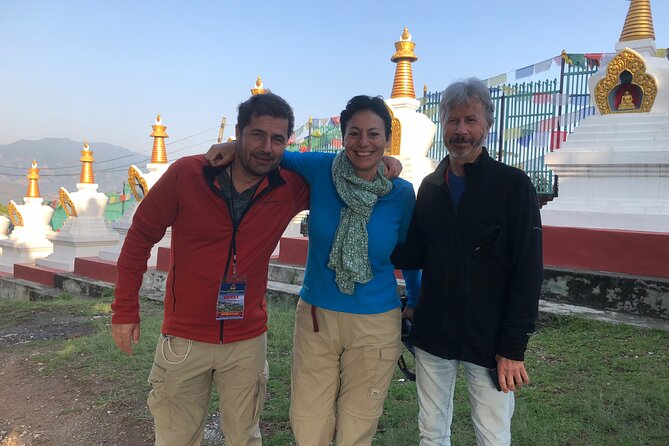
The tour runs about 5 to 8 hours, depending on timing and what your group chooses to linger on. That range matters in Kathmandu because traffic and crowds can stretch travel time. With a private vehicle and pickup, you avoid the worst of the guesswork, but you still need a flexible mindset.
One reason people rate this highly is the pacing. In my notes from different guide styles, the successful ones read your group and avoid pushing you through. You should feel time to take in meaning, not just rush from door to door.
A practical pacing tip for you:
- Decide ahead of time what is non-negotiable for photos. Then let the guide fill the rest with explanations.
- Leave room for quiet moments. Some of the best experiences here happen when you stop moving.
Also, pack for the day you actually have. Expect steps, uneven ground, and a fair amount of standing and walking. Keep water handy, and plan to eat lunch around the $10 USD local estimate.
What your guide can do for you (Krishna, Jamuna, Janina, SuJan)
The private guide is the difference between seeing temples and understanding them. The strongest guides in this tour style do two things well: they explain the story behind the monuments, and they connect that story to everyday life in Nepal.
I have seen guide names like Krishna, Jamuna, Janina, and SuJan. Krishna is described as accommodating and fluent, and the practical takeaway is that you can ask questions and get clear answers. Jamuna and Janina are praised for being informative and patient, with English that helps you grasp significance without feeling lost. SuJan is noted for being extremely knowledgeable and patient, which usually means you get answers at a pace your brain can actually process.
If you want the best day, prepare 2 or 3 questions for your guide, like:
- What is the significance of the living Kumari tradition here?
- Why is Pashupatinath sacred, even to people who do not follow the same faith?
- How does the 2015 earthquake show up in what you see today?
Those questions turn the day into something you remember beyond the photos.
Should you book Kathmandu Heritage Tour?
Book this tour if you want a first-timer-friendly introduction to Kathmandu Valley and you like religious sites with meaning behind them. It is a solid value for a private day because you get hotel pickup, private transport, a guide, and bottled water, while hitting the biggest landmarks most people come for.
Skip it, or choose a shorter plan, if you are extremely budget-sensitive about entrance fees and hate surprise add-ons. The tour price is attractive, but admission costs can add up when you visit multiple major sites. Also, if you want a slower day with fewer stops, you might find the schedule packed, especially if you are jet-lagged.
For many people, this is the right call as a day-one orientation, or a day in the middle of your trip when you want to connect the dots.
FAQ
Is lunch included in the tour?
No. Food and drinks are not included. You should expect to spend around $10 USD for lunch purchased locally.
Are entrance fees included?
No. Entrance fees are at your expense, and you will need to pay for admissions on site.
How long is the Kathmandu Heritage Tour?
It runs about 5 to 8 hours total.
Do I get hotel pickup and drop-off?
Yes. Hotel pickup and drop-off from Kathmandu are included.
Is this tour private?
It is private. Only your group participates, with a maximum of 10 people per booking.
Are there any notes about earthquake damage?
Yes. Some of the sites visited have significant damage due to the earthquakes in April and May 2015, so expect that reality to be visible in parts of the route.
What is the cancellation policy?
Free cancellation is available. You can cancel up to 24 hours in advance for a full refund, and changes within 24 hours are not accepted.
The Rest of Our Kathmandu Write Ups

Seven Sites, Other Routes
One More Valley Day
Everything else we have reviewed around Kathmandu
- 12 Days Everest Base Camp Trekking
★ 5.0 · 3 reviews - 1 Night 2 Days Chitwan Jungle Safari Tour from Pokhara or Kathmandu
★ 3.0 · 3 reviews - Thamel Rickshaw tour
★ 4.7 · 3 reviews - Kathmandu: Momo Making Class with a Local Chef
★ 5.0 · 3 reviews - Kathmandu: Full-Day Yoga, Body Massage and Pedicure Package
★ 5.0 · 3 reviews - From Kathmandu / Pokhara / Chitwan: River Rafting – 1 Day
★ 4.6 · 3 reviews
Kathmandu UNESCO Heritage Tours worth a second look.
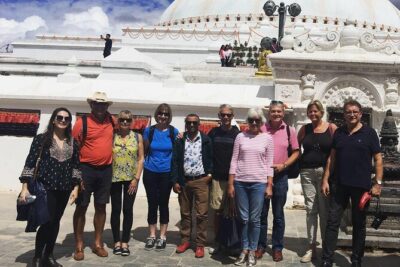 ★ 5.0Full Day 7 UNESCO Tour with Lunch – Private/GroupFrom $10415 reviews
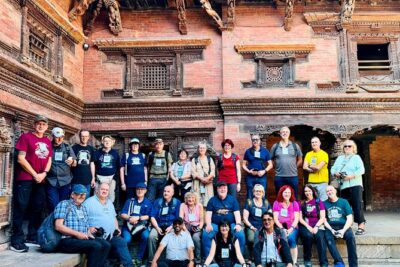 ★ 5.0Full Day Top 4 UNESCO Tour with Lunch – Private/GroupFrom $10269 reviews
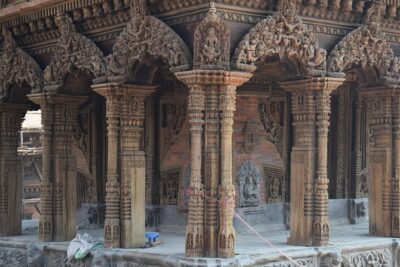 ★ 5.0UNESCO Seven World Heritage Tour in KathmanduFrom $180253 reviews
★ 4.9Full-Day 7 UNESCO Tour with Lunch – Private/GroupFrom $5247 reviews
★ 5.0UNESCO Seven World Heritage Tour in KathmanduFrom $180253 reviews
★ 4.9Full-Day 7 UNESCO Tour with Lunch – Private/GroupFrom $5247 reviews
 ★ 4.97 UNESCO Sites Tour in 1 Day (Private Tour)From $4204 reviews
 ★ 4.9Top 4 UNESCO Tour with Lunch – Private/GroupFrom $5181 reviews
 ★ 5.0Bhaktapur & Patan Durbar Square Day ToursFrom $50122 reviews
 ★ 5.0Kathmandu Private Sightseeing Tour | UNESCO World Heritage SitesFrom $35109 reviews
Lists this tour sits in