

REVIEW · KATHMANDU CITY TOURS & SIGHTSEEING
Kathmandu Walking Tour
Four hours, two UNESCO sites, and street-level Kathmandu. This walking tour is interesting because it threads together everyday city life with major sacred stops, all with an English-speaking local guide. I especially like the chance to see daily routines at the Ason market and then climb up to the Swayambhunath hill for a wide Kathmandu Valley view. One drawback to plan for: it is a true walking tour with crowded streets and temple stairs, so it is not suitable for wheelchair users or pregnant women.
You’ll start near your hotel area in Thamel and head into the older parts of town on foot. The group is small (limited to 10), so you actually get time for questions instead of just following the crowd. You’ll also get bottled mineral water, and the tour aims to help you skip ticket lines at the key monuments, even though entrance fees are not included.
If you’ve only got a morning or early afternoon in Kathmandu, this format is practical. You’ll be back in Thamel after about 4 hours, either by walking or taking a taxi from Swayambhunath depending on how your legs feel. Bring comfortable shoes and some cash, and have your hotel name ready so your guide can collect you on time.
In This Review
- Quick hits worth knowing
- Walking in Kathmandu, the fast way to see how the city works
- From Thamel pickup to Ason market street life
- Kathmandu Durbar Square, UNESCO and the sacred center feeling
- Freak Street and the Hippy-era junction story
- Climbing to Swayambhunath, the Monkey Temple hill view
- Group size and the guide experience that makes the walk worthwhile
- Price and value: what $30 covers, and what you’ll need to budget
- Who this Kathmandu walking tour suits best
- A balanced way to plan your day around 4 hours
- Should you book this Kathmandu walking tour?
- FAQ
- How long is the Kathmandu Walking Tour?
- Where does the tour start?
- What sites will I visit?
- Is the tour guided?
- What is included in the price?
- Are monument or site entrance fees included?
- Is transportation included back to Thamel?
- How big is the group?
- What should I bring?
- Can I cancel and get a refund?
Quick hits worth knowing

- Ason market first: you start with one of Kathmandu’s oldest market areas and real street life
- UNESCO Kathmandu Durbar Square: temples, palaces, shrines, and a strong sense of local religious practice
- Freak Street connection: a quick stop at the famous Hippy-era junction that shaped Kathmandu’s reputation
- Swayambhunath panoramic view: the Monkey Temple hill gives you a big-picture look over the valley
- Small group size: limited to 10 participants, with an English live guide and time to ask questions
Other one shot sweeps of the Valley


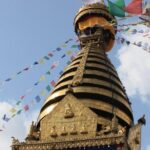
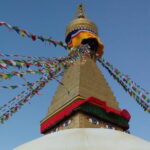
Walking in Kathmandu, the fast way to see how the city works

Kathmandu can feel loud and complicated at first. This tour gives you a simple path to follow, with a guide to translate the maze of alleys, shopfronts, shrines, and squares into something you can understand. Instead of treating the city like a checklist, you get to watch how people actually move through it.
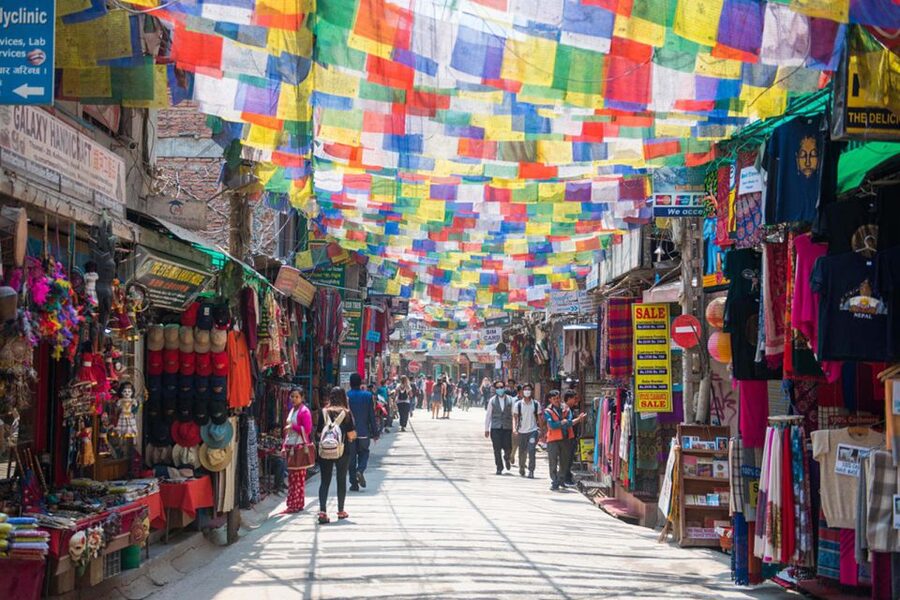
I like that it starts in the middle of day-to-day Kathmandu, not at a quiet gate. You’ll pass busy streets and older market lanes where you can see everyday habits at close range. That is where Kathmandu stops being abstract and starts feeling real.
Because this is mostly on foot, your comfort matters. Comfortable shoes are non-negotiable, since you’ll be moving through temples and along crowded sidewalks that can be uneven.
From Thamel pickup to Ason market street life
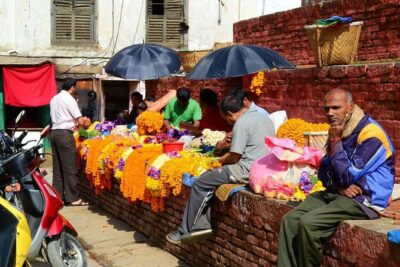
The tour begins with pickup from your hotel in the Thamel area. From there, you walk to Ason, described as Kathmandu’s oldest market place, and you’ll get your first taste of local rhythm fast.
What you’ll experience here is the texture of the city: storefronts, small squares, and ancient temple corners mixed right into commerce. This is a good place to practice slow looking. Watch how people buy, barter, pass items between stalls, and weave around foot traffic. You’ll also get a feel for the pace of the neighborhood before you step into the more ceremonial sites later.
A practical tip: bring cash early. Entrance fees come later for monuments you visit, but small purchases or simple snacks along the way can help you keep your energy up during the walk.
Kathmandu Durbar Square, UNESCO and the sacred center feeling

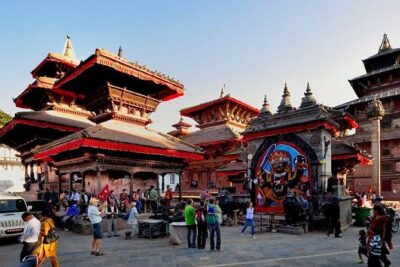
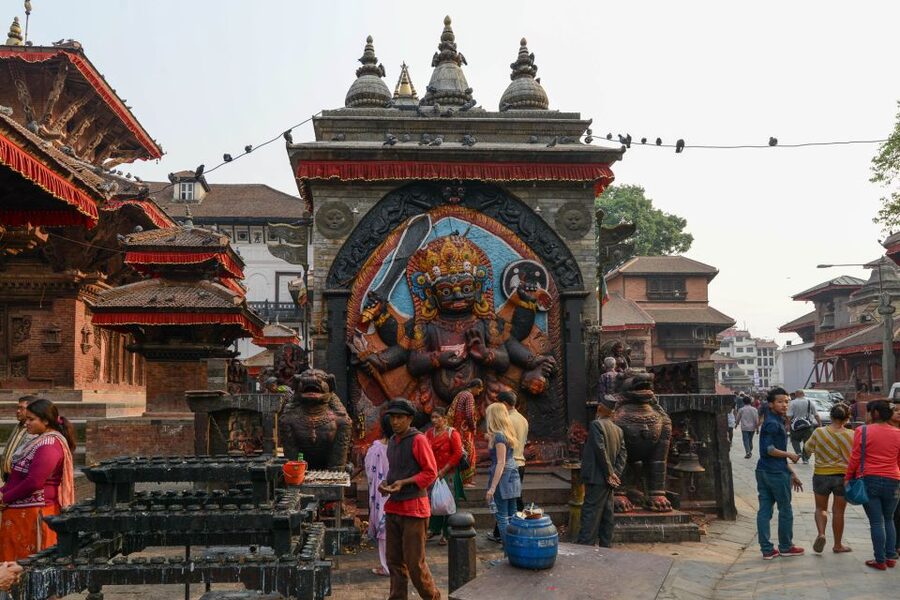
Next up is Kathmandu Durbar Square, a UNESCO World Heritage Site. This is the kind of place where history is not behind glass. Temples, palaces, and shrines sit within a living religious environment, and you can usually spot people engaging with the space in their own routines.
This stop is valuable because it shows you how Kathmandu’s sacred architecture fits into daily life. You’re not just seeing impressive buildings. You’re seeing why they matter to the community, and why the square remains a focal point.
The tour also includes help to skip the ticket line. That matters when you want to spend time looking instead of waiting. The entrance fees themselves are not included, so keep some extra cash aside if you plan to go into the monuments you encounter.
One consideration: squares can get crowded. If you’re sensitive to crush-level foot traffic, choose a calmer time of day when you can, and plan to move with your guide rather than trying to stop in the middle of the walkway.
Freak Street and the Hippy-era junction story

After Durbar Square, the tour heads to Freak Street, described as the most popular junction during the Hippy era. Even if you don’t know the entire backstory, the stop works because it links Kathmandu’s modern tourism identity to a specific time period.
I like that this part of the route breaks the pattern. You’ll go from formal sacred space into a more street-oriented junction known for cultural crossover. It’s a reminder that Kathmandu’s appeal has always been both spiritual and human-scale, not just one or the other.
This is also a good photo moment, but keep it respectful. Junctions like this are still used by locals, so avoid blocking routes or lingering in a way that disrupts foot traffic. Quick look, quick photos, then keep moving.
Keep walking: more Kathmandu routes

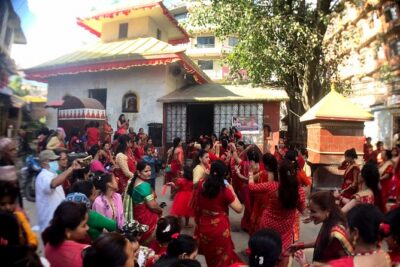
Climbing to Swayambhunath, the Monkey Temple hill view

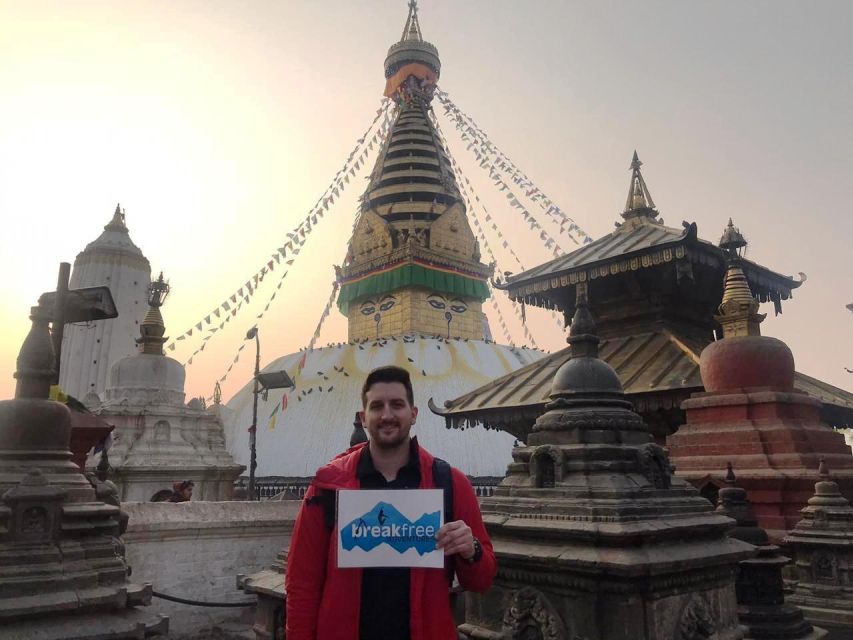
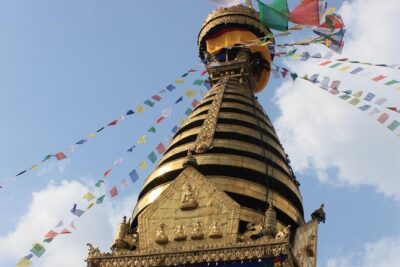
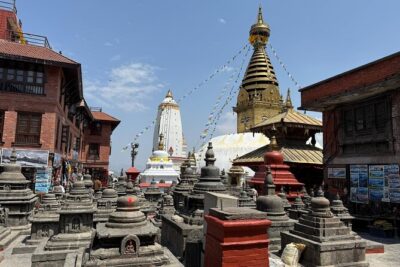
Then comes the highlight for many people: Swayambhunath, also known as the Monkey Temple, another UNESCO World Heritage Site. It sits up on a hill, so the walk gives you a gradual transition from busy streets to a viewpoint where the whole valley starts to reveal itself.
The big promise here is the panoramic view of the Kathmandu Valley from the top. When you’re standing there, you’ll finally understand how Kathmandu’s neighborhoods relate to each other. It turns the city from a grid of streets into something with scale.
This stop is more than sightseeing. You’ll also be around temples, shrines, and spiritual details that help explain why Swayambhunath is such an important place. The view is the payoff, but the atmosphere is what makes it stick.
Afterwards, you have two options back to Thamel. You can walk back if you want to keep the city scenes going, or you can take a taxi from Swayambhunath to Thamel if you prefer to conserve energy. The tour does not include transfers, so the taxi choice is on you.
Group size and the guide experience that makes the walk worthwhile

This is a small group tour limited to 10 participants. That single detail changes the whole vibe. You can ask questions about what you’re seeing, not just where you’re going. The tour is also in English, and it’s a live guided experience, so you’re not relying on a phone to explain the difference between a shrine and a temple complex.
What stands out from guide feedback is consistency and communication. Guides named Shankar Bhattarai and Madan Sakota have both been described as friendly and good at storytelling, with a focus on Kathmandu’s city history, Nepal’s religions, and everyday life. That kind of framing is exactly what you want on a walking tour, because it turns scattered sights into a coherent picture.
I also like that mineral water is included. Small but useful in Kathmandu, where a long walk under changing light can make you feel thirst sooner than you expect.
Price and value: what $30 covers, and what you’ll need to budget
At about $30 per person for a 4-hour tour, the value depends on how you travel. If you want a guided route through major UNESCO sites plus the street-level market portion, this price can make sense, especially compared to paying separately for a private guide and dealing with logistics on your own.
Here’s what you’re paying for, based on what’s included:
- Experienced tour guide in English
- Mineral water
- Help to skip ticket lines
- Pickup from your hotel area in Thamel
And here’s what you need to budget for:
- Monuments entrance fees (not included)
- Any transfers or taxi (not included)
So, in practical terms, the tour is good for the guided time, the route design, and the access to skip ticket lines. It is not a full all-in package for entrance costs.
If you’re the type who hates unpredictable expenses, set aside a little extra cash for those monument entry fees. If you’re flexible and you like walking, you’ll get a lot of value out of the half-day structure.
Who this Kathmandu walking tour suits best
This one fits best if you want Kathmandu to feel like a place, not a photo set. If you’re comfortable walking through busy streets, stopping at temples and shrines, and listening to an English guide explain what you’re seeing, you’ll probably enjoy it a lot.
You’ll also like this tour if you’re curious about how religions show up in everyday spaces. The route mixes market life with sacred centers like Kathmandu Durbar Square and Swayambhunath, so you get both the practical and the spiritual sides in one go.
It’s less ideal if you want mostly enclosed, ticket-based attractions with minimal walking. It’s also not for wheelchair users or pregnant women, since the route is a walking itinerary that includes temple areas and uneven access.
A balanced way to plan your day around 4 hours
A 4-hour tour can be a perfect anchor in your Kathmandu schedule. You start in Thamel, work through Ason and Durbar Square, then reach the hilltop viewpoint at Swayambhunath before heading back.
If you’re traveling with tight time constraints, this plan is a smart use of daylight. You get major sights without spending an entire day stuck on transport between sites.
To make the most of it:
- Wear comfortable shoes you can walk on for an extended stretch.
- Bring your passport or ID card since it’s requested.
- Keep cash handy for monument entrance fees and any small purchases.
- If you’d rather not walk back from the hill, plan on using a taxi from Swayambhunath to Thamel, since transfers are not included.
Should you book this Kathmandu walking tour?
If you want an efficient introduction to Kathmandu, this is a solid choice. It strings together market life at Ason, the UNESCO significance of Kathmandu Durbar Square, the cultural flashpoint of Freak Street, and the valley views from Swayambhunath. You also get the key advantage of a small group and an English guide, so the stops make sense instead of feeling random.
I’d say book it if:
- You enjoy walking and want street-level Kathmandu, not only monuments.
- You want a guided route through two UNESCO World Heritage Sites.
- You’re okay paying monument entrance fees separately.
Skip it or consider a different style if:
- You need step-free or low-walking access (it is not suitable for wheelchair users or pregnant women).
- You prefer less crowded, calmer sightseeing, since the route includes busy streets and temple areas.
Bottom line, this tour is best as a first or second Kathmandu day. It helps you orient fast, understand what you’re seeing, and leave you with a clearer sense of how this city blends daily life and sacred spaces.
FAQ
How long is the Kathmandu Walking Tour?
The tour duration is 4 hours.
Where does the tour start?
Pickup is included from your hotel in the Thamel area, and then you walk to Ason, the oldest market place in Kathmandu.
What sites will I visit?
You’ll visit Kathmandu Durbar Square and Swayambhunath, both UNESCO World Heritage Sites. You’ll also pass through areas including Ason market and the Freak Street junction.
Is the tour guided?
Yes. It’s a live tour with an English-speaking guide.
What is included in the price?
The price includes an experienced tour guide and mineral water.
Are monument or site entrance fees included?
No. Monuments entrance fees are not included.
Is transportation included back to Thamel?
No transfers or taxi are included. After Swayambhunath, you can walk back to Thamel or take a taxi at your own expense.
How big is the group?
The tour is a small group limited to 10 participants.
What should I bring?
Bring a passport or ID card, comfortable shoes, and cash.
Can I cancel and get a refund?
Yes. Free cancellation is available up to 24 hours in advance for a full refund.
Everything Bookable Around Kathmandu

The Rest of Our Kathmandu Write Ups



One More Valley Day
Everything else we have reviewed around Kathmandu
- 12 Days Everest Base Camp Trekking
★ 5.0 · 3 reviews - 1 Night 2 Days Chitwan Jungle Safari Tour from Pokhara or Kathmandu
★ 3.0 · 3 reviews - Thamel Rickshaw tour
★ 4.7 · 3 reviews - Kathmandu: Momo Making Class with a Local Chef
★ 5.0 · 3 reviews - Kathmandu: Full-Day Yoga, Body Massage and Pedicure Package
★ 5.0 · 3 reviews - From Kathmandu / Pokhara / Chitwan: River Rafting – 1 Day
★ 4.6 · 3 reviews
Kathmandu City Tours & Sightseeing worth a second look.
 ★ 5.0Kathmandu Private Sightseeing Tour | UNESCO World Heritage SitesFrom $35109 reviews
 ★ 5.0Private tour of Major highlights of Kathmandu top rated placesFrom $4492 reviews
 ★ 5.0Kathmandu Heritage Tour (Full Day)From $3863 reviews
 ★ 5.0Kathmandu Full Day TourFrom $7054 reviews
 ★ 5.0Life and spirituality tour of KathmanduFrom $5554 reviews
 ★ 5.0Kathmandu Highlights: Private UNESCO World Heritage Sites TourFrom $4950 reviews
 ★ 5.0Full Day Private Tour of Kathmandu – UNESCO World Heritage SitesFrom $3542 reviews
 ★ 5.0Kathmandu Valley City Day TourFrom $6040 reviews
Lists this tour sits in