
REVIEW · KATHMANDU UNESCO HERITAGE TOURS
Old Kathmandu Walking Tour, Historic World Heritage Durbar Square
One morning in Kathmandu can teach you more than a full day of sightseeing. This walking tour puts you in the hands of local guides, from rare Buddhist spots to UNESCO Kathmandu Durbar Square, with the living goddess experience as the headline. I especially like how it mixes famous landmarks with lesser-seen courtyards and temple lanes, so you get a real sense of how the city works on foot. You’ll also end with tea or coffee and an easy chat with your guide, which helps you connect dots you might miss on your own.
I love the street-level routing. You start near Thamel and move through places like Asan, Janabaha Dyo, and Itum Bahal without turning the whole morning into one long, boring queue. I also love the Kumari Chowk moment inside Durbar Square, because the living goddess shrine is one of the most distinctive cultural experiences in Nepal.
One consideration: Durbar Square entry and the Swayambhunath-area admission are not included. You should plan a little extra cash for temple site fees, and you’ll want comfortable shoes, because 4 to 5 hours is real walking time on uneven pavements.
In This Review
- Key highlights worth your attention
- Your morning in Kathmandu starts close to home
- Kathmandu Durbar Square and Kumari Chowk, the main event
- Before Durbar Square, you learn Kathmandu’s Newar roots
- Asan Bazaar: a market stop with real atmosphere
- Janabaha Dyo and Seto MachhindraNath Temple: compassion icons you can spot
- Itum Bahal: quiet courtyards, old monastery remains
- The walking route matters more than the clock
- Durbar Square to Kathesimbu or Dharmakirti Vihara, a less obvious finale
- Cafe Mitra tea or coffee, turning impressions into understanding
- Price and value, what $28 really covers
- Who this tour suits best
- Should you book the Old Kathmandu Walking Tour?
- FAQ
- How long is the Old Kathmandu Walking Tour?
- Where does the tour start and end?
- What time does the tour run?
- Is pickup offered?
- Is it a private tour?
- What is included in the price?
- Are entry fees included for Durbar Square and other sites?
- What is the cancellation policy?
- FAQ
- Do I need to bring anything like an admission ticket?
- Is a mobile ticket provided?
Key highlights worth your attention
- Mr. Mahesh Shreshtha and Modo type of guiding: experienced local interpretation, not just dates and names
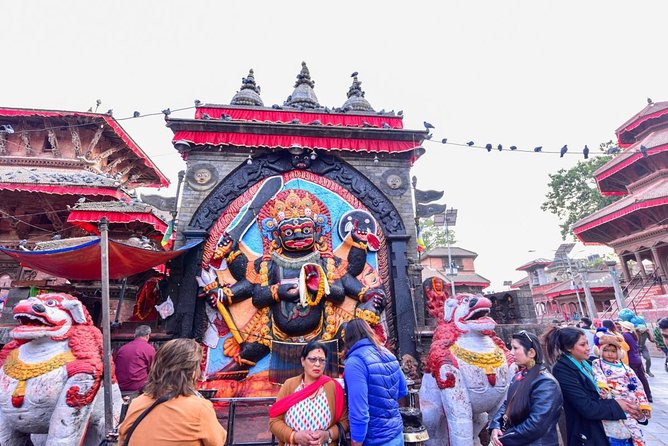
- Kumari Chowk inside Kathmandu Durbar Square: a living goddess shrine that actually feels unforgettable
- Asan Bazaar stop: one of Kathmandu’s oldest working markets, where you see daily trade and devotion side by side
- Rare Newar Buddhist sites like Bikramshila Mahavihar (Thambahil): short stops that add big context to Kathmandu’s roots
- Tea or coffee at Cafe Mitra: a simple end-of-tour reset with questions answered on the spot
Other one shot sweeps of the Valley

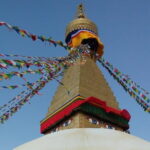
Your morning in Kathmandu starts close to home
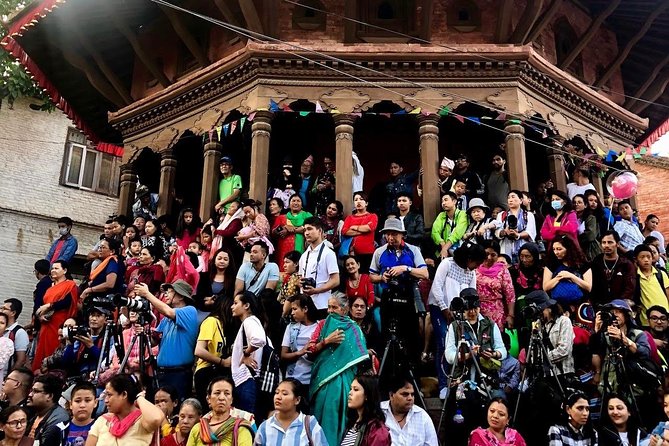
This is one of those Kathmandu tours that feels made for real schedules. If you’re staying in Thamel, you can start right near your hotel lobby. If not, you get pickup and a short drive, roughly 20 minutes, to the walking start.
The morning begins at 9:00 am. The start location is Amrit Marg, Kathmandu 44600, and the tour finishes at Cafe Mitra, Thamel Marg, Kathmandu 44600. If your hotel is outside the immediate meeting area, the provider can drop you back off, which matters after a long walk.
You’ll be with a private group, meaning it’s only your group and your pace. That tends to make it easier to ask questions, especially in places where locals are doing daily devotions and transactions.
Kathmandu Durbar Square and Kumari Chowk, the main event
Kathmandu Durbar Square is the UNESCO World Heritage core of the city center. On this tour, you spend about 45 minutes here, which is a good amount of time to see the layout, notice architecture details, and still have time to breathe without feeling rushed.
This part is especially strong if you like religion mixed with art. The square is surrounded by temples, with the Kumari Temple area taking center stage. The big practical point is that the entry fee is not included in the tour price, so you’ll need to pay for access to the Durbar Square premises.
Next comes Kumari Chowk, where you get that signature living goddess experience. You spend around 20 minutes in this area. If the Kumari is accessible that day, it’s the kind of moment that makes the tour feel worth waking up early for, because you’re not just looking at stone, you’re seeing a living tradition with current cultural meaning.
Before Durbar Square, you learn Kathmandu’s Newar roots
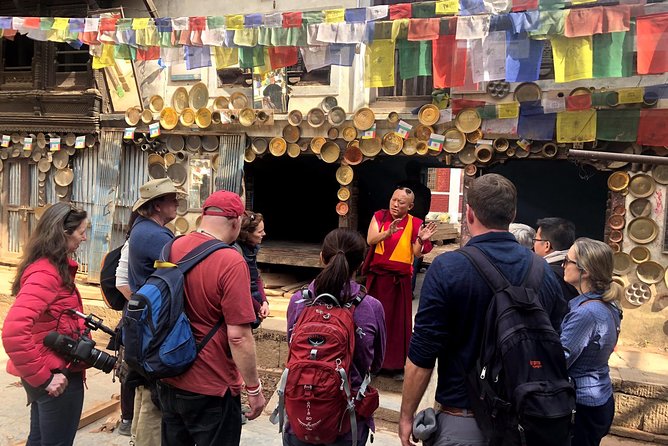
A lot of Kathmandu tours race straight to the big-ticket stops. This one starts earlier, with smaller, older monuments that help you understand why Kathmandu looks the way it does.
Stop one is Bikramshila Mahavihar (also known as Thambahil). It’s a rare Buddhist monument linked to the Newar community. The guide time here is short, about 15 minutes, and admission is free, so you don’t lose momentum.
Here’s why it matters: even the name Kathmandu’s tourist hub, Thamel, is connected to this older Thambahil landmark. When you hear that connection in context, suddenly you start noticing how modern neighborhoods grow out of old sacred geography.
Asan Bazaar: a market stop with real atmosphere
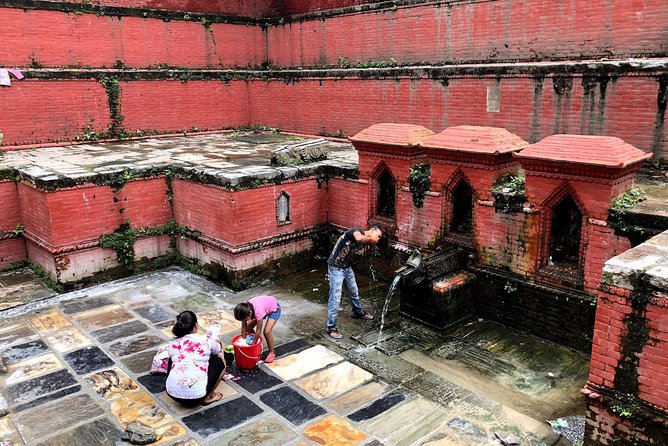
Asan is one of Kathmandu’s oldest living markets. The tour gives you about 15 minutes here, also with free admission. This stop works because it’s not just a photo break. You see everyday trade, plus spiritual items and everyday goods moving through the same street space.
If you’re the kind of person who likes to understand how locals shop and what they value, Asan is a strong use of time. You’ll also get a sense of where people go for daily necessities, not only souvenirs meant for visitors.
One tip for this stop: keep your phone handy for quick photos, but watch where you place your feet. Market lanes can get crowded, and you’ll get better value by looking first and filming second.
Other seven site heritage runs
Janabaha Dyo and Seto MachhindraNath Temple: compassion icons you can spot
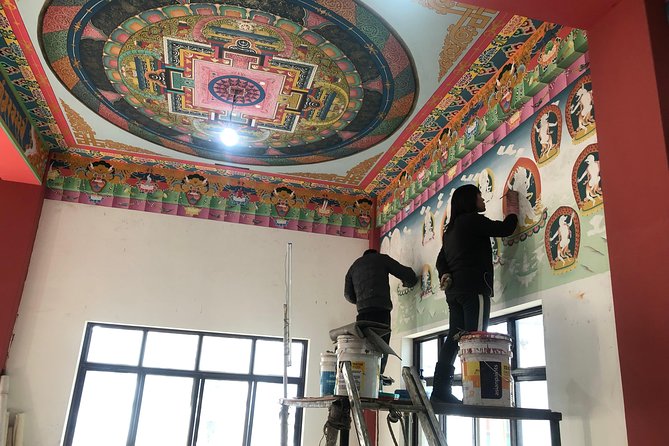
Next on the route is Janabaha Dyo, home to the Seto MachhindraNath Temple. This is another short stop, about 15 minutes, and admission is free.
The guide focus here tends to be on the living faith behind the buildings. The temple is dedicated to a native deity of Kathmandu and Tibetan Buddhists. One of the eye-catching details is the 108 engraved icons of Avalokitesvara, associated with compassion. Even if you only catch glimpses between people and movements, the number and symbolism make the place feel intentional rather than decorative.
If you’ve visited temples before, you’ll recognize how much meaning can sit in small details. This stop is a good example, and it adds texture to what you’ll later see at Durbar Square.
Itum Bahal: quiet courtyards, old monastery remains
Itum Bahal is the slow, contemplative breath in the middle of the morning. You get about 30 minutes here, with free admission.
This site is known as one of the larger Buddhist monasteries in ancient Kathmandu. You won’t see everything preserved, but you can still make out parts of the original monastic complex, including courtyards connected to the goddess Tara.
Why I like placing a stop like this in a walking itinerary: it changes your perspective. After markets and temple icons, you shift from the busy world of daily commerce into a space that feels designed for reflection and ritual routines.
The walking route matters more than the clock
The whole experience runs about 4 to 5 hours. That range is ideal if you want a morning that feels full, but not exhausting. It’s also long enough to absorb context, because you’re not just jumping between highlights, you’re learning how the areas connect.
The tour is private, so your guide can adjust pacing. That can be a big deal near Durbar Square, where foot traffic and temple entry rules can affect how quickly you move.
The biggest practical advice I can give: wear shoes you can trust. Kathmandu center stones and steps are not built for flimsy sandals. A small ankle slip can turn a great morning sour.
Durbar Square to Kathesimbu or Dharmakirti Vihara, a less obvious finale
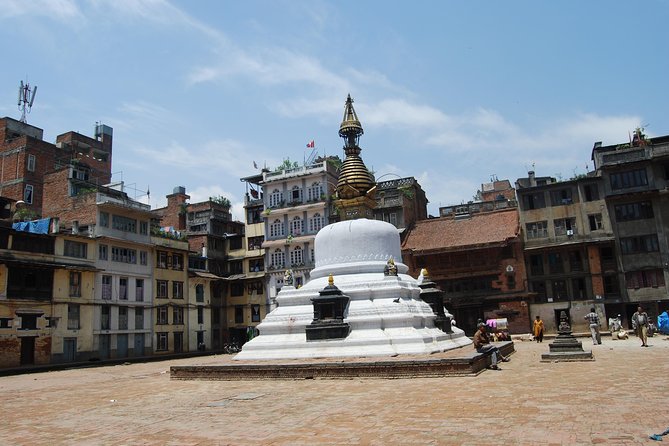
After you finish the Durbar Square sequence, the walk continues into the old-town area toward the Buddhist stupa complex of Kathesimbu, also known as Dharmakirti Vihara.
This is where you get a quieter finish. The complex includes a replica of the Swayambhu Stupa, which is a clever way to connect different holy sites without needing a separate full day outing. The tour segment here isn’t listed with a precise time in the details, but it functions as a thoughtful bridge between Kathmandu’s big palace square and the more pilgrim-style atmosphere of stupas.
If you like religious architecture, this part is a nice reward. You’ll likely notice how Kathmandu’s sacred map is layered, where a city block can act like a spiritual shortcut.
Cafe Mitra tea or coffee, turning impressions into understanding
The tour ends back in Thamel at Cafe Mitra, with about 30 minutes to sit, sip, and chat with your guide. Coffee and/or tea are included, so you’re not paying extra for the decompression stage.
I like this finish because it helps you translate what you saw into something you can remember. In Kathmandu, it’s easy to leave with photos but no meaning. A casual conversation with your guide, in plain language, closes that gap.
It’s also where you can ask quick questions like what to visit next or what you should notice if you go back on your own. Guides such as Mr. Mahesh Shreshtha and Modo are the type who can explain the why behind the what, which makes your next temple visit more satisfying.
Price and value, what $28 really covers
The price is $28 per person, and that’s quite reasonable for a half-day guided experience in the city center. What you’re getting is private, with pickup support when needed, plus coffee and/or tea.
Where value needs a small reality check: Kathmandu Durbar Square entry fees are not included, and neither is admission for the Swayambhu Stupa premises. So your total cost depends on your ticket requirements for those sections.
Still, compared with the cost of hiring a guide for only one monument, this route stacks multiple high-meaning stops into one morning. And it does it with enough time at each place to actually notice details instead of just marching through.
Who this tour suits best
This is a great fit if you want:
- First-timer orientation to central Kathmandu through a human-guided walking loop
- A mix of UNESCO Durbar Square and smaller, less-visited Newar and Buddhist sites
- A guide-led pace that helps you ask questions rather than feeling rushed
It’s also a good choice if you prefer authentic daily life. Stops like Asan Bazaar add that street reality that you don’t get from bus-only sightseeing.
Should you book the Old Kathmandu Walking Tour?
Book it if you want a balanced Kathmandu introduction that goes past the obvious. The strongest reasons to choose it are the combination of famous and lesser-seen sites and the chance to experience Kumari Chowk as more than a quick photo stop.
Skip it or rethink it if you hate walking or if you strongly prefer everything to be fee-inclusive. You’ll want comfortable shoes and you should budget for Durbar Square and Swayambhu-area admissions.
If you’re planning only one tour to get oriented, this one is built for that job, with guided context from start to finish.
FAQ
How long is the Old Kathmandu Walking Tour?
The tour lasts about 4 to 5 hours.
Where does the tour start and end?
It starts at Amrit Marg, Kathmandu 44600, Nepal, and ends at Cafe Mitra on Thamel Marg, Kathmandu 44600, Nepal.
What time does the tour run?
The start time is 9:00 am.
Is pickup offered?
Yes, pickup is offered. If you’re in Thamel, the start may be right at your hotel lobby, or you may be picked up and taken to the starting point by a short drive.
Is it a private tour?
Yes. It’s a private tour/activity, so only your group participates.
What is included in the price?
The tour includes private transportation and coffee and/or tea.
Are entry fees included for Durbar Square and other sites?
No. Entry fees for Kathmandu Durbar Square premises and Swayambhu Stupa are not included.
What is the cancellation policy?
You can cancel for free up to 24 hours in advance for a full refund.
FAQ
Do I need to bring anything like an admission ticket?
You won’t be charged for admission at some stops listed with free admission, but you should plan to pay entry fees for Kathmandu Durbar Square and Swayambhu Stupa since those are not included.
Is a mobile ticket provided?
Yes, the tour includes a mobile ticket.
The Rest of Our Kathmandu Write Ups



Seven Sites, Other Routes
One More Valley Day
Everything else we have reviewed around Kathmandu
- 12 Days Everest Base Camp Trekking
★ 5.0 · 3 reviews - 1 Night 2 Days Chitwan Jungle Safari Tour from Pokhara or Kathmandu
★ 3.0 · 3 reviews - Thamel Rickshaw tour
★ 4.7 · 3 reviews - Kathmandu: Momo Making Class with a Local Chef
★ 5.0 · 3 reviews - Kathmandu: Full-Day Yoga, Body Massage and Pedicure Package
★ 5.0 · 3 reviews - From Kathmandu / Pokhara / Chitwan: River Rafting – 1 Day
★ 4.6 · 3 reviews
Kathmandu UNESCO Heritage Tours worth a second look.
 ★ 5.0Full Day 7 UNESCO Tour with Lunch – Private/GroupFrom $10415 reviews
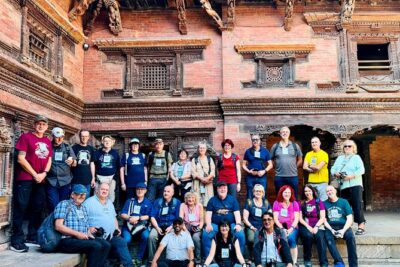 ★ 5.0Full Day Top 4 UNESCO Tour with Lunch – Private/GroupFrom $10269 reviews
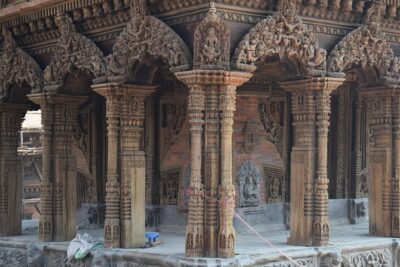 ★ 5.0UNESCO Seven World Heritage Tour in KathmanduFrom $180253 reviews
★ 4.9Full-Day 7 UNESCO Tour with Lunch – Private/GroupFrom $5247 reviews
★ 5.0UNESCO Seven World Heritage Tour in KathmanduFrom $180253 reviews
★ 4.9Full-Day 7 UNESCO Tour with Lunch – Private/GroupFrom $5247 reviews
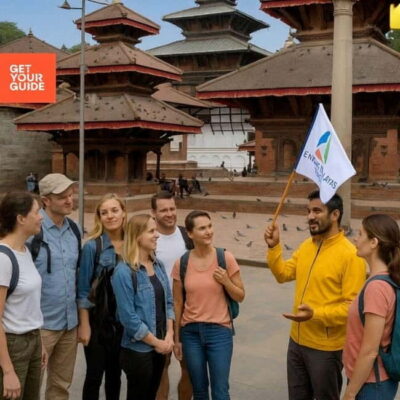 ★ 4.97 UNESCO Sites Tour in 1 Day (Private Tour)From $4204 reviews
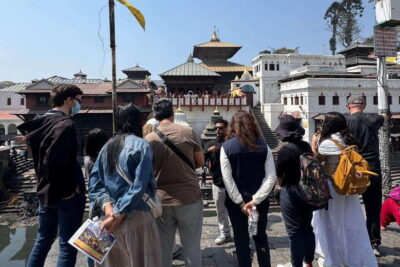 ★ 4.9Top 4 UNESCO Tour with Lunch – Private/GroupFrom $5181 reviews
 ★ 5.0Bhaktapur & Patan Durbar Square Day ToursFrom $50122 reviews
 ★ 5.0Kathmandu Private Sightseeing Tour | UNESCO World Heritage SitesFrom $35109 reviews