
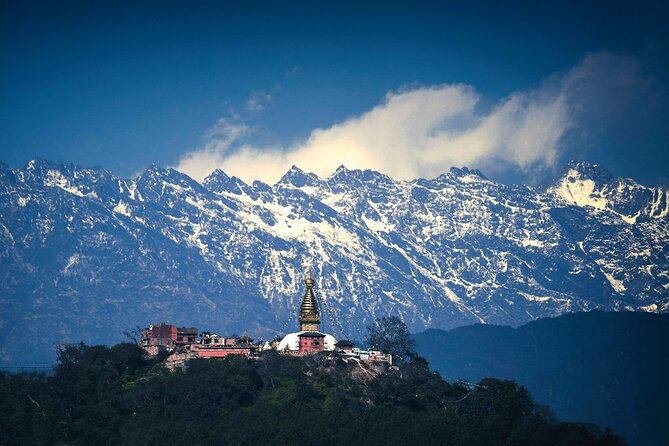
REVIEW · SWAYAMBHUNATH & THE MONKEY TEMPLE
Monkey Temple – Swayambhunath Tour – Private/Small Group
Swayambhunath tells Kathmandu’s story fast. This Monkey Temple area walk links myths and legends to the places you actually stand on, starting from Bhagwan Pau and climbing toward the main stupa. The best part is how the route strings together Buddhism and Hindu devotion so the religious symbols make sense, not just look pretty.
I really like two things about this tour. First, it is built for comfort and context, with a small max group and an English-speaking guide who explains what you are seeing as you go, including what ceremonies can look like when they are happening. Second, the itinerary moves beyond the big ticket site into the lesser temples and shrines like Harati Ajima Temple and Manjushree viewpoints, so you get more than a single-stamp highlight.
The main drawback to consider is physical effort. You will be walking and you start the Swayambhunath approach at Bhagwan Pau, where the main entrance involves 365 stairs, so this is not ideal if you have knee issues or severe asthma.
In This Review
- Key things that make this tour worth your morning
- Getting oriented in Thamel, then heading straight for Swayambhu
- Bhagwan Pau: the start of the stairs and the first legends
- Swayambhunath Stupa: the main attraction, plus the Kathmandu valley origins
- Budget note for the main stupa
- Harati Ajima Temple: pagoda-style architecture with a story behind it
- World Peace Pond: a small pause with a Buddha statue and English words
- Manjushree Temple: the lake-to-city legend and a western view
- Amideva Buddha Park: big idols that make the scale click
- Shova Bhagawati shrine: the river connection in Kathmandu
- Practicalities that actually matter on this walk
- Value check: why $15 makes sense here, if you budget the stupa fee
- Should you book the Monkey Temple, Swayambhunath private or small group tour?
- FAQ
- How long is the Monkey Temple – Swayambhunath tour?
- What does the $15 per person price include?
- Is there an entrance fee for Swayambhunath?
- How many people are in the group?
- Where do I meet the guide?
- Does the tour include a mobile ticket?
- Who qualifies for the youth price?
- Is this tour suitable for everyone physically?
- Can I cancel and get a refund?
Key things that make this tour worth your morning
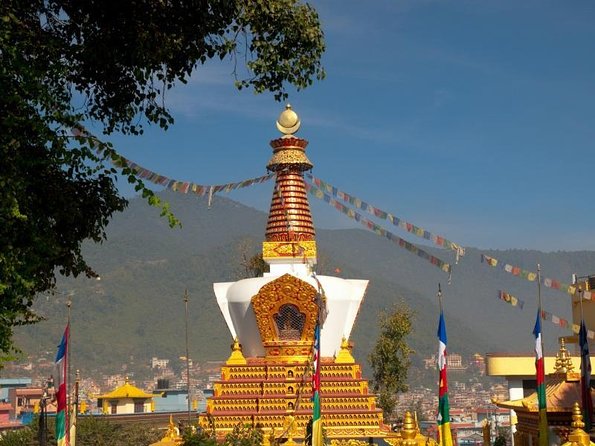
- Max 5 people means more questions and less time stuck behind a crowd.
- 360-ish minutes of meaning for symbols, myths, and why different groups worship here.
- Swayambhunath ticket detail: 200 Rupees cash for the main stupa is not included.
- Real temple variety: pagoda-style Harati Ajima, World Peace Pond, Manjushree Temple, and big Buddha icons.
- Panoramic western views from the Manjushree Temple stop are part of the plan.
- Youth pricing with a student card keeps the tour fair for students.
Other hilltop stupa visits

Getting oriented in Thamel, then heading straight for Swayambhu
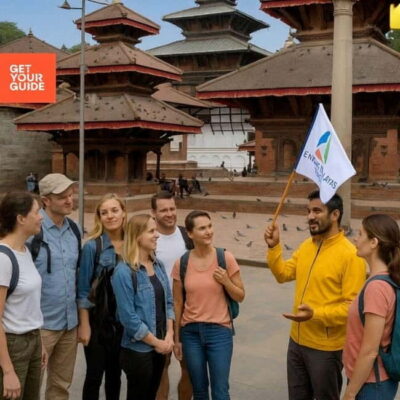
You meet at Pumpernickel Bakery in the heart of Thamel, right on Paryatan Marg. From the start, this feels like a practical walking tour, not a bus ride where you barely notice what is outside the window.
Thamel is a useful launch point because you can easily pop back for snacks later, but you are not wasting time there. The plan is to move you through the neighborhoods toward Swayambhu so you get a sense of where the old and the everyday Kathmandu sit side by side.
If you care about safety and confidence on your feet, the small group size is a real plus. In one of the guided experiences shared with the operator, Santosh was praised for taking solo travelers through the area calmly and clearly, which matches the basic style of this tour: guided, paced, and focused on what you are seeing.
Bhagwan Pau: the start of the stairs and the first legends
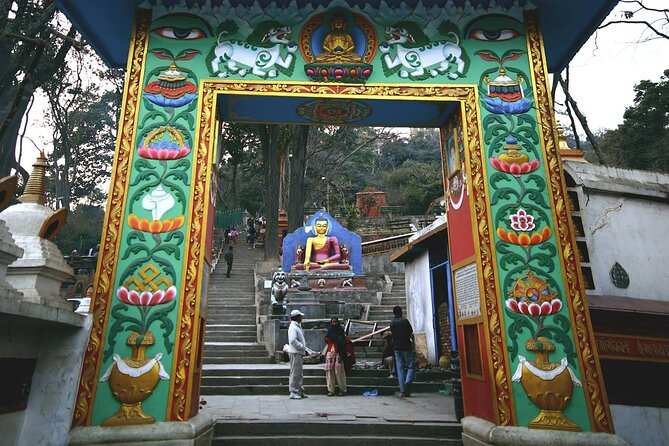
The first real temple approach stop is Bhagwan Pau at the bottom of the Swayambhu hill. Here, you start thinking about the layout of the whole holy area, because this is literally the named location connected with the feet of Lord Buddha, before the steps toward the main entrance.
You get a short pause on the way up, including time to drink water and catch your breath. That matters because once you commit to the hill and stairs, you want to have energy left for the stops that follow.
Timing-wise, this is a smart early placement. You are still fresh enough to enjoy the transition from street-level Kathmandu into sacred walking space. Also, because the tour is about myths and origin stories, starting at Bhagwan Pau gives those stories a physical anchor, not just a spoken one.
Swayambhunath Stupa: the main attraction, plus the Kathmandu valley origins
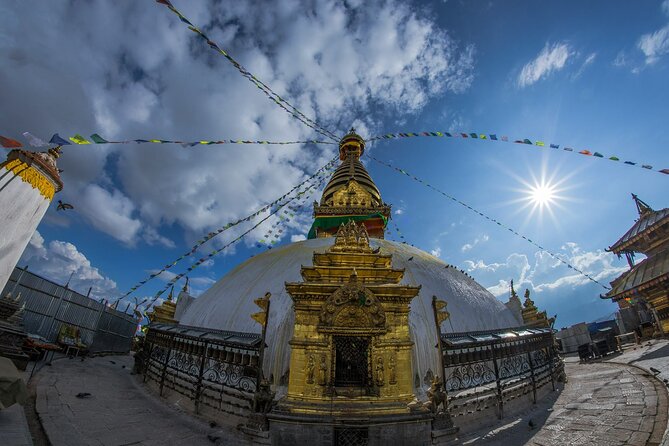
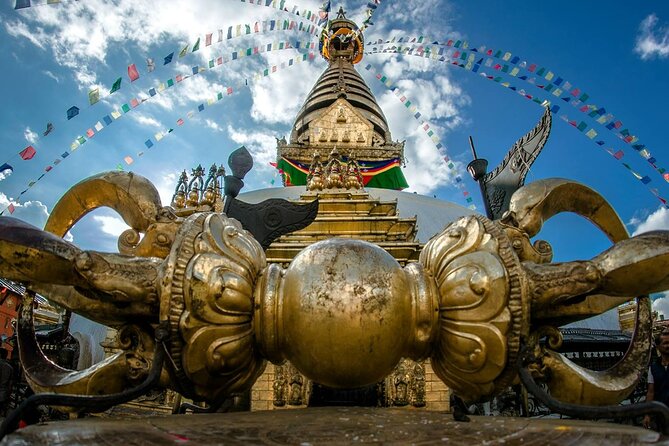
Now comes Swayambhunath, the central site and one of Nepal’s holiest Buddhist stupas, set on the hilltop at the heart of Kathmandu. This is where you slow down and really look, because the stupa area is not just architecture, it is a living religious space.
This stop is also where the tour focuses on two big story threads:
- the origin and meaning of Swayambhunath
- how the Kathmandu valley ties into legends of creation and transformation
You also get the added value of your guide pointing out what is going on when ceremonies are in progress. Even if you are not participating, it helps you understand the rhythms of worship and why people move the way they do around key spaces.
Budget note for the main stupa
Swayambhunath entry is 200 Rupees, paid in cash directly to temple authorities. The tour price is affordable, but this is the one mandatory extra you should plan for. Other temple entries in the route are listed as included at certain stops, so it is worth carrying some cash for this one.
Private guides for Kathmandu, a few more
Harati Ajima Temple: pagoda-style architecture with a story behind it
Next up is Harati Ajima Temple, with a short stop that packs in a lot of meaning. This is where the tour leans into local Nepalese religious culture, including the pagoda-style architecture that is unmistakably different from the smooth, stupa-only view some people expect.
You also hear the story of Harati Ajima, including how a demon named Harati becomes Mother Harati and why people around the Kathmandu valley worship her. That story detail matters because it explains why this stop is not just a photo spot. It gives you a reason to notice ornaments, worship patterns, and how devotion is expressed here.
This is one of the stops that works especially well for visitors who like to understand religion through characters and origin myths, not only through dates and big historical facts.
World Peace Pond: a small pause with a Buddha statue and English words
After Harati Ajima, you reach World Peace Pond, on the western side of Swayambhunath. The highlight is a brass statue of a Buddha standing on a lotus flower in the middle of the pond.
The tour also notes there are words on the wall written in English, which is a nice touch if you want a quick way to connect your visit to a theme you can read without guessing. This stop is shorter, but it functions like a reset. You move from one devotional story to another, and then you get a calmer spot before climbing and walking again.
If you get tired of nonstop stairs, this is the kind of pause that makes the whole morning feel manageable.
Manjushree Temple: the lake-to-city legend and a western view
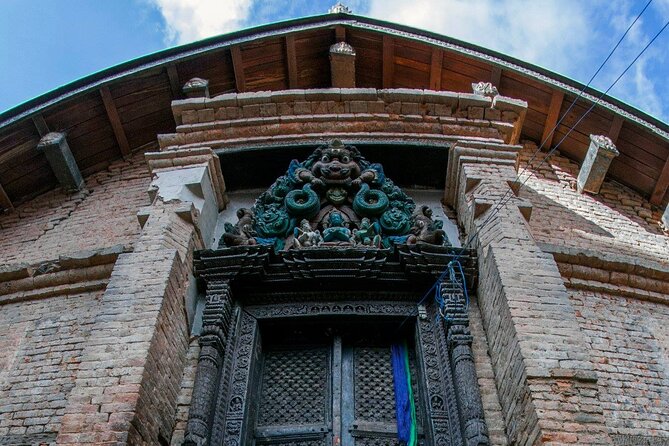
Then you hit Manjushree Temple, dedicated to Maha Manjushree on the Swayambhu hill. This stop is where the tour ties the “Kathmandu valley origin” theme to a specific legend: how the valley was turned into a city from a great lake.
What I like about this stop is the mix of story and payoff. You also get a panoramic view of the western side of Kathmandu from here. That viewpoint is one of the reasons this tour feels better than a checklist walk, because it gives your brain a visual landmark to remember the legends by.
In plain terms, it helps you picture the valley, not just hear about it.
Amideva Buddha Park: big idols that make the scale click
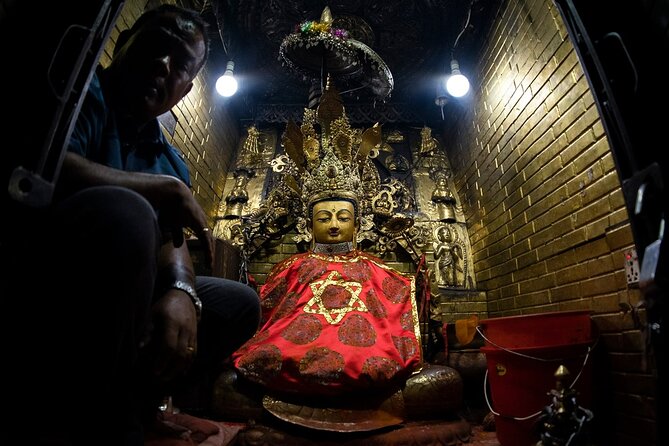
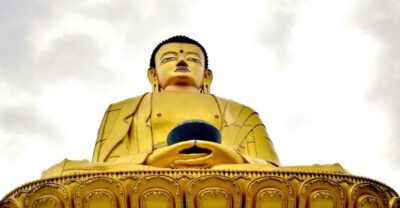
One of the most visually striking parts of this route is Amideva Buddha Park. You walk around a park area featuring three gigantic idols: Amitabha Buddha (Amideva) in the center at 67 feet, with Chenrezig and Padmasambhava on the sides at 64 feet each.
Even if you are not the type to study statues, the scale does the job. It makes the devotional aspect feel concrete. And because you are on a hill, these idols also help you orient where you are relative to the rest of the Swayambhunath complex.
This stop is also a good moment for photos, but use your time wisely. In busy temple zones, it is easy to get stuck shooting without taking in what the statues represent. Let the guide’s story do the heavy lifting.
Shova Bhagawati shrine: the river connection in Kathmandu
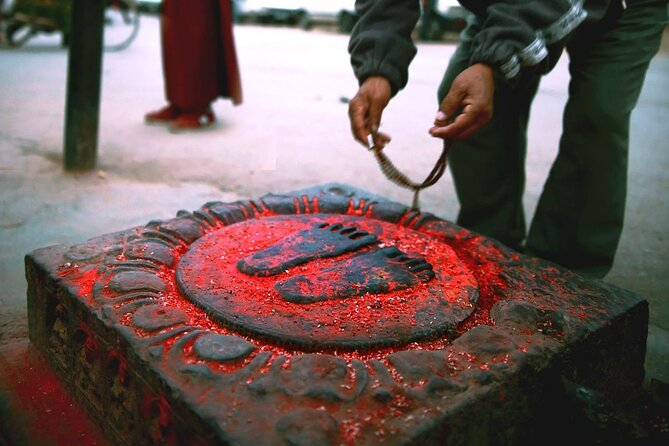
The route also includes Shova Bhagawati, described as a holy shrine devoted to goddess Bhagwati on the bank of the Bishnumati River. It is listed as one of the four major Bhagwati temples in Kathmandu.
What makes this stop interesting is the way it brings you back to the city’s real geography. You are up on Swayambhu for much of the walk, and then you connect the sacred activity to a river setting that keeps Kathmandu’s water and worship linked.
Even though this is not the main stupa, it rounds out the morning. You leave with a sense that religious practice here is not isolated on one hilltop. It is woven into the city.
Practicalities that actually matter on this walk
This tour is listed at 3 hours approx. and is designed as a moderate physical fitness experience. That “moderate” tag is a helpful warning label, because the stair situation at Swayambhunath is real, and your comfort on steps affects everything else.
A few practical tips before you go:
- Wear grippy shoes. Uneven stone and hill paths make traction more important than style.
- Bring a small water plan. The route includes time to drink water early on, but you still want to handle your own needs.
- Plan for a cash entry at the main stupa. Swayambhunath costs 200 Rupees, paid in cash.
- Go easy if your breathing or knees are an issue. The tour notes that severe asthma and knee problems are not advised.
You also get a couple of logistics perks that help the experience feel smooth. The tour includes an English-speaking guide, it uses a mobile ticket, and it is near public transportation. And since it ends back at the meeting point in Thamel, you can easily return for lunch without hunting for transport.
Value check: why $15 makes sense here, if you budget the stupa fee
At $15 per person, this is priced like a straightforward neighborhood walk, but it is actually more than that. You are paying for:
- a guided explanation of legends tied to multiple temple and shrine stops
- a small-group pace (max 5)
- an English-speaking guide for the whole loop
The only clear extra is the 200 Rupees cash entry fee for Swayambhunath. At the approximate conversion listed, that is about $1.50, which is small compared to the price of many major-site tours you might find in other countries.
Also, the tour includes entry tickets for some stops, so you are not constantly calculating what costs what. You just plan for the one main stupa fee and focus on the walking and stories.
Should you book the Monkey Temple, Swayambhunath private or small group tour?
Book it if you want a meaningful walking route through Swayambhunath that goes beyond the main stupa. The mix of myths (origin stories), architecture (including Harati Ajima), and added stops (World Peace Pond, Manjushree viewpoints, Amideva Buddha Park) makes it feel like you learn the place, not just pass through it.
Skip or adjust expectations if stairs are a problem. This tour is manageable for many people with moderate fitness, but it is not built for visitors who need flat ground only.
If you are short on time in Kathmandu and want your morning to pay off fast, this one is a strong choice because you get a tight loop with a clear focus: Swayambhunath and the stories around Kathmandu valley.
FAQ
How long is the Monkey Temple – Swayambhunath tour?
It is listed as about 3 hours.
What does the $15 per person price include?
The tour includes an English speaking guide. Coffee and/or tea are not included, and the Swayambhunath entrance fee is not included.
Is there an entrance fee for Swayambhunath?
Yes. Swayambhunath is listed as 200 Rupees, paid in cash directly to temple authorities.
How many people are in the group?
The maximum group size is 5 travelers.
Where do I meet the guide?
The meeting point is Pumpernickel Bakery on Paryatan Marg, Kathmandu 44600, Nepal.
Does the tour include a mobile ticket?
Yes, it is listed as having a mobile ticket.
Who qualifies for the youth price?
The youth price is for students with a student card.
Is this tour suitable for everyone physically?
It is listed for travelers with moderate physical fitness. It is not advised for travelers with severe asthma and knee problems.
Can I cancel and get a refund?
Yes. There is free cancellation up to 24 hours in advance for a full refund. If you cancel less than 24 hours before the start time, the amount paid is not refunded.
Everything Bookable Around Kathmandu
The Rest of Our Kathmandu Write Ups

Up the Swayambhunath Steps
Everything else we have reviewed around Kathmandu
- 12 Days Everest Base Camp Trekking
★ 5.0 · 3 reviews - 1 Night 2 Days Chitwan Jungle Safari Tour from Pokhara or Kathmandu
★ 3.0 · 3 reviews - Thamel Rickshaw tour
★ 4.7 · 3 reviews - Kathmandu: Momo Making Class with a Local Chef
★ 5.0 · 3 reviews - Kathmandu: Full-Day Yoga, Body Massage and Pedicure Package
★ 5.0 · 3 reviews - From Kathmandu / Pokhara / Chitwan: River Rafting – 1 Day
★ 4.6 · 3 reviews
Swayambhunath & the Monkey Temple worth a second look.
 ★ 4.8Chandragiri Cable Car and Monkey Temple TourFrom $3139 reviews
 ★ 5.0Chandragiri Cable Car & Monkey Temple Tour- Private/GroupFrom $532 reviews
 ★ 5.0Private Chandragiri Cable Car and The Monkey Temple TourFrom $530 reviews
 ★ 5.0Guided Walking Tour with Monkey TempleFrom $1518 reviews
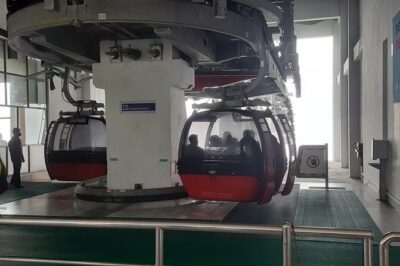 ★ 5.0Kathmandu Chandrigiri Hill Cable Car & Monkey Temple UNESCO TourFrom $4816 reviews
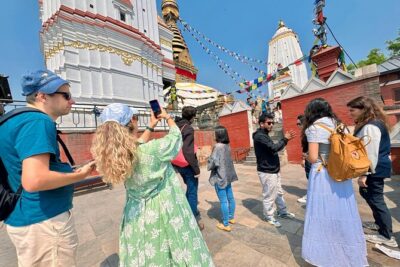 ★ 5.0Chandragiri Cable Car Ride & Monkey Temple Tour – Private/GroupFrom $513 reviews
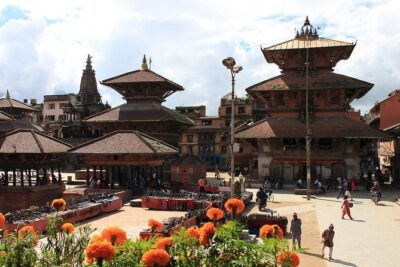 ★ 4.5Private Half-Day Tour of Kathmandu Durbar Square and Swayambhunath TempleFrom $4711 reviews
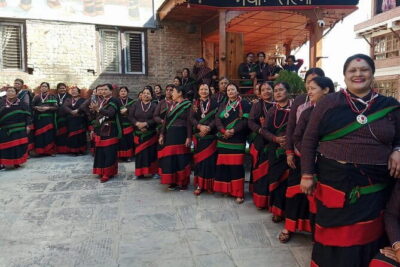 ★ 5.0Kirtipur & Swayambhu Trip from Kathmandu: Local Eats and DrinksFrom $808 reviews
Lists this tour sits in