
REVIEW · KATHMANDU UNESCO HERITAGE TOURS
Private Kathmandu UNESCO Heritage Sites with Narayanhiti Museum
Kathmandu rewards slow travel, but time is usually tight. This private heritage loop is built for maximum sights in one day, with a taxi that keeps you moving and an English-speaking guide to translate what you’re seeing. I love the private pace, and I also like that you hit several major UNESCO-linked landmarks plus Narayanhiti without the hassle of arranging separate outings.
My favorite part is the combination of Swayambhunath, Pashupatinath, and Bouddhanath with clear explanations you can actually follow. I also appreciate the practical touch points from the experience, like on-time hotel pickup and the smooth navigation around narrow lanes with an air-conditioned taxi, which matters a lot in Kathmandu traffic. Seeing the Kathmandu valley from Swayambhunath, then switching religions and styles as you go, is a great way to understand the city fast.
One consideration: entrance fees are not included, and lunch is not included either. That means you’ll want to budget a bit extra and plan food so you do not end up losing time or paying more than you want during the day.
In This Review
- Key highlights worth your attention
- Why this Kathmandu UNESCO route works so well
- Price and value: what $75 per person really buys
- Getting around in a private taxi, the practical way
- The full itinerary, stop by stop in plain language
- Stop 1: Swayambhunath, the hilltop stupa and valley view
- Stop 2: Pashupatinath Temple, Hindu sacred ground by the river
- Stop 3: Bouddhanath, Buddhism at large scale
- Stop 4: Patan Durbar Square, royal city craft and religion mix
- Stop 5: Kathmandu Durbar Square, old palace courtyards in the heart of the city
- Stop 6: Narayanhiti Palace Museum, a palace story near Thamel
- Admission fees and lunch: the two spots that affect your budget
- Who this tour suits best
- Tips to make the day feel smooth
- Should you book this private Kathmandu heritage sites plus Narayanhiti Museum tour?
- FAQ
- What does the tour cost, and how long does it take?
- What’s included in the price?
- Are entrance fees included?
- Is lunch included?
- Is pickup available?
- Is this a private tour or shared group?
Key highlights worth your attention
- Private transportation with an English-speaking licensed guide, so you get context, not just photos.
- A tight 7 to 8 hour route that covers UNESCO-linked sites plus Narayanhiti Palace Museum near Thamel.
- Mobile ticket is part of the setup, which helps keep things simple on the day.
- On-time pickup and smooth driving around busy, narrow streets, especially useful if you are staying in older areas.
- Group discounts can make the per-person cost drop if you are traveling with friends or family.
Other one shot sweeps of the Valley

Why this Kathmandu UNESCO route works so well
Kathmandu can be overwhelming on day one. The streets are busy, the distances feel longer than they should, and the sites each have their own rules. This tour solves the big problem by doing the heavy planning for you: you get a private taxi and an English-speaking guide who can connect the dots between the temples, stupas, courtyards, and palace history.
I like routes like this because they are not random. You start with Swayambhunath, then head to major Hindu pilgrimage ground at Pashupatinath, then move into Buddhist world with Bouddhanath. After that, you shift into the royal-city layout at the durbar squares in Kathmandu and Patan, then end with Narayanhiti Palace Museum. In one day, you get a clearer sense of how the valley’s religious life and political power overlap.
The other reason it works: you get a one-day rhythm. Each stop is long enough to walk, look up close, and take in the atmosphere without feeling rushed through every doorway.
Price and value: what $75 per person really buys
At $75 per person for a private taxi and a licensed English-speaking guide, this is a value play, not a luxury one. In Kathmandu, private taxis can add up quickly if you pay street-by-street rates for multiple pickups, multiple hours, and multiple destinations. This format gives you a single day plan and predictable time.
Two value notes matter here.
First, you are not just paying for driving. You are paying for interpretation. Guides like Dipendra and Deependra stood out in feedback because they explained what you were seeing without turning it into a lecture. That matters at sites where symbolism is easy to miss if you only look with your camera.
Second, there are group discounts. If you have two or more people, the price becomes even easier to justify, especially for families and small groups that want privacy without paying a premium for it.
Keep in mind what the price does not cover: entrance fees and lunch. So your total day cost is the $75 plus whatever entry tickets you choose and how you handle meals.
Getting around in a private taxi, the practical way
A private tour means you control the pace and you avoid the extra coordination that comes with joining larger group buses. The setup here includes pickup offered, and from real experiences, the driver and vehicle arriving on time makes a difference. Kathmandu has enough unpredictability, so you want to reduce the parts you cannot control.
The driving style also matters at these sites. Some parts of the city include narrow lanes and busy turns, and having an experienced driver who can handle it smoothly keeps your day from feeling stressful. If you like comfort between stops, this tour generally supports that since it uses taxi transport.
One more practical detail: you will want to plan for a bit of walking at each stop, even if the taxi gets you close. Wear shoes you can trust. And bring water, because you will be outside for most of the day.
The full itinerary, stop by stop in plain language
Other seven site heritage runs
Stop 1: Swayambhunath, the hilltop stupa and valley view
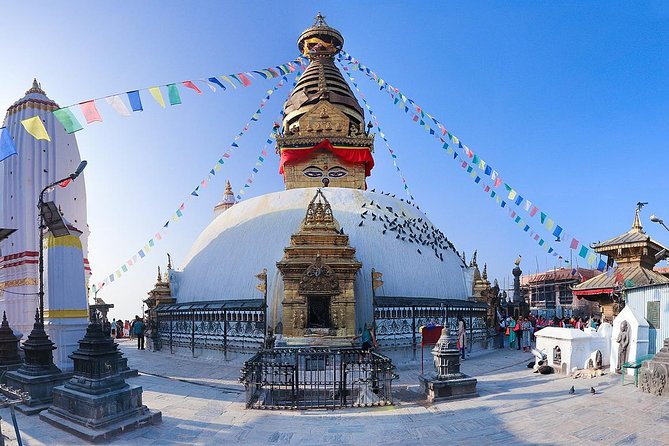
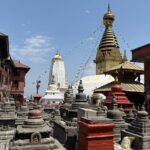
Your day often starts with Swayambhunath, a Buddhist stupa said to be about 2,600 years old. It sits up on a hill and gives you that classic Kathmandu valley panorama. If you want to understand the city’s shape, this is where you get your bearings.
Expect a mix of religious visitors and people climbing the steps. The stupa is often associated with monkeys in the area, so keep an eye on personal belongings and treat the space like a shared habitat, not a zoo. Even if you do not want to do a long climb, take a few minutes to look at the view first. It helps everything else you see later feel connected.
Time on site is about 1 hour here, so use that time wisely: walk in, take in the stupa area, then return to the viewpoint for photos and context.
Tip: If you care about photos, the hilltop view is where you should slow down. It is the one place where your angle and height actually change the whole story.
Stop 2: Pashupatinath Temple, Hindu sacred ground by the river
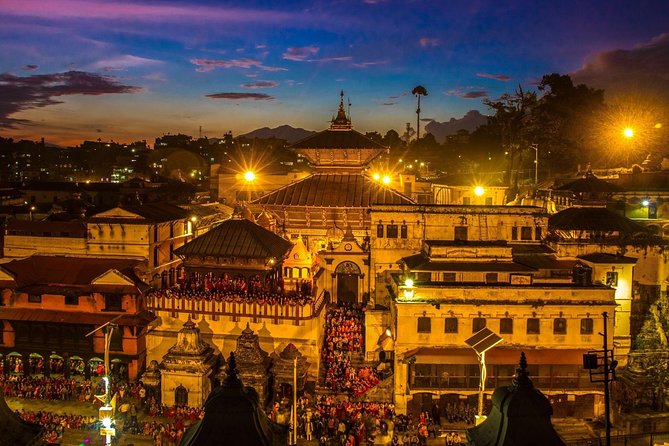
Next up is Pashupatinath Temple. The name points to the god of animal lives, and the site is a major Hindu pilgrimage stop in the subcontinent. It is located on the bank of the river, so you get the feeling of a living spiritual landscape rather than a museum-like monument.
Plan for a more formal environment than at a stupa. You may see people performing worship, and you’ll likely want to be mindful about where you stand and how you move. Your guide will help you understand what you are looking at and where attention is usually directed.
The stop is about 1 hour. Use it to observe the main temple areas and then step back to see how people move through the space.
Stop 3: Bouddhanath, Buddhism at large scale
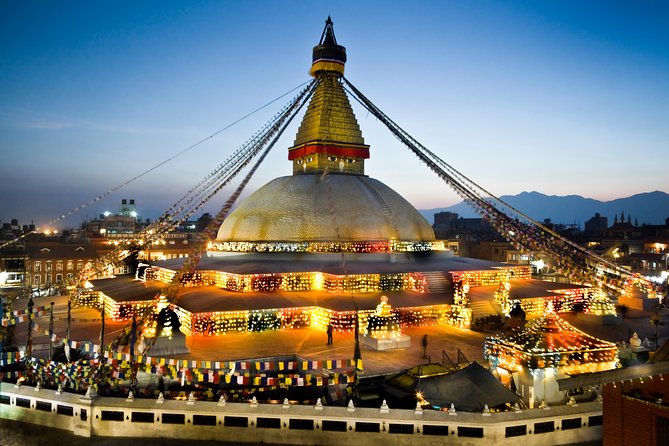
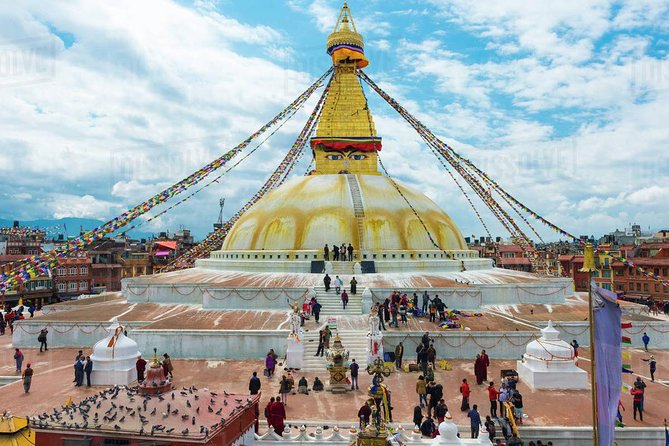
Then the tour shifts from Hindu temple focus to Buddhist monument scale at Bouddhanath. This is described as one of the largest stupas in the world, and it has long been important for Tibetan Buddhist communities.
What hits first is the size and the sheer visual weight. The stupa’s form and the prayer-circling atmosphere make you feel like you are joining a routine that has existed for a long time. Expect constant movement and people taking prayers seriously, even when they are chatting.
This stop also takes about 1 hour. If you want the full effect, spend a little time watching how people circle and pause, not just how they photograph. It is the difference between seeing a landmark and understanding what people come for.
Stop 4: Patan Durbar Square, royal city craft and religion mix
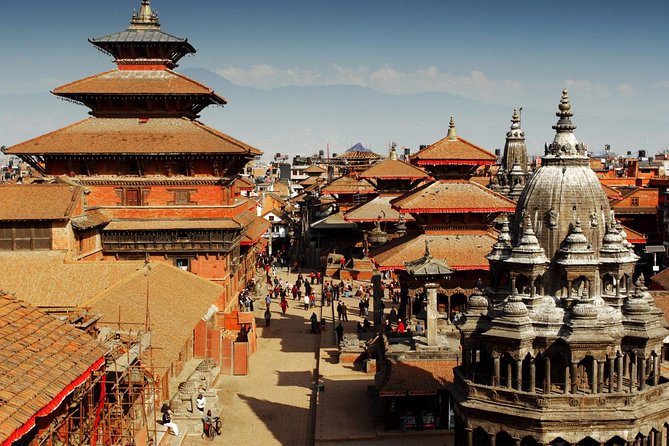
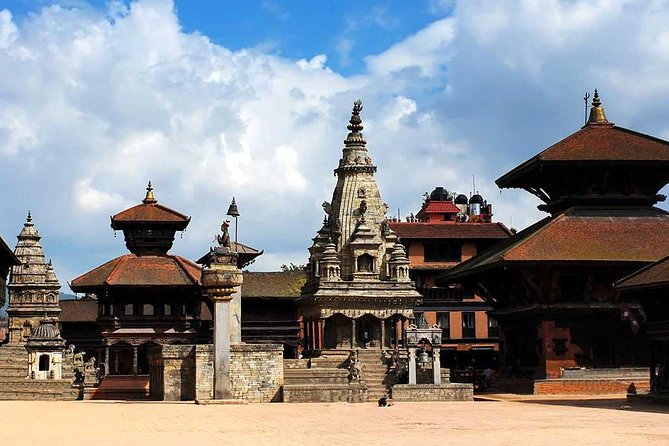
After Bouddhanath, you head to Patan Durbar Square in the Lalitpur district. Patan’s durbar square is known for the royal-city feel, with temples and courtyards arranged around a historic center.
The interesting angle here is the fusion you get in this part of Kathmandu Valley. The area reflects both Buddhism and Hinduism in how the space is used and decorated. That blend shows up in the details you see on buildings and in the way the square functions.
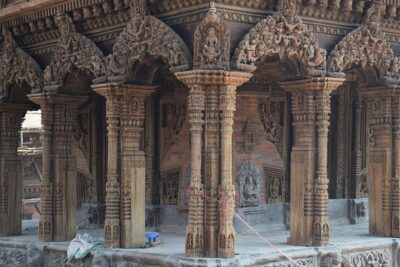
You get about 1 hour 30 minutes for Patan, which is a good amount of time for wandering slowly. If you like architecture and street-level detail, this is one of the stops where you will get more out of your hour-plus. If you prefer fast photos, you still can do it, but you might miss small carvings and courtyard rhythms.
Stop 5: Kathmandu Durbar Square, old palace courtyards in the heart of the city
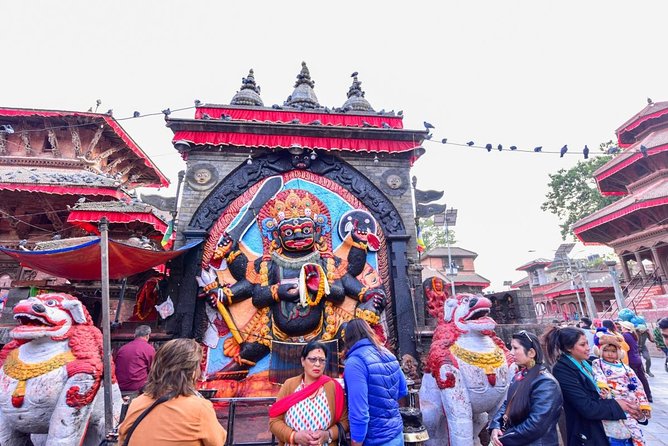
Then you move to Kathmandu Durbar Square, the historic core of old Kathmandu. This square is surrounded by palaces, courtyards, and temples, and it tends to feel busy because it is a central meeting point, not a quiet hillside.
The value of this stop is perspective. You can compare it with Patan: different feel, different layout, same general idea of royal and religious power in the same place. Watching people move through courtyards helps you understand how these spaces were built to function.
This stop is about 1 hour. That can feel short if you love doors, windows, and stonework. But with a guide, you can focus on the most meaningful areas without wasting time guessing.
Stop 6: Narayanhiti Palace Museum, a palace story near Thamel
Finally, you end at Narayanhiti Palace Museum. It’s a public museum in Kathmandu, located east of Kaiser Mahal and next to Thamel. That location matters, because it places you near where many people end up anyway after a day of sightseeing.
At this point, the tour often feels like a reset. You go from active temple and stupa environments to a museum setting where you can absorb history at your own pace. If you want your day to make sense, ending with Narayanhiti can help connect palace-era Kathmandu with the religious sites you saw earlier.
Time here is about 1 hour. Use it to read enough to anchor the day’s visuals in story form. Then you can head into Thamel for dinner without losing time to transfers.
Admission fees and lunch: the two spots that affect your budget
The tour includes transportation, the English-speaking licensed guide, and the taxi plan. What it does not include is entrance fees and lunch.
That is not a deal-breaker. It is just how you should think about your day total. Entrance tickets vary by site, and if you want the full experience at each stop, you will pay those fees at the entrance.
Lunch is the other cost lever. One practical bit of advice from the experience: if you care about your pocket, be picky about where you eat during the day. You might find that some lunch venues inside the tour flow cost more than a nearby meal.
My recommendation: decide in advance where you want lunch, or at least have a plan for it so you are not rushed into the first option when hunger hits.
Who this tour suits best
This is a strong fit if you want:
- A private day plan with taxi transport and an English-speaking guide
- The big Kathmandu landmarks done in one sequence without extra arranging
- A good balance of Hindu sites, Buddhist sites, and palace museum context
It is also a good choice if you are visiting for a short time and still want to check the UNESCO-linked checklist without hiring separate drivers for each location.
If you are the type who loves museum time more than temple walking, you’ll likely enjoy Narayanhiti as the finish. If you love street-level temple details, Patan and Kathmandu Durbar Square are likely to be your best hours.
Tips to make the day feel smooth
Here are a few small moves that make a big difference on this kind of itinerary.
- Use the guide time. If you ask questions at Swayambhunath and Bouddhanath, you get more meaning out of the visuals than if you just stand and shoot.
- Keep your expectations realistic. 7 to 8 hours means you will be moving most of the day. Build in short pauses for water and photos.
- Bring cash as a backup. Mobile tickets help, but payment methods can vary by situation. (In at least one case, GPay in INR was accepted.)
- Dress for temples. Loose, comfortable clothing and respectful behavior go a long way.
- Plan dinner near Thamel since Narayanhiti ends close by.
Should you book this private Kathmandu heritage sites plus Narayanhiti Museum tour?
If your goal is to see the valley’s major UNESCO-linked sites plus Narayanhiti Palace Museum in one organized private day, I think this is a smart booking. The value comes from private transportation plus a licensed English-speaking guide, not just the list of stops. The route also avoids the usual pain of switching between different taxis and different guides all day.
I would book it if you:
- want a simple plan in a city where logistics can get messy
- prefer explanations, especially for religious symbolism
- like finishing near Thamel so your evening is easy
I might skip or modify it if you:
- only care about one or two sites and would rather spend longer at fewer places
- are trying to keep the day as low-cost as possible, since entrance fees and lunch add to the total
If you fall somewhere in the middle, this is exactly the kind of day tour that turns first-time Kathmandu into something you can actually remember.
FAQ
What does the tour cost, and how long does it take?
The tour is $75.00 per person and runs for about 7 to 8 hours. It includes time at multiple heritage stops plus Narayanhiti Palace Museum.
What’s included in the price?
The price includes private transportation, an English speaking licensed tour guide, and English speaking driver support as part of the service. The tour also uses a mobile ticket.
Are entrance fees included?
No. Entrance fees are not included, so you should budget for tickets at each site.
Is lunch included?
No. Lunch is not included, and you will need to plan your own meal during the day.
Is pickup available?
Yes. Pickup is offered, and the tour is designed for you to be collected and transported between the stops.
Is this a private tour or shared group?
This is a private tour/activity, so only your group participates.
The Rest of Our Kathmandu Write Ups

Seven Sites, Other Routes
One More Valley Day
Everything else we have reviewed around Kathmandu
- 12 Days Everest Base Camp Trekking
★ 5.0 · 3 reviews - 1 Night 2 Days Chitwan Jungle Safari Tour from Pokhara or Kathmandu
★ 3.0 · 3 reviews - Thamel Rickshaw tour
★ 4.7 · 3 reviews - Kathmandu: Momo Making Class with a Local Chef
★ 5.0 · 3 reviews - Kathmandu: Full-Day Yoga, Body Massage and Pedicure Package
★ 5.0 · 3 reviews - From Kathmandu / Pokhara / Chitwan: River Rafting – 1 Day
★ 4.6 · 3 reviews
Kathmandu UNESCO Heritage Tours worth a second look.
 ★ 5.0Full Day 7 UNESCO Tour with Lunch – Private/GroupFrom $10415 reviews
 ★ 5.0Full Day Top 4 UNESCO Tour with Lunch – Private/GroupFrom $10269 reviews
 ★ 5.0UNESCO Seven World Heritage Tour in KathmanduFrom $180253 reviews
★ 4.9Full-Day 7 UNESCO Tour with Lunch – Private/GroupFrom $5247 reviews
 ★ 4.97 UNESCO Sites Tour in 1 Day (Private Tour)From $4204 reviews
 ★ 4.9Top 4 UNESCO Tour with Lunch – Private/GroupFrom $5181 reviews
 ★ 5.0Bhaktapur & Patan Durbar Square Day ToursFrom $50122 reviews
 ★ 5.0Kathmandu Private Sightseeing Tour | UNESCO World Heritage SitesFrom $35109 reviews
Lists this tour sits in