
REVIEW · NEPALI COOKING CLASSES
Rainbow Mo:Mo
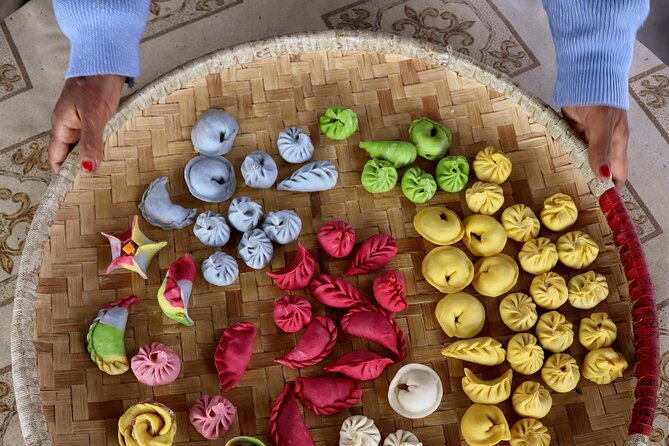
Color momos, and it feels personal. Rainbow Mo:Mo is a 2-hour queer-forward momo-making class in Kathmandu, where you dye dumplings with naturally coloured ingredients and turn dinner into a joyful, inclusive craft session.
I like the hands-on focus on shaping, with a playful, taught method that helps you get confident fast. I also like the payoff, because the momos you make are served both steamed and fried, so you get two textures from the same batch.
One consideration: the class is short, so if you want a long sit-down meal or lots of downtime, plan this as a focused activity, not a full afternoon.
In This Review
- Key things I’d zero in on before you book
- Arriving at Garden of Dreams, Kathmandu’s “easy to orient” starting point
- A 2-hour momo-making class with a queer-forward twist
- The colored filling lineup: how beetroot and butterfly pea shape the experience
- Shaping skills: pinching technique you can actually repeat
- What you’ll eat: steamed and fried momos, same dumplings, different textures
- Pickup, mobile tickets, and timing: the logistics that make or break short classes
- Group size and learning style: why 15 people matters
- Price and value: what $44 really buys you
- Who should book Rainbow Mo:Mo, and who might skip it
- Should you book Rainbow Mo:Mo?
- FAQ
- How long is Rainbow Mo:Mo in Kathmandu?
- What does it cost?
- Where do I meet for Rainbow Mo:Mo?
- Is pickup included?
- What ingredients are used to make the colored momos?
- Can I cancel for free?
Key things I’d zero in on before you book
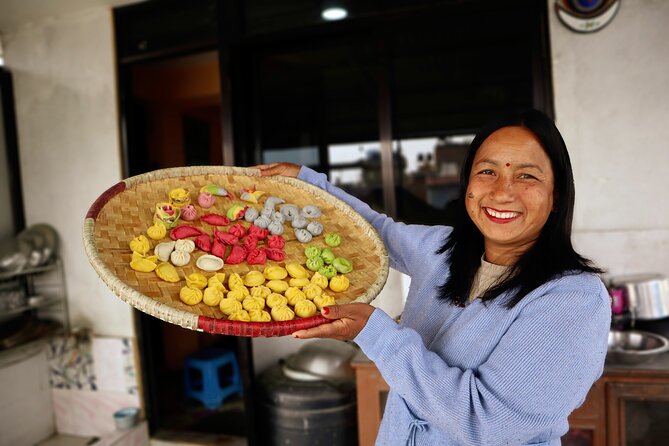
- Naturally coloured fillings using beetroot, spinach, carrot, and butterfly pea (with beetroot and butterfly pea called out for their striking pink and blue tones).
- Pinch-by-pinch shaping training, with the instructor using a humorous cosmetic-style comparison to keep the technique memorable.
- You taste what you make, with momos served steamed and fried.
- Pickup is available, and one review specifically credits Prajeet for arriving on time from a hotel lobby.
- Small group size, capped at 15 people, which tends to make it easier to ask questions and learn the steps.
- Easy start point, at the Garden of Dreams area, with proximity to public transportation and service animals allowed.
Fold more momos: other Nepali kitchens
Arriving at Garden of Dreams, Kathmandu’s “easy to orient” starting point
Your experience begins back where you start, at the Garden of Dreams meeting point on Tridevi Sadak. It’s a helpful setup in a city where traffic and timing can turn into a guessing game. Starting near Garden of Dreams also gives you a clear reference point, so you are not scrambling to find the venue.
If you are using pickup, this is where your guide meets you. One review named Prajeet, and the key detail was simple: he picked up the participant from the hotel lobby on time. That kind of reliability matters, especially when you only have a 2-hour window.
The format is also designed for a small group, with a maximum of 15 people. That usually means less waiting, more table space to work, and a better chance to actually learn the technique rather than just watch.
A 2-hour momo-making class with a queer-forward twist
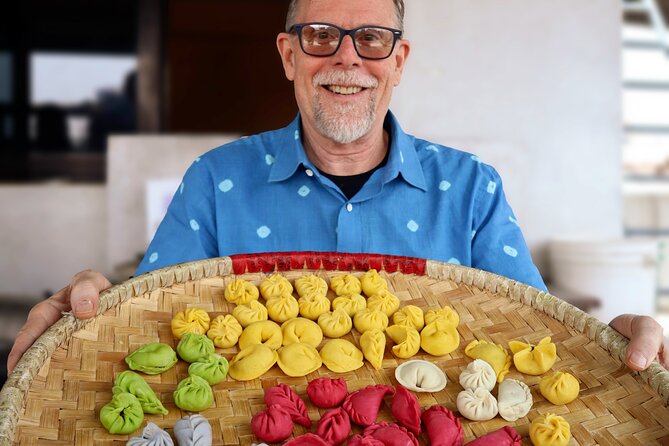
This is not just “learn to make momos” and move on. The class has a clear theme: celebrating diversity while you make food that looks as fun as it tastes. You are making colored momos using beetroot, spinach, carrot, and butterfly pea, and you are taught to treat the dumpling like a craft project, not a stressful test.
In practice, that vibe shows up in how the class is taught. The shaping is explained with humor, including a cosmetic-art comparison that boils down to pinch, pinch, pinch. That matters because momo folding can feel fiddly at first. A funny, repeatable explanation is an easy way to remember the steps when your hands are busy.
Also, if you are traveling with friends or solo, you will still have something to focus on. This is the kind of activity where your attention stays on your ingredients, your dough, and your folding technique, rather than on performance or awkward small talk.
The colored filling lineup: how beetroot and butterfly pea shape the experience
You get the full set of ingredients: beetroot, spinach, carrot, and butterfly pea. The class is explicitly built around color, with beetroot described as bold pink and butterfly pea described as calming blue. Seeing those colors come together in dumplings is part of the point.
Here is why that ingredient list is useful for you: it turns the cooking into something you can visually track. Instead of guessing if your filling is mixed enough, you can see how each ingredient is performing. It also gives you more to talk about at the table when you taste the finished momos, because you can connect color to what you made.
You are also learning the “natural colors” angle, so you are not relying on artificial food coloring. Even if you do not care about the politics of it, the practical takeaway is clear: you are working with real ingredients and learning how they behave in a dumpling setting.
And yes, the class is playful about it. It frames the whole session like edible art, where you end up with dumplings that look like a conversation piece.
Shaping skills: pinching technique you can actually repeat
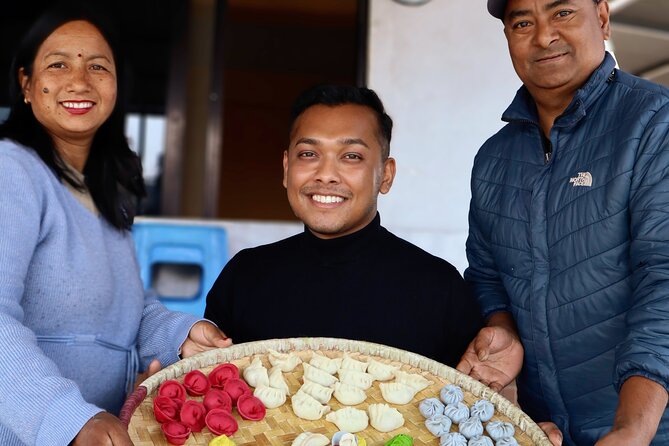
The shaping part is the core of the class, and it is taught in a very hands-on way. The instructor compares careful molding to cosmetic artistry, using a Botox-style joke and a pinch rhythm to emphasize precision. It sounds silly, but that is kind of the point. You are much more likely to remember pinch timing when it comes with a clear image and a simple beat.
In practical terms, this is what you want out of a class like this: technique that you can repeat later. Momo folding is not hard once you get the grip, but it is hard to learn from a recipe alone. A teacher standing with you while you work helps you avoid the most common mistakes, like uneven edges or fillings that spill.
One review also highlights that the teacher Aayam taught how to roll those fabulous momos. Names matter here because it signals the class is led by real people, not just a generic kitchen handoff. If you are the type who learns best when you can ask questions directly, a named instructor is a good sign.



What you’ll eat: steamed and fried momos, same dumplings, different textures
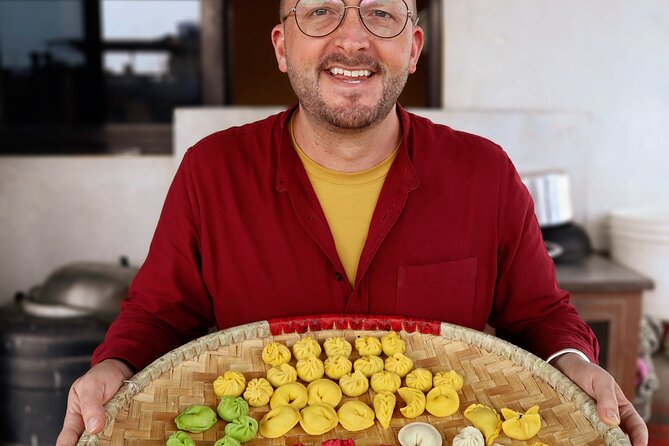
The best classes end with the edible proof. Here, you get that. Your momos are served both steamed and fried, so you taste your handiwork two ways.
This matters more than it sounds. Steamed momos tend to feel lighter, with a softer wrapper and a more delicate bite. Fried momos give you crunch and a different wrapper texture. When you taste both, you learn something important: the technique is not just about folding, it is also about how heat changes the final product.
So even if you only remember one thing from the class, try to remember the texture contrast. That is useful if you ever cook on your own and wonder why fried momos taste richer or why steamed ones feel lighter.
Pickup, mobile tickets, and timing: the logistics that make or break short classes
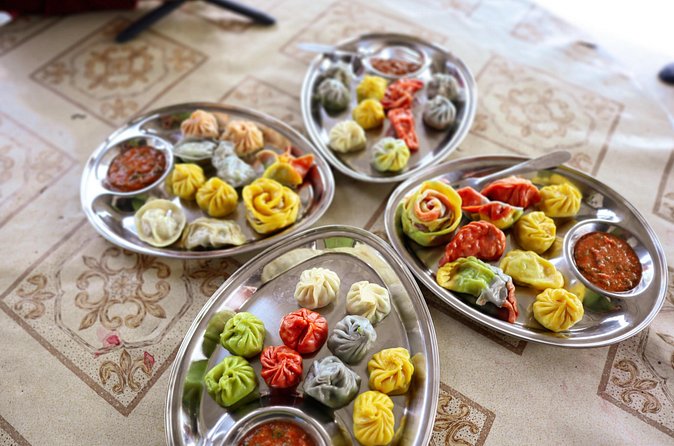
This experience offers pickup and uses a mobile ticket. In a city like Kathmandu, those two details are not small. Pickup reduces friction, especially if you are staying somewhere that is not easy to navigate on foot with luggage or in traffic.
Mobile tickets also help you avoid the last-minute paper scramble. You just show what you need and get to cooking.
Timing-wise, you are looking at about 2 hours. That is a sweet spot for people who want to learn a skill without burning a whole day. It also means you should arrive on time, because there is not much buffer built in.
Operating hours run daily, with a schedule listed from 9:15 AM to 4:15 PM during the season range. If you hate starting too early, pick a later slot. If you prefer cooler morning air for your walk around the Garden of Dreams area, go closer to the first half of the day.
Group size and learning style: why 15 people matters
The group cap is 15 travelers. That size is ideal for a technique class because:
- You get enough hands-on instruction without feeling like you are competing for attention.
- You can still hear directions clearly.
- You are not stuck waiting long stretches while someone else finishes.
If you are the only participant, the class can still work as a personal session. One review described exactly that, and the takeaway was that even with a single person in the session, it remained fun and guided. That is good news for solo travelers who worry about feeling awkward.
Price and value: what $44 really buys you
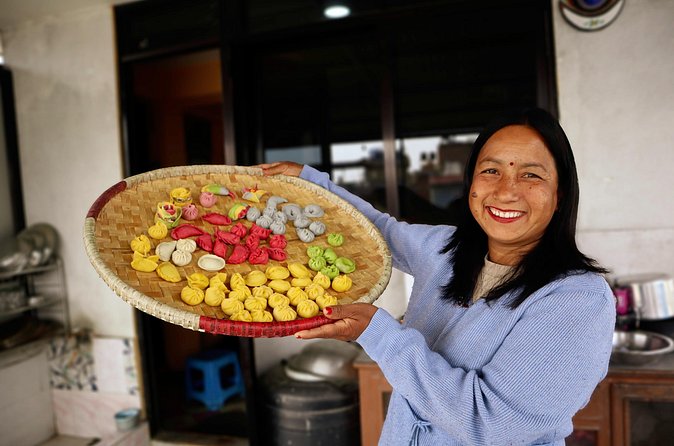
At $44 per person for roughly 2 hours, this is priced like a focused activity, not like a half-day tour with lots of transport. For that money, you get:
- A guided, queer-forward momo-making class
- Natural color ingredient work using beetroot, spinach, carrot, and butterfly pea
- Skill-building shaping practice
- A tasting where your momos are served steamed and fried
- Pickup offered (when selected)
- A mobile ticket flow
The value here is in the instruction and the experience design. You are not just buying food, you are buying the learning moment and the payoff. And the cost is relatively accessible for a hands-on class in a major tourist city.
If you are deciding between eating out and doing one activity with a real takeaway, this is the kind of cooking class that can make the day feel more personal. You will leave with a better sense of how the dumpling should feel and how the process works from start to finish.
Who should book Rainbow Mo:Mo, and who might skip it
I think this class fits best if you want:
- A hands-on cooking activity with clear technique
- A playful atmosphere where inclusivity is part of the format, not an afterthought
- A short commitment that still feels meaningful
It might be less ideal if you prefer strictly traditional cooking formats with no themed framing. Even if the food is what you care about most, the class tone is part of the package.
It also makes sense for travelers who like activities near their sightseeing loop. Garden of Dreams is a known reference point, and you are finished back at the meeting spot.
And if you travel with service animals, you are covered here, since service animals are allowed.
Should you book Rainbow Mo:Mo?
Yes, you should book it if you want a memorable, hands-on Kathmandu activity that mixes practical cooking with a light, inclusive social tone. The ingredients are clearly chosen for their color story, and the class ends with food you made yourself, served steamed and fried.
Book it soon if you are traveling at peak times. The data says it is often booked about 31 days in advance on average, so planning ahead will save you stress. If you like cooking lessons where you can learn by doing, this is a smart use of 2 hours.
If you hate structured activities, or you want a long meal and lots of free time, consider another option. But if you want to leave with dumpling skills, color knowledge, and a good story, this one is easy to recommend.
FAQ
How long is Rainbow Mo:Mo in Kathmandu?
The class runs about 2 hours.
What does it cost?
It costs $44.00 per person.
Where do I meet for Rainbow Mo:Mo?
Meet at the Garden of Dreams, Tridevi Sadak, Kathmandu 44600, Nepal. The activity ends back at the meeting point.
Is pickup included?
Pickup is offered.
What ingredients are used to make the colored momos?
You use beetroot, spinach, carrot, and butterfly pea to create the different colors.
Can I cancel for free?
Yes. You can cancel up to 24 hours in advance for a full refund, based on the local start time.
The Rest of Our Kathmandu Write Ups



More Kitchens, More Momos
Everything else we have reviewed around Kathmandu
- 12 Days Everest Base Camp Trekking
★ 5.0 · 3 reviews - 1 Night 2 Days Chitwan Jungle Safari Tour from Pokhara or Kathmandu
★ 3.0 · 3 reviews - Thamel Rickshaw tour
★ 4.7 · 3 reviews - Kathmandu: Momo Making Class with a Local Chef
★ 5.0 · 3 reviews - Kathmandu: Full-Day Yoga, Body Massage and Pedicure Package
★ 5.0 · 3 reviews - From Kathmandu / Pokhara / Chitwan: River Rafting – 1 Day
★ 4.6 · 3 reviews
Nepali Cooking Classes worth a second look.
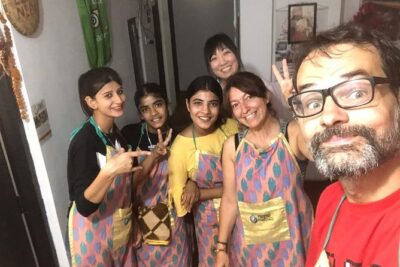 ★ 5.0Half day cooking class in Thamel kathmanduFrom $28607 reviews
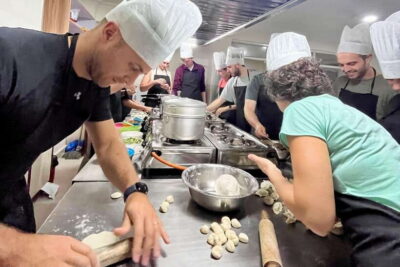 ★ 4.9Local Women-Led Nepali Cooking & Momo ClassFrom $4360 reviews
 ★ 5.0Local Lead Nepali Cooking & Momo-Making ClassFrom $5212 reviews
 ★ 5.0Local Women Lead Nepali Cooking ClassFrom $30125 reviews
 ★ 5.0Nepalese Momos or Dal Bhat Cooking Class (Cook with Delight)From $5099 reviews
 ★ 5.0The best Private Nepali Cooking Class in KathmanduFrom $2483 reviews
 ★ 5.0Nepalese Kitchen in Pokhara: Momos or Dal Bhat Cooking ClassFrom $2867 reviews
 ★ 4.8Traditional Momo Making Class & PickupFrom $460 reviews
Lists this tour sits in