
REVIEW · MUSTANG & MUKTINATH TOURS
Upper Mustang Trekking
Remote Mustang feels like a step into a forgotten map, and the route makes that real. I especially like the Lo Manthang walled city days and the way this trek focuses on authentic Upper Mustang lifestyle instead of crowded trails. One drawback to plan for is the weather and wind, especially on return days when you need to keep moving before midday.
This is a trip that mixes big logistics with low drama once you’re on the trail. You start with Kathmandu comfort, then switch to flights and lodge trekking, with a government-licensed guide and a shared porter for hauling the heavy stuff. You also get a structured path into a restricted region, which matters because Upper Mustang requires a special permit.
If you’re fit and you don’t mind basic lodge life, this can be a very satisfying way to see a Tibetan Buddhist world in Nepal. If you expect a polished, city-style experience every night, you might feel the rough edges of remote travel.
In This Review
- Key things that make Upper Mustang special here
- Entering Upper Mustang, where the trip feels older than the roads
- Kathmandu to permit day: getting set up before the trail starts
- The Kathmandu-Pokhara bus start: long road, simple rhythm
- Flights to Jomsom at 2,715m, then the first trek into Kagbeni
- Chhusang and entry checks: what you should know before you feel the sting
- Chhusang to Somare to Syangboche: climbs that explain the view
- Ghiling, Tsarang, and the road toward Lo Manthang
- Lo Manthang day: monasteries and the King Palace
- Dhakmar and Ghami: going deeper into village life
- The descent days: Chhusang, Samar, Bhena, Chele, and Kali Gandaki
- Jomsom return and apple-brandy breaks
- Pokhara to Kathmandu, then out at TIA
- Price and value: what your USD 2,400 is really buying
- Who should book Upper Mustang trekking with this plan
- Should you book this Upper Mustang trek or look elsewhere?
- FAQ
- What is the duration of the Upper Mustang Trekking tour?
- Where does the tour start and end?
- Are permits included, including the special Upper Mustang permit?
- What transport is included for the trek?
- What accommodations and meals are included?
- Do you get a guide and porter?
- How flexible is cancellation?
Key things that make Upper Mustang special here
- Special Upper Mustang access with the required permit, plus entry checks as you approach Kagbeni
- Lo Manthang day(s) for monastery and King Palace time inside the walled city
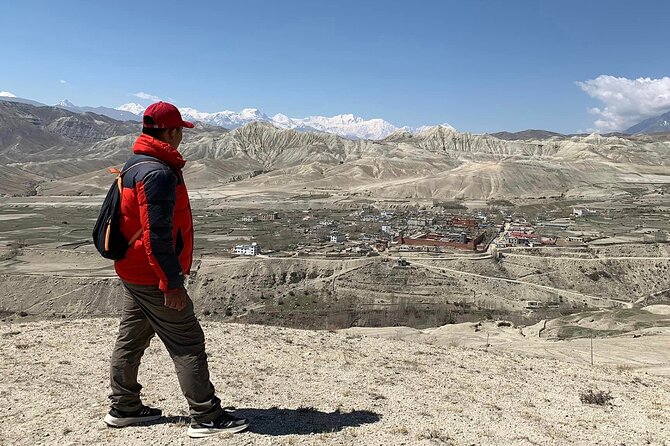
- Clear-weather views of major peaks like Dhaulagiri and Annapurna from higher points on the route
- Government-licensed guide plus a porter shared for 2 people to keep the trek realistic
- A practical return plan using flights between Jomsom and Pokhara to save time and fatigue
Further north, toward Muktinath
Entering Upper Mustang, where the trip feels older than the roads
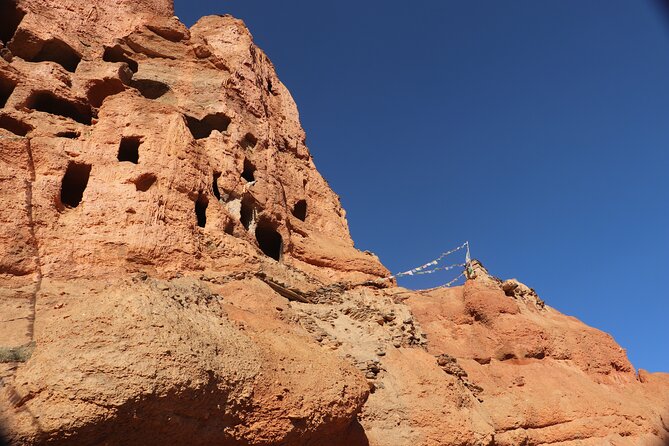
Upper Mustang has a specific vibe, dry air, wide skies, and villages that look designed to last. What makes this trek work for you is how the pacing and routing build toward the core experience: the walled city of Lo Manthang and the surrounding settlements that carry Tibetan Buddhist culture.
You’ll get to see how daily life continues in a place that still feels remote. The itinerary is built to move through villages such as Kagbeni, Chhusang, Ghiling, Tsarang, and others before you reach Lo Manthang, so you’re not just hiking to a single highlight. You’re watching the region unfold one day at a time.
Also, this trek tends to avoid the extreme high-alpine feel. Based on what’s been shared about the route, elevations often stay under about 4,000m. That can make a big difference if you want the challenge of trekking, but not a full-on high mountain grind.
Kathmandu to permit day: getting set up before the trail starts
Your tour begins in Kathmandu with a transfer to a hotel, then a second day that’s all about setup. If you’re interested, you can do Kathmandu sightseeing after breakfast and also get your Upper Mustang Special Permit arranged using your original passport and Nepal visa. The process takes a day.
This matters more than it sounds. Upper Mustang access is controlled, and you want your paperwork handled while you still have time and a base in the city. When you show up ready, the first trekking day feels like the start of the adventure, not a scramble.
The trip also includes hotel comfort up front: 3 nights in Kathmandu in a 3-star property with breakfast. That’s a nice buffer after arrival day fatigue and before you shift into flying and trekking schedules.
The Kathmandu-Pokhara bus start: long road, simple rhythm
Before you ever reach Mustang, you take a tourist bus from Kathmandu to Pokhara. The departure is listed as 7:00 AM, with a road trip on the Prithibi Rajmarg highway. You’ll stop briefly for breakfast after about 2 hours of driving.
You might think of bus time as downtime, but for this route it helps you get into a steady travel rhythm. You’re learning how your days will work on the trek: early start, planned rest points, and a clear handoff between transport segments.
Then you sleep in Pokhara, 2 nights with breakfast included. Pokhara is your staging point for the Mustang flights and a good place to reset your legs before the first hiking day.
Flights to Jomsom at 2,715m, then the first trek into Kagbeni
Day 4 is where the whole mood shifts. You fly from Pokhara to Jomsom, listed at an altitude of 2,715m, then trek to Kagbeni for about 4 to 5 hours. This part of Mustang is closely tied to the Jomsom Muktinath route, so you’ll feel the region’s established trails, even while Upper Mustang stays remote.
Kagbeni is your key first village stop, and it’s also described as the main entry gate area for the restricted zone. Expect time for checks and the transition from general trekking tourism to a more controlled access experience.
If you’re the type who likes a clean start, this section is straightforward. You’re not thrown into long days immediately, but you still get real mountain scenery and the early rhythm of tea house trekking.
Other lodge to lodge routes near Kathmandu
Chhusang and entry checks: what you should know before you feel the sting
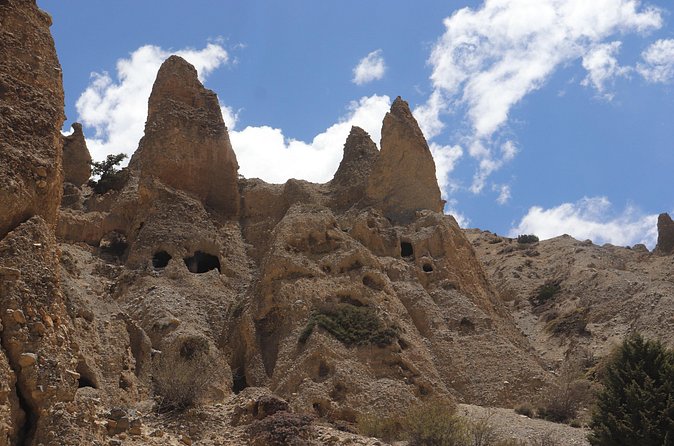
From Kagbeni you descend toward Chhusang, and this is where you feel the administrative side of the trek. Kagbeni is described as the entry gate for the restricted area of Upper Mustang, with a special permit cost of USD 500 per person for 10 days.
Practically, you should plan to slow down here. Entry processing can take time, and it’s better to treat the day like a setup transition rather than a pure hiking push. Once checks are done, you settle into the trekking routine.
Accommodations during the trek are included as lodge or tea house stays. That’s part of the value: you’re not paying per-night lodging separately while you focus on moving forward.
Chhusang to Somare to Syangboche: climbs that explain the view
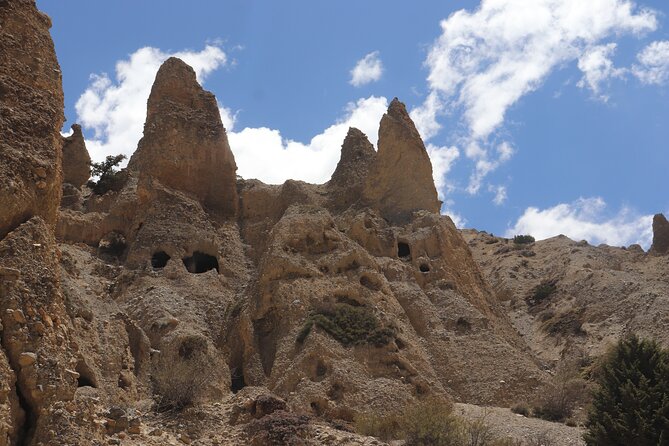
Day 6 is described as mostly solid trail with some flat sections, then a bigger climb up toward Syangboche. Total trek time is listed around 5 to 6 hours.
What I like about this stage for your planning is that it gives your legs a chance to adapt. You’re not only climbing. You’re getting a mix: easier walking segments, then a more serious push. That pattern helps you pace yourself so you don’t burn out too early.
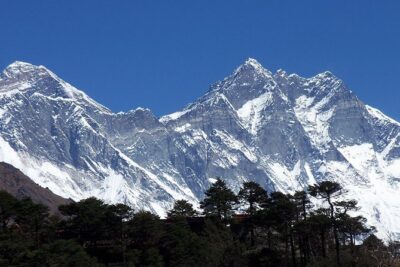
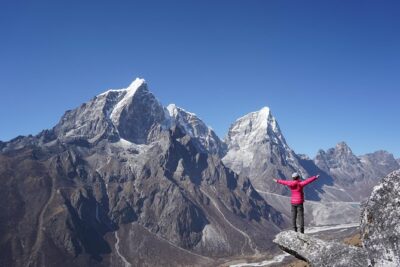
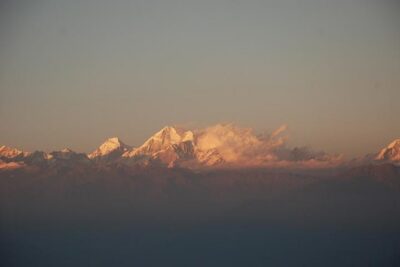
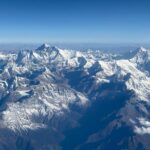
Day 7 then turns the knob on the climb. It’s mostly uphill to Syangboche, with time to take lunch and rest. The itinerary specifically points to excellent views of the white ranges, including Dhaulagiri (8,167m) and Annapurna (8,097m), when weather is very clear.
Translation for you: you don’t need to chase a strenuous day every afternoon, because the scenery payoff is planned into the higher points. But you do need to stay flexible with weather.
Ghiling, Tsarang, and the road toward Lo Manthang
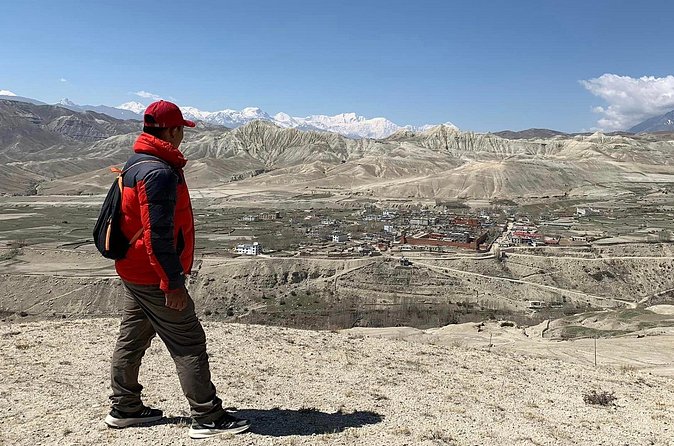
After Syangboche, Day 8 takes you through a section that includes farms and the Ghiling village area, with old monasteries mentioned. You then continue on toward Tsarang, described as a big village along the way.
This is the day where Upper Mustang starts to feel less like a trail and more like a lived-in region. You see settlements, agriculture, and religious sites that are not only for tourists. Even without extra context, the physical layout and monasteries make the cultural logic obvious.
Day 9 is the trek to Lo Manthang, about 5 to 6 hours. You’ll pass several rivers and bridges, and the scenery is described as more deserted as you get closer. That desert-like feeling can be an adjustment if you’re coming from greener regions. The upside is clarity. When buildings are fewer and horizons are wider, the sense of place becomes stronger.
Lo Manthang day: monasteries and the King Palace
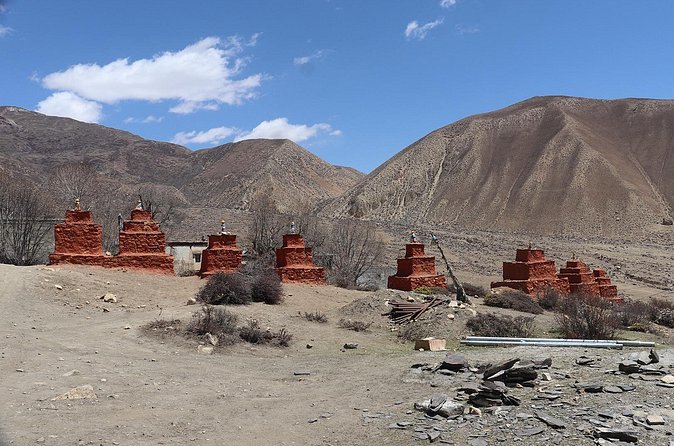
Lo Manthang is the headline because it’s a walled city, and it’s set up for a full explore day. Day 10 is a dedicated sightseeing day after breakfast, visiting monasteries and the King Palace.
This is where I’d tell you to slow down. In places like this, the details are in the gates, courtyards, and temple rooms. Even if you only spend a day, you can feel the “compact world” effect of the walled layout, and you get enough time to understand what you’re seeing instead of just passing through.
If you care about Tibetan Buddhist culture, this is one of the most valuable parts of the whole itinerary. You’ll be in the core zone, not just the approach trail.
Dhakmar and Ghami: going deeper into village life
After Lo Manthang, Day 11 starts with trekking to Dhakmar, and the beginning part is described as uphill to a Gompa area. The itinerary notes history about gompas, so this isn’t a casual stroll. It’s a route where religious sites are part of the walk, not just a side stop.
Day 12 continues into the Upper Mustang valley, trekking to Ghami, described as the biggest village and also a popular route, with a monastery. There’s also mention of farm products by a foreigner and apple gardens.
If you like the practical side of travel, you’ll enjoy this. The trek isn’t only about ruins and viewpoints. It’s also about how people live here, how agriculture works in a harsh climate, and how monasteries fit into daily routines.
The descent days: Chhusang, Samar, Bhena, Chele, and Kali Gandaki
Day 13 is described as Syanboche to Chhusang with a big downhill. You pass small villages such as Samar, Bhena, and Chele. The day includes a descent of about a thousand meters to the Kaligandaki River area.
Downhill days are often mentally harder than uphill ones because your body has to manage knees and balance. This stage can be a good moment to practice trekking technique, slow steps, and short breaks. If you’re careful, the downhill becomes manageable, and the river valley view gives you a satisfying sense of progress.
Day 14 brings another key planning detail. You trek from Chhusang to Kagbeni and are advised to leave early. The itinerary notes that after 12:00 PM you can face very strong wind until Kagbeni. That’s not a small detail, and you should treat it seriously.
For you, that means packing your day like a pro. Aim to be moving earlier rather than taking extra-long breakfast or lingering too much in town.
Jomsom return and apple-brandy breaks
After arriving back to Kagbeni, Day 15 is trekking to Jomsom, described as an easy and short hike. Once you reach Jomsom, you check the flight schedule for the next day and visit Jomsom City to buy apple brandy and items from apple makers.
This is one of those small, human touches that makes a trek feel complete. You’re not only walking between points. You’re also getting a taste of local trade and products tied to the apple-growing environment.
Day 16 then depends on your flight time. If there’s time, you can eat breakfast in Jomsom. Otherwise, you leave early to report to the airport and fly to Pokhara, with the flight listed as about 25 minutes. You then transfer to your Pokhara hotel, leaving backpacks as needed.
Pokhara to Kathmandu, then out at TIA
Day 17 is a 7-hour drive by tourist bus back to Kathmandu, picking up where your earlier bus leg left off. Day 18 is straightforward: you’re dropped to Tribhuvan International Airport for departure.
This transport sequence is practical. You’re not stacking long hikes every day. After the core Upper Mustang portion, you return with less strain, using air for the long-distance link and bus for the highway legs.
Price and value: what your USD 2,400 is really buying
The listed price is USD 2,400 per person for an approximately 18-day trip. On paper, trekking permits can make trips expensive, and Upper Mustang is exactly the kind of place where access fees matter.
Here’s what you should treat as the value drivers:
- Special Upper Mustang Permit (USD 500 per person for 10 days), plus the included trekking permit for the Annapurna Conservation Area Project (ACAP)
- Transportation that stitches remote legs together, including domestic air between Pokhara and Jomsom and the return flight segment
- Accommodations: 3 nights Kathmandu in a 3-star with breakfast, 2 nights Pokhara with breakfast, plus lodge stays during the trek
- Meals included: 16 lunches and dinners, and breakfast 17
- A government-licensed trekking guide plus a porter shared for 2 people
Those pieces reduce the risk of hidden costs and reduce decision fatigue on the ground. The biggest extra costs you should plan for are personal expenses and tips for guide, porters, and driver, plus any extra hotel days not covered by the included nights.
So yes, the price is not cheap. But for a restricted region trek that includes permits, domestic flights, and guided lodge trekking, it reads like a packaged solution aimed at keeping the experience smooth.
Who should book Upper Mustang trekking with this plan
This trek is a strong fit if you want:
- A remote, less-crowded trekking feel compared to more famous routes
- Tibetan Buddhist culture in and around Lo Manthang
- A route that may stay mostly below about 4,000m, based on what’s been noted about elevation on this itinerary
- A guided trip with a porter plan that keeps the trek more enjoyable
It may not be a fit if you:
- Want a fully comfortable, luxury travel rhythm every day
- Dislike basic lodge life during multi-day walking
- Struggle with wind exposure or you prefer to avoid schedule pressure around midday
Most importantly, the tour data says you should have strong physical fitness level. “Strong” here doesn’t mean athlete. It means you should be comfortable trekking for multiple days and handling a mix of climbs and descents.
Should you book this Upper Mustang trek or look elsewhere?
If your goal is to see Upper Mustang in a structured way, with the key permit handled and with a team that provides guide and porter support, I think this plan is worth considering. The trip’s biggest payoff is the time around Lo Manthang, paired with a return route that uses flights to avoid turning every day into a marathon.
I’d book it if you’re excited by Tibetan Buddhist sites, walled-city exploration, and a quieter sense of place. I’d hesitate only if you’re not comfortable with wind planning, or you want a high-comfort, low-effort experience.
And if you’re booking, do one smart thing: prepare your body for downhill days and follow the advice about leaving early when wind is expected after midday.
FAQ
What is the duration of the Upper Mustang Trekking tour?
The tour is listed as 18 days approximately.
Where does the tour start and end?
It starts in Kathmandu, Nepal, and ends with a drop-off at Tribhuvan International Airport for your final departure.
Are permits included, including the special Upper Mustang permit?
Yes. The trek includes the ACAP trekking permit, and it also includes the Special Upper Mustang Permit listed as USD 500 per person for 10 days.
What transport is included for the trek?
You get private pickup and drop by car, van, or bus, tourist bus travel between Kathmandu and Pokhara, and domestic air travel between Pokhara and Jomsom (and back).
What accommodations and meals are included?
Kathmandu includes 3 nights in a 3-star hotel with breakfast, Pokhara includes 2 nights with breakfast, and during the trek you stay in included lodge or tea house accommodations. Meals include 16 lunch and dinner and breakfast (17).
Do you get a guide and porter?
Yes. You get a government-licensed trekking guide and a porter, with 1 porter for 2 people.
How flexible is cancellation?
You can cancel up to 6 days in advance for a full refund. Cancel 2 to 6 days ahead for a 50% refund. If you cancel less than 2 days before the start time, the amount is not refunded, and changes within 6 days are not accepted.
Lodge to Lodge Around Kathmandu
The Rest of Our Kathmandu Write Ups
Beyond Jomsom, Toward Muktinath
Everything else we have reviewed around Kathmandu
- 12 Days Everest Base Camp Trekking
★ 5.0 · 3 reviews - 1 Night 2 Days Chitwan Jungle Safari Tour from Pokhara or Kathmandu
★ 3.0 · 3 reviews - Thamel Rickshaw tour
★ 4.7 · 3 reviews - Kathmandu: Momo Making Class with a Local Chef
★ 5.0 · 3 reviews - Kathmandu: Full-Day Yoga, Body Massage and Pedicure Package
★ 5.0 · 3 reviews - From Kathmandu / Pokhara / Chitwan: River Rafting – 1 Day
★ 4.6 · 3 reviews
Mustang & Muktinath Tours worth a second look.
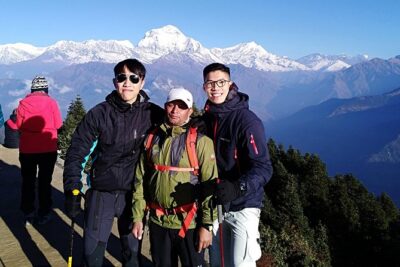 ★ 5.0Trekking in Annapurna/Langtang/Everest/Upper Mustang regionsFrom $40161 reviews
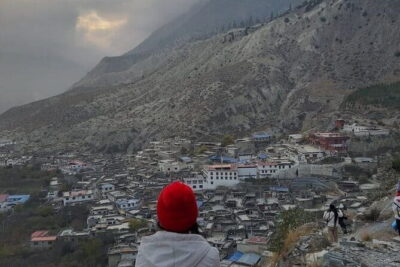 ★ 5.02-Day Scenic Mustang Tour: Pokhara to Jomsom, Kagbeni & MuktinathFrom $23923 reviews
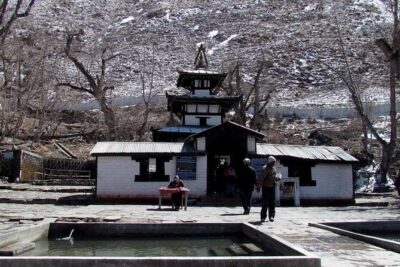 ★ 5.06 Days Muktinath Tour Package in NepalFrom $70020 reviews
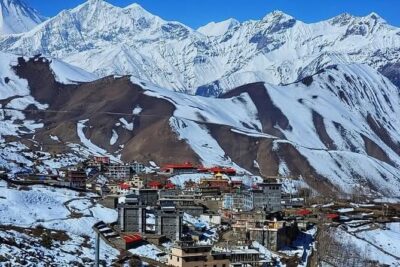 ★ 5.03 Day Lower Mustang Tour with 4WD Jeep from PokharaFrom $43012 reviews
 ★ 5.05 Days Adventures Lower Mustang Trip by 4WD JeepFrom $43012 reviews
 ★ 5.0Jeep Trip to Upper MustangFrom $2,20010 reviews
 ★ 5.06 Day Upper Mustang Tour by 4WD Jeep from PokharaFrom $3,0008 reviews
 ★ 5.0Manakamana Darshan- Day TourFrom $1804 reviews
Lists this tour sits in