
REVIEW · MUSTANG & MUKTINATH TOURS
Upper Mustang Trek 14 Days
Upper Mustang feels like another world. You get a rare taste of the once-forbidden kingdom, with time in walled Lo Manthang and a government-licensed English-speaking trekking guide shaping the route and stories. The tradeoff is simple: trek accommodation and most meals are not included in the listed price.
I like the pacing built around adjusting to altitude, plus the mix of classic trekking days with cultural stops that actually matter. You also start with the easy wins, Kathmandu base in Thamel and a Pokhara break with Phewa Lake and Tal Barahi Temple.
One more thing to consider: this is a moderate fitness trek in a high, remote region. You’ll be walking most days, and the plan depends on air and road connections within Nepal.
In This Review
- Key highlights
- Upper Mustang Trek: what makes Lo Manthang so special
- Price and logistics: what $1,212 gets you, and what costs extra
- Kathmandu in Thamel: a practical landing day before altitude
- Pokhara breaks: Phewa Lake and Tal Barahi Temple
- Jomsom to Kagbeni: starting the Mustang rhythm
- Kagbeni to Chele: arid trails, caves, and real remoteness
- Chele to Syanboche: high-desert walking with fewer distractions
- Ghami and Tsarang: village life plus fortress-and-monastery stops
- Tsarang to Lo Manthang: entering the walled capital
- Lo Manthang days: Thubchen Gompa and Chhoser Cave
- Returning via Dhakmar and Kagbeni: the route flips the meaning
- Jomsom to Pokhara, then Kathmandu: finishing strong
- Guide and comfort details that actually matter
- Who this Upper Mustang Trek fits best
- Should you book this Upper Mustang Trek?
- FAQ
- How long is the Upper Mustang Trek?
- Where does the tour start in Kathmandu?
- Does the tour include airport pickup and drop-off?
- Are permits included for Upper Mustang and the Annapurna region?
- Is accommodation during the trek included?
- Are meals included?
- Is a guide provided?
- Are porters included in the price?
- Is the trek private?
- When can I cancel for a full refund?
Key highlights
- Lo Manthang stays the star, with walled streets and Tibetan-influenced culture front and center
- Permits are handled in advance, including the Upper Mustang restricted area permit for 10 days plus the Annapurna Conservation Area permit
- You fly into Jomsom and out again, saving long overland days and cutting down wear and tear
- Caves and monasteries near Lo Manthang, including Thubchen Gompa and Chhoser Cave
- Handpicked teahouse-style stops along the way, with lodging costs listed as not included
- Comfort and safety basics included, like airport pickup, a first aid medical box, and your company map and trek kit
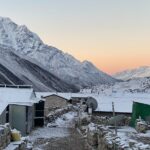
Further north, toward Muktinath
Upper Mustang Trek: what makes Lo Manthang so special
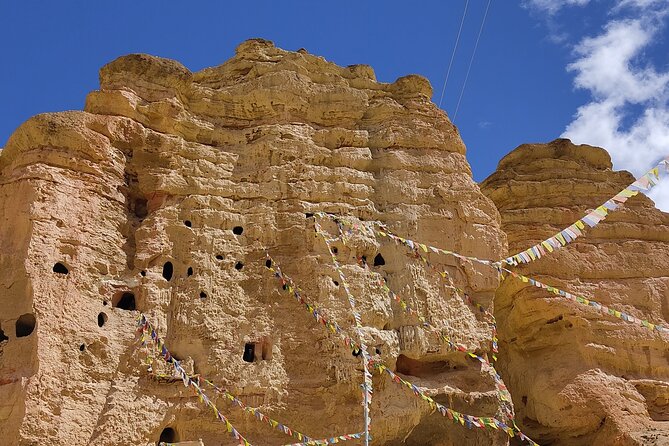
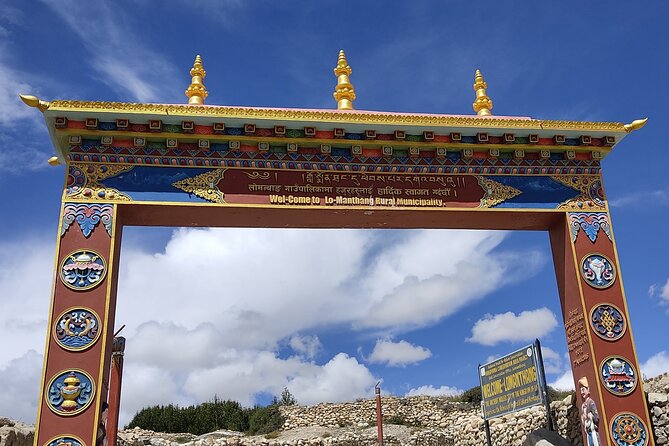
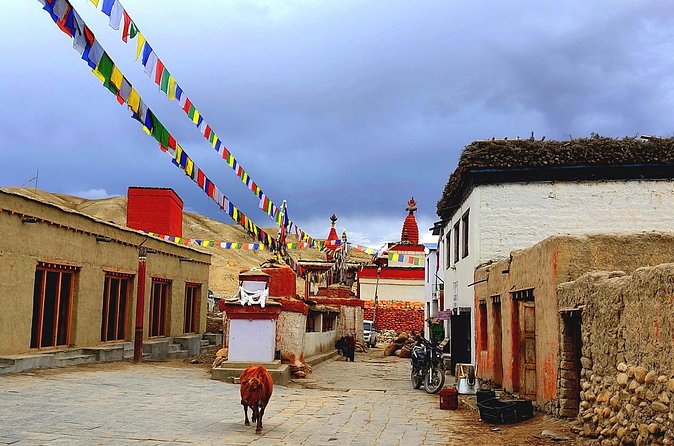
Upper Mustang is different from most Nepal treks because it still feels like a separate world. The region was once restricted, and that long-ago isolation shows in the architecture and daily life. When you reach Lo Manthang, you’re looking at a walled capital with narrow lanes, mud-brick buildings, and strong Tibetan influence.
That matters because you’re not just ticking off views. The trek is designed so you spend real time in the human side of the high desert. You visit key religious sites like Thubchen Monastery, and you get a chance to explore Chhoser Cave near Lo Manthang, which adds a sense of time depth beyond the walking.
I also like that the trip treats the route like more than exercise. The guidance is meant to connect you to the land and its stories, not just point at scenery.
Price and logistics: what $1,212 gets you, and what costs extra
At $1,212 per person for about 14 days, the price is in the middle-to-upper range for Nepal treks. The reason is the travel complexity and the permits. Your package includes:
- Airport pickup and drop-off and Kathmandu base lodging for 2 nights (Hotel Chhimeki)
- Transportation as scheduled, including the key internal flights
- Permits: Upper Mustang restricted area permit for 10 days (not all days) plus the Annapurna Conservation Area permit
- A government license holder English-speaking trekking guide
- A first aid medical box
- Trek kit items (t-shirt, duffel bag, trekking map with company logo)
- All taxes
- Dinner (included)
Now for the part you should budget for. It also lists several major items as not included:
- Accommodation during the trek
- All meals (even though dinner is included, plan on paying for most food)
- All kinds of drinks
- Porters
- Tips for guides and porters
- Travel insurance and any rescue costs
Value-wise, this means you’re paying for the structure: permits, guide, and the Nepal logistics. You’re still responsible for day-to-day living expenses on the trail, plus optional help like a porter. If you want less hassle, you’ll likely pay for a porter and settle tips. If you travel light and budget carefully, you can keep costs controlled.
Kathmandu in Thamel: a practical landing day before altitude
Your trip begins in Kathmandu with pickup from the airport and a base in Thamel, a convenient area for getting your bearings quickly. The tour includes 2 nights in Kathmandu at Hotel Chhimeki, which is handy because you’re not scrambling for logistics on day one.
The day 1 plan is mostly “get settled.” It gives you time to unwind and adjust, which is smart. Before Upper Mustang, you want your sleep and hydration routines to be solid, not scattered.
Then on day 2, you shift to Pokhara by scenic drive. That’s a long travel day, around 12 hours, but it also breaks up the energy of Kathmandu with countryside passing by. Pokhara is your emotional reset before the trek starts.
Pokhara breaks: Phewa Lake and Tal Barahi Temple
Pokhara gives you something you won’t get on the trail: open air and water. You get time at Phewa Tal, including an option to rent a boat and watch the reflections of Annapurna and Machapuchare peaks. Even if you skip the boat, the lake walk and viewpoints are a nice soft landing.
You also visit Tal Barahi Temple on an island in the lake. It’s a short stop, reached by boat, but it adds a calm, spiritual pause right before you fly toward the Mustang gateway.
This matters for your pacing. The trek later is dry, high, and quieter. Pokhara helps you store energy, not just spend it.
Other lodge to lodge routes near Kathmandu
Jomsom to Kagbeni: starting the Mustang rhythm
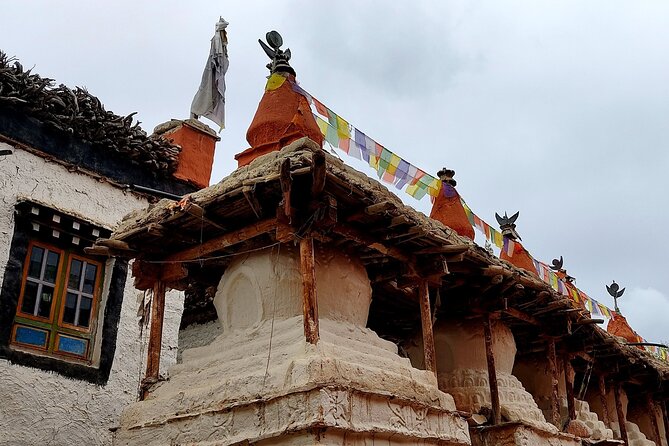
The trekking phase begins after you fly from Pokhara to Jomsom in the Kali Gandaki Valley area. The flight time listed is short, about 15 minutes, but the region is known for strong winds. Translation for you: air connections can feel more sensitive here than in calmer parts of Nepal, so keep a flexible mindset around timing.
From Jomsom you trek to Kagbeni, often described as a gateway village with ancient mud-brick houses, narrow alleyways, and monasteries. This is where the terrain starts to feel like Upper Mustang. The walking days become more about wide horizons, dust-colored hills, and a “you are far from everything” mood.
Kagbeni is also a cultural start point. It’s not just a rest stop. The village offers a first taste of the lifestyle and architecture that repeats throughout Mustang.
Kagbeni to Chele: arid trails, caves, and real remoteness
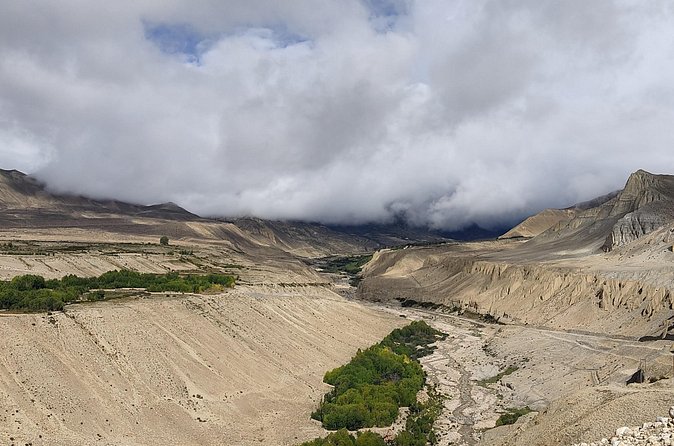
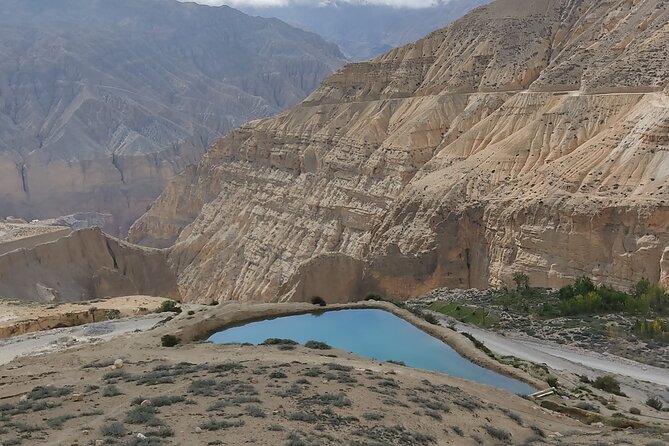
Your next day brings you from Kagbeni to Chele. The route is arid and remote, with traditional Mustang villages and ancient caves mentioned as part of the scenery. That’s a good setup for what comes next: the high desert feel gets stronger as you go.
One possible drawback: days like this can feel long on days where footing is steady but the environment is unforgiving. There’s less “green” to break up the visual monotony, so your job is to notice details: walls, carvings, monastery shapes, and the way villages appear suddenly against the dry hills.
If you enjoy photography, this is the kind of day that rewards slow looking instead of sprinting from one view to the next.
Chele to Syanboche: high-desert walking with fewer distractions
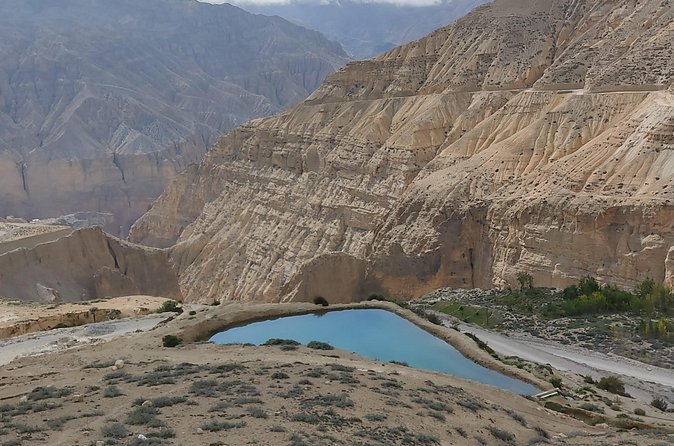
From Chele to Syanboche, the trek continues across high-altitude deserts and rugged, barren terrain. The description emphasizes raw, untouched beauty and a peaceful, remote atmosphere.
This is one of the best sections if you like quiet treks. It can also be one of the most mentally demanding, because you’re trekking in a big open setting. To keep it enjoyable, you’ll want to pace yourself early, drink regularly, and plan your breaks like short “recovery checkpoints,” not random stops.
This is also where acclimatization support matters. The overall plan mentions careful acclimatization and thoughtful pacing, which is exactly what you want in a place like Upper Mustang where the air can feel thin.
Ghami and Tsarang: village life plus fortress-and-monastery stops
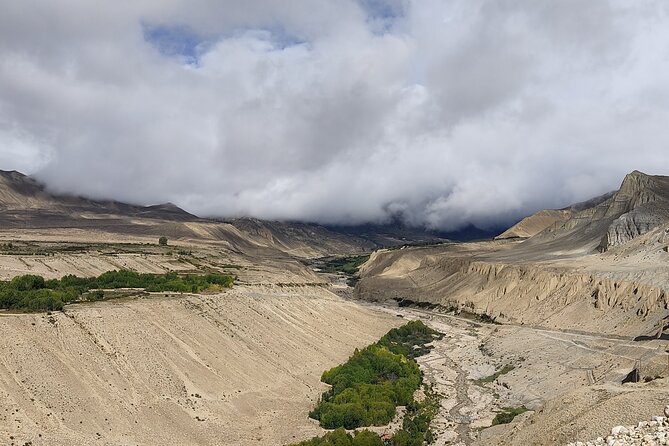
As you move toward Ghami, the trek becomes a little more “lived-in.” Ghami is a larger village area, and the plan highlights historical monasteries. That gives you a break from pure walking focus, plus a chance to see how religion and community blend into everyday routines.
From Ghami to Tsarang, you’re aiming at another cultural anchor. Tsarang is known for an ancient monastery and the imposing Tsarang Fort. Fort and monastery stops work well in Mustang because they’re physical landmarks you can match with stories you learn along the way.
If you’re the kind of traveler who likes “why here matters,” these days deliver. If you only want scenery, you’ll still see plenty, but the payoff here is understanding how these villages survived and organized themselves in a tough environment.
Tsarang to Lo Manthang: entering the walled capital
The trek continues to Lo Manthang, described as the walled city and capital of Upper Mustang. This is the emotional highlight for many people because walled cities feel like a time capsule. The itinerary’s emphasis on narrow streets and traditional mud-brick structures is spot on: you don’t just look at Lo Manthang, you slow down and move through it.
And since you’re there for more than a token photo stop, you can feel the rhythm of the place. That’s a big deal in a city like this, where one hour passes fast, but a full walking day helps it sink in.
Lo Manthang days: Thubchen Gompa and Chhoser Cave
Once you reach Lo Manthang, the plan focuses on spiritual and historic sites nearby.
First is Thubchen Gompa, described as one of the oldest and most significant monasteries in the city. You’re aiming for atmosphere here, not just architecture. A monastery visit on a high-desert day can feel surprisingly grounding.
Then comes Chhoser Cave, located near Lo Manthang. The cave complex is said to have been used for centuries. It’s also noted as being used historically for practices connected to the region’s past. Even if you don’t read every inscription, the physical scale and the silence of a cave setting give you a very different kind of perspective than the open trail.
This combination is valuable because it balances “walking wonder” with “stillness wonder.” You can be active during the day and slow down enough that you remember what you came for.
Returning via Dhakmar and Kagbeni: the route flips the meaning
Your return trek runs from Lo Manthang to Dhakmar, then Dhakmar to Kagbeni, retracing the route with fresh eyes. That repetition is not boring here. Mustang terrain is so stark that the same trail can feel different once you’ve already lived inside the destination.
Dhakmar is noted for unique rock formations and expansive valleys. You’re not just going back down the line, you’re comparing your first impressions with what you noticed on the way in.
Back at Kagbeni, you get one more view of the mud-brick alleys and monastery setting before the endgame. It’s a good moment to do the practical things too: rest, re-check your gear, and mentally swap from trekking mode into travel mode.
Jomsom to Pokhara, then Kathmandu: finishing strong
After the trekking portion, you fly from Jomsom back to Pokhara, with the flight time listed around 30 minutes. From there, you drive back to Kathmandu. The ride is about 12 hours and gives you time to decompress before you take your next flight.
Day 13 includes time in Kathmandu for last-minute shopping or a relaxed wander. That’s useful, because you’ll likely want to buy a few small gifts and practical souvenirs you missed earlier.
On day 14, you head to Tribhuvan International Airport for departure.
Guide and comfort details that actually matter
This trip is private, meaning only your group participates. That matters because Mustang days are long enough that you benefit from steady pacing and fewer group bottlenecks.
The package also includes:
- A government license holder English-speaking trekking guide
- A first aid medical box
- Company-branded map, plus a t-shirt and duffel bag
From the guide side, the reviews tied to Trek Mania Nepal highlight smooth communication and a standout guide experience with Mr. Devaraj. That kind of organization matters in Upper Mustang because permits and timing are not optional. You want someone who can keep the plan moving when weather or connections get tricky.
About comfort: the overview emphasizes handpicked teahouses and thoughtful pacing. But since trek accommodation is not listed as included, you should expect to pay for your beds and most food on the trail. The good news is that you’re not choosing from a wild range of options yourself. The plan is designed to match your daily walking rhythm.
Who this Upper Mustang Trek fits best
This trek is a strong match if you want:
- A serious cultural trip with Lo Manthang at the center
- A mix of guided village days and quieter spiritual stops like monastery and cave visits
- An itinerary that includes flights into Jomsom so you’re not spending all your energy on transport
It may be less ideal if you:
- Want a fully “all-inclusive” package with trek meals and lodging included (those are listed as not included)
- Are planning for a very low walking day profile, because most days are structured trekking
- Need guaranteed flight reliability in a tight schedule, since Jomsom flights can be affected by regional wind conditions
Should you book this Upper Mustang Trek?
If you’re excited by the idea of walking into Upper Mustang’s walled capital and spending time at places like Thubchen Gompa and Chhoser Cave, I think this is a solid choice. The value is strongest when you care about permits, guidance quality, and a plan that connects culture to the route.
I’d book with eyes open on costs beyond the headline price. Trek accommodation, meals, drinks, porters, and tips are the big add-ons. If that lines up with your budget, you’ll likely feel like you got your money’s worth in the things that are hard to DIY: permits, logistics, and an organized day-by-day flow.
FAQ
How long is the Upper Mustang Trek?
The trip is listed as 14 days (approx.).
Where does the tour start in Kathmandu?
The start is at Hotel Chhimeki, 17 Purano Dhalko Marga, Kathmandu 44600, Nepal.
Does the tour include airport pickup and drop-off?
Yes, airport pickup and drop-off service is included.
Are permits included for Upper Mustang and the Annapurna region?
Yes. The package includes an Upper Mustang Restricted Area Permit (10 days only) and an Annapurna Conservation Area Permit.
Is accommodation during the trek included?
No. Accommodation during the trek is listed as not included.
Are meals included?
Dinner is included, but meals are listed as not included overall, so you should plan to pay for most of your food while trekking and for drinks.
Is a guide provided?
Yes. A government license holder English-speaking trekking guide is included, along with a first aid medical box.
Are porters included in the price?
No. Porters are listed as not included.
Is the trek private?
Yes. It is a private tour/activity, and only your group will participate.
When can I cancel for a full refund?
You can cancel up to 3 days in advance of the experience for a full refund.
Lodge to Lodge Around Kathmandu
The Rest of Our Kathmandu Write Ups
Beyond Jomsom, Toward Muktinath
Everything else we have reviewed around Kathmandu
- 12 Days Everest Base Camp Trekking
★ 5.0 · 3 reviews - 1 Night 2 Days Chitwan Jungle Safari Tour from Pokhara or Kathmandu
★ 3.0 · 3 reviews - Thamel Rickshaw tour
★ 4.7 · 3 reviews - Kathmandu: Momo Making Class with a Local Chef
★ 5.0 · 3 reviews - Kathmandu: Full-Day Yoga, Body Massage and Pedicure Package
★ 5.0 · 3 reviews - From Kathmandu / Pokhara / Chitwan: River Rafting – 1 Day
★ 4.6 · 3 reviews
Mustang & Muktinath Tours worth a second look.
 ★ 5.0Trekking in Annapurna/Langtang/Everest/Upper Mustang regionsFrom $40161 reviews
 ★ 5.02-Day Scenic Mustang Tour: Pokhara to Jomsom, Kagbeni & MuktinathFrom $23923 reviews
 ★ 5.06 Days Muktinath Tour Package in NepalFrom $70020 reviews
 ★ 5.03 Day Lower Mustang Tour with 4WD Jeep from PokharaFrom $43012 reviews
 ★ 5.05 Days Adventures Lower Mustang Trip by 4WD JeepFrom $43012 reviews
 ★ 5.0Jeep Trip to Upper MustangFrom $2,20010 reviews
 ★ 5.06 Day Upper Mustang Tour by 4WD Jeep from PokharaFrom $3,0008 reviews
 ★ 5.0Manakamana Darshan- Day TourFrom $1804 reviews
Lists this tour sits in