
REVIEW · KATHMANDU CITY TOURS & SIGHTSEEING
Kathmandu City in One Day with Bodhnath Stupa
One day can feel like Nepal in miniature. This route works because it stitches together two major Buddhist stops plus key Hindu sites, all within a tight schedule. I like the way you get both belief systems in one morning-to-afternoon loop, and I also like the built-in hotel pickup and drop-off, which saves you time in a city that can feel chaotic at first. One thing to consider, though, is that you’ll be moving between temples with stairs and uneven ground, and some spots may show earthquake damage from 2015.
The biggest win is the guide. When the guide is someone like Keshar, or Keshar Jung Thapa, the day stops being a checklist and turns into real explanation, including clear answers about Buddhism and Hinduism. With a maximum of 12 people, it’s small enough to ask questions without shouting over a bus.
This also suits people who want structure. The plan starts at 9:00am and runs about 7 to 8 hours, with admission tickets handled for most sights and a mobile ticket for the day. The only real downside is that food and drinks are not included, so plan on budgeting time or money for a stop of your own.
In This Review
- Key highlights you’ll actually feel on this tour
- Why a one-day Kathmandu loop makes sense
- Morning plan: Patan (Lalitpur) Old Durbar Square and Krishna Temple
- Pashupatinath Temple: the Hindu crematorium site you should approach thoughtfully
- Boudhanath Stupa: Buddhist rituals, prayer wheels, and a slower pace
- Swayambhunath, Monkey Temple, and the Kathmandu Valley view payoff
- Price and value: what $95 buys you for a full day
- Logistics that make or break the day
- What this tour feels like with a guide like Keshar
- Who should book this, and who should skip it
- Should you book Kathmandu City in One Day with Bodhnath Stupa?
- FAQ
- What time does the tour start?
- How long is the Kathmandu city tour?
- Is hotel pickup and drop-off included?
- How many people are in the group?
- Are admission tickets included?
- What should I know about food and drinks?
- Should I expect earthquake damage at the sites?
- What is the cancellation policy?
Key highlights you’ll actually feel on this tour
- Patan Old Durbar Square first, so you start with art, craftsmanship, and city history right away
- Pashupatinath Temple and cremation grounds, where you’ll learn what this site means in daily Hindu life
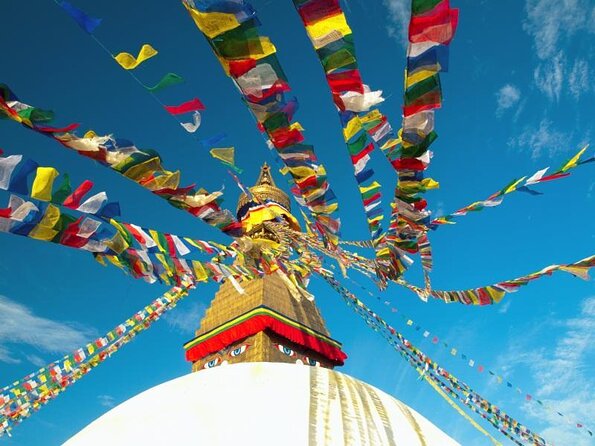
- Boudhanath Stupa, the massive Buddhist stupa and a great place to watch rituals from close range
- Swayambhunath (Monkey Temple) with the best chance on a day tour to see Kathmandu Valley from above
- Guides like Keshar Jung Thapa, praised for patient, practical answers and a friendly teaching style
Other one shot sweeps of the Valley

Why a one-day Kathmandu loop makes sense
Kathmandu is famous as a jumping-off point for Everest adventures, but the city itself has its own rhythm. This tour is built for that reality. You get a day that’s not random sightseeing, it’s a guided path through major sacred places, then a jump to a different part of the valley so your day doesn’t feel stuck in one neighborhood.
I like the order of the stops because it keeps you oriented. Patan first helps you understand the cultural world the Kathmandu Valley shares. Then you shift into two Hindu and Buddhist anchors, and finally end with the view from Swayambhunath, which feels like a payoff after a day of temples.
The day is also intentionally time-bound. With an overall duration of 7 to 8 hours, you’re not left wondering whether you’ll have “just one more stop” before you’re dropped back at your hotel. You’ll still walk, but the schedule gives you a clear shape.
Morning plan: Patan (Lalitpur) Old Durbar Square and Krishna Temple
You’ll start in Patan, also known as Lalitpur, and the first stop is the Old Durbar Square. Admission here is free, which matters on a one-day trip because it keeps the day balanced, not just paid entrances and quick photos.
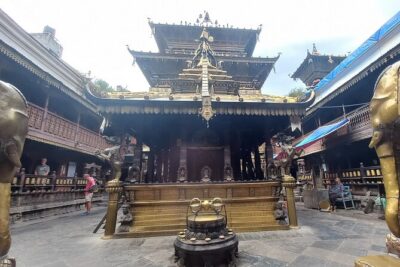
Patan’s old square tends to reward slow attention. Look at the stonework, the doorway shapes, and the way the buildings sit close together. Even if you don’t know Nepalese history yet, you’ll feel the craftsmanship and the sense of a city designed around temples and public spaces.
After that, you’ll go to Krishna Temple, one of the oldest temples in the Patan area. The short time window here is intentional, it gives you enough to understand why Krishna is central, without turning this into a long detour. The key value is that the guide can connect what you see to the religious ideas behind it, not just point at carvings.
Practical note: expect crowds at major squares and temples. Go with the mindset that you’re visiting a working, lived-in sacred area, not a quiet museum.
Pashupatinath Temple: the Hindu crematorium site you should approach thoughtfully
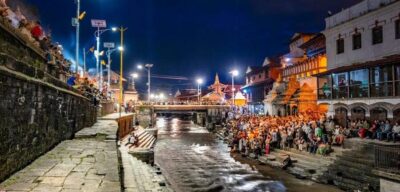
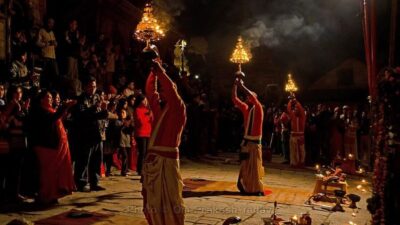
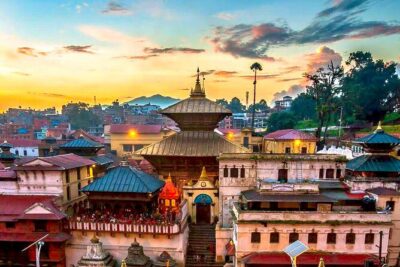
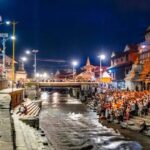
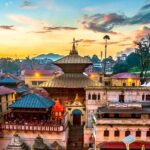
Pashupatinath Temple is one of the biggest names in Hindu pilgrimage, and it’s also known as a crematorium area. That can sound heavy on a holiday brochure, but it’s also the point: this is a place where Hindu life, death rituals, and belief meet.
You’ll have about 40 minutes here. That’s enough time to see the main views and understand the site if your guide explains clearly. The guide is a big deal at Pashupatinath because you want to know what you’re looking at and what is appropriate.
What I’d watch for as you arrive is how the space is used. People come with intent, not sightseeing energy. Keep your voice down, be mindful with your camera, and don’t block walkways. If you’re unsure about where you should stand, follow the flow and ask your guide. Having someone like Keshar, who’s known for answering questions about Buddhism and Hinduism, can make the difference between confusion and understanding.
Also keep your expectations flexible. The tour notes that some of the sites may have significant damage due to the 2015 earthquakes. Even when repairs are underway, parts of the area can look different than what you might see in older photos. Treat it as part of the living story of the place.
Boudhanath Stupa: Buddhist rituals, prayer wheels, and a slower pace
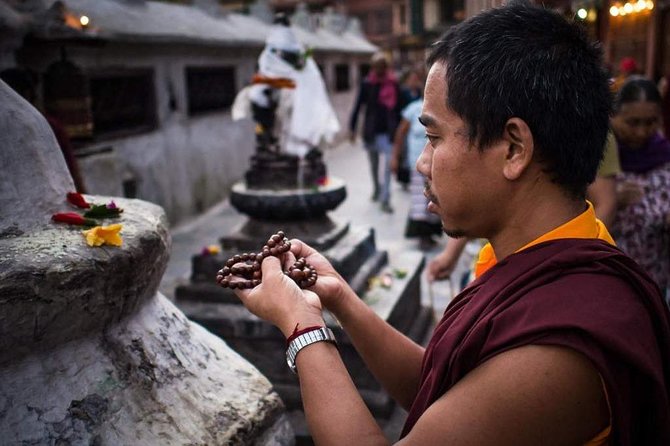
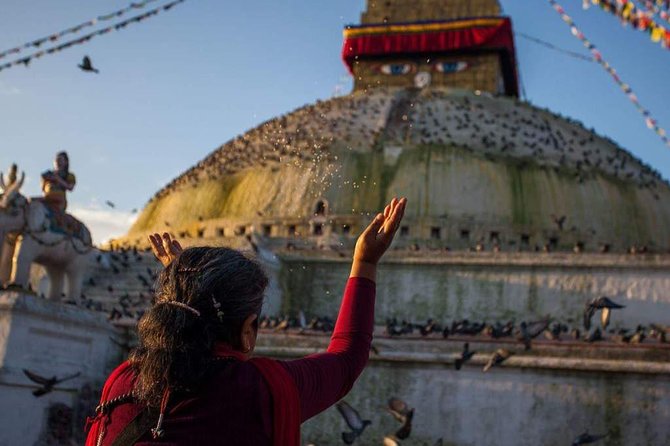
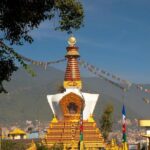
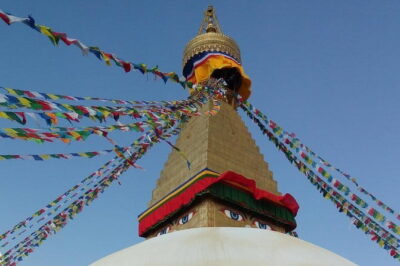
Boudhanath Stupa is the kind of place you can’t really rush. It’s described as the biggest Buddhist stupa in Kathmandu, and the sheer scale helps you understand why this site matters to pilgrims.
You’ll spend about 30 minutes here. That’s short, but the good part is the atmosphere. Boudhanath is not just a landmark. It’s a worship zone. You’ll likely see people circling the stupa, pausing, and performing prayers in their own rhythm.
I like Boudhanath on a day tour because it’s a natural break from the busier feeling of squares. The stupa gives you a focal point, so even if you’re not deep into Buddhist practices, you can still appreciate what people are doing and why it’s meaningful.
If you’re into photography, stand where you won’t interfere with movement around the stupa. Try a couple angles from different sides, but keep it respectful. The best photos are often the ones where you caught the ritual without forcing the scene to stop.
More temple evenings and stupa walks
Swayambhunath, Monkey Temple, and the Kathmandu Valley view payoff
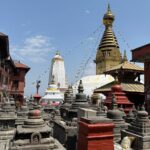
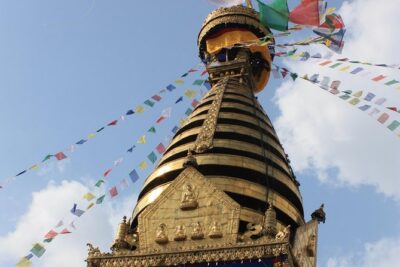
The day ends at Swayambhunath, often called the Monkey Temple. You’ll have about 40 minutes, which is a comfortable window for both temples and viewpoint time.
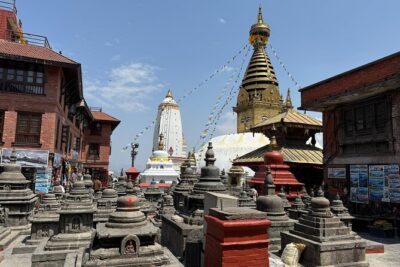
Here’s what makes it special: the combination of sacred architecture, busy foot traffic, and that Kathmandu Valley perspective. After Patan, Pashupatinath, and Boudhanath, Swayambhunath feels like a reset. You look up, you watch the site from above, and suddenly the whole valley makes a little more sense.
The tour highlights this stop as having awesome views of Kathmandu Valley, and that’s exactly why I like it as a finale. Even if clouds or timing affect visibility, you still get the sense of altitude and geography that helps the rest of your trip feel real.
One reality check: the “Monkey Temple” nickname is not just cute. There can be monkeys around, so keep your belongings secure and avoid sudden moves near people feeding or holding food. Your guide can help you stay aware of where animals are likely to be and how to handle the moment safely.
Price and value: what $95 buys you for a full day
At $95.00 per person, this is not an ultra-cheap “just drive me around” option. You’re paying for structure: hotel pickup and drop-off, a professional local guide, and guidance between multiple sacred sites.
On top of that, the tour lists that all taxes, fees, and handling charges are included. It also includes most admission tickets for the temples on the route. That matters because one-day Nepal plans can get expensive when you’re constantly adding small entrance fees without realizing the total.
The cost is also aligned with the day length. With about 7 to 8 hours, you get real time with the guide rather than a quick stop at each place. In a small group capped at 12, you’re more likely to get answers than just sit and wait.
The one thing not included is food and drinks. That’s the main variable you’ll need to manage yourself. If you’re sensitive to hunger affecting your patience on temple steps, plan a snack or budget for a meal during the ride or around the final stop.
Logistics that make or break the day
This tour starts at 9:00am. The timing is important because you want enough daylight for Swayambhunath and enough energy to handle temple crowds and stairs.
You’ll also get a mobile ticket. That’s a practical touch, especially if you don’t want to deal with paperwork at every stop. Confirmation is received at booking, and that helps you avoid last-minute uncertainty.
Pickup and drop-off are included, which is a big value point if you’re new to Kathmandu or staying in a hotel that isn’t right in the middle of these sites. The schedule is built around moving efficiently between locations, not letting you scramble with local transport.
Finally, keep in mind that some visited sites may show earthquake damage. That doesn’t mean you’ll have a “damaged ruins” tour. It means you should expect uneven restoration and possibly closed or altered sections.
What this tour feels like with a guide like Keshar
One of the strongest themes in the experience is how the guide teaches. Names like Keshar and Keshar Jung Thapa come up for a reason. The guide style described is friendly, patient, and strongly focused on cultural and religious context.
I’d expect this kind of day to include a lot of explain-and-answer time, not just “here’s the temple, move on.” If you’re curious about why Hindu and Buddhist sites sometimes overlap in the Kathmandu Valley, you’ll likely get clearer answers than you would from a guidebook alone.
That “ask me anything” quality is especially useful at places like Pashupatinath, where the practices can be unfamiliar. It also helps at Boudhanath and Swayambhunath, where ritual behavior matters more than the architecture alone.
The humor mentioned in guide feedback is not just a personality thing. It helps you stay relaxed in busy, sometimes emotional spaces.
Who should book this, and who should skip it
This tour fits best if:
- You’re on a first visit to Kathmandu and want major sites without planning
- You care about religion and culture, and you want context, not just photos
- You prefer a small group (max 12) and a guided day with pickup and drop-off
You might skip or modify your approach if:
- You want lots of free time to wander without a schedule
- You have limited mobility for stairs and uneven temple paths
- You don’t want to visit sites connected with cremation rituals, even with respectful context
If you’re traveling with family, it can work because it’s structured and guide-led, but you’ll want to judge your group’s comfort with walking and steps at each sacred site.
Should you book Kathmandu City in One Day with Bodhnath Stupa?
If you’re short on time in Kathmandu but you want the city to feel connected, this is a strong choice. The value isn’t only in hitting the headline sights. It’s in having a guide who can explain what you’re seeing, especially across Hindu and Buddhist locations that otherwise can feel confusing.
I’d book it if you’re the type of traveler who likes meaningful stops, and you’re okay with a full day that mixes steps, crowds, and sacred spaces. I’d reconsider if you want a slower, more flexible day with long breaks for meals or if cremation related sites are a hard no for you.
FAQ
What time does the tour start?
The tour starts at 9:00am.
How long is the Kathmandu city tour?
It runs for about 7 to 8 hours.
Is hotel pickup and drop-off included?
Yes, hotel/port pickup and drop-off are included.
How many people are in the group?
The tour has a maximum of 12 travelers.
Are admission tickets included?
Admission tickets are included for the listed stops such as Krishna Temple, Pashupatinath Temple, Boudhanath Stupa, and Swayambhunath. Patan Old Durbar Square is listed as free.
What should I know about food and drinks?
Food and drinks are not included.
Should I expect earthquake damage at the sites?
The tour notes that there has been significant damage to some of the sites visited due to the earthquakes in April and May 2015.
What is the cancellation policy?
Free cancellation is available up to 24 hours in advance for a full refund. If you cancel less than 24 hours before the start time, the amount paid is not refunded.
Lumbini and the Pilgrimage Trail
Pashupatinath and Boudha After Dark

One More Valley Day
Everything else we have reviewed around Kathmandu
- 12 Days Everest Base Camp Trekking
★ 5.0 · 3 reviews - 1 Night 2 Days Chitwan Jungle Safari Tour from Pokhara or Kathmandu
★ 3.0 · 3 reviews - Thamel Rickshaw tour
★ 4.7 · 3 reviews - Kathmandu: Momo Making Class with a Local Chef
★ 5.0 · 3 reviews - Kathmandu: Full-Day Yoga, Body Massage and Pedicure Package
★ 5.0 · 3 reviews - From Kathmandu / Pokhara / Chitwan: River Rafting – 1 Day
★ 4.6 · 3 reviews
Kathmandu City Tours & Sightseeing worth a second look.
 ★ 5.0Kathmandu Private Sightseeing Tour | UNESCO World Heritage SitesFrom $35109 reviews
 ★ 5.0Private tour of Major highlights of Kathmandu top rated placesFrom $4492 reviews
 ★ 5.0Kathmandu Heritage Tour (Full Day)From $3863 reviews
 ★ 5.0Kathmandu Full Day TourFrom $7054 reviews
 ★ 5.0Life and spirituality tour of KathmanduFrom $5554 reviews
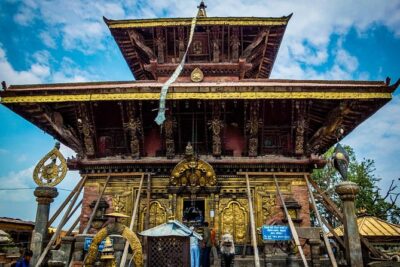 ★ 5.0Kathmandu Highlights: Private UNESCO World Heritage Sites TourFrom $4950 reviews
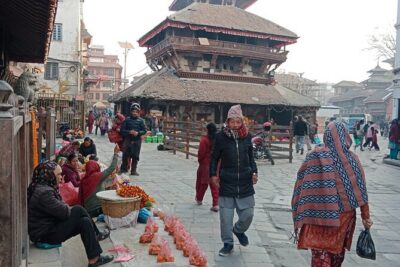 ★ 5.0Full Day Private Tour of Kathmandu – UNESCO World Heritage SitesFrom $3542 reviews
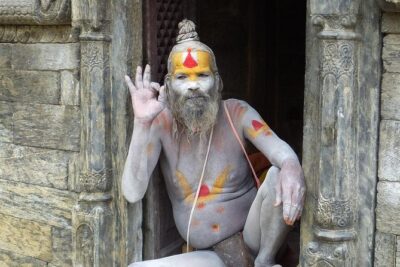 ★ 5.0Kathmandu Valley City Day TourFrom $6040 reviews