
REVIEW · PASHUPATINATH & BOUDHANATH TEMPLES
Kathmandu Spiritual Sites: Bodhnath & Pashupatinath Tour
Two faiths, one evening, and real Kathmandu life. I love rotating prayer wheels with locals around Boudhanath Stupa, and I love how the guide sets context before you join the Aarati lights at Pashupatinath Temple. In about 4 hours, you’ll move from the Thamel area into daily devotion, sadhu monks, and the cremation ceremonies along the Bagmati River.
One key consideration: Pashupatinath gets crowded fast at sunset, so you’ll need to keep close to your group and follow local instructions, especially around cremation moments where you should not photograph or watch inappropriately.
In This Review
- Key things that make this tour worth your time
- Why the 3 pm start is smart for Bodhnath and Pashupatinath
- Thamel, the meeting point, and how you’ll move through the city
- Boudhanath Stupa: prayer wheels, butter lamps, and Tibetan Buddhism in motion
- The walk between sites: short distance, big difference
- Pashupatinath Temple: Shiva beliefs, sadhu monks, and the reality of Bagmati
- Sadhu monks
- Palm reading option
- Bagmati cremation ceremonies, and how to respect the moment
- The Aarati at sunset: how to watch the lights without losing your bearings
- Price and value: what you’re actually paying for at $60.56
- What’s extra to budget for: butter lamps, palm reading, and monk interactions
- Earthquake repairs and what “renovated” means for your visit
- Who this tour suits, and who should think twice
- Getting the most from a small group, and choosing the right mindset
- A quick packing and behavior checklist
- Should you book Kathmandu Spiritual Sites: Bodhnath & Pashupatinath?
- FAQ
- What time does the tour start?
- How long is the Kathmandu Spiritual Sites tour?
- Is admission included for both UNESCO sites?
- Do I get to join the evening Aarati ritual?
- Is palm reading included?
- Is lunch or dinner provided?
- How big is the group?
- Are cremation ceremonies included, and can I take photos?
- What’s the cancellation window?
Key things that make this tour worth your time
- Prayer wheels at Boudhanath Stupa with a local-style circumnavigation and a chance to light a traditional butter lamp
- Evening Aarati at Pashupatinath where timing matters and the guide helps you see without getting separated
- Small-group flow (max 12) so questions are actually possible instead of feeling like a lecture
- Hindu and Tibetan Buddhist context explained as you walk, not dumped as a history lesson
- Sadhu life and Bagmati River ceremonies presented with clear respect guidelines, including no-photo moments
- Practical transport choices that keep it feeling like real Kathmandu, not a private bubble
More temple evenings and stupa walks

Why the 3 pm start is smart for Bodhnath and Pashupatinath
This is an evening-focused tour that starts at 3:00 pm and finishes back where you began. That timing is the sweet spot. You get the chance to enjoy Boudhanath Stupa before the sky fully darkens, then move to Pashupatinath just as crowds build around sunset and the Aarati ritual begins.
Because it runs about 4 hours, it works well when you want big highlights without burning your whole day. You’re also not stuck doing temples in full midday sun. If Kathmandu weather or fatigue would otherwise slow you down, this schedule is a relief.
Also, note the tour is designed around UNESCO sites and daily religious practice, not just “see the building, take the photo, leave.” The flow is built so you’re actively doing small things like rotating prayer wheels and participating in the lights offering, guided by explanations.
Thamel, the meeting point, and how you’ll move through the city
Your tour starts in the Thamel area, at Hotel Marshyangdi near Chaksibari Marg. Thamel is the classic hub where hotels, shops, and restaurants cluster together, and it’s also where many tours begin.
There’s a short stop that functions as a transition point (about 15 minutes). Then you travel onward to the stupa and later to Pashupatinath. The itinerary emphasizes using public transport when possible, which is a big deal for value and authenticity. You’ll feel Kathmandu moving around you, not just sitting in a vehicle with temple stops.
And because the tour is close to public transportation, it’s not a hassle to reach the meeting spot in the first place. If you’re staying nearby, it reduces “logistics stress,” which matters in a city where traffic and walking routes can be unpredictable.
Boudhanath Stupa: prayer wheels, butter lamps, and Tibetan Buddhism in motion
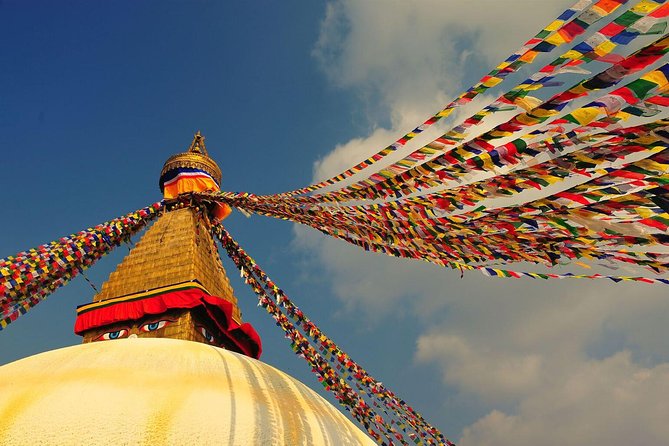
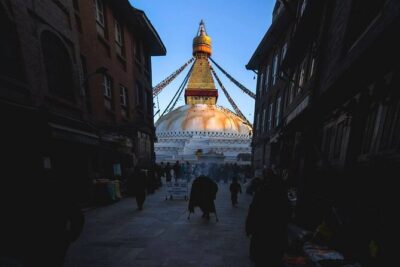
The first major stop is Boudhanath Stupa, a UNESCO World Heritage Site and one of the largest stupas in the world. Expect about 1 hour 25 minutes here, and yes, the admission ticket is included.
This is one of those places where you don’t just look, you participate. You’ll rotate prayer wheels along with local Buddhists as you circumnavigate the stupa. That action is simple, but it carries meaning, and your guide’s job is to connect the motion you’re making with the belief behind it.
You also have an option to offer a traditional butter lamp to Lord Buddha. Even if you decide not to do it, you’ll still see how people light, bow, and move in a steady rhythm. It gives you a very clear sense of Tibetan Buddhist practice as something lived daily, not staged.
Practical tip: wear shoes you can walk in comfortably. Boudhanath is walk-friendly, but it’s still a lot of motion around the stupa, and you’ll want your feet to feel decent by the time you reach Pashupatinath.
The walk between sites: short distance, big difference
After Boudhanath, you’ll transfer to Pashupatinath Temple. The walking time is relatively limited in the grand scheme of Kathmandu, and the tour lists about 2 km total walking across the experience.
Still, don’t ignore the “small” walking parts. The main transitions are long enough that you’ll feel the change in atmosphere. Boudhanath is strongly Tibetan Buddhist in character. Pashupatinath is Hindu, and the cultural cues shift fast. That contrast is part of why this tour works so well.
Also, keep your expectations realistic. You’re not touring every corner of either site. You’re visiting two major spiritual centers and focusing on experiences that are most meaningful, including the Aarati ritual and the Bagmati River ceremonies.


Pashupatinath Temple: Shiva beliefs, sadhu monks, and the reality of Bagmati
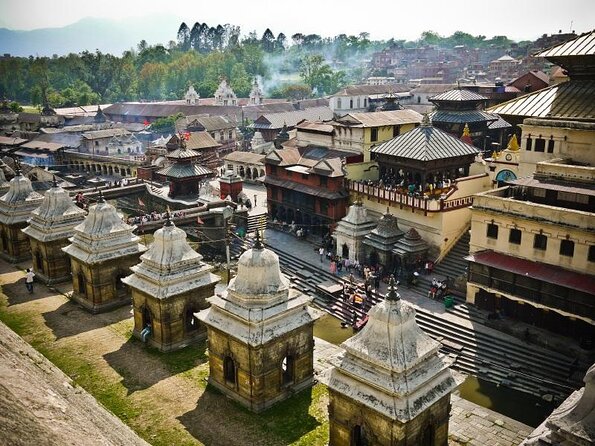
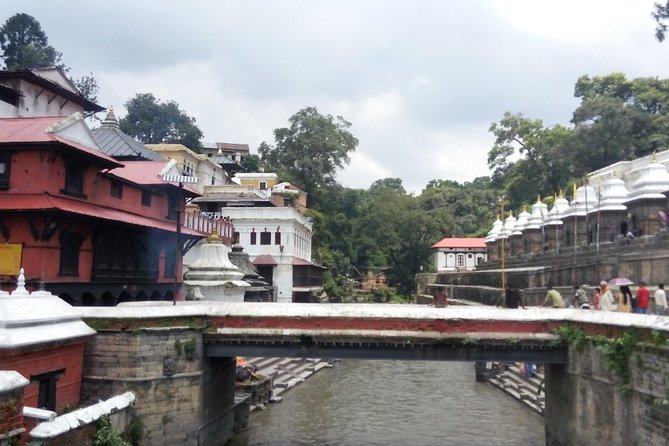
Pashupatinath is a UNESCO-listed Hindu shrine dedicated to Shiva. Your visit is about 2 hours 20 minutes, and admission is included.
Your guide will explain key ideas of Hindu belief, including the cycle of birth and death. That matters here, because Pashupatinath isn’t just “a temple.” It’s also a place where life events flow into religious practice in very visible ways.
Sadhu monks
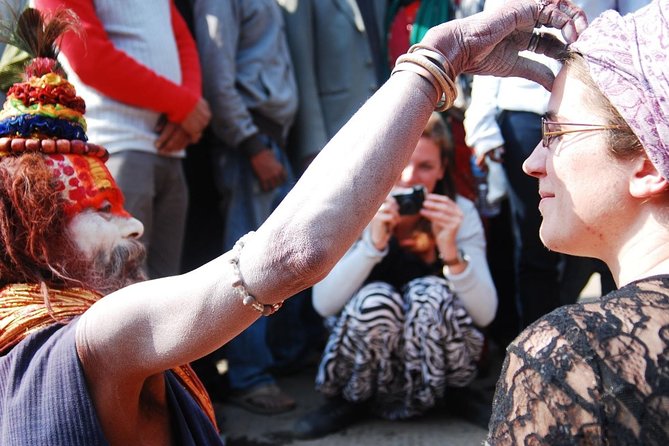
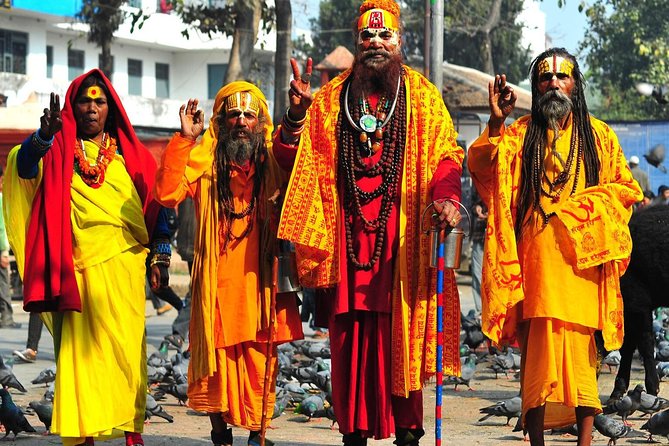
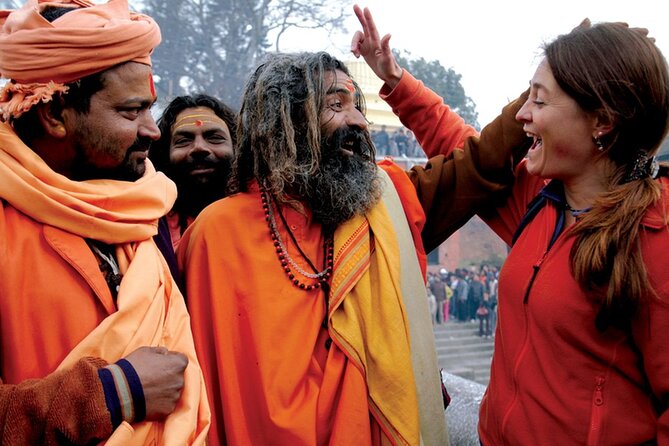
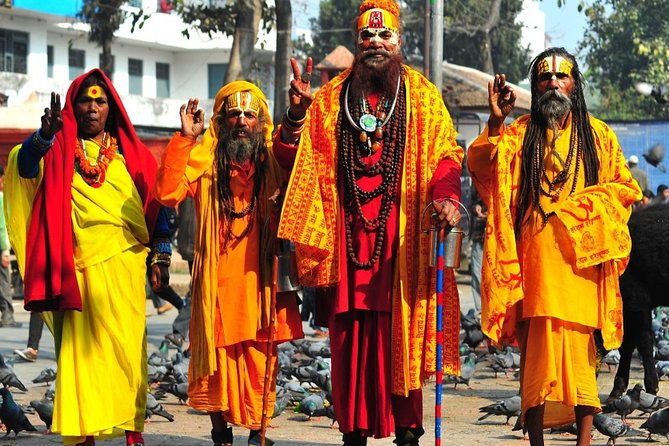
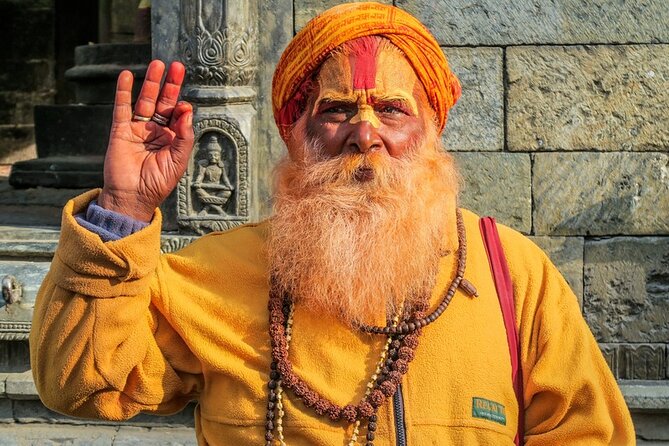
One of the most striking parts of this stop is the chance to see sadhu monks and hear what your guide shares about their beliefs. The tour describes their focus on sacrificing material possessions as a sign of devotion. You’ll notice their colorful clothing and distinct presence around the temple area.
Palm reading option
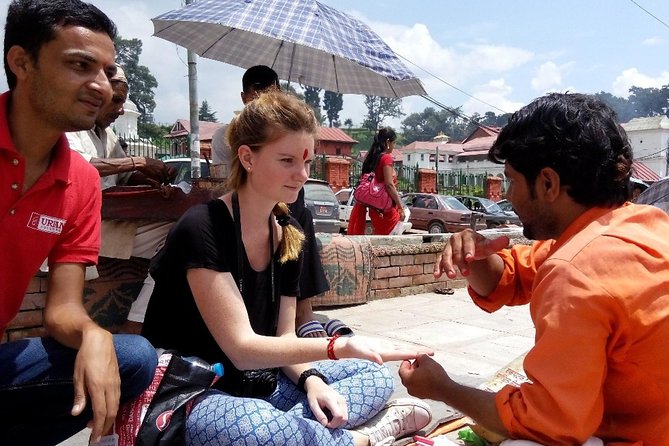
There’s also a local palm reader aspect. The tour includes the visit to a palm reader, but the palm reading fee is not included. The program describes that cost as varying, roughly $7.50 to $9 per person. If you do it, your guide can help you navigate the interaction.
If you’re not into palm reading, you can still enjoy the rest of the experience. But even if you skip the reading itself, you’ll likely get something from watching how people treat it as a normal part of visiting a sacred place.
Bagmati cremation ceremonies, and how to respect the moment
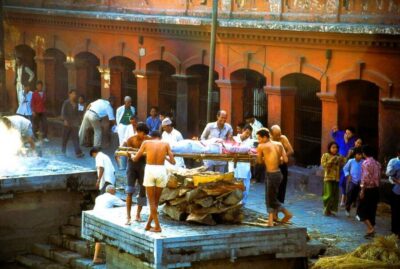
This tour includes a chance to witness cremation ceremonies that take place along the edge of the Bagmati River, outside the Pashupatinath entrance area.
This is where you have to be extra careful. The tour specifically asks you to refrain from taking photos or watching the rituals in a way that disrespects the mourning families. That’s not a “suggestion for good manners.” It’s the whole point of experiencing this respectfully.
If you’re sensitive to death-related rituals, consider that this part is direct. If you’re okay with it, it will likely be one of the most unforgettable moments in your Nepal trip because it shows how religion functions in real life, not just as architecture.
The Aarati at sunset: how to watch the lights without losing your bearings
As the sun goes down, the Pashupatinath area fills with people. The tour notes the crowd on the eastern side of the temple banks as locals gather along the Bagmati River.
This is when you join the mesmerizing aarti ritual, described as an offering of lights to Lord Pashupatinath. Your guide’s role becomes extra important here because you’ll be near a dense crowd.
The practical takeaway is simple: keep near your group and your guide. The tour itself warns that it’s easy to get lost in the crowd. So don’t plan to wander off for photos or to “find a better angle.” Let the guide do the navigation while you focus on the ritual.
If you want good viewing, aim to watch first, then take a few photos after you’ve oriented yourself. You’ll enjoy it more, and you’ll also avoid the awkward moments of blocking people who are there to participate.
Price and value: what you’re actually paying for at $60.56
At $60.56 per person for a half-day experience, the value comes from how much is bundled into a short time window.
You’re paying for:
- A local English-speaking Nepali guide
- Admission fees to both UNESCO sites
- Transportation between the meeting area and the stops
- Participation in the evening Aarati
- Guided explanations of Hinduism and Buddhism as you move
- A visit to a palm reader (with the fee separate)
- Tips on what else to see, do, and eat while you’re in Kathmandu
If you tried to recreate this on your own, you’d likely spend money on admissions, you’d spend time figuring out routes and timing for public transport, and you’d lose the context that helps you understand what you’re seeing. A good guide turns “temple sightseeing” into “I get why people are doing this.”
Also, the max group size is 12, and that usually improves the experience, because it’s easier to stay together during crowded moments like Pashupatinath.
What’s extra to budget for: butter lamps, palm reading, and monk interactions
Not everything is included, and it’s better to know what’s optional than to get surprised in the moment.
From the tour details:
- Lunch and dinner are not included.
- Palm reader fees are not included. The tour lists a typical range of $7.50 to $9 per person.
- Alms to sadhus and monks are not included.
- If you choose to offer butter lamps at Boudhanath, there may be costs depending on what you choose to do.
- The tour also notes that taking pictures or interacting with sadhus can cost about $7.50.
One more practical note: the tour says the guide can assist with negotiation for these optional experiences. That’s useful in Nepal, where the interaction can feel confusing if you don’t know what’s expected. Still, keep your spending realistic. If you’re doing a low-budget trip, focus on the included experiences and treat optional offerings as extras, not requirements.
Earthquake repairs and what “renovated” means for your visit
The tour mentions there was significant damage to some sites due to the earthquakes in April and May 2015. It also states that all the sights you visit in Boudhanath and Pashupatinath are renovated.
In practice, that means you should expect to find the places you’re visiting open and functional, rather than abandoned sections. It also means you’re seeing living sites that have been restored and maintained enough to support ongoing worship and daily visitors.
This context matters because it keeps your expectations grounded. You’re not touring ruins. You’re touring important spiritual spaces that have endured, repaired, and continued.
Who this tour suits, and who should think twice
This tour is described as child-friendly, and children under age 6 can join free of charge. If your family can handle a mix of crowds and ritual viewing, it’s a reasonable way to see two major UNESCO sites in one half-day.
This tour also fits solo travelers who want a small group and like structured guidance, especially for understanding Hinduism and Tibetan Buddhist practice.
But there’s one “think twice” factor: the cremation ceremony viewing. Even though you’ll be asked to respect mourning families and follow no-photo rules, you may still find this part emotionally intense. If you know you’re not comfortable with death-related rituals, it’s okay to skip this specific experience.
Getting the most from a small group, and choosing the right mindset
Because the group size is capped at 12, you’re more likely to get your questions answered without waiting in a long queue. You also move through crowds with less confusion than you would with a larger group.
The guides mentioned in the program include names like Rita, Rozit, Amit, Subash, Bipin, and Ramhavi. While you can’t pick your guide, it’s fair to expect that the stronger guides will do two key things well: keep you on track in busy places and explain the religious meaning in plain language.
Your mindset matters too. This is not a “checklist tour.” If you go in thinking you’ll understand rituals in one go, you’ll miss what makes it special. Instead, treat it like a guided walk through how people live their faith day to day, then let the emotions land when they land.
A quick packing and behavior checklist
- Dress respectfully for temple areas
- Bring water, especially because you’ll be out in the afternoon-to-evening window
- Have your camera ready, but follow the no-photo guidance around cremations
- Keep close to your guide when crowds swell
- Decide in advance if you’re interested in palm reading and offerings, so you’re not rushed into choices
Should you book Kathmandu Spiritual Sites: Bodhnath & Pashupatinath?
If your goal is to see two of Kathmandu’s most important UNESCO spiritual sites in one efficient half-day, I think this tour is a strong pick. The value is in the blend of participation and context: prayer wheel rotation at Boudhanath, followed by the Aarati lights ritual at Pashupatinath, with explanations that help you understand the meaning behind what you’re doing.
I’d especially recommend it if you:
- Want an evening schedule that feels connected to religious life
- Appreciate guided context instead of solo wandering
- Prefer a small group and public-transport style movement
- Don’t mind crowds if you can stay with the guide
I’d hesitate if you:
- Are uncomfortable with cremation ceremony viewing, even with respect rules in place
- Want a quiet, low-crowd experience
Overall, this tour is one of the more meaningful ways to experience Kathmandu’s spiritual side without needing a full day. It’s short, it’s focused, and it gives you moments you’ll remember long after you leave the temples.
FAQ
What time does the tour start?
The tour starts at 3:00 pm.
How long is the Kathmandu Spiritual Sites tour?
It runs about 4 hours (approx.).
Is admission included for both UNESCO sites?
Yes. Admission to Boudhanath Stupa and Pashupatinath Temple is included.
Do I get to join the evening Aarati ritual?
Yes. The tour includes joining the evening Aarati at Pashupatinath Temple.
Is palm reading included?
The tour includes a visit to a local palm reader, but the palm reader fee is not included.
Is lunch or dinner provided?
No. Lunch and dinner are not included.
How big is the group?
The group is limited to a maximum of 12 travelers.
Are cremation ceremonies included, and can I take photos?
The tour says you can witness cremation ceremonies along the Bagmati River, but you should refrain from taking photos or watching in a disrespectful way.
What’s the cancellation window?
Free cancellation is available if you cancel up to 24 hours in advance of the experience’s start time.
Everything Bookable Around Kathmandu

The Rest of Our Kathmandu Write Ups



Pashupatinath and Boudha After Dark
Everything else we have reviewed around Kathmandu
- 12 Days Everest Base Camp Trekking
★ 5.0 · 3 reviews - 1 Night 2 Days Chitwan Jungle Safari Tour from Pokhara or Kathmandu
★ 3.0 · 3 reviews - Thamel Rickshaw tour
★ 4.7 · 3 reviews - Kathmandu: Momo Making Class with a Local Chef
★ 5.0 · 3 reviews - Kathmandu: Full-Day Yoga, Body Massage and Pedicure Package
★ 5.0 · 3 reviews - From Kathmandu / Pokhara / Chitwan: River Rafting – 1 Day
★ 4.6 · 3 reviews
Pashupatinath & Boudhanath Temples worth a second look.
 ★ 5.0Pashupatinath Temple Evening Aarati TourFrom $4536 reviews
 ★ 4.8Pashupatinath Temple Aarti Night TourFrom $7129 reviews
 ★ 5.0Pashupatinath Temple, Hindu Crematorium and Aarati in-depth TourFrom $9025 reviews
 ★ 4.5Pashupatinath Evening Aarati: Few Divinely Hours in KathmanduFrom $3523 reviews
 ★ 5.0PashupatiNath and BoudhaNath – Private/Small GroupFrom $1518 reviews
 ★ 5.0Sacred Pashupatinath: Aarati,Cremation Rites & Boudha StupaFrom $1118 reviews
★ 4.7Pashupatinath Temple Evening Aarati TourFrom $2211 reviews
★ 5.0Sacred Pashupatinath: Aarati,Cremation Rites & Boudha StupaFrom $1118 reviews
★ 4.7Pashupatinath Temple Evening Aarati TourFrom $2211 reviews
 ★ 5.0Kathmandu City in One Day with Bodhnath StupaFrom $9510 reviews
Lists this tour sits in