
REVIEW · PASHUPATINATH & BOUDHANATH TEMPLES
PashupatiNath and BoudhaNath – Private/Small Group
Two faiths, one unforgettable Kathmandu route. I love how this small walk pairs Hindu samskaras at Pashupatinath with Buddhist basics at Boudhanath, so you see living religion, not just stone. You also get the practical context for how Hindu and Buddhist communities share space in Nepal.
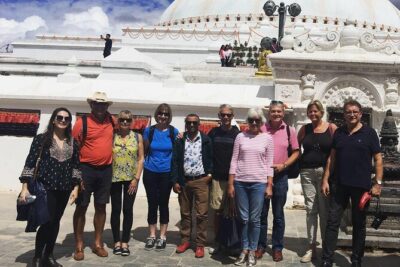
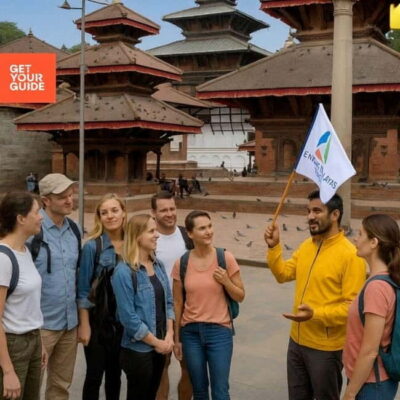
With guide Santosh leading a max of 5 people, you get time to ask questions and actually get answers. That small-group pace makes it easier to follow the stories behind the ceremonies, and it keeps the whole experience from feeling like a rushed checklist.
One consideration: you’ll want to budget for cash entrance fees at key stops, and the Aryaghat crematoria area can be emotionally intense to witness.
In This Review
- Key highlights to plan around
- Where this tour fits in your Kathmandu days
- Meeting Santosh, then heading straight for Pashupatinath
- Pashupatinath and Aryaghat: 16 samskaras in real time
- Mrigasthali Deer Park: a short, meaningful Shiva detour
- Gorakhnath and Guhyeshwari: the Hindu side of the bridge to Boudha
- Boudhanath Stupa: Buddhism explained in concepts you can reuse
- Guru Lhakhang Monastery: seeing a typical monastery and key names
- Thanka art and healing bowls: a creative ending at Boudha Stupa
- Price and value: what $15 really buys, plus the cash entrance reality
- Is this tour worth it if you want a flexible, question-friendly guide?
- What I think are the best matches for this tour
- A simple booking decision: should you do PashupatiNath and BoudhaNath?
- FAQ
- How long is the PashupatiNath and BoudhaNath private/small group tour?
- How big is the group?
- What are the start and end points?
- Is the entrance fee included?
- What is the total price, including entrance fees?
- What does the guide cover during the tour?
- Does the guide speak English?
- Can the guide adjust the schedule if I want to see something specific?
- Is this tour suitable for most people?
- Are service animals allowed?
Key highlights to plan around
- Santosh adjusts the timing when you ask for a specific ceremony moment
- Hindu samskaras (16 rites) explained clearly at the Pashupatinath crematoria area
- Boudhanath Stupa fundamentals taught through simple, memorable Buddhism concepts
- Shaktipeeth and Satidevi stories connect the Hindu and Buddhist landscapes
- Thanka art and mandala basics, plus a look at healing bowls to finish the tour
More temple evenings and stupa walks

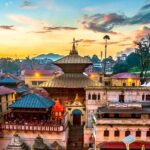
Where this tour fits in your Kathmandu days
This is a focused, half-day type of experience, about 3 hours long, built for first-time visitors who feel overwhelmed by all the temples, chants, and symbolism in Kathmandu. The starting point is at Gaushala Bus Stop, and you end at the Boudhanath Gate, which is handy because you can keep exploring on your own after the tour.
What makes this tour especially useful is the blend. You do Hindu sites like Pashupatinath, including the crematoria area, then you shift to Tibetan-style Buddhism at Boudhanath. You come away with a basic map of what you just saw and why people treat these places as sacred.
And you’re not stuck in a crowd. The group size is capped at 5, and you have an English-speaking guide, so the tour feels more like a guided conversation than a line-watching exercise.
Meeting Santosh, then heading straight for Pashupatinath
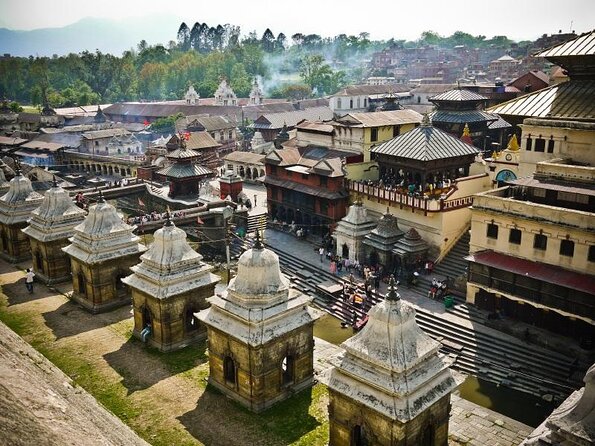
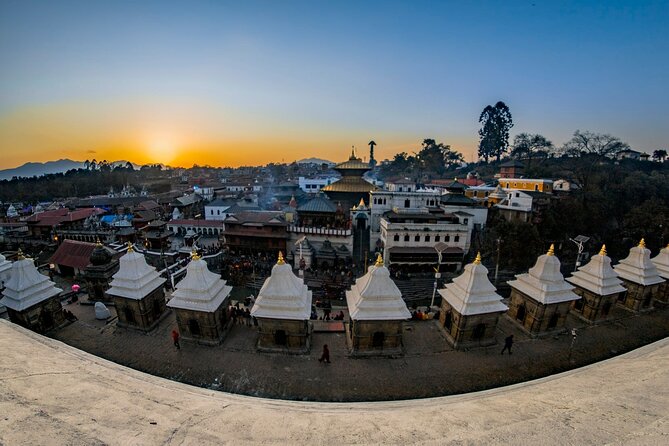
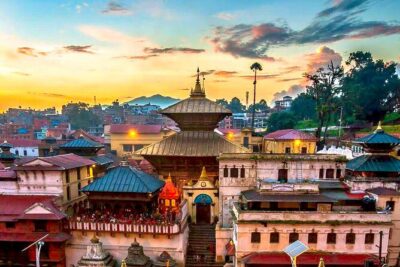
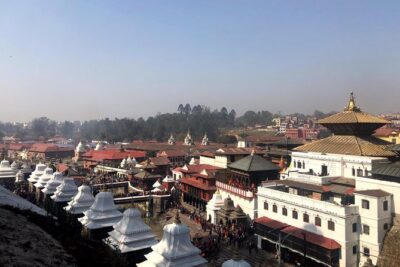
You start out moving toward one of Kathmandu’s most important Hindu landmarks: Pashupatinath Temple. This is the kind of place where religion is not background scenery, it’s the main event. Your guide sets the stage with the big picture, including why Pashupatinath matters to Hindus around the world.
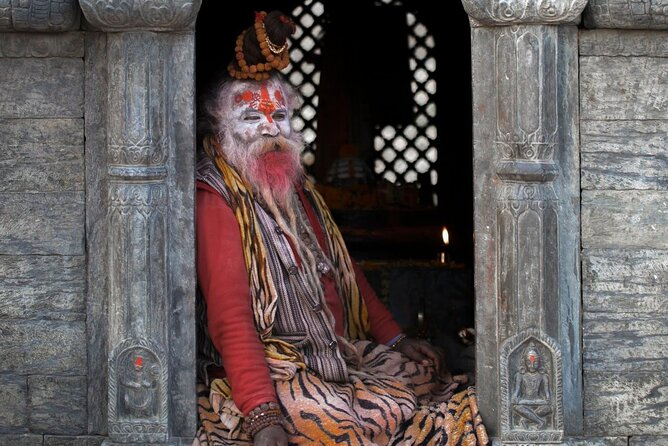
A key practical point: only Hindus can go inside the main temple area. So your tour route takes you past the temple toward the crematoria section at Aryaghat, which is where the last rites viewing area comes in.
If you’re the type who likes to understand what you’re seeing before you see it, this is a smart way to start. You’re not just walking into a complex and hoping it makes sense. Santosh (the guide name I saw repeatedly) explains what the rituals represent before you reach them.
Pashupatinath and Aryaghat: 16 samskaras in real time
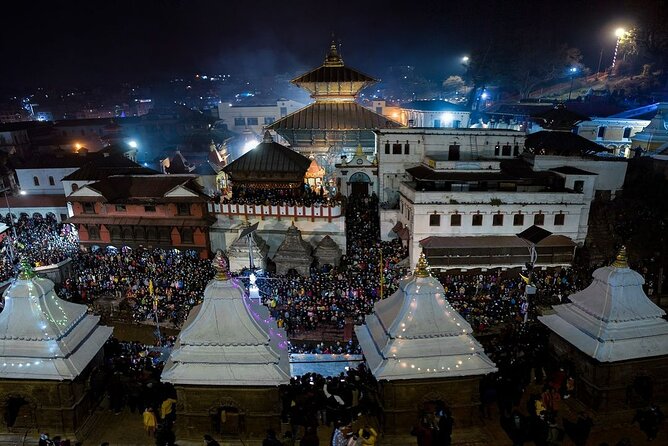
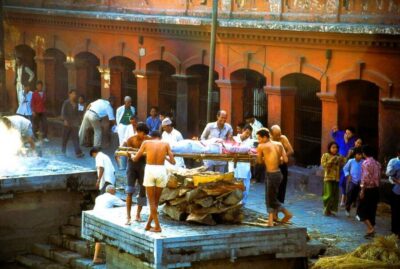
The heart of the Hindu portion is the stop near the crematoria at Aryaghat, where you can understand the last rites of Hindus and learn about the Shodasha Samskaras, meaning the 16 rites of passage tied to a person’s life. Even when you’re not fully fluent in the culture, this guided context helps the ceremony and symbolism click.
This is the part I’d call the most powerful and also the most demanding. Seeing cremation rituals can feel heavy, even when you know it’s part of long-standing tradition. If you tend to be sensitive to intense scenes, mentally prepare for that before you go.
Also note the money piece: admission for this segment is not included, so you’ll be paying entrance fees in cash at the site. Budget time too. Your tour includes a set amount of time here, but the atmosphere can make it feel longer or shorter depending on what’s happening.
Mrigasthali Deer Park: a short, meaningful Shiva detour
After the emotional intensity of Aryaghat, the tour shifts gears to something lighter: Mrigasthali Deer Park. This stop is brief, about 15 minutes, but it’s not random. The guide connects the place’s name and story to Lord Shiva, including the idea of Shiva’s journey to this location.
This stop helps break up the day. You go from ceremony and ritual meaning, to a quieter spot where you can reset your brain and keep absorbing religious stories without feeling like you’re only standing still and watching formal rites.
For practical planning, this is the kind of stop where you can take a couple of steps, look around, and let the last section settle. If you’re hoping for variety, this is a good tempo change.
Private guides for Kathmandu, a few more
Gorakhnath and Guhyeshwari: the Hindu side of the bridge to Boudha
Next comes Gorakhnath Mandir, where you get a rest, then start moving toward Boudhanath through the Guhyeshwari Temple area. You’ll hear the story of Guru Gorakhnath, and then the tour continues with the Satidevi connection through Guhyeshwari Shaktipeeth.
The shaktipeeth concept matters because it shows how sacred geography works in Nepal. Instead of religion being separate compartments, you see how one set of stories and sacred ideas can thread through multiple places. That’s where this tour earns its “religious harmony” angle in a real, not slogan-based way.
Timing-wise, the tour notes travel time from this area toward Boudhanath. So you’re not just bouncing around town without a plan. You’re moving with a purpose: linking Hindu stories to the Buddhist center you’ll reach next.
Admission at Guhyeshwari Shaktipeeth is listed as free, which helps your budget a bit on the day. Still, I recommend keeping some cash on hand since other entrances are payable at the gate.
Boudhanath Stupa: Buddhism explained in concepts you can reuse
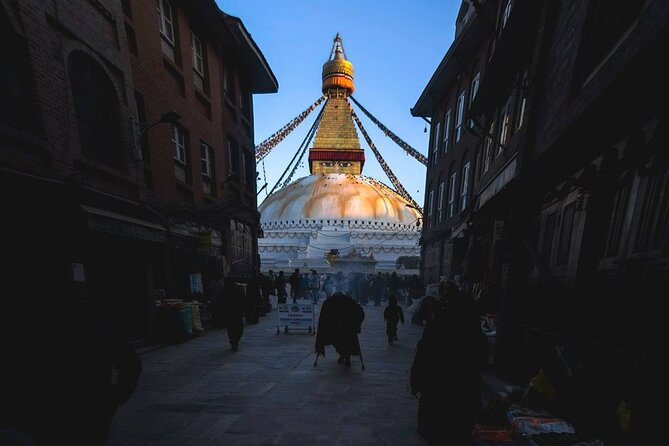
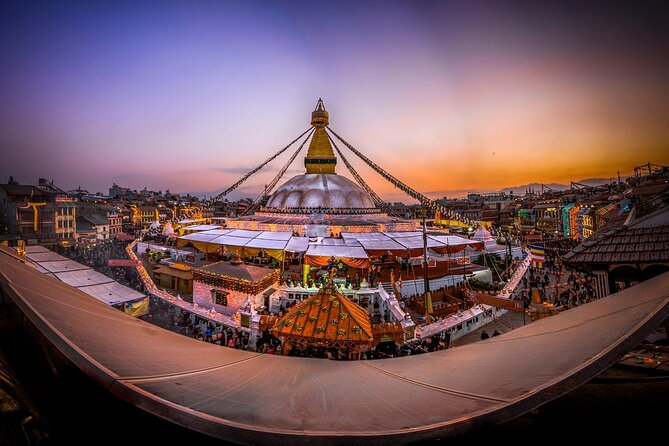
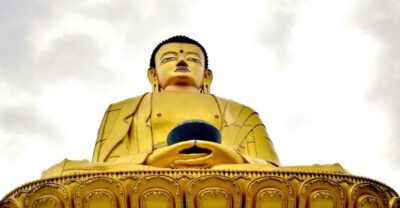
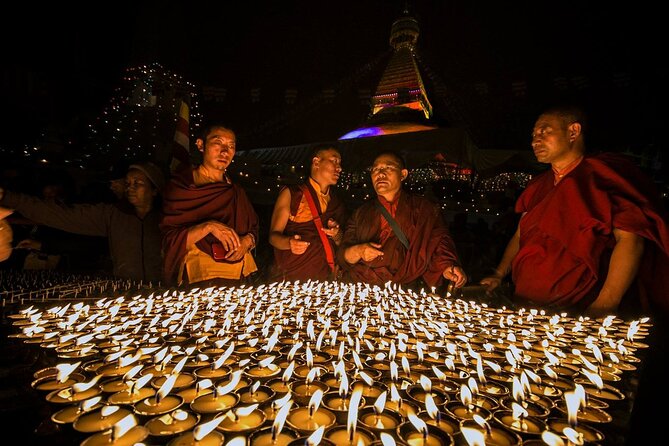
Then you arrive at Boudhanath Stupa, a major pilgrimage site and one of the biggest stupas of its kind in the world. This is where you shift from Hindu rites to Tibetan Buddhism themes, specifically Vajrayana Buddhism.
Your time here is about 45 minutes, and the guide focuses on Buddhism fundamentals you can actually carry with you: the role of prayer flags and the ideas of the five elements, plus the Four Noble Truths and the start of the Eightfold Path (the tour materials list eightfold teaching content).
This is not about reciting verses. The value is in learning a simple framework. When you understand the meaning behind what people are doing around the stupa, the movements make more sense. Circling, chanting sounds, the visual patterns, and the general atmosphere stop feeling random.
If you love photography, Boudhanath is also one of the more rewarding places to look carefully. There’s visual rhythm in the space, and the guide’s explanations help you spot what you should pay attention to rather than just aiming your camera at everything.
One small practical note: the main stupa admission is not included, so again, plan for cash payment.
Guru Lhakhang Monastery: seeing a typical monastery and key names
After Boudhanath, you visit Guru Lhakhang Monastery for about 10 minutes. The goal here is straightforward: you get a feel for what a typical Buddhist monastery setup looks like and the names tied to the tradition.
In this stop, the guide talks about Guru Padmasambhava and the idea of Dharma Chakra Pariwartana. Even if you don’t catch every term, you’ll come away with a set of anchors you can search later, and more importantly, you’ll understand why these names come up around practice and teaching.
This is a short stop, so don’t expect it to replace time spent exploring on your own later. Instead, think of it as a guided label maker for what you see, so you can interpret the monastery style instead of only recognizing it as a monastery.
Thanka art and healing bowls: a creative ending at Boudha Stupa
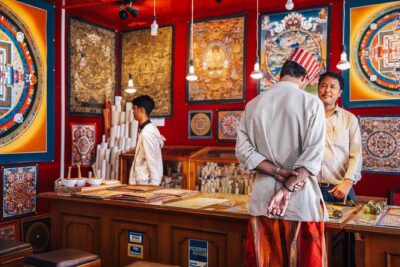
You finish at a Thanka center linked to Boudhanath, spending around 15 minutes. This is a nice change from temples and ceremonies because it turns what you learned into visual learning.
You’ll get basics on Thanka art, including the idea of mandala design. And you get a look at healing bowls, which connects sound and symbolism in a way that feels more modern and hands-on than pure lecture.
It’s also a good closing moment because you leave with something tangible in your head. By the time you’re back out at the Boudhanath Gate, you can keep walking and notice the mandalas, patterns, and the broader visual language that carries Buddhism across art and ritual.
Admission here is listed as included, which is a small but helpful budget win after paying other gate fees earlier.
Price and value: what $15 really buys, plus the cash entrance reality
The tour price is listed at $15 per person for the guided experience, with a small-group setup (up to 5) and mobile ticket support. That part is the big value: someone helps you interpret two major religious centers in one tight block of time.
But there’s a separate cost you should plan for. Entrance fees for Pashupatinath are listed around NRP 1000 (about US$ 9), and Boudhanath around NRP 400 (about US$ 4). The materials state $13 per person for entrances.
So your true all-in day cost is closer to $28 total once you add entrance fees to the $15 guide fee. That still can feel like strong value because you’re getting interpretation for ceremonies that are otherwise hard to understand quickly on your own, especially at Pashupatinath and Aryaghat.
If you’re the kind of traveler who enjoys asking questions, this tour leans even better. A guide who can steer the day, answer questions, and adjust timing to your interests is worth paying for, particularly in places where symbolism is the main language.
Is this tour worth it if you want a flexible, question-friendly guide?
This is where your odds look good. The name Santosh shows up repeatedly in positive feedback, with people praising how he handles questions and stays professional while still being friendly.
One detail that matters for real life: when someone asked to see an aarati ceremony moment, Santosh adjusted the schedule to accommodate it. That tells me the tour isn’t just a fixed factory line. There’s some flexibility built in, and it can help you get more of what you came for.
You’ll also appreciate the tone if you’re not comfortable being the only person staring silently at religious ceremonies. With Santosh, you’re guided through meanings, not just escorted from one stop to another.
What I think are the best matches for this tour
You’ll likely love this tour if:
- You want a quick, guided introduction to both Hinduism and Buddhism in Kathmandu
- You prefer small groups and guided context over wandering alone
- You’re curious about rituals, stories, and the symbolism behind sacred sites
It may feel like a tougher fit if:
- You’re not up for the emotionally intense reality of cremation-related scenes at Aryaghat
- You’d rather spend a full day at fewer places instead of covering two major religious centers in one go
A simple booking decision: should you do PashupatiNath and BoudhaNath?
If your goal is to understand what you’re seeing, this is an excellent first Kathmandu religious combo. The structure works, you have enough time at each place to learn something real, and the small-group size helps keep the experience personal.
I’d book it if you’re willing to handle the intensity of Aryaghat and you’re comfortable paying entrance fees in cash at the gates. Do that, and you’ll leave with mental “translations” for Hindu samskaras, Shaktipeeth ideas, and the core teachings you encounter around Boudhanath.
If that intensity sounds like too much, you can still enjoy Boudhanath, but you might want a different route that doesn’t focus on the crematoria segment.
FAQ
How long is the PashupatiNath and BoudhaNath private/small group tour?
It runs for about 3 hours.
How big is the group?
The tour has a maximum of 5 travelers.
What are the start and end points?
It starts at Gaushala Bus Stop and ends at the Boudha Stupa area, specifically at the Boudhanath Gate.
Is the entrance fee included?
Entrance fees are not included for Pashupatinath and Boudhanath. You pay in cash at the entrance. Other stops are listed as included, free, or not included depending on the specific location.
What is the total price, including entrance fees?
The tour price is listed at $15 per person, and entrance fees are listed as about $13 per person to be paid in cash.
What does the guide cover during the tour?
You’ll learn Hinduism basics and the last rites, including the 16 samskaras at Pashupatinath, then you’ll learn Buddhism basics at Boudhanath, including topics like prayer flags, five elements, Four Noble Truths, and eightfold path teaching content.
Does the guide speak English?
Yes, the tour includes an English-speaking guide.
Can the guide adjust the schedule if I want to see something specific?
The information provided includes examples where the guide adjusted timing to accommodate a request to see an aarati ceremony moment.
Is this tour suitable for most people?
The tour notes that most travelers can participate.
Are service animals allowed?
Yes, service animals are allowed.
Kathmandu Without the Group Bus
The Rest of Our Kathmandu Write Ups



Pashupatinath and Boudha After Dark
Everything else we have reviewed around Kathmandu
- 12 Days Everest Base Camp Trekking
★ 5.0 · 3 reviews - 1 Night 2 Days Chitwan Jungle Safari Tour from Pokhara or Kathmandu
★ 3.0 · 3 reviews - Thamel Rickshaw tour
★ 4.7 · 3 reviews - Kathmandu: Momo Making Class with a Local Chef
★ 5.0 · 3 reviews - Kathmandu: Full-Day Yoga, Body Massage and Pedicure Package
★ 5.0 · 3 reviews - From Kathmandu / Pokhara / Chitwan: River Rafting – 1 Day
★ 4.6 · 3 reviews
Pashupatinath & Boudhanath Temples worth a second look.
 ★ 5.0Kathmandu Spiritual Sites: Bodhnath & Pashupatinath TourFrom $60185 reviews
 ★ 5.0Pashupatinath Temple Evening Aarati TourFrom $4536 reviews
 ★ 4.8Pashupatinath Temple Aarti Night TourFrom $7129 reviews
 ★ 5.0Pashupatinath Temple, Hindu Crematorium and Aarati in-depth TourFrom $9025 reviews
 ★ 4.5Pashupatinath Evening Aarati: Few Divinely Hours in KathmanduFrom $3523 reviews
 ★ 5.0Sacred Pashupatinath: Aarati,Cremation Rites & Boudha StupaFrom $1118 reviews
★ 4.7Pashupatinath Temple Evening Aarati TourFrom $2211 reviews
★ 5.0Sacred Pashupatinath: Aarati,Cremation Rites & Boudha StupaFrom $1118 reviews
★ 4.7Pashupatinath Temple Evening Aarati TourFrom $2211 reviews
 ★ 5.0Kathmandu City in One Day with Bodhnath StupaFrom $9510 reviews
Lists this tour sits in