
REVIEW · THAMEL WALKING & RICKSHAW TOURS
Kathmandu at Sunset: Explore the City on Rickshaw
Sunset rickshaws feel like time travel. This is an easy, small-group way to see Kathmandu after the heat cools, with a rickshaw ride through backstreets and a careful focus on temples, markets, and the places locals actually use. I love that the tour keeps you moving between scenes, from Thamel’s street life to the quieter spiritual corners around Sigal. I also like that you spend real time at Kathmandu Durbar Square, watching prayers, chai, and everyday routines unfold in the evening light. One possible drawback: the total tour length can run shorter than advertised, so keep your next plan flexible.
You’ll get an English-speaking Nepali guide and a chance to see Durbar Square as an active public space, not just a postcard. I love the Asan Market stop, where you get close to everyday ingredients and the nearby Annapurna Temple adds meaning to what you’re seeing. Still, you should be comfortable with some walking on uneven temple and market ground, and you should plan to bring water snacks on your own since food and drinks are not included.
In This Review
- Key highlights you will actually notice
- Why a sunset pedicab ride works in Kathmandu
- Starting at Hotel Marshyangdi, then finding the Thamel pulse
- The Sigal Buddhist shrine stop: a quiet reset in a side alley
- Asan Market and the Annapurna Temple connection
- Kathmandu Durbar Square at sunset: watching people use the sacred
- Rickshaws in Kathmandu today, and why hiring the pedicab is meaningful
- Timing and group size, so you can plan your evening
- What is included, what you must handle yourself
- Who should book this rickshaw tour
- Should you book Kathmandu at Sunset on a Rickshaw?
- FAQ
- Where does the Kathmandu at Sunset rickshaw tour start?
- How long is the tour?
- What does the tour cost?
- What’s included in the price?
- What is not included?
- Which places do we visit during the tour?
- Is the rickshaw ride all day?
- Can children join this tour?
- Is this tour carbon neutral?
- What kind of group size is it?
Key highlights you will actually notice
- Real rickshaw time in Kathmandu, with the pedicabs hired directly from the drivers to support their work
- Sigal Buddhist shrine, reached via a quiet alley stop that shifts the mood right away
- Asan Market focus, especially the vegetable and spice trade right under Annapurna Temple
- Durbar Square at sunset, with time to sit in the temple squares and observe how people use the space
- Small group size (up to 12) so your guide can slow down and explain what matters
Still in Thamel? Keep wandering


Why a sunset pedicab ride works in Kathmandu
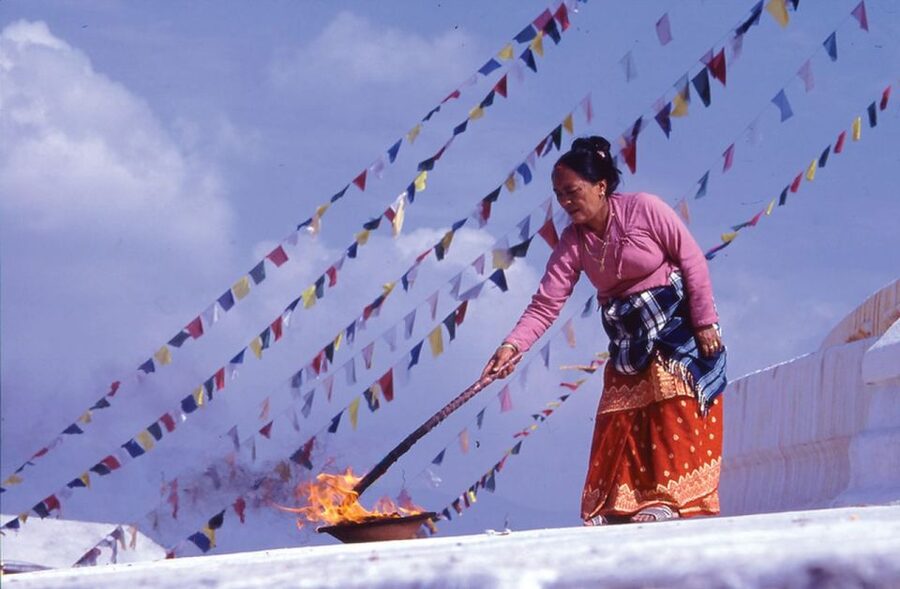
Kathmandu in the afternoon can feel intense. Evening is where the city becomes more legible, when people step out for errands, prayers, and small breaks from the day. This tour is built around that shift. You ride, you stop, you walk a little, then you stop again. That rhythm is what makes it practical, and it is also what makes it feel local.
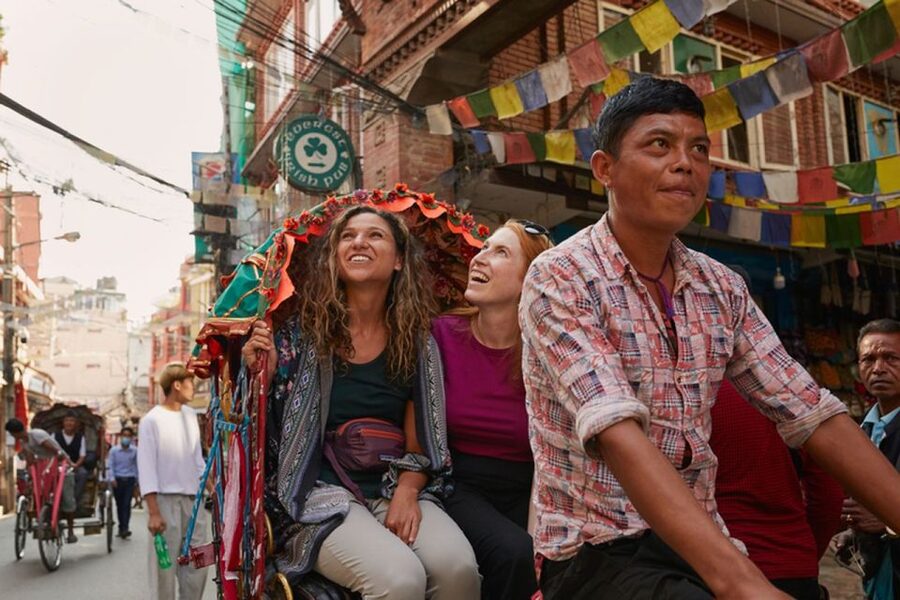
The rickshaw part matters more than you might think. Kathmandu has a lot of motorbikes and cars, so the city can feel like it runs on speed and noise. Here, you slow down physically. Your pace matches pedestrians and shopkeepers, so you notice details you would miss if you were just passing through in a taxi.
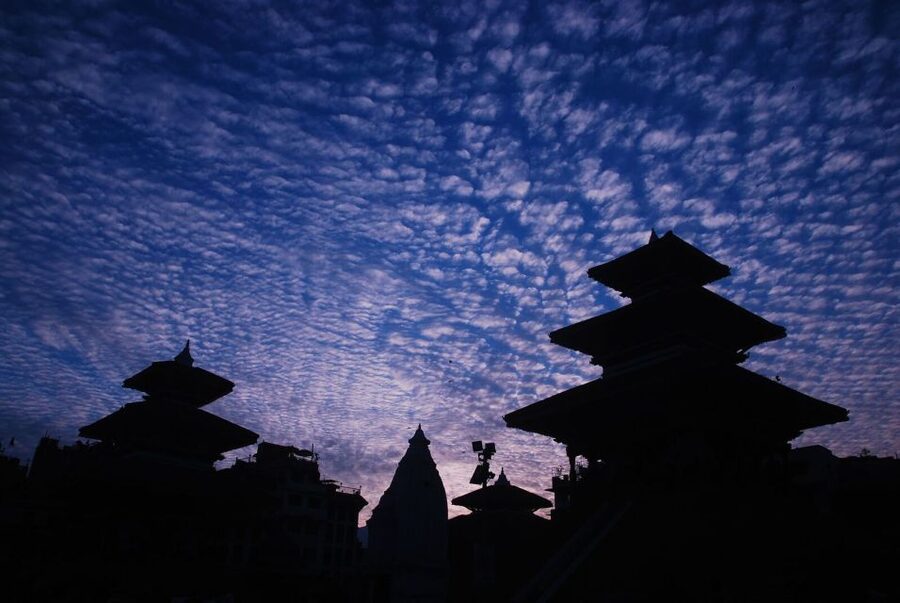
And yes, you are doing classic sights, like Durbar Square. The difference is timing. When you arrive toward sunset, the light softens the stonework and the mood changes. Instead of only seeing architecture, you get a window into daily life around the temples.
Starting at Hotel Marshyangdi, then finding the Thamel pulse
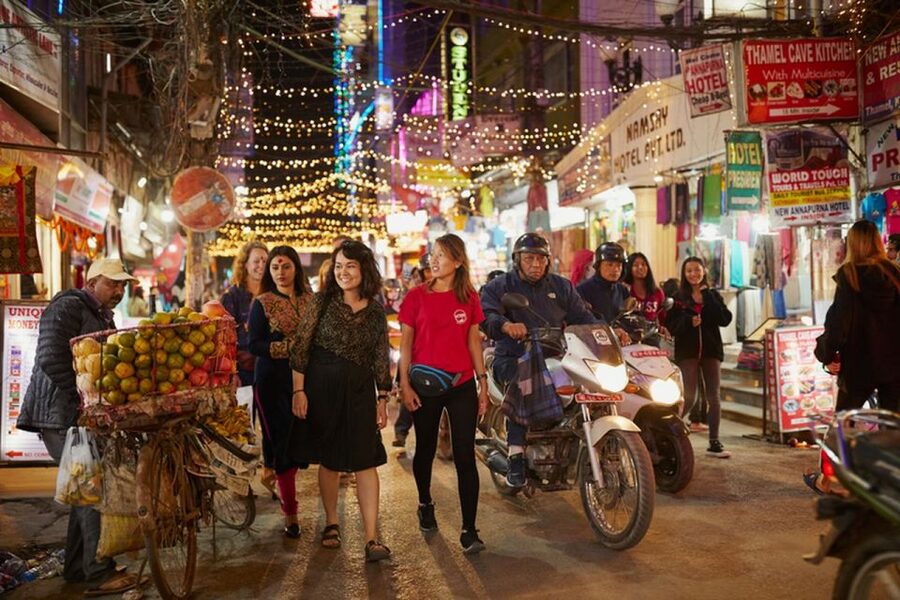
Most tours begin with a rush. This one begins with a meeting point that is easy to reach if you are staying in Thamel: Hotel Marshyangdi, Chaksibari Marg, Thamel. From there, you head out on the pedicab portion and start with a short look at Thamel itself.
The Thamel stop is brief, around 15 minutes, so you are not dragged through every shop lane. It is enough time to orient yourself, understand the energy level of the area, and mentally switch from tourist browsing mode to street-level Kathmandu. If you have never been here, that quick orientation can reduce the stress later when you are navigating smaller alleys and market streets.
Thamel also sets expectations for sound and movement. In a short time, you will see why rickshaws are a smart choice. They move through the same lanes that locals use, and they give you a front-row view without forcing you to constantly weave around traffic.
The Sigal Buddhist shrine stop: a quiet reset in a side alley
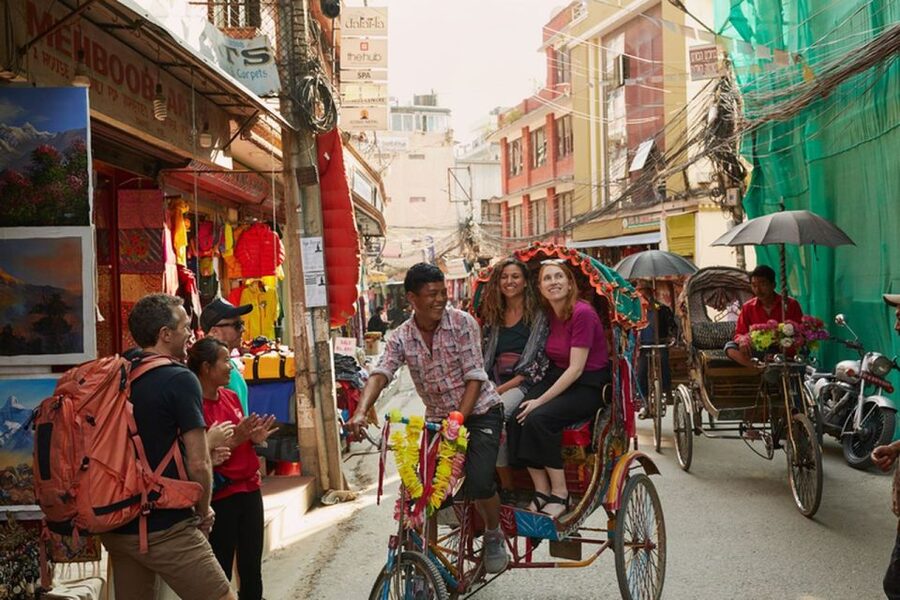
After the city’s main buzz, you hop off for the Sigal Buddhist shrine visit, just a few steps inside an alley. Even if you know nothing about Buddhism, this stop usually lands emotionally because it is a sudden change in pace.
You go from street chatter and market activity to a calmer pocket of devotion. People come to pray, light offerings, and pause. That contrast is exactly why this tour works. It does not treat temples like museum pieces. It treats them like living places where belief and routine overlap.
What I like about this kind of stop is that it trains your eyes. Once you have seen one small shrine setting up a different mood, Durbar Square later feels less like a single big attraction and more like a series of connected sacred spaces.
Asan Market and the Annapurna Temple connection
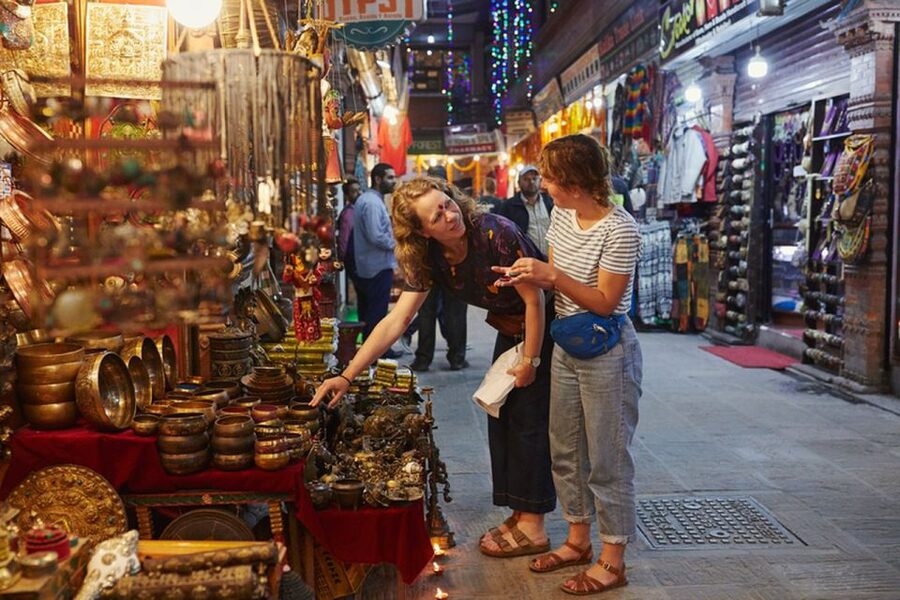
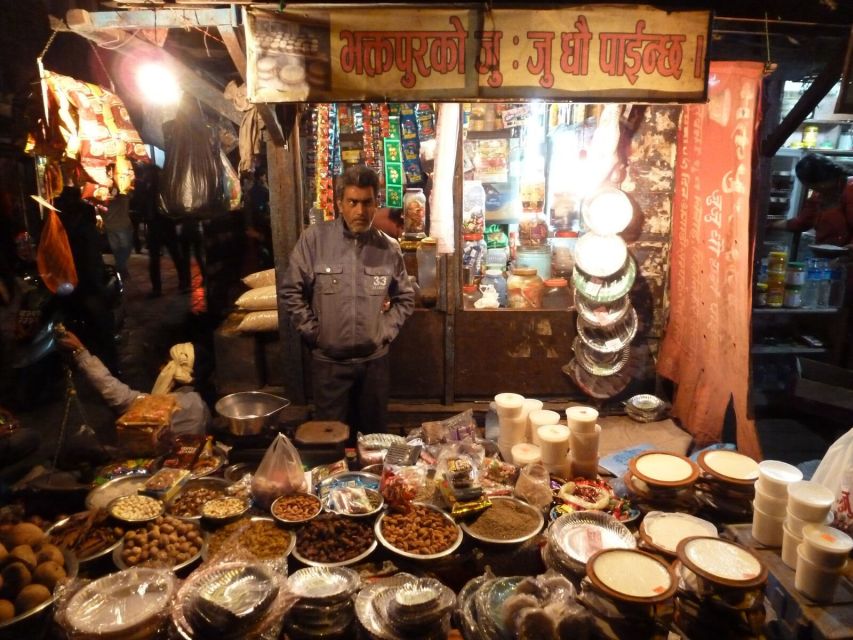
Next comes Asan, with about 1 hour here. Asan is known for vegetable and spice trading, and the tour uses that strength well. You are not simply walking past stalls. You are guided through the atmosphere and explained in plain language, so the ingredients stop being random and start feeling like part of how Kathmandu eats and cooks.
Look up while you are there. Asan is described as being overlooked by Annapurna Temple, and that matters for your understanding of the place. Markets and temples in Kathmandu are not separated in real life. People shop and pray in the same geography, and sacred and practical needs share the same streets.
This is also a good moment to watch daily rhythms. When you slow down, you often notice that the market is a social space, not only a purchasing space. Someone always seems to be bargaining, someone else is preparing supplies, and you will likely catch small conversations happening while transactions move along.
If you are short on time in Kathmandu, you might think you should skip markets in favor of only major monuments. I do not. Markets are where you learn how a city actually runs. Asan gives you that in a focused way.
Other Kathmandu town days on our list
Kathmandu Durbar Square at sunset: watching people use the sacred
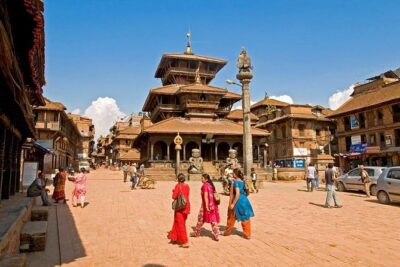
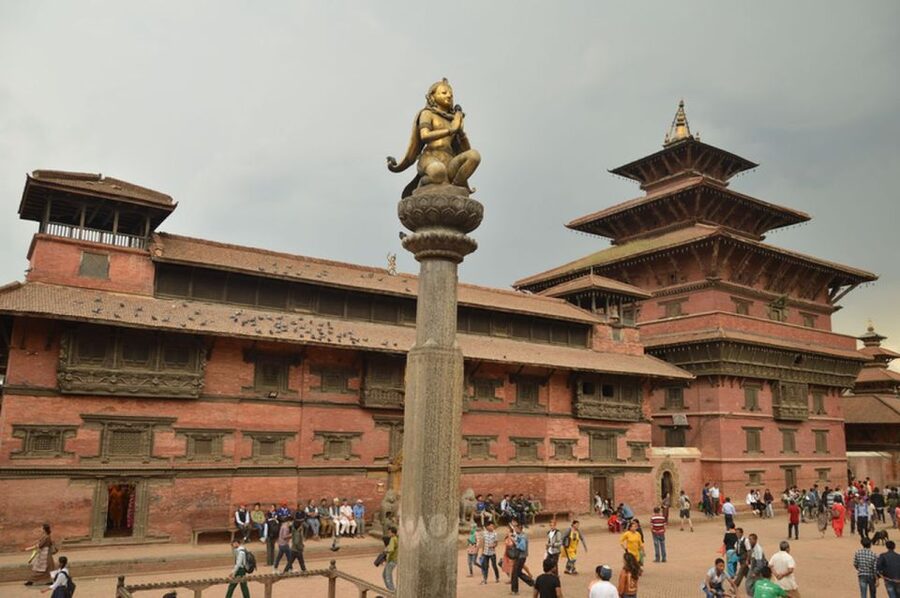
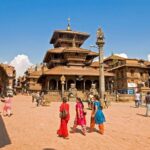
Then you get to the headline: Kathmandu Durbar Square, with around 1.5 hours on site. This is where the tour turns from street exploration into slow observation.
The guide encourages you to park yourself in a temple square and watch what happens. That is key. Instead of sprinting from one building to the next, you get time to see how people move through the space. You may notice locals sipping hot chai, devotees deep in prayer, and pigeons fluttering while everyday chores continue. That mix is what makes Durbar Square feel like a public living area, not just a heritage photo set.
Durbar Square is also a UNESCO Heritage site, so you are in a place that carries recognition beyond Nepal’s borders. But the best value here is not paperwork. It is the combination of architecture and atmosphere. When you arrive toward sunset, the stonework looks different than it does at noon, and the crowd mood shifts too.
Two practical tips for this portion:
- Dress for the evening, since temple squares can cool off as the light fades.
- Sit for a few minutes. Standing to look is fine, but the real payoff comes from settling in and letting the scene unfold.
This is also where entrance fees matter. The tour includes the entrance fee to Kathmandu Durbar Square, and that means your time there is supported rather than just extracted.
Rickshaws in Kathmandu today, and why hiring the pedicab is meaningful
Kathmandu has modern traffic pressure. Modern motorbikes and cars have largely replaced rickshaws in many parts of town. What this tour does differently is that the rickshaws are hired directly from the drivers.
That is not a random detail. It changes the value of the experience. Instead of paying for a scenic effect, you are paying for a working practice that has been squeezed by modern transport. Your ride becomes a direct way to support the people keeping this older city form alive.
The tour also states it is carbon neutral and operated by a B Corp certified company committed to using travel as a force for good. Even if you do not care about labels, the basic idea fits what you are doing: moving slowly through town without adding more traffic emissions than you have to. The rickshaw is doing what it was built to do, low impact and human scale.
Timing and group size, so you can plan your evening
The stated duration is 2.5 to 3 hours, and the day’s pacing is built around that. You have about an hour on the rickshaw portion, plus visits that include Thamel, Asan, and the longer Durbar Square time.
One thing to keep in mind is that the actual time can run shorter than the full range. A past booking described a shorter-than-expected duration. The most sensible approach is to schedule a light evening afterward, not a tight dinner reservation or a train that depends on you arriving exactly on the clock.
Group size is another practical factor. The tour runs as a small-group walking style experience for just 12 people, and a private group option is available. In practice, that smaller size makes the explanations easier to follow and reduces the feeling of being rushed by a big cluster.
What is included, what you must handle yourself
This tour keeps the essentials covered:
- Rickshaw hire
- English-speaking Nepali guide
- Entrance fee to Kathmandu Durbar Square
- Buddhist shrine visit at Sigal
You handle your own:
- Food and drinks
So plan like an evening city walk. If you tend to get hungry while sightseeing, bring a simple snack. If you get thirsty, carry water. Since Asan is a market area and Durbar Square is an open public space, it is not hard to find things to buy, but it is also easy to end up without what you want if you did not plan.
Also, wear shoes that can handle uneven surfaces. Temple and market ground tends to be inconsistent. You will walk enough that good footwear makes everything feel easier, and it also keeps the experience comfortable when you stop to sit at Durbar Square.
Who should book this rickshaw tour
This tour is a strong fit if you want:
- A gentle start in Thamel without spending hours there
- A mix of street life and sacred stops
- A small group experience with an English-speaking Nepali guide
- A calmer pace than busier half-day tours
It is especially good for first-timers who want an authentic-feeling evening without needing to navigate alone. The itinerary gives you a logical flow, from city buzz to quiet shrine to market learning to Durbar Square observation.
It can also suit couples and solo travelers who like meeting small groups but still want a guide who can manage pacing. If you prefer total flexibility, the private group option is available, though the basic value comes from the same mix of places.
Families can consider it too. The tour lists an age rule allowing children under 6 and also covering children aged 6 to 11 inclusively. If you are traveling with kids, you might still want to bring patience, since temple squares and markets require more walking than indoor sightseeing.
Should you book Kathmandu at Sunset on a Rickshaw?
If you have limited time in Kathmandu and you want more than a checklist, I think this is a smart booking. You get a rickshaw ride, a real market stop at Asan, and proper time at Kathmandu Durbar Square when the atmosphere changes. The included entrance fee and shrine visit add value, and the small group size helps the guide keep things understandable.
Book it if your ideal evening includes:
- Watching people use public sacred space
- Getting ingredient-level context at a market
- Moving slowly enough to notice details
Skip it if your schedule is extremely tight, since the tour length can run shorter than the stated range. Also skip it if you dislike walking on uneven ground or if you absolutely need all meals included.
If you do book, plan for a relaxed next step after the tour. Kathmandu evenings reward you when you are not rushing the rest of your night.
FAQ
Where does the Kathmandu at Sunset rickshaw tour start?
It meets at Hotel Marshyangdi, Chaksibari Marg, Thamel, Kathmandu.
How long is the tour?
The duration is listed as 2.5 to 3 hours.
What does the tour cost?
The price is $49 per person.
What’s included in the price?
Included are the rickshaw hire, an English-speaking Nepali guide, the entrance fee to Kathmandu Durbar Square, and a Buddhist shrine visit at Sigal.
What is not included?
Food and drinks are not included.
Which places do we visit during the tour?
You’ll stop in Thamel, visit the Sigal Buddhist shrine, explore Asan Market, and spend time at Kathmandu Durbar Square before returning to the meeting point.
Is the rickshaw ride all day?
No. The tour includes a pedicab/rickshaw portion (listed as 1 hour), plus walking during market and temple visits.
Can children join this tour?
Children must be 6 years of age to 11 years inclusively. Children below 6 are permitted on this tour.
Is this tour carbon neutral?
The tour notes that it is carbon neutral and operated by a B Corp certified company.
What kind of group size is it?
It’s listed as a small group of up to 12 people, and a private group option is also available.
Streets and Squares of Kathmandu
The Rest of Our Kathmandu Write Ups




Still in Thamel
Everything else we have reviewed around Kathmandu
- 12 Days Everest Base Camp Trekking
★ 5.0 · 3 reviews - 1 Night 2 Days Chitwan Jungle Safari Tour from Pokhara or Kathmandu
★ 3.0 · 3 reviews - Thamel Rickshaw tour
★ 4.7 · 3 reviews - Kathmandu: Momo Making Class with a Local Chef
★ 5.0 · 3 reviews - Kathmandu: Full-Day Yoga, Body Massage and Pedicure Package
★ 5.0 · 3 reviews - From Kathmandu / Pokhara / Chitwan: River Rafting – 1 Day
★ 4.6 · 3 reviews
Thamel Walking & Rickshaw Tours worth a second look.
 ★ 5.0Half day cooking class in Thamel kathmanduFrom $28607 reviews
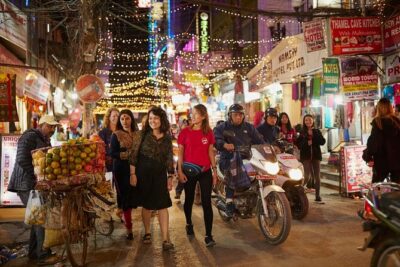 ★ 5.0Kathmandu Sunset Tour by Rickshaw Including Durbar Square VisitFrom $5073 reviews
 ★ 5.0Kathmandu Food & Drink and Shopping Rickshaw TourFrom $2548 reviews
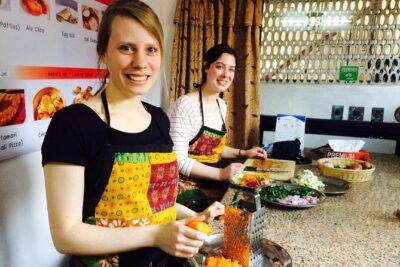 ★ 5.0Best Nepali Cooking Class in Thamel with Local Market TripFrom $3026 reviews
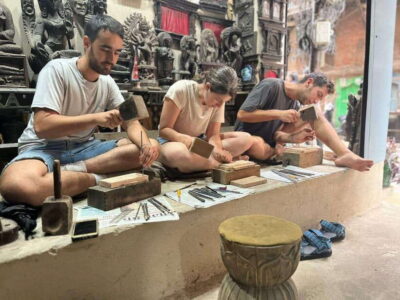 ★ 4.9Wood Carving Workshop with Local Artisan (Thamel)From $4217 reviews
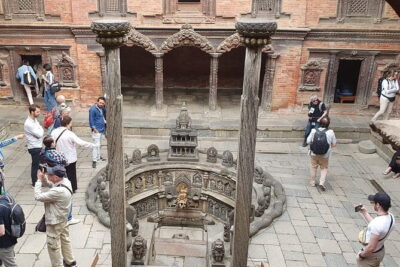 ★ 5.0Kathmandu and Patan Heritage and Living Goddess Experience TourFrom $5012 reviews
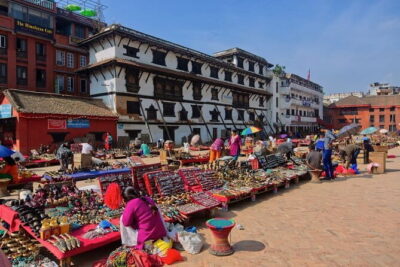 ★ 5.0Oldest Local Market Walking Tour With Living Goddess KumariFrom $398 reviews
★ 5.0Oldest Local Market Walking Tour with Living Goddess KumariFrom $408 reviews
Lists this tour sits in