
REVIEW · ANNAPURNA BASE CAMP TREKS
Annapurna Base Camp 7 Days Trek from Pokhara
Annapurna Base Camp is the kind of trek you remember forever. You get classic Annapurna views over Gurung villages and rhododendron forests, then a steady push up to Annapurna Base Camp at 4,130 meters. I particularly like how this route mixes big scenery with real village life, plus the company pairs it with English-speaking guidance and guest house stays.
One thing to plan for: the walking is serious. You should have moderate physical fitness, and day 4 includes a climb of about 730 meters to reach the Base Camp area, after which mornings can feel cold and thin at altitude.
In This Review
- Key highlights you’ll feel on the trek
- Why Annapurna Base Camp from Pokhara hits different
- Price and logistics: what $435 really buys you
- Fitness and altitude: the real work is day 4 and day-to-day steps
- Route highlights: from Ghandruk to the Annapurna Sanctuary and Base Camp
- Day 1: Pokhara to Ghandruk, then your first big Annapurna views
- Day 2: Ghandruk to Upper Sinuwa, through villages and ridges
- Day 3: Into the bamboo and rhododendron world toward Annapurna Base Camp area
- Day 4: Annapurna Sanctuary, Machhapuchhre Base Camp area, then climb to Base Camp
- Day 5: Base Camp down to Bamboo, a day for careful footing
- Day 6: Bamboo and the long way down toward Chhomrong, then Jhinu Danda
- Day 7: Jhinu-Danda to Pokhara, with a suspension bridge moment
- Guest houses, food, and comfort that support the hike
- Guides, group pace, and how to get more than photos
- Who this trek suits best, and who should think twice
- Should you book Annapurna Base Camp from Pokhara with PAN?
- FAQ
- How high does the trek go?
- Is pickup and drop-off in Pokhara included?
- What kind of guide do I get?
- What permits are included?
- Where do I sleep during the trek?
- Is this trek suitable for wheelchair users?
- What fitness level do I need?
Key highlights you’ll feel on the trek
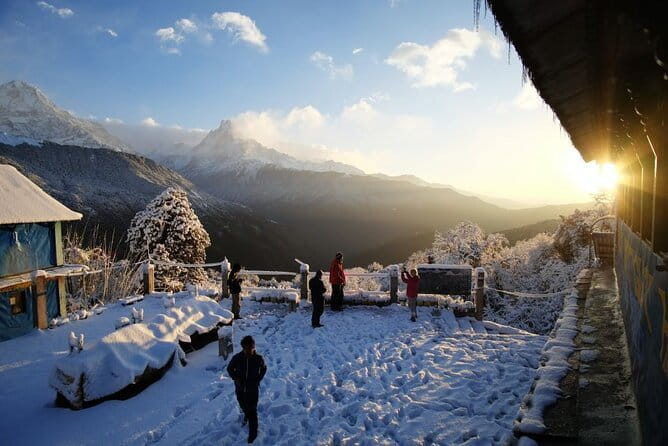
- Guides people mention by name (Ram and Krishna) for being helpful and keeping things moving
- Ghandruk to Sinuwa to the Sanctuary, with constantly changing scenery and trekking vibes
- Annapurna Base Camp at 4,130 m, plus a high stop near Machhapuchhre Base Camp at about 3,900 m
- Guest house lodging each night, so you are not carrying camp gear
- Hotel pickup and drop-off in Pokhara, plus round trip sharing bus or jeep transfers
Other approaches to the Sanctuary gate
Why Annapurna Base Camp from Pokhara hits different
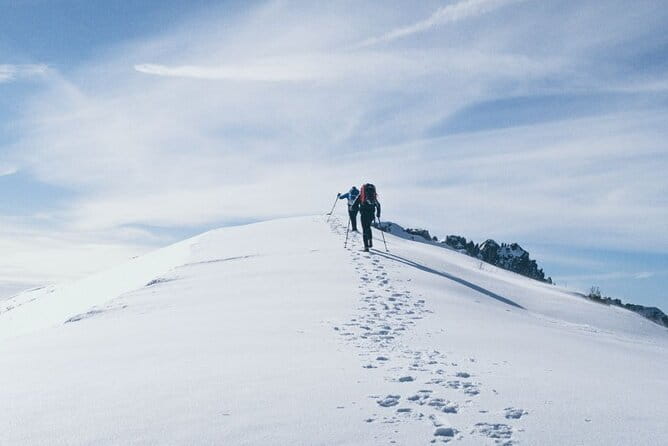
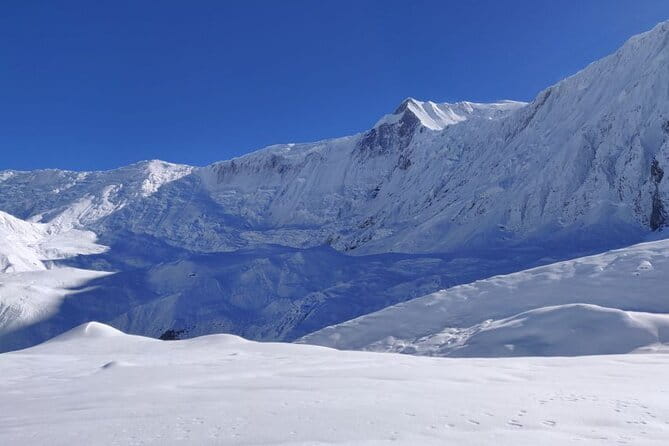
If you care about mountains, Annapurna Base Camp is hard to beat. The trek takes you through a sequence of ecosystems you can feel in your legs, from lower, warmer forest paths to cooler higher trails. Then, when the air tightens and your breath gets louder, the payoff shows up in wide-open views of Annapurna South, Machhapuchare (Fishtail), Hiunchuli, and the Annapurna massif surrounding the sanctuary zone.
What makes this trek especially satisfying is the mix of scale and texture. You are not only chasing heights. You pass through communities like the Gurung and Magar villages, with chances to see local life along the trail. Places like Ghandruk are known for strong Gurung culture, and on this route you start there, which means your mountain story begins with people, not just peaks.
The practical side matters too. This is not a self-guided hop-on, hop-off plan. You travel with an English-speaking trekking guide, you sleep in guest houses, and the route is designed so you can keep a steady pace for seven days. That structure matters when you are dealing with altitude and day-to-day logistics.
Price and logistics: what $435 really buys you
At $435 per person, the big question is value, not just cost. For this trek, the number covers the core services you would otherwise spend time and effort arranging yourself.
Included in what you pay:
- Hotel pickup and drop-off in Pokhara
- Round trip transfer by sharing bus or jeep
- Trekking permit and TIMS card
- English-speaking trekking guide
- Guest house accommodation during the trek
- A private trip for your group
Not included:
- Personal expenses
- Gratitude
That is a sensible package for a seven-day high-mountain trek. Permits and TIMS cards are not optional, and they can be the kind of thing that derails a plan if you forget them. Transfers matter too, because getting between trailheads and the trail is part of the overall experience, not just a warm-up.
One more logistics detail that helps you plan: this is described as a private activity, meaning only your group participates. That typically makes the pace and timing feel more tailored, compared with joining a random mixed group.
Fitness and altitude: the real work is day 4 and day-to-day steps
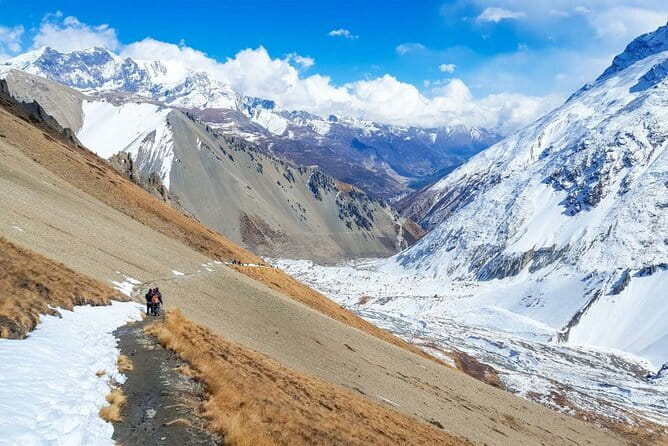
This trek is best for you if you have moderate fitness and you are comfortable hiking several hours per day. The walk times on most days are around 6 to 7 hours, not counting lunch and tea breaks. That is long enough to add up, even when the trail feels manageable.
Altitude is the other factor. You reach Annapurna Base Camp at 4,130 meters. Before that, you spend time in the sanctuary area and then climb to the Base Camp zone. Day 4 is described as a climb of about 730 meters to reach the Base Camp area, and it sits after a morning section toward Machhapuchhre Base Camp around 3,900 meters.
What to do with this info:
- Expect a slower pace as you gain height.
- Plan to move steadily, not fast, especially after the higher stops.
- Keep your energy for mornings. Sunrise and clear-peak visibility often come when you manage fatigue well.
Also, this trek is not recommended for wheelchair users. The route includes hiking on trekking trails and steps, and the data specifically flags accessibility limits.
Route highlights: from Ghandruk to the Annapurna Sanctuary and Base Camp
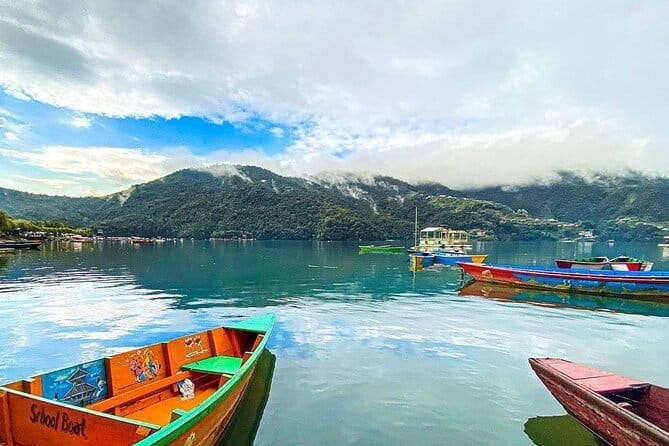
Below is what you can expect as the trek builds, stop by stop. The route is designed so each day adds a little more altitude, a little more cold, and a little more drama in the views.
Other lodge to lodge routes near Pokhara
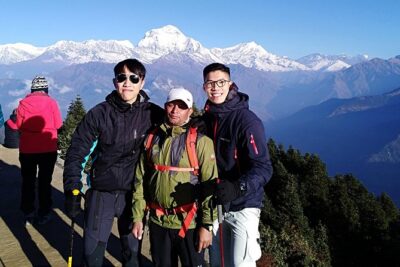
Day 1: Pokhara to Ghandruk, then your first big Annapurna views
You start with scenery around Pokhara and then head out in the morning toward Kyu Mi Danda via Nayapul and Birethati. The road section is unpaved, so you take a sharing jeep from the area of Ghandruk onward. That is normal here. It is part ride, part bumpy adventure, and it helps set the tone.
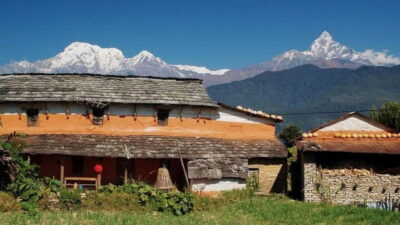
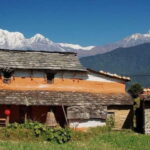
Then you settle into Ghandruk, one of the major Gurung villages in the Annapurna region. It is a great first base because you get culture early. You can explore Gurung customs, lifestyle, and views of Annapurna South, Hiunchuli, Machhapuchare (Fishtail), Gangapurna, and Annapurna III. This is also a day where you often feel the excitement, because the mountains start to look close.
Practical note: the day is described around seven hours, including the transfer and trekking segment. Even if you feel fresh, don’t spend all your energy on Day 1 exploring every lane. Save some for the push upward.
Day 2: Ghandruk to Upper Sinuwa, through villages and ridges
From Ghandruk, you head toward Upper Sinuwa. This day is described as a strenuous walk, with about seven hours of hiking time aside from lunch and tea breaks. You pass through areas like Kimrung Danda and along the Kimrung River, then through Chhomrong village before reaching Sinuwa.
What I like about this day is the in-between feeling. You are not only walking through forests. You are moving through small pockets of community and vegetation changes, so it stays interesting even when your pace slows on steeper sections. The view of the Annapurna ranges appears in flashes between ridgelines.
Sinuwa itself tends to feel more basic than big trail hubs. That is a plus for many people, because it feels like you are living inside the trek rhythm rather than popping in for views and leaving.
Day 3: Into the bamboo and rhododendron world toward Annapurna Base Camp area
Day 3 focuses on building altitude toward the sanctuary zone. The description highlights an uphill trend as the air cools. You move through places like Bamboo and Dovan along the route, and the path winds through bamboo and rhododendron forest with the Modi River valley adding atmosphere.
This is where the trek starts to feel more like a high-mountain corridor. The forest gives way to more openness as you get higher, and that shift can be noticeable in both temperature and trail sound.
If you tend to get impatient, this is the day to practice patience. You may not be at the highest point yet, but the route is setting up the moment when the Base Camp area appears.
Day 4: Annapurna Sanctuary, Machhapuchhre Base Camp area, then climb to Base Camp
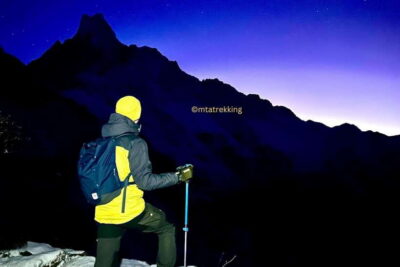
Day 4 is the heart of the high trek. You go up toward the Machhapuchhre Base Camp area at about 3,900 meters. Then you climb about 730 meters to reach Annapurna Base Camp at 4,130 meters.
Along the way, the trail is described as gradually uphill into Annapurna Sanctuary, with grassy uphill sections as you near the Base Camp zone. The big reward is the view of Annapurna peaks circling the sanctuary, including Annapurna I. If you are hoping for that classic moment of standing at the base of a massive massif, this is the day.
One important reality check: you will likely arrive tired. Even though the route is structured for six hours on this day (not counting typical breaks), the altitude makes your effort feel heavier. Don’t worry if you feel slower than you expected. That is normal up here.
Day 5: Base Camp down to Bamboo, a day for careful footing
After Base Camp, you descend to Bamboo. Descents are their own workout, even when the trail is labeled decent. The guidance here is clear: walk carefully on the way down.
You pass via Deurali, Himalaya, Dovan, and then continue back to Bamboo for the overnight stay. This day usually gives you a chance to reset physically because your energy can go toward steady movement instead of a big altitude gain.
A warm shower is specifically mentioned as an added comfort at Bamboo. That kind of small win matters when you are carrying cold in your muscles and fingers.
Day 6: Bamboo and the long way down toward Chhomrong, then Jhinu Danda
Day 6 is described as a looped, changing-elevation day. You go from here with a short steep up to KhuldiGhar, then descend through forest to Sinuwa-Danda. From there, you descend toward Chomrong Khola and then cross a bridge before climbing slightly again to Chhomrong village for lunch.
After lunch, you climb again to the top of Chhomrong ridge, then finish with a downhill walk to Jhinu-Danda. The emotional feel of this day is big because you are leaving the high zone behind but still moving through dramatic valleys.
This day is also where you can tell the pace of your whole trek. If your ankles are holding up and you manage your steps, you will feel more confident for the final day.
Day 7: Jhinu-Danda to Pokhara, with a suspension bridge moment
Your final day is about getting you back to Pokhara. The route includes a short downhill and a crossing of a long suspension bridge to reach Samrung Khola. From there, you catch a local jeep back to Pokhara, taking about four hours.
The drive route passes through places including Kimrung village, Syauli Bazaar, Birethati Nayapul, Kande, and Naudanda before reaching Pokhara. After days of foot travel, this feels like a big change of pace, and it is a good time to soak in the fact that you did the trek.
Guest houses, food, and comfort that support the hike
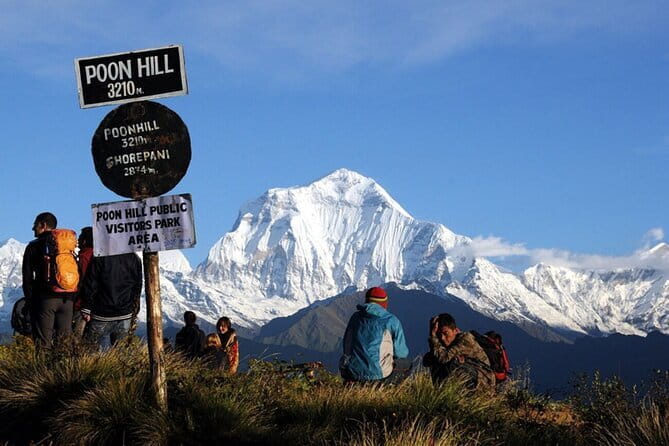
The trek includes accommodation in guest houses, which is exactly what you want for a multi-day trek at altitude. You are not carrying tents or sleeping gear, so you can focus on trekking.
Rooms and basic comfort are mentioned as “nice” in the experiences shared by past participants. Food is also mentioned positively along with room comfort and transport, which signals that this is not a bare-bones approach.
That said, guest houses up high are still in the mountains. Expect simple setups, limited privacy, and a need to dress warmly at night. Bring layers you can manage easily because temperatures shift quickly at altitude, and your body feels it.
If you want the best comfort, plan for:
- Warm sleep layers for cold nights
- Dry layers for mornings
- Footcare basics to prevent small issues from becoming big problems
Guides, group pace, and how to get more than photos
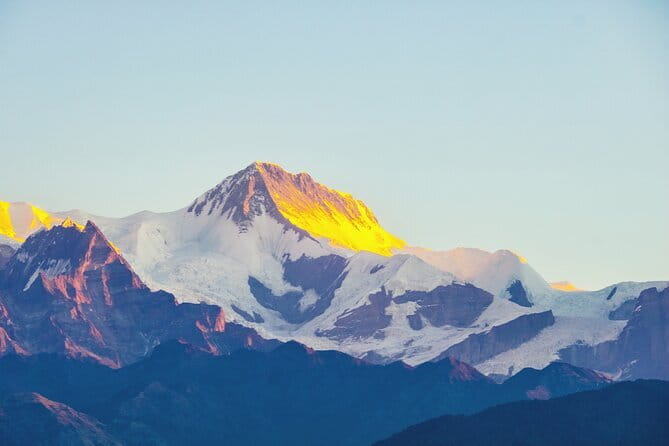
A good guide can make or break a trek, not because of fancy talk, but because of practical decisions. In the experiences shared, guides such as Ram and Krishna are specifically praised for being helpful. That usually means clear communication, smooth pacing, and support when you are tired.
Here is what you should do to make the guide’s work pay off:
- Ask about the day’s pace early, then match it.
- Keep your pack organized so you are not searching when you need gloves or a warm layer.
- If you care about sunrise moments, ask your guide how to time breaks and start times so you are in position.
You are also trekking as a group on a route with shared transfers, so communication matters. If you get frustrated with slower walkers, remember this is not about being first. It is about staying consistent and finishing feeling proud.
Who this trek suits best, and who should think twice
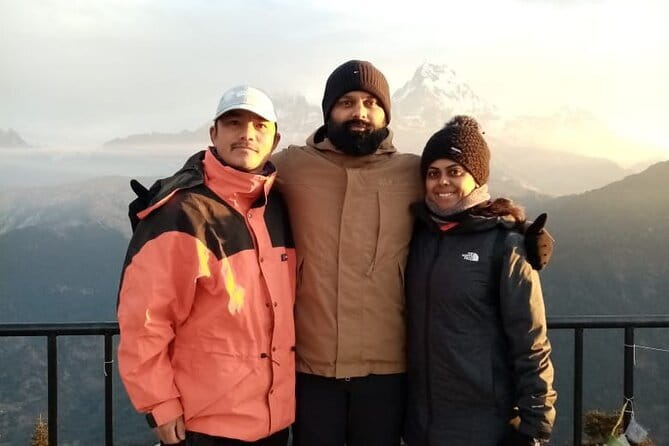
This trek suits you if:
- You are aiming for the classic Annapurna Base Camp experience with villages, forest sections, and high-altitude views
- You want an English-speaking guide and guest house lodging
- You have moderate physical fitness and can handle long walking days
Think twice if:
- You need wheelchair-accessible routes, because the trek is hiking on trails
- You want a fully gentle walk, because there are strenuous sections and a major climb day around the Base Camp push
- You are new to altitude hikes and you cannot commit to slow, steady movement
The good news is that the route includes time in villages and forest, not just climbing. That variety can help your mind stay engaged, even when your legs are working.
Should you book Annapurna Base Camp from Pokhara with PAN?
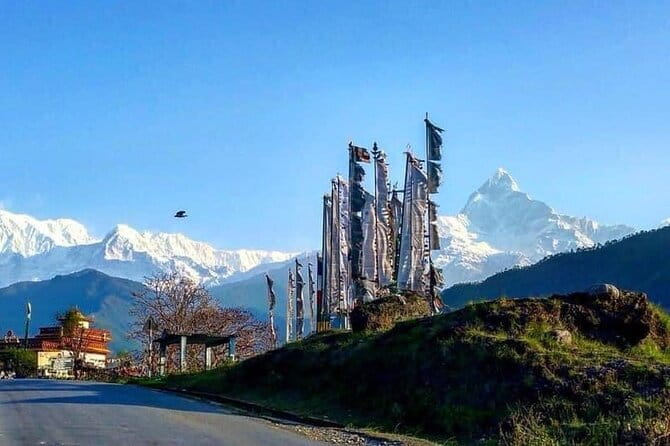
If your goal is to reach Annapurna Base Camp, see the Annapurna massif up close, and still enjoy village culture and a supported trek structure, this is a strong option. The value looks solid because your payment includes permits, guide support, guest house lodging, and Pokhara pickup and drop-off.
I would book it if you match the fitness level and you are comfortable with cold and long walks. If you want the mountains without worrying about the permit and logistics pieces, the included support is exactly what you’re paying for.
Skip it or look for alternatives if you are worried about altitude effort, you cannot handle multi-day hiking, or accessibility is a requirement.
FAQ
How high does the trek go?
You reach Annapurna Base Camp at about 4,130 meters. The route also includes a stop near Machhapuchhre Base Camp at about 3,900 meters.
Is pickup and drop-off in Pokhara included?
Yes. Hotel pickup and drop-off in Pokhara are included.
What kind of guide do I get?
The trek includes an English-speaking trekking guide.
What permits are included?
The trekking permit and a TIMS card are included.
Where do I sleep during the trek?
Accommodation is in guest houses.
Is this trek suitable for wheelchair users?
It is not recommended for wheelchair users, since it involves hiking on trekking trails.
What fitness level do I need?
Travelers should have a moderate physical fitness level, as the route includes long walking days and a major uphill day near the Base Camp area.
Lodge to Lodge Around Pokhara
The Rest of Our Pokhara Write Ups

Through the Sanctuary Gate
Everything else we have reviewed around Pokhara
- Pokhara: Cable Car Tour – Bird Eye View of Mountain & Lake
★ 4.4 · 3 reviews - Jomsom Muktinath Tour by 4WD SUV 2 Days
★ 5.0 · 3 reviews - Ghorepani Poonhill Private Trek – 2 nights / 3 days
★ 4.5 · 3 reviews - Pokhara: 30-Minute Paragliding Adventure with pick up/drop off
★ 4.5 · 3 reviews - Pokhara: 7-Day Annapurna Base Camp Trek via Ghandruk
★ 4.3 · 3 reviews - Pokhara Group Joining Sarangkot Sunrise Himalayas Tour
★ 5.0 · 3 reviews
Annapurna Base Camp Treks worth a second look.
 ★ 5.0Annapurna base camp trek 5 DaysFrom $699252 reviews
 ★ 5.0Annapurna Base Camp TrekFrom $935111 reviews
 ★ 5.0Kathmandu to Annapurna Base Camp (ABC) 5-Day TrekFrom $99102 reviews
 ★ 5.0Annapurna Base Camp Trek 12 DaysFrom $80085 reviews
★ 5.0Annapurna Base Camp TrekFrom $92580 reviews
 ★ 4.95-Day Annapurna Base Camp (ABC) TrekFrom $9672 reviews
★ 5.0Annapurna Base Camp TrekFrom $69959 reviews
 ★ 5.011-Day Hike Tour to Annapurna Base Camp Bliss in KathmanduFrom $1,30052 reviews
Lists this tour sits in