
REVIEW · EVEREST BASE CAMP TREKS
Everest Base Camp trek with Helicopter return 9 days
If you want Everest fast, this format hits the sweet spot. In nine days you’ll walk the classic high-altitude trail up to Kala Patthar, then take a helicopter back down from the Everest region. It’s a smart choice when you want the big views without a long, weeks-long grind.
I especially like the way this trip handles logistics for you. You get a private car from the airport, flight help to Lukla, and a planned helicopter return, which matters when weather or timing gets tight at altitude. I also like the day-by-day pacing, including a real acclimatization rhythm around Namche Bazaar, then a gradual climb that gets steeper once you’re higher than Dingboche.
One consideration: even with a helicopter return, this is still an altitude trek. Once you’re above Dingboche, the route becomes more remote and steep, so you’ll want a moderate fitness base and good walking consistency.
In This Review
- Key takeaways before you go
- Why Everest Base Camp by helicopter return makes sense in 9 days
- Day 1 Kathmandu pickup, hotel time, and a smooth start
- Day 2 Flying to Lukla, then starting the trekking rhythm
- Days 3-5 Namche Bazaar acclimatization, plus the Everest View Hotel detour
- Day 5 to Day 6 Kyangjuma to Tengboche, with sunrise-style timing
- Day 7 Dingboche onward and the Khumbu Glacier day
- Day 8 Gorak Shep, the long rocky day, and building toward Kala Patthar
- Day 9 Kala Patthar views and the helicopter return from Gorakshep to Lukla
- Guides, porters, and safety checks that matter at altitude
- Price and logistics: what $3,888 includes, and what can cost extra
- How hard is this Everest Base Camp trek, really?
- Who this trip fits best
- Should you book Everest Base Camp with helicopter return?
- FAQ
- Is the airport pickup included?
- Are the flights to Lukla included?
- Where does the helicopter return start?
- How many days do you spend trekking in the mountains?
- What meals are included?
- What trekking safety support is included?
- Are permits and government fees included?
- Is international airfare and travel insurance included?
Key takeaways before you go
- 9 days, 7 days in the mountains with a helicopter return on the last day
- Kala Patthar (5,644 m) for the signature Everest panorama moment
- Lukla flights plus porters to keep the hardest work focused on your legs
- Oximeter and first-aid support twice a day as part of the safety routine
- Private group experience, so your guide can move with your pace
- Hotel, meals, permits, and official taxes are largely built in, with some add-ons on the trail
Other routes to Base Camp, side by side


Why Everest Base Camp by helicopter return makes sense in 9 days
Everest Base Camp has changed. These days, a lot of people don’t have the time for a full-on marathon trek, but they still want the real thing: walking into the Everest region, reaching the viewpoint at Kala Patthar, and seeing how remote that part of Nepal feels when you’re well above the tree line.
This 9-day version does something practical. You spend a concentrated week hiking upward along the classic route, then you stop worrying about spending extra days descending in the cold and fatigue zone. The helicopter return from Gorakshep helps shrink the whole trip without turning it into a sightseeing bus tour. You still earn the views.
It also keeps your day structure clear. You’re not constantly guessing what tomorrow looks like, which is a big deal when you’re operating at altitude. And because the trip is guided, you’re not left to figure out pacing, safety checks, or permit basics on your own.
Day 1 Kathmandu pickup, hotel time, and a smooth start
Your trip begins in Kathmandu with an airport team waiting for you. They help you check in, carry your bags, and get you transferred by private car. That first day sounds simple, but it’s worth appreciating. Kathmandu traffic can be stressful, especially if you arrive tired, dehydrated, and jet-lagged.
After pickup, the plan is straightforward: rest and get oriented with the core team. This matters because the rest of the itinerary depends on clean logistics. When your first day is handled, you’re more likely to show up rested for the next morning’s flight to Lukla.
Day 2 Flying to Lukla, then starting the trekking rhythm
Day two is all about the iconic flight from Kathmandu to Lukla, landing at Tenzing Hillary Airport. It’s short, and it’s famous for views, but the bigger value is time. You get to the start of the trek quickly rather than adding days of overland travel.
Once you land, porters join in and your trek logistics start moving. This is where you’ll feel the difference between a DIY trip and a guided one. You’re still walking for real, but you’re not juggling gear hauling, route figuring, or the small decisions that cost energy.
From there, your route sets you up for the classic progression: gradual ascent through villages and trail segments that help your body start adjusting, before the harder altitude days stack up.
Days 3-5 Namche Bazaar acclimatization, plus the Everest View Hotel detour
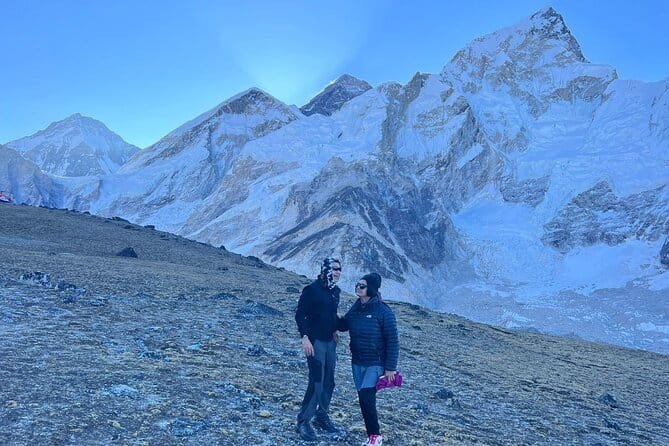
These are the days where the trip quietly does the most important work: acclimatization.
You’ll move from the lower villages toward Namche Bazaar, passing through forested sections along the way and crossing into higher terrain. This includes the Toktok and Monjo area, plus bridges along the route. That kind of trail travel may not sound “dramatic,” but it’s exactly what you want before you jump in elevation.
Then comes the Namche Bazaar rest day. This is a smart pause built into the itinerary, because acclimatization can’t be rushed. The plan includes going up via the Syangboche Airstrip to the Everest View Hotel above Namche Bazaar. It’s still on your schedule, so you get the advantage of fresh-air altitude without pushing a hard uphill day when your body is still adjusting.
You’ll then continue onward toward Kyangjuma, with views and rolling ups and downs that keep your walking steady. And you’ll start to feel how the route changes as you gain altitude. Trail segments after the Namche area can feel less forgiving, not because they’re technical, but because every step asks for more oxygen and more focus.
Other lodge to lodge routes near Kathmandu
Day 5 to Day 6 Kyangjuma to Tengboche, with sunrise-style timing
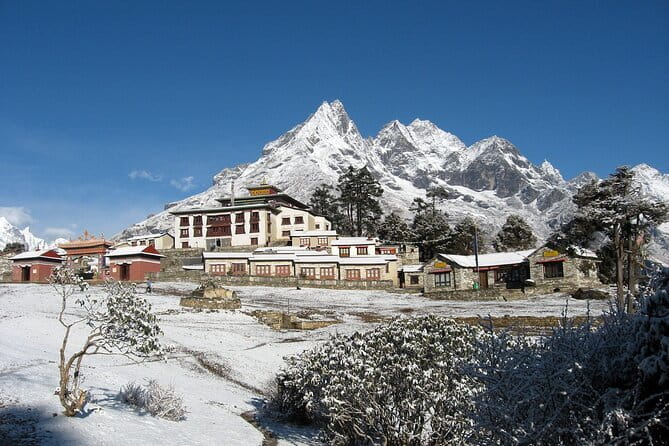
This part of the trek is where the route transitions into a more “Everest region” vibe. You climb up through areas with mountain viewpoints and then press on toward Tengboche.
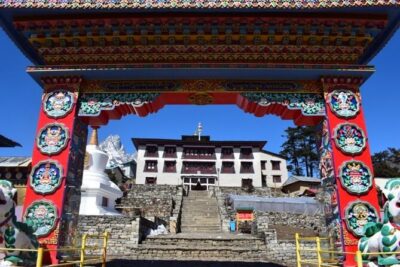
Tengboche is also where the day’s timing shows up. You’ll get up early to see sunrise, then depart after breakfast. The descent to Deboche along rhododendron forest adds variety, which I like because monotonous uphill walking can start to grind you down. Here you get a change in pace and scenery while still staying on the route progression.
Wildlife is possible on this segment, and you might see things like musk deer or blue sheep. Even if you don’t, the point is that you’re in an active ecosystem at altitude, not in a sterile trail corridor.
Day 7 Dingboche onward and the Khumbu Glacier day
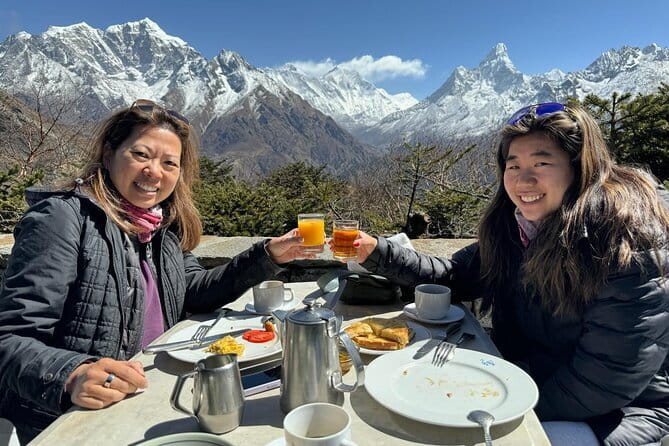
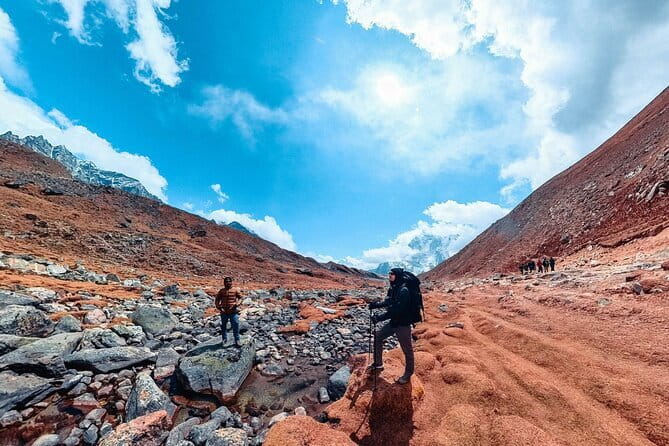
Day seven is a turning point. After Dingboche, you’re moving into steeper, more remote terrain. The itinerary includes a ridge climb after leaving Dingboche, and then most of the day is walking along the Khumbu Glacier.
That glacier day can feel long, and it’s often one of those “quiet challenge” days where your legs do the work while your head keeps checking your breathing. You’ll likely notice how the world narrows as you go higher. The trail becomes more serious, and you’ll spend more time thinking about pace.
Also, this is where the guided aspect matters. You’re not only walking, you’re being managed. Your guide and team are watching for altitude strain and adjusting when needed. That’s especially important because the trek is only nine days total, so the days you’re in are your whole window.
Day 8 Gorak Shep, the long rocky day, and building toward Kala Patthar
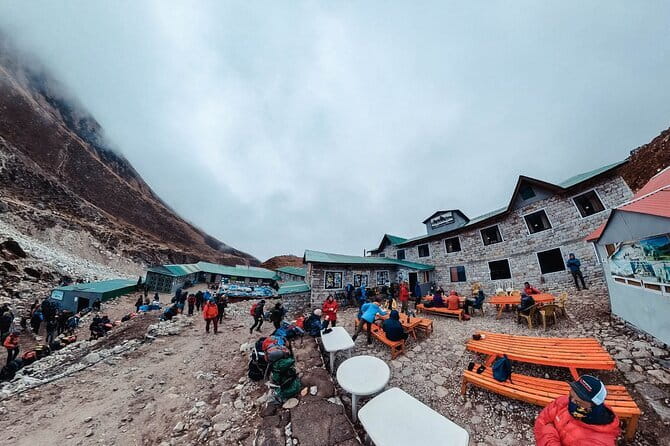
Gorak Shep is the big step before Kala Patthar. The day includes leaving Lobuche and following a wide valley up toward Gorak Shep.
The itinerary describes a slow climb on a rocky path, with increasing steepness as elevation rises. That combination is real. At this stage, you’re not just walking uphill, you’re walking uphill when your body is already working harder than it was earlier in the trip. This is the day that often determines how you feel the next morning.
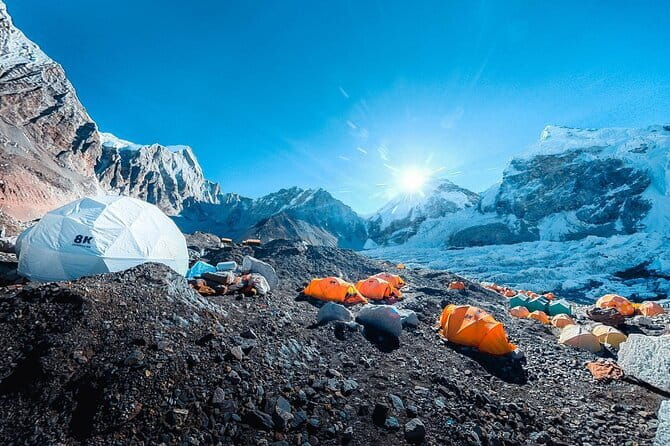
It’s also your staging point. You’ll be in position to go for Kala Patthar early, which is the whole payoff of this helicopter return format. If you’re hoping to see Everest in a strong, clear way from above the glacier basin, this is where the “wait for sunrise” energy comes from.
Day 9 Kala Patthar views and the helicopter return from Gorakshep to Lukla
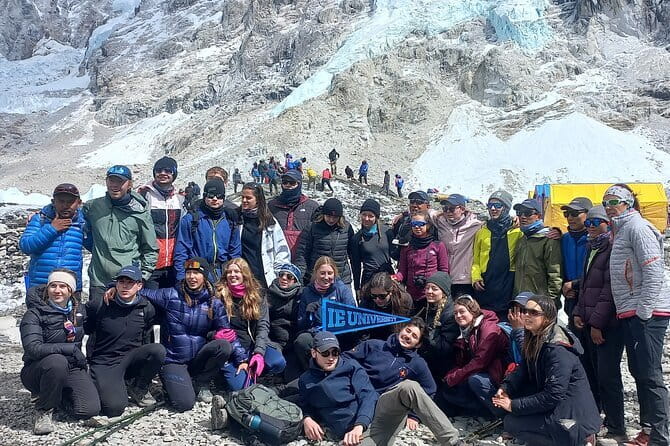
Day nine starts with the non-negotiable viewpoint: Kala Patthar. The idea is simple. You don’t leave the Everest area until you’ve seen the mountain panorama from there. The trail is well-used but easy to follow, and it starts above Gorak Shep.
The itinerary highlights early sun and golden light timing. Whether the weather is crisp or hazy, you’re aiming for that moment where the topography and peaks look the most defined. This is the day you came for, and it’s why the hike length is condensed in this 9-day version.
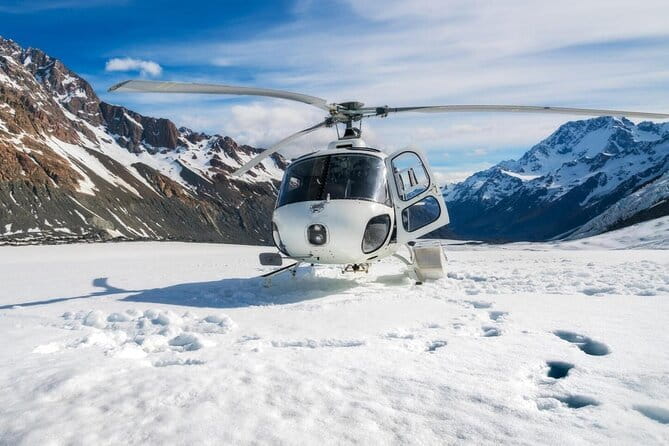
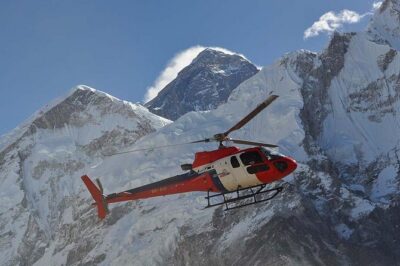
Then the helicopter comes into play. The trip includes a helicopter flight from Gorakshep to Lukla. That’s the clever part for people who want the Everest experience but don’t want to spend extra days descending through the toughest fatigue stretch.
After that, you return toward Kathmandu as the overall trip wraps up. The helicopter isn’t a shortcut to skip everything, it’s a shortcut that reduces wear and tear once you’ve earned the high point.
Guides, porters, and safety checks that matter at altitude
A trek like this is won or lost on management, not just endurance. This trip includes an experienced guide, plus a porter for two people. That porter ratio is important on a short trek, because it helps keep your hiking focus where it belongs: steady movement and smart pacing.
Safety measures are also built into the routine. The trip includes a first aid kit and an oximeter to check pulse and oxygen saturation, plus heart rate, twice a day. That’s a tangible benefit. Altitude problems often show up as slow changes before people feel fully “sick,” and having scheduled checks helps catch trouble early.
You’re also covered in another way that people forget to price in: the guide’s salary, food, drinks, lodging, and transportation, plus insurance coverage for the guide, are included.
I also appreciate the trip being private, so your guide can pay attention to your specific pace and any concerns without group pressure or constant reshuffling.
Price and logistics: what $3,888 includes, and what can cost extra
At $3,888 per person, this is not a budget trip. But when you look at what’s included, the value becomes clearer.
Included on the practical side:
- Private ground travel in Kathmandu, including airport transfer
- Flight Kathmandu to Lukla
- An experienced guide with support logistics covered
- Helicopter flight from Gorakshep to Lukla
- Permits and official taxes handled as part of the trek paperwork
- Meals on the trek (breakfast, lunch, dinner for the trek days)
- Oximeter and first aid kit
- Trip completion certificate
- One porter for two people
What’s not included (and you should plan for):
- Your visa and travel medical insurance
- International airfare
- Lunch and dinner in Kathmandu
- Tips for guide, porter, and driver, since tipping is expected
- Tea house costs like hot showers and phone charging (listed as about $2 to $5)
- Alcohol and other extra drinks
- Sweet desserts and snacks like cakes and pudding
- Personal expenses
The financial takeaway: you’re paying for a short timeline plus helicopter return plus a guided safety system. If you try to assemble those pieces yourself, you’ll often lose time and increase uncertainty, especially around the hardest parts of the route. Here, the plan is built to reduce that risk.
How hard is this Everest Base Camp trek, really?
The trek difficulty is described as moderate, and that matches the structure. You’re hiking every day for a total of seven full days in the mountains, and the route gradually ascends to Kala Patthar. Above Dingboche, the trail becomes steeper and more remote.
Moderate, though, doesn’t mean easy. The main challenge is altitude and the steady grind of walking at higher elevations. On a short 9-day itinerary, you’ll want to show up already comfortable with hiking days and able to keep a consistent pace without sprinting uphill.
If you can handle long days of uphill walking, and you have realistic altitude awareness, this can be a strong fit. If you hate early mornings, this trip is still going to wake you up, because Tengboche sunrise and Kala Patthar early timing are part of the package.
Who this trip fits best
This is best for you if:
- You want the classic Everest region experience but you only have about nine days
- You like guided support and a clear itinerary rather than open-ended trekking
- You want the key viewpoint hit at Kala Patthar, plus the relief of a helicopter return
- Your fitness is solid enough for moderate hiking at altitude
It’s less ideal if:
- You’re looking for an easy stroll with minimal altitude exposure
- You want total independence with zero organization, because this is built around flights, permits, and guiding
- You dislike paying add-ons on the trail, since tea house shower and charging costs are extra
Should you book Everest Base Camp with helicopter return?
If your priority is Everest, but your calendar is tight, I’d put this on your shortlist. The mix of Lukla flights, classic route walking, and a helicopter return from Gorakshep makes the whole experience more efficient without removing the heart of the trek: the climb to Kala Patthar for big Everest views.
I’d book it with confidence if you want guided safety support, appreciate the reduced descent fatigue, and you’re ready for moderate altitude hiking days. Just don’t underestimate the mountain part. The helicopter helps with getting back down, it does not erase the altitude challenge.
FAQ
Is the airport pickup included?
Yes. You get airport team support in Kathmandu, including help with check-in and carrying bags, then transfer by private car.
Are the flights to Lukla included?
Yes. The itinerary includes the flight from Kathmandu to Lukla.
Where does the helicopter return start?
The helicopter flight is from Gorakshep to Lukla.
How many days do you spend trekking in the mountains?
You spend about seven full days in the mountains, with the final day tied to Kala Patthar and the helicopter return.
What meals are included?
Breakfast, lunch, and dinner are included for the trek days (listed as 8 breakfasts, 8 lunches, and 8 dinners).
What trekking safety support is included?
A first aid kit is included, and an oximeter is used to check pulse and oxygen saturation, plus heart rate, twice a day.
Are permits and government fees included?
Yes. The trip includes the fees and papers needed for entering permits, plus taxes and official costs paid to the government.
Is international airfare and travel insurance included?
No. International airfare and your travel medical insurance are not included.
Lodge to Lodge Around Kathmandu
The Rest of Our Kathmandu Write Ups



Base Camp, Three More Ways
Everything else we have reviewed around Kathmandu
- 12 Days Everest Base Camp Trekking
★ 5.0 · 3 reviews - 1 Night 2 Days Chitwan Jungle Safari Tour from Pokhara or Kathmandu
★ 3.0 · 3 reviews - Thamel Rickshaw tour
★ 4.7 · 3 reviews - Kathmandu: Momo Making Class with a Local Chef
★ 5.0 · 3 reviews - Kathmandu: Full-Day Yoga, Body Massage and Pedicure Package
★ 5.0 · 3 reviews - From Kathmandu / Pokhara / Chitwan: River Rafting – 1 Day
★ 4.6 · 3 reviews
Everest Base Camp Treks worth a second look.
 ★ 5.0Everest Base Camp Trek – 14 DaysFrom $1,8001,499 reviews
 ★ 5.0Everest Base Camp TrekkingFrom $1,350485 reviews
 ★ 5.0Everest Base Camp Trekking – 13 DayFrom $1,399365 reviews
★ 5.0Everest Base Camp Trek -14 DaysFrom $1,420321 reviews
 ★ 5.0Everest Base Camp Trekking – 2025/2026From $1,339199 reviews
 ★ 5.0Everest Base Camp TrekFrom $1,408193 reviews
 ★ 5.0Everest Base Camp Trek with Helicopter Return from Gorakshep to LuklaFrom $3,000161 reviews
14-Days Private Everest Base Camp TrekFrom $1,600152 reviews
Lists this tour sits in