
REVIEW · EVEREST BASE CAMP TREKS
Gokyo to Everest Base Camp Trek
A high pass and two famous viewpoints drive this trek. You get a classic Everest circuit, plus the Gokyo Lakes area and the steep climb to Kala Patthar, with a guided pace and solid logistics. Two things I especially like are that you travel with a licensed English-speaking guide and a porter ratio of 1 porter for every two clients, and that the operator includes real trail support like permits, filtered water, and even your down jacket and sleeping bag.
The best part for most people is the route itself, it keeps moving across the Khumbu while still building in acclimatization, like the extra time in Namche Bazaar. You’ll also get genuine cultural time in Sherpa country as you pass through places like Tengboche and nearby monasteries at altitude. One possible drawback to plan for is altitude and weather, especially early starts and the remote feel of basic lodging, like a very simple dormitory-style stay at Thangnag.
In This Review
- Key Highlights You Should Know Before You Go
- Price and What You Actually Get for $2,200
- First Steps in Kathmandu, Then Straight Into the Khumbu
- Lukla to Phakding: The Trek Starts, Not the Views Yet
- Namche Bazaar Acclimatization: Why This Day Is a Big Deal
- Phakding to Phortse: Forest Walking and Steeper Climbing
- Phortse to Machhermo: Ngozumpa Glacier Country
- Gokyo Base: Two Nights for Sights and Real Breathing Room
- Thangnag and Cho La Pass: Early Starts and Basic Reality
- Lobuche and the Road to Everest Base Camp
- Kala Patthar: The Hard Climb That Feels Like a Prize
- The Descent Back to Namche Through Pangboche and Tengboche
- Lukla Return and Kathmandu Wind-Down
- Who This Trek Fits Best (and Who Should Rethink It)
- Should You Book Gokyo to Everest Base Camp with Ace the Himalaya?
- FAQ
- What is the trek duration for this Everest Circuit?
- Where do you meet, and what time does the trip start?
- How many nights are you in Kathmandu, and are Kathmandu meals included?
- Are meals included on the trek?
- Are permits and guide services included?
- Do you get trekking gear provided?
- How is water handled on the trail?
- What is the cancellation window for a full refund?
- How many travelers are in the group?
Key Highlights You Should Know Before You Go
- Gokyo Lakes and Gokyo Ri views: the trek routes you to the lake area west of Base Camp, with a dedicated sunrise push to a 5,483 m viewpoint
- Cho La Pass effort is real: start early to cross around 5,300 m, then keep moving toward Everest territory
- Kala Patthar is the payoff: a hard climb to about 5,555 m that’s often the clearest “look at Everest” moment on this circuit
- Support that reduces friction: trained guide, porter coverage, and included trekking permits take weight off your brain
- Weather flexibility in practice: guides in past groups have handled storms by adjusting timing and route choices when conditions change
- Small group size: a maximum of 15 travelers makes it easier to move, regroup, and manage slower walkers
Other routes to Base Camp, side by side
Price and What You Actually Get for $2,200
At $2,200 per person for roughly 17 days, this trek is in the mid to upper range for Everest-area guided packages. The value comes from what you are not forced to arrange yourself: airport transfers in Kathmandu, two nights in a Kathmandu three-star hotel, Kathmandu to Lukla flights and the return flight, licensed guide time for the trek, and permits.
You also get practical gear and day-to-day support that matters at altitude. The package includes a down jacket and sleeping bag for the trek (returned afterward), plus a Katadyn Pocket Water Filter so you can handle safe water on the trail. Meals are included during the trekking portion, with breakfast 16 times, lunch 14 times, and dinner 14 times, while Kathmandu meals and drinks are not included.
Two cost notes you should budget for early. Tips for trekking staff and driver are expected, and travel insurance is not included, but you should have coverage that understands high-altitude rescue and evacuation. International airfare and the Nepal entry visa are also on you.
First Steps in Kathmandu, Then Straight Into the Khumbu
You start in Kathmandu with an airport representative who meets you at Tribhuvan International Airport, using a signboard for the company. From there, you’ll get an airport transfer and two nights in a three-star hotel, twin-share or double room, before you head to Lukla.
That hotel pause matters more than it sounds. After international flights, it’s smart to arrive with time to sleep, sort gear, and plan your layering system for sudden temperature swings. Also, you get the company duffel/kit bag and a sun hat as part of the trip, which can save you from last-minute buying.
When you are ready, your first big transition is the short, scenic flight to Lukla (2,804 m). The itinerary is set up for that, so don’t plan extra sightseeing in Kathmandu that delays your departure schedule. On many Everest-area trips, flights can be weather-sensitive, and your operator’s guide network is built around keeping the trek safe and workable.
Lukla to Phakding: The Trek Starts, Not the Views Yet
Your trekking days begin after landing in Lukla, then moving to Phakding. Even though the altitude is already serious, this first segment is mostly about rhythm: walking steady, getting used to the thinner air, and figuring out how you’ll handle breaks.
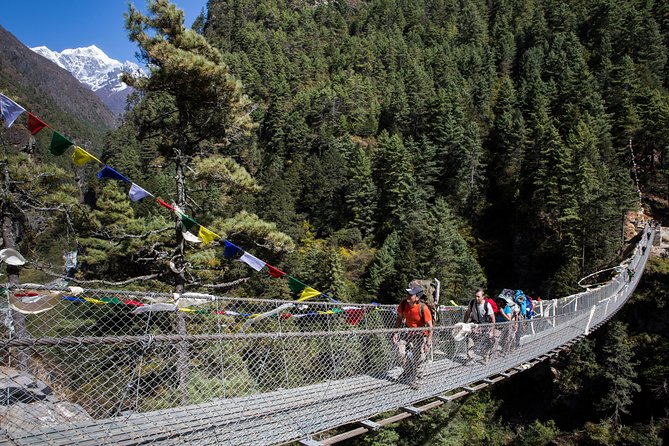
This part of the trail also introduces you to the river crossings and prayer-flag culture. Expect suspension bridges over the Dudh Kosi, often with lots of color and sound from the valley. It’s a good warm-up, not a “race,” and you’ll feel the difference if you keep your pace slow on purpose.
A practical thought for you: if you tend to walk fast when you’re excited, resist the urge here. Early over-effort makes later acclimatization harder, especially once you start climbing toward Namche.
Namche Bazaar Acclimatization: Why This Day Is a Big Deal
After continuing along the Dudh Kosi and entering Sagarmatha National Park, you reach Namche Bazaar. Then you get a day in Namche to acclimatize and adjust to thinning air. This is one of the most valuable parts of the circuit because it lowers your odds of altitude trouble later.
During that acclimatization time, you’ll trek a short distance to a museum featuring Sherpa customs and traditions. It’s not just “kill time.” It gives your brain context for what you’re seeing in villages, monasteries, and daily life as you move deeper into the Khumbu.
Namche is also where you start noticing how guided trekking changes the experience. A good guide will help you manage effort, eating, and sleep, not just the route. In past trips run by guides like Nima, Raj Kumar, and Lakpa Sherpa, one repeated theme has been safety-first decision making and practical flexibility when conditions shift.
Other lodge to lodge routes near Kathmandu
Phakding to Phortse: Forest Walking and Steeper Climbing
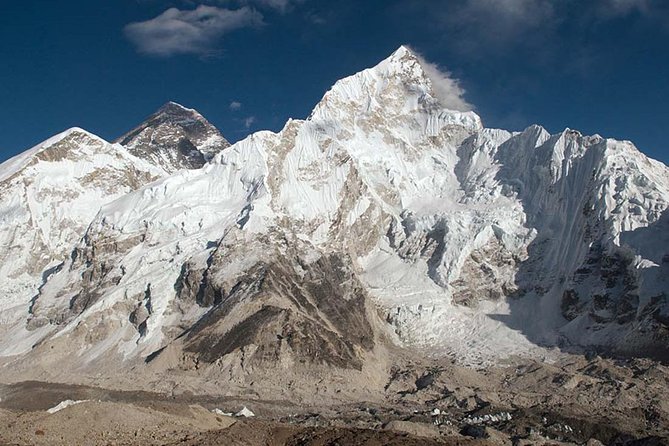
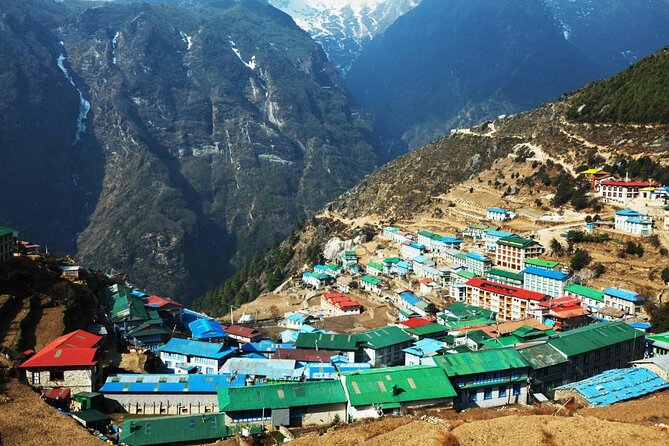
From Namche, you continue toward Phortse after climbing out of the valley through rhododendron forest. As elevation increases, you start seeing more conifers and the trail feels more “green tunnel” at points. It’s a reminder that this trek is not only about big peaks, it’s also about how the mountain vegetation changes with altitude.
This section is where the hiking starts to feel less gentle. The route climbs steadily and can feel long even when the grade is manageable, and the thin air starts to show up more in breathing and pace.
Don’t underestimate the value of good breaks here. With a guide and porter system, you can plan a steady start, keep your pack manageable, and focus on consistent effort.
Phortse to Machhermo: Ngozumpa Glacier Country
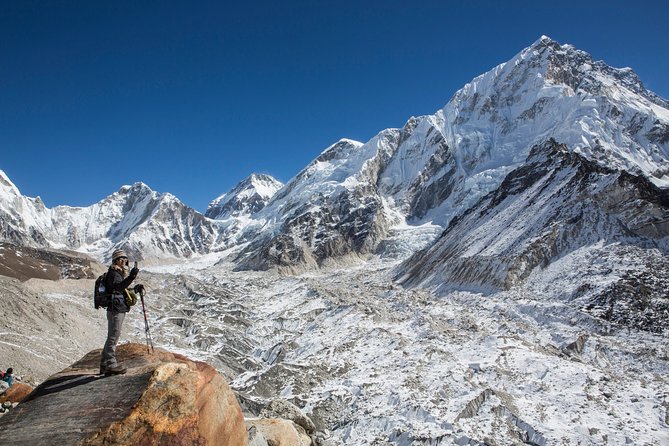
Next you reach Machhermo, with a ridge climb that sets you up for views down toward Kengtega and up toward Cho Oyu. Then the trail works its way toward the terminal moraine of the Ngozumpa glacier.
This is one of those “quiet wow” areas. You’re not at the main viewpoints yet, but the glacier terrain and the way the trail contours around it makes the scale of the region hit home. You’re moving toward the Gokyo side, where the air is thinner and the scenery starts to get more dramatic as you gain elevation.
If you want the practical tip version: this is a section where you should keep your water habit consistent, use your filter, and avoid going too long between sips. The dry air at these heights turns dehydration into fatigue fast.
Gokyo Base: Two Nights for Sights and Real Breathing Room
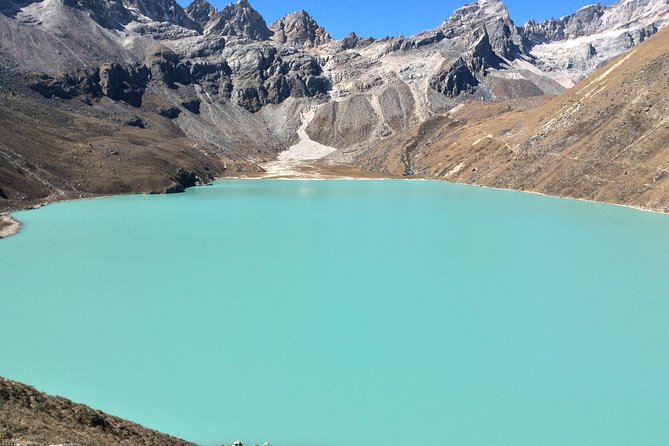
When you finally reach Gokyo (4,790 m), you get two nights there, not just a single stop. That buffer is important. It gives you time to settle, recover after the climb, and plan your next summit-style push without the pressure of immediately moving camps.
Gokyo itself is a different flavor of the Everest circuit. It’s about high-altitude glacial scenery and a strong sense of being in Sherpa trade and trekking country rather than just chasing Everest. This is also where groups often feel that the extra days are justified, because the lake area adds scenery that many routes skip.
One day in Gokyo includes Gokyo Ri, a steep early climb to about 5,483 m. You start early enough that the reward often feels huge. The views over the Gokyo valley, and the surrounding peaks, are the kind of moment you understand why people plan the circuit in the first place.
Thangnag and Cho La Pass: Early Starts and Basic Reality
After Gokyo, you trek to Thangnag, positioned as your launch point toward Cho La. The lodging here is described as very basic, with dormitory-based rooms because of remoteness. Plan for simple comfort. This is where you’ll want to pack a calm, practical mindset, not a high-expectation hotel mindset.
Then comes Cho La Pass. The plan is to start walking before sunrise, around 4:00 or 5:00 am, aiming to cross in the 9:00 to 10:00 am window. That timing is about dodging worse midday weather, because high passes can become serious fast.
Crossing around 5,300 m means you should treat this as a peak-day effort even if you’re not using climbing equipment. You’ll likely feel the altitude in your lungs and legs. If you tend to push through discomfort, this is the day to follow your guide’s pace and rest strategy.
The good news is that the circuit is built to keep moving forward. After the pass, you continue toward Lobuche, and then you shift closer to the Everest Base Camp zone.
Lobuche and the Road to Everest Base Camp
From Cho La, you reach Lobuche with an easier and shorter trekking route. That helps you recover a bit, but don’t assume you’re “back to normal.” At these heights, even easier days can feel harder than you expect.
From Lobuche, your big day is walking to Everest Base Camp (about 5,365 m). The trail follows the Khumbu Glacier and climbs to the base camp area, which is the closest you can get to Everest without mountaineering equipment.
This is the day that changes how people remember the trek. You’ve been circling the Everest region for many days, and then suddenly you’re there, surrounded by the stark glacier world that supports the whole Everest season.
Practical move: keep your energy for the last stretch. Take short breaks, keep warm, and don’t burn calories early. You’ll want enough in your legs for the final push to Base Camp and to enjoy it without rushing.
Kala Patthar: The Hard Climb That Feels Like a Prize
Next is Kala Patthar, often the most intense day on the circuit. The climb goes to about 5,555 m, and the day is described as demanding but deeply rewarding.
This is where altitude management matters most. I like trips that treat Kala Patthar as a real goal with a paced approach rather than a “see it if you can” side quest. A guide who focuses on safety and timing, the kind described in the experiences with Nima and Lakpa Sherpa, can make a huge difference on how you handle the ascent.
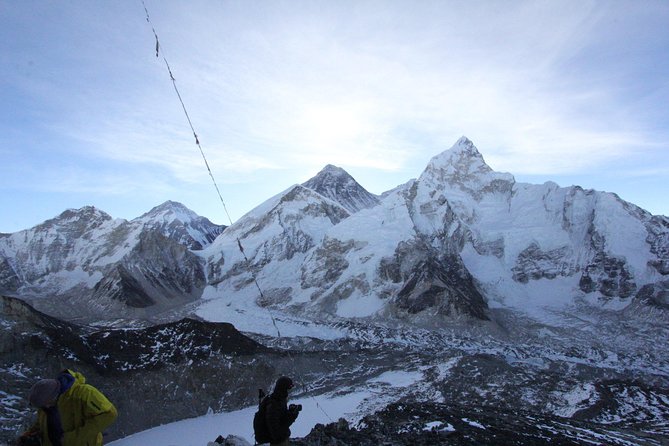
If weather is clear, the viewpoint offers some of the best angles of Everest and surrounding peaks in this area. Even when clouds roll in, you’ll still get a sense of scale from the high viewpoint, plus that feeling of standing on the edge of the Everest world.
The Descent Back to Namche Through Pangboche and Tengboche
After Kala Patthar, you start descending, heading back toward Namche Bazaar. The route includes Pangboche and Tengboche, with monasteries in the story as you move through Sherpa religious landscapes at altitude.
The descent is not just “easy downhill.” Your knees can remind you what you did the day before, and cold air can still feel sharp. But it’s also a relief to see the trail angle relax and to watch the air thicken gradually.
You arrive back at Namche in the afternoon, and then you have time to regroup. For many people, this is when the trek finally feels like it has ended emotionally, not just physically.
Lukla Return and Kathmandu Wind-Down
After descending to Lukla, it’s your last trekking day. You return to the town where it began, then reflect as a group. The afternoon is free, which helps you stay practical. Use that time to rest, re-check your personal items, and do any last packing.
Then you fly back to Kathmandu, where you’re transferred to your starting hotel. On the final day, an airport representative drops you at Tribhuvan International Airport for departure.
Who This Trek Fits Best (and Who Should Rethink It)
This circuit is best for you if you want a supported Everest experience with meaningful extra scenery. The Gokyo Lakes portion is a strong reason to book, especially if you like trekking that feels more off the core path than a straight Base Camp-only push.
You should be ready for altitude, early mornings, and days that can feel physically demanding even when the pace is controlled. The itinerary also includes a very basic dormitory stay at Thangnag, so comfort-loving hikers should mentally prep for simple conditions.
This is not the right choice if you’re unsure about your ability to handle sustained trekking in thin air. The trip asks for moderate physical fitness level, but the passes and viewpoint days demand more than a casual walk.
Should You Book Gokyo to Everest Base Camp with Ace the Himalaya?
I’d lean toward booking if you want the full Everest circuit experience, including Gokyo, Cho La, and then the classic “proof of Everest” moments at Base Camp and Kala Patthar. The overall value is strongest for people who prefer not to coordinate permits, guide coverage, gear, and logistics on their own.
I’d think twice if you don’t want basic lodging or early starts, or if you’re not serious about altitude readiness and travel insurance that can handle emergencies. Also, if weather goes sideways, your trip can be adjusted, because this is a trek where conditions matter. The guide-flexibility you see in past experiences with people like Raj Kumar and Nima is a good sign for how the company handles real-world mountain weather.
If you’re the type who likes planning, pacing, and earning views over many days, this route is a very compelling way to experience Everest country.
FAQ
What is the trek duration for this Everest Circuit?
The trek is listed as 17 days approximately.
Where do you meet, and what time does the trip start?
The meeting point is Tribhuvan Airport in Kathmandu, and the start time is 8:00 am.
How many nights are you in Kathmandu, and are Kathmandu meals included?
You have 2 nights in Kathmandu in a three-star hotel. Lunch and dinner in Kathmandu are not included.
Are meals included on the trek?
Yes. The package includes breakfast 16 times, lunch 14 times, and dinner 14 times.
Are permits and guide services included?
Yes. Permits for trekking are included, and you get a licensed English-speaking trekking guide.
Do you get trekking gear provided?
Yes. The package includes a down jacket and sleeping bag for the trek, and you return them afterward.
How is water handled on the trail?
You get filtered water on the trails using a Katadyn Pocket Water Filter.
What is the cancellation window for a full refund?
You can cancel up to 6 days in advance of the experience for a full refund.
How many travelers are in the group?
This activity has a maximum of 15 travelers.
Lodge to Lodge Around Kathmandu
The Rest of Our Kathmandu Write Ups

Base Camp, Three More Ways
Everything else we have reviewed around Kathmandu
- 12 Days Everest Base Camp Trekking
★ 5.0 · 3 reviews - 1 Night 2 Days Chitwan Jungle Safari Tour from Pokhara or Kathmandu
★ 3.0 · 3 reviews - Thamel Rickshaw tour
★ 4.7 · 3 reviews - Kathmandu: Momo Making Class with a Local Chef
★ 5.0 · 3 reviews - Kathmandu: Full-Day Yoga, Body Massage and Pedicure Package
★ 5.0 · 3 reviews - From Kathmandu / Pokhara / Chitwan: River Rafting – 1 Day
★ 4.6 · 3 reviews
Everest Base Camp Treks worth a second look.
 ★ 5.0Everest Base Camp Trek – 14 DaysFrom $1,8001,499 reviews
 ★ 5.0Everest Base Camp TrekkingFrom $1,350485 reviews
 ★ 5.0Everest Base Camp Trekking – 13 DayFrom $1,399365 reviews
★ 5.0Everest Base Camp Trek -14 DaysFrom $1,420321 reviews
★ 5.0Everest Base Camp Trekking – 13 DayFrom $1,399365 reviews
★ 5.0Everest Base Camp Trek -14 DaysFrom $1,420321 reviews
 ★ 5.0Everest Base Camp Trekking – 2025/2026From $1,339199 reviews
 ★ 5.0Everest Base Camp TrekFrom $1,408193 reviews
 ★ 5.0Everest Base Camp Trek with Helicopter Return from Gorakshep to LuklaFrom $3,000161 reviews
14-Days Private Everest Base Camp TrekFrom $1,600152 reviews
★ 5.0Everest Base Camp Trek with Helicopter Return from Gorakshep to LuklaFrom $3,000161 reviews
14-Days Private Everest Base Camp TrekFrom $1,600152 reviews
Lists this tour sits in