
REVIEW · EVEREST BASE CAMP TREKS
Kathmandu: 14-Day Everest Base Camp with Kala Patthar Trek
Lukla flights set the tone fast. This 14-day trek pairs Sherpa culture in Namche Bazaar with the big payoff of reaching Everest Base Camp and then pushing on to Kala Patthar for huge Everest-area views. It is a classic Khumbu route, but the pacing and acclimatization make it feel more doable than the headline distance.
Two things I really like are the way the trek builds in altitude acclimatization (you rest at Namche Bazaar and again at Dingboche) and the chance to spend meaningful time in the Sherpa heartland around Namche. You are not just passing through, you are actually there long enough to get a sense of daily life, tea-house rhythm, and village scale.
One drawback to keep in mind is that Lukla is weather-prone. If flights get delayed or canceled, your trip can shift, and you may wait or adjust plans, since that air link controls when trekking begins and when you can get back to Kathmandu.
In This Review
- Key things that matter on this Everest Base Camp and Kala Patthar trek
- Why This 14-Day Everest Base Camp Route Feels Like a Plan, Not Just a Hike
- Getting Started in Kathmandu, Then Flying to Lukla at 2,850 Meters
- Phakding to Namche Bazaar: The First Big Climb and the Sherpa Heartland Moment
- Namche to Tengboche, Then Up to Dingboche: Pacing That Respects Altitude
- Dingboche to Lobuche: Trading Village Comfort for Higher-Elevation Reality
- Gorak Shep to Everest Base Camp (5,364 Meters), Then Kala Patthar at 5,545
- The Descent Back to Kathmandu: Three Days of Getting Lower and Getting Better
- Price and Value: What You Get for $1,296 Per Person
- Guide and Human Support: What You Can Learn From How Past Treks Ran
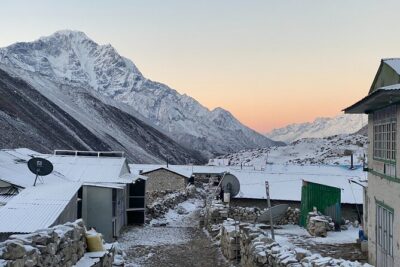
- What It Feels Like on the Ground: Lodges, Tea Houses, and Cold Nights
- Who This Trek Is Best For, and Who Should Skip It
- Practical packing and health notes you should not ignore
- Should You Book This Everest Base Camp and Kala Patthar Trek?
Key things that matter on this Everest Base Camp and Kala Patthar trek
- Lukla air link: the trek starts after a flight to Lukla at 2,850 meters, so weather can affect timing
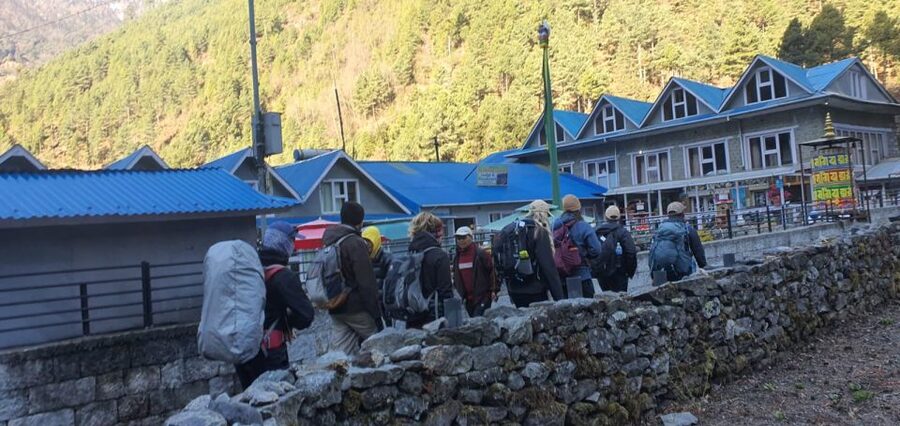
- Namche Bazaar acclimatization: a full rest day plus a short excursion helps you adjust to altitude
- Dingboche rest and reset: another acclimatization day at 4,410 meters, then onward toward higher country
- Everest Base Camp day: you hike up to 5,364 meters from Gorak Shep, then return the same day
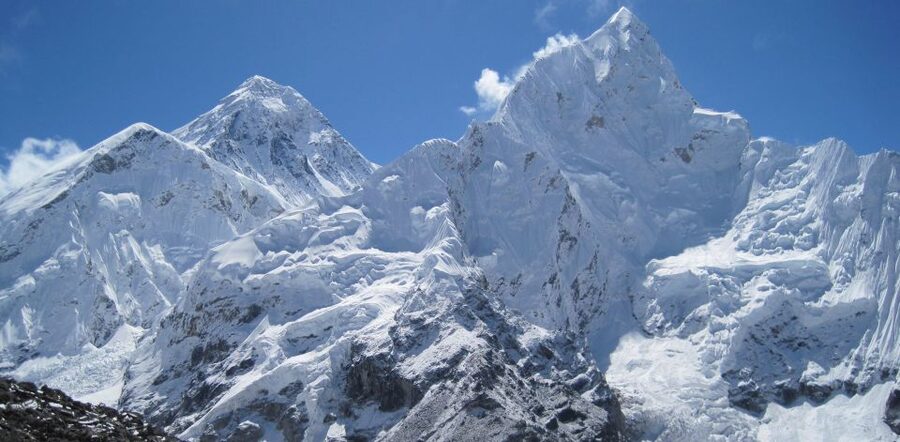
- Kala Patthar viewpoint: a high, demanding climb to 5,545 meters, with Everest, Lhotse, Nuptse, and Ama Dablam in the mix
- Tea houses along the route: lodge stays are included during the trek, so you do not need to hunt for beds
Other routes to Base Camp, side by side
Why This 14-Day Everest Base Camp Route Feels Like a Plan, Not Just a Hike
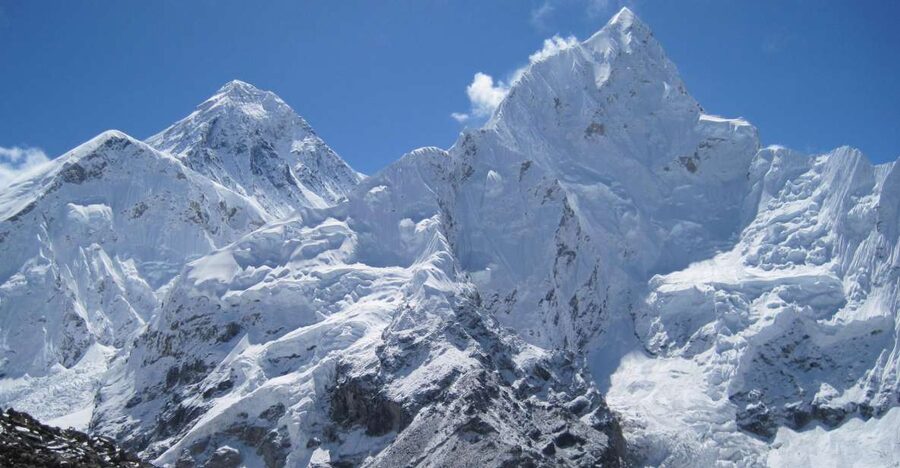
This trek is built around altitude reality. You do not jump straight to the high points. Instead, you gradually climb through the Khumbu region, sleep higher, and include rest days at two key altitude checkpoints. That is what turns the trip from a brave idea into something you can actually manage with the right pace.
You also get a strong cultural layer. Namche Bazaar is described as the Sherpa heartland, and that matters because the day-to-day feel of the trek is not just about peaks. It is about people, routines, and the practical flow of mountain life. Even on a tour, the best moments are usually small ones, like the way tea houses function as warm meeting spots after a long stretch of trail.
Finally, the views are not treated like an afterthought. The route is set up so that when you reach the big days, you are in the right zones for the Everest group of mountains, including Everest, Lhotse, Nuptse, and Ama Dablam.
Getting Started in Kathmandu, Then Flying to Lukla at 2,850 Meters
Your trip begins in Kathmandu with airport pickup and drop-off by private car, van, or bus. After two nights in standard accommodation in Kathmandu with breakfast, you fly to Lukla at 2,850 meters.
This flight step is more than logistics. Lukla is known as an extreme mountain airport, and you should treat the arrival day as the start of a new altitude chapter, not just a quick hop. If you are the type who hates uncertainty, plan to stay flexible on timing, especially in seasons when weather can be rough.
From Lukla, the trek goes to Phakding at 2,640 meters. The walking time is listed as about 4 to 5 hours. It is a good first day because it is long enough to get you moving, but not so brutal that it instantly drains you.
Phakding to Namche Bazaar: The First Big Climb and the Sherpa Heartland Moment
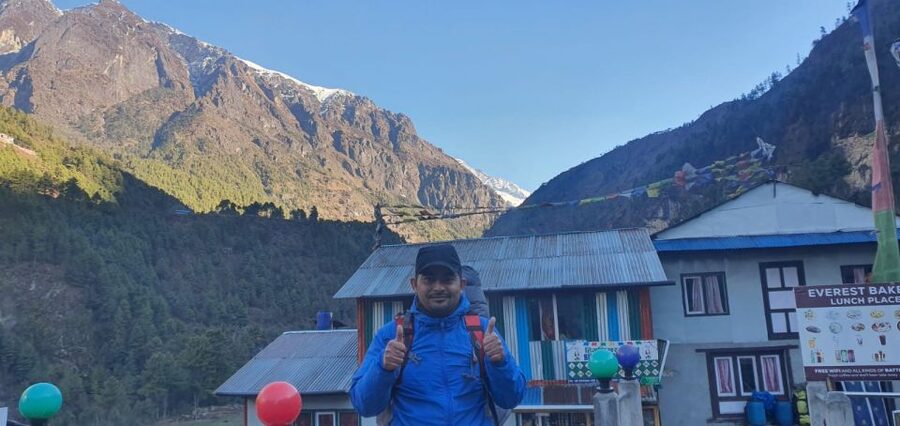
The trek from Phakding to Namche Bazaar is listed at 6 to 7 hours, climbing up to 3,440 meters. This is your first real altitude push, so take it steady. Short steps beat heroic strides here. You should expect cold air and a slower breathing rhythm as you gain elevation.
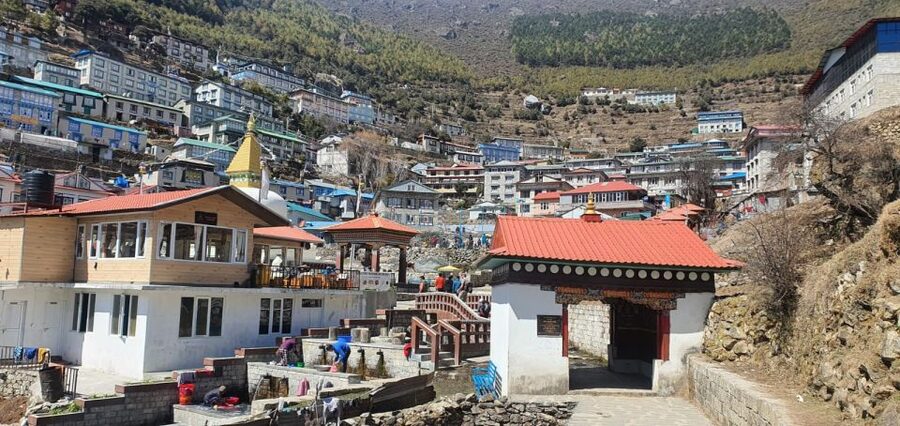
Then you hit Namche Bazaar at the heart of the climb. This is where the trip shifts from trail scenery to mountain town life. Namche is positioned as the Sherpa heartland, and that is why it is a highlight. You get a place with energy and services, plus that sense that this area is home, not just a stop on the way up.
The next morning is not another grind. Day 4 is rest and acclimatization at Namche. You get a 2 to 3 hour excursion, which is usually exactly the right amount of movement for an altitude reset. You want your body to learn the elevation without turning the rest day into another full trek.
Namche to Tengboche, Then Up to Dingboche: Pacing That Respects Altitude
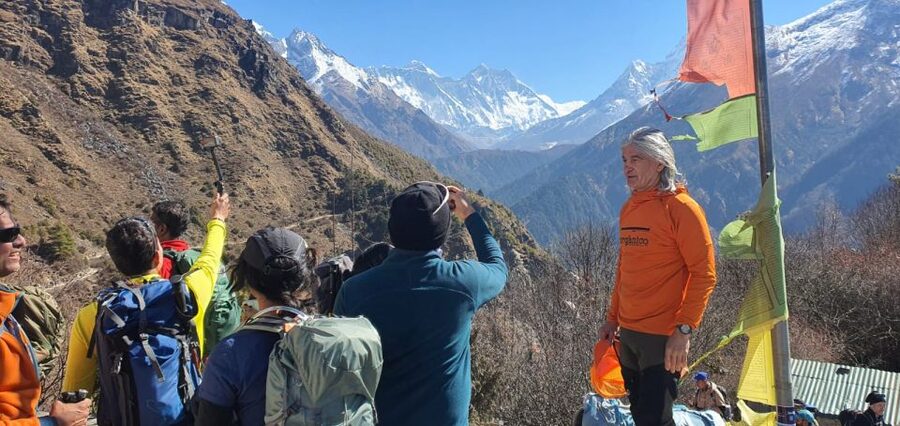
After your Namche rest day, you walk to Tengboche at 3,870 meters, about 5 to 6 hours. You are continuing upward, but the daily hours listed keep the rhythm in a reasonable window. This matters on a 14-day trek because your strength and recovery are your real fuel.
Day 6 takes you from Tengboche to Dingboche at 4,410 meters, again about 5 to 6 hours. That is a serious jump, and this is where the trek starts feeling more like high-country travel. Nights get colder fast, and you will feel the thin air more clearly.
Day 7 is acclimatization at Dingboche. Another rest day. Another chance to let your body adjust. This is one of the best parts of the route because it turns potential trouble spots into planned steps. If you have ever rushed altitude on previous trips, you will appreciate how this route gives you breathing room.
The goal is not to feel great every day. The goal is to avoid burning out before the high points.
Other lodge to lodge routes near Kathmandu
Dingboche to Lobuche: Trading Village Comfort for Higher-Elevation Reality
On day 8, you trek from Dingboche to Lobuche at 4,940 meters. The listed time is 5 to 6 hours. This is where the terrain and air get harsher, and it is also where you start thinking about the upcoming high days: Gorak Shep, Everest Base Camp, and then Kala Patthar.
You sleep in lodges or tea houses along the way, since those accommodations are included. That helps because you know where you will be at night, without surprise planning. Still, high-altitude nights tend to be cold, and you will want to use what is provided and what you pack carefully.
If you like having a plan, this is the section where the plan starts to feel real. Every day gets more exacting, but you are moving in a structured way toward the big peaks on the viewing horizon.
Gorak Shep to Everest Base Camp (5,364 Meters), Then Kala Patthar at 5,545
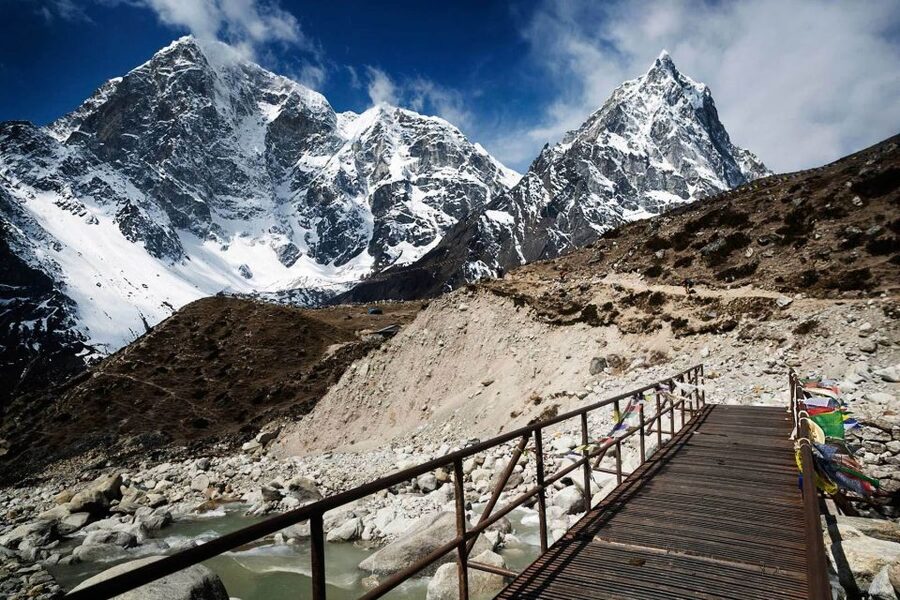
Day 9 is a high point, and it is built like a day trip from Gorak Shep. You trek from Lobuche to Gorak Shep at 5,170 meters, then hike up to Everest Base Camp at 5,364 meters before returning back to Gorak Shep. The tour keeps the walking within a long but defined window, which helps you understand what you are signing up for.
Everest Base Camp is a mental milestone as much as a physical one. You are moving into thin-air country where your pace will naturally slow. I like that the day is structured as out-and-back, because it gives you a clear turnaround point instead of an open-ended situation.
Day 10 then pushes you to Kala Patthar at 5,545 meters. After the viewpoint hike, you trek down to Pheriche at 4,371 meters. This is a big change of tempo: the climb up demands effort, and then the descent gives you that relief that your legs will remember.
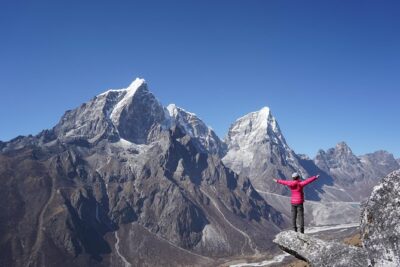
Kala Patthar is described as one of the main highlights, with views of the Everest range plus nearby peaks including Lhotse, Nuptse, and Ama Dablam. If you are the kind of person who wants the best “from here to there” look across the Everest region, this is the day you came for.
The Descent Back to Kathmandu: Three Days of Getting Lower and Getting Better
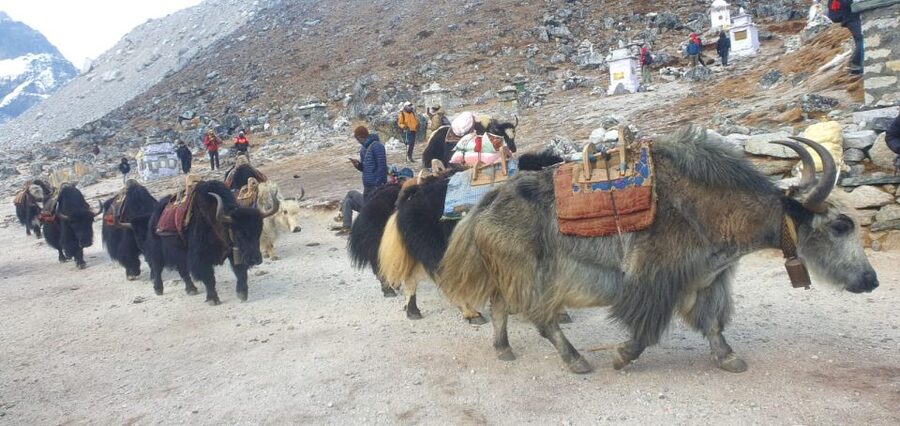
After you reach Pheriche, the plan is to descend for the next 3 days, then arrive back in Kathmandu on day 13. You spend a final evening in Kathmandu before departure the next day.
That descending window is not just about walking less slowly. It is about recovery and quality of life. As altitude drops, your appetite often returns and your sleep may improve. You also get the psychological boost of knowing you have already done the hardest altitude work, so the remaining days feel more like finishing strong than starting over.
You end with Kathmandu again, which is a smart reset. After cold high-altitude nights and basic lodge life, even a simple evening in the city can feel like a reward.
Price and Value: What You Get for $1,296 Per Person
At $1,296 per person for 14 days, this trek is priced like a full, managed Everest trip, not a DIY adventure. Here is where the value is actually coming from:
- Flights Kathmandu to Lukla and back are included
- Airport pickup and drop-off in Kathmandu are included
- Two nights in Kathmandu with breakfast are included
- Sagarmatha National Park entry permits and fees are included
- You have an English-speaking, experienced guide
- Trek lodging is covered via included lodges and tea houses
- If you need it, you can use a jacket, sleeping bag, and duffle bag (if required)
The cost can sting if you assume everything is covered. Meals during the trek are not included, and neither are lunch and dinner in Kathmandu. Hot showers during the trek are also not included. Alcohol and drinks are not included either.
So you should budget for food day by day and bring your travel insurance with medical evacuation coverage. The route operates in a high-risk environment, and insurance is not optional in any practical sense.
Guide and Human Support: What You Can Learn From How Past Treks Ran
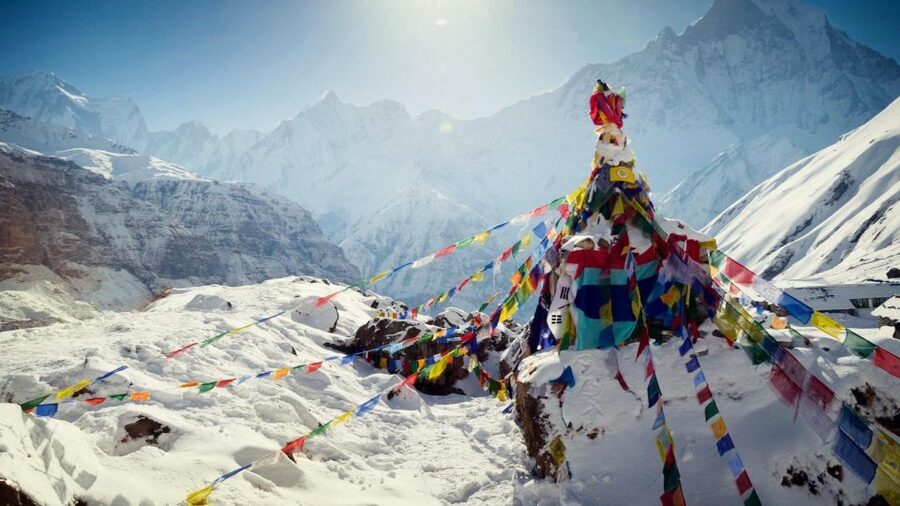
The big name here is the guide support quality. The tour includes salary, food, drinks, accommodation, transportation, and insurance for the guide and porter. That matters because it usually translates to more consistent on-trail support, and it shows up in how smoothly the trek is managed.
Past trip experiences highlighted English-speaking guides who were attentive and calm on the mountain. Names that came up include Anjan and Padam, praised for careful coordination. You also get a tour representative in Kathmandu after you land, and one contact name that showed up in experiences was Hari, described as reachable when questions came up.
One practical lesson from real-world conditions: when Lukla flights do not go, the whole schedule has to bend. In one scenario, the Everest Base Camp trek was canceled due to no Lukla flights, the team worked for multiple days to get an opening, and then an alternative base camp trek was offered with the same guide. That tells you two things. First, the air link is the choke point. Second, the company’s response plan matters.
What It Feels Like on the Ground: Lodges, Tea Houses, and Cold Nights
During the trek, you stay in lodges or tea houses, since those are included. You are also given a jacket, sleeping bag, and duffle bag if required. That gear support helps if you are arriving without proper cold-weather insulation.
You should still expect that “warm” is relative at high altitude. Even when tea houses are cozy, nights can be cold. Bring the layers you are listed as needing, and do not rely on one magic piece of clothing.
A note from a shared experience that I think is useful: high-altitude food is not just about calories. Noodles and comfort meals can taste surprisingly good at elevation, and it is a morale booster when you are tired. You should still plan on the trek meals being something you need to manage and pay for, because meals are not included in the package.
Who This Trek Is Best For, and Who Should Skip It
This trek is listed as not suitable for pregnant women, people with heart problems, and people with mobility impairments. If any of those apply to you, choose a safer alternative.
For everyone else, the best fit is someone who:
- Can hike 5 to 7 hours most days, with higher-altitude fatigue by the second half
- Wants real acclimatization time built into the schedule
- Enjoys Sherpa culture through a meaningful stop in Namche Bazaar
- Wants both Everest Base Camp and a high viewpoint day at Kala Patthar
If you want a trek that feels structured, with clear altitude milestones and a plan for rest days, this route matches that.
Practical packing and health notes you should not ignore
Based on the provided gear list, focus on sun and cold first. You are at altitude long enough that strong sun is real, even when temperatures feel brutal.
Pack items listed for the trip such as:
- Sunglasses and a hat
- Sunscreen
- Hiking shoes and socks
- Long pants plus shorts (both are listed)
- Insect repellent
- T-shirts and long sleeve layer needs as appropriate
- Toilet paper
Also, bring your travel insurance with medical evacuation in case of emergency. That requirement is explicitly called out, and it is the kind of detail that can save you from a major financial shock if something goes wrong.
Should You Book This Everest Base Camp and Kala Patthar Trek?
You should book if you want a classic Everest route with built-in acclimatization, you care about Sherpa culture in Namche Bazaar, and you want the two big altitude milestones: Everest Base Camp and Kala Patthar.
You might think twice if:
- You are risk-sensitive about flight disruptions, since Lukla is the key timing gate
- You are looking for meals and hot showers to be included, because those are not part of the package
- You need accessibility accommodations, since the trip is marked as not suitable for mobility impairments
If you do book, treat it like a serious hiking trip, not a casual tour. Train for steady uphill walking, plan your budget for trek meals, and keep your schedule flexible around Lukla. With that mindset, you will get exactly what the highlight list promises, Sherpa country on the way up, and big Everest views when it counts.
Lodge to Lodge Around Kathmandu
The Rest of Our Kathmandu Write Ups

Base Camp, Three More Ways
Everything else we have reviewed around Kathmandu
- 12 Days Everest Base Camp Trekking
★ 5.0 · 3 reviews - 1 Night 2 Days Chitwan Jungle Safari Tour from Pokhara or Kathmandu
★ 3.0 · 3 reviews - Thamel Rickshaw tour
★ 4.7 · 3 reviews - Kathmandu: Momo Making Class with a Local Chef
★ 5.0 · 3 reviews - Kathmandu: Full-Day Yoga, Body Massage and Pedicure Package
★ 5.0 · 3 reviews - From Kathmandu / Pokhara / Chitwan: River Rafting – 1 Day
★ 4.6 · 3 reviews
Everest Base Camp Treks worth a second look.
 ★ 5.0Everest Base Camp Trek – 14 DaysFrom $1,8001,499 reviews
 ★ 5.0Everest Base Camp TrekkingFrom $1,350485 reviews
 ★ 5.0Everest Base Camp Trekking – 13 DayFrom $1,399365 reviews
★ 5.0Everest Base Camp Trek -14 DaysFrom $1,420321 reviews
★ 5.0Everest Base Camp Trekking – 13 DayFrom $1,399365 reviews
★ 5.0Everest Base Camp Trek -14 DaysFrom $1,420321 reviews
 ★ 5.0Everest Base Camp Trekking – 2025/2026From $1,339199 reviews
 ★ 5.0Everest Base Camp TrekFrom $1,408193 reviews
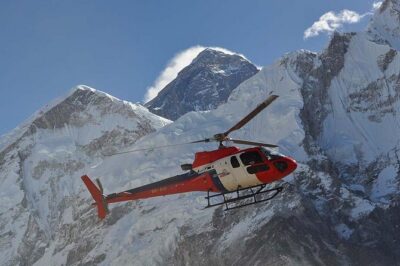 ★ 5.0Everest Base Camp Trek with Helicopter Return from Gorakshep to LuklaFrom $3,000161 reviews
14-Days Private Everest Base Camp TrekFrom $1,600152 reviews
★ 5.0Everest Base Camp Trek with Helicopter Return from Gorakshep to LuklaFrom $3,000161 reviews
14-Days Private Everest Base Camp TrekFrom $1,600152 reviews
Lists this tour sits in