
REVIEW · ANNAPURNA BASE CAMP TREKS
Pokhara: 7-Day Annapurna Base Camp Trek & Natural Hot Spring
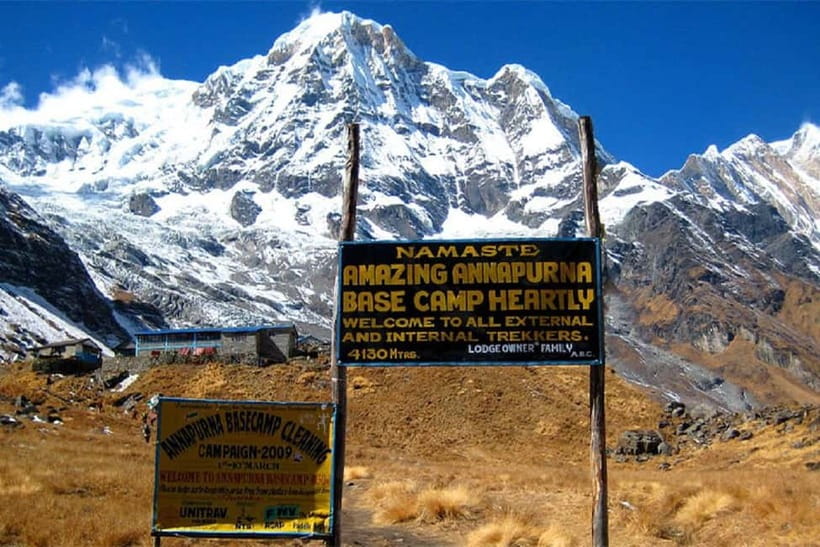
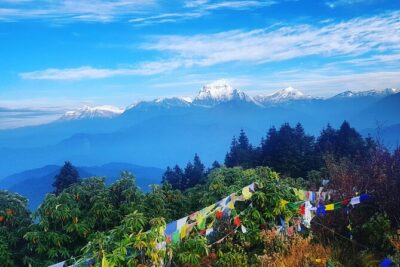
Sweat now, soak later, Annapurna always. This 7-day route gets you to the Annapurna Base Camp at 4,130 m, then finishes with a real-life payoff at the natural hot springs near Jhinu Danda. You’ll walk through rhododendron forests, terraced fields, and traditional mountain villages, all while the peaks keep showing up like they mean it.
I especially like the way this trek blends effort and payoff. I love how the days steadily build to the alpine zone, so reaching base camp feels earned, not rushed. I also love the tea house rhythm, where warm meals and simple beds help you keep going without the logistics headache.
One drawback to plan for is altitude and fitness. Even though it’s broken into manageable walking chunks, you still climb to 4,130 m, so you’ll want to move at a steady pace and take the days seriously.
In This Review
- Key highlights worth knowing before you go
- From Pokhara to Ghandruk, you start with views and motion
- Ghandruk to Chomrong, classic steps and Machhapuchhre angles
- Chomrong to Himalaya, bamboo and rhododendron time
- Himalaya to Machhapuchhre Base Camp to Annapurna Base Camp
- Back down to Bamboo, take in the backward views
- Bamboo to Jhinu Danda, ending with real recovery
- Jhinu Danda to Nayapool, last-day energy and the return to Pokhara
- Guides, pacing, and why the right leader changes everything
- Price and value: what you get for about $181
- What to pack for cold nights at altitude
- Should you book this Annapurna Base Camp trek?
- FAQ
- How long is the Annapurna Base Camp trek, and what’s the highest altitude?
- Where does the trek start, and do you offer pickup?
- What days and walking times should I expect?
- Are permits included?
- Are meals included?
- Do I need a porter?
- Is travel insurance included, and what is the cancellation policy?
Key highlights worth knowing before you go
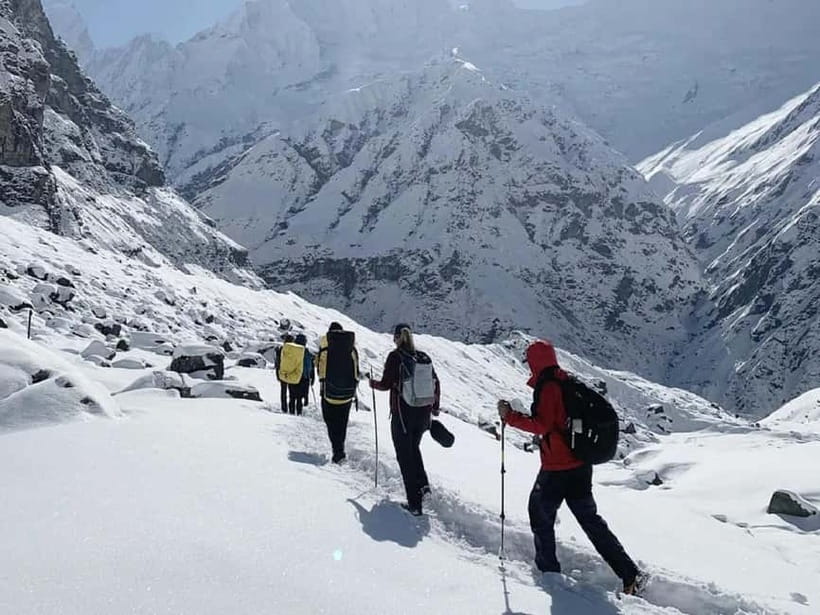
- Annapurna Base Camp at 4,130 m, reached in 7 days with time to enjoy the amphitheater-like views
- Traditional Gurung villages and terraced farms, not just a string of mountain waypoints
- Rhododendron and bamboo forests on the way up and down, so the trail stays interesting
- Machhapuchhre Base Camp on the approach, putting that iconic peak in your line of sight
- Jhinu Danda hot springs after the long descent, a smart way to recover
- Private group with an English-speaking Nepal Government certified guide, with day-to-day pacing support
Other approaches to the Sanctuary gate
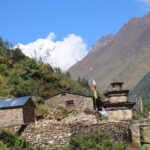
From Pokhara to Ghandruk, you start with views and motion
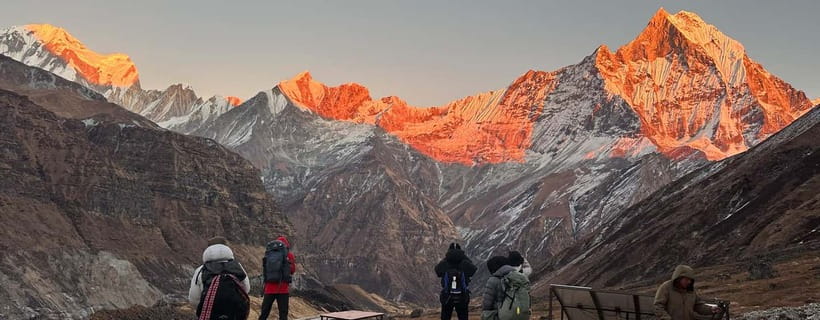
The trip begins with a scenic push out of Pokhara, then you switch gears from road travel to trail trekking. Day 1 usually includes a drive from Pokhara toward Nayapool, then a 5 to 6 hour trek along the Modi Khola valley through villages and forest edges. You end the day in Ghandruk at about 1,940 m.
What makes this first day work is that it gives you momentum without dumping you straight into big altitude. You’ll walk through lived-in places, see locals going about their day, and pick up the trail patterns early. If you’re the type who gets distracted by snacks, day 1 is also perfect for building good habits, because you’ll be balancing energy with steady climbing.
Where this can feel a little annoying is dust, depending on conditions. One common suggestion is to ask your team whether the road segments on Day 1 and Day 7 can be handled by car or jeep where possible, since dust can be rough on the eyes and throat.
Ghandruk to Chomrong, classic steps and Machhapuchhre angles
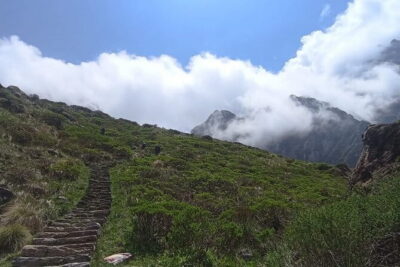
Day 2 is a full trekking day, about 5 to 6 hours, moving from Ghandruk to Chomrong (around 2,170 m). The trail includes stone steps and forest paths, and the payoff is wide mountain framing, including a strong look at Machhapuchhre.
Chomrong is a key stop for more than geography. It’s where the trek starts to feel more “mountain serious,” because you’re higher, the air is cooler, and you can feel your body learning the rhythm. The ascent and steps also make it a good place to practice your pace. Go slow enough that you can keep breathing under control. You’re not trying to win the trail. You’re trying to arrive fresh on the high days.
A small practical point: keep your daypack organized. When you’re doing lots of step climbs, it’s easier if you don’t dig around every time you need water, sunscreen, or a layer.
Chomrong to Himalaya, bamboo and rhododendron time
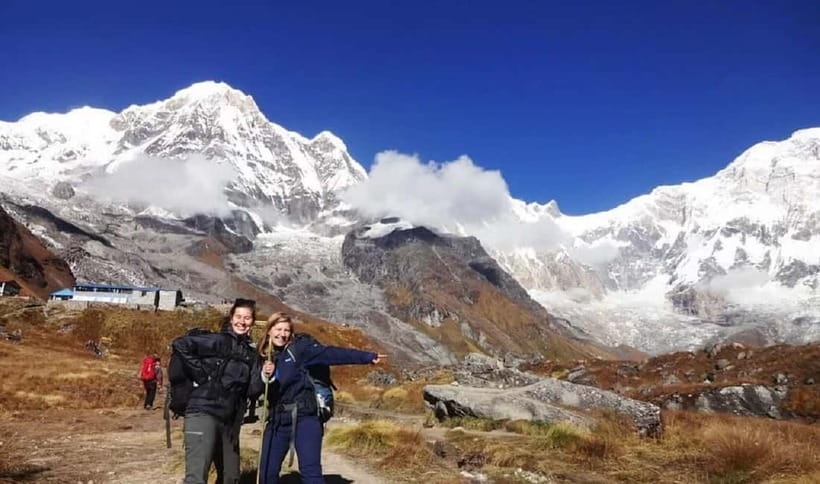
On Day 3 you trek about 6 to 7 hours from Chomrong up toward Himalaya at roughly 2,920 m. You descend to a river area first, then climb again through bamboo and rhododendron forests. This section matters because it shifts the trek from village scenery into thicker forest walking, which can feel both cooler and more protected.
I like this part of the route because it keeps your attention off the clock. You’ll be switching between shaded stretches and open viewpoints, and the forest gives you a break from constant peak exposure. That’s helpful because on longer treks, the best view is sometimes the one that lets you catch your breath.
At this altitude, the biggest thing you’ll notice is how quickly you get winded if you push. Let your guide set a pace that keeps you moving smoothly. If you ever feel a headache, nausea, or unusual fatigue, that’s your cue to slow down more, take extra rest, and tell your guide right away.
Himalaya to Machhapuchhre Base Camp to Annapurna Base Camp
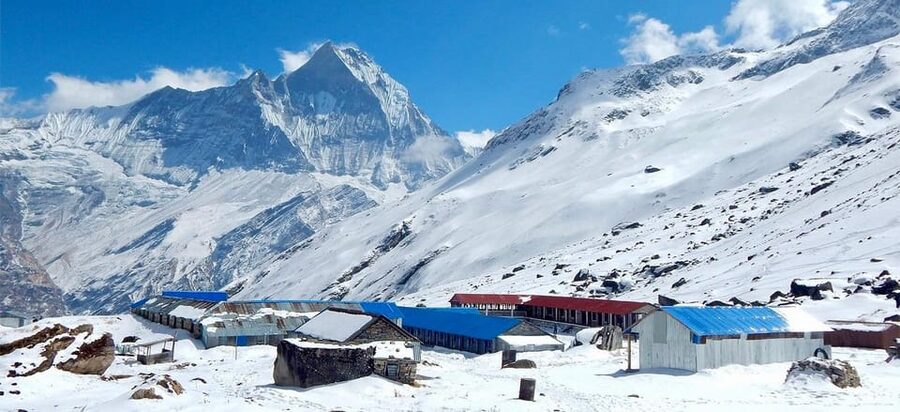
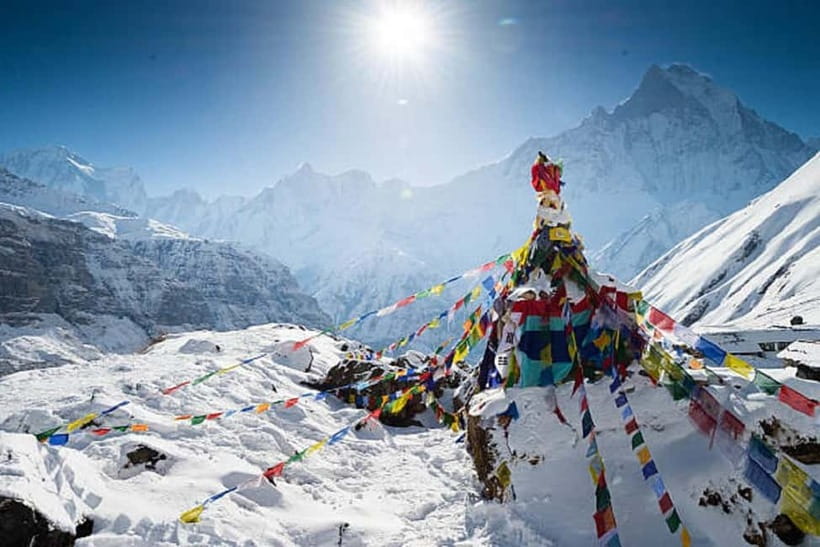
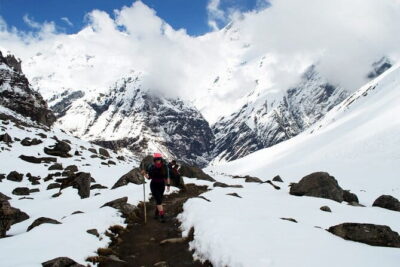
Day 4 is the main day, about 6 to 7 hours, from Himalaya up toward Machhapuchhre Base Camp, then on to Annapurna Base Camp at 4,130 m. You’ll enter the alpine zone and glacier valley, reaching a base camp setting that feels like an amphitheater surrounded by giant peaks.
This is where the trek earns its reputation. The walking becomes more exposed, the scenery gets higher drama, and the air starts to feel thinner. You may also get your sunrise and sunset moments with views of peaks like Annapurna I and Machhapuchhre, if weather cooperates. Even if clouds roll in, the staging of the valley is still impressive, because the mountains keep layering behind each other.
What to expect at base camp is also a reality check. At 4,130 m, you’ll feel your body working even when you’re standing still. Plan to spend time slowly, not constantly rushing for photos. Take a minute to breathe, hydrate, and keep warm. A good guide will be tuned to altitude issues and will help you manage your energy at this final stretch.
Other lodge to lodge routes near Pokhara
Back down to Bamboo, take in the backward views
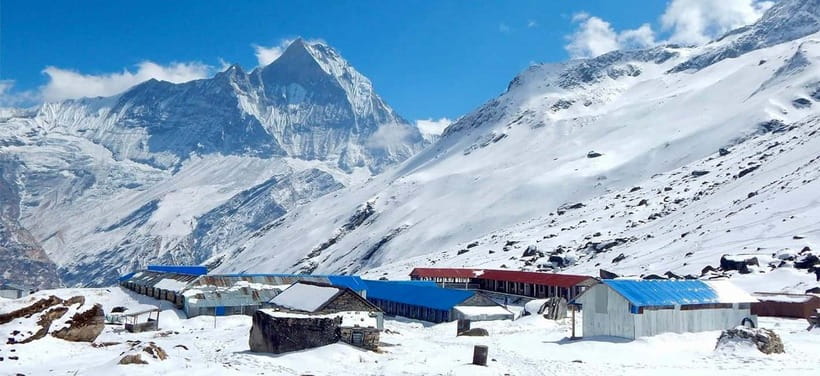
Day 5 brings a long downhill trek, about 6 to 7 hours, from Annapurna Base Camp to Bamboo around 2,335 m. The trail’s known for incredible backward views of the Annapurna range and waterfalls.
This is one of those days where the view is doing half the work. Your legs may feel different after the high point, but you’ll likely be motivated by what you can see behind you. I find this backward-looking scenery helps people stay calm and steady, instead of getting tense about how far they still have to go.
Downhill is also where you have to be smart with your feet. Use trekking poles if you have them, watch your footing on rocks, and don’t assume you can always go fast just because you’re descending. Your knees are negotiable, your ego is not.
Bamboo to Jhinu Danda, ending with real recovery
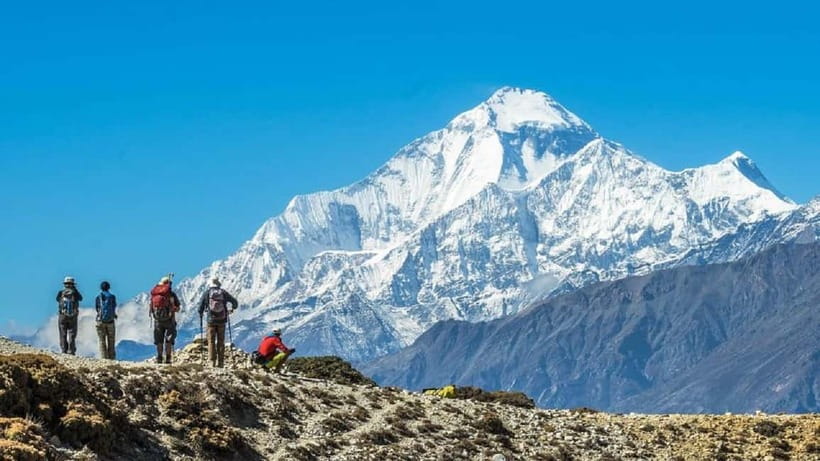
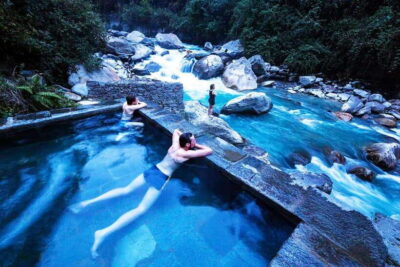
Day 6 is a 5 to 6 hour trek from Bamboo down to Jhinu Danda at about 1,610 m. You’ll get a riverside feel again, and the big finish is the natural hot spring soak near Jhinu Danda.
This is the part I love most, because it turns the trek into a full-body story. After days of climbing, your muscles want warmth and a little forgiveness. The hot spring gives you that payoff in plain, uncomplicated form. It’s not a spa with fancy pricing. It’s your legs getting a well-earned reset.
In practical terms, bring a towel and a change of dry clothes. Temperature can drop quickly at night, and you’ll feel better if you’re not walking around damp. If you’re tired, this is also the time to slow down emotionally. You’ve already done the hard work.
Jhinu Danda to Nayapool, last-day energy and the return to Pokhara
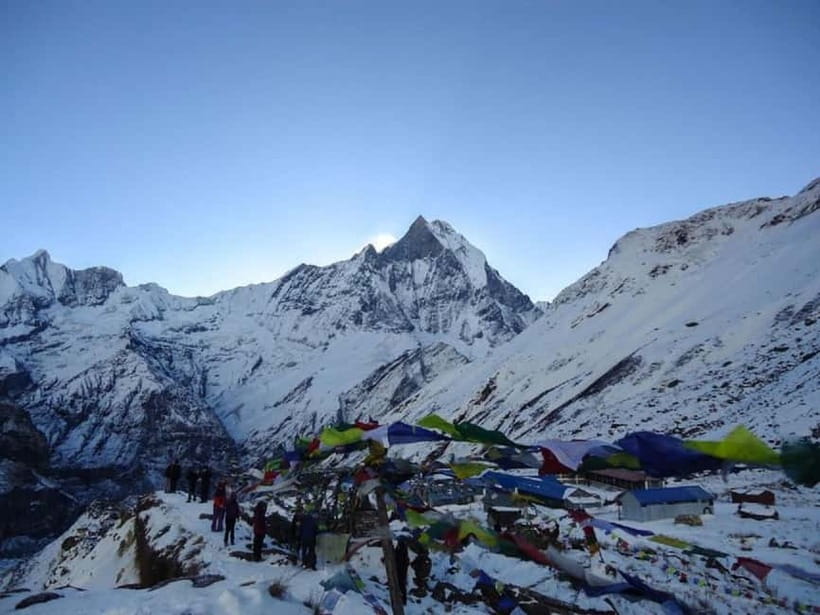
Day 7 is a shorter sendoff, about 4 to 5 hours trekking from Jhinu Danda to Nayapool, followed by an about 1 hour drive back to Pokhara. This last day is usually a mix of good vibes and sore legs. You’re not climbing anymore, but you’ll still want comfortable shoes because you’ll likely be walking on uneven ground.
This is also a good day to manage expectations. You might feel strangely emotional after base camp and hot springs, even if you try to play it cool. That’s normal. Big mountain trips do that. You’re trading constant altitude tension for memory.
If you’re planning to get straight into casual sightseeing in Pokhara afterward, go easy for a few hours. Eat well, hydrate, and let your body cool down.
Guides, pacing, and why the right leader changes everything
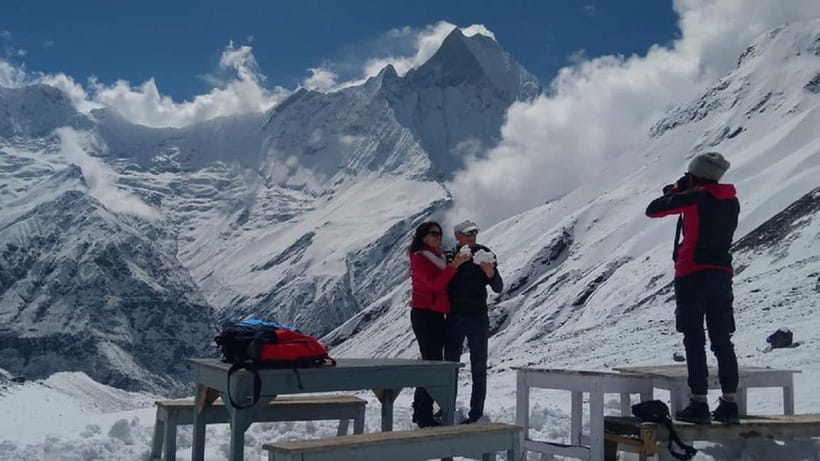
This trek runs with a professional English-speaking trekking guide certified by the Nepal Government, and you’re in a private group. That matters on a route like this because pacing is not just comfort. It’s safety. A good guide helps you read how you’re doing each day, then adjusts the plan.
Based on the guide experiences shared for this trek, names you may run into include Chaundra, Anil, Jeet Bhadur, Bishnu Giri, Chandra, Sun, and Laxman. The common thread is attention to well-being, encouragement, and practical mountain knowledge. In particular, some departures show guides staying flexible about lodging based on your progress, so you’re not forced into a one-size-fits-all rhythm.
Here’s how you can use that flexibility to your advantage: tell your guide early how you feel on the first couple days. If you want to push, say so. If you prefer a slower, steadier approach, say that too. The best trekking week is the one where the plan supports your body.
Price and value: what you get for about $181
At around $181 per person for 7 days, this trek is priced in the “budget-to-mid” zone for Annapurna Base Camp style trips. The value comes from what’s included, not just the base number.
Inclusions you should care about:
- Round-trip transportation between your hotel, Pokhara International Airport, and the trek starting point
- Trekking permits, required paperwork, and TIMS fees
- Tea house lodge accommodations along the route
- Meals throughout the trek depending on the option you choose
- A certified English-speaking guide, plus guide insurance and expenses
- Luggage storage in Pokhara
- A first aid kit
What’s not included is also important:
- Travel insurance, which is listed as mandatory for your safety
- Personal expenses like snacks and beverages
- Emergency rescue services
- A porter is optional at $20 per day
If you’re comparing options, don’t just compare the total price. Ask what your option includes for meals, and confirm what trekking gear is actually provided (a trekking stick and sleeping bag as needed are listed). For many people, a big chunk of the true cost difference between trips is how much they include upfront.
What to pack for cold nights at altitude
Even if the days feel manageable, you’ll be dealing with cool mornings and chilly evenings, especially toward base camp and on the way back. Bring layers, not one magic jacket.
From the provided packing list, focus on:
- Comfortable hiking shoes (and you might also want a waterproof pair if conditions get wet)
- Warm clothing, jacket, and rain gear
- Gloves, a hat, and sunglasses
- Sunscreen and a sun hat
- A towel (you’ll thank yourself on hot spring day)
- Flashlight and a power bank
- Cash
- Passport (a copy is accepted), plus the rule that you submit a passport copy at least one day before the trek so permits can be processed
- A flashlight and comfortable clothes for downtime
If you’re deciding between “warm enough” and “too warm,” pick warm. At higher altitude, cold can feel sharper. You can always open a layer on a slow climb.
Should you book this Annapurna Base Camp trek?
If you want a classic 7-day Annapurna Base Camp experience with village culture, tea house stays, and a clear finish at Jhinu Danda hot springs, this is an easy choice. The route makes sense day by day, with a gradual build to 4,130 m and a recovery-focused ending.
You should think twice if you’re not comfortable with altitude. This trek climbs high enough that you need decent fitness and a willingness to pace yourself. Also, if dust annoys you, ask about possible car or jeep help for the road portions on Day 1 and Day 7.
One last practical tip: book with travel insurance that covers trekking, and plan to move slowly early in the week. If you do that, you’ll get the thing everyone talks about with Annapurna Base Camp, big mountain views that still feel real when you’re standing there.
FAQ
How long is the Annapurna Base Camp trek, and what’s the highest altitude?
The trek is 7 days. You reach Annapurna Base Camp at about 4,130 m, which is the highest altitude listed for this route.
Where does the trek start, and do you offer pickup?
Pickup is optional. You can be picked up from Pokhara International Airport or from hotels in the Lakeside area of Pokhara, and transportation between your hotel or the airport and the trek starting point is included.
What days and walking times should I expect?
Walking times vary by day, with several days around 5 to 7 hours. Examples include about 5 to 6 hours on Day 1 (to Ghandruk), about 5 to 6 hours on Day 2 (to Chomrong), and about 6 to 7 hours on Day 4 (up to Machhapuchhre Base Camp and Annapurna Base Camp).
Are permits included?
Yes. All required trekking permits, required paperwork, and TIMS fees are included.
Are meals included?
Meals throughout the trek are included depending on the option you select. Tea house or lodge accommodation is included along the route.
Do I need a porter?
A porter is not included by default. If you want one, it’s optional at $20 per day.
Is travel insurance included, and what is the cancellation policy?
Travel insurance is not included and is listed as mandatory. Cancellation is free up to 24 hours in advance for a full refund.
Lodge to Lodge Around Pokhara
The Rest of Our Pokhara Write Ups

Through the Sanctuary Gate
Everything else we have reviewed around Pokhara
- Pokhara: Cable Car Tour – Bird Eye View of Mountain & Lake
★ 4.4 · 3 reviews - Jomsom Muktinath Tour by 4WD SUV 2 Days
★ 5.0 · 3 reviews - Ghorepani Poonhill Private Trek – 2 nights / 3 days
★ 4.5 · 3 reviews - Pokhara: 30-Minute Paragliding Adventure with pick up/drop off
★ 4.5 · 3 reviews - Pokhara: 7-Day Annapurna Base Camp Trek via Ghandruk
★ 4.3 · 3 reviews - Pokhara Group Joining Sarangkot Sunrise Himalayas Tour
★ 5.0 · 3 reviews
Annapurna Base Camp Treks worth a second look.
 ★ 5.0Annapurna base camp trek 5 DaysFrom $699252 reviews
 ★ 5.0Annapurna Base Camp TrekFrom $935111 reviews
 ★ 5.0Kathmandu to Annapurna Base Camp (ABC) 5-Day TrekFrom $99102 reviews
 ★ 5.0Annapurna Base Camp Trek 12 DaysFrom $80085 reviews
★ 5.0Annapurna Base Camp TrekFrom $92580 reviews
 ★ 4.95-Day Annapurna Base Camp (ABC) TrekFrom $9672 reviews
★ 5.0Annapurna Base Camp TrekFrom $69959 reviews
 ★ 5.011-Day Hike Tour to Annapurna Base Camp Bliss in KathmanduFrom $1,30052 reviews
Lists this tour sits in