
REVIEW · ANNAPURNA BASE CAMP TREKS
Annapurna Base Camp Trek – 10 Days
First, a high-altitude walk really changes you. This Annapurna Base Camp trek pairs city culture in Kathmandu and Pokhara with serious mountain hiking, run by a licensed guide team that includes names like Santosh, Asok, and Raju (Rash). I also like how the itinerary builds in warm, human support, with porters called out directly in past journeys, plus comfortable start-and-stop stays.
Two things I’d bet on for your experience are the tea-house days (6 nights) and the focus on being safe at altitude with a government-licensed guide. The trip also makes practical sense for couples, because you share the same pace, the same meals, and the same cozy “we did it” moments without big logistical hassles.
One consideration: you’ll hike to about 4,130m, and weather can shift fast. You should treat altitude as real, not theoretical, and talk to your doctor in advance, plus bring the travel insurance the trip requires.
In This Review
- Key things to know before you go
- Kathmandu first: temples, Thamel, and getting your legs ready
- Pokhara transfer day: views, viewpoints, and a smoother start to the trail
- Chhomrong day: where the trail starts to feel like Nepal
- Sinuwa: the stone-steps grind and the pay-off of steadier uphill
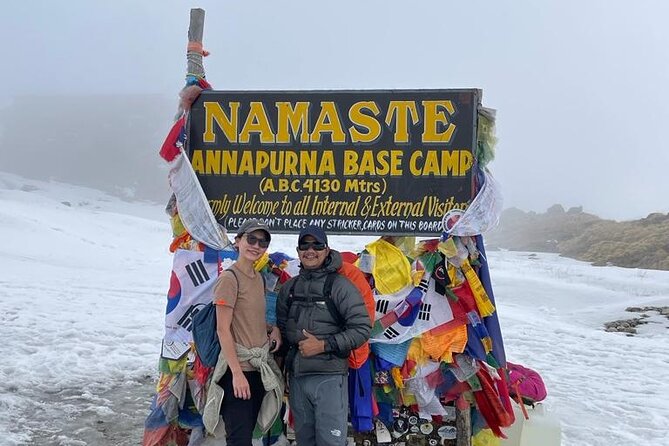
- Annapurna Base Camp day: the big objective at 4,130m
- Retracing days: cooling down without losing the Himalayan feeling
- Jhinu Danda: stone steps, climbs, and a route that keeps you moving smart
- Back to Pokhara: countryside walking, Phewa Tal, and the day you exhale
- Kathmandu valley wrap-up: Patan Durbar Square and a final city evening
- Price and what $699 really covers for an ABC trek
- Guide support that people actually remember
- What your days will feel like: effort levels and altitude reality
- Who this trek fits best (and who should reconsider)
- Should you book this 10-day ABC trek?
- FAQ
- What is the maximum group size on this Annapurna Base Camp trek?
- How long is the trek, and what is the approximate duration?
- Is airport pickup included?
- Where do you stay during the trek?
- How high do you reach?
- What fitness level is required?
- Do I need travel insurance?
- What meals are included in the price?
- What is not included in the price?
- Is cancellation free?
Key things to know before you go
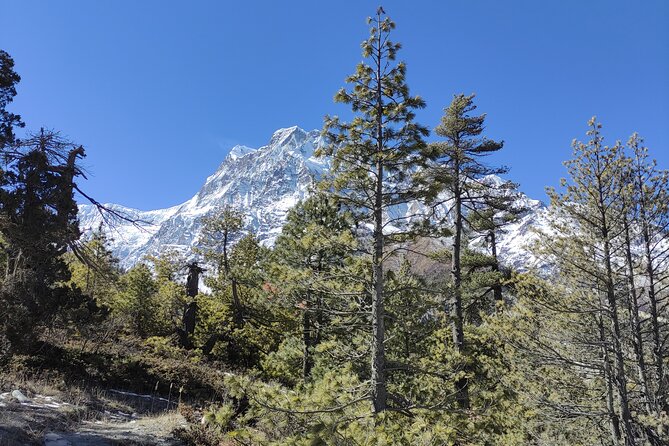
- Altitude to 4,130m on the way to Annapurna Base Camp, so plan for slow steps and cold weather readiness
- Licensed trekking guide support plus first-aid coverage and local know-how
- Tea-house accommodations for 6 nights, with dinners and included breakfasts during the trek portion
- Focused pacing with back-and-forth hiking days, not just a nonstop grind uphill
- Small group feel capped at 12 people per booking, which helps your trek day stay coordinated
- Value-packed logistics: airport transfers, Kathmandu and Pokhara hotel nights, and ground transport covered
Other approaches to the Sanctuary gate
Kathmandu first: temples, Thamel, and getting your legs ready
Your trip starts in Kathmandu with the kind of arrival support that matters when you are tired and jet-lagged. When you land at Tribhuvan International Airport, you’ll be met and assisted to your hotel, then you meet your guide and get oriented for what’s next. The plan also includes time around Thamel, the easy-to-navigate tourist neighborhood where you can sort last-minute trekking items (or ask the guide to arrange gear).
Two highlights in the Kathmandu mix are Pashupatinath Temple and Kathmandu Durbar Square. If you’ve never seen how Hindu architecture and daily life sit side-by-side, Pashupatinath is the kind of place that makes the culture feel immediate. Durbar Square gives you the heritage core of the city, so you’re not only “passing through Nepal,” you’re getting a real snapshot before heading uphill.
The practical upside here is simple: you’re not spending your first day stressed about logistics. It also sets up a smoother start for couples, since you’ll have comfortable nights in the same city before separating into different trekking-day challenges.
Pokhara transfer day: views, viewpoints, and a smoother start to the trail
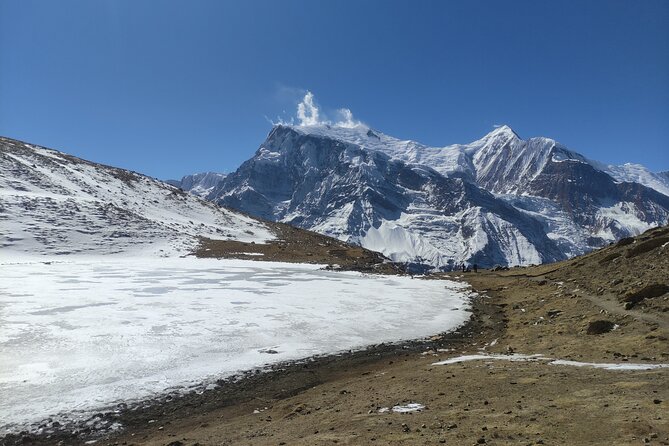
On the next day, the route shifts toward Pokhara, with transport organized via a scheduled drive and then onward to Nayapul. This is the moment where “trekking” stops being an idea and becomes your daily reality. You’ll travel through scenic stretches along the way, and you’ll arrive in the Pokhara area with enough time to reset before trail days begin.
In the plan, you also get famous Kathmandu-area stops like Swayambhunath and Chandragiri Hills. These are the kind of viewpoints that help you understand Nepal’s geography quickly: the hills, the ridgelines, the way settlements cling to terrain. Even if you only spend a short time at each, they add context for what you’ll be walking through later.
When people talk about ABC treks, they usually mean the mountain end game. But I like that this trip gives you an intermediate step in Pokhara so the big altitude moment doesn’t feel like a sudden jump off a cliff.
Chhomrong day: where the trail starts to feel like Nepal
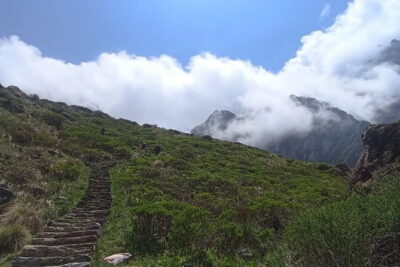
Day 3 has you trekking toward Chhomrong, following uneven uphill-and-downhill terrain through woodlands and rhododendron-rich sections. This is a real “get comfortable with being uncomfortable” day, and that’s not a bad thing. Early on, you learn how your body reacts to changing step rhythms, how you handle cold mornings, and how your breathing changes when the trail tilts.
Chhomrong itself is a well-known trekking hub in the Annapurna region, and staying overnight around this area usually means you get that classic tea-house rhythm: a warm drink, simple meals, and lots of other trekkers moving through the same space. If you are new to high mountain trekking, this day helps you build confidence before the long push toward Base Camp.
One extra stop in the plan is Poon Hill, a viewpoint famous for sunrise-style views over the wider Himalayan region. If your schedule lines up with decent weather, it’s a great way to “see the map” in real life before you commit to the main hike.
Sinuwa: the stone-steps grind and the pay-off of steadier uphill
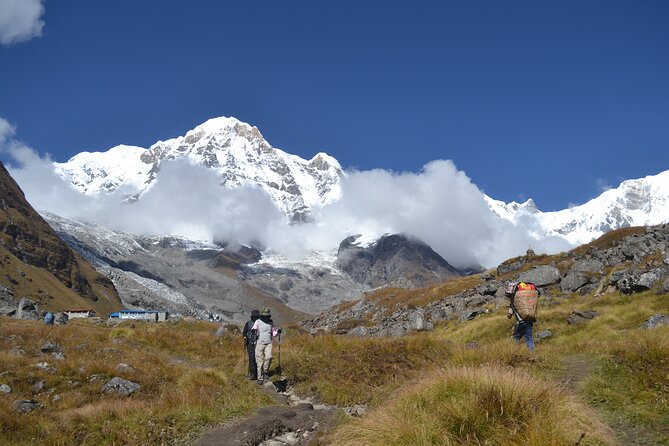
On Day 4 you move onward to Sinuwa, after crossing the river and climbing a serious run of stone steps carved into the hillside, in the range of 2,500 steps. This is where your trekking technique matters: short steps, consistent pace, and no heroic surges. Your goal is to keep your breathing controlled so you can enjoy the views without getting wiped out too early.
Sinuwa also matters because it’s a stepping stone into the Annapurna Sanctuary zone. The trail environment tends to shift, and you’ll start to feel like you are walking inside a protected Himalayan ecosystem rather than just moving between villages.
A nice part of this day, if conditions cooperate, is the sense of the mountain scale gradually getting louder. You don’t go from “soft hills” to “jaw-dropping peaks” in one hour. You build toward it.
Other lodge to lodge routes near Kathmandu
Annapurna Base Camp day: the big objective at 4,130m
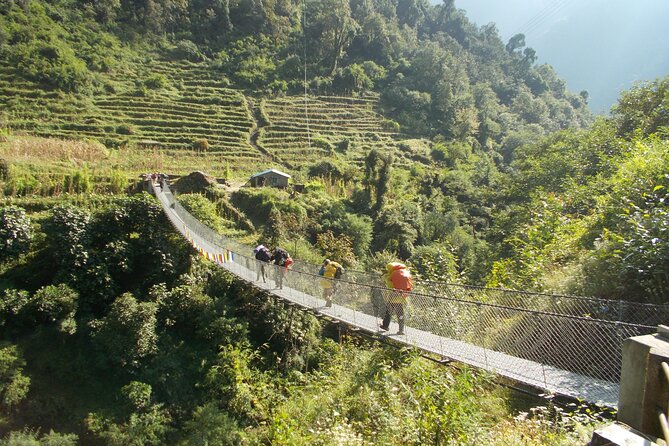
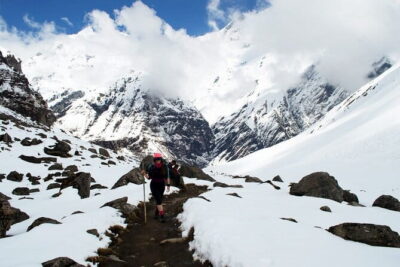
Day 5 is your main objective day, trekking to Annapurna Base Camp, set at around 4,130m. The route includes gentle climbing along a riverbed, with the trek pushing you toward higher ground and toward areas that connect with Machhapuchhre Base Camp terrain. It’s described as somewhat strenuous, which is accurate for ABC. The challenge here is partly physical, partly altitude, and partly the fact that your body asks you to slow down even when your mind wants to “just get there.”
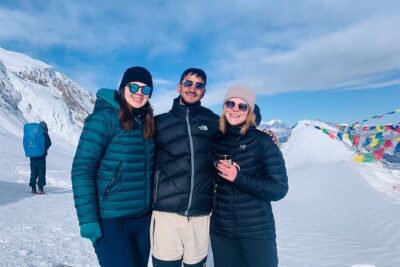
This is the day to handle expectations smartly. The base camp area gives you that wide open feeling, but the real reward is how it feels to reach a place that most people only see on screen. If you’re traveling as a couple, this is also where shared effort turns into shared pride. You’ll remember the small moments more than the big speeches, like helping each other keep warm or waiting for a clearing in the clouds.
Also, because altitude is a documented risk on this trip, you should treat pacing as a safety tool. The group moves together, but you still control your effort. If you feel off, you don’t “push through” just because you’re close.
Retracing days: cooling down without losing the Himalayan feeling
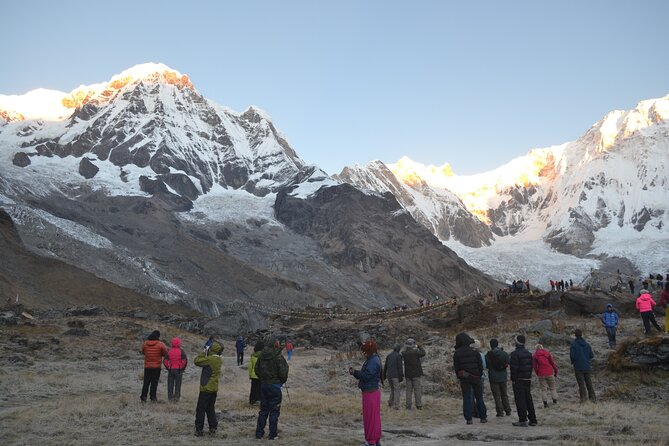
On Day 6, you head back toward Sinuwa, retracing your steps and trekking through the sanctuary area. One detail I like from the trip description is the note about a moist, wetland-like feel, plus the feeling that you’re passing through a different kind of environment rather than repeating the exact same walk twice.
Retracing can sound boring on paper. In reality, it often becomes a gift: you see your earlier path from a new angle, your legs learn the route, and you get time to regroup mentally. It also gives your body a bit of variation in effort, which can matter when you’ve already spent time above high-altitude comfort zones.
Jhinu Danda: stone steps, climbs, and a route that keeps you moving smart
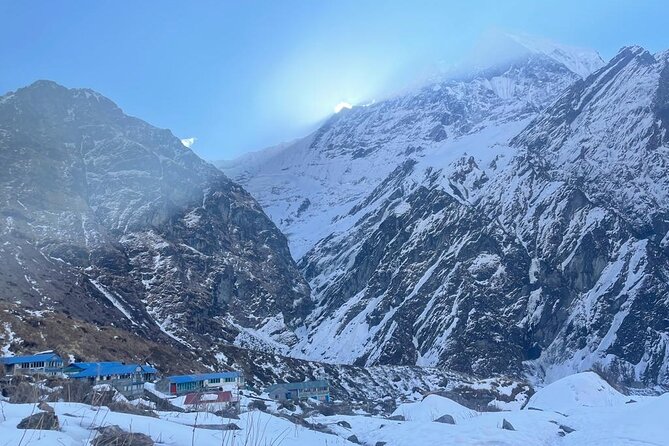
Day 7 brings you toward Jhinu Danda, with a climb from bamboo up toward Kuldighar and then a descent back toward the Chhomrong Khola. You’ll climb stone steps again to Chhomrong before continuing. This is one of those days where the pattern is familiar, but the effort still feels real, because you’re accumulating fatigue.
I like this structure because it’s not a single straight-line “up, up, up” experience. You’re training your rhythm for a full trek, not just for the highlight photos.
Back to Pokhara: countryside walking, Phewa Tal, and the day you exhale
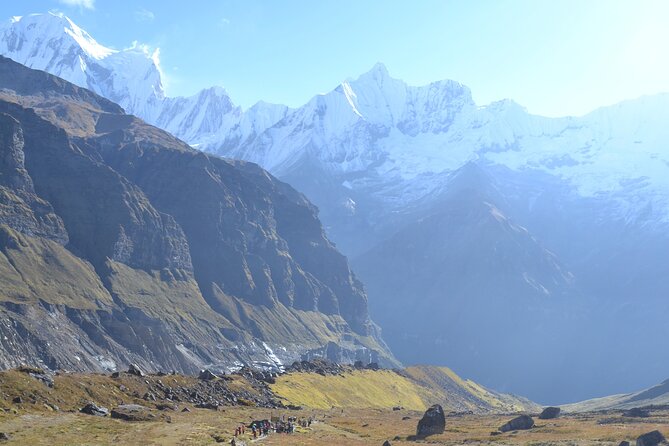
Day 8 shifts from trekking to recovery mode. You walk along countryside toward Nayapul, and the description emphasizes distant Annapurna views, plus wet farms with rice fields. When you reach Nayapul and transition into Pokhara, the trip helps you land softly.
Pokhara stops in the plan include Phewa Tal and Sarangkot. Phewa Tal is a calm change from trekking grit, and Sarangkot adds a viewpoint feeling to the final day. Even if your trek brain is still switched on, these breaks help you switch back to travel mode.
Kathmandu valley wrap-up: Patan Durbar Square and a final city evening
On Day 9 you return to Kathmandu from Pokhara by driving. The plan includes time in the Kathmandu valley, specifically Patan Durbar Square, which gives you another layer of Nepal’s heritage without repeating the same sights from Day 1. This part of the trip is a good chance to pick up small things you need, like extra warm layers or snacks, before your final day departure.
Day 10 completes the circle with assistance for airport drop-off, plus some final time around Garden of Dreams and Narayanhiti Palace Museum. Garden of Dreams is a gentle, slower end to a physically intense trek, which is exactly what you want on departure day.
Price and what $699 really covers for an ABC trek
At $699 per person, the headline price looks simple. The value is in what’s packed in:
- Airport transfers and ground transport from Kathmandu to Pokhara and back
- 2 nights in Kathmandu and 2 nights in Pokhara with breakfast included
- 6 nights in tea houses during the trek portion
- A government license holder guide plus first-aid support (and a first aid kit)
- Breakfast (9) and dinner included
- Farewell dinner with cultural show
- Taxes, VAT, and service charges handled
What’s not included is also clear, and you should budget for it. The trip lists $150 per person for lunch and dinner in Kathmandu and Pokhara (when those meals aren’t covered). You’ll also want to plan $50 per person for gratuities. On top of that, travel insurance is required because emergency repatriation must be covered, and you’ll need to show proof on the first day.
My take: for ABC, this is the kind of price where you’re paying for logistics and qualified human support, not just a “trail idea.” The biggest way to get good value is to take the included structure seriously, especially around altitude readiness and meals.
Guide support that people actually remember
This trek’s reputation in the details you were given is mostly about the human side. Names like Santosh and Asok show up directly, along with porters and support staff who make first-time trekking feel less scary. Another repeated name in the support mix is Raju Simkhada (often called Rash), remembered for caring support and good energy through the long days.
Why this matters: ABC treks can become stressful when communication is weak or pacing isn’t consistent. A licensed guide and an organized support team help you handle the most important things early, like how to move at altitude and how to manage cold, fatigue, and timing.
Also, the group size cap of 12 people max helps. Smaller groups tend to move with fewer bottlenecks, which keeps your day from turning into a slow shuffle.
If you want a guide who speaks a specific non-English language, there’s an option noted as an extra $200 per group.
What your days will feel like: effort levels and altitude reality
The trip is listed for moderate physical fitness, but the altitude is the real headline risk. You’re walking at around 4,130m, and the plan explicitly notes that adverse health effects from altitude can happen regardless of age or gender. That’s your cue to be honest about your current fitness and hydration habits.
The good part is that the itinerary includes multiple days with direction changes and retracing segments. This often helps your body adjust because you’re not constantly escalating. It doesn’t remove the risk, but it creates a more manageable rhythm.
Pack smart, too. The trip notes that trekking gear is available to buy or rent in Kathmandu, and the guide will help arrange it. That’s useful if you do not already own boots, layers, or a trekking-ready setup.
Who this trek fits best (and who should reconsider)
This is a strong match if you want:
- a full Annapurna Base Camp experience over 10 days
- a guided trek with tea-house nights
- a manageable group size and organized logistics
- a trip that feels romantic-friendly for couples, since you share the same daily plan and spend evenings together in the same style of accommodations
Consider rethinking or at least talking to your doctor before booking if you already know you struggle at altitude, or if you can’t commit to steady pacing and careful self-care on high-elevation days.
Should you book this 10-day ABC trek?
I’d book it if you want an organized, value-focused ABC trip with a licensed guide team and comfort built into the start and finish. The inclusion of Kathmandu and Pokhara hotel nights, tea-house lodging, major transport legs, and on-the-ground support is the kind of structure that keeps your mind on the trek instead of the logistics.
Skip this booking only if you know you’re not ready for high altitude risk, or if you don’t have travel insurance that covers medical treatment and emergency repatriation. ABC is gorgeous, but it’s still a serious mountain undertaking.
If you can plan well, respect the altitude, and show up ready to take it slow, you’ll be in the right place.
FAQ
What is the maximum group size on this Annapurna Base Camp trek?
The trip is capped at a maximum of 12 people per booking.
How long is the trek, and what is the approximate duration?
The tour is listed as 10 days (approx.).
Is airport pickup included?
Yes, airport transfers are included, and the team helps you from Tribhuvan International Airport to your hotel on arrival and then drops you off on the last day.
Where do you stay during the trek?
You get 6 nights in tea houses during the trekking portion.
How high do you reach?
Annapurna Base Camp is listed at an altitude of 4,130m (about 13,550 feet).
What fitness level is required?
The trip says travelers should have moderate physical fitness level.
Do I need travel insurance?
Yes. Travel insurance that covers medical expenses, including emergency repatriation, is required. Proof must be shown to the tour leader on the first day.
What meals are included in the price?
Dinner is included, and breakfast is included (9 breakfasts are listed).
What is not included in the price?
Lunch and dinner in Kathmandu and Pokhara are not included, listed as $150 per person, and gratuities are listed as $50 per person.
Is cancellation free?
Cancellation is free up to 24 hours in advance for a full refund. If you cancel within 24 hours, you do not get a refund.
Lodge to Lodge Around Kathmandu
The Rest of Our Kathmandu Write Ups

Through the Sanctuary Gate
Everything else we have reviewed around Kathmandu
- 12 Days Everest Base Camp Trekking
★ 5.0 · 3 reviews - 1 Night 2 Days Chitwan Jungle Safari Tour from Pokhara or Kathmandu
★ 3.0 · 3 reviews - Thamel Rickshaw tour
★ 4.7 · 3 reviews - Kathmandu: Momo Making Class with a Local Chef
★ 5.0 · 3 reviews - Kathmandu: Full-Day Yoga, Body Massage and Pedicure Package
★ 5.0 · 3 reviews - From Kathmandu / Pokhara / Chitwan: River Rafting – 1 Day
★ 4.6 · 3 reviews
Annapurna Base Camp Treks worth a second look.
 ★ 5.0Annapurna base camp trek 5 DaysFrom $699252 reviews
 ★ 5.0Annapurna Base Camp TrekFrom $935111 reviews
 ★ 5.0Kathmandu to Annapurna Base Camp (ABC) 5-Day TrekFrom $99102 reviews
 ★ 5.0Annapurna Base Camp Trek 12 DaysFrom $80085 reviews
★ 5.0Annapurna Base Camp TrekFrom $92580 reviews
★ 5.0Annapurna Base Camp Trek 12 DaysFrom $80085 reviews
★ 5.0Annapurna Base Camp TrekFrom $92580 reviews
 ★ 4.95-Day Annapurna Base Camp (ABC) TrekFrom $9672 reviews
★ 5.0Annapurna Base Camp TrekFrom $69959 reviews
★ 4.95-Day Annapurna Base Camp (ABC) TrekFrom $9672 reviews
★ 5.0Annapurna Base Camp TrekFrom $69959 reviews
 ★ 5.011-Day Hike Tour to Annapurna Base Camp Bliss in KathmanduFrom $1,30052 reviews
Lists this tour sits in