
REVIEW · ANNAPURNA BASE CAMP TREKS
Annapurna Base Camp Trek 10 Days
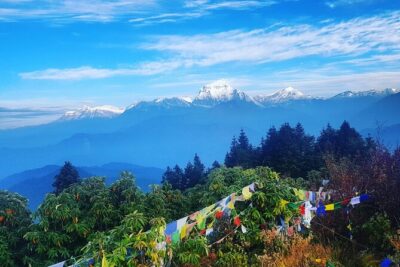
Stepping into the Annapurna Basin feels like entering a giant postcard. This 10-day trek brings big Annapurna views and real village life with Gurung and Magar communities, while keeping the logistics simple from Kathmandu to Pokhara and back. You’re aiming for Annapurna Base Camp at about 4,130 meters, with panoramas that include Annapurna I and Machapuchare.
I really like two practical things here. First, you get a government-licensed guide plus a porter to carry your load, with a stated limit of 25 kg and a ratio of 2 guests per porter. Second, the package includes key cold-weather basics, including a sleeping bag and down jacket, so you are not scrambling last minute for gear.
One consideration: altitude and hiking effort are real. You’ll face steep days and lots of steps, and you’ll be spending time high up, so if you tend to feel winded easily, plan to move at a steady pace and keep expectations grounded.
In This Review
- Key things that make this Annapurna Base Camp trek worth your time
- Price and what you actually get for $996
- Getting there smoothly: the 8:15 am start and how transport is handled
- Day 1: Kathmandu to Pokhara, then settle into trekking mode
- Days 2 to 4: from Ghandruk through Chhomrong and up to Khuldighar
- Day 2: Pokhara to Ghandruk (the village gateway)
- Day 3: Ghandruk to Chhomrong, with classic Annapurna views
- Day 4: Chhomrong down steps, over a suspension bridge, then up to Khuldighar
- Day 5: Deurali, the steep moments, and the forest-to-alpine change at Base Camp
- Day 6 to 8: sunrise at ABC, then back down via Bamboo, Jhinu Danda, and Naya Pul
- Day 6: morning at Base Camp, then descent back to Bamboo
- Day 7: Chhomrong loop with Kuldighar and Chomrong Khola
- Day 8: Jhinu Danda to Naya Pul, along Modi Khola, then back to Pokhara
- Day 9 to 10: Pokhara leisure and the scenic return to Kathmandu
- Guides and porter support: why the team matters more than people think
- Permits, gear, and safety basics you get without hunting
- Altitude and fitness: how to prepare so the trek feels hard, not scary
- Is it a good match for you?
- Should you book this Annapurna Base Camp trek?
- FAQ
- Where is the meeting point and what time does the trek start?
- How long is the Annapurna Base Camp trek?
- What is the cost per person?
- Is airport pickup and hotel transfer included?
- What permits are included for the trek?
- Do you provide trekking equipment like a sleeping bag and down jacket?
- How much baggage can the porter carry?
- What is the maximum group size?
- What is the cancellation refund timeline?
Key things that make this Annapurna Base Camp trek worth your time
- Guides with a strong reputation for caring support, including Sudam and Ganesh, who are repeatedly praised for attention and professionalism
- ACAP and TIMS permits handled, so you can focus on the trail, not paperwork
- Sleeping bag and down jacket included, a big deal for comfort at night and in morning cold
- Smart transport mix, tourist bus to Pokhara and private vehicles for key hops
- Small group size, max 16 people, which usually means easier pacing and fewer chaos moments
- Pokhara reset day (Day 9) after the main walking push
Other approaches to the Sanctuary gate
Price and what you actually get for $996
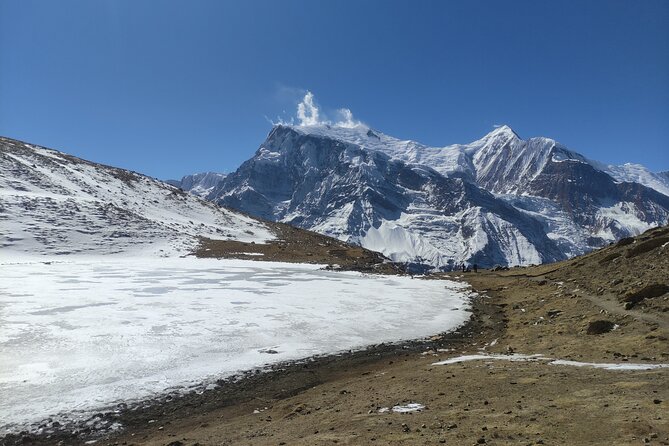
At $996 per person, this is not a “bare-bones” trekking deal. You’re paying for the full support layer: guide, porter, permits, most meals, and a bundle of cold-weather gear. When you price those items separately, the cost starts to make more sense, especially if you do not want to rent equipment or spend time arranging paperwork.
Here’s what stands out as value, not just a list of inclusions. You get ACAP (Annapurna Conservation Area Project) and TIMS (Trekkers Information Management system) coverage. You also get a sleeping bag and down jacket, which matters because the cold at higher elevations can turn an “easy hike” into a shivery problem fast. On top of that, meals are largely included, with 8 breakfasts, 8 lunches, and 8 dinners stated for the program.
Even the transport is part of the value story. You travel Kathmandu to Pokhara by tourist bus, and you use private vehicles for the Pokhara to Nayapul jump and the return. That saves you from the uncertainty of piecing together multiple local connections right at the start and right at the end.
Getting there smoothly: the 8:15 am start and how transport is handled
This trek is anchored in Kathmandu, with the meeting point at The Great Adventure Treks & Expedition Pvt. Ltd, Chhusya Galli, Kathmandu 44600, Nepal. The start time is 8:15 am, so plan an early morning in the city, not a late one.
Pickup is included from the airport, with transfer to your hotel. There’s also Kathmandu sightseeing by private vehicle, which is helpful if you want to see a bit of the city before you head for mountains. The itinerary then sends you to Pokhara by tourist bus after an early day start.
A practical bonus: you’ll have a stated maximum group size of 16 travelers, which usually means fewer bottlenecks on trail crossings and less waiting around for the group to reorganize. Another small comfort point is that it uses a mobile ticket, and the meeting area is described as being near public transportation.
Day 1: Kathmandu to Pokhara, then settle into trekking mode
You start early in Kathmandu, then ride to Pokhara on a luxury tourist bus. The drive is about 6 to 7 hours, and it’s one of those long stretches where you either try to sleep a bit or just relax and watch the scenery slide by.
When you arrive in Pokhara, you do not rush into trekking immediately. Pokhara is one of Nepal’s big tourist bases for a reason: it has a relaxed feel, lake views, and lots of services. Even if you keep it simple that evening, you’re using Day 1 to get your legs ready and your mind switched from city pace to mountain pace.
Days 2 to 4: from Ghandruk through Chhomrong and up to Khuldighar
Other lodge to lodge routes near Kathmandu
Day 2: Pokhara to Ghandruk (the village gateway)
After breakfast in Pokhara, you drive to Ghandruk, with the drive taking 3 to 3.5 hours. Ghandruk sits at about 1,940 meters, so you’re already gaining altitude gently compared to starting higher and pushing hard immediately.
Ghandruk is a good “first day village” because it gives you culture without the stress of a full summit day. You’ll be walking into a place where Gurung and Magar traditions are part of everyday life, and you can get a feel for the region before the trail turns more rugged.
Day 3: Ghandruk to Chhomrong, with classic Annapurna views
Day 3 is a trekking day that totals about 6 hours. The route includes an uphill portion for around an hour up to Kimrungdanda, and this is where the views start stacking.
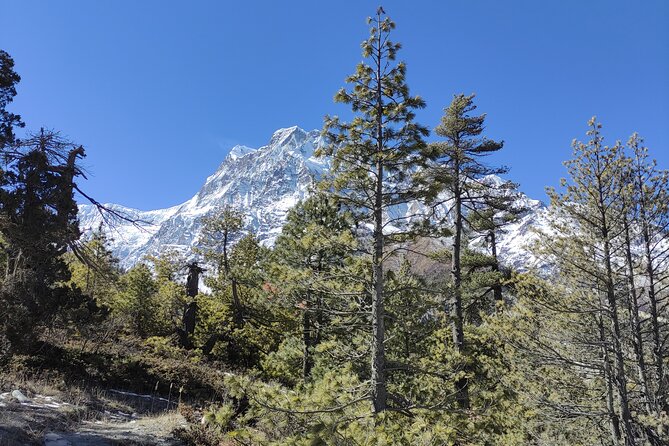
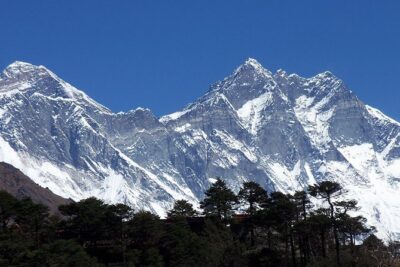
On this day, you can catch strong sightlines toward Annapurna South, Hiunchuli, Machhapuchhre (Fishtail), and Gangapurna. That is not just scenery theater. Those view windows are useful because they give you a clear mental image of what you’re working toward, and they help you stay motivated when the trail feels like endless steps.
You’ll reach Chhomrong, a key waypoint for the next phase of the trek. Expect the day to feel more “work” than Day 2, but still very doable if you keep a steady rhythm.
Day 4: Chhomrong down steps, over a suspension bridge, then up to Khuldighar
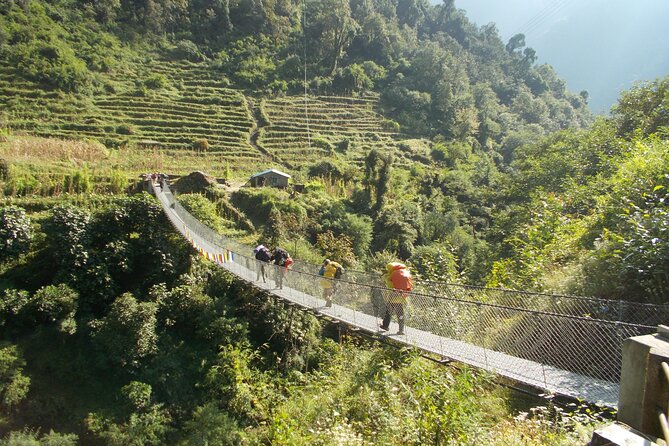
This is the kind of day that makes Annapurna famous. You descend at first, with thousands of steps down toward Chomrong Khola, then cross a suspension bridge and start climbing again.
After the descent, you work your way up to Khuldighar at 2,380 meters, with the full Day 4 trekking time listed around 7 hours. The shape of the day matters: you’re practicing “down, cross, up.” If you’re gentle with your knees on the descents and do not sprint on the ups, the rest of the trek becomes much easier to manage.
Day 5: Deurali, the steep moments, and the forest-to-alpine change at Base Camp
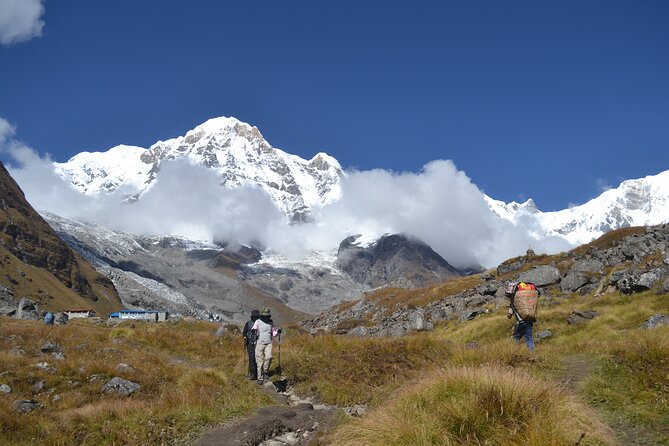
Day 5 is a transition day from “pretty trekking” to “real high-altitude trekking.” You start with an hour’s walk to Deurali after being about an hour’s walk from the Himalaya area. From there, you climb gently through a river bed, then face an ascent on steep trail to the mountainside of Bagar.
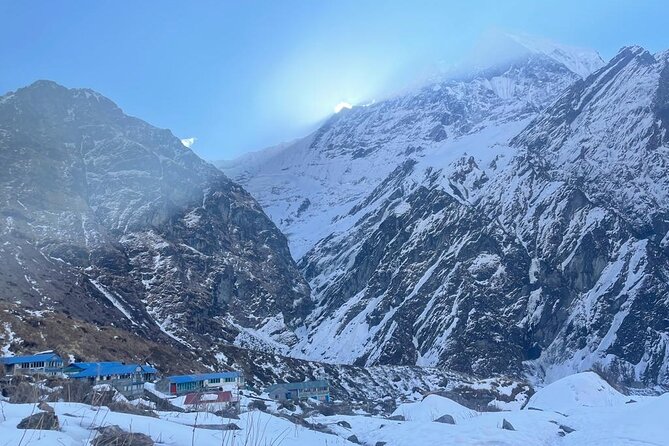
The program then continues toward Annapurna Base Camp, which is described as a 6-hour segment from the Machhapuchhre Base Camp area. One detail I really like in the description is the change in vegetation: the forested parts you associate with the ABC trek disappear as you approach Base Camp. That signals you’re getting higher and the environment is shifting, which helps you mentally prepare for colder air and a more exposed feel.
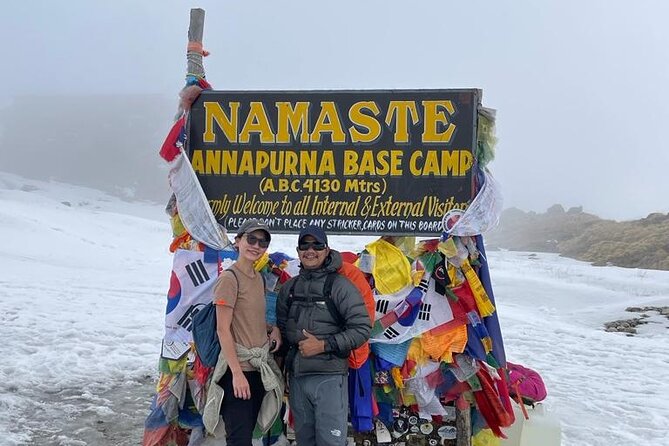
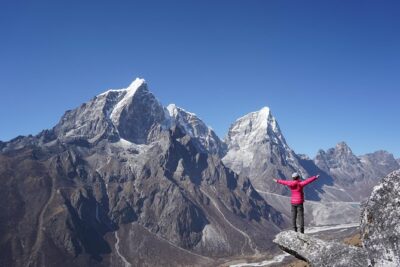
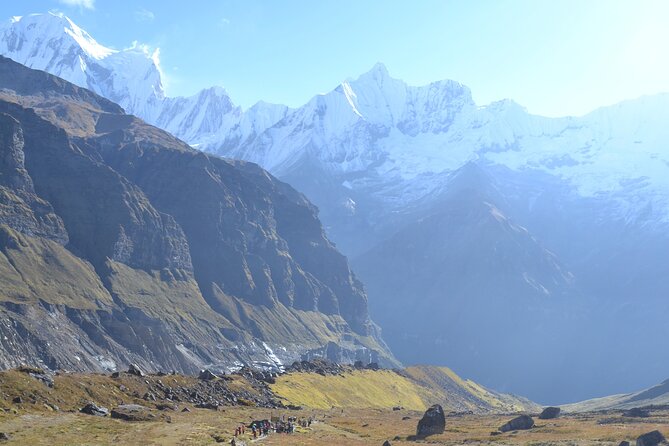
Reaching Base Camp is the payoff moment. You’re aiming for about 4,130 meters, and the views of Annapurna I and Machhapuchhare are what most people picture when they plan this trip. Even if you do not get a perfectly clear sky, the sense of arrival is still strong because the trail has been building you up for days.
Day 6 to 8: sunrise at ABC, then back down via Bamboo, Jhinu Danda, and Naya Pul
Day 6: morning at Base Camp, then descent back to Bamboo
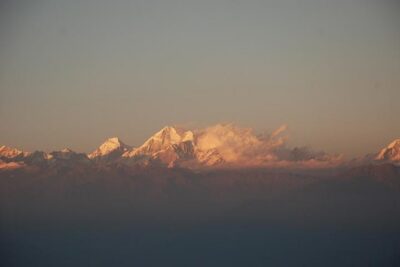
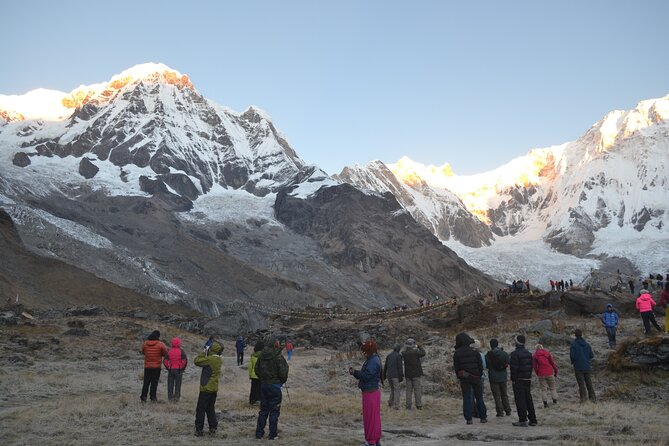
Day 6 starts with the sunrise experience at Annapurna Base Camp. After that early cold wake-up (bring layers), you descend back on the same trail you came up, with the day listed around 8 hours.
You end at Bamboo. This is a good rhythm day: you got your Base Camp moment, and now you’re using the return route to continue adjusting to altitude while getting your body used to longer walking hours. Just keep in mind that downhills can be rough on your legs, even when the air feels easier.
Day 7: Chhomrong loop with Kuldighar and Chomrong Khola
Day 7 is about 6 hours, and the description shows a classic ups and downs pattern. You start by trekking uphill until Kuldighar, then head downhill to Chhomrong Khola. After that, you climb again through stone steps for about an hour to reach Chhomrong.
This day is not about speed. It’s about steady movement and conserving energy for the final descent stages. If you pace yourself on the steps, it feels like a manageable bridge between the higher portion of the trek and the lower, more relaxed valleys.
Day 8: Jhinu Danda to Naya Pul, along Modi Khola, then back to Pokhara
Day 8 takes you from Jhinu Danda to Naya Pul, described as a 4 to 5 hour hike. You’ll hike along the side of Modi Khola to reach Birethanti, then take a 1 hour drive back to Pokhara.
This is the emotional reset day. You see less of the intense high-elevation world and more of the river valley feel. You’ll likely arrive in Pokhara with tired-but-proud legs, because you’ve returned from the main ABC effort.
Day 9 to 10: Pokhara leisure and the scenic return to Kathmandu
Day 9 is a true break. You have leisure time in Pokhara and can go sightseeing on your own. The program calls out Phewa Lake and Begnas Lake, which are two of the easiest places to enjoy the city’s laid-back vibe after a multi-day trek.
Day 10 sends you back to Kathmandu by a scenic flight or bus from Pokhara this afternoon. The flight option is highlighted as extremely scenic, giving you a last look at mountains in the Annapurna region. Then you arrive in Kathmandu, and the activity ends back at the meeting point.
Guides and porter support: why the team matters more than people think
The trek includes an experienced, government-licensed guide and a porter to carry your baggage. The porter support is capped at 25 kg, with the stated ratio of 2 guests per porter, which is a relief if you packed too much at the start.
From the guide-focused feedback tied to this trek, two names come up again and again: Sudam and Ganesh. They’re repeatedly praised for being attentive, supportive, and professional. There’s also mention of a fun, encouraging style, including humor that helps when you’re tired but still moving forward. One detail worth noting if language matters to you: Sudam is said to be able to speak Chinese, which can make communication smoother for some groups.
The takeaway for you is simple. This kind of trek lives or dies on how well your guide manages pace, weather realities, and group energy. Here, the guide support is part of what you’re paying for, not an afterthought.
Permits, gear, and safety basics you get without hunting
ABC is in a protected area, so permits are not optional. This trip includes ACAP and TIMS. That’s one less task on your to-do list, and it also matters because these permits help support conservation and manage trekkers.
Gear support is also included in a meaningful way: the package provides a sleeping bag and down jacket. That can save money and prevents the common mistake of underpacking warmth. The company also includes a first aid kit from The Great Adventure Treks and Expedition and emergency rescue help covered by your travel insurance.
One more small but important detail: insurance is included for guide and porter, and you have professional support in the field. That does not remove all risk, but it does signal that the plan has safety infrastructure built in.
Altitude and fitness: how to prepare so the trek feels hard, not scary
The program is aimed at people with moderate physical fitness. That’s good news, but it still means you should treat the trek like a training goal, not a stroll.
You’ll be doing long days with steep ascents, steep steps, and high altitude time. Some parts of the itinerary practically warn you about this in plain terms. Day 4 has thousands of steps on the descent. Day 7 includes stone steps again. Day 5 is the main push toward Base Camp.
So, what should you do before you go? Build leg strength and practice walking on hills and stairs. On the trek, move at a pace you can sustain, and do not try to “win” every uphill. If you keep your breathing steady, you’ll likely enjoy the views and not just focus on surviving each step.
And yes, bring warmth for mornings and high ridgelines. Even when you are walking hard, temperatures at altitude can shift fast.
Is it a good match for you?
This Annapurna Base Camp trek fits best if you want:
- A structured 10-day route with permits, guide, and porter handled
- A clear goal, Annapurna Base Camp at about 4,130 meters
- A realistic balance of climbing days and recovery time, with sunrise at Base Camp and a descent back down through villages
- A small group size, max 16 people
It might not be the right fit if you want a fully hands-off, zero-exertion vacation. This is trekking. You’re walking. You’ll feel it in your legs, especially after long descents and steps. But if you’re excited about the mountain payoff and comfortable working at a moderate fitness level, this plan is built for you.
Should you book this Annapurna Base Camp trek?
I’d book it if you like the idea of a guided, value-packed Annapurna Base Camp experience that handles permits, cold-weather essentials, and key transportation. The guide and porter setup, along with the repeated praise for Sudam and Ganesh style support, is a strong sign the experience is managed day to day, not just sold on paper.
I would think twice only if you are worried about altitude or you want an easy walk with minimal steep steps. The trek is attainable for many people, but it demands steady effort and smart pacing.
FAQ
Where is the meeting point and what time does the trek start?
The meeting point is The Great Adventure Treks & Expedition Pvt. Ltd, Chhusya Galli, Kathmandu 44600, Nepal. The start time is 8:15 am.
How long is the Annapurna Base Camp trek?
The duration is 10 days, approximately.
What is the cost per person?
The price is $996.00 per person.
Is airport pickup and hotel transfer included?
Yes. Pickup from the airport and transfer to your hotel are included.
What permits are included for the trek?
You get the Annapurna Conservation Area Project Permit (ACAP) and a TIMS (Trekkers Information Management system) card.
Do you provide trekking equipment like a sleeping bag and down jacket?
Yes. Necessary equipment including a sleeping bag and down jacket is included.
How much baggage can the porter carry?
The package states a porter carries baggage with a limit of 25 kg max, with a ratio of 2 guests per porter.
What is the maximum group size?
The maximum group size is 16 travelers.
What is the cancellation refund timeline?
You can cancel up to 6 days in advance for a full refund. For a full refund, cancel at least 6 full days before the experience start time. A 50% refund is offered if you cancel 2 to 6 full days before the start time.
Lodge to Lodge Around Kathmandu
The Rest of Our Kathmandu Write Ups

Through the Sanctuary Gate
Everything else we have reviewed around Kathmandu
- 12 Days Everest Base Camp Trekking
★ 5.0 · 3 reviews - 1 Night 2 Days Chitwan Jungle Safari Tour from Pokhara or Kathmandu
★ 3.0 · 3 reviews - Thamel Rickshaw tour
★ 4.7 · 3 reviews - Kathmandu: Momo Making Class with a Local Chef
★ 5.0 · 3 reviews - Kathmandu: Full-Day Yoga, Body Massage and Pedicure Package
★ 5.0 · 3 reviews - From Kathmandu / Pokhara / Chitwan: River Rafting – 1 Day
★ 4.6 · 3 reviews
Annapurna Base Camp Treks worth a second look.
 ★ 5.0Annapurna base camp trek 5 DaysFrom $699252 reviews
 ★ 5.0Annapurna Base Camp TrekFrom $935111 reviews
 ★ 5.0Kathmandu to Annapurna Base Camp (ABC) 5-Day TrekFrom $99102 reviews
 ★ 5.0Annapurna Base Camp Trek 12 DaysFrom $80085 reviews
★ 5.0Annapurna Base Camp TrekFrom $92580 reviews
★ 5.0Annapurna Base Camp Trek 12 DaysFrom $80085 reviews
★ 5.0Annapurna Base Camp TrekFrom $92580 reviews
 ★ 4.95-Day Annapurna Base Camp (ABC) TrekFrom $9672 reviews
★ 5.0Annapurna Base Camp TrekFrom $69959 reviews
★ 4.95-Day Annapurna Base Camp (ABC) TrekFrom $9672 reviews
★ 5.0Annapurna Base Camp TrekFrom $69959 reviews
 ★ 5.011-Day Hike Tour to Annapurna Base Camp Bliss in KathmanduFrom $1,30052 reviews
Lists this tour sits in