
REVIEW · ANNAPURNA BASE CAMP TREKS
Annapurna Base Camp Trekking
Annapurna Base Camp works best when logistics are handled, and this private trip is built that way, from airport pick-up to meals along the trail. I like that accommodations and meals are included once you start trekking, and you get the undivided attention of an English-speaking guide plus porters on a 2 trekkers to 1 porter setup. The main drawback to plan for is that “moderate fitness” still means plenty of steep walking, plus some downhill days where your knees will get their say.
What also makes this route appealing is the combo of Kathmandu’s major UNESCO World Heritage sights and then the classic ABC trek through villages like Ulleri, Ghorepani, Tadapani, Chhomrong, and Dovan. One more consideration: hot water and drinks are not included, so you’ll want to budget for cold mornings and the usual extra costs that pop up in tea houses.
If you want the Annapurna experience without spending your days doing spreadsheets and chasing permits, this is the kind of organized trek that lets you focus on the views, the rhythm of the trail, and the little village moments.
In This Review
- Key Points Worth Noting
- Why This Annapurna Base Camp Trek Feels Low-Stress
- A quick reality check
- Kathmandu UNESCO Day: Pasupatinath, Bouddhanath, Patan, Swayambhunath
- The Pokhara Transfer and Why Nayapul Matters
- Ulleri to Chhomrong: The Classic ABC Build-Up (and Poon Hill’s Big Moment)
- Day 4: Nayapul, Birethanti, and the Ulleri road
- Day 5: Ulleri to Ghorepani through forests
- Day 6: Poon Hill sunrise, then down to Tadapani
- Day 7: Tadapani to Chhomrong, steep downhill and big village energy
- Dovan, Deurali, and the Push to Annapurna Base Camp
- Day 8: Chhomrong to Dovan, bamboo forest and river views
- Day 9: Dovan to Deurali, steady climb on rocky edges
- Day 10: Deurali and the climb to Annapurna Base Camp
- Downhill to Bamboo, Then Jhinu Danda Hot Spring
- Day 11: Base Camp descent to Bamboo
- Day 12: Bamboo to Jhinu Danda hot spring
- Finishing Route: Pokhara then Kathmandu, with time to recover
- Price and Logistics: What $899 Includes, and What You’ll Still Pay
- What you get for the price
- What is not included, so plan for it
- Guide Quality and the Friendly Team Theme I Keep Seeing
- A realistic caution
- Who This Trek Suits Best (and Who Should Rethink It)
- Should You Book This Annapurna Base Camp Package?
- FAQ
- What is included in the trekking meals and accommodations?
- Do you get picked up from the airport in Kathmandu?
- Is transportation between Kathmandu and Pokhara included?
- Are entrance fees for Kathmandu sightseeing included?
- What kind of fitness level do I need?
- Is free cancellation available?
Key Points Worth Noting
- Private guide and porters (2:1) keep the trek feeling manageable, especially with luggage
- Kathmandu UNESCO day plus trek prep means you start ABC feeling ready, not rushed
- Poon Hill sunrise timing gives you one of the best viewpoints on the classic route
- Teahouse meals are included during the trek, so you can hike without meal-planning stress
- Downhill is part of the deal, especially on the way back through Bamboo and Chhomrong
Other approaches to the Sanctuary gate
Why This Annapurna Base Camp Trek Feels Low-Stress
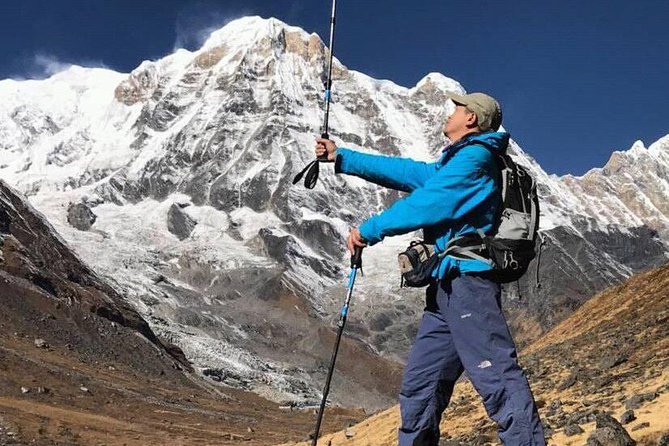
This tour is designed around one big idea: you should not lose days to planning. You’ll get airport pick-up from Tribhuvan International Airport and a transfer to Kathmandu, then later organized transport to Pokhara and back to Kathmandu. Once trekking begins, the trip leans on a simple system: you walk, your guide handles the route rhythm, and porters handle the heavy stuff.
That “private” format matters more than people expect. In group treks, you often spend time waiting, catching up, and guessing what’s next. Here, the plan is yours to follow day by day, and the guide can adjust pacing based on how you’re feeling. That flexibility can be the difference between finishing tired and finishing proud.
Also, the value is real on the ground. The package includes:
- hotel accommodations in Kathmandu and Pokhara (3 star category) with breakfast
- tea house accommodation plus breakfast, lunch, and dinner during the trek
- permits and paperwork (ACAP and TIMS) handled for you
When those things are bundled, you stop thinking about logistics and start thinking about your feet, your water, and the next view.
A quick reality check
The itinerary calls for a moderate fitness level, and you should take that seriously. There are days described with 5 to 7 hours of trekking, plus steep climbs out of valleys and a few long downhill stretches. If you are comfortable walking 5 to 7 hours on uneven ground, you’re in the right zone. If not, you can still do it, but you’ll want to build up stamina before you go.
Kathmandu UNESCO Day: Pasupatinath, Bouddhanath, Patan, Swayambhunath
Before Annapurna pulls you upward, you get a full day in Kathmandu valley sights that are world-famous for a reason. Day 2 is packed but logical: you’re not just sightseeing, you’re also setting your Nepal mindset.
Here’s what’s on the menu:
- Pashupatinath Temple: one of the most sacred Hindu shrines in the world, with devotees doing ritual dips in the Bagmati River
- Bouddhanath Stupa: a major Buddhist landmark, famous for its massive stupa and its large-scale stupa design
- Patan Durbar Square: palace buildings, courtyards, and pagoda temples, with an on-site museum space described in the plan
- Swayambhunath Stupa (Monkey Temple): a hilltop stupa complex watching over the valley, known for its monkeys
This matters because it helps you understand the culture you’re hiking through. On trek days, you’ll pass small shrines, prayer flags, and village life shaped by both Hindu and Buddhist traditions. That day in Kathmandu makes those details feel more than random scenery.
Practical note: the plan also frames this as trek preparation. So even if you are tempted to treat Kathmandu as a pure sightseeing day, keep some energy for the next leg.
The Pokhara Transfer and Why Nayapul Matters
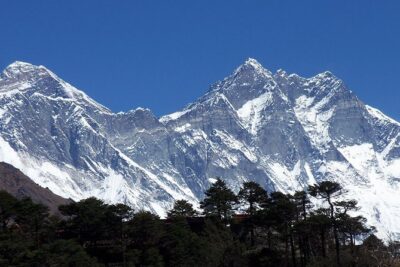
Pokhara is where the trek starts feeling real. You’ll travel from Kathmandu to Pokhara by tourist bus, with an early morning pick-up from your hotel. The drive is the calm before the trail, and Pokhara is described as calmer and less hectic than Kathmandu, plus it offers big views of Annapurna and Machapuchhare (fish-tail shape) in the north.
Then comes the trek start point: Nayapul. The first walking segment is relatively short, starting with a walk along the banks of the Modi Khola, then moving toward Birethanti and into the Ulleri direction. This is a smart way to begin. You ease into the routine rather than going straight into a brutal climb.
Why I like this start: it gives you time to get your body and shoes aligned before the bigger days.
Other lodge to lodge routes near Kathmandu
Ulleri to Chhomrong: The Classic ABC Build-Up (and Poon Hill’s Big Moment)
Days 4 through 7 are the core training arc of this trek. You’re moving up from the river valleys into higher villages, with forest walks and a couple of key viewpoints.
Day 4: Nayapul, Birethanti, and the Ulleri road
The day is described as about 5 to 7 hours. You start near Nayapul, walk roughly 15 minutes along the Modi Khola to reach Birethanti, and then follow the valley north bank. The trail climbs steadily toward areas like Hille and Tikhedhunga, and you arrive in the Ulleri zone.
What to expect: village transitions plus gradual uphill. It’s not the “hardest day” of ABC, but it sets the tone.
Day 5: Ulleri to Ghorepani through forests
This is a classic rhythm day with a steep climb early, then more gentle ascent through oak and rhododendron forests. The route runs toward Banthanti, Nangethanti, and then arrives at Ghorepani. The plan gives trekking time around 4 to 5 hours and places Ghorepani at about 2,840 m.
This is where the air starts to feel different. Your goal here is simple, keep moving at a pace you can maintain.
Day 6: Poon Hill sunrise, then down to Tadapani
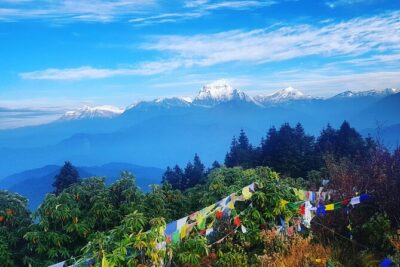
This is the day with the big payoff. You start very early to reach Poon Hill (3,210 m) just in time for sunrise views over the Himalayas. The plan also describes wide views toward Annapurna and Dhaulagiri ranges and even mention Mustang and more than 20 of the highest mountains.
After that, you return to Ghorepani for breakfast, then walk onward through rhododendron forests and waterfalls to reach Tadapani. Overnight is in Tadapani.
My advice: bring layers for sunrise. Even if you feel fine during the day, the early hours can catch you off guard.
Day 7: Tadapani to Chhomrong, steep downhill and big village energy
This day starts with a descent through rhododendron forest, then opens into terraced fields and a few suspension bridges. You end in Chhomrong, a village right below the giant Annapurna massif, around 2,170 m in the plan.
It’s one of those days where you’ll feel strong during the first half, then work your legs on the downhill. Your guide’s pacing will matter here.
Dovan, Deurali, and the Push to Annapurna Base Camp
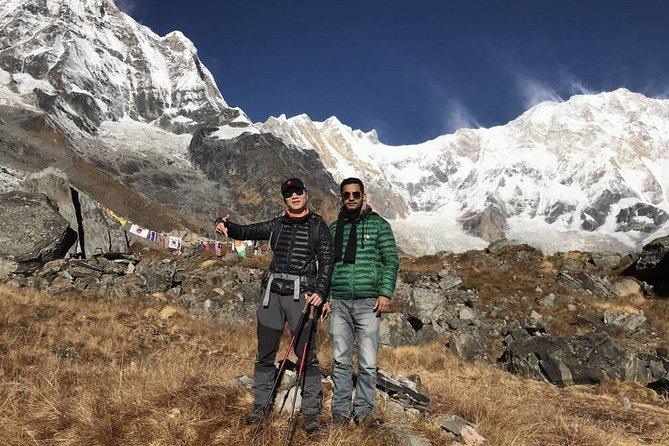
After Chhomrong, the trek starts shifting from village life to more dramatic trekking terrain.
Day 8: Chhomrong to Dovan, bamboo forest and river views
This day is described around 5 to 6 hours. You walk through damp, colder bamboo forest, then uphill on sections that can be steep. After reaching areas around Himalaya Hotel, the forest opens and the route reveals views of a glacial river below.
You also pass through places like Hinku Cave described on the route, and you finish the day in Dovan. The plan points out the vegetation becomes more sparse, giving “magical views” of valley and cliffs with waterfalls.
Day 9: Dovan to Deurali, steady climb on rocky edges
This is described as 5 to 6 hours, with the trail following a valley side and sticking to a rocky cliff, sometimes steep. There’s also mention of a flatter stretch before a final push upward toward Machhapurchre Base Camp.
This is a good day to practice what you’ll need later: breathing control and steady steps. Don’t rush altitude. Let it happen.
Day 10: Deurali and the climb to Annapurna Base Camp
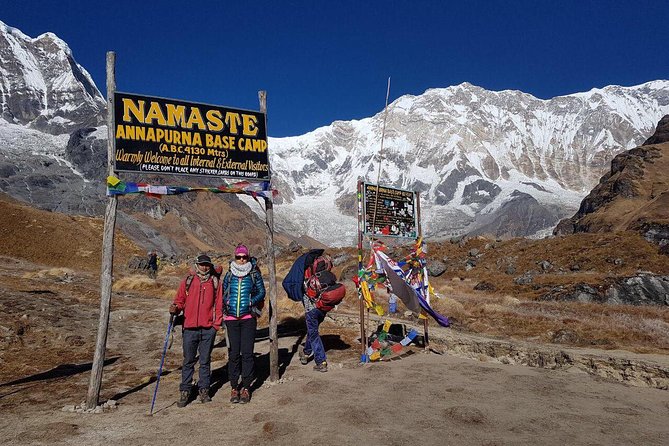
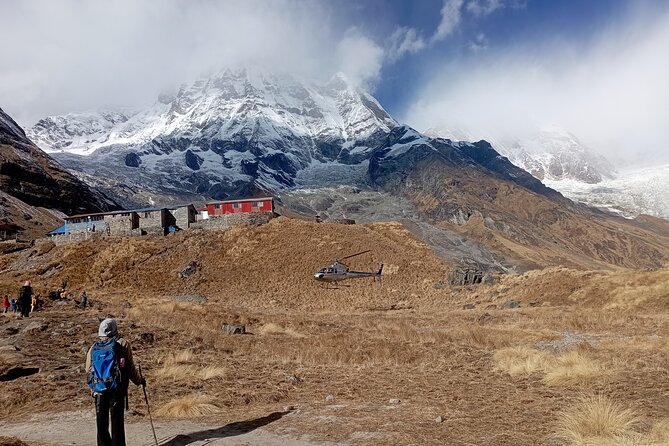
This day is the summit moment. The plan frames trekking time around 5 to 7 hours as the trail rapidly ascends to Annapurna Base Camp.
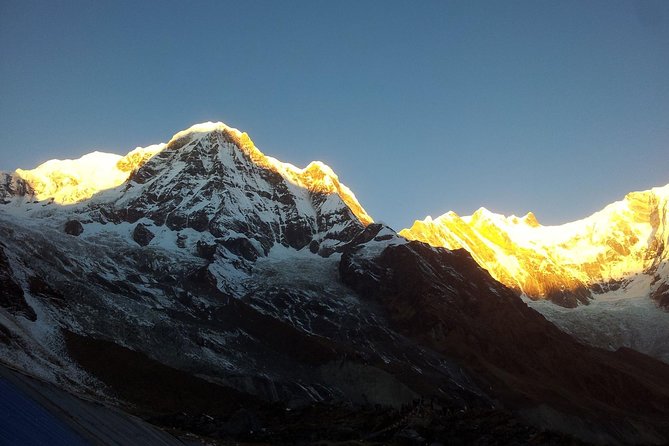
What makes ABC special, even on an organized trek, is that it feels like the trail culminates into a wall of mountain. You get your base camp day, then the itinerary moves into descent the next day.
Downhill to Bamboo, Then Jhinu Danda Hot Spring
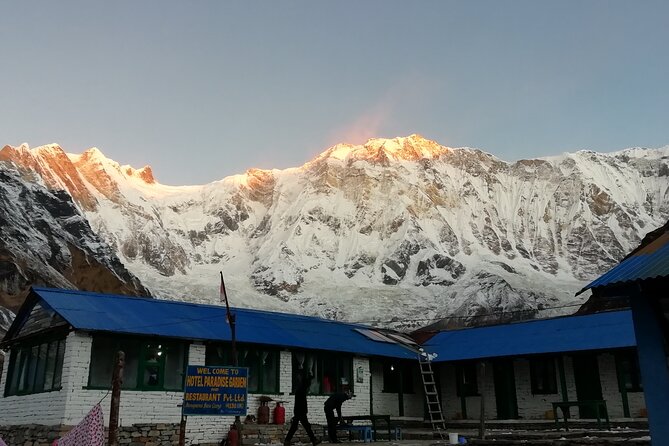
ABC is not just about going up. The real challenge for many people is what comes next: long down days.
Day 11: Base Camp descent to Bamboo
After reaching Annapurna Base Camp, the plan says the trail rapidly descends past Machhapuchhre Base Camp, Deurali, Himalayan Hotel, and Doban, and then ends at Bamboo for the night. Trek time in the plan is about 7 hours and the tone is clearly downhill.
Downhill is work. Your muscles are fine until they suddenly aren’t. If you’re going to bring one mindset for the whole trek, bring this one: take short steps and keep your balance.
Day 12: Bamboo to Jhinu Danda hot spring
From Bamboo, the plan retraces steps back to Chhomrong for lunch, then continues with a steep descent into the Modi Khola valley and ends at Jhinu Danda. The plan also says you’ll enjoy hot spring time at Jhinu Danda.
This day is one of the best “reset” moments on ABC. You’ve done the heavy lifting and you get a reward that is practical, warm water after cold days, plus a different kind of quiet than the upper viewpoints.
Finishing Route: Pokhara then Kathmandu, with time to recover
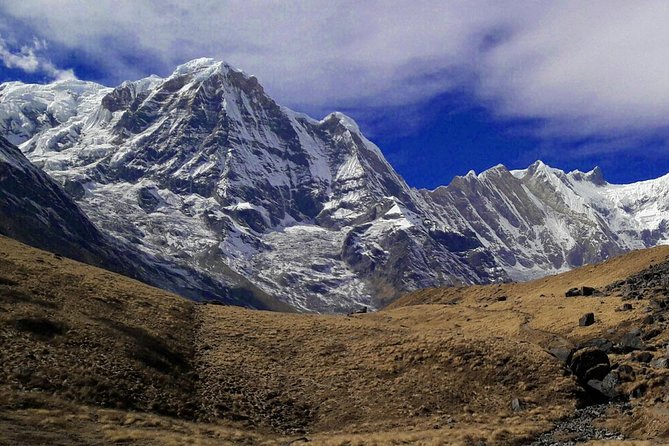
Once trekking ends, the itinerary gives you a decompression path.
Day 13 moves you from the trek end back toward Pokhara, with drive time and a final overnight in Pokhara. Day 14 then drives you back to Kathmandu by tourist bus after breakfast, with travel time described around 7 to 9 hours.
Why this ending pacing works: it avoids the classic mistake of jumping back into a full day of city sightseeing while your legs are still negotiating with you.
One more practical note: the trip description mentions extra night accommodation may be needed if your return changes due to early arrival, late departure, or early return from the mountain. That cost is not listed as included, so keep some flexibility in your budget if weather does anything unpredictable.
Price and Logistics: What $899 Includes, and What You’ll Still Pay
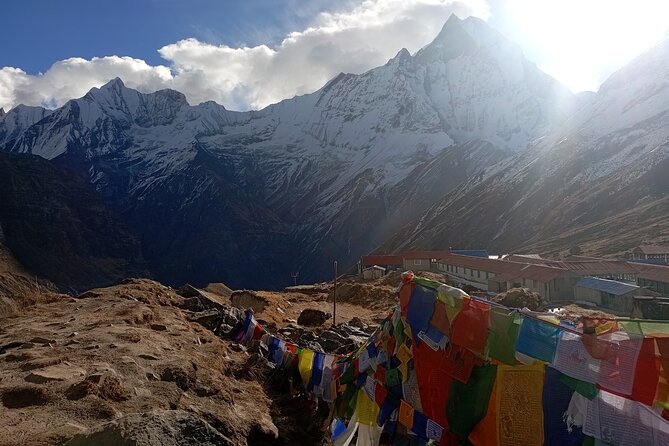
At $899 per person, the big question is value. Here’s how I’d judge it.
What you get for the price
- airport pick-up from Tribhuvan International Airport
- 3 star category hotels in Kathmandu and Pokhara with breakfast included
- teahouse lodging during the trek with breakfast, lunch, and dinner included
- transportation by tourist coach Kathmandu-Pokhara-Kathmandu
- an experienced English-speaking trekking guide
- porters to carry luggage, plus porter salary, insurance, equipment, flight, food, and lodging
- ACAP and TIMS permits paperwork plus government and local taxes
This is a lot of “hidden work” that many cheaper-sounding trips try to shift onto you.
What is not included, so plan for it
The plan lists several add-ons:
- hot water and cold drinks, including cola, fanta, sprite, and mineral water
- phone calls, laundry, beer and bar bills
- entrance fees for sightseeing in Kathmandu and/or Pokhara
- lunch and dinner in Kathmandu and/or Pokhara
- extra nights in Kathmandu and Pokhara if your mountain schedule changes
- tips for guides and porter
My practical tip: treat tips, cold drinks, and any sightseeing entrance fees as part of your real trip budget. Also, if hot water matters to you, you should assume it will cost extra since it is not included.
Guide Quality and the Friendly Team Theme I Keep Seeing
The standout praise in the feedback is consistent: care, friendliness, and people who manage comfort. Multiple reports mention guides by name, including Bishnu Bhatta and Vishnu, and one review specifically calls out kindness from staff like Prem dai.
You’ll see the theme that matters on ABC: the guide isn’t just a route holder. They’re there for pacing, communication, and keeping the experience comfortable. One review also notes food was looked after carefully to help avoid stomach issues. That lines up with how important nutrition is at altitude, even when you’re eating mostly simple meals.
Also, there’s a nice signal here for first-time trekkers. One review describes ABC as a first trekking experience in Nepal, and another mentions seniors and average trekkers doing the trek successfully with the team’s support.
A realistic caution
Even with a great guide, the mountains decide some parts of the schedule. Weather and trail conditions can impact how far you go. One review mentions they were unable to trek further due to weather conditions. That’s the nature of ABC, so if you’re on a strict calendar, build in buffer time if possible.
Who This Trek Suits Best (and Who Should Rethink It)
This Annapurna Base Camp trek is a strong fit if you want:
- a private tour with personal guidance
- a structured plan that takes care of hotels, permits, and daily meals while trekking
- moderate walking goals with multiple 5 to 7 hour trekking days
You might want to rethink if:
- you hate downhill days, because several parts of the plan return you down through bamboo and village steps
- you are sensitive to cold mornings without included hot water
- you need a fully flexible schedule with zero weather impact, because mountain conditions always have a voice
If you enjoy a mix of culture day in Kathmandu and then a classic trek arc, this hits the right balance.
Should You Book This Annapurna Base Camp Package?
I’d book it if you value less stress, more walking, and you want your guide to handle the details like permits, meals, and pacing. At $899, the included guide and porter setup plus trek meals and Kathmandu transport can make it feel like better value than piecing everything together.
I’d pause before booking if your budget is tight for add-ons like tips, entrance fees, and hot water, or if you’re not ready for the combination of steep climbs and long descents.
If you’re a first-timer to Nepal trekking, or you want the ABC trail without turning your trip into a logistics project, this one makes sense.
FAQ
What is included in the trekking meals and accommodations?
The package includes teahouse accommodation during the trek with breakfast, lunch, and dinner. In Kathmandu and Pokhara, you get 3 star category hotels with breakfast included.
Do you get picked up from the airport in Kathmandu?
Yes. The tour includes pickups from Tribhuvan International Airport, with transfer to your Kathmandu hotel.
Is transportation between Kathmandu and Pokhara included?
Yes. You travel by tourist coach between Kathmandu and Pokhara, and later back from Pokhara to Kathmandu.
Are entrance fees for Kathmandu sightseeing included?
No. Entrance fees for sightseeing in Kathmandu and/or Pokhara are listed as not included.
What kind of fitness level do I need?
The tour requires a moderate physical fitness level. The days on trek include multiple long walking periods, including uphill and downhill segments.
Is free cancellation available?
Yes, you can cancel up to 24 hours in advance for a full refund, based on the experience’s local time cut-off.
Lodge to Lodge Around Kathmandu
The Rest of Our Kathmandu Write Ups

Through the Sanctuary Gate
Everything else we have reviewed around Kathmandu
- 12 Days Everest Base Camp Trekking
★ 5.0 · 3 reviews - 1 Night 2 Days Chitwan Jungle Safari Tour from Pokhara or Kathmandu
★ 3.0 · 3 reviews - Thamel Rickshaw tour
★ 4.7 · 3 reviews - Kathmandu: Momo Making Class with a Local Chef
★ 5.0 · 3 reviews - Kathmandu: Full-Day Yoga, Body Massage and Pedicure Package
★ 5.0 · 3 reviews - From Kathmandu / Pokhara / Chitwan: River Rafting – 1 Day
★ 4.6 · 3 reviews
Annapurna Base Camp Treks worth a second look.
 ★ 5.0Annapurna base camp trek 5 DaysFrom $699252 reviews
 ★ 5.0Annapurna Base Camp TrekFrom $935111 reviews
 ★ 5.0Kathmandu to Annapurna Base Camp (ABC) 5-Day TrekFrom $99102 reviews
 ★ 5.0Annapurna Base Camp Trek 12 DaysFrom $80085 reviews
★ 5.0Annapurna Base Camp TrekFrom $92580 reviews
 ★ 4.95-Day Annapurna Base Camp (ABC) TrekFrom $9672 reviews
★ 5.0Annapurna Base Camp TrekFrom $69959 reviews
 ★ 5.011-Day Hike Tour to Annapurna Base Camp Bliss in KathmanduFrom $1,30052 reviews
Lists this tour sits in