
REVIEW · ANNAPURNA BASE CAMP TREKS
Annapurna Base Camp Trekking
Annapurna Base Camp hits different when logistics are handled for you. This 12-day trek from Kathmandu is designed to take the stress out of the hard parts, with a licensed guide and porter plus an included sleeping bag and down jacket to help you stay comfortable in the cold. You’ll also get round-trip bus transfers between Kathmandu and Pokhara, so your time goes to hiking, not figuring out transport.
One catch: you still need to plan for extra on-the-ground costs. Meals during the trek are not included, and you may pay for items like cold drinks and Jhinu Danda hot spring entry separately.
In This Review
- Key things I’d spotlight before you go
- Annapurna Base Camp’s real draw: it’s a guided route with the hard bits supported
- Price and logistics: what $749.90 is really buying you
- Gear and support: why the included sleeping bag and down jacket matter
- Your 12 days on the Annapurna route, stop by stop
- Day 1: Arrive in Kathmandu, meet your trek leader
- Day 2: Kathmandu to Pokhara Lakeside
- Day 3: Start trekking from the Pokhara side, head toward Ghorepani
- Day 4: Poon Hill sunrise, then down toward Tadapani
- Day 5: Chuile to Sinuwa, a quieter day before higher country
- Day 6: Sinuwa to Deurali, up into the Annapurna Sanctuary zone
- Day 7: The climb to Annapurna Base Camp via Machhapuchhre Base Camp
- Day 8: Descend from ABC to Bamboo
- Day 9: Bamboo to Jhinu Danda, with hot springs waiting
- Day 10: Jhinu Danda hot spring, then down toward Pokhara
- Day 11: Pokhara back to Kathmandu
- Day 12: Depart Kathmandu
- Tea house nights, permits, and the reality of what is included
- Guides, pace, and safety: why the human touch shows up in real feedback
- Who should choose this trek, and who might think twice
- Should you book this Annapurna Base Camp trek?
- FAQ
- What city does this Annapurna Base Camp trek start from?
- How long is the trek?
- What is included for transportation between Kathmandu and Pokhara?
- Do I get help getting to the trek starting point?
- What trek permits are included?
- What gear is provided for the trek?
- Is a guide included?
- Is a porter included, and is it the same for solo travelers?
- Is food included during the trek?
- Can I cancel for free?
Key things I’d spotlight before you go
- Licensed guide and porter to keep the pace sensible and the safety decisions in experienced hands
- Included trek permits (TIMS and Annapurna Conservation Area) so you skip paperwork headaches
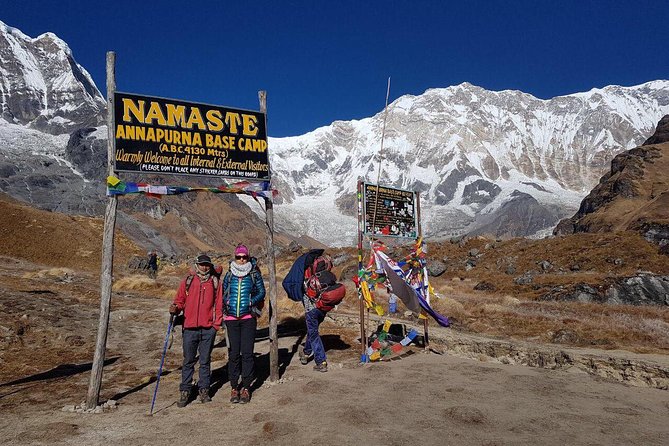
- High point around 4,130 meters at Annapurna Base Camp, with big mountain views as the payoff
- Gear provided for cold nights (sleeping bag, down jacket, duffle bag)
- A sunrise add-on at Poon Hill to stack an early-view moment into your trek
Other approaches to the Sanctuary gate
Annapurna Base Camp’s real draw: it’s a guided route with the hard bits supported
Annapurna Base Camp is one of those goals people set for the Himalayas, but the trek only feels manageable when the details are sorted. Here, the operator builds in a lot of the behind-the-scenes work: permits, trekking logistics, and a plan that threads classic stops like Ghorepani and Poon Hill into the ABC route. That matters because on a trek like this, your energy is your currency.
What also helps is the human factor. You get a licensed professional English-speaking trekking guide, and there is porter support (one porter for two trekkers). In places where you are tired, moving slower, or suddenly short on patience, that kind of practical support is not a luxury. It is what keeps the day working.
Price and logistics: what $749.90 is really buying you
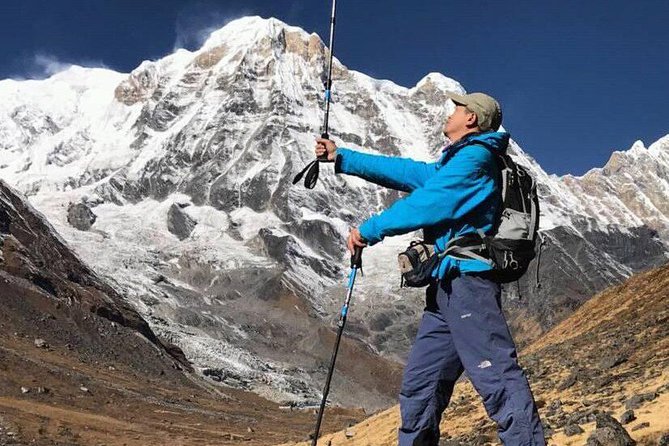
At $749.90 per person for about 12 days, this is not a bare-bones deal. You are paying for structured mountain time, not just a walking itinerary. The included transfers between Kathmandu and Pokhara by tourist bus, plus private transfers to the trek start and end, take out a lot of time-wasting coordination.
You’re also paying for items and services that would cost you if you tried to self-arrange. The package includes TIMS and the Annapurna Conservation Area Permit. You’ll also have a duffle bag for the trek, and you borrow the sleeping bag and down jacket during your hike. For many hikers, that gear alone is the difference between a trip that feels solid and one that becomes a cold, uncomfortable slog.
Two important value notes. First, Kathmandu and Pokhara lodging is not included, so you’ll budget for hotels yourself. Second, food during the trek is not included, so you’ll still be spending money at tea houses.
Gear and support: why the included sleeping bag and down jacket matter
High altitude turns your body into a battery. When the temperature drops, you want insulation that actually works, and you want it without last-minute shopping. This trek provides a sleeping bag and down jacket for use during the trek, plus a duffle bag and a first aid kit.
That is practical. You can pack less, and you avoid the common mistake of arriving with gear that is too thin for mountain nights. You still need to bring personal items like layers, gloves, and sun protection, but having the heavy cold-weather pieces included cuts down the most painful guesswork.
The guide and porter setup also matters for how the trek feels day to day. The itinerary is built as a guided route, which usually means steadier pacing and fewer lost-hours. On a steep climb, minutes add up fast, and having a professional lead the way helps you keep moving with less friction.
Your 12 days on the Annapurna route, stop by stop
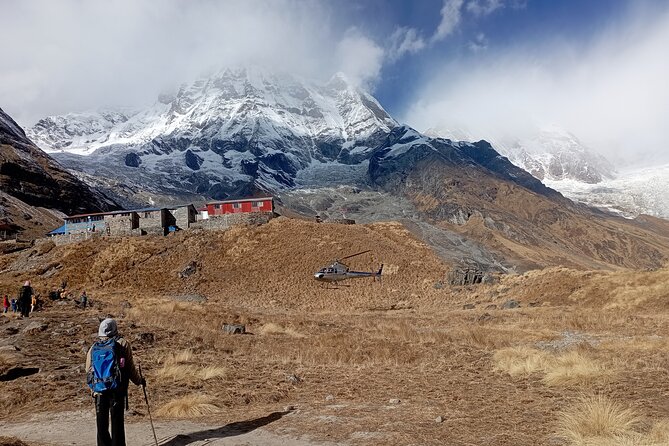
Here’s how your days are shaped, and what each place tends to do for your trip.
Other lodge to lodge routes near Kathmandu
Day 1: Arrive in Kathmandu, meet your trek leader
You land in Kathmandu and get an airport transfer to your hotel. Later, you meet your trek leader for a pre-trip briefing. This is the moment to confirm your packing, get clarity on what is included, and ask questions you might otherwise hesitate to bring up on the trail.
Day 2: Kathmandu to Pokhara Lakeside
You head to Pokhara, typically departing around 7:00 AM. Once you reach Pokhara Lakeside, you settle in and get oriented. This day is about setting your body up for hiking tomorrow, not chasing sightseeing. It also gives you a smoother mental transition from city life to tea house nights.
Day 3: Start trekking from the Pokhara side, head toward Ghorepani
This is your first trekking day, and it tends to feel like a wake-up call. You move from Birethanti into the Ulleri area, then work up through Nangethanti toward Ghorepani. The trail climbs in stages, and that rhythm is useful because it helps you find a steady effort level.
Ghorepani is a key base for views and for the sunrise plan later. It’s also where you’ll sleep before the early walk to Poon Hill.
Day 4: Poon Hill sunrise, then down toward Tadapani
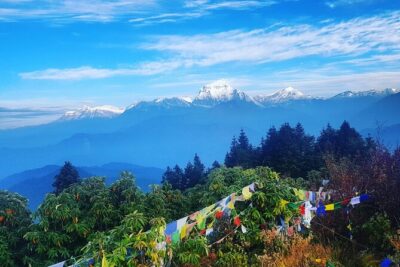
This is one of the most memorable moments of the entire trek. You start pre-dawn from Ghorepani for about a 45-minute hike to Poon Hill at roughly 3,210 meters. The payoff is panoramic mountain views, including Annapurna and Dhaulagiri and a famous view of Machhapuchhre in the Annapurna region.
After sunrise, you trek onward to Tadapani, around 2,630 meters. Tadapani gives you a calmer, more settled feeling after the early scramble. You’ll trade “big view” energy for steady trail walking, with mountain scenes continuing along the way.
Day 5: Chuile to Sinuwa, a quieter day before higher country
You head toward Chuile around 2,300 meters, then continue to Sinuwa (about 2,340 meters). This day is paced for building altitude gradually without burning yourself out. The terrain generally keeps you working, but it is not usually the steepest day in the route.
Sinuwa is also a known stop on the ABC approach. It positions you for the next day’s climb toward Deurali.
Day 6: Sinuwa to Deurali, up into the Annapurna Sanctuary zone
You trek from Sinuwa (or sometimes start from Chomrong, depending on where you are on the route) toward Deurali. The goal is to reach higher viewpoints around 2,890 meters and move closer to the ABC approach.
This is where weather matters more. Even if you feel fine during the day, the cold can creep in fast once you’re higher and farther from lower warmth. Use the guide’s pacing to keep your breathing controlled.
Day 7: The climb to Annapurna Base Camp via Machhapuchhre Base Camp
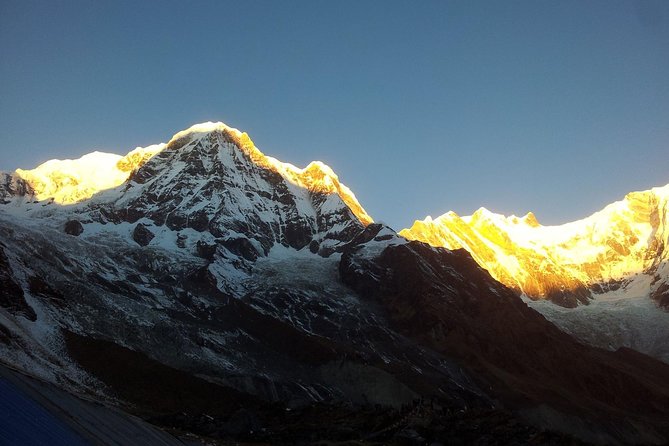
Day 7 is the money day in your itinerary. You climb from the Deurali area up toward Annapurna Base Camp at about 4,130 meters. Along the way, you pass Machhapuchhre Base Camp, around 3,700 meters.
Machhapuchhre Base Camp is a strong “checkpoint” moment, because you are moving beyond the lower tea house routine and into the heart of the sanctuary. Then, the final climb brings you to ABC, surrounded by the peaks that make Annapurna famous.
This is also a day where you slow down mentally. The altitude is real, so you want deliberate movement, short breaks, and plenty of hydration.
Day 8: Descend from ABC to Bamboo
After reaching your high point, you transition into descent mode. Day 8 brings you down from Annapurna Base Camp to Bamboo around 2,350 meters. Expect the legs to feel it. Descent is still work, just in different muscles than the ascent.
Bamboo is your reset. You’re getting lower, which helps the breathing, but you still keep walking and sleeping in tea house style accommodations.
Day 9: Bamboo to Jhinu Danda, with hot springs waiting
You trek from Bamboo down toward Jhinu Danda around 1,780 meters. This section is a welcome change in altitude pressure because you are going lower, not higher.
Jhinu Danda is known for its natural hot springs. After days of mountain walking, soaking your legs is a recovery move that makes the last stretch feel easier.
Day 10: Jhinu Danda hot spring, then down toward Pokhara
You spend time at the hot springs, with the ticket noted as not included. Then you continue on the final hiking leg, trekking toward Siwa or Ghandruk Phedi depending on the route chosen, with the end of the trek connecting back to Pokhara Lakeside.
This is a day where you’ll want to keep an eye on timing. If you linger too long in the springs, you might shorten your buffer for the final walk. Still, it’s one of the best rewards in the itinerary.
Day 11: Pokhara back to Kathmandu
You drive from Pokhara to Kathmandu, around 200 kilometers and roughly 8 hours. This is a long ride, but it’s a typical end-of-trek transition.
Once you get to Kathmandu, you can shift your focus from hiking logistics to a simple recovery routine: hydrate, eat normally if you can, and sleep like you mean it.
Day 12: Depart Kathmandu
Your trek wraps with transfer to Tribhuvan International Airport. The trip ends, but you’ll likely feel the altitude echo for a couple of days, even if your body feels mostly fine.
Tea house nights, permits, and the reality of what is included
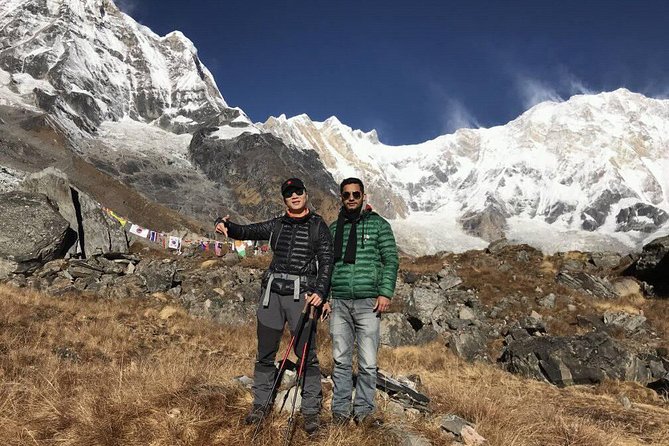
This trek uses tea house accommodations along the route, and it lists “best teahouse” as part of the included value. Tea houses are basic by travel standards, but that’s the point. They’re part of how the trail works, and they keep you from hauling camping gear.
What’s included helps a lot. Tea house lodging is part of the trek structure, and you have a guide and porter team to manage day-to-day decisions. Permits are also handled, with TIMS and the Annapurna Conservation Area Permit included. That’s a big deal on the practical side. You avoid searching for paperwork, and you avoid delays that can happen if requirements are missed.
But you should plan your spending. Cold drinks are not included, and food during the trek is not included. That means your daily budget should assume buying meals at tea houses. You’ll also be responsible for hot spring entry fees at Jhinu Danda.
One more practical note: your highest point is Annapurna Base Camp at about 4,130 meters. Even with the itinerary’s step-by-step planning, the altitude still affects how you feel.
Guides, pace, and safety: why the human touch shows up in real feedback
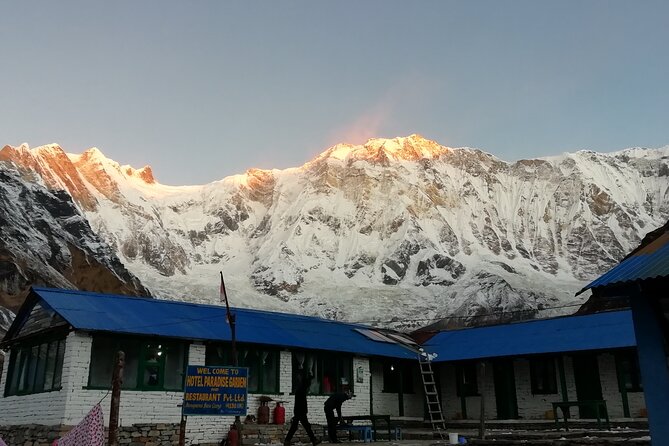
One of the most praised elements tied to this kind of trip is how the guide and porter treat you when the trail gets slow. On this route, a guide named Avi and porter Robin are specifically highlighted for being patient and for focusing on safety while keeping the experience positive.
That’s what you should look for in any ABC trek: a guide who keeps you moving at the right effort level and a porter who takes load handling seriously. The goal isn’t speed. The goal is to arrive at ABC feeling like you participated in the mountains, not like you survived a forced march.
If you are nervous about altitude, this kind of support matters even more. You want a team that helps you manage your pace and your decisions.
Who should choose this trek, and who might think twice
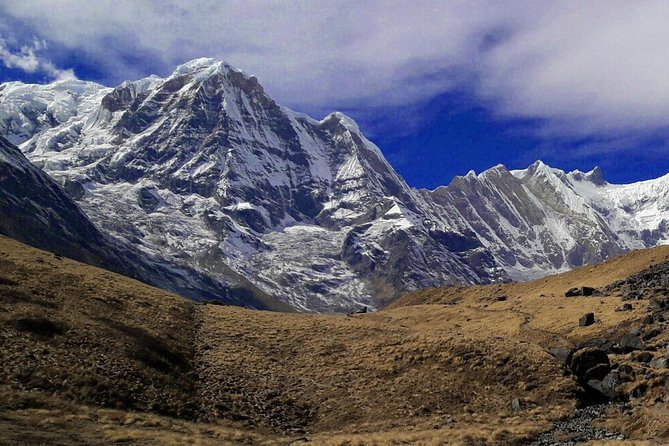
This is a good fit if you have moderate physical fitness and you want a guided, structured Annapurna Base Camp experience with gear support. It’s also a solid option if you prefer not to manage permits and transfers yourself.
You might think twice if you dislike paying for most meals on the trail. Because food is not included, you’ll be choosing from tea house menus day by day. It’s not unusual, but it is something to factor into your total cost.
Also consider that this route includes Poon Hill sunrise, plus a longer multi-day sequence up to ABC. If you want a shorter, gentler trek, you may find this itinerary demanding.
Should you book this Annapurna Base Camp trek?
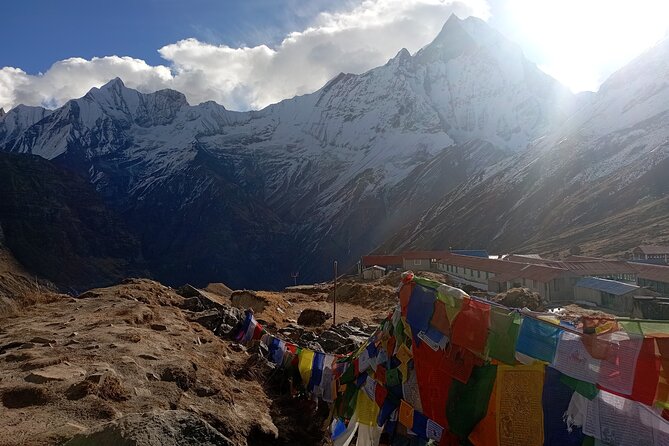
I’d book it if you want a guided experience that takes the “planning stress” off your shoulders, especially with permits, guide leadership, porter support, and serious cold-weather gear included. The value is strongest when you factor in the sleeping bag and down jacket rental-like benefit, plus the structured transfers between Kathmandu and Pokhara and the private movement to the trek start and end.
I would hesitate if your budget can’t handle extra expenses like meals during the trek and cold drinks, or if you prefer all-in pricing for food. Since lodging in Kathmandu and Pokhara isn’t included either, make sure your total plan still feels comfortable.
If you’re ready to work step by step toward 4,130 meters, and you want a setup built around safety and sensible pacing, this trek is a practical and worthwhile choice.
FAQ
What city does this Annapurna Base Camp trek start from?
It starts from Kathmandu, Nepal.
How long is the trek?
The duration is 12 days (approx.).
What is included for transportation between Kathmandu and Pokhara?
Round-trip bus transfers between Kathmandu and Pokhara are included, using a tourist bus.
Do I get help getting to the trek starting point?
Yes. The package includes a private transfer to the trek starting point and ending point, and it mentions taxi to Nayapul to start the trek.
What trek permits are included?
TIMS and the Annapurna Conservation Area Permit are included.
What gear is provided for the trek?
You get a duffle bag, a sleeping bag, and a down jacket for use during the trek. A first aid kit is also provided.
Is a guide included?
Yes. It includes one licensed professional English-speaking trekking guide.
Is a porter included, and is it the same for solo travelers?
Porter support is included as 1 porter for two trekkers. It also states porter for solo traveler is not included.
Is food included during the trek?
No. Food (breakfast, lunch, and dinner) during the trek is not included.
Can I cancel for free?
Yes. Free cancellation is available. You can cancel up to 24 hours in advance for a full refund. Cancellation less than 24 hours before the experience start time is not refunded.
Lodge to Lodge Around Kathmandu
The Rest of Our Kathmandu Write Ups

Through the Sanctuary Gate
Everything else we have reviewed around Kathmandu
- 12 Days Everest Base Camp Trekking
★ 5.0 · 3 reviews - 1 Night 2 Days Chitwan Jungle Safari Tour from Pokhara or Kathmandu
★ 3.0 · 3 reviews - Thamel Rickshaw tour
★ 4.7 · 3 reviews - Kathmandu: Momo Making Class with a Local Chef
★ 5.0 · 3 reviews - Kathmandu: Full-Day Yoga, Body Massage and Pedicure Package
★ 5.0 · 3 reviews - From Kathmandu / Pokhara / Chitwan: River Rafting – 1 Day
★ 4.6 · 3 reviews
Annapurna Base Camp Treks worth a second look.
 ★ 5.0Annapurna base camp trek 5 DaysFrom $699252 reviews
 ★ 5.0Annapurna Base Camp TrekFrom $935111 reviews
 ★ 5.0Kathmandu to Annapurna Base Camp (ABC) 5-Day TrekFrom $99102 reviews
 ★ 5.0Annapurna Base Camp Trek 12 DaysFrom $80085 reviews
★ 5.0Annapurna Base Camp TrekFrom $92580 reviews
★ 5.0Annapurna Base Camp Trek 12 DaysFrom $80085 reviews
★ 5.0Annapurna Base Camp TrekFrom $92580 reviews
 ★ 4.95-Day Annapurna Base Camp (ABC) TrekFrom $9672 reviews
★ 5.0Annapurna Base Camp TrekFrom $69959 reviews
★ 4.95-Day Annapurna Base Camp (ABC) TrekFrom $9672 reviews
★ 5.0Annapurna Base Camp TrekFrom $69959 reviews
 ★ 5.011-Day Hike Tour to Annapurna Base Camp Bliss in KathmanduFrom $1,30052 reviews
Lists this tour sits in