
REVIEW · ANNAPURNA BASE CAMP TREKS
Pokhara: 5-Day Annapurna Base Camp (ABC) Trek
Annapurna Base Camp in five days is real work. I like how this trek links Pokhara lakeside comfort to high-mountain payoffs, and you get a real sense of local life through the Gurung villages along the way. The route also has a smart visual bonus, a detour toward Machhapuchhre Base Camp for Fishtail Peak views.
The main thing to consider is altitude. You climb to 4,130 meters, so you should take pacing seriously and listen to your guide, even if altitude issues are described as rarely happening.
In This Review
- Key things I’d focus on before you go
- Pokhara lakeside, then straight into the mountains
- Day-by-day: Jhinu warmth, Deurali air, and the ABC moment
- Day 1: Pokhara to Lower Sinuwa, via Jhinu
- Day 2: Lower Sinuwa to Deurali
- Day 3: Deurali to Annapurna Base Camp, via Machhapuchhre Base Camp
- Day 4: Annapurna Base Camp exploration, then down to Bamboo
- Day 5: Bamboo to Pokhara, via Jhinu hot springs (optional)
- What the included tea houses and meals mean for your comfort
- Guides: why English and registration matter here
- Price and value: what $136 covers, and what to add
- Fitness reality check for a 5-day ABC run
- Practical packing notes: what matters on the trail
- Who this trek suits best
- Should you book this Annapurna Base Camp trek?
- FAQ
- How long is the Annapurna Base Camp trek from Pokhara?
- Where does the trek start and where do you return to?
- What kind of lodging and meals are included?
- What permits are included?
- Will I have a guide, and what language do they speak?
- Does the itinerary include hot springs?
- Is a porter available, and is it included?
Key things I’d focus on before you go
- Private transport from Lakeside Pokhara to the last road, then trekking, so your first climbing day starts with less hassle
- Tea house lodging and full-board meals are included, which keeps day-to-day logistics simple
- A detour to Machhapuchhre Base Camp on the way to Annapurna Base Camp for that iconic Fishtail Peak perspective
- Jhinu hot springs are baked into the plan for post-trek unwinding (optional on the way back)
- English live guide plus government-registered professional guidance, including ACAP permit handling
- Luggage storage in Pokhara during the trek, so you travel light once the walking starts
Other approaches to the Sanctuary gate
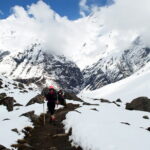
Pokhara lakeside, then straight into the mountains
Most of the success of a short trek like this comes from how well you set yourself up on day 1. You start around Lake Side in Pokhara, and you get pickup and drop-off from any hotel in Lakeside Pokhara, plus the airport, which matters when you are trying to keep schedules tight.
You’ll take a scenic drive first, then transition into the trail system near the Lower Sinuwa area. Think of it as easing your body into hiking rhythm, while still feeling like you are already partway into the Annapurna story.
Day-by-day: Jhinu warmth, Deurali air, and the ABC moment
This is a 4-night, 5-day Annapurna Base Camp trek built for steady progress. The big idea is that you are not doing a huge daily grind every single day, but you will still hike enough to feel the altitude.
Day 1: Pokhara to Lower Sinuwa, via Jhinu
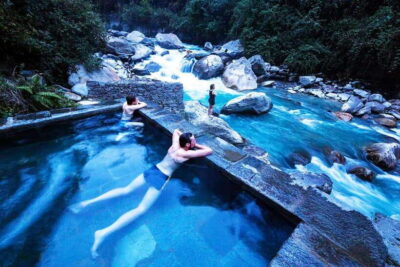
After pickup and transport, you trek for about 5 hours to Lower Sinuwa, stopping along the way in Jhinu. Jhinu is known for natural hot springs, and even if you do not soak on the first day, the area itself sets a relaxing tone for what comes next.
Lower Sinuwa sits at 2,300 meters, a good “first altitude step” that helps your legs learn the trail before the higher days. You’ll typically see a mix of farming areas and forested sections as the valley funnels you toward the foothills.
Day 2: Lower Sinuwa to Deurali
Day 2 is a more serious climb. You hike for about 6 hours toward Deurali at 3,200 meters. The air tends to feel sharper here, and the trail keeps changing, which is helpful when you want variety instead of a long, repetitive grind.
Deurali is also where you start feeling the “Himalaya mood” more clearly. In traditional village areas, you get glimpses of daily life and a sense of community along the route, including the Gurung culture that is highlighted as part of this trekking experience.
Other lodge to lodge routes near Kathmandu
Day 3: Deurali to Annapurna Base Camp, via Machhapuchhre Base Camp
This is your big summit-feeling day. The walking time is around 4 hours to reach Annapurna Base Camp at 4,130 meters. That shorter hiking time is a blessing, but it can also trick you into feeling too fresh too fast, so keep your pacing conservative once altitude kicks in.
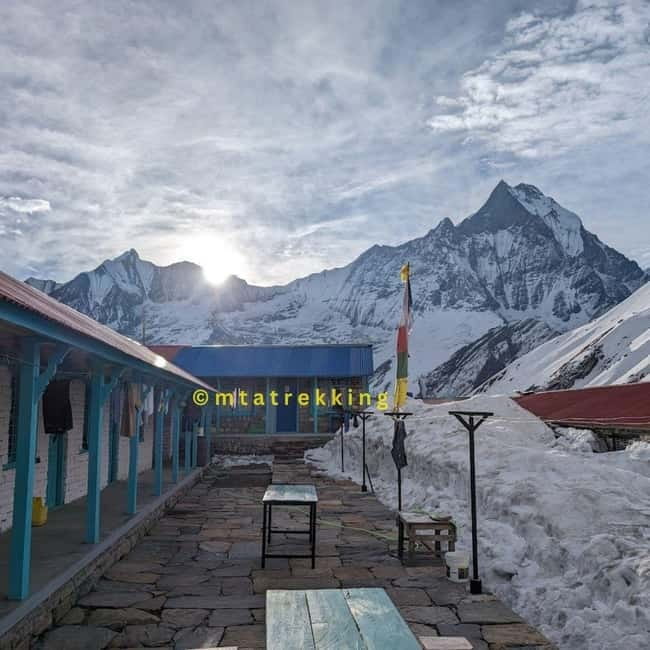
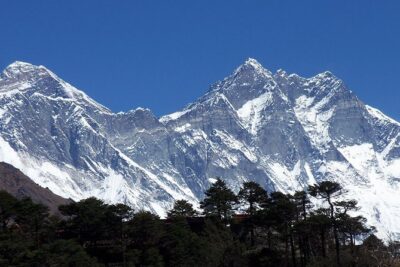
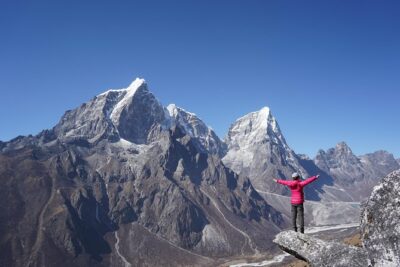
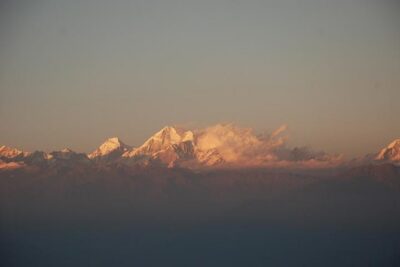
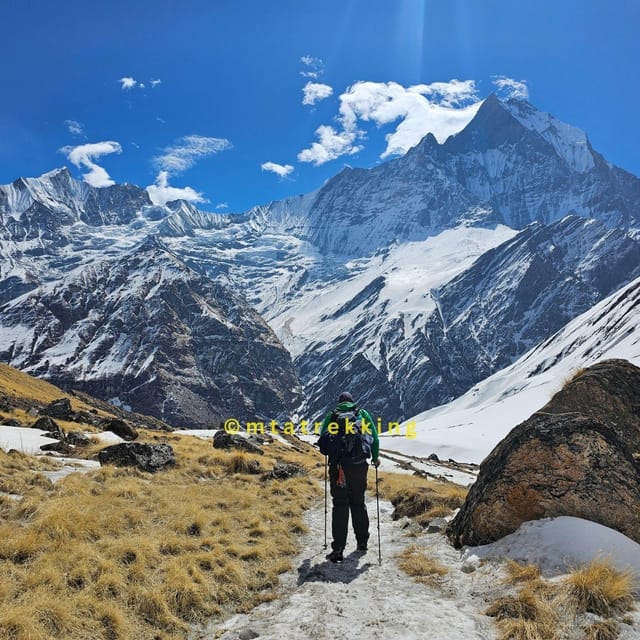
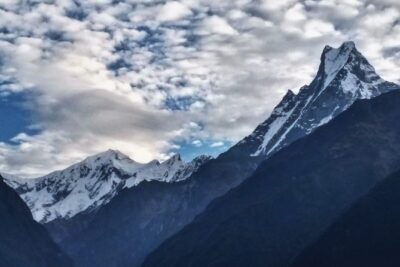
The route includes a key visual detour to Machhapuchhre Base Camp, where you look toward Fishtail Peak (Machhapuchhre). That stop gives you a classic Annapurna view moment on the way to the main goal.
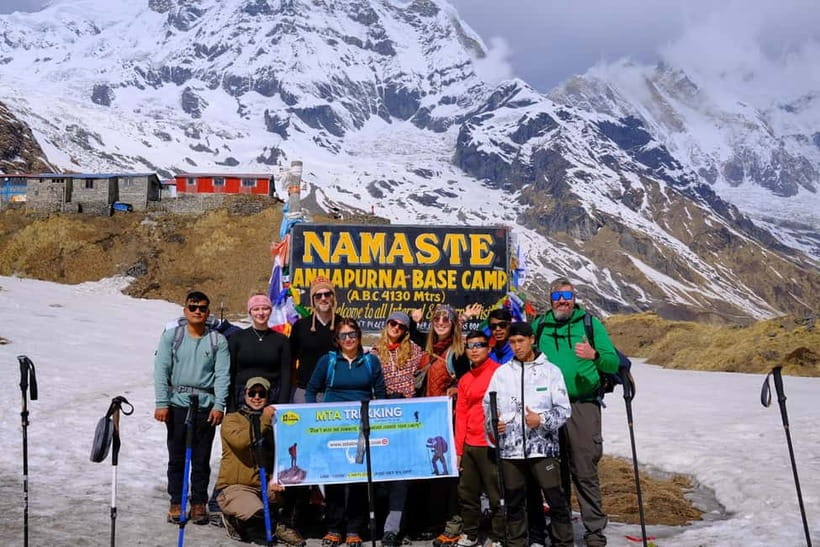
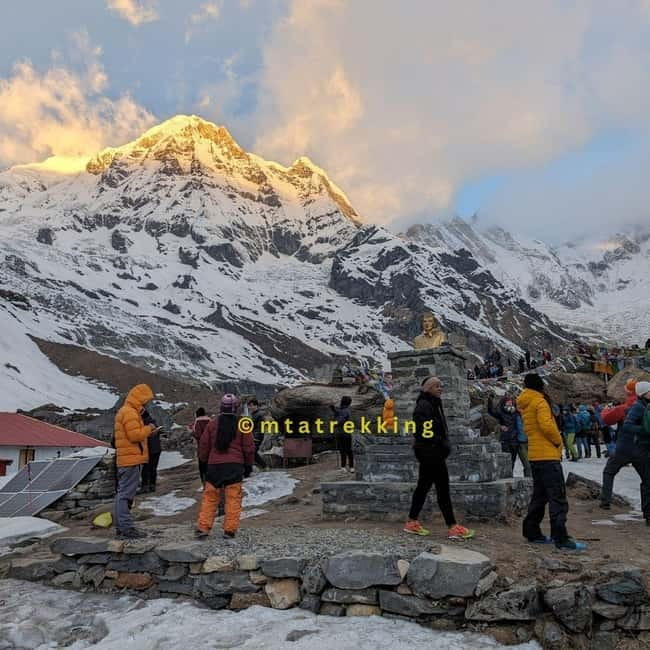
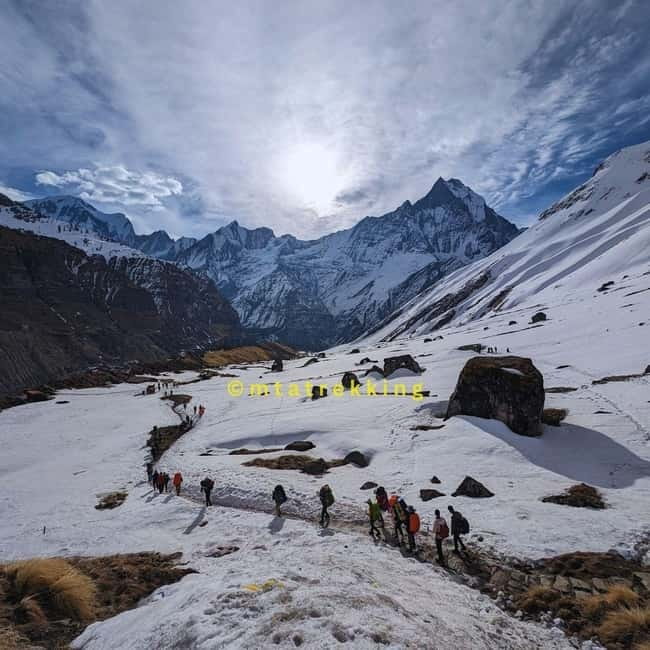
When you finally arrive at Annapurna Base Camp, it is the kind of place where you understand why people plan their whole trip around it. You are surrounded by the Annapurna massif, and the sense of arrival is immediate.
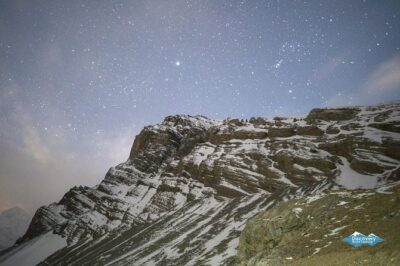
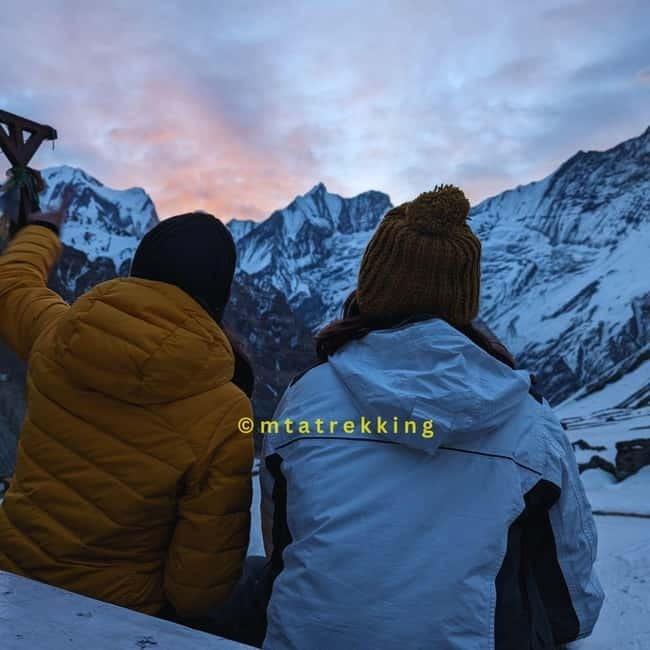
A practical note: the plan includes sunset-style timing at base camp. If you want the early-light version of this moment, you can ask your guide how your lodge schedule lines up with sunrise viewpoints on this trek.
Day 4: Annapurna Base Camp exploration, then down to Bamboo
Day 4 is a split day: you spend time at base camp for photos and panoramic moments, then start descending to rest your body. You walk from Annapurna Base Camp down to Bamboo Lodge, around 2,400 meters.
This day is valuable because it teaches your body recovery in motion. You do not just “arrive and collapse.” You see more of the high views, then you get altitude relief by dropping significantly before sleeping.
If you are the type who likes to make the most of a view, the base-camp exploring time matters. You’ll be high enough to feel the mountain scale, but your descent day keeps you moving toward comfort.
Day 5: Bamboo to Pokhara, via Jhinu hot springs (optional)
The final day gives you a more relaxed finish. You trek back toward Jhinu, where the hot springs are optional, then you drive back to Pokhara.
This is the day that turns the trek into a full experience instead of just a hike. When your body is tired, a warm spring can feel like your legs are getting a reset. Even if you skip it, the return route keeps the mood easy after reaching base camp.
What the included tea houses and meals mean for your comfort
This trip uses tea house accommodation and includes meals under a full-board setup. In plain terms, that reduces the big uncertainty of trekking in Nepal: you do not have to figure out where to eat each day, or scramble for food after a long climb.
Tea houses can be simple, but they are also part of what makes the trek feel real. You get a steady rhythm of trekking, eating, and exchanging stories with people passing through the same valleys. Since you are on a private group with a guide, you can keep the pace aligned with your needs rather than forcing a one-size-fits-all day.
One practical tip: water and hot showers are listed as personal expenses on the mountain side. So if you want extra comfort, budget for it, and be ready to plan hydration based on what is realistically available along the way.
Guides: why English and registration matter here
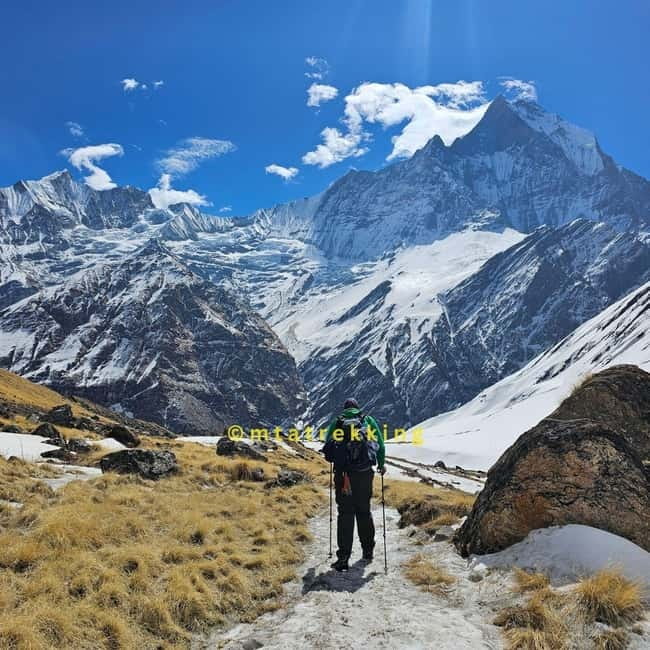
You’ll have a professional trekking guide with English support, and the guide is described as government-registered. For a trek that reaches 4,130 meters, that matters more than people think.
From the guide names you’ll hear in past bookings, you can get a sense of the style. Guides such as Santosh, Prabit, and Ramit are highlighted for being kind, friendly, and helpful, and for giving useful explanations about the mountains and local culture. Another recurring theme is that guides help manage effort so you do not overexert yourself, which is exactly what you want on a short trek where every day counts.
I also like that the trip includes a first aid kit and operational support like ACAP and permits coverage. You are not just paying for a person with a map, you are paying for someone who understands the paperwork and the safety basics.
Price and value: what $136 covers, and what to add
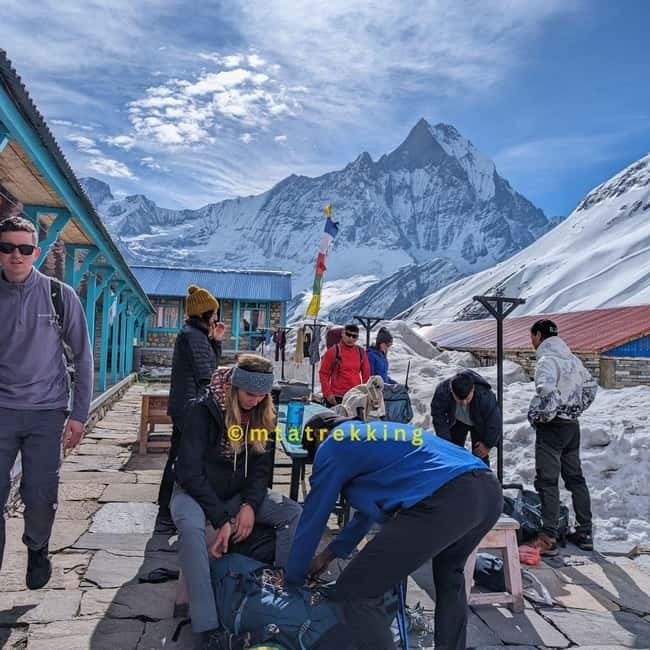
At $136 per person, this is positioned as a budget-friendly way to do Annapurna Base Camp in a tight timeframe. The best value part is that you are not piecing together permits, meals, and core logistics yourself.
Here’s what is included:
- Tea house accommodation
- Hotel pickup and drop-off in Lakeside Pokhara or from the airport
- Meals (full-board option)
- Private transport from Pokhara to the last road area (Siwai) and back
- ACAP permit, plus TIMS, government permits, and taxes
- Government-registered professional guide
- First aid kit and luggage storage facility in Pokhara
Not included items that can affect your true cost:
- Hot shower, Wi-Fi, drinks, mineral water, and similar mountain extras
- Porter service, listed at $20 per day
- Rescue and insurance
My take on value: if you already have trekking basics and you can keep to the meal plan, the included structure is what keeps this from turning into a stressful budget puzzle. The biggest “add-on cost risk” is usually either porter use or last-minute comfort buys at higher elevations.
Fitness reality check for a 5-day ABC run
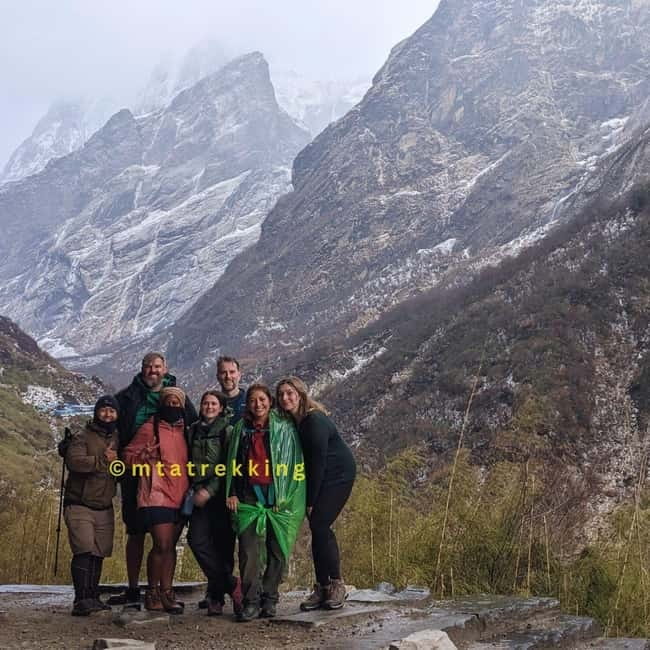
This trek is short, not effortless. It reaches 4,130 meters, and even if altitude issues are described as rarely happening, your body still has to adapt to thinner air.
You’ll be hiking roughly 5 to 6 hours on the first two days, then adjusting to a base-camp arrival day, a full exploration plus descent day, and a return day. That means you need a baseline of fitness, and you should plan to walk at a pace where you can speak in short sentences.
If you are thinking, I want to do this without feeling crushed, choose this trek if you can comfortably handle steep sections for multiple hours. If you know you struggle with long days, consider adding a porter for some help, since porter service is available.
Also, consider the weather. During the monsoon season (June to August), conditions can be erratic with heavy rainfall. You should have gear that handles wet trekking, and you should follow your guide’s advice on timing and footing.
Practical packing notes: what matters on the trail
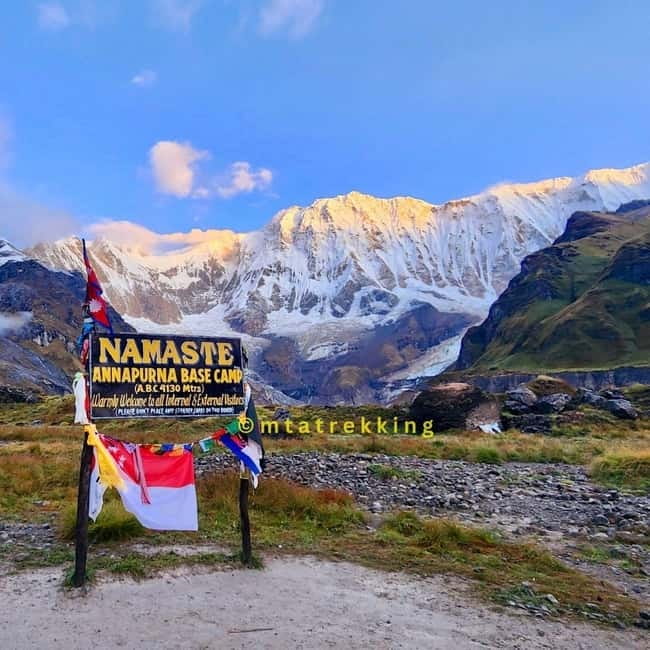
What to bring is clearly listed, and I’d treat it as a checklist rather than suggestions.
At minimum:
- Comfortable shoes built for uphill and slippery trail
- Change of clothes and comfortable layers
- Cash
- Passport or ID card, and you can use a copy
Two extra thoughts that fit this specific region and trek style:
- Leeches can be a nuisance, especially in monsoon season. Long pants tucked into gaiters and insect repellent are recommended.
- Expect personal expenses for items like hot showers and drinks, because those are not included on the mountain side.
Who this trek suits best
This is a strong fit if you want:
- a classic Annapurna Base Camp goal without taking a week or more
- cultural stops in Gurung villages plus big mountain views
- the convenience of private transport and an English-speaking guide
- a route that includes a detour for Machhapuchhre and a post-trek reset at Jhinu hot springs
It may not be a fit if you fall under the listed “not suitable” categories, including pregnancy, mobility impairments, wheelchair users, visually impaired people, people with altitude sickness, and people over 70.
Should you book this Annapurna Base Camp trek?
Book it if you want a well-structured 5-day ABC package with the logistics handled, and you value having a guide who manages pace, safety basics, and mountain context in English. I also think it’s a smart option if you like the idea of mixing high-mountain achievement with culture and the practical payoff of Jhinu hot springs.
Pass or rethink it if you know altitude and long hiking days are a challenge for you, or if your plan needs a gentler schedule. In that case, consider either more days for acclimatization or a different itinerary style.
If you do book, your best move is simple: train for steady walking, pack for wet conditions if traveling in monsoon months, and treat the guide’s pacing advice as part of the trip, not a suggestion.
FAQ
How long is the Annapurna Base Camp trek from Pokhara?
It is a 5-day trek, with 4 nights in tea house accommodation.
Where does the trek start and where do you return to?
You start from Lake Side in Pokhara (and you can be picked up from any hotel in Lakeside or from Pokhara international airport). You return to the same Lake Side area.
What kind of lodging and meals are included?
You get tea house accommodation. Meals are included under the full-board option you choose.
What permits are included?
The trek includes the Annapurna Conservation Area (ACAP) Permit, plus TIMS, government permits, and taxes.
Will I have a guide, and what language do they speak?
Yes. You’ll have a live tour guide who speaks English.
Does the itinerary include hot springs?
Yes, Jhinu hot springs are part of the plan. Soaking is listed as optional on the final return day.
Is a porter available, and is it included?
A porter service is not included in the price. It costs $20 per day if you want one.
Lodge to Lodge Around Kathmandu


The Rest of Our Kathmandu Write Ups



Through the Sanctuary Gate
Everything else we have reviewed around Kathmandu
- 12 Days Everest Base Camp Trekking
★ 5.0 · 3 reviews - 1 Night 2 Days Chitwan Jungle Safari Tour from Pokhara or Kathmandu
★ 3.0 · 3 reviews - Thamel Rickshaw tour
★ 4.7 · 3 reviews - Kathmandu: Momo Making Class with a Local Chef
★ 5.0 · 3 reviews - Kathmandu: Full-Day Yoga, Body Massage and Pedicure Package
★ 5.0 · 3 reviews - From Kathmandu / Pokhara / Chitwan: River Rafting – 1 Day
★ 4.6 · 3 reviews
Annapurna Base Camp Treks worth a second look.
 ★ 5.0Annapurna base camp trek 5 DaysFrom $699252 reviews
 ★ 5.0Annapurna Base Camp TrekFrom $935111 reviews
 ★ 5.0Kathmandu to Annapurna Base Camp (ABC) 5-Day TrekFrom $99102 reviews
 ★ 5.0Annapurna Base Camp Trek 12 DaysFrom $80085 reviews
★ 5.0Annapurna Base Camp TrekFrom $92580 reviews
 ★ 4.95-Day Annapurna Base Camp (ABC) TrekFrom $9672 reviews
★ 5.0Annapurna Base Camp TrekFrom $69959 reviews
 ★ 5.011-Day Hike Tour to Annapurna Base Camp Bliss in KathmanduFrom $1,30052 reviews
Lists this tour sits in