
REVIEW · ANNAPURNA CIRCUIT TREKS
12 Days Annapurna Circuit Trek from Kathmandu
One of Nepal’s best treks starts gently, then climbs hard. This 12-day Annapurna Circuit route strings together lush valleys, Tibetan-style villages, alpine pastures, and big high-mountain days, all with English-speaking guide care. I like the way you get an intentional mix of road travel and trekking, so you arrive in the high country ready, not rushed. I also like the focus on safety and timing around high altitude, with acclimatization built in around Manang. The main drawback to note up front is that Day 8 to Muktinath is a long, steep effort (about 8 to 9 hours), so your fitness and pacing need to be on point.
What makes this trip especially appealing is the human side. Guides come across as patient, honest, and seriously helpful, with names like Biru, Milan, Amrit, and Krishna showing up in standout feedback. If you like clear guidance, good explanations of mountain culture, and a pace that fits your group, this tour model makes sense.
In This Review
- Top Highlights on the Kathmandu to Pokhara Annapurna Circuit
- From Thamel to Chame: how you ease into the trek
- Upper Pisang and Braga: Tibetan-style architecture and suspension bridge moments
- Manang acclimatization: the day that can save you later
- Thorong Phedi and the climb to high country
- Muktinath, the long hard day to match the altitude
- Jomsom to Pokhara: big views, then a smart recovery
- Price and Logistics: what you really get for $680
- Who this trek fits best, and who should think twice
- Should You Book This 12-Day Annapurna Circuit Trek?
- FAQ
- What time does the tour start in Kathmandu?
- Is this Annapurna Circuit trek private?
- What’s included besides the guide?
- Are meals included during the trek?
- Are trekking poles provided?
- Which day is the hardest and how long is it?
- What is the cancellation window for a full refund?
Top Highlights on the Kathmandu to Pokhara Annapurna Circuit
- Guides who explain the route and culture, with strong mentions of Biru, Amrit, Krishna, and Milan
- Real altitude planning, including an acclimatization day in Manang before going higher
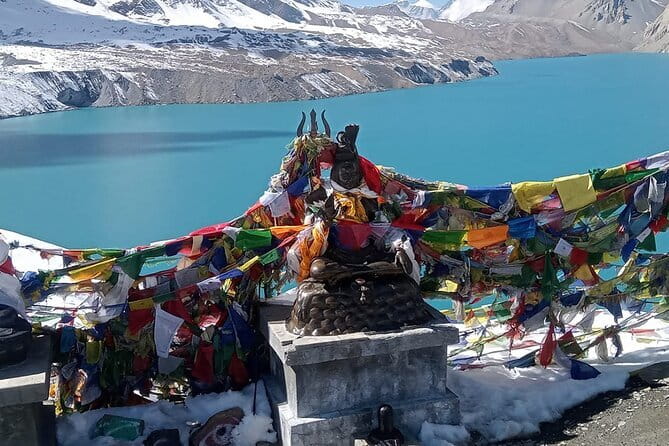
- Iconic high-pass payoff at Thorong La Pass (5,416m), the trek’s headline moment
- A challenging Muktinath day built into the schedule (about 8 to 9 hours, with wind mentioned as a factor)
- Guest house trekking nights, plus hotel comfort backstops in Kathmandu and Pokhara
- Trek-to-relax flow, with a drive to Pokhara after Jomsom so you can recover and enjoy Phewa Tal
Longer Circuit loops over Thorong La
From Thamel to Chame: how you ease into the trek
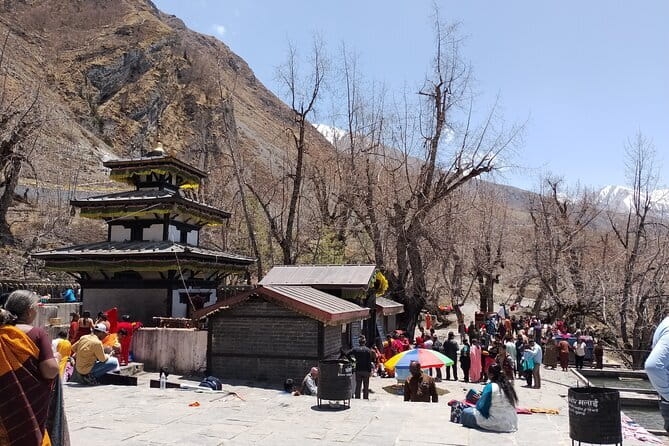
Day 1 is all about arrival and getting settled. You fly into Kathmandu Tribhuvan International Airport, then get picked up and driven to your hotel in Thamel. After check-in, you’re set up for an early start style the next day. Your meeting time is listed as 4:15 pm, so it’s worth planning on a quick orientation and getting your gear organized.
Why this matters: the Annapurna Circuit is not a sprint. When you start in Kathmandu with a simple plan, you waste less energy on logistics. Also, Thamel is practical for last-minute supplies, trekking essentials, and getting comfortable with Nepal time.
Day 2 shifts you into motion with a road trip, crossing rivers like the Trishuli and the Marsyangdi along the way. You travel to Besisahar and continue onward to Chame. This day is long in vehicle hours, but it’s a smart way to position yourself for real hiking later. You’re also getting your first taste of the Annapurna region’s changing terrain, from greener valleys toward higher ground.
What to watch for: road days can make your legs feel “awake” but not strong. I’d treat Day 2 as a warm-up day, keep water coming, and don’t over-stretch your first trekking morning.
Upper Pisang and Braga: Tibetan-style architecture and suspension bridge moments
Day 3 takes you from Chame toward Upper Pisang, passing through Telekhu and gaining some early views of the Annapurna ranges and Mt. Pisang (6,091m). Along the trail, you re-cross a suspension bridge, then continue until Upper Pisang.
This is a good day for your “eyes” more than your “legs.” You’re moving through scenery that starts to feel more dramatic, and bridges like this help you understand the Annapurna Circuit’s rhythm: frequent small transitions, steady effort, and constant visual rewards.
Day 4 is your first big culture shift. You trek to Braga, described as a Tibetan village with distinctive architecture, including houses built one upon another. That kind of dense, stacked building style is a clue you’re moving into a different cultural zone, and it also hints at how people adapt to a high-altitude, weather-driven life.
Why I like this approach: the trek doesn’t just show peaks, it explains how people live along the route. When your guide is the type who chats through history and mountain culture, days like these become memorable in a different way than just hitting elevations.
Possible consideration: Upper Pisang and Braga areas can involve uneven paths and short climbs that feel punchy at altitude. If you’re prone to going out too fast early in the day, remind yourself to keep a consistent pace.
Manang acclimatization: the day that can save you later
Day 5 is a rest and acclimatization day in Manang. The trip explicitly recommends acclimatizing before heading higher and staying active rather than sitting still all day. That’s a big deal on this route, because the cumulative elevation is what catches people, not just one single pass.
Day 5 in Manang gives you time to let your body adjust while still keeping momentum. It’s also where your guide’s role gets extra important. If you’re used to hiking on your own, the structure here helps you avoid the common mistake: feeling great at midday and then paying for it later.
Day 6 pushes higher to Yak Kharka. The trek is listed as about 10.4 km uphill, passing through juniper forests and along trails where you can see yak grazing in alpine pastures. You’ll also pass a teahouse at Thorong Khola, noted as the only teahouse at that point.
Why this is valuable: alpine days feel different. The air gets drier, the air time between breaths changes, and your body starts to notice altitude more. Yak Kharka is often where trekkers feel the trek “switch.” With the acclimatization done the day before, you have a better chance of moving steadily through that change.
Tip: pack your mindset for this stretch. If you treat it like a steady, controlled hike rather than a race, you’ll feel more ready for Day 7 and the final push.
Thorong Phedi and the climb to high country
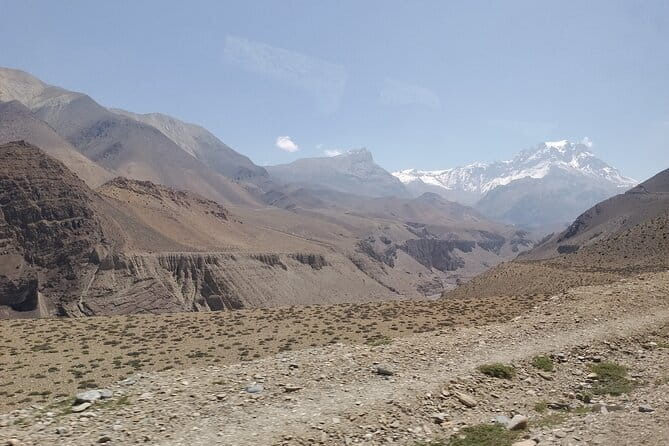
Day 7 goes toward Thorong Phedi, following along the east bank of the Jarang Khola and viewing steep bluffs before reaching Thorong Phedi, described as meaning foot of Thorong La.
This is where the trek’s altitude becomes unavoidable. Even if you don’t think you’re “that slow,” you’ll likely notice how every meter costs more energy. A guide who understands the route can be the difference between a day that feels manageable and a day that drains you for no reason.
Day 7 is also a key staging day mentally. You’re essentially getting your body into position for the pass effort. If your group has different paces, this is where your guide can help keep you together without forcing anyone to sprint.
What to consider: bring layers you can add and remove. Wind and temperature swings can be noticeable as you get closer to pass country.
Other lodge to lodge routes near Kathmandu
Muktinath, the long hard day to match the altitude
Day 8 is one of the most physically demanding days. You hike about 8 to 9 hours to Muktinath, with the itinerary noting strong altitude effects and sometimes strong winds in the area.
This is the day you earn the bragging rights, but it’s also the day you should plan your effort. If you start too fast, you’ll feel it quickly. If you pace well, you’ll conserve enough energy to enjoy the big views when they arrive.
Muktinath itself is part of the trek’s spiritual geography. The route description mentions monasteries and Buddhist stupas throughout the journey, and the high-country culture here is part of why this trek feels more than just athletic. You’re hiking through a place where local life and mountain travel connect.
Practical note: wind can change how cold you feel. If you’re the type who gets chilled easily, plan your clothing so you stay warm without needing to stop constantly to adjust.
Jomsom to Pokhara: big views, then a smart recovery
After leaving Muktinath, Day 9 continues through the Kali Gandaki Valley toward Jomsom. The route describes lush meadows, orchards, and streams, plus a stop through Kagbeni, a village noted for its reputation.
Day 9 is shorter than some of the other trekking days in time, about 6 hours. That makes sense. Once you’ve tackled Thorong La and reached Muktinath, you deserve a bit of breathing space. Kagbeni is also a good reminder that the circuit is not one big “above the clouds” line, it’s a pattern of transitions between environments.
Day 10 switches gears. You drive to Pokhara by local bus for 7 to 8 hours, arriving via Tatopani via Beni Bazaar. Pokhara is famous for Phewa Tal and is popular because it’s a place to reset after the trek.
This recovery day is where the trip makes logistical sense. Not everyone wants to jump into another demanding hike immediately, and Pokhara gives you the option to rest, eat well, and enjoy the calmer pace.
Day 11 brings you back to Kathmandu, again by road for about 7 to 8 hours. Day 12 is your final airport transfer. You’ll be taken to Tribhuvan International Airport at least three hours before your scheduled departure.
Why I like this ending: you get closure. It’s not just “finish the trek, good luck.” The schedule includes the travel buffer so you can catch your flight without stress.
Price and Logistics: what you really get for $680
This trek is priced at $680 per person for roughly 12 days. For that cost, the important included items are:
- Hotel pick-up and drop-off round trip in Kathmandu
- An English-speaking trekking guide
- Trekking permit and official documentation
- Kathmandu: 2 nights accommodation with breakfast
- Pokhara: 1 night accommodation with breakfast
- Guest house lodging during the trek
- Round trip transfer by shearing bus according to itinerary
- Private tour (your group participates together)
- Trekking poles, one per person
- Mobile ticket
That’s solid value when you think about how many of these costs would be annoying to arrange yourself. Permits, official documents, guide support, and organized transport are often the hidden headache in Nepal treks.
What’s not included is also clear:
- Food and drinks (available to purchase, approximately $25 per day)
- Gratuities (optional)
How I’d evaluate the value for you: if you want a guided route with permits handled, lodging organized, and trekking poles provided, the package price looks fair. If you already have a guide you trust and plan to handle permits and logistics yourself, you might spend less on paper, but you’d likely spend more time managing details.
Who this trek fits best, and who should think twice
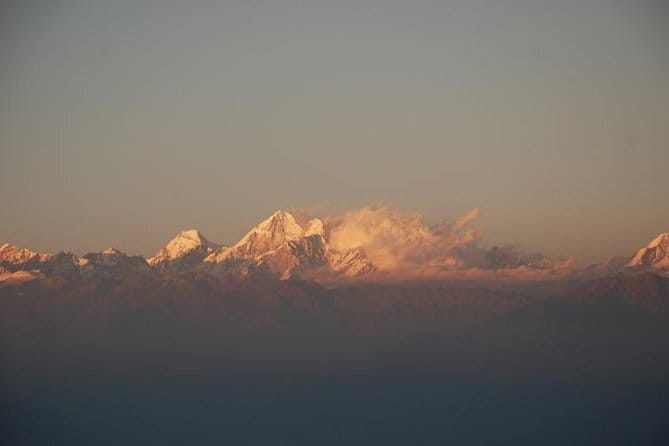
This is a high-altitude, physically demanding trek. The trip specifically says travelers should have a strong physical fitness level, and Day 8 is listed as 8 to 9 hours.
So it fits best if:
- You’re comfortable hiking uphill for hours at altitude
- You want a guide who explains culture and trail context, not just directions
- You prefer organized pacing with acclimatization planned in
You should think twice if:
- You dislike long hiking days or already know you struggle with elevation
- You want something that feels easy and casual (this is not that)
On the plus side, feedback highlights that guides can adapt pace and that their English skills and honesty stand out. Names like Biru, Milan, Amrit, and Krishna show up as particularly strong guide matches. If you value clear communication and steady leadership on a pass day, that’s worth paying attention to.
Should You Book This 12-Day Annapurna Circuit Trek?
I’d book this if you want the classic Annapurna Circuit experience with structured acclimatization, an English-speaking Sherpa guide, and a guided culture connection along the way. The schedule includes the high-pass reality (Thorong La Pass at 5,416m) while also giving you rest and staging through Manang and Thorong Phedi.
Skip it, or at least plan carefully, if long days and altitude stress you out. Day 8 to Muktinath is the big test, and wind can add friction. If you know you can handle sustained hiking and you pack smart for cold and wind, this is a strong, well-organized way to do the circuit.
FAQ
What time does the tour start in Kathmandu?
The meeting point start time is listed as 4:15 pm in Kathmandu.
Is this Annapurna Circuit trek private?
Yes. It’s described as a private tour/activity, meaning only your group will participate. Some transfers are listed as round trip transfer by shearing bus according to the itinerary.
What’s included besides the guide?
The package includes the trekking permit and all official document, Kathmandu 2 night and Pokhara 1 night accommodations with breakfast, guest house accommodation during the trek, hotel pick up and drop off round trip, and trekking poles (one per person).
Are meals included during the trek?
No. Food and drinks are not included. They are available to purchase on the way, with an approximate cost of US$ 25 per day.
Are trekking poles provided?
Yes. The itinerary lists a trekking pole per each one as included.
Which day is the hardest and how long is it?
Day 8, the hike to Muktinath, is listed as the most physically demanding, with hiking time between 8 and 9 hours.
What is the cancellation window for a full refund?
You can cancel up to 3 days in advance for a full refund. If you cancel less than 3 full days before the experience starts, the amount paid will not be refunded.
Lodge to Lodge Around Kathmandu


The Rest of Our Kathmandu Write Ups



The Circuit, Other Itineraries
Everything else we have reviewed around Kathmandu
- 12 Days Everest Base Camp Trekking
★ 5.0 · 3 reviews - 1 Night 2 Days Chitwan Jungle Safari Tour from Pokhara or Kathmandu
★ 3.0 · 3 reviews - Thamel Rickshaw tour
★ 4.7 · 3 reviews - Kathmandu: Momo Making Class with a Local Chef
★ 5.0 · 3 reviews - Kathmandu: Full-Day Yoga, Body Massage and Pedicure Package
★ 5.0 · 3 reviews - From Kathmandu / Pokhara / Chitwan: River Rafting – 1 Day
★ 4.6 · 3 reviews
Annapurna Circuit Treks worth a second look.
 ★ 5.0Annapurna Circuit Trek with Tilicho LakeFrom $1,093368 reviews
 ★ 5.0Annapurna Circuit TrekFrom $1,17594 reviews
★ 5.0Annapurna Circuit TrekFrom $1,15035 reviews
★ 5.0Annapurna Circuit TrekFrom $97534 reviews
 ★ 5.0Annapurna Circuit with Tilicho Lake TrekFrom $1,09325 reviews
 ★ 5.010-Day Adventurous Annapurna Circuit TrekFrom $46725 reviews
 ★ 5.015-Day Private Annapurna Circuit Trek from KathmanduFrom $99518 reviews
 ★ 5.09-Day Annapurna Circuit Trek via Thorong La Pass17 reviews
Lists this tour sits in