
REVIEW · ANNAPURNA CIRCUIT TREKS
Annapurna Circuit Trek
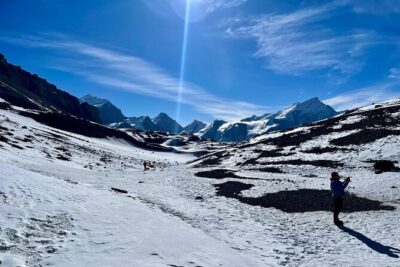
High passes make this trek unforgettable. This private guided Annapurna Circuit plan takes the headache out of logistics, so you can focus on one big thing: walking toward the 5,416 m Thorang La crossing at your own pace. I especially like the built-in comfort base in Pokhara and Kathmandu, and I like that trekking days run on full-board meals so you are not hunting for food every step of the way.
One possible drawback to weigh: some feedback has flagged that guide support and communication may not always be consistent. It is not a deal-breaker, but I suggest you ask questions early and confirm how pace and safety decisions will be handled.
In This Review
- A Few Standout Reasons This Annapurna Circuit Feels Good
- Two Weeks of Trekking, Ground Transfers, and Big Views
- Price and Value: What You Pay For (and What You Do Not)
- Day-by-Day Walking: What to Expect (and Where to Watch Your Step)
- Day 1: Kathmandu arrival and a real briefing
- Day 2: Long ride to Syange, then you start settling in
- Day 3: From walking start to Dharapani, with a bridge moment
- Day 4: Chame, steep ridges, and landslide awareness
- Day 5: Narrow and steep valley walking, Paungda Danda detail
- Day 6: Reaching Manang via Upper Pisang
- Day 7: Manang rest day, with short hike options
- Day 8: Higher ascent through Tenki and the Marshyangdi Valley area
- Day 9: Thorang Phedi day, suspension bridge included
- Day 10: The big one, crossing at the highest elevation and heading toward Muktinath
- Day 11: Finish the trek and travel to Pokhara
- Day 12: Pokhara rest day to explore the valley at your pace
- Day 13: Return to Kathmandu by tourist bus or optional flight
- Day 14: Departure day
- Lodges, Meals, and How the Full-Board Setup Helps at Altitude
- Permits, Safety, and Why Having a Guide Changes the Whole Trip
- Comfort, Pace, and the Private Group Advantage
- Should You Book This Annapurna Circuit Trek?
- FAQ
- How long is the Annapurna Circuit trek in this package?
- What food is included during the trekking portion?
- Are trekking permits and area entrance fees included?
- Do I get a guide?
- Are airport and hotel transfers included?
- Is a porter included for the trek?
- Is cancellation free?
A Few Standout Reasons This Annapurna Circuit Feels Good
- Private, customizable trek with your group only, so the schedule and pace can fit your needs
- Permits and area entrance fees included, removing a big planning step before you even leave home
- Full board while trekking (breakfast, lunch, dinner), which matters at altitude when you want predictable energy
- A real guide for safety and learning about Nepal, plus first aid medicine carried during the trek
- Comfort on both ends with 2 nights in Pokhara and 2 nights in Kathmandu, each with breakfast
- Optional help with gear if needed, including a company duffel bag and sleeping bag
Longer Circuit loops over Thorong La
Two Weeks of Trekking, Ground Transfers, and Big Views
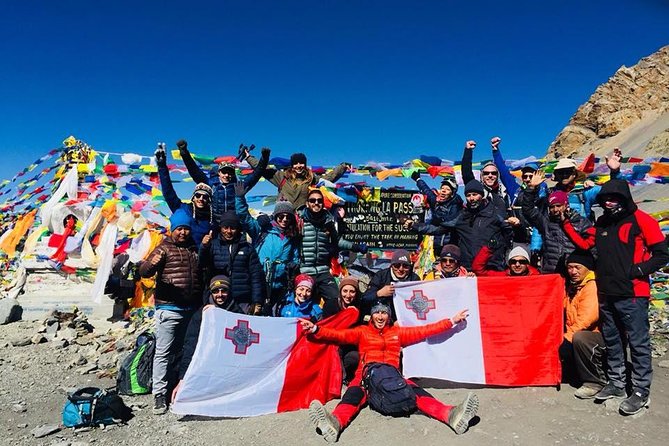
This trek is built around the classic Annapurna Circuit rhythm: start with long ground travel, then settle into days of walking between villages and tea houses, then finish with a major descent and a travel day back to cities. It runs about 14 days, and it is paced for people with moderate physical fitness who want a guided approach rather than DIY planning.
You begin in Kathmandu, with airport pickup and a short briefing. Then you spend day 2 driving out toward Syange, about an 8 to 9 hour journey. That long drive does two helpful things for you. First, it gets you out of traffic and into trekking country fast. Second, it gives your legs a calmer first day before you commit to walking.
From there, the trek gradually stacks altitude and effort until you reach the high point. The route’s most intense moment is the Lhorang La pass area at 5,416 m, which is why the plan includes rest and shorter hikes during the Manang days. After that big crossing, you are back in motion toward Muktinath and then down toward Pokhara for a proper recovery day.
Price and Value: What You Pay For (and What You Do Not)
At $1,150 per person, this package is not cheap. The good news is that a lot of the costly friction points are handled up front. You get a trekking guide, lodging in twin-sharing tea houses/lodges, and full board meals while trekking. You also get essential trekking permits and area entrance fees included. Those items add up fast when you plan independently.
You also pay for time. Ground transfers are included by tourist bus for the longer stretches, plus local bus or jeep where needed. That means you are not spending your limited energy negotiating transport in multiple places. On top of that, you get private airport and hotel transfers by vehicle, which is exactly what you want when you arrive tired or jet-lagged.
What you do not get is also worth noticing. Porters are not included, and lunch and dinner in Kathmandu and Pokhara hotel stays are not included either. Also, tips to guide and porter are not included, and any extra costs beyond inclusions are your responsibility. If you want to travel light with assistance, you may need to arrange a porter separately.
One more value check: this is private (your group only) and customizable. That can be worth real money if you want a guide who can adjust pace and timing rather than follow a rigid group schedule. With the average booking window around 105 days in advance, it is the kind of trip that benefits from planning early anyway.
Day-by-Day Walking: What to Expect (and Where to Watch Your Step)
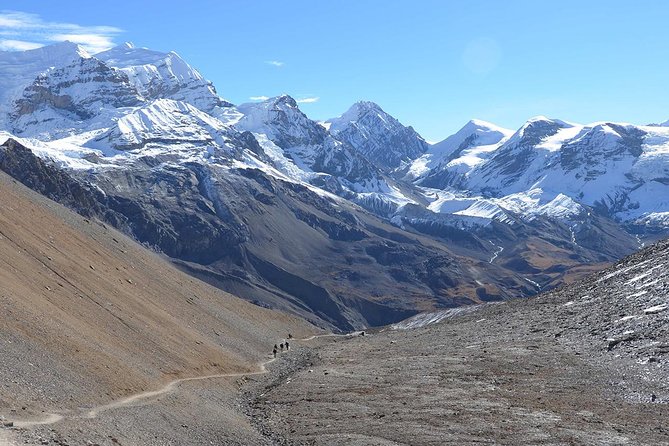
Here is how the walking day flow looks, with the practical takeaways for each part.
Day 1: Kathmandu arrival and a real briefing
Day 1 is about getting set up. An airport representative meets you and transfers you to your hotel by private vehicle. After rest, your guide gives a short briefing on the Annapurna Circuit trekking rhythm and trekking safety.
Why this matters: if you do not have time to learn the basics before the first walk, you can lose energy through confusion. This day is designed to keep you from wasting your first hours.
Other lodge to lodge routes near Kathmandu
Day 2: Long ride to Syange, then you start settling in
You drive to Syange, about 8 to 9 hours. The transfer is long, but the idea is that you start the journey without immediately burning your legs on steep terrain.
You should treat day 2 as your warm-up logistics day. Hydrate, eat, and plan to sleep well because day 3 shifts into walking for around 7 to 8 hours toward Dharapani.
Day 3: From walking start to Dharapani, with a bridge moment
You hike toward Dharapani, likely a 6 to 8 hour day depending on conditions and pace. The route includes a bridge crossing, which is usually where you want to slow down and keep your footing steady.
This is also a good day to practice your altitude routine even before you feel it. You will be using breathing control, steady steps, and consistent snacking, because the high pass is waiting later.
Day 4: Chame, steep ridges, and landslide awareness
Today you head to Chame, walking about 6 hours. The description calls out steep ridges, green woods, and some landslides, so you should assume you will need extra attention on trail conditions.
Practical tip for you: this is the day to stay mentally sharp. When trails get uneven, people rush. Slow down and treat safety as part of the view.
Day 5: Narrow and steep valley walking, Paungda Danda detail
You keep trekking through a valley that needs caution, described as narrow and steep. On the way, you get a curved rock rise at about 1,500 m at Paungda Danda.
This day is useful for building confidence. By now you understand how your body handles time on your feet, and you can adjust how often you stop.
Day 6: Reaching Manang via Upper Pisang
You walk for about 7 hours to arrive at Manang, passing through Upper Pisang. This is one of the key “settle at altitude” stages of the circuit.
Even if you feel okay, Manang days can start to change your sleep and appetite. Use it to your advantage by building a calm routine.
Day 7: Manang rest day, with short hike options
Instead of pushing higher, you rest at Manang and do short hikes. Options include hiking to Bonjo Gumba or Gangapurna Lake, plus additional nearby hike options listed in the plan.
How to use a rest day well: pick a hike short enough that you feel better afterward, not wrecked. Your body needs recovery to make the later pass safer and more comfortable.
Day 8: Higher ascent through Tenki and the Marshyangdi Valley area
You keep ascending, described with stops through Tenki village and along the Marshyangdi Valley area northwestern of Jharsang Khola. The trail passes juniper trees and a small Ghunsa Village.
This is a “steady work” kind of day. Your win condition is arriving with energy, not sprinting to prove toughness.
Day 9: Thorang Phedi day, suspension bridge included
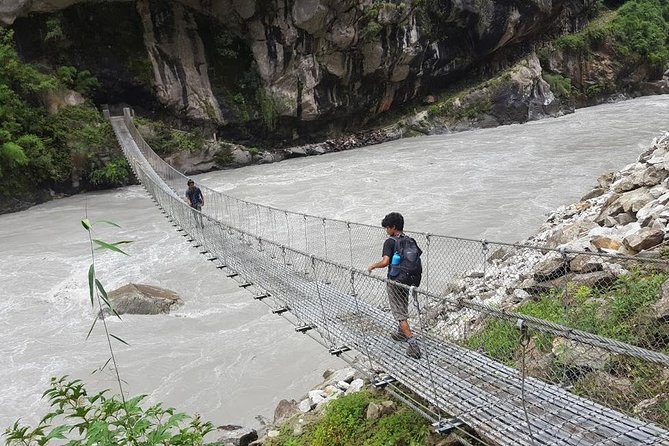
You wake up, breakfast, and then continue uphill to Thorang Phedi. The day includes a suspension bridge to Lather Village, then continues past cliffs toward the Thorang area.
At this point, your hiking pace matters as much as your effort level. If you go too hard too soon, the next day becomes harder than it needs to be.
Day 10: The big one, crossing at the highest elevation and heading toward Muktinath
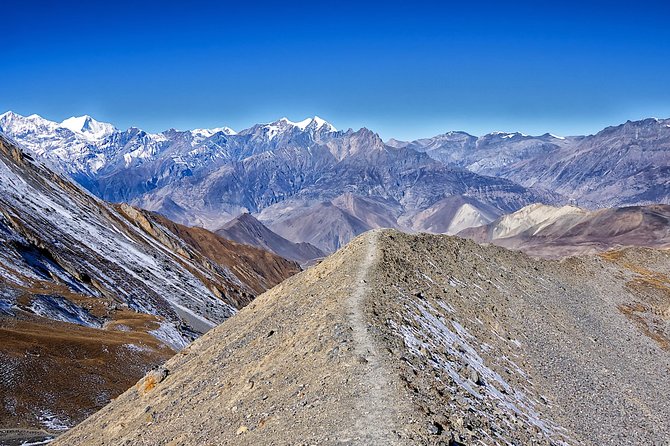
Today is described as passing through the highest elevation of the trek at 5,416 m. You cross Lhorang La at that altitude and head to the western side, where the real challenge comes.
Then you continue toward Muktinath Temple. The day is long, listed around 8 hours, and this is the day you respect. If weather or symptoms change how you feel, your guide is the one who helps you make the call.
If you take one thing away from this section, take this: the pass is not a performance. It is a safety task.
Day 11: Finish the trek and travel to Pokhara
After the last walking day, you take a bus/jeep drive to Pokhara on sharing with other people, about 10 hours. This is a major shift from trekking to road travel, so expect to be tired, even if you feel physically okay.
Day 12: Pokhara rest day to explore the valley at your pace
You get a free day in Pokhara. The plan is to rest and explore the Pokhara valley yourself.
This is where you catch your breath. It is also where a good base matters, because you now need recovery more than adventure.
Day 13: Return to Kathmandu by tourist bus or optional flight
You travel to Kathmandu by tourist bus drive, about 7 hours. There is an option for a flight from Pokhara to Kathmandu for an extra cost, then transfer to your Kathmandu hotel with breakfast included.
For most people, the bus is simpler and included. The flight option can be handy if you want to cut time, but you would be paying extra.
Day 14: Departure day
You get a drop-off to the international airport for your flight home.
This is a nice ending, because you are not asked to squeeze in sightseeing and logistics at the same time.
Lodges, Meals, and How the Full-Board Setup Helps at Altitude
This trek gives you lodging in tea houses/lodges on a twin-sharing basis while trekking. Food is also planned: full board while trekking, meaning breakfast, lunch, and dinner are included for trekking days.
Altitude changes how you eat. When you are climbing, you often forget to fuel properly, or you end up eating whatever is available quickly. Full-board means you are not making that decision over and over. It also tends to keep your meal timing more consistent, which helps your hiking rhythm.
You also get hotel accommodation in Pokhara and Kathmandu, including breakfast. Those hotel days can be the difference between enjoying the trek and feeling like you are constantly managing fatigue.
One more practical perk: if needed, the company can provide a duffel bag and sleeping bag. If you are traveling from abroad and do not want to bring heavy gear, that is a real convenience.
Permits, Safety, and Why Having a Guide Changes the Whole Trip
This package includes the essential trekking permits and area entrance fees, plus a professional trekking guide for the trek. You also receive first aid medicine carried by your local guide.
That might sound like a small line item, but it changes your trip. You are not assembling documents, cross-checking rules, or worrying whether you missed a fee. You are also not alone on a high pass day.
Also, this guide setup is about learning and staying safe. The plan explicitly frames it as learning about Nepal and trekking safely with a guide. On a trek that includes a 5,416 m high point, having that human safety layer is not just comfort, it is part of risk management.
Just keep your eye open for the one concern mentioned earlier, guide training and communication quality. Your best move is simple: ask for clear explanations on pace, altitude expectations, and how decisions get made if conditions change.
Comfort, Pace, and the Private Group Advantage
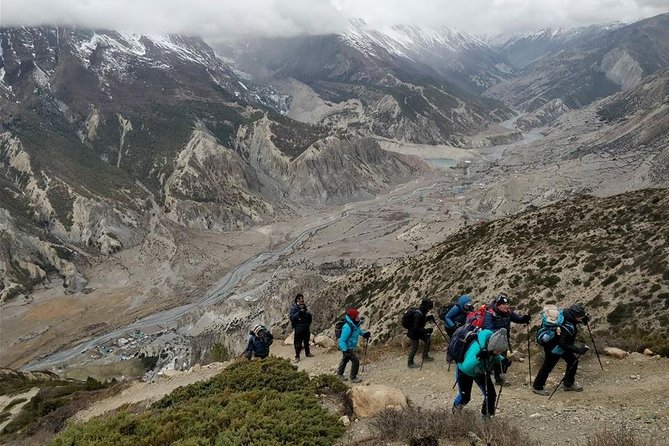
One thing I like is that this is private and customizable. You are not stuck behind a large crowd. You can go at your own pace, which matters most when you are crossing high altitude sections like the Thorong La pass area.
Private can also mean better coordination. Your guide can spend time on your questions and adjust pacing based on how you feel. In real life, that is often what makes a “good trek” feel like a great one.
That said, “private” does not mean stress-free. It means your group becomes the center of planning. If you want a very specific pace, confirm it early.
Should You Book This Annapurna Circuit Trek?
I think this is a solid choice if you want a guided Annapurna Circuit with built-in meals, permits, and comfortable city stays at both ends. The best match for you is someone who values less planning hassle, appreciates the structure of full-board trekking, and wants a guide who can help with safety and altitude decision-making on the pass day.
You might want to skip or adjust the plan if you strongly prefer carrying your own setup without any questions, because a porter is not included and you will need to plan how you handle gear. And if you are the type who needs consistent, highly polished guide communication, ask more questions before you commit.
If you want, tell me your fitness level, your trekking experience (first-time or not), and whether you prefer bus travel or flights on the Pokhara to Kathmandu segment. I can help you decide if this specific version of the circuit fits your travel style.
FAQ
How long is the Annapurna Circuit trek in this package?
It runs for about 14 days.
What food is included during the trekking portion?
You get full board while trekking, with breakfast, lunch, and dinner included.
Are trekking permits and area entrance fees included?
Yes. Essential trekking permits and area entrance fees are included.
Do I get a guide?
Yes. The package includes one professional trekking guide for the trek, along with first aid medicine carried by the local guide.
Are airport and hotel transfers included?
Yes. All airport and hotel transfers are included by private vehicle.
Is a porter included for the trek?
No. A porter is not included in the package.
Is cancellation free?
Yes. You can cancel up to 24 hours in advance for a full refund.
Lodge to Lodge Around Kathmandu
The Rest of Our Kathmandu Write Ups

The Circuit, Other Itineraries
Everything else we have reviewed around Kathmandu
- 12 Days Everest Base Camp Trekking
★ 5.0 · 3 reviews - 1 Night 2 Days Chitwan Jungle Safari Tour from Pokhara or Kathmandu
★ 3.0 · 3 reviews - Thamel Rickshaw tour
★ 4.7 · 3 reviews - Kathmandu: Momo Making Class with a Local Chef
★ 5.0 · 3 reviews - Kathmandu: Full-Day Yoga, Body Massage and Pedicure Package
★ 5.0 · 3 reviews - From Kathmandu / Pokhara / Chitwan: River Rafting – 1 Day
★ 4.6 · 3 reviews
Annapurna Circuit Treks worth a second look.
 ★ 5.0Annapurna Circuit Trek with Tilicho LakeFrom $1,093368 reviews
 ★ 5.0Annapurna Circuit TrekFrom $1,17594 reviews
★ 5.0Annapurna Circuit TrekFrom $97534 reviews
★ 5.0Annapurna Circuit TrekFrom $1,17594 reviews
★ 5.0Annapurna Circuit TrekFrom $97534 reviews
 ★ 5.010-Day Adventurous Annapurna Circuit TrekFrom $46725 reviews
 ★ 5.0Annapurna Circuit with Tilicho Lake TrekFrom $1,09325 reviews
 ★ 5.015-Day Private Annapurna Circuit Trek from KathmanduFrom $99518 reviews
 ★ 5.09-Day Annapurna Circuit Trek via Thorong La Pass17 reviews
 ★ 5.0Annapurna Circuit Trek with Tilicho Lake (16 Days)From $1,80015 reviews
Lists this tour sits in